Centering a Movement

There has been a lot of discussion of late about a return to whole-person education. Sometimes referred to as formative education, holistic education, or even character education, these various pedagogies adhere to the personal formation of students across multiple dimensions. To the academics who teach these various methods, the distinctions among them matter but perhaps less so than the fact that they are all coming into renewed focus as major objectives in higher education today. 

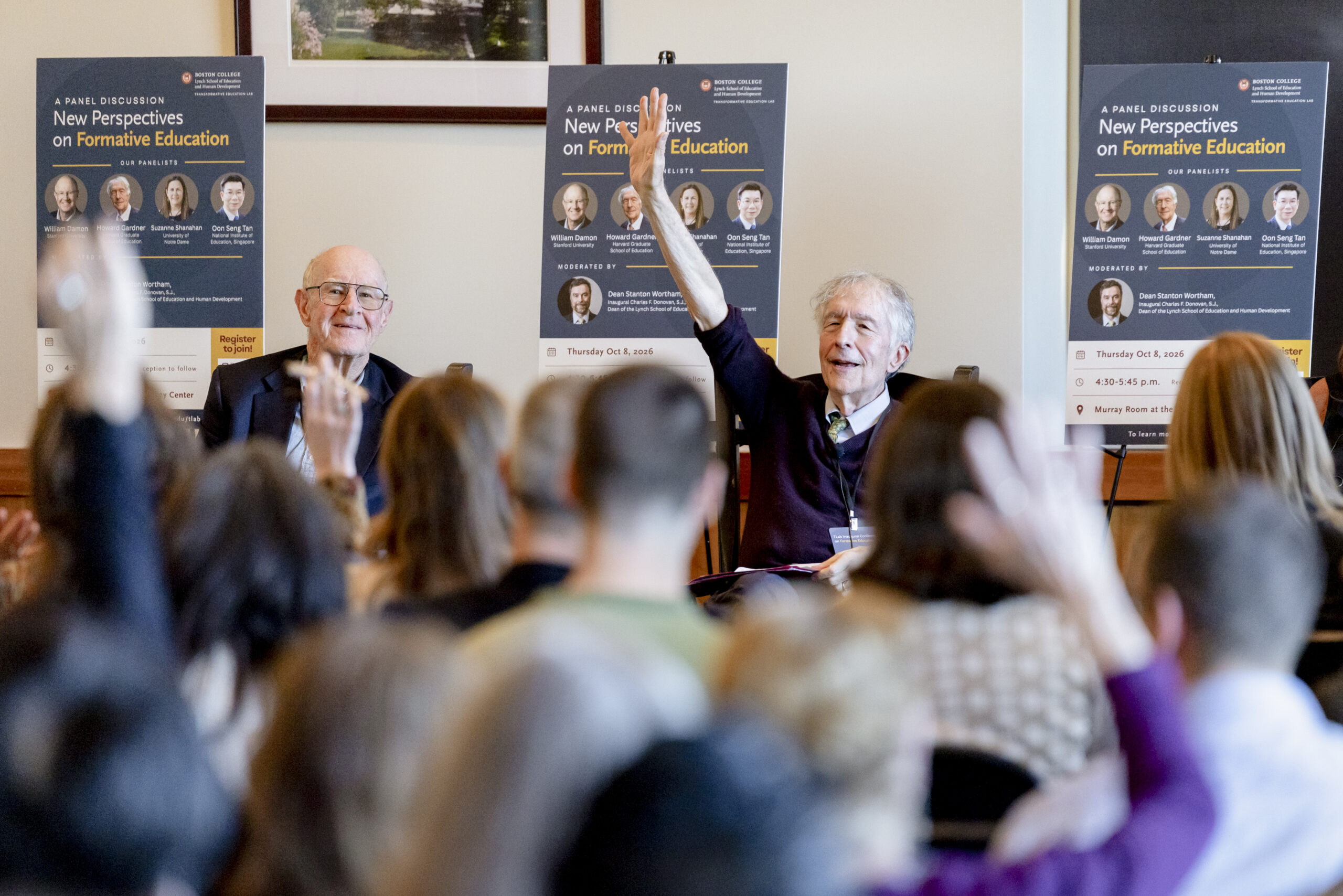
In early October, at Boston College, a group of empirical researchers, educational philosophers, and practitioners associated with these methods came together to explore how their work aligns and diverges when it comes to teaching to the whole person. The Inaugural Conference on Formative Education was hosted by the Transformative Education Lab at BC, a newly launched hub for research on holistic, formative human development focused on K–16 education. The lab is led by director Deoksoon Kim and is housed in the Lynch School of Education and Human Development, led by Dean Stanton Wortham. 

The two dozen or so participants in the conference spent two days together in small and large groups considering questions such as: is formative education, once the bedrock of higher education, more critical than ever? If so, what does it look like, and how can the various advocates of this method move it forward, without stepping on one another’s good intentions?

A primary motivation for the conference was the growing question of how colleges and universities can attend to the human qualities of their students, including how they develop along multiple, simultaneous dimensions. Theories as to what is driving this interest include emotional and behavioral health problems among students brought on by the pandemic, excessive social media, and a global reckoning in the age of AI about what it means to be human. A key ingredient in this thinking is how to help students live lives of purpose and meaning beyond just their chosen professions and skills. This approach challenges the decades-long trend towards narrower academic goals and post-graduate economic metrics. 

This movement of the needle—if not full pendulum swing—towards a broader view of student success is a welcome change for the many advocates from diverse institutions and disciplines who are working in this area, but it is not without challenges. In his introduction to a public conversation among four experts at the conference, Dean Wortham said, “You have lots of people trying to devise a curriculum or program or philosophy or approach within this larger space of flourishing, wellbeing, character education, growth mindset, positive education, and so forth. It’s not clear how they relate to one another.” 

The presentation that followed was a synchronous case in point. The first two speakers, William Damon and Howard Gardner, are giants in their fields, as well as long-time colleagues and friends. Damon, a professor emeritus at Stanford University, is the country’s preeminent scholar on purpose, having defined it as the need for a “beyond the self” element. 

“Purpose, meaning, and fulfillment have been incredibly complicated by technology.” –Howard Gardner

In his remarks, Damon said, “One of the pillars of formative education is purpose. Purpose has to be meaningful, but that’s not all. In a personal sense, it gives people a commitment that adds energy, joy, and fulfillment in life, but it also pre-empts self-absorption, which any expert knows is a risk.”

Gardner is one of the most influential educational psychologists of the past half-century. His GoodWork Project at Harvard, which was co-created with Damon, helped advance contemporary thinking about ethics, character, and professional responsibility.  

Gardner reiterated Damon’s point with a reference to AI. “Purpose, meaning, and fulfillment have been incredibly complicated by technology,” he said. “I think the best we can do with our students is to help them realize [this] complexity—and hope they will use their sense of purpose in the right direction.”

Also on the panel was Suzanne Shanahan, the executive director of the Institute for Social Concerns at the University of Notre Dame. She framed the goal of her formative work as “shared human flourishing.” 

“For me, the essence of what formative education can be is about transcendence,” she said. “It’s about the liberation and the possibility that come for us both as individuals, and as a society, to share something extraordinary.” 

The fourth panelist, Oon Seng Tan, a professor at the National Institute of Education in Singapore, brought a cultural perspective to the formation conversation. “Education in Singapore has always been about social harmony and nation building,” he said. “The goals of formative education are, number one, to be a good person and number two, to be a contributing citizen. A good person relates to character. A contributing citizen relates to competence.”

In examining these and other methods of formative education, Wortham and Kim see the field’s “big tent” as a good thing and are pleased with the outcomes of the conference. “Participants converged on the view that formative education matters because it rests on a shared commitment to human dignity and flourishing—one that holds across a thick pluralism of backgrounds, faith traditions, and school settings,” Kim said. “They agreed that it counters purely transactional views of schooling by helping students move from ‘I’ to ‘we,’ and that formation is lifelong and relational, nurtured through reflection and supportive environments within a broader infrastructure, rather than isolated programs.”

They consider the conference the beginning of a continued conversation about how multiple methods of formative education can align to advance a new movement. Kim said confronting challenges—such as how not to frame the intrinsic-motivation elements of formative education as at odds with extrinsic goals such as financial security—will be important. And they are explicit in the fact that Boston College is well positioned to lead the way. 

“This is an institution that’s been trying to do holistic approaches to education and human development since its founding,” Wortham said. “We’ve been trying to figure out how to help people work toward lives of purpose, a sense of their calling, a sense of what their connection is to a larger moral order—and push it forward to advance the common good. We are in the fortunate position of never having made the mistake of ignoring all [of] that in the first place.”

You can reach LearningWell Editor Marjorie Malpiede at mmalpiede@learningwellmag.org with comments, ideas, or tips.

The Power and Courage of Vulnerability with Raé Lundy and Jarred Keller

On this episode of LearningWell Radio, Dr. Raé Lundy and Jarred Keller, a content creator and mental health advocate, talk about why it matters to speak openly about mental health, both in therapy and in everyday life.

Content note: this episode includes discussion of depression and suicide.

If you need immediate support in the US, call [988] (tel:988?oai_link_source=model_response_hotline) to reach the Suicide & Crisis Lifeline. For ongoing self-care resources, visit The Steve Fund’s My Digital Sanctuary.

Listen now on Spotify or Apple Podcasts.

You can reach LearningWell Editor Marjorie Malpiede at mmalpiede@learningwellmag.org with comments, ideas, or tips.

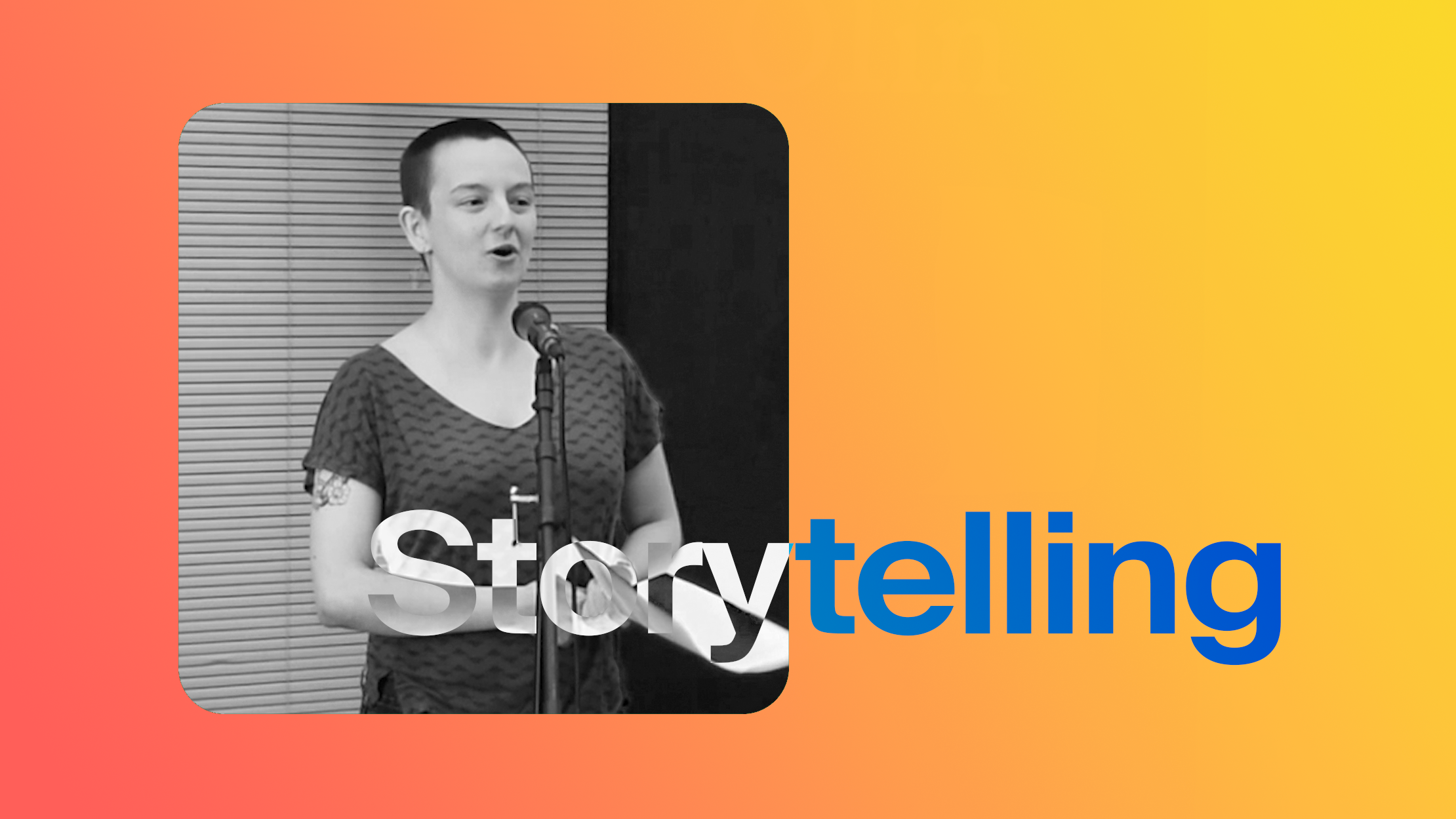
Storytelling | “The Moon and Other Controversies,” Delaney Knapp

This performance by Olin College’s Community Resources Librarian, Delaney Knapp, comes from Olin’s Community Story Slam featuring faculty and staff stories along with student stories. Inviting faculty and staff to perform a personal story alongside students reinforces how identity development is an iterative, lifelong process and how we all bring our personal context to our professional practice. This particular story shows how – long after we become adults – a parent can loom large over our connection with self, others, and the world. Delaney’s Dad literally warps time and obliterates facts, destabilizing Delaney’s ability to know which way is up. Perhaps that disorientation gives Delaney superpowers in defending a particular point of view or idea, suggesting that the seeming antagonists in our lives can also help shape us in ways we value.

To learn more about Storytelling, visit Olin College’s Story Lab website here.

What Belonging Means to Young People With Terrell Strayhorn

On this month’s episode of LearningWell Radio, the professor, author, and researcher on belonging Dr. Terrell Strayhorn talks candidly about what belonging really means in college and why DEI is a commitment, not a program.

Listen now on Spotify or Apple Podcasts.

You can reach LearningWell Editor Marjorie Malpiede at mmalpiede@learningwellmag.org with comments, ideas, or tips.

More Than A Game

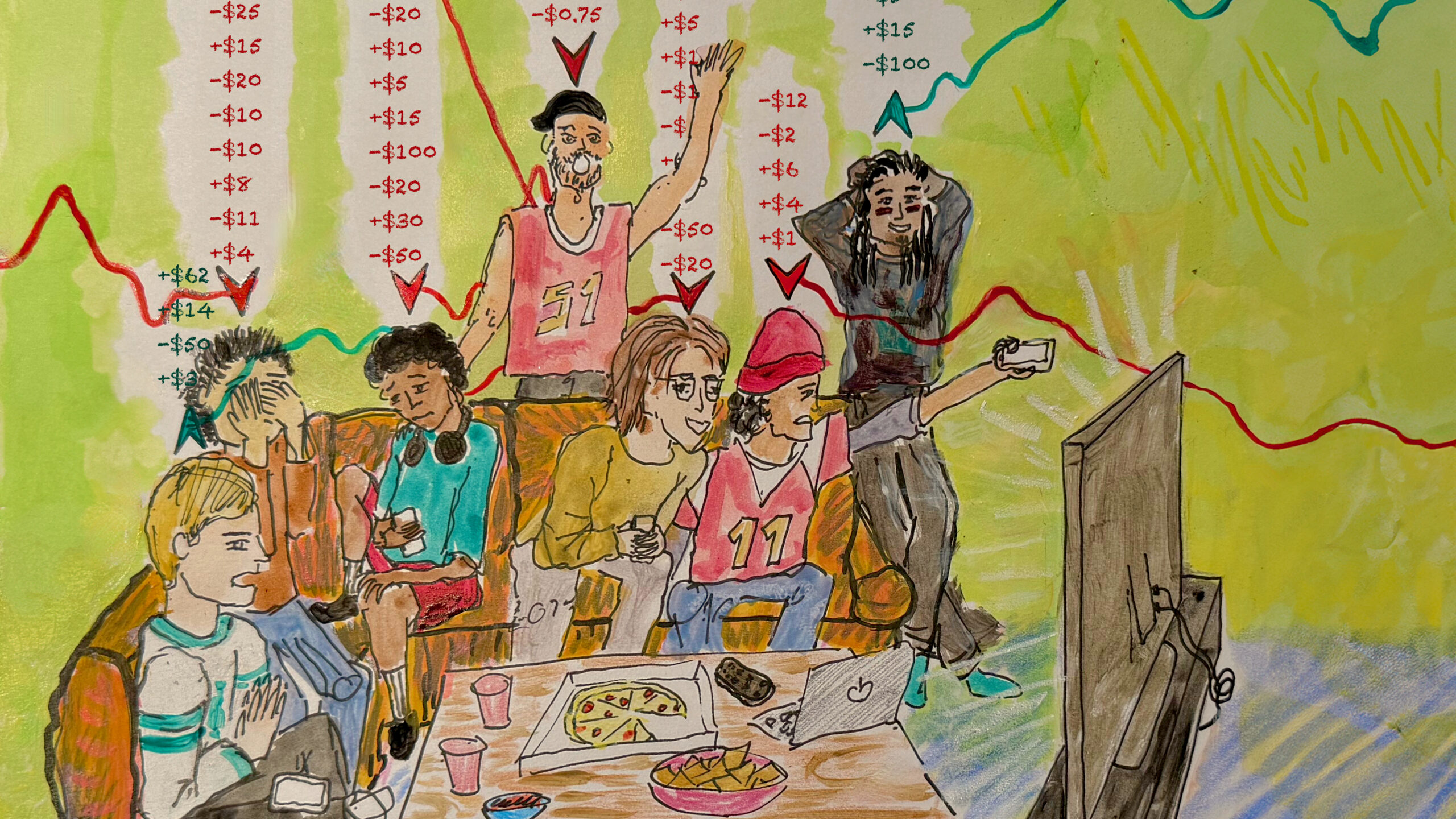
Not long after arriving at college, in 2022, Jack gambled for the first time. It started as a social pastime. His fraternity would get together to watch a big game, and the brothers would throw some money on the outcome. For Jack, who grew up a huge sports fan, betting made tuning in for teams he already loved even more exciting. 

Over time, the stakes changed. He stopped seeing betting as a way to bond with his buddies and began thinking of it as a legitimate money-making opportunity. He didn’t just do it with a group anymore, and he didn’t just focus on the matchups typically important to him. When he won, he felt like he’d beat the system. When he lost, he resolved to win the next time.

“It definitely got to a point where I’m up late at night sweating out a bet on some stupid game that I don’t care about, but have money on, so I have to care about,” Jack said. He lost time and sleep. He was distracted from studying and soured by bad bets. He worried his parents. The negative impact on his life had become apparent, but he dreaded telling his friends he might need to take a step back.

What happens when students come of age alongside an expanding legal sports betting industry?

Gambling addiction is not new. But Jack’s experience captures a newer question: what happens when students come of age alongside an expanding legal sports betting industry? Since the Supreme Court overturned the federal ban on sports betting in 2018, the prominence of gambling on college campuses has come into sharp focus. By 2023, an NCAA poll of 18 to 22 year-olds found that 58 percent overall and 67 percent of those living at college had sports bet. 16 percent indicated engaging in at least one risky gambling behavior, like betting more frequently or making or losing larger sized bets.  

Concerns about the risks of gambling have spread in turn, particularly related to the pop-up predatory commercial enterprise spawned by the habit. With the emergence of sports betting apps, like DraftKings and FanDuel, bettors gained continuous access to the action, right in their pockets. Meanwhile, online prediction markets have become a popular way for anyone 18-plus, including in states where the legal gambling age is 21, to engage in thinly disguised betting, framed as buying “shares” in the probability of different events happening. Investigations into the marketing tactics of betting apps, much like social media platforms, have revealed the plethora of ways they aim to hook users and profit off the most vulnerable. 

For decades, psychologists have recognized the potential for disordered gambling, characterized, to summarize, by an inability to stop despite various negative consequences. Yet for all the strides colleges and universities have made in recent years to address widespread student mental and behavioral health concerns, problem gambling appears to have been one issue left behind. 

Student gambling experts continue to find schools largely on their heels when it comes to a proactive response. Some expect institutions are still becoming acquainted with a phenomenon that has dramatically outpaced their grasp. Others imagine administrators assume gambling is prevalent on their campus but they don’t know in exactly what ways or to what extent. 

Lindsey Mortenson, the inaugural chief mental health officer at the University of Michigan, has found herself, in a short time, among the leaders of a growing effort to increase awareness around student gambling at colleges and universities. “It’s kind of an uncomfortable moment in higher ed and just in society in general because there’s really no federal funding [for] gambling research, and our behavioral health, mental health workforce pipeline is really not prepared,” she said. “Most people are just not getting any education about gambling.” 

For Mortenson, gambling on college campuses was always on her watch list but only recently on her doorstep. She first noticed the shift when the pandemic fog lifted and socialization began to return to normal. She started hearing from friends and colleagues, asking, “How would I know if my husband or my son had a problem?”

The longtime clinician had a general sense of how to respond but limited experience with the gambling issue overall. It occurred to her that the Covid-19 quarantine, which dawned right as dozens of states legalized or planned to legalize sports betting, would have bred the perfect conditions for online betting habits to fly under the radar. People often ended up alone, unmoored and unmonitored, with newfound free time to devote to unfamiliar apps designed to hold their attention.

For all the strides colleges and universities have made in recent years to address widespread student mental and behavioral health concerns, problem gambling appears to have been one issue left behind. 

Behavioral addictions like gambling are already known as “hidden addictions,” Mortenson said. They involve getting hooked on an activity, like shopping, food, or sex, as opposed to a mood-altering substance. These behaviors might be done in private, and the effects, while mimicking a chemical “high,” aren’t necessarily immediately obvious.

Eric Wood, the director of mental health and counseling at Texas Christian University, added that online sports betting is unique among addictions because there’s no “lag time” involved. Unlike with drinking, for example, online bettors don’t need to take the time to procure alcohol and then consume it. They can fire off bets instantaneously, at any point their phone is in reach. They also don’t need to wait to “recover” from one bet, like they might with a hangover, before making another. 

Bettors can even engage in many schemes at once, either on different games or within the same ones. With parlays, a popular form of bet, multiple predictions, referred to as “legs,” are linked and must all come true to win. So a bettor might bank on a certain football team to win, as well as to win by a certain number of points. He might end the bet there, or stack on another 10 legs to up the ante.

The brains of emerging adults, still developing impulse control, are vulnerable to this reward cycle. Young men appear to be particularly susceptible. According to the 2023 NCAA survey, 33 percent of men bet a few times a month or more, compared to 20 percent of women. Mortenson said the reason for this difference may be social more than biological. “Because sports are such a big part of male culture and you have this frictionless, easy way to keep betting continuously,” she said, “it just is uniquely reinforcing and addictive.” 

Perhaps most troubling to Mortenson, though, is everything researchers still don’t know about the harms of gambling among young people. While betting companies have access to data about users—how many, how often—they’re not exactly eager to share it. 

“It’s hard to really quantify all the harms,” Mortenson said, “because they’re sort of under corporate lock and key.”

Risky Fun

Before Jack entered college, the world of sports betting was largely unknown to him. “I’d maybe heard a little bit [about it] in high school, but I certainly wasn’t doing any,” he said. 

These days, Jack’s limited exposure before college seems less likely for incoming college students. Rob, a current first-year at another university, was well acquainted with betting by the time he arrived on campus. A study published last month found more than 40 percent of 13 to 17 year-olds had gambled in some form in the previous year. 

Rob described a gambling culture that took over his boarding school. Seniors ran sportsbooks and invited other students to join. Around the country, these kinds of student “bookies” build websites or spreadsheets to facilitate illegal betting among their often-underage peers. The ones Rob knew encouraged participation by providing membership for free and bonus cash to those who referred friends. In a small place, word spread fast.

Eventually the school administration cracked down on gambling, making it a dismissible offense, but not before Rob heard rumors about kids in the grade above him selling personal items, like bedsheets and posters, to pay off their debts. Online casino games, like blackjack and roulette, had also caught on and, Rob said, cost big. He himself stopped sports betting after his “bookie” graduated, then disappeared, never paying Rob an outstanding $1,000 he had won. 

For Chris, another first-year college student, gambling constituted a more casual affair at his high school, at least until students turned 18. As underclassmen, his friends would toss around bets on a Sunday football game and agree that the loser had to pay for pizza, or some equivalent. It was once they could download the betting apps legally that his relationship with gambling changed. 

In the months before he left for college, Chris said he spent entire days betting. He grew frustrated by hours wasted wagering on “U18 girls tennis matches in Slovakia,” rather than making the most of his summer. He placed his final bets on the World Cup ending in July, and cut himself off.

But when Chris started college, the betting started up again, too. His new friends bet. He made one close friend because of betting. “When everyone’s making friends, this was something which we felt like we had a similar interest over, so we’d hang out and discuss it,” he said.

The social component of betting seems to make picking it up easy and stopping even more difficult. For Jack, admitting to himself that his betting had become a problem was one thing. Admitting it to his friends was another.  

“I had good friends; they were good people. They weren’t like, ‘No, you gotta spend more money,’” he said. “I guess more of the worry was like, ‘Okay, I’m pulling myself back from a social avenue and a group that I really enjoy.’” 

Jack told his friends he needed to cut down, and they understood. He also didn’t stop hanging out with them. From time to time, betting beckoned. Especially after a couple drinks, few odds seemed too long. 

“It’s hard to get away from, I guess, is what I’m trying to say,” Jack said, “just with all the social pressure that comes with it.”

Understanding What’s at Stake  

Gambling may now be part of the participatory social fabric as early as high school, but luckily, not every student who bets will develop a betting problem. In fact, the vast majority, the numbers suggest, are able to bet responsibly. 

Rob’s trajectory with gambling seems to reflect that room for middle ground. “There’s so much going on all the time that there’s a bunch of other things to do other than watch sports, and then sports betting becomes less of a thing,” he said of his college experience so far. 

But the distinction between who is and isn’t a high-risk gambler isn’t always easy to parse. Monetary wins and losses, for one, don’t necessarily capture the entire depth of someone’s problem. 

Isaac Rose-Berman is a professional gambler now, but in 2020, he was a sophomore at Brandeis University, playing poker up to 10 hours a day during the Covid-19 shutdown. He’s open about the fact that, at that point, he exhibited telltale signs of problem gambling. And, he said, he made “pretty solid money” doing it.

“Like other activities that are iterative, if you do way too much of something, you can get better,” he added.

Still a pro today, Rose-Berman said he’s been able to shake the compulsive nature of his gambling, much of which is now sports betting. Meanwhile, he became a gambling policy and research fellow for the American Institute for Boys and Men (AIBM), advocating for stricter regulations for betting apps and educating people about how to bet safely.

In some ways, in his role for the AIMB, Rose-Berman spends his time trying to convince young men he’s something they should never expect to be: the exception. He may have made a career out of betting, but that doesn’t mean others can. Time and again he encounters students who seem to understand betting comes with risks, but they think they’re too good to fall victim. 

“A lot of what I try to explain to them is just how rigged the game is against them, how unlikely it is for them to win, who they’re going up against,” Rose-Berman said.

In their conversations with LearningWell, Jack, Chris, and Rob all expressed in some way that their gambling habit emerged in part because they were skilled at it—that they found unlikely success.

When Rose-Berman addresses students, he likes to lead them through one particular exercise. He asks everyone who uses DraftKings to raise their hands. Then he instructs them to keep their hands up if they think they’re “really good” at gambling. Many hands tend to stay raised.

“I’m not saying you guys are liars, but I have some very good friends who work on the risk management team at DraftKings, and their entire job is figuring out who is good at gambling and kicking them off the platform,” he tells them. “So if you’re still on the platform, that’s pretty good evidence that you’re probably not that good at gambling.’” 

Rose-Berman watches the gears shift in students’ heads as they realize, perhaps, they aren’t quite as talented as they imagined. Some of those who figured themselves stars hadn’t even been tracking their wins and losses. 

Rose-Berman’s goal isn’t to tell students to gamble or not to gamble but to clarify the potential risks, so they can proceed more safely. Breaking down what he called the “illusion of skill” is an important step.

On the essence of his gambling philosophy, he said: “I love gambling, but I hate gambling companies.” He sees bettors being set up to fail by corporate predation. As for the activity itself, he doesn’t believe gambling is inherently bad. Under the right conditions, he said, it could be a social good.

“You hear about the male loneliness epidemic,” he said. “I think that a bunch of guys getting together and playing poker is really good when people are very socially isolated, and especially if it’s for small stakes and they don’t care about the money.”

Rose-Berman also believes there’s value in learning the hard lessons about gambling early in life. If they’re like him, students will feel grateful they took wrong turns in college, instead of when they’re older, with more money to lose and responsibilities at stake.

“I think I was always destined to make a lot of those mistakes,” he said. “If I had started gambling later, then I would’ve had that realization at 25 instead of 21.”

What Schools Can Do 

In 2022, the team at the Higher Education Center for Alcohol and Drug Misuse Prevention and Recovery (HECAOD) at the Ohio State University decided to adopt gambling as a new focus area after learning about the extent of sports betting among students from an investigation in The New York Times.

It didn’t take Cindy Clouner, HECAOD’s managing director, long to realize they had entered uncharted territory. She set out looking for student affairs associations already addressing gambling who could help guide them into the fray, only to come up empty. 

Clouner soon understood that arriving at the resource she needed would require starting it from scratch. In 2023, HECAOD launched its collegiate problem gambling work group, bringing together individual leaders in college gambling research and programming to think through how to expand readiness and capacity among campus professionals around the country.

Theirs has been an uphill battle. Only the rare school had existing strategies up and running for them to draw from. Most colleges lack data around the prevalence of gambling among their students, Clouner said, because the activity hasn’t historically been included in surveys about their health and wellbeing. Funding for additional research is minimal because there’s no federal support in the area, excluding a recent designation for the Department of Defense to consider the issue among military personnel.

However, Clouner said, the situation is not without hope: there’s reason to believe that some of the evidence-backed strategies effective for addressing substance misuse can also help with problem gambling.

On an individual level, one of the gold standards for addressing problem alcohol use is called a motivational enhancement approach. It involves talking to students about the issue in a neutral way, framing it as not good or bad but as an activity with risk of harm. They then can discuss ways of limiting that risk. This same framework may translate to conversations about gambling, Clouner said, to help students build targeted knowledge and skills.

As for larger scale efforts, Clouner described how the kind of bystander trainings typically offered for drug use or sexual assault might be expanded or adapted to include gambling—to help students know what warning signs to look out for, how to talk to peers they’re concerned about, and how to connect them to resources. Mass media and social norming campaigns are other potential modes of spreading this kind of information.

“It isn’t widespread knowledge what the things [are] that people should do to reduce their risk of experiencing harm from gambling,” Clouner said. “It isn’t something that people just innately know.”

In 2025, HECAOD received a grant from the National Council on Problem Gambling, one of the key funders in this area, to develop a student-facing educational program called “You Bet?” informed by the expertise of their working group. “If you have 45 minutes with students,” they asked themselves, “what do you think are the most important things that they need to know about this issue?” So far, they’ve trained over 400 people to be able to deliver the program to students on their campuses.

At the University of Mississippi, broad strokes efforts are underway to understand the gambling issue on not only their campus but seven of eight other public institutions in the state. 

Daniel Durkin, a professor of social work at Ole Miss, helped organize a survey of student gambling habits across all seven universities. Collected in spring 2025, the data suggest that 40 percent of students had gambled in the past year, mostly playing the lottery (18 percent), playing cards (17 percent), or sports betting (16 percent). The students most likely to gamble included white men living off campus, participating in athletics, and involved in Greek life. They also had higher GPAs.

“We did that survey, got the results back, [and they] told us we already have a problem,” Durkin said. From there, he worked to get Ole Miss approval from the Institutions for Higher Learning to launch the Center on Collegiate Gambling, which calls itself the first of its kind in the nation entirely dedicated to research and the development and promotion of prevention efforts. The provost’s office is funding at least the first stage of growth, opening the doors to hiring a director and other staff, ideally, by the end of spring 2027.

One of Durkin and his colleagues’ first moves was to assemble a campus task force to assess current programs and policies on campus and make recommendations for going forward. Another was to train counseling staff to recognize and be able to respond to problem gambling. Once Ole Miss has put on its proverbial oxygen mask, the university hopes to help others in the state dawn their own, developing approaches tailored to each campus gambling situation.

Other universities that don’t have a dedicated hub for gambling research or prevention have begun to address the issue piecemeal.

At Texas Christian University (TCU), the director of counseling, Eric Wood, has embedded a gambling screening into the intake questionnaire that every student fills out upon visiting his center. While it’s not uncommon, he said, for students to deny or undersell their gambling habits on the form, asking the question upfront opens the door for more discussion in counseling sessions. There, Wood added, he finds students are often willing to talk about their engagement.

Those who initially underestimate their gambling habits may not even be doing so on purpose. Yes, some aren’t ready to admit to a potential problem, Wood said. But others simply aren’t aware that some of their habits, like small bets with friends over video games or fantasy leagues, qualify as gambling. 

Students engaging in problem gambling also haven’t been likely to seek out counseling for specifically that reason, Wood said. Rather, it might be general anxiety that brings them into the center, and then later conversations about betting that helps them realize it’s a key source of their distress. Once they begin to connect the dots, they can get the support they need.

Another of Wood’s interest areas involves the e-sports lounge at TCU. These kinds of video gaming centers have cropped up on college campuses in part to build community around a popular activity that might otherwise leave students isolated. Wood is thinking, though, about how the wagering in that environment might be monitored or curbed by putting out educational resources, like pamphlets or posters.

“If you have [a lounge] on campus, you know the students are placing bets in there,” he said. “Do you need to put signs in it? Is a school liable if something were to happen? Those are questions no one has the answer to.”

As with all forms of human behavior, relatability offers a strong intervention. Isaac Rose-Berman, while not affiliated with any one university, will no doubt continue speaking to young people on campuses across the country—young men in particular—trying to provide the education they’re missing around their new favorite form of entertainment. He and others like him, who are recent graduates, gamblers, and purveyors of caution, might just strengthen the voice in students’ heads that reminds them what’s at stake.  

When Jack graduated from college, he moved to New York City, where he said his gambling has improved, meaning dwindled. At times, he’ll admit, the voice of reason can be difficult to make out over the sounds of betting—blaring ads, bullish friends—across Manhattan. For now, he’s listening closely.

Jack, Rob, and Chris’ names were changed for this story to protect their anonymity.

You can reach LearningWell Reporter Mollie Ames at mames@learningwellmag.org with comments, ideas, or tips.
Just Released: 2026 Campus Mental Health Services Survey 

The Princeton Review, best known for its college rankings, ratings, and guides, has once again provided key information about the scope and availability of mental health services on colleges and universities across the country. Since 2023, the education services company, together with the Ruderman Family Foundation, has published the findings from its Campus Mental Health Services Survey, which reports on the type of services available on campus and the awareness, on the part of students, of their existence. 

The 2026 survey, out last week, included the participation of 739 institutions, nearly tripling the number of schools that participated in the first year. Leaders believe the sharp increase in participation reflects colleges’ growing awareness that students and families want to know more about how institutions support student wellbeing.

“We partnered with the Princeton Review to build something that didn’t exist before: a way to make student wellbeing visible and comparable across higher education, so it becomes a priority for institutions and for the families choosing them,” said Jay Ruderman, the president of the Ruderman Family Foundation. 

The survey is divided into two sections: one which polled administrators at the 739 institutions on their schools’ mental health and wellness services, and the second which polled more than 56,000 students across 300 colleges about their awareness of services on their campuses. Findings from both administrator and student surveys reveal sustained momentum in campus infrastructure, policies, and awareness surrounding student mental health. 

Of the participating schools, 99 percent reported their colleges have a comprehensive mental health/wellness program thar makes counseling, referrals, and wellbeing services available to all students; 99 percent also reported their colleges have a mental health services website; and 92 percent reported their colleges have suicide prevention training programs. 

Notably, more than three quarters (77 percent) of the participating institutions now offer for-credit or non-credit mental health and wellness education courses, indicating a growth in preventative as well as clinical services. 

Among students, 82 percent agreed with the statement, “If I needed to seek professional help for my mental or emotional health, I would know where to access my school’s resources;” 80 percent agreed with the statement, “Mental health services are readily available on campus;” and 79 percent agreed with the statement, “I am aware of mental health outreach efforts by my school.” 

You can reach LearningWell Editor Marjorie Malpiede at mmalpiede@learningwellmag.org with comments, ideas, or tips.

Wellness by Design 

A typical morning at James Madison University’s (JMU) Paul Jennings Hall starts off quietly, with students engaged in quiet study time throughout the common spaces. As the day progresses, students return from classes and animate the 500-bed residence hall, and by afternoon, the recreation room comes alive with students playing pool or watching television. Come evening, they gather to study—even those who don’t live in the building. 

“People would rather study with friends in Jennings than in their own dorm,” said Dalton Stroupe, who spent three years as the residence hall’s director. “Everyone who walks in is like, ‘Wow, this building is beautiful.’ And once you’re inside it has a great flow.” 

While it is a magnet for random encounters, the hub-like atmosphere of Paul Jennings Hall is anything but accidental. When the university planned the new building, which opened in 2019, administrators and architects were thinking not only about how to accommodate students but how to create opportunities for spontaneous connection that lead to improved wellbeing. 

College campuses have always been designed to bring people together. But amid growing concern about student mental health, loneliness, and belonging, architects and university planners are paying added attention to how the physical environment can shape student experiences. The emerging emphasis goes beyond attractive lounges and inviting green spaces to consider how building design might encourage interaction and help students feel part of a community. 

In April 2026, a report published by the Student Affairs Administrators in Higher Education (which goes by its old acronym, NASPA) examined how intentional campus design can foster inclusion, engagement, and community. In “Spacing It Right: Designing Higher Education Institutions for Student Success,” a consideration of 12 attributes assesses how physical spaces, alongside institutional culture and practices, shape the student experience.

“Helping the campus community understand how spatial arrangements preclude or support retention, graduation, pedagogical innovation, and a host of campus priorities is an essential first step,” the report’s authors write. “All must realize that good space is not a luxury, but a key determinant of good learning environments.”

Designing for the Encounters 

Design decisions at JMU’s Jennings Hall ranged from the expected focal points—how to design the main common space—to intimate ones. One of the most deliberate choices involved the bathrooms. 

Ask most students what dorm bathrooms they prefer, and it would be the privacy of their own in small shared suites, said Holmes Browne, the associate director of facilities for JMU’s Office of Residence Life. But the university knew that bathrooms are one of the main flight paths that draw students from their rooms to interact with hallmates and create opportunities for unplanned, repeated conversations—the building blocks of familiarity, and friendship.

Paul Jennings Hall at James Madison University. Photo credit: VMDO Architects

“We were intentional about creating community baths so that we would get people out of their rooms,” Browne said.

The solution was a hybrid: shared bathroom areas with sinks and individual, fully private bathing-dressing pods. Students could have the privacy they wanted without remaining entirely secluded in their own suite units. Stroupe described the goal as “intentionally designing for community building that gives them the privacy they want but doesn’t take away the opportunity for them to meet other people.”

Other decisions similarly served more than one purpose. Rather than separating two residential wings, the university advocated for a connection between them—in part to preserve accessible routes if an elevator failed but also to further promote cross-class connection, with first-year students on some floors and upperclassmen on others.

That mix matters, Browne said, because younger students can observe how more experienced students navigate college life. And it creates a different social environment from residence halls occupied almost exclusively by first-year students.

“Each design strategy was linked to a measurable outcome, such as healthy eating, physical activity, or sense of belonging, so the design could be held accountable.”

The university also included a faculty apartment and classrooms in Jennings as part of an effort to bring academic life into the residential setting. Students have the option to participate in residential learning communities organized around shared themes, taking classes and living alongside others with similar interests or academic areas.

Paul Jennings Hall at James Madison University. Photo credit: VMDO Architects

The architects guiding the effort—VMDO—have experience in designing with wellbeing front of mind. Brown credits them with a conscious design approach that paired each architectural decision with a social one: How can a building make it easier for students to encounter one another, develop relationships, and feel connected to the place where they live? The payoff of this approach was recognized by the juried Livable Buildings Award. Administered by UC Berkeley’s Center for the Built Environment, the award is given annually to the single project that best exemplifies design, sustainability, and occupant satisfaction. Jennings is the first residential building of any kind to win it. But VMDO has also won for its design of two elementary schools—which like Jennings, had satisfaction surveys pointing to the happiness of its occupants. 

VMDO points to its people-first philosophy as a critical piece of its success in the education sector. “These are facilities designed to support vulnerable populations—children in the early stages of their development and young adults that, as a group, struggle with high levels of social isolation, anxiety, and depression,” writes Michelle Amt, a co-managing principal, in VMDO’s profile of the award achievement. ”The winning projects began with strategies that support health and well-being: abundant daylight and views, fresh air, and thermal and acoustic comfort. Spaces are designed to foster community, encourage connection, and reinforce a sense of identity, safety, and inclusion.”   

Built Spaces that Feel Human

At UC San Diego, architects held similar goals but on a much larger scale. The university’s North Torrey Pines Living & Learning Neighborhood brought approximately 2,000 student beds together with classrooms, dining, retail, outdoor gathering areas, and other amenities. The university faced competing pressures: a need for more affordable student housing in an expensive market, limited available land, ambitious environmental goals, and concerns about student mental and physical health.

For Renae Mantooth, a design researcher at HKS, the architectural firm behind the project, the challenge was to capture those institutional priorities in the experience of individual students.

“We translated those goals through an idea we call nested scales, designing intentionally for each scale of a student’s experience: the neighborhood, the building, the floor, the suite, and the room,” Mantooth explained. “Belonging built at one scale tends to carry into the next.”

At the neighborhood scale, that meant a walkable main street with dining and a market at its center, along with outdoor spaces intended to draw people together. At the building level, communal kitchens and gathering rooms offered places to meet. Within two-level residential suites, shared living rooms created smaller communities. Individual rooms included operable windows and opportunities for personalization.

North Torrey Pines Living & Learning Neighborhood at UC San Diego. Photo Credit: HKS

The idea was to make a large residential development feel human in scale, while giving students different levels of connection to choose from.

Much of the thinking drew on point-of-decision design, an approach developed through the Center for Advanced Design Research and Evaluation that seeks to make healthier behaviors easier and more appealing through the built environment. Visible stairs might encourage students to walk rather than take an elevator. Conveniently located food options could support the most nutritional choices. Gardens, bicycle routes, and shared kitchens could encourage dynamic interaction.

“Each design strategy was linked to a measurable outcome, such as healthy eating, physical activity, or sense of belonging, so the design could be held accountable,” Mantooth said.

That accountability distinguishes North Torrey Pines from many projects whose success is described primarily through architectural awards, photographs, or the enthusiasm of university administrators. At UC San Diego, the designers and researchers set out to find out how students actually responded after they moved in. The university’s Live-Learn Lab, conducted with HKS and research partners, studied students’ experiences in both older residential facilities and the new North Torrey Pines neighborhood. Researchers surveyed students, conducted focus groups, and observed how they used outdoor spaces.

The findings were encouraging in several respects. The report documented an 8.2 percent lower average self-reported depressive-symptom score among students in the new neighborhood, along with a nearly 28 percent increase in satisfaction with residential spaces and a roughly 13 percent increase in satisfaction with campus social spaces.

North Torrey Pines Living & Learning Neighborhood at UC San Diego. Photo Credit: HKS

A subsequent peer-reviewed study, published in the Journal of College and University Student Housing in 2024, also found significantly lower depressive-symptom scores among first-year students living in the new facilities compared with those in the older residences, after accounting for differences in overall life satisfaction. 

Interstingly, the researchers’ observations also suggested that students experienced social connection in ways that conventional measures might not fully capture. In the neighborhood’s outdoor spaces, researchers recorded more instances of social activity than solitary activity. Students tended to gather near active destinations such as the dining hall and market. Those spending time alone often chose quieter places where they could still see other people. The researchers came to see the importance of providing places where students could see and be seen, as well as places where they could observe without being the center of attention.

“Even seeing other people being social makes me feel being part of a college campus,” one first-year student told the researchers. Another student described a favorite feature of the residence halls: “I like to look outside and see the community and not feel stuck.”

And the students themselves found uses for the architecture that the designers hadn’t necessarily anticipated. Large residence-hall windows became informal galleries, displaying artwork, messages, pop-culture references, and expressions of personal identity. They offered ways to communicate with neighbors and the larger campus community.

The findings pointed toward an important lesson: Opportunities for connection matter, but so do comfort, individuality, and a sense of control over one’s surroundings. The peer-reviewed analysis found that satisfaction with students’ private residential spaces was a particularly important predictor of lower depressive-symptom scores, underscoring the value of the immediate environment in which students spend so much of their time.

As one first-year student told the Live-Learn Lab researchers, “My room [is my favorite place on campus] because that’s the place that I can relax without anyone seeing.”

Knowing You’re Welcome

Back when he was a high school student, Andrew, a student at George Washington University, developed an interesting way of evaluating college campuses with his family. During a tour of one technical school in upstate New York, he was struck by how few comfortable places there seemed to be to sit around campus. There were hard metal benches, but little that suggested students were expected to stop, relax, or spend time together.

“The benches were awful, just these metal tubes to perch on, It became a joke with my family—people here never stop and sit down, ever,” he recalled. Other campuses made a different impression. He remembered one college with hammocks on the quad and another with Adirondack chairs facing a grand view. “It just gives a vibe as to whether or not students hang out,” he said.

When Andrew arrived at GW and moved into the renovated Thurston Hall, the largest first-year residence at the Foggy Bottom campus, he found plenty of places to sit both indoors and out. This was no accident; an overt goal of the renovation was to reduce the building’s density by enhancing and expanding the courtyard and access to natural light in the terraced hang-out space that opens right onto F street and the urban rhythm of D.C.

“There were so many places to sit down and chill,” he said. “The question was just whether or not I was going to study in it.”

His experience captures something that architects and campus planners increasingly try to account for: Students make quick, intuitive judgments about whether a place invites them in. 

At Western Michigan University, that question helped shape an entirely new student center. Rather than simply providing an impressive but generic central gathering space, the university and architects at CannonDesign sought input from a wide range of students—including commuters, graduate students, members of affinity groups, and students with disabilities—to understand what would make the building welcoming.

The resulting student center, which opened in 2023, includes a large central atrium lit by skylights designed to be a flexible and accessible place for individuals and events. Throughout the building, students have options of private, semi-private, and public student gathering spaces and amenities that acknowledge different cultural and personal needs, including a prayer and meditation room and an ablution room. The designers also considered different degrees of social engagement, from busy gathering spaces to smaller quiet areas.

“The building can look beautiful, but if students don’t feel connected to it, it won’t matter,” Christopher Sligh, Western Michigan’s director of student engagement, told CannonDesign.

Architecture that Opens the Door

Of course, there are limitations to what good architecture can do. Even the most carefully designed building cannot make students form friendships or become involved in campus life. But maybe, just maybe, if you design activity hubs and classroom spaces directly into a residential footprint, the engagement will rub off.

At JMU, Browne has seen that firsthand in the residential learning communities. The building includes spaces intended to bring students and faculty together, but the success of those communities depends heavily on the people involved.

“We’ve had programs be super successful, but it tends to be because you’ve got a faculty member that’s really passionate about it, building that community,” he said. When that commitment is missing, even a promising residential program can struggle to attract students or sustain itself.

When Stroupe sees JMU’s shared spaces hum with student activity, he can’t help thinking it’s one of reasons some students choose to return to Paul Jennings beyond one year—not a common occurrence in residential life.

That’s perhaps the most pithy description for designing for belonging: creating the right conditions for successful, healthy living. Architecture can’t create relationships or happiness, but it can offer them fertile ground. The proof that it’s been effective can be as simple as watching them grow.

Learning in Motion: Reimagining How Students Can Relate to Course Material

Like every other professor, in creating a new course, I work hard to construct a syllabus that fits the goals and objectives I want students to learn. This does not only include session topics but also competencies that I want them to develop. With these intentions in mind, I created a course called “Learning in Motion: Exploring Holistic Learning,” which, at first glance, might look more like a spin class than an experiential learning opportunity designed to develop skills through exploration of the mind-body connection.

“Learning in Motion: Exploring Holistic Learning” seeks to go beyond new developments in problem- or project-based learning to create an experiential, embodied learning environment, where students directly experience the concepts and skills, examine the relationship between physical sensations, emotions, and cognition, and analyze how they can incorporate these concepts and skills into their lives outside the classroom. 

Intentionally incorporating competency development in education is increasingly important for today’s college students, since we can no longer take for granted that they are acquiring the personal and professional skills to navigate today’s challenges, given how their work and social worlds are changing at such a rapid pace. Yet, in creating “Learning in Motion: Exploring Holistic Learning,” I quickly came to appreciate not only that how we teach is as important as what we teach, but also that we can be much more creative in designing courses to meet student interests and needs.

Learning Through Showing and Experiencing, Not Simply Telling

“Learning in Motion” is a one-credit experiential seminar offered through Emory’s physical education program. The course brings together physical activity, philosophical inquiry, psychological research, and reflective conversation. Instead of sitting around a seminar table, students ride stationary bikes while discussing the relationship between mind and body, attention, motivation, habits, resilience, play, friendship, and identity.

Each 50-minute class combines moderate physical activity with guided conversations grounded in short readings. Students start the course considering René Descartes’ distinction between mind and body while becoming increasingly conscious of how difficult it is to separate their own physical sensations from their mental experiences. They then explore theories on the psychology of attention, while noticing how the effort of cycling competes with, or potentially sharpens, their ability to focus. As the course moves into themes of motivation and habit formation, students don’t simply analyze theories about how people in general change their behavior. They reflect on how their own experiences in class affect the rest of their day or week and what they notice about their own motivations to come to class or do other types of activities. The goal is not simply to get students to exercise more or find ways to limit computers in class. It is for students to learn about the dynamics of the mind-body relationship through academic inquiry and firsthand experience. More generally, it is to create opportunities for students to engage with material in ways where they can make it their own. As such, “Learning in Motion” is grounded in self-determination theory, finding creative ways for students to develop autonomy, competence, and relatability to the course—and to each other —which is so important for life-long learning and wellbeing.

The goal is not simply to get students to exercise more or find ways to limit computers in class. It is for students to learn about the dynamics of the mind-body relationship through academic inquiry and firsthand experience.

Origins of the Course

The idea for “Learning in Motion” grew out of conversations with Julia Jarvis, an Emory student who had taken my “Moral Leadership” course. In office hours one day, we spoke about how we feel when trying to work when itching for a run, versus thinking while exercising and how productive we become after a good workout. This conversation became the motivation to develop a course that explored these differences in a way that would align with curricular objectives at the school. With the collaboration of April Flint, who was then the senior director of recreation and wellness at Emory, we created “Learning in Motion,” which could fulfill students’ physical education requirement.

What Students Experienced

On the first day of class, we asked students to introduce themselves (while cycling). Most could not cycle and speak, and many also found it difficult to cycle and listen to other students at the same time. However, as students developed the ability to engage in all aspects of the class—cycling and participating in class discussion—simultaneously, they saw how their minds and bodies changed, and they learned how they could intentionally change their habits to grow in the ways they wanted. 

Student responses in the course evaluation suggest that students recognized and appreciated how the combination of physical activity and reflection created a distinctive learning experience. One student noted that “biking while talking, actively changing habits while talking about them” is an effective educational practice. Another student wrote how they appreciated “good conversations while pushing us harder both mentally and physically.” A third described enjoying “the idea of moving while talking” and learning about “mind, body, and health” while becoming comfortable on a stationary bike.

The quantitative evaluations were also encouraging. Of the 22 students enrolled, 12 completed the end-of-term evaluation. All 12 rated both the course’s organization and the delivery of course content as either effective or very effective. All 12 also rated instructor-student interactions and the support shown for their learning as effective or very effective.

The evaluations provide promising evidence of students’ perceptions, even while, like every course, “Learning in Motion” will continue to undergo continuous quality improvement.

Learning for Purpose, Not Just Performance

“Learning in Motion” is part of a broader educational methodology that is central to my work with the Emory Purpose Project. I believe that purpose education cannot be about giving students their purpose or even encouraging them to find the one thing that they can call their life’s purpose. Rather, it is about helping students develop skills and tools to be more purpose-oriented. Courses and campus life activities can reinforce the idea that academic content and competencies are fodder for self-reflection and the development of life skills.  Even as students’ goals may change over time, they can learn to ask themselves if their goals are internally motivated and if their choices speak to their own values. They can learn to ask themselves if what they want is worth wanting and whether they are making their own path or following someone else’s. To do this, however, purpose-oriented education must understand students’ current motivations and needs, as well as creatively use all aspects of a course, from assigned readings and assessments to style of instruction and classroom environment, as part of the pedagogy. This does not mean abandoning conventional academic expectations. Rather, it means being very intentional, recognizing what and how students learn will inform how they live. Ultimately, “Learning in Motion” is not an argument that every classroom should become a spin class. It is an invitation to consider how students can engage with and find meaning in what they learn.

Ira Bedzow is an associate professor in the practice of organization and management at Emory’s Goizueta Business School and the executive director of the Emory Purpose Project.