A Solider’s Journey

When Adam Delaney entered college in 2024, he’d already honed a remarkable set of skills. He wasn’t fresh off captaining a high school team or founding a club like many other first-years. Around the time most of his classmates were born, Delaney was 19, joining the Marines, and readying for combat in Iraq and Afghanistan. In his 20s, he was concerned about life or death, rather than As or Fs. 

That doesn’t mean navigating higher ed came easily when he decided to go back for his bachelor’s at 40. His time in the service made him supremely competent at tackling situations most civilians can’t imagine; it also made doing anything else afterwards challenging in a way most will never understand.

So what can colleges and universities do to give veterans like Delaney the greatest shot at success? At Arizona State University, the expansion of services for military-connected students has been critical amid the ballooning of that population — up nearly 15,000 in the last four years alone. The approach, though, has gone beyond streamlining systems for processing G.I. benefits, as important as those are. Leadership at A.S.U.’s Pat Tillman Veterans Center is investing in a tailored and deeply relational approach to support, aiming to pull in those like Delaney and keep them — through to graduation. 

While Delaney knew little about the Pat Tillman Center before enrolling at A.S.U., he now attributes it with restoring a sense of family he didn’t realize he’d missed. “It makes it feel more like we [veterans] belong than anything else,” he said. “Students who are there just out of high school or something like that, they all share that; they have that community with each other. So it was cool to have our own community as well.”

The Uphill Battle

In 2011, the Pat Tillman Center launched to offer military-connected students, who include current and former service members and their dependents, a designated space for advising and connecting with each other. Spanning 3,340 square feet in the basement of the student union on the main Tempe campus, the facility replaced the old face of A.S.U. veteran support: a window in the registrar’s office where students could go, slip their paperwork under the glass, and be on their way. 

When the center opened, fewer than 2,000 military-connected students attended A.S.U. Now there are 25,000. A surge in remote learning has been key to the rapid expansion of both the university’s military population and its general one. Of the 194,000 students at America’s largest public university, more than a third are remote; at least 11,000 of them are military-connected.

The expansion of services for military-connected students has been critical amid the ballooning of that population — up nearly 15,000 in the last four years alone.

Shawn Banzhaf, the executive director of the Pat Tillman Center, believes the center has helped drive enrollment, whether online or off, by sending a message to service members that they matter here. “The more you can understand them, the more they feel like they belong, the more they’ll stay here, and the more they’ll tell their buddies about it,” he said. That strategy becomes a self-fulfilling prophecy of sorts: The more vets who come in chasing the promise of community, the stronger it gets — up to 25,000 and counting.

Of course, the numbers mean very little without the necessary support to back students up and bring them together. A point of pride for the Pat Tillman Center staff is that most served in the military, so they’re intimately familiar with the challenges their students can encounter. Banzhaf described a road through college riddled with fits and starts. In 1991, he enlisted in the Army National Reserve freshly out of high school, in large part to be able to pay for higher education. Once he found himself juggling a civilian career as a police officer, a family, and deployments, including 15 months in Iraq, he was forced to adapt. In the end, 20 years passed before he finished his degree.

From 2003 to 2010, Adam Delaney completed multiple combat deployments in the Middle East. Photo credit: Adam Delaney

Banzhaf said the challenges veterans encounter in college — and the Pat Tillman Center aims to address — are wide-ranging and sometimes surprising, especially to those on the outside. One of the most underestimated, he finds, is the financial strain. While the G.I. Bill may cover expenses like tuition and housing costs, it can leave others, from food to gas to medical bills, to pile up, while income has often stopped coming in. 

Adam Delaney had been out of the Marines for more than a decade when he decided to go back to school. Nervous about abandoning his six-figure salary as a sales manager at O’Reilly Auto Parts, he turned to the Pat Tillman Center early on, finding staff could walk him through options — scholarships, work-study, federal aid — to lighten the load. They armed him with a detailed checklist to guide him through finding and completing the necessary forms. “They took the stress away,” he said. “I could do this without having a job and, you know, survive.”

Other concerns for student veterans are more cultural. They don’t just tend to be older or in a different life stage than their peers; they’re adjusting to a vastly different way of life. Military tradition emphasizes structure, disciple, and respect for hierarchy, Banzhaf said. “Veterans are used to you saying, ‘Do this, then go here. Do this, then go here and do this.’ And if you don’t do all these things, somebody gets killed.” In college, there are far fewer rules and almost no play-by-play instructions. Veterans often chafe, Banzhaf said, at the sight of students glued to their phones in class, ignoring their professor. 

To help with this transition, A.S.U. offers specific orientations and a first-year College 101 course tailored to veterans’ needs and experiences. “Veterans don’t need to know how to live in dorms,” Banzhaf said. “They don’t need to know the best practices of staying away from the bars.” Instead, Student Success for Veterans covers issues like the “hidden curriculum” — rules and expectations often implicit in higher ed but unknown to those who have been out of school for a while. Students also learn how to help others navigate trauma, and Banzhaf said many come to realize the ones most in need of help are themselves. 

Trauma is a critical barrier the Pat Tillman Center recognizes can impede veterans’ success. Delaney said his alcoholism, which spawned from post-traumatic stress disorder after his tours in the Middle East, led to two uncompleted degrees at two different community colleges before he got to A.S.U. That’s why he’s now pursuing a degree in social work to support other veterans on similar recovery journeys. It’s also why Banzhaf and his team continue to build out a range of programming for holistic wellbeing, from equine and art therapy to guitar and cooking classes. “If you can think of a way,” Banzhaf said, “we’re doing it.”

Trekking Through

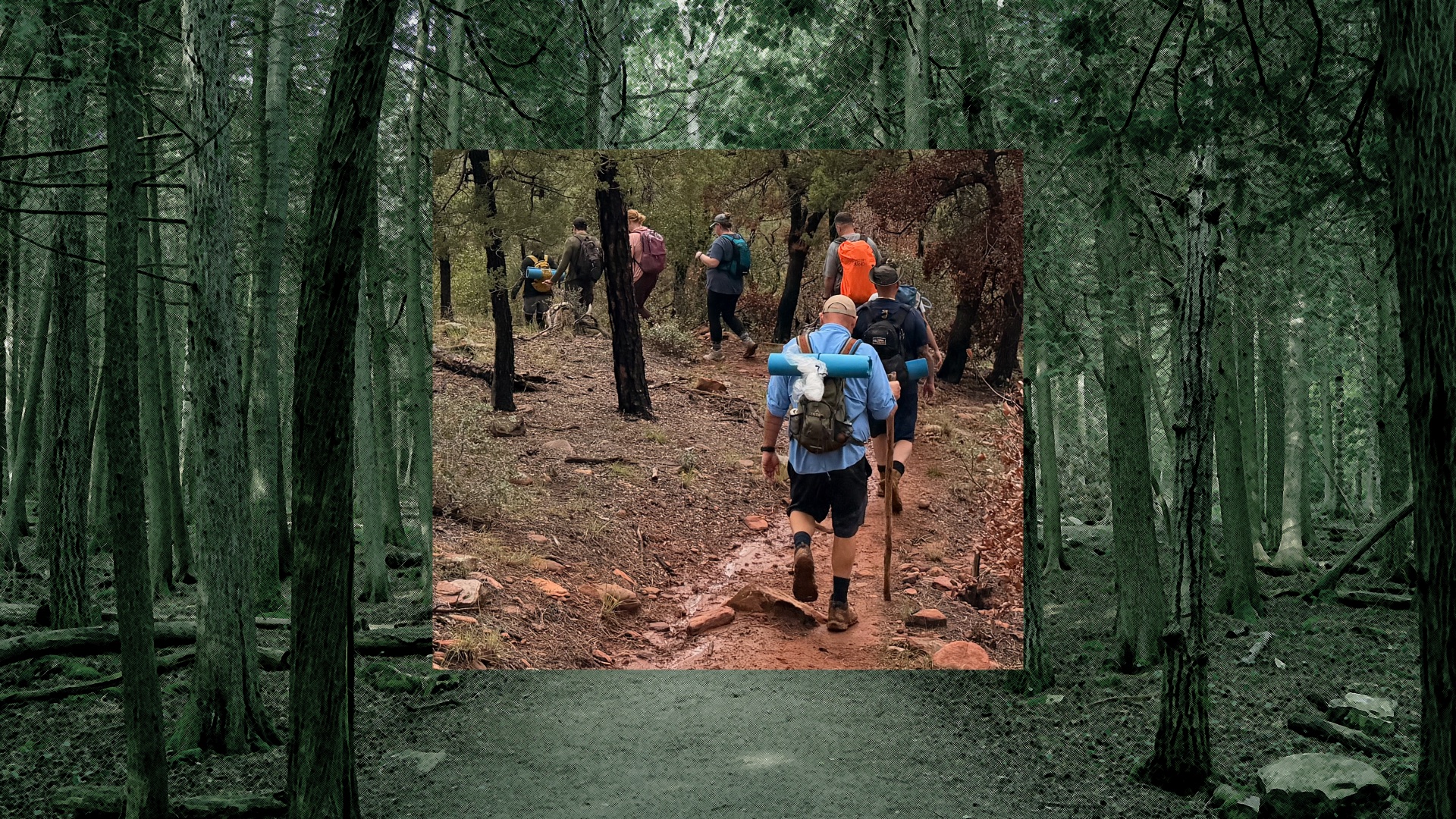
One of the Pat Tillman Center’s most unique offerings is a program called Treks for Vets, which involves leading a group of student veterans in a rigorous, multi-day hiking trip. Banzhaf was part of a team that started the program after participating in a similar one with a Colorado-based nonprofit, Huts for Vets. He spent four, ten-hour days in the Aspen Mountains, climbing between 9,000 and 12,000 feet in elevation, and found the experience as rewarding as it was exhausting. In the wild he learned he hadn’t resolved his trauma from the war as completely as he’d thought. 

Back at A.S.U., Banzhaf was committed to helping recreate the opportunity for his students. Now, twice a year, he takes a group of seven to 10 A.S.U. veterans to a base camp in northern Arizona for four days of trekking — and then some. The students do readings and discuss them together. They relish in nature, disconnected from technology. They participate in morning Qigong, a meditative movement practice. They eat nourishing meals.

The bonds that form during this time are not so dissimilar from ones formed in military service.

The bonds that form during this time are not so dissimilar from ones formed in military service, Banzhaf said. In both contexts, participants are pushed together in a uniquely close way and made vulnerable by grueling exercise. An important differentiator is that, on Treks for Vets, students have the opportunity to be open, whether on the trail or in organized conversations, about some of the most challenging and raw elements of their service. There’s no rank or title here, Banzhaf likes to remind them. 

“All of a sudden these hard chargers that are used to not showing any emotion at all, because it could cost you your job or it could show that you’re weak and it could hurt your pride, start opening up because it really, truly doesn’t matter,” said Delaney, who was a participant in Treks for Vets before becoming a trip leader. He’s seen conversation topics run the gamut among his expeditions, though the through-line is veterans being open and connected in a rare and freeing way. Sometimes they talk about combat and trauma. Other times it’s the transition to college. “And that’s fine too,” Delaney said, “because it’s something people have been holding in, and we all sit and talk about it.”

Not everyone signs up for Treks for Vets wanting or expecting more than a camping trip. But most, Banzhaf suspects, “come because they need something.” Maybe it’s a change of scenery; maybe it’s connection or direction or meaning. Students who were contemplating suicide have told Banzhaf the trip kept some them from attempting. “It brought them to a place of hope and encouragement and community and all the things that all of us need anyway, but they just hadn’t found it, yet.”

Banzhaf’s only regret where Trek for Vets is concerned is that it can’t reach more students. Ideally, he said, he’d be running trips four times a year, but without the funding to train new staff, expansion just isn’t in the cards right now. At $15,000 per trip, Treks for Vets ends up eating up about a third of the Pat Tillman Center’s $100,000 annual operating budget, which depends on a per-student stipend from the Veterans Affairs Department. The university covers salaries for staff, but there’s always room for more. Where the V.A. recommends universities hire one School Certifying Official per 125 student G.I. Bill users, Banzhaf has just eight, attending to thousands.

The limitations on staff make the strength of connections among students that much more important. Delaney believes he’s never felt like a “number” among vets at A.S.U. because of the emphasis on peer support. In his first fall, it was students — some working for the Pat Tillman Center; others not — who were often his confidants to learn about new opportunities for military-connected students or talk through challenges. This semester, Delaney and a friend from Treks for Vets buddied up to take all the same classes after learning they share the same field of study. “We know who the other veterans are when we see them walking down the hallway like, ‘Yep, that guy’s a vet, or that girl’s a vet.’” he said. “You can spot them. That starts the conversation.”

You can reach LearningWell Reporter Mollie Ames at mames@learningwellmag.org with comments, ideas, or tips.

How to Thrive at College with Mathilde Ross

On this episode of LearningWell Radio, psychiatrist Mathilde Ross of Boston University shares wisdom and advice for students heading off to college — and their parents — from her new book, “How to Thrive at College: A Guide to the Ups and Downs of Mental Health on Campus.” Ross’ candid and thoughtful account of her work with young people is at once surprising, instructive, and hopeful.

Listen now on Spotify or Apple Podcasts.

You can reach LearningWell Editor Marjorie Malpiede at mmalpiede@learningwellmag.org with comments, ideas, or tips.

Becoming a Better Version of Myself

I can still remember the suspense that I felt while sitting there at the desk in my dorm room during my first year in our nation’s capital. I looked out over the Potomac River, to the Lincoln Memorial and Washington Monument beyond, at a view that inspired me to do great things in the service of others. My long-held dream had supposedly come true: I was finally studying politics at Georgetown University. I thought that I had done everything “right” to lead me to that point. I had studied hard, volunteered on countless campaigns, been a good friend, and listened intently in class and at church. Yet I could not help but be overwhelmed by a sense that by crossing through the front gates of Georgetown’s campus, my life at home with my family and friends, shaped by a desire to make my community and the world a better place, had come to a close. A new life seemed to have begun. But making the most of a new life, in a new place, with new people, is a big task. I asked myself: Was I up for the challenge? What kind of person would I become?

Before I knew it, I met the best people to help me explore these big questions, and I learned that I was thinking about my calling at Georgetown all wrong. Spending time with my residential minister, Fr. Christopher Steck, working for the Jesuit community on campus, and heading on retreat taught me that my time at Georgetown wouldn’t be a time for reinventing myself but instead a time for refining who I was, whose I was, and what I was called to be. I will forever be grateful to Georgetown for “meeting me where I was” in this regard. I had resources in my dorm (a residential minister), on campus (a robust campus ministry and a meaningful employment opportunity), and beyond (a dedicated retreat center) to help me take stock of where I had been, where I was, and where I was called to go. 

My time at Georgetown wouldn’t be a time for reinventing myself but instead a time for refining who I was.

Through this discernment, I realized just how big of an adjustment coming to college really was, no matter if I had moved across the state or relocated across the world. It was time in which I would have to build a new network of supporters to celebrate with in times of triumph and to lean on in times of need. Yes, it would be important to make new friends and get involved in extracurricular activities, but it would also be important to find new mentors to guide me through this time in my life, whether they were in my shoes three years ago or 30 years ago. I found a role model in an upperclassmen leader of one of my favorite clubs, the admissions ambassador program. I found a space for solace with a professor who taught us her favorite stories from New York City in between recording book reviews for NPR. I found a springboard for ideas and decision-making in the priest of the neighboring parish who challenged me to consider the person I was and to develop different parts of my personality. 

One of the most crucial guides along my journey was our vice president for student affairs, Eleanor Daugherty. “Dr. Elly,” as I came to call her, taught me that making the most of my experience wouldn’t mean doing everything or doing the “right” things but making the experience better for myself and for others. By investing in this place like my mentors, professors, and peers were investing in me, I would make “the Hilltop” my home. This involved the tremendous opportunity to work alongside Dr. Elly and her team in Student Affairs on efforts to make communities across Georgetown feel a greater sense of inclusion. Whether entering into dialogue with students regarding what they needed to have more comfortable facilities on campus or expediting the implementation of gender-inclusive housing (not in spite but because of our Catholic and Jesuit mission), we have worked to make more people feel like they belong. That, in turn, is how I found my sense of belonging: by working to build and strengthen communities on our Hilltop and beyond.

By investing in this place like my mentors, professors, and peers were investing in me, I would make “the Hilltop” my home.

Now in my senior spring, as I prepare to graduate, I am happy to report that I did not become a new person during these four years. Instead, I became a smarter, kinder, more worldly, and harder working version of myself. Georgetown provided the people and the opportunities for me to discern just who I was and what I was called to be at my university. I pursued lifelong dreams, like working on Capitol Hill and studying abroad under the Tuscan sun, and picked up new practices, like caring for our bulldog mascot Jack and advising a university administrator. But I also left some things behind, all the while curating, not creating, my most joyful, authentic self. Through this process, my college experience was not transactional but, rather, transformational. This transformation was not unilateral, though. As I was becoming my more authentic self, I was helping my university to more authentically live its mission. 

Institutions of higher education can help students flourish by providing spaces for reflection and growth. These institutions can flourish, too, if they reflect upon their adherence to missions, open themselves to student and stakeholder feedback, and enable these groups to help in creating real change on campus. Even though I am filled with gratitude for my time as a student on the Hilltop, I hope that these are not the best four years of my life. In that same light, I hope that these are not the best four years for Georgetown. Instead, I hope I remember this as an informative time, full of high highs and low lows, when a new network of support formed around me in the shape of tremendous friends and mentors. A time when I learned not to be afraid to be myself and I found those who embraced me. A time when I learned to be present, to be patient, to trust, and to grow, and hopefully imparted these lessons onto Georgetown, too.

Michael C. Woch is a senior at Georgetown graduating this spring.

Learning Away  

It was senior night at one of the last home basketball games of the season at Simsbury High School. Just before tipoff, Emmanuel, one of the team’s captains, stepped onto center court amidst the roaring applause of his family, friends, teachers, and teammates.    

The team didn’t come away with a victory that night, but for Emmanuel, it was another step in a remarkable journey. At 13, he left his home in the Bronx to live at the Simsbury A Better Chance (ABC) House and attend Simsbury High School in Simsbury, Connecticut, a quintessential New England town that is predominantly white and affluent.

A Better Chance is a national program promising middle and high students, both boys and girls, from historically underserved communities the opportunity to attend high-performing independent day schools, boarding schools, or community school programs (C.S.P.) throughout the country. Its mission is to give deserving students access to high-quality transformative educational opportunities that support them in reaching their full potential and substantially increase the number of well-educated young people of color prepared to assume positions of responsibility and leadership in American society.

Founded in 1973, the Simsbury ABC program is a C.S.P. for boys and is known by the stately brick colonial located at the center of town, called the ABC House. The boys live there five to eight at a time with resident directors and a resident advisor. The resident advisor runs daily study hours to help the scholars complete their class homework/projects and prepare for tests. Additional academic advisors assigned to each scholar provide guidance on courses, extracurricular activities, or volunteer passion projects over their four years at Simsbury ABC. Each scholar is also matched with a Simsbury host family with a son in his same class and with whom he spends one weekend a month. 

At Simsbury ABC, the scholars experience far more than a chance to attend a better school with a stronger path to college. What they learn navigating high school away from home, and immersing themselves in a community vastly different from their own, prepares them for success in life as well as school. Indeed, the resilience and persistence these scholars exhibit make them excellent candidates for colleges and universities hoping their students will thrive.  

A House and a Home 

Sheri Eklund and her husband Jae have been the ABC House resident directors for the last four years. They live in an apartment connected to the main house, though they spend most of their time with the boys, getting them on the bus, driving them to sports, and eating dinner with them every night at 5:30 p.m. On a typical night, the boys line up at the buffet, pile their plates with the home-cooked meal the ABC House chef has prepared for them, and assemble around the oversized dining room table. 

As Eklund described: “It is that one time of day between after-school activities and before mandatory study hours when everyone is together.”

Eklund, who is a pediatric nurse practitioner by training, is both pragmatic and warm. Her affection for, and protection of, the boys in her care, is evident. In talking about them to others, she leads with their strengths and their hopes and says even she is not fully aware of the challenges they may have faced in their young lives. As resident director, she is both parental figure and advocate, whether getting resources together for a boy to pursue a particular sport or hobby or meeting with the high school principal about any issues of concern. 

Her approach to supporting the scholars is, not surprisingly, straightforward. “These guys should have every opportunity to do what they want to, just like every other student in this town,” she said. 

The resilience and persistence these scholars exhibit make them excellent candidates for colleges and universities hoping their students will thrive.  

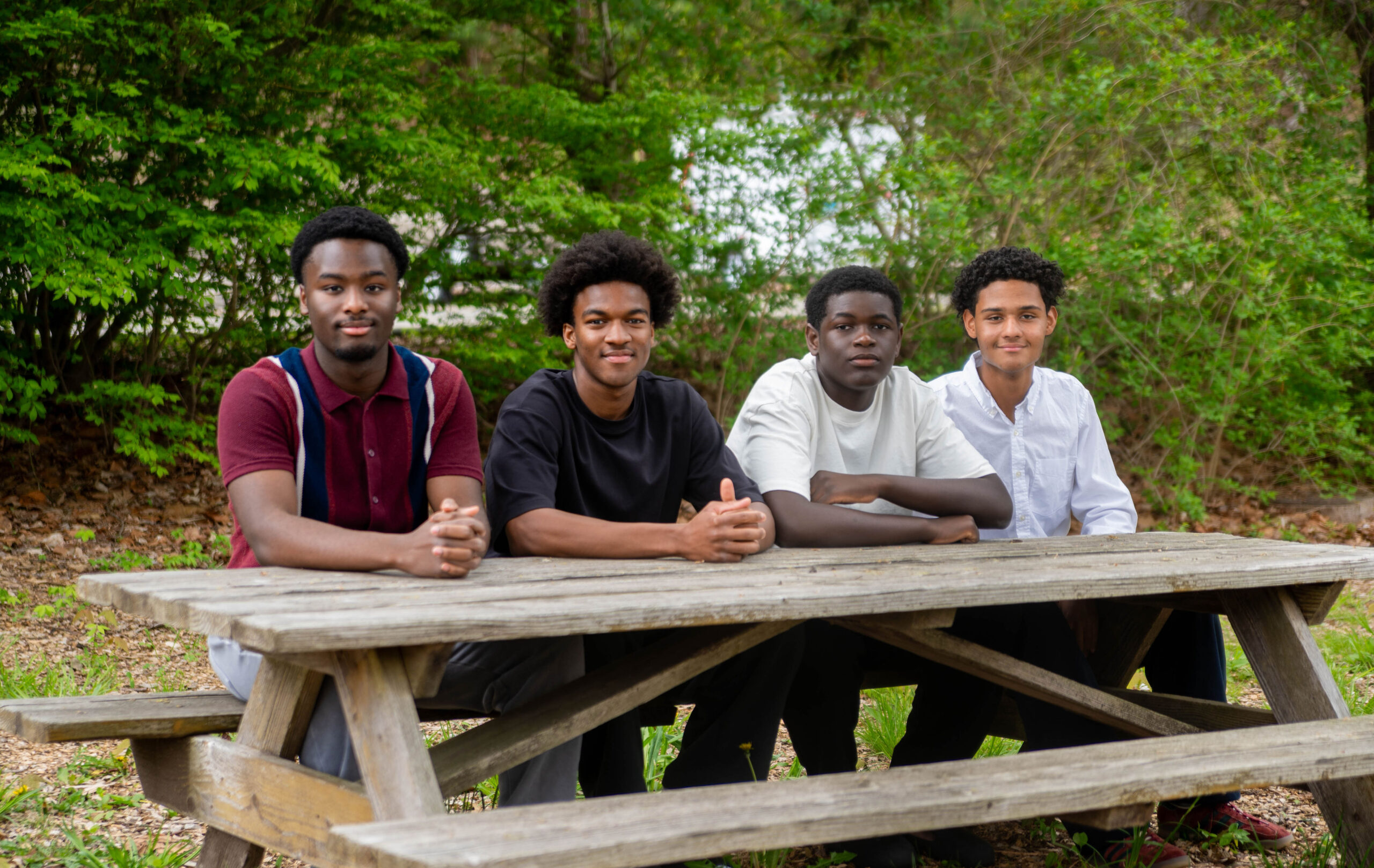
On one particular Tuesday, over their “make-their-own” quesadillas, the boys talked about how it is they came to live at the ABC House. Of the current scholars, Emmanuel, Isaias, and Julian are from New York City; David is from Maryland, and Joakim is from nearby Hartford. They all said they are in Simsbury because adults in their lives envisioned a different educational path for them. It is hard to believe their belief in themselves didn’t also contribute, but for now, they are happy to talk about others who are responsible for their participation.    

Emmanuel’s mother insisted he not go to the high school all of his friends were planning to attend in the Bronx. David, a junior, had a similar story: His dad had found the program years earlier for his older sister and encouraged him to leave Baltimore for his high school years so he might get into a good college, as she had.  

Isaias, a freshman who has only been at the House a few months, left New York City for Simsbury after only two years in the country. Having come with his family from the Dominican Republic, he had been performing well in bilingual classes (Spanish and English) when his teacher encouraged him to take a monolingual track (English only) for eighth grade. When Isais continued to do well, she suggested he apply to the ABC program, a decision his family strongly supported.  

Later, Eklund explained that the boys come to the program for a variety of reasons, starting with the program’s premise — to get a higher quality education. But, having gotten to know their families, Eklund said it’s about more than just escaping something that doesn’t work.  

“Most of the families are first-generation immigrants, many directly from Africa, and they have a culture where there is an expectation that they will send their children somewhere where they will do their best. It’s very different from what we often think of here, which is, ‘Oh, I could never send my kid away.’”  

While the boys no doubt appreciate the good intention, they are honest about how difficult it was at first to leave their neighborhoods. Isaias is still adjusting to a new school and being away from his friends who played pick-up soccer and welcomed him into their community when he arrived in the country. Starting again is hard, but the other boys in the house are supportive, knowing full well how he feels. He recently joined a soccer club, which the Eklunds arranged for him with funds from the program. 

Sports is a common channel for belonging for any teenager, particularly for the ABC scholars. “Freshman year, I didn’t play a sport, so I didn’t really have anything to talk to anyone about but school,” said David, who now fences and rows crew. “But when I started playing sports, I started making more connections, and it all made more sense to me.” 

For Emmanuel, the combination of leaving his friends behind and worrying about making new ones was initially tough. “I was in the Bronx my whole life, and my friends and I, we were going to stick with each other, and then I was the one going away. When I got here and went to my first day of school, I saw only three or four people that looked like me.” 

Emmanuel said it’s now hard to imagine those days, as he prepares to graduate with what he called “some of the best friends of my life.”  

“I think if you put yourself out there, you’ll find you have more in common with people than you think,” he said. “I have great friends. I don’t have a really big circle like some people do, but I think having a small circle of really good friends is better.” 

David, too, has found his footing. He sees his time at Simsbury High School as a series of learning experiences, all leading to knowing who he is as a person. “All I knew was what life was like for the first 14 years of my life in Baltimore, and then when I saw how people acted here, my first instinct was to be more like everyone else. But when you do that, it becomes really apparent how different that is from who you really are.”   

The level of maturity the boys exhibit is the first clue to the impact their experience at the ABC House is having on them. With a fair amount of independence (like doing their own laundry and walking down the street for Chinees food), they are held accountable not just for their behavior and their grades but for how they contribute to a household of different people with a healthy number of rules.  

“Sometimes, I’ll think, ‘Oh no, I can’t get along with this guy,’” Emmanuel said. “And then it all works out.” 

“Yeah,” David added. “We all come from different backgrounds and have different personalities, but we definitely get along. We just have to solve stuff.” 

While it may be challenging at times, the boys in the ABC House regularly form a strong bond and a common commitment to who they are as ABC scholars. “If I had to come up with one way to describe them, I’d say they are like brothers,” said Kara Petras, a Spanish teacher at Simsbury High School and a board member at the ABC House. “They are a nuclear unit, but they are always folding in new kids and including the other boys in these new friendships.” 

Petras has had several ABC scholars in her class and, as a long-time volunteer at the program, gotten to know many of the boys over the years.  

“I’m like their mom at school,” she said. “We’ll start a group text at the end of the day for anyone needing a ride home.”  

Petras first learned about the ABC Program when she was in high school in Massachusetts and made friends with some of the girls who participated. Getting to know other people her age of a different culture had a major influence on her. She believes the same is true of how the ABC scholars contribute at Simsbury High School.  

“They carry with them the reputation of the ABC House in how they behave, and I think that rubs off on people,” she said. “They take their classes seriously. With their work ethic, their attention to detail, and their willingness to stay after school, you can tell they have a lot more skin in the game than a regular high school student. They are the kind of students you want your own kids to be.” 

It’s accolades like these that Eklund draws on to lift her spirits whenever she hears comments that reveal a lingering bias.

“When I tell people what I do, I get a lot of, ‘Oh, that must be really hard.’ People will ask me, ‘How do they do in school?’ or ‘Do you have to deal with a lot of behavior problems?’ I just tell them these kids are here for a reason. They’re great students; they do well in school.” 

The current residents of the ABC House said they find Simsbury to be a welcoming town, if different than what they are used to. And it is clear that those who run the program are all acutely aware of the need for the boys to feel they belong in order to do well. The host family model has resulted in life-long mentors and friendships. And in a classic it-takes-a-village approach, there is a strong circle of support that includes school counselors, coaches, teachers, and volunteers — all with eyes on the boys as they live, learn, and grow.

Hopes and Dreams 

On a Sunday afternoon in the ABC House living room, the boys talked excitedly about college and what they will do afterward. Isaias has his sights on N.Y.U., having heard they have an excellent transportation program, a combination of mechanics and engineering. David is also interested in mechanical engineering, in part because he has always been good at math. Emmanual dreams of being in sports marketing but will major in business generally as to not limit his choices. He is just now deciding which of the accepted colleges he will attend. No doubt his love of basketball will follow.   

True to its goal, the ABC House boasts alumni who are an impressive array of professionals and graduates, with more than 95 percent of participants going on to college. At the ABC House in Simsbury, alumni regularly return and are on a quarterly Zoom call where they mentor the boys on academics, college prep, or just life at Simsbury High. Seeing themselves in these professionals gives the current scholars the inspiration to pursue the road they are on and to appreciate what it might be teaching them, even if they don’t always realize it.  

“We hear all the time from the guys before us that even though we go to the same school as all the other kids, living in this house gives us a big leg up on college,” David said. 

With end of year approaching, the ABC scholars and alumni will be taking another step in their journey. The current residents will be heading home for work, summer courses, or preparing to leave for college. Some of the boys who came before them will be graduating from college; others are out of school and will keep in touch as mentors. Their individual success is the ultimate goal of the support team that has watched them grow in remarkable ways.  

Asked what she appreciates most about her experience at the ABC House, Eklund said, “The human spirit of all of it: meeting the families, making our mission work — not just with education but with everything — and seeing them grow and following them through and letting them know, ‘You guys are going to be successful. You are going to be great leaders in your communities.’”

You can reach LearningWell Editor Marjorie Malpiede at mmalpiede@learningwellmag.org with comments, ideas, or tips.