Jumping In

On a weekday morning during spring break, a group of first-year and second-year college students gathered around a patient whose condition began to change. The patient’s blood pressure was rising, breathing growing shallow. Sudden drooling. 

It wasn’t a real patient. Behind the scenes, an instructor controlled the simulation using a mannequin. But the patient’s recovery wasn’t the point. The students’ introductory glimpse to the field of medicine was.

For some students, this might have been a confirmation: Yes, this is exactly what I want to do. For others, the realization could have been a cooler response, which would be just as important: Maybe this isn’t for me.

That moment — of clarity, uncertainty, or recalibration — is what Tufts University hoped to spark with its new JUMP-IN pilot program, a weeklong, immersive experience designed to help primarily first-year and some second-year students step, however briefly, into the lives they think they want. Ask a room full of first- and second-year college students what they want to do after graduation, and many will have an answer: Doctor. Lawyer. Engineer. Ask them what those jobs actually look like, day to day, and the answers may resemble vague impressions, a composite of jobs observed on television and heard about through friends and relatives.

This gap — between aspiration and understanding — is not just anecdotal. Surveys from organizations like the National Association of Colleges and Employers (NACE) and Gallup have consistently found that while students feel pressure to choose a career path early, many lack meaningful exposure to what those careers entail. At the same time, research suggests that students who engage in experiential learning — internships, simulations, project-based work — are significantly more likely to feel confident in their career choices and to secure employment aligned with their interests after graduation. In other words, it’s not just about choosing a path. It’s about trying it on to see how it feels.

“We wanted students to begin to think about linking their interests to their academic learning to their career goals,” said Ellise LaMotte, the associate provost for student success at Tufts. The goal is not to arrive at definitive answers in a single week, but to develop the tools — and the self-awareness — to start asking better questions.

And just as importantly, students are encouraged to recognize when the answer might be, no thank you. “We did not want this program to just confirm what students already thought,” LaMotte said. “If someone came in thinking, ‘I want to be a doctor,’ and left realizing they didn’t —that was just as powerful.”

Learning by Doing 

Each JUMP-IN participant spends the week in one of five tracks, including pre-med and dental pathways as well as global policy, nutrition, and engineering-focused design. What unites them is a commitment to experiential learning. “The charge was that this needed to be hands-on,” LaMotte said. “The majority of the time was spent with them doing something.” 

In the Design Problem Solving (D.P.S.) track, that meant building structures out of melting Oreos — an exercise in material constraints and creative thinking. It meant working with modeling software, experimenting with 3D printing, and tackling real-world challenges. An open deck on top of the Tufts library was enclosed in glass so that it would be a safe place for students. But that design choice had an unexpected consequence: Birds were now flying into the glass. “One of the design flash challenges was: How can these students in this D.P.S. program for the week help to give some solutions to this problem?” LaMotte said. “So, it was a little tech heavy. But if you are somebody curious about how to solve problems, it would be appealing.”

For some, the experience was exhilarating. For others, it was clarifying in a different way. “There were students who realized, ‘This is harder than I thought,’ or ‘This isn’t what I imagined,’” LaMotte said.

In Global Policy Lab, students became senators in a climate policy simulation, debating legislation on a mock Senate floor at the Edward M. Kennedy Institute for the United States Senate in Boston. They explored the role of drones in international security and engaged with local officials on immigration policy. 

In the Pre Med Connect track, students practiced suturing and patient care, responding to dynamic simulations that required quick thinking and teamwork. In the Dental Bridge track, students performed tooth wax-up modeling, simulation shadowing, suturing, and align impressions. In the Beyond the Plate track, students conducted “nutrition myth labs,” explored food systems, and visited facilities researching lab-grown meat. Across all tracks, students were asked not just to absorb information, but to apply it — to make decisions, test ideas, and reflect on outcomes.

For some, the experience was exhilarating. For others, it was clarifying in a different way. “There were students who realized, ‘This is harder than I thought,’ or ‘This isn’t what I imagined,’” LaMotte said. “And that’s valuable.”

Building Belonging through Shared Exploration

If JUMP-IN is about career exploration on the surface, it is equally about something deeper: connection. The program, piloted this spring break with 94 first-year students, was intentionally designed to reach those who may not yet have found their place on campus.

“Some of them knew each other,” LaMotte said. “But there were some who didn’t know anybody — and those are the folks we really, really wanted to get in touch with.” The challenge is a familiar one. The first year of college is often framed as a time of discovery and belonging, but for many students, that sense of connection doesn’t come easily. Social circles can feel closed, academic interests uncertain, and the path forward unclear.

From the moment students arrive, the program nudges them toward interaction. They are encouraged to sit with people they don’t know. They work in teams. They share meals, experiences, and, by the end of the week, reflections.

Even small moments matter. On the first day, one student resisted moving from a table where he sat alone, confident that others would eventually fill the space, and they did. Over the course of the week, LaMotte watched him gradually open up — participating more, volunteering, engaging in ways he hadn’t at the start.

Those shifts, while subtle, are central to the program’s purpose. By the end of the week, 96 percent of participants said they would recommend JUMP-IN to a friend, citing connection and community as key reasons. And perhaps more significantly, 84 percent reported feeling more comfortable reaching out to mentors, advisors, or faculty — a critical step in navigating both academic and career pathways.

Measuring What Matters

By traditional academic standards, a weeklong program like JUMP-IN might be difficult to evaluate. There are no grades, so the metrics that matter are different: curiosity satisfied, realism gleaned. It’s hard to measure some shifts in attitude because they might only appear downstream later — in the form of keeping one’s eyes open more keenly or an increased willingness to make inquiries of someone who does something you just might want to know more about.

At the most immediate level, student feedback has been overwhelmingly positive. In addition to the 96 percent recommendation rate, students reported gains in career clarity, networking skills, and confidence in seeking support.

Thirty-two percent said the program led them to change their academic plans — a striking figure for a cohort just beginning their college journey. Another 38 percent reported feeling better equipped to leverage networks and support systems. Even exposure to research — a domain often reserved for upperclassmen — emerged as a meaningful outcome, with 17 percent of students reporting new experience in that area.

But the longer-term measures may prove even more significant. Tufts plans to track JUMP-IN participants and their progress over time, examining retention rates, academic trajectories, and career outcomes. Do students who participate feel more connected to the institution? Are they more likely to persist, to pivot when needed, to engage with mentors and opportunities? “We want to follow them along their path to figure it out,” LaMotte said. “They were in the JUMP-IN program and were interested in engineering; now they’re in political science. Why did that happen? Without surveying them to death, we would like to determine if JUMP-IN helped them make that change. Did they get support they need to be successful?” 

Lessons from the Pilot

Like any new initiative, JUMP-IN’s first iteration revealed areas for growth. The first was critical: using faculty to design and lead the program. “It took us a minute to figure out that faculty needed to run this and not staff. And once we made that decision, it made more sense because this is their area of expertise. Once we got faculty involved, we were able to really develop programming.” 

The most consistent feedback from students was the need for more unstructured time. The schedule, while engaging, was also intense. By midweek, small signs of fatigue had set in. “It was too structured,” LaMotte said. Future versions of the program will likely include more downtime and social activities — opportunities for students to build relationships outside of formal programming. “We need to give them more time to just connect and be with each other.” 

There were also logistical challenges, from coordinating transportation between campuses to managing meals while the campus is closed. But these are solvable problems, LaMotte noted, and, in some ways, evidence of the program’s scale and ambition.

Demand exceeded expectations, with 124 students applying for 100 spots. Plans are already underway to expand the number of tracks and increase capacity.

Perhaps the most ambitious aspect of JUMP-IN is what comes next. The program is envisioned not as a standalone experience but as the first step in a four-year developmental arc. Tufts plans to introduce sophomore, junior, and senior versions of JUMP-IN, each tailored to students’ evolving needs.

The first-year program focuses on exploration and connection. Future iterations may emphasize deeper skill-building focused on leadership, entrepreneurship, negotiation, navigation, along with civic impact and career development.

“We want it to grow with students,” LaMotte said, “and integrate JUMP-IN into the ethos of the undergraduate experience at Tufts.” 

In that sense, JUMP-IN reflects a broader shift in higher education — from viewing career development as a late-stage concern to embedding it throughout the undergraduate experience.

Capping the week, LaMotte was gratified to find the best evidence of the program’s success: In a session at the end where participants broke into sub-groups to share experiences, there was a buzz of animation in the room as students reflected on: what brought them joy, if their career focus changed, what skills they need to learn next, and how Tufts can further support them. For some, the experience reinforced a sense of purpose. For others, it raised new questions. But for all of them, it transformed an abstract idea — being this thing — into something tangible, complex, and real.

That transformation may be the most valuable outcome of all. Because the goal of programs like JUMP-IN is not to provide answers but to create encounters with possible futures and versions of themselves. In a higher education landscape increasingly defined by uncertainty, that kind of clarity — earned, and personal — may be just what students need to begin.

Learning from Despair

On a Monday evening in March, a few dozen students at the University of Pennsylvania trickled into a darkened classroom. Their professor, Justin McDaniel, greeted them at the front of the small lecture hall with two reminders: to pass in their phones and pick up the books they’d be reading that night. As the group traded in their tech for texts, McDaniel introduced their first author: Carson McCullers, a literary prodigy who wrote her first masterpiece at 23 and was dead by 50 following lifelong illness and chronic alcoholism. McDaniel said she was his “biggest crush” growing up. 

This is the tenth year that McDaniel, the chair of Penn’s religions department, has taught Existential Despair, a literature course that meets once per week for seven hours straight. Between roughly 5 p.m. and midnight, students typically hear a lecture on that day’s writers before settling in to read a book (or three) about human despair and concluding with group discussion. The lights in the room go off during those 11 p.m. conversations. No devices are allowed, ever. Only McDaniel knows what the reading will be before class starts. The rest can only expect it to be depressing.

Those skeptical that any students would be drawn to this dark experience will be shocked to learn it’s one of the most sought-after classes at Penn. This semester, McDaniel said, he fielded more than 500 requests — 80 more than last year — to fill 45 spots. The course’s general mystique no doubt contributes to its appeal, as would the lack of graded assignments. Arguably the most discussed reason for the class’s success has been its format forcing Gen Zers, with their ever-shrinking attention spans, to “read again.” But the urge to reclaim a childhood love of reading may offer only a partial explanation. By embracing a new and unusual approach to learning, and maybe even living, students are participating in an intensely present and explicit quest for meaning.

Choosing Despair

Students in Existential Despair read provocative texts from around the world and across time periods — from McCullers’ “The Ballad of the Sad Café” to contemporary French novelist Marie NDiaye’s “Self-Portrait in Green” — whose central experiences with despair compel readers to turn inward. In contemplating characters’ struggles with isolation, anxiety, and grief, McDaniel’s students end up questioning what they themselves want from this short and often cruel life. What really matters to them? And who do they want to be?

When he first started teaching Existential Despair, McDaniel was already well aware of young people’s hunger for meaning. For one, he’d devoted part of his own 20s to living in remote Thailand as a Buddhist monk. More recently, over the last 24 years and across three universities, he’s taught another unconventional but highly popular course, Living Deliberately, which is an introduction to monasticism. In addition to weekly lectures, the class requires students adopt certain elements of the ascetic lifestyle, like waking up at 5:30 a.m. and adhering to restrictions in their dress, drinking, and communication. For one month, they make a vow of silence, meaning no speaking or technology use whatsoever.

The last time McDaniel ran Living Deliberately, there were 200 people vying for 14 openings. He characterized the applicants as typically non-religious but envious of those who are, and looking for “something real and something dedicated” to guide their lives. “In a chaotic world, in a very highly competitive world,” McDaniel said, “students often seek order; they seek predictability.” 

Young people don’t want to simply settle for a fate that’s defined by “joining this club, aiming for this promotion, deciding on the Lexus versus the Acura.”

Increasingly, students’ reasons for enrolling in Existential Despair seem to mirror those for Living Deliberately. In the beginning, McDaniel said, he chalked up the interest in Despair mostly to its “weird and cool” structure — the midnight meetings, the lack of syllabus or tests or papers. But lately, he’s noticed a particular drive among students to be better read and to get off their screens. They seem eager for a new and more purposeful way of engaging with the world. 

Kayla, a senior taking Existential Despair this semester, said she was first pulled toward the class because it was as different a learning experience as she could imagine. With an eye toward her impending graduation, the engineering major had been feeling herself “grinding away” and wondering whether there wasn’t more she might want from her life. For the last year and a half, she’s gone as far as to embark on what she called a “personal crusade,” trying to rediscover old hobbies, including reading, and reduce her technology dependency. “Just because school is a little soul crushing,” she said. She’s just recently traded in her iPhone for a flip phone. 

Existential despair, as a phenomenon, is one way of framing this kind of restlessness with the status quo. We all confront the precarity of our mortality at some point, McDaniel said, adding that Buddhists believe life is just a series of distractions to avoid that most fundamental and disturbing truth. “Because we know it’s just getting up, eating, and going to sleep. We kind of know it,” McDaniel said. “And that’s why we’re desperate for gossip or we’re desperate for award shows.”

But the Kaylas of the world aren’t ready to cede their lives to the distractions. She, like many of McDaniel’s students, would rather pull back the curtain on the darkness of being alive and learn to sit with those feelings. Because, however unsettling, wading in promises something elusively more meaningful than turning away. Especially as they move further into adulthood, McDaniel said, young people don’t want to simply settle for a fate that’s defined by “joining this club, aiming for this promotion, deciding on the Lexus versus the Acura.”

Technology is of course one of the most obvious distractions for college students. And with the rise of A.I., they’re seeing the online universe expand at the same time that it seems to be becoming less trustworthy. “I’m not disturbed because I don’t trust it at all,” McDaniel said of the internet. “But they actually do trust it. And so for them, it’s like you’re taking away the world.” That’s part of the reason he thinks they want to invest more in their physical reality. “I think it’s really, really hard on them, and they’re craving, craving for something genuine.”

At Penn specifically, many who come into McDaniel’s class are also contending with the weight of an omnipresent achievement culture. Kayla spent the last four years devoted to her studies and chasing success in preparation for a career she isn’t sure will make her happy anymore. Grace Burke, a current first-year in Existential Despair, had been struggling to adapt to what she called Penn’s East Coast focus on “what you do,” as opposed to her own Mid-Western mindset that prioritizes “who you are.” In her first semester, she was rejected from all the extracurriculars she hoped to join and watched as her nice new friends seemed to be consistently more successful. “I just was very confused — found myself very lost — in what’s important about my identity in a very new place and environment,” she said. She’d started to question whether she was even at the right school.

Finding Humanity

In many ways, Justin McDaniel could be a character in one of the novels he teaches, starting with the fact that he’s, well, complicated. At first glance, his all-black uniform, resistance to eye-contact, and intense intellectuality might make him seem the quintessential brooding Ivy League philosopher. But as is so often the case, there’s more to uncover from there. His office door, for example, is the only one in its hallway covered in a colorful smattering of sticky notes, printed-out poems, even an endearing meme. Inside, his space overflows with floor-to-ceiling books and art. As a lecturer, he walks around the room engaging his audience in an excitable manner that often involves cursing about authors and/or students. “I see blank faces,” he said after introducing one writer in particular. “Oh fuck. Oh my fucking God. I’m about to get so angry.” He wasn’t, really.

For some, McDaniel’s unapologetic, unfiltered way of being and teaching is refreshing; for others, it’s off-putting. In Existential Despair, his irreverent commentary tended to elicit chuckles from his audience that sounded torn between entertained and uncomfortable. “I think he’s a very controversial person in general,” Grace said. For her, McDaniel was a main draw to the class because he struck her from the beginning as a professor worth learning from. “He’s very flawed, and we all are, but he’s very candid about it. And I think he would like to show us authors and people who are also very flawed and also very candid.” 

Several students commented on how McDaniel’s authenticity helps build an environment where everyone can let their guard down — where there’s not as much pressure to be or act the smartest. In interviews with course applicants, for example, he doesn’t seem interested in assessing their intellectual prowess. Instead, he asks them to create a drawing based on a poem he reads to them or to write a poem on the spot themselves. The general unpredictability of the class — the fact that students don’t know what they’ll be reading — also means they couldn’t prepare if they wanted to. They just have to be. Sometimes McDaniel makes other changes without notice. Once he held the entire session in silence. Another class they spent in a cemetery.

The books, though, are the primary teacher in this course. McDaniel’s bet is that by delving into the experiences of some of the most troubled characters in some of the darkest literature, students will gain perspective on themselves and the world. He’s not suggesting that the novels or authors he selects offer good life advice, just that there’s insight to be found in the human condition. “You learn from when things go wrong, and that’s what good fiction will give you. Film does it well, too, and music does it well. Art does it well. So it doesn’t matter the medium as much. It matters that it’s complex and thoughtful.” 

In McDaniel’s world, the places young people typically seek guidance — like their friends or the internet — will simply never measure up to the wisdom of a whole human history’s worth of art and literature. “I have no idea why you would spend $92,000 in tuition to get life advice from another 19-year-old,” he said. A similar way of thinking can apply to online content. “I can’t trust a video I see on the internet, but I can trust James Baldwin,” he said. “I mean, Somerset Maugham or Sheila Heti on relationships is much better than any junk advice you would get in the manosphere. It’s just better advice, even though it’s a hundred years old.”

“I can’t trust a video I see on the internet, but I can trust James Baldwin.”

Grace said one of her favorite reads in the class so far has been “In Grand Central Station I Sat Down and Wept” by the poet Elizabeth Smart. (Others mentioned “The Passion According to G.H.” by Clarice Lispector, “The Book of Illusions” by Paul Auster, and “A Sheltering Sky” by Paul Bowles.) In “Grand Central Station,” Smart details her obsession with her lover and fellow poet George Barker, with whom she had four children but never married. In total, he had 15 children with four different women, just one of whom was his wife. “It kind of knocks you flat, in terms of who are you to judge?” Grace said of Smart’s book. “She really committed to a path that she felt was right, and she carried that conviction every single day. And there’s just this sort of unwavering intensity to the book that I find really compelling.”

One common outcome for students in the class seems to be a sense of gratitude. For senior Gabe Agüero, the breadth of new experiences and perspectives he’s been exposed to have opened up a range of new possibilities to think about when it comes to his own life. Studying finance and A.I. at the Wharton School, Gabe had been accustomed to defining himself based on the career path, and ideally success, he was headed towards. “This is almost making me realize that there’s more to life and there’s more to appreciate,” he said. “It just kind of made me think more about what do I want for my life? And I still don’t have that answer, but it’s definitely making me reconsider, and it’s allowing me to see what I want my life to be in a completely new lens.”

For the most part, McDaniel said, he has no interest in what, precisely, his students learn. “I have no learning goals. I’m consciously against them,” he explained. Instead of outcomes, he’s focused on the learning process. That’s what education is all about, he insists. “It is about complexity. It is about negative capabilities. It is this conscious and unforgiving and unapologetic exploration of things we don’t know and the desire to keep unknowing.” 

At the same time, McDaniel does have a vision whereby his middle-aged, former students better withstand their inevitable struggles. “I want my students, when they’re 45 or 55, when they’re dealing with a lot of these really existential problems, not to turn towards bourbon or hitting their spouse or screaming at their kids or storming out of a job or getting addicted to opiates,” he said. He imagines when they end up dealing with life’s least comfortable moments, his students might turn to books, or other resources, to move forward.

The most paradoxical aspect of McDaniel’s course may be that the distressing material his students read isn’t making them prone to hopelessness, or worse, defeatism. The effect is quite the opposite. “Some of the books we’ve read are quite disturbing in really sad ways. I’ve cried at some of the books,” Kayla said. “But no, I don’t find it depressing at all, and I don’t know if anyone actually does.” 

“I leave each class either reflective and pensive, or happy.”

You can reach LearningWell Reporter Mollie Ames at mames@learningwellmag.org with comments, ideas, or tips.
Knowing What We Seek 

Happiness today is most often associated with comfort, or momentary pleasure, but our founders envisioned something very different when they drafted the Declaration of Independence. Indeed, “the pursuit of happiness” may be the most misunderstood phrase in the national vocabulary. 

As we approach our 250th anniversary as a country, a new course at Arizona State University aims to clarify the term “happiness” and, in doing so, remind us of the virtuous ideals on which our nation was founded. “What the Founders Meant by Happiness: A Journey Through Virtue and Character” is a partnership between A.S.U. and the National Constitution Center, and course co-creators Ted Cross of A.S.U. and Jeffrey Rosen, the center’s C.E.O. emeritus.  

Based on Rosen’s book, “The Pursuit of Happiness: How Classical Writers on Virtue Inspired the Lives of the Founders and Defined America,” the course explores how the study of classical virtue shaped the founders’ understanding of happiness, character, and civic duty. But in creating the course, Rosen and Cross hoped to do far more than correct an interpretation that has been misconstrued over time. The course engages students in getting to know our founding fathers and mothers who, despite their flaws, made the pursuit of virtue something that would guide the growth of the country.  

The course’s title, “What the Founders Meant by Happiness,” is revealed in the first part of the course, stemming directly from Rosen’s body of work as a constitutional scholar. “The founder’s happiness did not mean ‘feeling good,’ but ‘being good’ — not the pursuit of immediate pleasure, but the pursuit of long-term virtue — meaning self-mastery, character improvement, and lifelong learning,” Rosen said. 

The course draws reflection from learners about how the original meaning of happiness can be held for individuals and society today. 

“We hope that students and learners become reflective on not only what happiness means to them but which of those values and virtues they would like to adopt in their own lives and what implications that may have on how we interact with one another,” said Ted Cross, who leads Principled Innovation,a character education initiative at A.S.U. that places character and virtue at the center of decision-making. 

The open access, online course has 12 modules and is currently available at A.S.U. without credit (though Cross hopes that will change over time) and on the National Constitution Center’s website. Those who complete all 12 modules receive a certificate. The co-creators describe the course as “providing a framework to cultivate civic identity and character at scale, modeling how institutions can democratize character education while reinforcing civic flourishing.”

Rosen said the aim of this course is to shed light on a critical pillar of our democracy: holding dear a common understanding of what it is we stand for.

The second part of the course revisits the founders’ stories — from Thomas Jefferson to Benjaman Franklin to Phyllis Wheatley — revealing their moral sources for recovering happiness as the pursuit of virtue and self-control. Key to this telling is their humanness in borrowing their insights from philosophers like Aristotle and Cicero and their admission that their quest for moral fortitude often eluded them. It was the pursuit that mattered most. Explained in this context, Cross said, the content becomes relatable. 

While it stands on its own from a content perspective, the course itself reinforces the missions of both its founding organizations. As part of A.S.U.’s Principled Innovation, it fits nicely within the character education framework, which has been adopted by A.S.U. President Michael Crow as a foundational design aspiration of the university. The school is promoting the course not just to students but to educators at A.S.U. Prep, the university’s preparatory charter school, and other K-12 educators. 

As the nation’s only institution dedicated to increasing awareness and understanding of the constitution, the National Constitution Center has been marketing the course throughout the country, hoping to attract students and life -long learners alike to engage with all or some of the modules. The course is the latest addition to the center’s growing suite of educational resources initiated by Rosen when he was the president and C.E.O. 

Rosen said the aim of this course is to shed light on a critical pillar of our democracy: holding dear a common understanding of what it is we stand for.

“People should think as they will and speak as they will, but we need models to inspire us,” Rosen said. “We need exemplars. Without a consensus about our heroes, it’s difficult to invite people to envision happiness in this once familiar but now forgotten way.”

The course underscores another important tenant of democracy in America by examining the juxtaposition of freedom and self-control, once again illustrated through the intentions and practices of our founders. “I’ve always believed that democracy depends on political self-government,” Cross said. “Our founders set up a system that has many degrees of freedom, but it depends on individual citizens being able to manage themselves and interact with each other in virtuous ways.”  

The course was launched in February 2026, and the response thus far has been positive, in part due to an engaging storytelling format (a hook Cross said was intentional for younger learners). But time will tell if deeper meaning about virtue and self-control will come through for a generation often criticized as being isolated and self-absorbed. The co-creators believe the lack of moral exemplars this generation has experienced, both in popular culture and leadership, may actually increase the course’s appeal. 

“We know that young people want to be happy,” said Cross, who has taught courses in positive psychology. “My contention is if you learn to be good, you will also feel good, that there is a root to feeling good that comes through character development, purpose, and meaning.” 

Rosen agrees and sees the course as an example of a renaissance of character education in the U.S. 

 “We’ve had a tremendous reaction to the course thus far and we are hoping that this will be part of the movement for the cultivation of virtue that is increasingly strong in America today,” Rosen said. “There’s a hunger for this right now in this country.” 

You can reach LearningWell Editor Marjorie Malpiede at mmalpiede@learningwellmag.org with comments, ideas, or tips.

Stacking Majors in an Age of Anxiety

Julia entered college in 2023 pretty sure of two things: that she wanted to major in either art history or French and that she wanted to study abroad. At the time, her dream career involved working in and around museums. 

Now a junior, she is majoring in both French and art, but considers her third major, business, her “primary field” — and sees going into finance a means to all her desired ends. She regrets that study abroad is no longer in the cards, collateral damage in the struggle to meet strenuous requirements for all three departments. 

“One day when I exit the corporate world and I’ve made enough money, I would love to use my business skills and connections in the art world and be able to travel,” Julia said. “When I got on campus, I started to appreciate that there’s a difference between the things you want to do and the things you actually do so you can someday work in the things you want to do.” 

Her calculation reflects a broader shift taking place on college campuses across the country. The rising number of students pursuing double majors — and sometimes triple majors — has increased five-fold at some universities, as students strive to differentiate themselves in a competitive job market and hedge against an uncertain economic future.

But as students stack credentials, advisors and mental health professionals are raising questions about what may be lost in the process: not only balance and wellbeing but also the exploratory, formative aspects of college that can shape a life and career in less easily quantifiable ways.

The Credentials Arms Race

Some observers note what they call a “credential arms race,” the growth of students accumulating academic achievements to remain competitive. 

Data from colleges across the U.S. suggest that the share of students graduating with more than one major has risen significantly over the past decade. Reporting by The Hechinger Report has documented a wide spectrum of increases: The University of North Carolina at Chapel Hill has seen a 20% increase; Brown University, 97%; Harvard, 334%; and Drexel, a 591% increase.

Administrators acknowledge the trend is part of a broader socio-economic picture: students worrying about job prospects and attempting to increase their career viability and areas of expertise. Students often frame the decision pragmatically; in an era of economic volatility, rising tuition costs, and rapid technological change, pursuing multiple fields of study can feel like a form of risk management.

In an era of economic volatility, rising tuition costs, and rapid technological change, pursuing multiple fields of study can feel like a form of risk management.

But advisors say the motivations are varied, and evolving. Today’s students are navigating a labor market shaped by automation, shifting industry demands, and heightened expectations around early career readiness. Many feel pressure to demonstrate both specialization and versatility at the same time — a challenging balance for anyone, let alone someone still discovering their intellectual interests. And as college costs skyrocket, many feel pressure to make a degree, or degrees, matter as much as they can.

“There’s a sense that students want to keep as many doors open as possible,” said Nigel Richardson, the assistant provost for university advising and student success at the University of Florida. Richardson said he and colleagues increasingly hear from students who arrive on campus already planning to double major or add multiple credentials. “A lot of students are thinking more means better,” he said. “If I have more credentials, that’s going to make me more competitive.” 

Hedging Bets in an Uncertain Economy

Students’ motivations for stacking majors are often deeply pragmatic. Many are aware that the labor market they enter after graduation may look quite different from the one that existed even a decade earlier. News headlines regularly discuss artificial intelligence, layoffs in once-stable industries, and the possibility that workers may hold many different roles over the course of their careers.

Even when students don’t explicitly cite A.I., advisors say the broader sense of uncertainty influences how they approach their education. Richardson noted that students are increasingly thinking strategically about how their academic choices position them for employment. Some combine technical and non-technical fields, pairing disciplines like data science with psychology, economics with public policy, or business with the arts. 

“Students are thinking about covering bases, but they aren’t fully aware of the costs,” Richardson said. “It’s this desire for more, and their answer — in this environment that they’re in and paying for — is another academic program.”

Alyssa, a sophomore at a highly competitive school in the northeast, has always found child studies fascinating. She speaks eloquently about her fascination with what makes children tick and evolve while maximizing their potential. Working with a nonprofit dedicated to the wellbeing of under-resourced children, she said, has always been her passion. But not her current path.

“I always knew I wanted to have a corporate moment first — to have a sustainable lifestyle — and later, after I’ve been a corporate strategy expert, I can segue into being the head of a nonprofit for children, get globally involved. I’m passionate about that work, but I’m more passionate right now about being corporate first because that’s going to make my life way easier to support in the long run.” 

She applied to college with child development as her intended major, knowing it was a less-competitive route into that school. Once she was accepted, she set the groundwork to add a major in business and set her sights on pursuing consulting firms. She just completed a career fair in New York to be introduced to the Big Four, an opportunity she secured by getting involved with her school’s career office early in her first year. 

“You have to do all these things because everyone else is doing all these things. It’s not enough to be a double major. You also have to be in the business frat — which I didn’t get into, after trying three semesters — and minor in Chinese or math or data science and have extra-curricular leadership. Everyone’s just generating anxiety,” Alyssa said. The competitive campus environment she describes is one where students are running on all cylinders to be and do everything, realizing that academic credentials alone may not be sufficient to secure employment. Energy and commitment might be the most valuable resources of all. “You have to be really intentional with your time,” she said. “You can’t risk not succeeding in a course, not graduating on time.” 

When Efficiency Meets Opportunity

Clearly, not all students double major expressly out of fear of job competition and instability. Many are making room for two strong interests. Some have the advantage of arriving on campus with significant numbers of Advanced Placement or dual-enrollment credits. This allows them to fulfill general education requirements quickly — and puts them on an efficient path, if they choose to maximize the use of credits towards multiple credentials for the same time and cost. Others benefit from financial aid structures that cover a set number of credits, encouraging them to maximize the academic opportunities included in that tuition.

In such cases, adding another major can appear to be an efficient use of resources. Students may reason that if they are already enrolled full-time, pursuing an additional field of study adds value without increasing cost. It’s just slicing and dicing your time in a focused way. Some institutions have also designed interdisciplinary programs that make double majoring cover even more ground. 

But efficiency can come with tradeoffs. Richardson introduces students to the idea of a “T-shaped” education — one that combines breadth across disciplines with depth in a particular area of expertise. He cautions that pursuing breadth can sometimes come “at the expense of depth,” limiting opportunities for sustained research engagement or deeper learning within a primary field. The major itself is only one piece of the professional profile, he stresses, along with research, volunteering, and shadowing, all part of a holistic experience. 

“If you’re not going deeper into a topic, you’re not increasing your level of understanding or opportunities for hands-on expertise or fruitful relationships with faculty and classmates. Students might think it’s going to make them more competitive. But they could miss that meaningful engagement that’s expected within each of these respective departments in their pursuit of this double or triple major.”

The Stress of Optimizing

Completing multiple majors calls for careful academic planning — timing when required courses are offered — and a willingness to take on heavy course loads. Students may need to coordinate requirements across departments, enroll in classes offered only once per year, and forgo scheduling flexibility.

Kirsten Behling, the associate dean of student accessibility and academic resources at Tufts University, said her office frequently works with students managing the demands of double majors or combinations of majors and minors.

“Students are generally a little bit overwhelmed with the amount of content that they have to cover and how tricky it is to organize getting into the courses you need when they’re offered,” she said. “With multiple majors, they hit the burnout button earlier. They may think they’re doing O.K., until they aren’t.”

“With multiple majors, they hit the burnout button earlier. They may think they’re doing O.K., until they aren’t.”

Academic coaching services can help students develop time management strategies and adjust expectations when workloads become difficult to sustain. Behling noted that students sometimes feel locked into rigid academic pathways once they commit to multiple programs or realize they have to miss out on certain options. The inability to participate in study abroad or other experiential learning opportunities can be a significant loss, she added, given the role such experiences play in developing independence, cultural competence, and professional skills.

Missing out on options also has a very everyday component: just plain missing out on hanging out. Mental health professionals find that heavy academic loads can reduce the time students have for social interaction, exercise, and rest.

Eric Wood, the director of counseling and mental health at Texas Christian University, said it is logical that students taking on multiple majors feel the weight of increased demands on their time.

“If you’re doing double majoring, you’re doing more courses,” he said. “You have more demand from faculty, more demand from coaches, and less time socially — even less if you also are holding a part-time job.” Wood said concerns about the job market are common among college students, particularly graduating seniors. “I think it’s only natural that they are absorbing what they hear and read about the economy and job market and A.I. and doing everything they can to protect themselves. But sometimes you don’t realize that frantic protection isn’t actually protecting you.”

When students respond to that anxiety by seeking ways to strengthen their academic profile, counselors try to gently remind them that additional coursework is not the only or best path to career readiness. “Some advisors encourage students to consider whether adding another major will genuinely support their goals or simply add pressure,” Wood said.

A Narrowing of the College Experience? 

College has traditionally been framed as a time for intellectual exploration and personal development, as well as career preparation. But students may feel pressure to optimize every aspect of their academic trajectory, leaving less time for activities that contribute to broader growth. Networking events, internships, leadership roles, and collaborative projects often require time flexibility that becomes harder to maintain alongside dense academic schedules.

Behling observes that many students increasingly approach higher education with a highly instrumental mindset. “There’s definitely a ‘means to an end’ mentality,” she said. “I have to do this thing that looks good in order to get this job or this graduate school entry, and sometimes this is emphasized by family, too. If the Tufts experience becomes a means to an end, it’s less about the collegiate, holistic experience — which is something I really believe in — and more the drive, drive, drive to get to the other side of graduation.”

Students are doing what they think they need to do to get a job, Behling said. But that perception may not always reflect employer expectations. Advisors often emphasize that internships, research experience, and interpersonal skills play a significant role in hiring decisions.

Richardson encourages students to ask why they want multiple majors and what they hope those additional programs will accomplish. A second major can contribute to intellectual growth, he advises, but it is not the only way to demonstrate versatility. Often, he finds that students are motivated less by curiosity than by a desire to reduce uncertainty. 

“Oftentimes when I’m having this conversation, what comes out is risk management: ‘I have to have the funds; I have to make sure the doors are opened.’ I often don’t hear much about intellectual exploration, and I try to find ways to help them remain curious,” he said. “There are many different ways to approach their preparation to graduate, which could include multiple majors, but there might be other skills and personal attributes that end up mattering a lot more.”

A Recalibration of Success

The rise of double and triple majors suggests that students are responding actively to changing expectations about education and employment. Yet advisors emphasize that academic credentials represent only one dimension of readiness. Relationships, experiences, and intellectual curiosity often shape opportunities in ways that transcripts alone cannot capture.

The challenge for students — and for institutions — may be finding ways to support ambition without sacrificing wellbeing or the broader developmental value of the college experience. Meaningful one-on-one conversations with influential faculty advisors can help. But it’s more easily done in the context of a larger culture shift. In an arms race, it’s hard to unilaterally walk away.

“I do think I do a pretty good job trying to be in the present and appreciate where I am. I love my school. It feels like home, and I love spending time kicking back with my friends,” Alyssa said. “But then I look around at what everyone else is doing, and I feel so dumb that I’m not doing more. It’s just so much harder than I thought.”

Five for Flourishing 

University of Washington professor Elizabeth Kirk regularly arrives early to her introduction to nutrition class and stands outside the lecture hall to welcome her students inside — all 500 of them. She also grants every student email a personal response, reflecting a philosophy that the essential transaction of higher education is the connection between instructors and students.

But lately, Kirk has watched her students become increasingly withdrawn and has been eager to try out new ways to engage them. A recently launched, interdisciplinary initiative at U.W., called Five for Flourishing, wants to help. 

In 2024, a team of U.W. administrators spanning student and academic affairs developed Five for Flourishing to guide faculty members like Kirk in the implementation of strategies to promote connection in the biggest classes across the university’s three campuses. 

The strategies are: adding language to class syllabi that expresses support for student wellbeing; setting up a slide before each class offering wellness resources or prompting students to engage with one another; reminding students before major assignments that they are opportunities to grow rather than reflections of intelligence; organizing small student groups that meet weekly; and instituting mid-quarter evaluations for students to offer feedback on the course.

Taken together, the strategies mean to improve wellbeing by cutting through the feelings of anonymity that can run rampant in huge classes. The interventions set the precedent that professors want to connect with students and care about their personal and academic success. The intended outcomes — sense of belonging, classroom engagement, and intellectual risk-taking, among others — are those often associated with smaller courses and more intimate faculty-student dynamics.

Part wellness intervention, part student success initiative, Five for Flourishing grew out of the needs of several departments. Its dual focus is captured in its interdisciplinary leadership, which includes the provost’s office, the Center for Teaching and Learning, and the U.W. Resilience Lab, a hub for campus wellbeing efforts.

The interventions set the precedent that professors want to connect with students and care about their personal and academic success.

According to Penelope Moon, the director of the Center for Teaching and Learning, what makes Five for Flourishing unique is the way all five interventions come together, and the unlikely team that assembled them. “The package is an innovation,” she said. “The partnership is an innovation.”

Marisa Nickle, the senior director of strategy and academic initiatives, laid the groundwork for Five for Flourishing. While U.W. staff may be “naturally collaborative,” she said, they tend to be “structurally siloed.” That was a barrier she was prepared to overcome.

With her boss, vice provost for academic and student affairs Philip Reid, Nickle had attended the presentation of another wellbeing initiative that she liked but feared was overly complicated. Curious about how a simpler version could work at U.W., they sought advice from Moon as well as Megan Kennedy, the director of the Resilience Lab, which promotes campus wellbeing through research, education, and strategic programs.  

Kennedy was ready to lend her expertise and welcomed the cross-departmental nature of the initiative. “I think the question universities are trying to answer around mental health is: How do we distribute the responsibility beyond student life and the counseling center and crisis services?” she said.

What many institutions need, Kennedy added, is “a really clear pathway for how everyone can take responsibility.”

But wellbeing interventions in academic spaces are not always easy to implement for time-pressed faculty. Nickle said a major question steering the work was: “How can we bring student success into the classroom and do that in that lightweight way that also thanks faculty for their time and effort?” 

With Kennedy and Moon both on board, and critical support and funding from Vice Provost Reid, the group began to develop an official program, first by deciding on the strategies themselves.  

“It came together fairly quickly,” Moon said. “It was pretty easy to identify the things that probably would help, and then we dug into the literature to confirm suspicions.”

“How can we bring student success into the classroom and do that in that lightweight way that also thanks faculty for their time and effort?” 

Once the five strategies were established, the team turned to enlisting faculty members for a two-year pilot phase of the project, during which educators would institute the interventions in two classes. The recruitment didn’t present much trouble, given plenty of professors, like Kirk, were already interested in incorporating these kinds of learner-centered techniques. 

Not surprisingly, Kirk had been using some of the Five for Flourishing strategies before the program existed. Mid-term evaluations, for example, were standard practice for her and continue to be. She’s long valued how they allow students to feel heard and her to respond to their needs in real time.

Other interventions, though, were new to Kirk, like the “growth-mindset” reminders. It’s another way she’s appreciated being able to establish a rapport with her students. 

“This is just my way of assessing how well I’m getting across to you — how well you are understanding what it is I’m saying,” she now tells her class before tests. “Because if I need to revisit some things, I want to do that.”

While Kirk doesn’t expect one practice to expel her students’ performance anxiety completely, she thinks they appreciate the sentiment. One even wrote in the course feedback that the language “made me feel calmer.”

Samantha Robinson, a professor in the chemistry department, teaches lectures with between 100 and 300 students. The uphill battle is made steeper by chemistry’s reputation as one of the most difficult and demanding subjects. 

“They hear horror stories. They’re under this impression that we’re ‘weed-out’ classes,” Robinson said. “And that isn’t ever our goal.”

In 2025, Robinson started implementing Five for Flourishing in two courses that tend to draw those without strong chemistry backgrounds — those who might feel particularly uncomfortable or nervous about the class.

“Those are really great student populations for this sort of an initiative because they are feeling pretty intimidated to be in a STEM class in a lot of cases,” Robinson said. Five for Flourishing, she hoped, could increase their sense of belonging and support. 

Over time, Robinson determined which elements of the program she found helpful. She likes the syllabus and growth-mindset language and the “moment-to-arrive” slides. The midterm evaluations present more of a challenge because, given the highly structured nature of her courses, she can’t plan to change much about them half-way through the term.

Both Robinson and Kirk came out with mixed reviews of the effort to have students meet weekly in small groups. They know it’s difficult to get students to get together on their own outside of class.

Robinson found that the students in a 120-person course were more likely to meet than those in her 285-person class. Kirk tweaked the structure so that the groups gathered during “quiz sections,” a pre-existing T.A.-led class time. 

More formal assessment of the initiative has also been ongoing since the beginning thanks to the contributions of Lovenoor Aulck, a data scientist working in the provost’s office. 

Aulck developed pre- and post-course surveys to assess the impact of the five interventions on students’ reported sense of belonging, confidence, and academic support, among other measures. Aulck said he’s found “small positive gains,” based on data from the first year of implementation. 

Some of the promising findings include that, by course end, students were more likely to indicate feeling accepted and comfortable being themselves in class and less likely to indicate feeling worried about being judged negatively based on their identity.

But data collection is in its pilot phase as much as the rest of the program; and the Five for Flourishing staff plans to continue tweaking each facet of the work as needed.

That doesn’t mean the program can’t grow at the same time. Already, the group has collaborated with the University of Georgia to help engineer its own version of Five for Flourishing called Wellbeing by Design.  

As the U.W. team monitors their own progress, and swaps stories with partners near and far, perhaps students nationwide will begin to find their big classrooms feel a little smaller.

You can reach LearningWell Reporter Mollie Ames at mames@learningwellmag.org with comments, ideas, or tips.

“Beyond Silos”

Around 500 professionals across higher education logged on Thursday for a webinar focused on how to institutionalize a culture of wellbeing on college campuses. 

The virtual event, called “Beyond Silos: Bridging Academic and Student Affairs to Advance Student Wellbeing,” was a joint initiative of the LearningWell Coalition and U.S. Health Promoting Campuses Network, two national organizations dedicated to promoting health and wellbeing at colleges and universities.

The webinar was inspired by the understanding that the efforts of a few positive actors on campus, no matter how committed, can’t move the wellbeing needle alone; they need the support of each other and collective action of the wider institution to make meaningful change.

“What if our systems were designed so that without any external intervention, they produced wellbeing and flourishing just by the way that they function?” asked Kelly Gorman, one of the four panelists and the director of the office of health promotion at the University of Albany.

The other three experts included Jennifer Fee, the assistant director of curriculum and training development for the Skorton Center for Health Initiatives at Cornell University; Angela Lindner, the interim vice provost for undergraduate affairs at the University of Florida; and Joe Tranquillo, the associate provost for transformative teaching and learning at Bucknell University.

Marjorie Malpiede, the editor-in-chief of LearningWell magazine, moderated the session, which began with a discussion of why a whole-campus approach to wellbeing is the right one.

Several of the panelists described how implementing wellbeing efforts institution-wide creates a system of support for students that extends beyond bare-bones crisis management or clinical mental health care. The goal is not just to keep issues from worsening, they said, but to foster new heights of flourishing. 

“What if our systems were designed so that without any external intervention, they produced wellbeing and flourishing just by the way that they function?”

Jennifer Fee noted how these kinds of wrap-around supports are key to student academic performance. As for faculty and staff, she said, developing the whole-campus approach pushes them to practice creative problem solving and work across differences and between departments — that is, “beyond silos.”

On a higher level, Joe Tranquillo called out how the whole-campus approach, and ideally improving student wellbeing outcomes on a mass scale, might be influential in improving public trust in higher education as a whole. 

“I think that we need to show what transformations are occurring in our students — how they’re becoming these amazing citizen leaders that are going to go out into the world and do great things,” he said.

But the panelists weren’t shy about identifying the challenges that come with trying to unite different departments and disciplines under a common goal, even one as non-threatening as wellbeing. Institutions of higher education, they noted, are famously quick to factionalize and historically slow to change.

Angela Lindner called one foundational barrier to institutionalizing wellbeing a “challenge of the heart.” “This is less about how to do the work,” she said, “and it’s more about convincing folks that it’s important to do.”

Lindner described a steady struggle to inspire broad interest in an issue that faculty and staff may perceive to be outside their usual focus and adding to their already full plates. From there, sustaining any energy that does emerge is another battle.

Buy-in from top leadership is particularly key, given presidents’ ability to fund and promote a wellbeing agenda. But again, the panelists said, such a champion is not so easily won or kept.

Still, the spirit of the panel remained hopeful. All four experts are as familiar with the obstacles to institutionalizing wellbeing as they are the workarounds.

“One mistake is only paying attention to the coalition of the willing,” Tranquillo said he’s learned. “That feels good. It works great at first because you make really quick progress… But what it does is it means that there’s then a bunch of people who are not included in the change.”

Tranquillo urged the audience to be persistent in efforts to draw fresh support, but also to be patient with the process. “Sometimes the best you’re going to do is to get them to stop fighting you,” he said. 

Gorman added that bringing in new and diverse leadership for projects can help expand involvement as well as impact. “You can’t have just one person or one office leading everything,” she said. “You need leaders from all different areas to bring their perspective to the table.”

Most of Fee’s attention is directed toward helping faculty understand the importance of incorporating wellbeing in the classroom and then actually doing so.

“I have to make sure that they’re seeing the strategies that I’m sharing with them as not one more thing, but helping them do their jobs better, contributing to the academic success of students,” she said.

The online toolkit Fee developed, called WISE (Well-being in Scholarly Environments), includes evidence-based resources for instructors to, for example, write a wellbeing-forward syllabus or develop coursework that builds connections between students.

The need to develop ways of tracking and measuring student wellbeing was also a recurring theme. Clarifying the desired outcomes can reveal gaps in the work and roles that need to be built, Tranquillo said. 

“There should be dashboards,” Lindner added. “It should be open and available, and everybody can see how we’re doing in this agreed upon set of wellbeing metrics across the board.”

Meanwhile, buy-in may build with time and necessity. Faculty will come up against wellbeing’s impact on academic performance; residential life will see repercussions for social involvement; admissions will connect the dots to stop-outs and retention.

“At some point, when you get to a level of root cause analysis,” Gorman said, “you’re going to be on the same playing field. You’re going to be at that same table.”

You can reach LearningWell Reporter Mollie Ames at mames@learningwellmag.org with comments, ideas, or tips.
The Art and Science of Formative Education 

Listen Here:

Since its founding in 1863, Boston College, like many Jesuit institutions, has practiced “whole person” teaching, powered by the belief that one learns in multi-dimensional ways well beyond subject matter knowledge and vocational training. Over the last 20 years, B.C. has devoted particular time and resources to developing its approach and becoming a leader in the larger field, known as “formative education.”  

The university in Chestnut Hill, Mass. now has a formative education department within the Lynch School of Education and Human Development and has recently launched a campus-wide Transformative Education Lab (TLab), an interdisciplinary research and innovation hub dedicated to advancing the theory and practice of formative education.  

“We’ve been building up a particular vision of what education for undergraduate students should be about,” said Stanton Wortham, dean of the Lynch School. “Formative education is this notion of integrated or holistic approaches that are not just intellectual and not just vocational but include an interconnected set of social, emotional, ethical, and spiritual questions and developments.”

Wortham said the lab is designed to clarify and promote formative education so that it may benefit other institutions, both K-12 and higher education. Its first mission is to share best practices, through the literature and by convening people who are doing this work. Secondly, the lab will focus on the research on the method itself, with an intention to distinguish it from other practices such as social and emotional learning or character education.  

“All of those things are good but what we are doing here is different and has something special to offer,” Wortham said. “The purpose of the lab is to articulate that and present it to people more broadly.” 

“What we often do with children is just teach academic material, mostly through memorization, when what we need to do is ask them what kind of person they want to be.”

According to Wortham, formative education has four distinctions: It focuses on intrinsic ends, developing dispositions that stay with us for life; it centers both individual and community development so that young people are disposed to contribute to the common good; it is holistic, acknowledging the multiple dimensions within which young people develop — emotionally, relationally, civically, ethically, and spiritually; and it includes an emphasis on purpose, on discerning what we are called to do.

Deoksoon Kim is a Lynch School professor in the Teaching, Curriculum, and Society department and a strong believer in how the right kind of education can change people’s lives. As the inaugural director of the TLab, she seeks to seed within other institutions a method she believes can lead to personal growth in a way that other pedagogies cannot quite match.    

“What we often do with children is just teach academic material, mostly through memorization, when what we need to do is ask them what kind of person they want to be,” Kim said. “As an educator, I really wanted to make differences in people’s lives and in the world. This work really gave me a deeper sense of who I am and what I want to be doing.”

Kim has an ambitious blueprint for the TLab that includes three major strategies announced at the launch. In an effort to jump start and share new ideas, the TLab will hold a K-12 Formative Education Grant Competition which identifies and supports promising practices in schools, after-school programs, and community-based learning environments.  

In summer 2026, the TLab will host an intensive professional development institute designed to prepare K-12 educators and leaders to implement formative education practices in their teaching and leadership. And in October 2026, the TLab will hold its inaugural conference on formative education, bringing together scholars and practitioners from around the country and the world in both K-12 and higher education.  

Kim said developing the TLab to help expand the formative education pedagogy within higher education is a major goal. It is part of what she hopes will address a narrow focus on academic standards that she and others believe has “gone too far.”

“This is a great kind of a movement we are in — one that broadens education to be about meaning, character and purpose,” Kim said. “This is what we need to do to transform higher education.”  

You can reach LearningWell Editor Marjorie Malpiede at mmalpiede@learningwellmag.org with comments, ideas, or tips.

Knowledge and Virtue at the University of California, Irvine

In 1965, students at the newly established University of California, Irvine, chose, as their mascot, the anteater. The unusual selection was an attempt to distinguish the university from others within the state system, leading to a campus identity that remains unique.  

Today, U.C. Irvine has embraced a university-wide approach to teaching and learning that once again reflects its independence. Anteaters Virtues is a pedagogical and research initiative that promotes a set of intellectual character traits meant to underpin a student’s educational journey. If this sounds like something critics of higher education might call indoctrination, Anteater Virtues is, in fact, the opposite. 

“We don’t just train people to be doctors or engineers or business leaders; we train people to think for themselves, and that is profoundly liberating,” said Duncan Pritchard, a distinguished professor of philosophy at U.C. Irvine and the creator of Anteater Virtues.   

The virtues — curiosity, integrity, intellectual humility, and intellectual tenacity —  are first introduced to students at orientation. Students work on them, in different forms, as they advance to their degrees. The hope is that these intellectual building blocks will help students develop a greater capacity to learn and to succeed in a rapidly changing world.   

Launched as a pilot in 2017, Anteaters Virtues is hitting its stride. The initiative has recently received a $400,000 grant from the Lilly Endowment as part of the Educating Character Initiative at Wake Forest University, supporting schools dedicated to making character education central to their academic mission.  

The grant will fund, in part, a major push to bring Anteater Virtues to other institutions attracted to the method’s commitment to freedom of ideas and the development of durable skills. Indeed, the initiative’s leaders believe that a return to intellectual virtues may be what’s needed to address many of the problems facing higher education today. 

Anteater Origins 

Duncan Pritchard is an epistemologist from the U.K. who had a keen interest in the intellectual side of character education when he arrived at U.C. Irvine in 2017 from the University of Edinburgh in Scotland. As a knowledge scholar, Pritchard sought to understand how intellectual virtues could be embedded into an educational setting.  

“A lot of people are focused on moral or civic virtue in terms of character education, but my interest is in intellectual character: How can we get students to understand that what they are doing is actually cultivating intellectual virtues that will stay with them for life?” he said.

Pritchard explored the idea of identifying and explaining a digestible set of  intellectual virtues that would be taught throughout a student’s trajectory. The vision included faculty training to infuse these virtues into the classroom. 

Pritchard admits that attempting to transform curriculum at an Research-1 university seemed like “absolute madness,” but he was surprised and encouraged when he received the full support of U.C. Irvine Chancellor Howard Gillman and Vice Provost for Teaching and Learning Michael Dennin.  

“When Duncan came to me with this idea of creating intellectual virtues that would be a framework for teaching and learning, I thought, ‘Yes, this is what anteaters are all about,’ and so that’s what we called it,” Dennin said. 

While Dennin was excited about the potential of Anteater Virtues, he said he always viewed the initiative as a “long game” effort.  

“We could have made a big announcement telling everyone they have to use these, but that was never going to work,” he said. “Instead, we said, ‘Let’s do this slow and steady, get the modules developed, and engage some early adopters.’” 

With leadership backing him, Pritchard focused on two tracks: implementation and assessment. After introducing the concept as a pilot, he expanded it to the entire university with a grant from the Templeton Foundation. To allow the initiative to scale quickly, he developed online modules. Core modules are included in the orientation course that all incoming U.C. Irvine students take, with other introductory modules embedded into regular courses or taken for extra credit. More advanced modules, including a capstone version, round out a more in-depth experience.

To help assess the work, Pritchard enlisted the expertise and support of Richard Arum, a professor of sociology and education and the former dean of the U.C. Irvine School of Education. The well-known sociologist and author is also the director of the U.C. Irvine MUST Project (Measuring Undergraduate Success Trajectories). Arum’s unprecedented data collection on undergraduate experiences and outcomes would now include measuring the effect of Anteater Virtues. Like Dennin, Arum became an eager partner.  

“This work really spoke to me as a faculty member and a scholar and as someone who has been thinking about how we educate individuals in the 21st century,” said Arum, who is the author of “Academically Adrift: Limited Learning on College Campuses.” 

“A lot of character education to me is politically challenging and not very productive, given people’s different perspectives,” he continued. “But shifting some of that work into intellectual virtues — academic values — that can promote scholarly dispositions, I found to be a very useful intervention.”

It became clear that for the virtues initiative to be embraced on campus, even one as free-spirited as U.C. Irvine, it would need to be strategically positioned — from the chancellor’s endorsement to its distinction among character work to its iterative implementation. Perhaps the most important step to ensure the Anteaters Virtues’ acceptance on campus was the careful identification and communication of the virtues themselves.  

Dispositions for Life 

“When I think about the core of a research university, I don’t think we could do much better than to start with curiosity,” Dennin said. “That’s what we’re all about. It is important as a virtue but also as an antidote to something I find disturbing in society today: that questioning things, which should be a positive, has become a negative.”  

“When I think about the core of a research university, I don’t think we could do much better than to start with curiosity. It is important as a virtue but also as an antidote to something I find disturbing in society today: that questioning things, which should be a positive, has become a negative.”

A major theme throughout the four virtues is a return to inquiry as a core value of education. After curiosity comes integrity, which at first glance may appear to be about plagiarism and misconduct in the age of A.I. Pritchard said Anteater Virtues turns this around, asking students: What does good conduct look like? The last two virtues — intellectual humility and intellectual tenacity — complement one another, though Pritchard said they are often misunderstood. 

“The reason we chose intellectual humility and intellectual tenacity is that a lot of students think of them as opposing concepts — that to have conviction is to not listen to another’s point of view and that humility is a lack of conviction,” Pritchard said. “What we are trying to convey is that intellectual humility is respect for others’ viewpoint and is critical to one’s capacity to learn new information, and tenacity means stick to your guns but also be sensitive to the fact you could be wrong.” 

Arum is particularly appreciative of this virtue pairing and believes it holds a strong message across the board.  

“Some of the problems we are having in the sector as a whole, with students and faculty alike, come from not embracing intellectual dispositions,” Arum said. “It’s great to have convictions and want to do good in the world, but the way that that is acted upon sometimes abandons humility and curiosity. So it becomes just advocacy, and that’s very off-putting. If faculty are not showing an openness to other perspectives, how can we expect that from students?”  

Getting faculty to embrace Anteaters Virtues is a large part of the effort. To gradually build the virtues into the curriculum, Anteater Virtues is now part of  pedagogical training for faculty and teaching assistants, hundreds of whom have taken the modules. Pritchard said the reaction thus far has been encouraging.  

“Now we’ve got engineers talking about intellectual grit, an educational theorist talking about humility. We have a Shakespearian scholar talking about integrity. In each case, they are connecting the intellectual virtues to what most interests them,” he said. 

Pritchard said they are well on their way to attaining their target of 80 percent of students being exposed to the virtues programs through general education courses, and all of them have taken introductory modules as part of their orientation. Students, faculty, and staff are also regularly reminded of the virtues by posters on campus and continuous references by Chancellor Gillman, who promotes the project whenever possible — from convocation to commencement.  

For those who remain skeptical, or less enamored by the virtues’ philosophical core, Pritchard said he uses the development of durable, enduring skills as his pitch. In a technology-based marketplace, specialized skills can quickly become redundant. “This is something that you learn at university that will stay with you for life,” he said.

Evidence of the program’s effectiveness is also convincing. Arum’s research on the effort is nascent though promising. Following pre- and post-studies of student and faculty experiences with Anteater Virtues, one report revealed: “The intervention was effective at promoting knowledge of what intellectual virtue is, why it is important, and how to implement it, suggesting the importance of instruction in virtue learning.” 

But despite the early data, Arum summons the integrity virtue in cautioning against broad conclusions. “Large public universities are very noisy places,” he said. “It is very hard to capture the attention of either students or faculty.” 

As the Anteaters Virtues team continues to communicate the project’s benefits, they are expanding the focus to other universities in the United States and abroad with support of their institutional impact grant from the Wake Forest E.C.I. program. Public versions of the model are now freely available and come with a commitment to help other universities learn how to implement and assess the program. 

“We’re sort of a beacon now,” Pritchard said. “We’ve done it here, and we want to use it to promote a conversation about higher education generally — what its purpose is and how we can use this model to help meet the existential challenges that are coming our way.” 

Dennin agrees, believing an intellectual virtues framework can address a number of the issues facing higher education from academic freedom to the value of a college degree to the myriads of opportunities and challenges posed by the proliferation of technology.   

Dennin even wonders if Anteater Virtues can help with a critical question about the use of A.I.: “What do we do that A.I. doesn’t do?” he asked aloud.

“What does faculty bring to class if A.I. can deliver information and answer questions?” he said. “How does a student learn if they are just using A.I. to do the work? This is where curiosity, integrity, humility, and tenacity come into play. You may have all the information, but what conclusions are you drawing?” 

You can reach LearningWell Editor Marjorie Malpiede at mmalpiede@learningwellmag.org with comments, ideas, or tips.
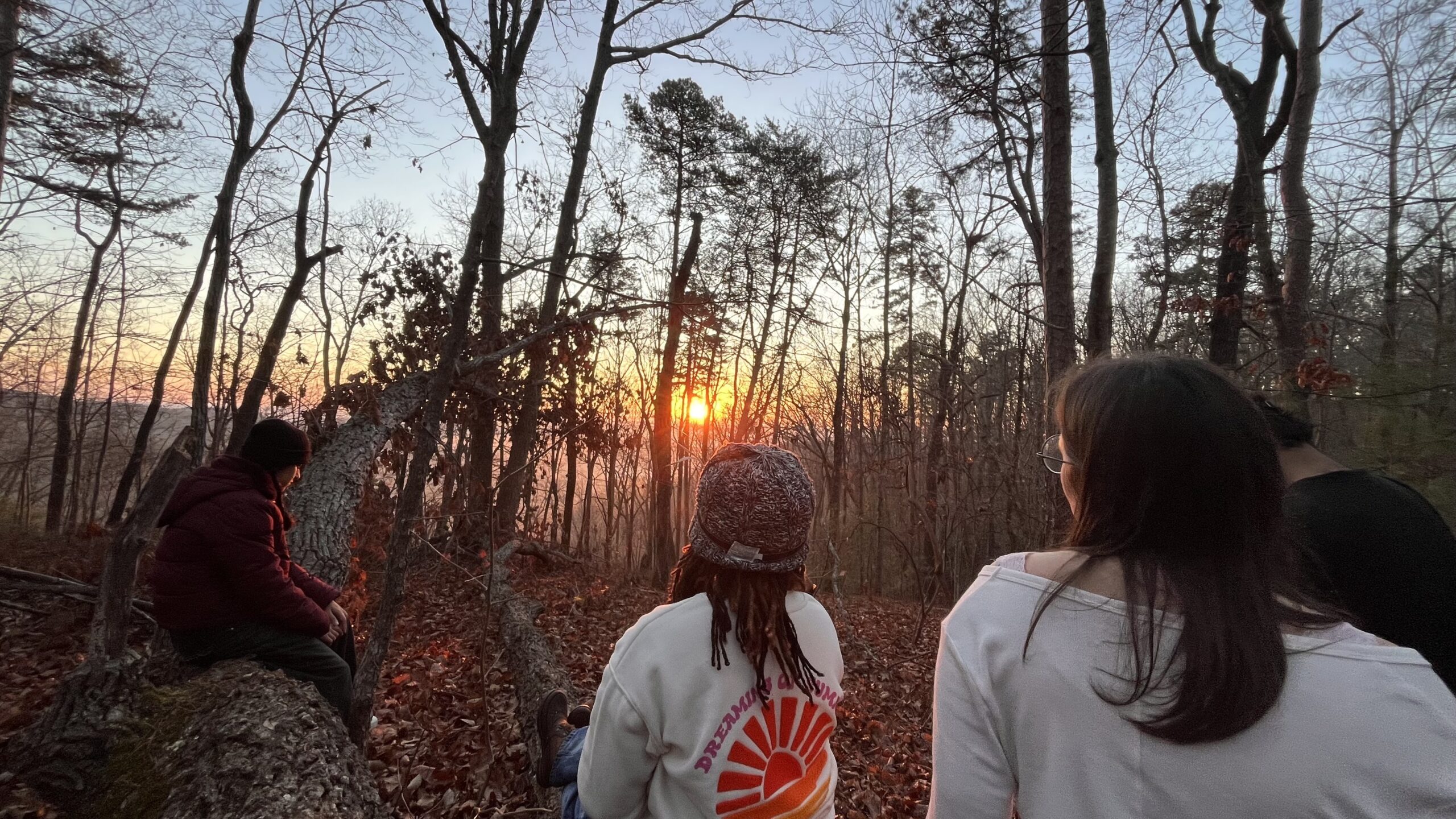
Beyond Expectations

Donatus Nnani remembers being “utterly unprepared” for the first college he attended. After leaving school and serving in the military for five years, he decided to try again, this time at Austin Community College (A.C.C.), where an unusual seminar would change his life and his confidence as a student.

Nnani was one of the first students to enroll in the Texas college’s Great Questions Seminar, a discussion-based, first-year course in which students mine for meaning and relevance in renown texts, ranging from Homer’s “The Odyssey” and Euclid’s “Elements” to global religious texts and Chinese poetryBy design, Great Questions resembles a liberal arts class at any college or university, complete with students sitting in semi-circle and faculty strolling the room.  

“Great Questions was very different in the sense that it treated students as if they were already in a university setting,” said Nnani, who graduated from A.C.C. and went on to earn a bachelor’s and master’s degree from the University of Texas, Austin. “You were expected to engage with and dissect this work on a level that isn’t always typical in community college.” 

Challenging community college students to reach beyond what is expected of them is an impassioned goal of the seminar’s creator, Ted Hadzi-Antich Jr., associate professor of government at A.C.C. and founder of the Great Questions Project. Educated at St. John’s College in the Great Books method, Hadzi-Antich believes exploring the wisdom associated with life’s biggest questions is exactly the right introduction to higher education for all students.

“We’re talking about big concepts and looking at them from very different perspectives,” he said. “We’re reading epic poetry and studying religious texts. We’re seeing the ways the questions are raised in different times and places. What is justice? What is beauty?” 

Hadzi-Antich’s effort to infuse a liberal arts pedagogy into a community college setting has become a personal and professional quest and, at times, “a bloody battle.” In addition to the Great Questions Seminar, he developed the Great Questions Journey, a pathway that applies a similar core-text and discussion-based learning format to a variety of courses within general education at A.C.C. Hadzi-Antich has also launched the Great Questions Foundation, whose programs include curriculum redesign institutes that train faculty throughout the country in the Great Questions pedagogy. 

“We’re talking about big concepts and looking at them from very different perspectives. We’re reading epic poetry and studying religious texts.”

But with powerful forces pushing for job training and skills-based learning over broad education, particularly in community colleges, Hadzi-Antich and his colleagues are working against a strong tide. And yet, they make a case that community colleges are the future of the liberal arts. They cite positive outcomes reported by Great Questions students, such as increases in retention and transfers to four-year institutions. Their biggest challenge may be getting higher education to rid itself of an unhelpful mindset: underestimating the intellectual curiosity of community college students.  

The Power of Questioning

Well before he created the Great Questions Seminar, Hadzi-Antich was fresh out of school and teaching a class on Texas politics at a community college. “It was kind of boring. It was boring for me, and it was boring for my students,” he said. To mix things up, he assigned Alexis de Tocqueville’s “Democracy in America” and watched the class come alive. 

“It was obvious these kids could read serious stuff,” he said. 

Hadzi-Antich never went back to lecture-style teaching but kept his head down amidst colleagues who followed a more traditional format. At A.C.C., he saw an opening to bring a great books seminar concept to the multi-campus institution within its required, first-year student success offering. But securing the opportunity to introduce first-year students to a radically different educational experience was hard-won.

“I remember some administrators at the time saying, ‘I don’t think that community college students can handle that kind of curriculum, and that just gave me this kind of righteous anger,’” he said.

First launched as a pilot funded by the institution, the Great Questions Seminar would be an alternative to the other required student success course, an educational psychology class focused on effective learning. A collegial competition emerged, and remains, between the tracks, with Hadzi-Antich believing that a seminar that stimulates intellectual curiosity by exploring life’s most fundamental questions is the obvious choice.   

“We looked at this and said, ‘We’re teaching students to be effective at learning, but higher education is about more than optimizing your efficiency in downloading information into your brain,‘” he said. “It’s about developing as an individual and figuring out how to live a good life.” 

The Great Questions Seminar pilot, which ran from 2015 to 2017, produced impressive quantitative and qualitative data. Semester to semester persistence rates of students who took the seminar were 92 percent, with 73 percent of students who persisted earning a G.P.A. of 3.0 or above. In a video for the Teagle Foundation, which provided a grant to support implementation at A.C.C. past the pilot stage, students referred to the course as “empowering” and “life-changing,” with one young woman saying, “I felt the courage in my own voice.” 

“You got to witness real transformation among students,” said Nnani, who is now the director of operations at the Great Questions Foundation. “Some people went from being shy, introverted, and not very confident in their ability to speak, coming forth with intelligent, insightful opinions. And more importantly, they knew it.”

Gaining confidence in critical thinking is at the heart of the Great Questions Seminar. Students consider ancient texts through the lens of fundamental questions they have about the world today. The inter-disciplinary faculty are not trained as experts on the texts but act as “engaged amateurs” to facilitate what is presented as a forum among equals. 

With the success of the seminar, Hadzi-Antich developed the Great Questions Journey, a pathway in general education at A.C.C. with redesigned curriculum focused on transformative texts and ideas. With the Journey program, students can engage in a discussion-based version of a variety of courses, including U.S. history, mathematics, and theater arts. 

“We’re trying to take these general education courses and make them as meaningful as possible,” Hadzi-Antich said. “We want education to be something that really matters to people, not just something you check off in order to survive in this economy.”  

To date, over 7,000 students have participated in either the Great Questions Seminar or the Journey classes. 140 faculty members have been trained in the standardized syllabus. The first-years that choose Great Questions for their student success requirement are more likely to transfer to four-year institutions.

For Hadzi-Antich, the most compelling evidence of the success of the Great Questions method is the fact that well after some class meetings end, groups of students linger in the hallway discussing the topic.  

American Spaces

In 2019, Hadzi-Antich founded a non-profit to receive grant money for a variety of causes, from food at student events to a fellowship program for faculty throughout the country. The Great Questions Foundation has become a national convenor for the growing number of leaders who share Hadzi-Antich’s belief that discussion-based curriculum should intentionally include community college students, a cohort who make up almost half of all American college students.    

Larry Galizio is president and C.E.O. of the Community College League of California, which represents one of the most established and well-regarded systems in the country. Even in a state where community college was designed as an introductory first step to higher learning, credentialing dominates. Galizio sees programs like Great Questions as important reminders of the original mission of community college: to provide a broad foundation for learning.  

“There’s been a strong push in the last 15 years for shortening time to degree and getting people on a strict career pathway,” he said. “It’s very well-intentioned because community college students are often time-starved with less resources. But I think anyone in education would agree we need to educate the whole person because you’re not going to be an effective medical technician or welder unless you also know how to work collaboratively and can solve problems.” 

Galizio believes perceptions based on class divisions exacerbate the push towards skills-based training over holistic education for community college students. “If you go to an elite university, there’s this expectation that your education is about discovery and you might change your major four times,” he said. “But at community college, the thought is these students just need to get their degree as quickly as possible.” 

Nnani’s personal story tracks to that assumption. “As an African American man, I was taught that education was just about learning the basics,” he said. “Things like Shakespeare and Socrates, that was for white, privileged kids.” Nnami said his success as an undergraduate and graduate student disavowed him of the notion that there were two types of knowledge: “functional knowledge for poor people and abstract thinking for the privileged.” 

The Great Questions Foundation is at the forefront of changing that mindset and rethinking community college as the ideal setting for the resurgence of the liberal arts. Hadzi-Antich is adamant that these ends will be achieved through the engagement of faculty, not the permission of administrators. The Foundation has trained inter-disciplinary faculty from over 60 institutions in the Great Questions method. The fellowship program, funded through a grant by the Mellon Foundation, provides stipends for 21 faculty fellows in six institutions to dig even deeper with in-person convenings, like a recent conference held at Miami Dade College.

Hadzi-Antich calls the fellowship program “the cultivation of the talent, skill, and passion to make community college the future of liberal education.” In many states like Texas, the majority of college students start out taking courses at community colleges, and younger students are pushing enrollment at many schools. Advocates see this as an opportunity to set a foundation for intellectual curiosity as well as civic engagement for a wide swath of learners. 

At a time of deep polarization, higher education’s role in developing engaged citizens has been called into question. Community colleges may well step into the void. 

“Higher education has a responsibility to help students understand their roles in a representative democracy and listen to the perspectives of those who are different from them,” Hadzi-Antich said. “There’s no better place to have those conversations than at a community college. They are simply the most American spaces in higher education.”  

You can reach LearningWell Editor Marjorie Malpiede at mmalpiede@learningwellmag.org with comments, ideas, or tips.

Rethinking Work, Meaning, and Education 

At the University of St. Thomas in St. Paul, Minn., the question isn’t just what students will do after graduation — it’s who they’ll become, quite consciously. In an age when higher education is often measured by employment rates, St. Thomas is leaning into a different measure of success: whether students leave not just with a degree, but with a sense of purpose. 

Through The Purpose Project, launching this fall, the university is reframing college as a formative journey, one in which reflection, storytelling, and ethical exploration are as essential as more traditional career prep. As the new thinking goes, if all a student takes away from college is an entrée to their first job, they — and the college — have missed the point of higher education.

“I think we fail our students if, when they graduate, all they think college was good for was getting them their first job out of college,” said Christopher Michaelson, professor of business ethics. “But,” he conceded, “we also fail them if we don’t help them get that first job.”

The heart of the new initiative sits in the juncture of that tension between the practical and the profound, at a time when the practical is increasingly under the crosshairs for “return on investment.” Part cultural philosophy, part pedagogical blueprint, The Purpose Project asks a different question than the ones colleges often lead with. The focus is not so much “What career do you want?” but instead “What kind of life are you trying to build?” And then it offers the tools for that blueprint.

From the earliest conception, the project was never meant to be a philosophical silo but a shift in the university’s core culture: a way of weaving reflection and purpose through the fabric of a student’s entire experience. Amy McDonough, chief of staff in the Office of the President, watched this idea take root in the university’s leadership and spread throughout the campus.

“We wanted this to be something that students encounter throughout their time here — not just a one-off retreat or capstone,” she said. “It’s not about putting pressure on students to ‘find their purpose’ in college. That’s too much. Instead, it’s about equipping them to begin the lifelong process of searching.”

The Purpose Project took shape with support from a Lilly Endowment grant and was further strengthened by campus-wide strategic planning, culminating in its inclusion as a priority. University President Rob Vischer allocated institutional support to the initiative, advocating that a St. Thomas education must be more than transactional.

In the process of planning, McDonough and her colleagues began an audit of what was already happening across the university. They discovered that many faculty had been doing work rooted in vocation and reflection. The task then became one of elevation: recognizing that existing work, giving it a common language, and creating a framework that could unify and strengthen it.

Around the same time, a grant through the Educating Character Initiative at Wake Forest University was also awarded to the Office of the Provost to support faculty development around the teaching of virtue and character formation. The initiative focuses on helping faculty explore how virtues such as integrity, empathy, and courage can be integrated into their teaching across disciplines. And it complements other elements of The Purpose Project by reinforcing the university’s mission to cultivate ethical leaders and graduates committed to the common good. 

The touchpoints of The Purpose Project now include a reimagined First-Year Experience course that introduces students to vocational thinking from day one. Sophomore-year retreats, piloted with students from the Dougherty Family College at St. Thomas, are designed to meet students at a mid-college moment when questions of major, direction, and identity converge. For seniors, faculty are working to infuse capstones with deeper reflection on purpose.

Even techniques like storytelling, which might seem tangential to vocation, have been folded into The Purpose Project’s scope. Faculty have partnered with organizations like Narrative 4, co-founded by author Colum McCann and supported by figures like Bono and Sting, to help students tell their own stories. In telling where they’ve come from, students reflect on who they are, who they want to become, and how they want to contribute to the bigger picture. 

“Students come to realize, ‘I can tell my story, and I reflect a little bit about myself.’ And then if you can carry that through, you combine that with what you’re learning and how you want to show up in the world,” McDonough said. 

Still, she was quick to note that the project, with its exercises and skillsets, is meant to feel organic, not imposed. “It’s about recognizing and elevating the work that’s already happening. When you talk to alums, it’s been a distinctive piece of their education,” she said. “This isn’t about adding more to people’s plates. We’re not talking about taking on another minor. This is work that helps you reflect on the rest of your life.” 

A new elective class, designed by Michaelson, the business ethics professor, is one of the most tangible expressions of The Purpose Project. Called “Work and the Good Life,” the course is launching this fall in two pilot sections. The idea had been percolating for years, grounded in Michaelson’s research and personal convictions, as well as research for his book “Is Your Work Worth It?” which explores the intersection of personal fulfillment, ethical responsibility, and professional ambition. The Purpose Project brought together a team of faculty to build the course from the ground up.

Michaelson had long been observing a tension in his students. Many were driven, focused, pragmatic — laser-aimed at securing that first job. But what many lacked, he felt, was space to ask the bigger questions: What is work for? How does it fit into a good life? What responsibilities come with privilege and education?

The course invites students into those questions. Developed with input from faculty across disciplines — chemistry, social work, English, entrepreneurship, and political science — the course is interdisciplinary and intentionally open to students from all majors. One section is dedicated to honors students; the other is open enrollment. But both sections will converge at times for plenary speakers and shared conversation.

Each week, students experience three modes of engagement: a lecture-style session, a small-group discussion, and an asynchronous reflection. Assignments are deliberately experiential and reflective. In one assignment, students interview someone whose job does not require a college degree, seeking to understand motivations and obstacles. In another, they interview a retiree to explore how perspectives on work evolve over time. Throughout, they pursue methods of creating a life path using tools from the world of design thinking, while also building an appreciation of the idea that paths rarely unfold as planned.

The culminating assignment is a letter to a “wise elder”— a parent, mentor, or imagined confidant. In it, students reflect on three fictional job offers, each with its own balance of compensation, passion, and public service. Their task is to justify, in writing, the path they feel drawn to and why. It’s a final exercise in what Michaelson called “asking better questions.”

“I’m not telling students what kind of work they should do,” he said. “I’m helping them ask better questions. That’s the real goal.”

“I’m not telling students what kind of work they should do. I’m helping them ask better questions. That’s the real goal.”

In many ways, the crux of the forward-thinking course lies in a deceptively old-school tool: a physical workbook. Unlike most contemporary digital course materials, this one is tactile. Students write by hand. They fold it open on dorm desks and coffee shop tables. Forming answers this way takes time.

“Research suggests that we learn differently when we actually write by hand,” Michaelson said. “It slows you down. It encourages reflection.” 

The workbook includes single-day exercises and multi-part projects, but perhaps its most endearing quality is its intentional tone. Michaelson likened it to the Dr. Seuss book “My Book About Me,” a fill-in-the-blank childhood journal filled with drawings and declarative statements. (“My favorite food is macaroni and cheese! When I grow up I want to be an astronaut!”)

Michaelson’s own children had copies, and years later, enjoyed the glimpses of their past selves. That’s the spirit he hopes this workbook captures: not to infantilize students, but to offer a keepsake of where they were at this moment in life.

“I hope years from now,” he said, “they look back and say, ‘That’s what I thought I wanted… and here’s what I’ve learned since.’”

It’s all part of the focus on intentional work — with an eye to giving back. While some programs and institutions stress an element of being the best X you can be, St. Thomas, as a school founded in a faith tradition, believes in going a step further and linking your goals towards larger obligation. 

“We don’t say, ‘You can be anything you want to be.’ If you want to be a really good bank robber, well, that might be O.K. in other places, but we’re more judgy than that,” McDonough laughed. “We say, ‘You can be anything you want to be — for the common good.’ It’s also about what you’re bringing to the world. That’s a distinction here.”