“This Is What We Do” 

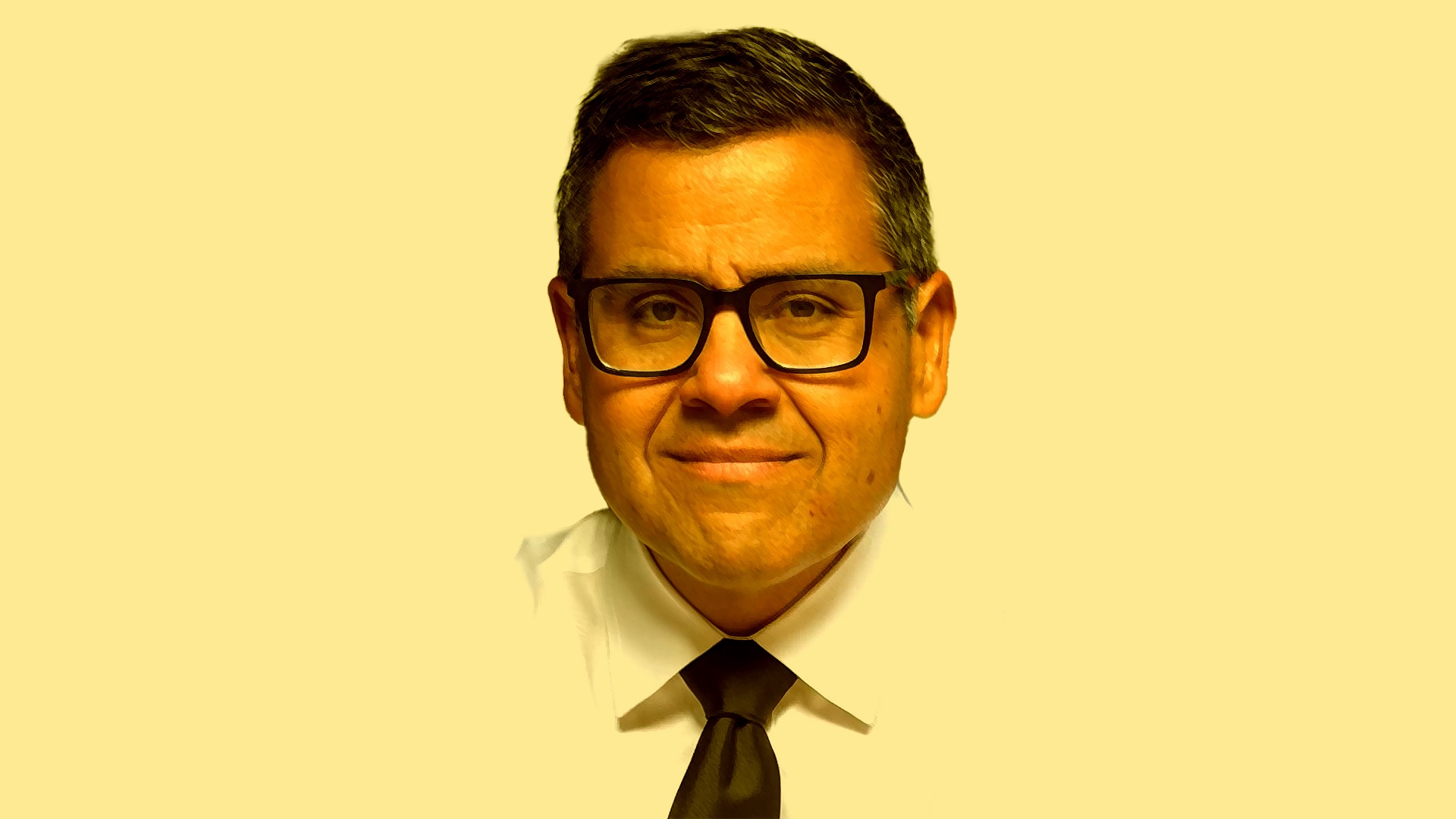
At a time of fear and uncertainty in higher education, what good leadership demands may be as simple as being an excellent human being. Meet Father “Call Me Jack” Butler, the new president of Boston College. The Jesuit priest was a prison minister, administrator, counselor, and spiritual director before becoming the institution’s first new president in 30 years. The week of his much-anticipated inauguration, he was remarkably relaxed, and characteristically modest, saying, “A job doesn’t change who you are.” 

Father Jack, as he is known, may well be the college president of our times. He is discerning, relatable, and refreshingly unafraid of the existential crisis higher education appears to be facing at this moment. For over 15 years, he was the Haub Vice President for University Mission and Ministry, a division of Boston College that invites faculty and students to embrace the school’s formative education mission through retreats and reflection. Grounded in Jesuit educational tradition, BC retains an intentional focus on teaching to the whole person with an emphasis on how to live a good life in many dimensions. 

As a Catholic priest on a multi-faith campus, Father Butler is at once unapologetic about his devotion to his religion and welcoming of all forms of spirituality. He acknowledges the realities of encouraging the practice of personal formation within a highly selective research institution. At the same time, he believes that understanding our roles as humans is more important than ever. In this interview with LearningWell, Father Jack and Winston Provost and Dean of Faculties David Quigley talk about why they are doubling down on BC’s mission in a rapidly changing world.

It’s been 30 years since BC has had a new president, and here you are. How does it feel?

JB: The most important thing in all of this is continuing to be who you are. You might have more responsibility, but if you have people like this [gestures to colleagues], the responsibility isn’t all that different. The one thing I can genuinely say is the love and support and affection that I’ve received since the naming and the first day on the job has been hard to process. It’s been overwhelming. It’s been wonderful. The rest of it, it’s just getting up in the morning and doing what I can do to be the best I can be for myself and for others. 

Do you think your becoming president says something about the direction of Boston College and the importance of formative education at this point in time?

JB: I think that formative education is something that people like David and the deans and the faculty at Boston College all believe in. It is who we are. But formative education didn’t come out of a vacuum. The Jesuit, Catholic education that’s been going on for 500 years has always been formative. It’s always been about the liberal arts: helping us learn how to live life and to become integrated people, the idea that an education isn’t just about a job; it’s about how to maximize your potential and enjoy the gift of creation itself. 

And it’s because we want to be known as a Jesuit, Catholic-faith-based, values-laden school that specializes in formative education that they were looking for a Jesuit to be in this role. I think that’s probably the default on why it’s me, to be honest. It doesn’t hurt that I love human beings, I love the relational aspect of education, and I believe in formative education. 

What do you think, David? What does Father Jack’s presidency say about where BC is right now? 

DQ: If you talk to the board of trustees, there was an absolute focus that having Jesuit leadership has served us well in the past and is really critical at this moment in time. The biggest change over these almost 30 years, and especially over the last 15, is the way in which the language of formation and formative education has taken hold in really powerful ways with faculty, staff, undergraduate and graduate students, friends, alumni, and trustees. There’s a richness in that conversation and the ways in which it’s allowed us to think about how we make investments, how we develop new programs, how we think about hiring, how we think about accompanying our students in light of that kind of broader set of values that Father Jack and his colleagues have created in so many ways. 

I don’t think there’s any place in the country that has done more interesting work than what Father Jack and his colleagues have done [in University Mission and Ministry] for faculty formation, for staff formation, for expanding undergraduate student formation. Here, we have been intentional and creative in thinking about: How do we meet faculty where they are, with a clear sense of who they are in the eyes of younger people, who are coming into universities and are looking for meaning, a sense of community, a sense of a larger purpose? 

You mentioned the importance of faculty in formative education. This is tricky because isn’t there an unwritten rule in higher ed that faculty and administrators sort of mind their own business? Is it a different story here? 

JB: Boston College is a Jesuit, Catholic university, and I’m proud to say that. And I’m a proud Jesuit. But we’re not a church. We’re not about the faith development of everybody here. The primary purpose of a Jesuit, Catholic university is in fact the education. But because we’re Jesuit, Catholic, we have a different reason for doing the education we do, which we welcome the faculty to buy into. What faculty formation really means is getting them to remember why they wanted to be a teacher: the things that got them excited about their particular discipline, the things that gave them purpose and meaning in life, the things that help organize how they negotiate the world. It’s the same things we’re trying to do for the students. 

For us, instead of responding out of fear, we say, “Let’s step back. Why do we do what we do? Has that changed?”

Faculty are the primary formulators. If we can help them help our students become fully alive—to enjoy the richness in life, to be able to live out of joy but also have the capacity and the adaptability to deal with sadness, frustration, and disappointment or failure—that’s what education is really about. We lost our way in higher ed when we made education seemingly only about getting a job

The stakes are a whole lot higher and more important than getting a job. And if you remind faculty that we want our students to be fully alive human beings, to have the capacity to engage life and explore life in all its tremendous magnanimity, very few will find that strange or unappealing. And if you get them to think about why they became faculty, it’s usually because they had somebody like a David Quigley in their life who inspired them. So they are not just teaching math or history or psychology or literature. We’re getting them to understand who they are, integrating themselves, and getting them excited about that. 

Is the goal for faculty to really see the students in more ways than just a receptable for knowledge in a particular specialty? 

JB: I don’t want education to just be a transmission of a subject, of a discipline. We want cognitive development, but we want that to be integrated into their volitional drives, into finding out who they are as they embrace the liberal arts. Like a pinball machine, we want them to bounce off of history and English and psychology and math to find out what they are really interested in. Because some of them come here already hardwired for a career. I think we win if they change their desires because they are doing so based on what they really want to do with their lives. At Boston College, we ask all of our students to consider three questions: What brings you joy? What are you good at? And who does the world need you to be? To us, these three questions are at the heart of formative education. 

DQ: Father Jack was a key ally and driving force when we renewed the undergraduate core curriculum a decade or so ago. One of the key developments there was that many faculty who were most engaged in helping lead the process came to it with a sense that we needed to up our game because the generation of young people who are coming to our classrooms had different needs and different experiences. 

We can talk about all the overdetermined ways in which social media and the various crises of our time are weighing on these young people. But I thought that there was a wonderful openness in that core process to think about, as a Jesuit institution, what kind of a liberal arts core do we need, but also to imagine it involving a lot of creativity about reflection experiences across many of these courses. This is what the retreat work that BC’s Division of Mission and Ministry took on under Father Jack is all about. It is about getting faculty more attuned to what brought us into this work in the first place—that joy of scholarship—which helps our students come alive. 

Let’s talk about the students. David mentioned seeing a different kind of student arriving on campus about a decade ago. That’s when we were just learning the extent of the college student mental health problem and some of the other struggles like loneliness and fatalism. Do you think about that in terms of everything that you’ve designed here, from your work in ministry through to your leadership now?

JB: Answering your question honestly, I’d say—is that the guiding principle behind everything I’m thinking about? No. Is it a large portion of what I’m thinking about? Absolutely. Jesuits have been famous for being countercultural, which most people think of as social justice. But the countercultural is precisely what you’re talking about. And if you have a sense, as I do, that the human organism itself is self-correcting, then you believe that it’s going to be fine. It will move out of loneliness. It will seek relationships. It will have a sense of joy. And I don’t mean this from a religious sense but rather understanding what it is to be human so that they can live their lives to the fullest. 

Take loneliness for example. Why are people so lonely? In part because they haven’t realized they can have a relationship with themselves or they’re afraid to have a relationship with themselves. So we need to get them to be quiet—to reflect. You get the organism to function correctly with the cognitive development. You’re giving them resources, you’re giving them insight, but you’re moving from intellectual growth to wisdom. Wisdom is the way to incorporate this into a life. The intellectual growth is just how to do something. So somebody who’s fatalistic falls in love. Love has a way of getting you out of fatalism. You start bringing that together, and the organism starts to function better. 

What about the pressure students put on themselves to pursue certain majors, constantly striving towards their goals? David, do you talk about that with the deans or the faculty at all? Because that can lead to some mental health issues, as well.

DQ: BC is certainly not immune to this. Historically, across the 20th century up until the 2008 financial crisis, across higher education, there was a counter-cyclical relationship between the economics major and the business cycle. In bad times, people rushed to the economics major. As the economy improved, people went to philosophy or history or fine arts. Since 2008, and this goes for BC but it goes for just about all elite schools around the US, that relationship has been changed, and the push towards the economics major has just continued. So there is a desire on the part of students, families who are committing to support their students, to find their way into particular majors. 

As Father Jack said, they’ve got a certain mindset coming in here. I think why it’s so important to have such an extensive liberal arts core is that we really believe that the kind of flourishing that we’re after for our young people across their lives will be best developed by encountering great works of literature, reading about the greatest approaches to the big theological questions across those areas. Another element—and it’s been part of Jesuit Catholic education especially inventively done here at BC since the late ’60s—is a real institution-wide commitment to service learning, to getting our students out into the city of Boston, into neighboring communities, and encouraging them to think about their obligation, what they owe their fellow men and women and the communities around them. 

JB: I’ll jump in here. I’m not the historian; David’s the historian. But if you really traced it back, before higher education became overly focused on job placement—that’s when we started to lose what I think is the true impact and the essence of what education’s all about. When your kids were young, they were asking you, “Mom, Dad, why?” Everything was why, why, why. 

But we sent them into an educational system, and too often it took the why out of them. And then it became, “How many pages do I have to write? What courses do I have to take that will lead to a job?” Don’t get me wrong, BC is an elite university, and 96 percent of our graduating seniors have a job, are attending graduate school, or are engaged in a meaningful volunteer experience like the Peace Corp. But what distinguishes us as a university is that we consider everyone here an educator, and we’re trying to get our students back into the wonderment of the why.

And the last piece I’ll say is we need to teach them that it is okay to fail. I want them to fail while they’re here because that’s a part of what formative education is about. Because if we don’t let them fail, they won’t take risks. And so part of formation is how do we get them to take risks, to teach them that failure isn’t really failure—it’s the beginning of success.

There is a lot about higher education that needs to be addressed, including affordability. What do you worry about most? 

JB: Sure, we worry about access and affordability. Boston College invested $100 million to establish Messina College, a two-year residential program for low-income, first-generation students on our Brookline campus. It allows people who didn’t have access or couldn’t have access to a school like BC to come here, in many cases, free of charge and transfer into Boston College after two years of study if they maintain a 3.4 cumulative average or better. I would love for BC to try to join universities like Harvard and MIT that offer free undergraduate tuition for families with annual incomes of less than $200,000, but we are not there, yet. We allocate a tremendous amount to need-based undergraduate financial aid, but we have to do more for middle class families. That is something we are all paying attention to.

Do I think that what’s going on at the federal level is hurting us? Absolutely. Do I worry about the distrust of institutions in general and whether or not people believe that a college education really is worth it given the price? Absolutely. Do I think that college athletics—something that I love and is big here—do I think it’s gone astray and that it is putting a strain on BC and other Division 1 universities? Yes. 

There are lots of challenges out there, but if we’re really about formative education, then my line is, “Where there’s love, there can be no fear.” For us, instead of responding out of fear, we say, “Let’s step back. Why do we do what we do? Has that changed?” We will continue to be honest about who we are and not try to change our core values for the circumstances of the time. 

We’re a Jesuit, Catholic university—that’s who we are. This is the kind of education we offer, and this is why we do it. This is the time to double down. This is the time to say, “What we do is really important because we’re actually trying to address the issues of the world.” It’s a very challenging time in one way, to be in higher education. But if you look at it the way that I think people like us look at it, this is the best time to be in education because now the stakes really count. I think we are well positioned to prepare students who can make a difference in the world.

You can reach LearningWell Editor Marjorie Malpiede at mmalpiede@learningwellmag.org with comments, ideas, or tips.

Posted in Q&A

In Pursuit of Connection, Stray from the Social Networks

During orientation week my first year at Dartmouth College, I found myself with over 100 freshmen at a s’mores social event. The night sky was dotted with fairy lights, and a warm glow encircled us, as a tide of excitement rippled around the firepits. While I moved with the current, flowing from one person to the next, the fleeting conversations remained stagnant. Each exchange followed the same routine of strained small talk. For an event with no instruction nor rules, I felt confined by some arbitrary social boundaries that kept me on the surface of every interaction. I was at an event made for getting to know people, and here I was, at least 20 people later, none the wiser to anyone around me. 

As I headed back to my dorm, I bumped into another freshman on the sidewalk. Our conversation started about the cobblestone streets of Bruges, Belgium, and the next thing I know, three hours later, he is standing in the middle of my room reciting an entire passage from Macbeth. We moved from one conversation to another unable to contain our excitement. His laughter, full, uninhibited, and authentic, was contagious, and I felt a freedom to be candid in a way that feels so difficult in this day and age. Since then, our friendship has only grown, and today he is my best friend. It’s hard to describe our friendship in any other way but limitless. We find joy in everything, from rolling pumpkins down a long driveway outside the library to running through the sprinklers outside the science building. 

Ironically, finding my best friend so early in college has made me more attuned to the wider challenge of connection. In my experience, this obstacle stems from societal systems that encourage us to conform to narrow ideals of success, from how we present ourselves to where we find connection. These prescribed norms can inhibit authenticity and make genuine connection more difficult. However, attaining such a meaningful relationship not at the gathering by the campfires but serendipitously on my way home showed me that connection exists outside the system. 

Pressure to Fit the Mold 

Despite the interconnectedness of our modern society, it feels we are progressively becoming less connected. While social media has brought many positives, it has also propagated unrealistic expectations of success. Platforms like LinkedIn display every academic and professional milestone someone has achieved since adolescence, while Instagram serves as a constant reminder of all the friends, places, and experiences that we have had no time to pursue. As a result, it leads us to slowly construct an impenetrable barrier between our real selves and our cultivated personas. As we relinquish so much of our life online, the feeling of being constantly perceived leads to a looming pressure to perform, even offline. 

If one believes meaningful relationships can only be found in a select few places, it creates unrealistic expectations and can leave one feeling further disconnected in a society where connection is already difficult. 

Recently, during a conversation free of pretense, a friend asked me if I was happy with how I was spending my time in college. I told her yes. But when I asked the same question back, she shook her head. Despite her time being filled leading extracurricular organizations on campus, getting the ideal internships, going on spontaneous adventures every weekend, and still finding time to excel academically, she felt discouraged as this did not bring her fulfillment. “So what if I do all these things?” she said. “I can’t even tell you what I truthfully like anymore.” 

The internet has become our judge, jury, and executioner. When scrutiny feels omnipresent and comparison is all encompassing, it’s natural to want to fit a perfect mold. However, this culture of constant visibility and judgment inhibits vulnerability. If we can’t truly be ourselves, how are we supposed to create authentic connections? Our inability to be fully honest with one another not only prevents connection but continues this cycle of silent struggling as we feel more and more isolated in our own worlds. I don’t think Dartmouth is an inherently competitive nor cutthroat place. It’s quite the opposite. Time and time again, I feel the support of my peers and professors and a general sense of community. The issue is that we are more similar than we think. Many of us face the same struggles and challenges; yet our apprehension to express them leaves us isolated in our journey. 

The pressure to fit the mold not only makes students feel like they must always appear successful, but also dictates where meaningful connections can and should be found. Too often I have heard “you need to be a part of this club if you want to make new friends” or “if you don’t join a sorority you will have difficulty making friends.” I am not saying that true connection can’t be found in these structured and defined places. Of course it can. Rather, if one believes meaningful relationships can only be found in a select few places, it creates unrealistic expectations and can leave one feeling further disconnected in a society where connection is already difficult. 

Beyond the System 

Societal systems pose arbitrary rules that can limit connection. However, we have a choice to determine how we let the system affect us. By looking beyond these artificial boundaries, we can find connection in places and with people we least expect. During my freshman year, I was standing in the chilly autumn breeze at a Diwali celebration, when a girl, walking back from the gym, paused to ask what was going on. Both of us spent our time engaging in very different activities, and our paths rarely crossed in the hectic rhythm of college life. However, this spontaneous moment permitted a close friendship to grow with someone I would have likely never met. 

I believe that as college students we have more agency than we think in defining what connection means to us. Some of my favorite memories include formally emailing 12 friends to go sledding the day after a blizzard and, in what is now a term tradition, spending the whole day with two friends cooking an extravagant dinner for a large group. In my experience, by being authentically myself and seeking intentional moments with friends, I have been able to defy the constraints of the system and find what true connection means to me. 

Sophia Sahni is a junior at Dartmouth College.

Storytelling | “O No,” Owen Dray

Sometimes it’s the little things that get us through the day.  In this story, Olin student Owen Dray waxes rhapsodic about those little miracles in the yellow box: Cheerios.  But far from simply serving as part of a well-balanced breakfast, for Owen, Cheerios have been his anchor, holding him steady while the seas of his life around him have shifted.  As so many students struggle with anxiety, it’s important to remember the reliable, unchanging parts of our lives, however small.

To learn more about Storytelling, visit Olin College’s Story Lab website here.

Invented Here | Jumping into Careers with Ellise LaMotte, Tufts University

Ellise LaMotte oversees Tufts’ weeklong spring break program, JUMP-IN, which allows first-year students to try on a career before committing to it. The goal is clarity: students feeling “this isn’t for me” counts as a win just as much as students saying, “this is it.” On this episode of Invented Here, LaMotte shares how JUMP-IN came to be, how the program’s success is measured, and how the work can be adapted to other campuses.

This episode is a part of Invented Here, a podcast series from LearningWell Magazine and the LearningWell Coalition featuring stories of innovation in learner-centered education that fosters life-long wellbeing.

Listen now on Spotify or Apple Podcasts.

You can reach Jack Tucker, LearningWell’s strategic communications manager, at jack@learningwell.org with questions, comments, and other ideas.

The Flourishing Familiarity Gap

College-bound high school students, whether they’re on their way to a two-year or four-year college, are familiar with what it takes to get into college; however, they know very little about what it takes to flourish once they arrive on campus. No doubt they have received college admission information from high school counselors, peers, family members, private college counselors and tutors, and even social media influencers. Many feel confident that their high school courses and extracurricular activities have adequately prepared them to succeed in college classrooms, labs, and learning environments. 

But as those of us who work on campuses know, there is so much more to a college education than academic success. Unfortunately, what professors and student affairs professionals may take for granted, new students and their families need to know if they are to make the most of their college experience. These include the myriad programs and resources geared toward flourishing, such as the presence of a college counseling center, the role of the learning assistance center, or the best way for students to secure funds to support their study away opportunities. 

The majority of students enrolled in an institution of higher education have one principal goal in mind: finding a career or vocation that will lead to financial success upon completion of a degree or program. Sure, many students factor in a school’s social scene, proximity to the beach, Greek Life options, or Division 1 sports when choosing a school. But these things are often secondary to the availability of a major, the academic reputation of a school, or the teacher-student ratio. 

High school students and families have very little awareness, anecdotal or otherwise, with the concept of flourishing.

For all that went into taking certain courses in high school—hiring an ACT or SAT tutor to secure a better standardized test score or tracking into one preparatory course of study or another to get into the program of one’s dreams—almost no time and effort has been devoted to one’s ability to thrive in and out of the college classroom, nor the professional environment that follows. Put more bluntly, the majority of high school students and their families are missing the forest for the trees: they have spent too much time fixated on the potential financial success that comes from finishing college, while spending almost no time becoming familiar with lifelong flourishing. All of this has led to what I refer to as the Flourishing Familiarity Gap. 

High school students and families have very little awareness, anecdotal or otherwise, with the concept of flourishing. And though authors such as Martin Seligman have made strides—and written popular and accessible books—that elaborate on the idea of positive psychology and happiness as being more complex than a set of feelings or expectations, high school and would-be college students have failed to grasp the importance of flourishing. These college-bound students would be well-served by becoming acquainted with Seligman’s operationalization of flourishing as: positive emotions, engagements, relationships, meaning, and accomplishments (or PERMA). Furthermore, they would benefit from realizing that academic development is but one of three legs of development that higher education is equipped to facilitate, the other two being personal development and social development. But these ideas, theories, and practices are rarely the focus of high school curricula, nor are they covered in much depth by college counselors and advisors. Again, their main focus is on getting students accepted to their preferred colleges and universities. It’s little wonder (though no less concerning) that the literature continues to highlight high levels of stress and depression, low use of college counseling services, feelings of exclusion and not fitting in, and a whole sundry of challenges experienced by college students in their first year of college. 

Unfortunately, there is little colleges and universities can do to directly influence what is and is not being shared by high school educators or private college admissions counselors and testing tutors. But what if two-year and four-year schools could help students and their families maximize the brief yet crucial time between a high school senior’s final exams and move-in day or the first day of classes? What if colleges and universities could address the Flourishing Familiarity Gap by helping incoming students (and their loved ones) increase their awareness of flourishing and alerting them to all of the services available on campus aimed at helping students flourish in college.

By May 1st every year, colleges and universities have a very good idea as to who will make up the incoming class for the start of the upcoming academic year. It is shortly after this date that incoming students and their caregivers start to receive a flurry of emails from the registrar’s office, the office of student financial aid, the dining services office, and the office of residence life and housing (to name a few). These offices support those most basic elements of Maslow’s Hierarchy of Needs: physiological. But what about Maslow’s other needs: safety, belonging; self-esteem, and self-actualization? 

Colleges and universities—using a flourishing framework such as Seligman’s PERMA model—should turn their attention to succinctly and clearly increasing student’s familiarity with flourishing, while assembling a who’s who of offices, centers, and individuals charged with distinct aspects of facilitating students’ academic, personal, and social development. These schools can help students use the eight to 10 weeks before the start of classes to figure out how to get the most from their new college or university. Schools should start planning now—this fall semester—what sort of communications, prompts, welcome messages, and resources they can strategically share with incoming students next summer before the start of classes. 

The concept of flourishing, similar to terms such as character, virtue, belonging, or wellbeing, are often discussed, interrogated, debated, and elevated on college and university campuses. In that sense, we the academic community either assume (at best) or ignore (at worst) the existence of varying levels of familiarity with these concepts for those who do not work in higher education. If higher education wants students, and their families by extension, to live out the full promise of their academic, personal, and social development, perhaps we would better serve our incoming students by shining a light on flourishing as soon as we can. 

Dr. José Villalba is a professor of counseling at Wake Forest University.

The College of Charleston Goes All in on Life Design

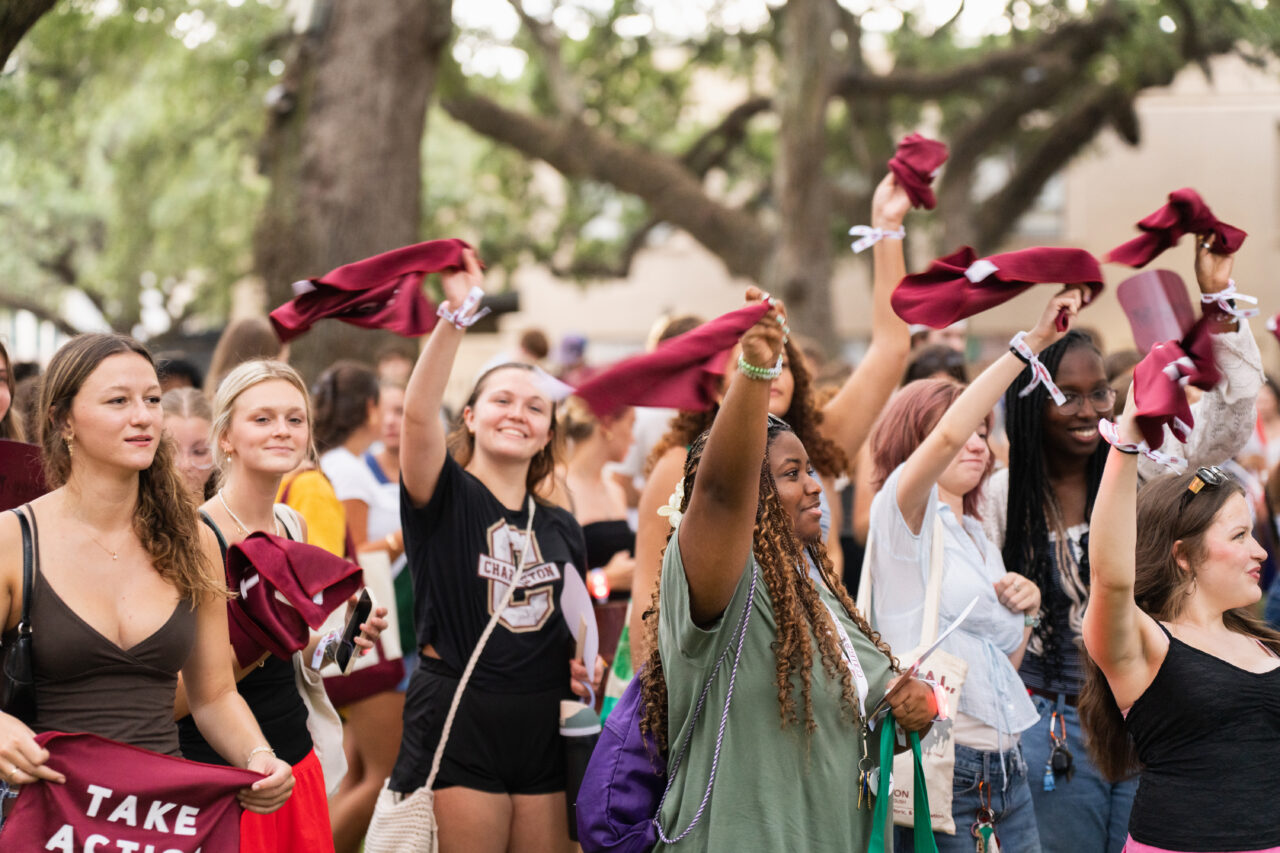
In some ways, this year’s opening days at the College of Charleston might have resembled those of the last 20—or even the last 200. At the 13th oldest college in the country, this fall’s convocation drew the perennial throng of new students who mingled with nervous excitement under the willowy live oak trees on the historic Cistern Yard.  

But this time, there was a notable addition. All around, students held, or waved, rally towels of different colors, printed with one of five encouragements: “Be Curious,” “Radically Collaborate,” “Take Action,” “Reframe,” and “Be Mindful.” 

These weren’t just typical words of wisdom for launching the year, or a college career. They are the core mindsets of Life Design, a life coaching model that CofC has decided to implement university-wide with a focus on first-year students. Over the last six years, Life Design’s expanding influence on campus has highlighted its potential to fortify students’ self-efficacy and optimism and, ideally, better position them for personal and professional success. Now leadership is on a mission to center these concepts in the student experience, introducing them early and often.   

Life Design, in essence, offers students a framework to plot multiple alternate futures for themselves and then encourages them to explore those options. The approach originated with two Stanford engineers who decided to apply their field’s design principles to regular life planning. For students, they asked, what would it look like to consider not one but three different majors, or extracurricular focuses, or career paths? Where would they take you, and would you be satisfied with each?

Kristen McMullen, the executive director of student success at CofC’s School of Business Student Success Center, was among the university’s first to embrace the practice. Her journey began in 2019 when, along with two colleagues, she flew out to Stanford for a Life Design training program. Over four days, they were immersed in the methodology and prepared to implement the work on their campus. Come the new academic year, they launched a one-credit Life Design course that drew about two dozen underclassmen in the fall and a similar cohort of upperclassmen in the spring. 

As they mapped their different life paths, they seemed freed from the pressure of fulfilling a single destiny and the fear of falling short.

An assessment of this first Life Design experiment affirmed McMullen’s budding faith in the practice. Compared to control groups, students in both her classes demonstrated an improved sense of hope for the future, greater self-efficacy, and reduced career anxiety. Anecdotally, McMullen said, she could sense the change in her students. As they mapped their different life paths, they seemed freed from the pressure of fulfilling a single destiny and the fear of falling short. “They were actually starting to believe that they could take control of their lives,” she said. “They could make decisions, it was in their hands, and they just felt better about themselves.” 

Over subsequent years, McMullen extended Life Design to new corners of campus, and others took notice. There were coaching sessions for individuals and then small groups of students, and the number of other staff trained to be coaches and classes featuring the content grew. Then, around two years ago, CoC President Andrew Hsu issued a directive for all students to receive some kind of life coaching. The provost approached McMullen about whether Life Design might be the way to go about it. “Do you think we could do this college-wide?” she remembered being asked. “That’s my dream,” she replied. 

Today McMullen finds herself updating a document she’s titled “My Ecosystem,” which charts all the different people and areas on campus where Life Design has made its way so far. The goal, she said, is to reach “every single department, office—everywhere we can.”  

Design Your Charleston

It was still fairly early in McMullen’s Life Design efforts when she started teaching an elective first-year seminar pulling in some of the key concepts. She was particularly impressed by just how far these very young students were able to progress in a short amount of time.

“I get goosebumps,” she said, describing how their final presentations would reflect their transformation into organized, forward-thinking, open-minded college students. They seemed to mature so quickly and fully, she added, that she would find herself thinking of them as graduating seniors, rather than rising sophomores. 

When she got the presidential green light to expand Life Design, McMullen set her sights on the First Year Experience program. As of this fall, she and Jessica Zuber, the senior director of student success and engaged learning, have launched what is perhaps the school’s most prominent Life Design effort yet: FYSS 101 Design Your Charleston, a weekly, required course for first-years combining an introduction to student life and resources with Life Design content. There are currently more than 100 sections of the class in progress, reaching a total of around 2,700 students, nearly the entire grade.

Every week, the students in Design Your Charleston receive information and complete exercises pertaining to different facets of college life. Week two on “Design Your Support System,” for example, provided an overview of various support offerings and tasked students with mapping out which they “would actually use,” according to the syllabus. Other weeks have homed in on “Design Your Community” or “Design Your Academic Path,” requiring more detailed plotting of events to attend, organizations to try out, fields of study that seem interesting, or advising questions to ask. Those five mindsets from the convocation towels —“Be Curious,” “Radically Collaborate,” etc.— are integrated continuously to give students a common language for navigating the first year, and beyond.

Another central element of Design Your Charleston is that it’s peer-facilitated. While McMullen and Zuber create the course lesson plans and PowerPoint slides for each week, older students bring the content to life in the classroom. “Not only are we growing professionals for the workforce past graduation, but also the students that they’re working with are receiving information from a peer,” Zuber said. “We find that students generally receive that information better than they do from adults just telling them what to do all the time.”

McMullen believes this information really can transform the student experience. “Design Your Charleston is to intentionally design the years—whether it’s three, four, five—that you’re at the college so that you’re getting every little thing out of the experience that you possibly can,” she said. She likes to think about the course as building a parachute for students made up of all the experiences and knowledge gained along the way. So by the time they’re jumping out of the college plane, dropping down into the real world feels like floating, rather than crashing. “This is great. I can see the view,” she hopes they are able to say. “I know where I want to go.”

A New Generation

Christopher Korey, the associate provost for student success at CofC, doesn’t subscribe to generational stereotyping. When he looks at his own children, for one, he doesn’t find the supposed Gen Z mold, which seems almost synonymous these days with some combination of fearfulness and fragility.

But Korey is willing to note that today’s college students, like many of all ages, appear to struggle with the task of taking the first step—putting themselves out there, trying something new, and risking failure in the process.

It was this recognition, in part, that Korey said inspired the request for universal student coaching in the first place. The high-level strategic vision, which Life Design helps deliver on, is for CofC to provide a truly holistic style of education: advising that goes beyond academics to help students grow as human beings, career preparation that goes beyond landing students jobs to developing their understanding of what they want to do and the skills they already have to help them succeed.

The CofC administration is currently eyeing an advancement campaign, of which one priority is boosting the university’s national prominence. Striving to become a leader in the student support and development space seems like a promising approach. “We’ll learn things that we can bring to a national audience about [how this work fits] into thinking more broadly about supporting students and this generation of students,” Korey said. 

Should its steady course of Life Design expansion continue, CofC just might become as famous for its work on student wellbeing as it is for its centuries-old oaks.

You can reach LearningWell Reporter Mollie Ames at mames@learningwellmag.org with comments, ideas, or tips.

Community Partners 

The University of Dayton and Sinclair Community College are just two miles away from one another, but in many ways, they are worlds apart. UD is a private Catholic university providing a four-year undergraduate experience. Sinclair, a public community college, offers the most affordable associate’s degree in the state of Ohio. And yet, when a group of educators from both institutions held a retreat to explore a partnership around character education, an infectious energy emerged. 

“It was like we fell in love with each other over three days,” said Nancy McHugh, the executive director of the Fitz Center for Leadership in Community at UD. “We went in as two separate groups and came out as one.” 

At the end of the retreat, they named themselves “the dream team,” and it stuck. This eclectic group of educators are now the driving force behind an unusual partnership in higher education based on what unites them, not what sets them apart. Funded by the Educating Character Initiative (ECI) out of Wake Forest University’s Center for Leadership and Character, UD and Sinclair will now embed character instruction into curricular and co-curricular initiatives at both schools, with a particular focus on community-engaged learning. At the heart of the initiative is the UD-Sinclair Academy (UDSA), one of the country’s most promising examples of a two-year/four-year transfer collaboration.

They named themselves “the dream team,” and it stuck.

Using character as the bridge, the team believes the work will produce a number of positive outcomes, including expanding the work of personal formation to all students, infusing belonging into the transfer pathway between the schools, and deepening each institution’s commitment to the community. In this sense, the UD/Sinclair character education initiative promises to be a national model for how institutions of different profiles and student populations can create beneficial relationships while deepening their respective missions. 

Breaking New Ground

The initial retreat that brought the team together was part of an ECI capacity building grant meant to help institutions do the groundwork for their character education aspirations. Oftentimes, these planning stages bring into focus existing assets, and in some cases barriers, that can be addressed through a larger effort. Always, it is the people behind the initiatives who ultimately shape how the work takes root.

The UD/Sinclair partnership is led by two academics who, their colleagues say, represent the best of each institution: UD’s Nancy McHugh and Sinclair’s Myra Bozeman. McHugh is a philosopher by training, though she calls herself a “weird one,” spending as much time outside the classroom working with students in the community as she does inside it. The Fitz Center, where she is director, is one of several centers at UD that focuses on community-engaged learning — a form of experiential education in which students apply what they are learning in class to the needs of the community. 

“I’ve always tried to help students understand that the work we do internal to higher ed travels out into the world,” she said. “The skills we are learning in the humanities, in the liberal arts, have this strong external-facing component that helps us understand how to live better in the world and also develop our personal and professional lives in ways that are really important.” 

Myra Bozeman, the dean of liberal arts, communication and social sciences at Sinclair, was born and raised in Dayton. “I have a deep connection to Sinclair,” she said. “I was the first child in their day care because my mother was a student here. I have a real love for the students, and moreover, the community.” 

Bozeman said that while most faculty at four-year colleges have an expectation about research, the expectation at Sinclair is to be out doing work in the community. This mirrored UD’s Catholic Marianist mission, advanced by its current president, Eric Spina, who in 2017 declared UD the “university of the common good.”

A year earlier, Spina worked closely with Sinclair’s president Steven Johnson to create the UDSA, an affordable pathway for transfer students from Sinclair to UD. USDA students are representative of Sinclair’s population: Most are Pell-eligible, first generation, and/or students of color. For their first two years, USDA students pay Sinclair tuition (around $5,500 annually) rather than UD tuition (around $50,000), while gaining full access to UD’s campus experience and student organizations, as well as co-curricular opportunities at both institutions. When Sinclair students transfer to UD after receiving their associate’s degree, they get a deep discount on tuition. 

Realizing the program’s full potential involves educators from both schools continuing to learn about each other and reflecting on the perceptions they bring to the work. Fortunately, the trust and candor the dream team members built has enabled them to address issues head on. 

“UD is a fantastic institution, but they haven’t, in the past, been the most welcoming platform for students of color,” Bozeman said. “Many Blacks just didn’t feel like they belonged on that campus. I personally believed UD has wanted to welcome our students, but perhaps they didn’t understand how to do it. And now we can help figure that out.” 

UD’s 2024 Culturally Engaging Campus Environments survey revealed that UDSA students experience lower community connection and sense of belonging compared to traditional four-year UD students. However, UDSA students do experience strong educator support at UD and find they have abundant opportunities for positive regional contribution. The dream team sees this as an opportunity for growth and collaboration across institutions, with character-education tied to community-engaged learning as a vehicle to increase the sense of belonging for students in both their curricular and co-curricular lives. 

For McHugh, the belonging gap for the UDSA students sparked an “aha moment” that would lead to a larger inter-institutional effort funded by an ECI institutional impact grant of a little under a million dollars. She told the team, “Let’s use community-engaged learning as a vehicle for character education and then use that to create a common language for character for both institutions to drive forward this sense of belonging for all students.” 

Understanding and communicating what that looks like is an ongoing conversation, both within regular meetings of the dream team and at brainstorming sessions called “charettes.” The project materials describe character as a set of dispositions, or virtuous habits, that shape how we think, feel, and act. The overlay of community-engaged learning means that these habits are shaped by community participation and geared toward the benefit of the community. 

“For me, character is about enlarging my students, not making them smaller.”

While the benefits of experiential learning are well established, leaders advocate that when implemented with intentional attention to character education, these benefits compound, as student gain not just knowledge and skills but the moral and epistemic dispositions to use them wisely in service to others. In creating a common language and commitment to these principles, the project is guided by nine virtues: joyfulness, curiosity, resilience, hope, integrity, mindfulness, empathy, justice, and community belonging. 

While the foundation of the initiative is rather philosophical, the proposed plan is a tangible list of specific initiatives with deliverables, including work within the community-facing centers and in co-curricular activities for students on both campuses. Much of the energy and resources are pointed inside the classroom. Among the project’s goals are to strengthen cross-institutional collaboration and to empower educators at both institutions to implement character education into their courses. This is happening on many levels, starting with faculty who now teach or guest lecture on both campuses, with many planning to infuse character into their coursework. 

A newly launched faculty fellows program will train 10 new faculty a year from both institutions to use a character pedagogical framework, resulting in a cohort of 70 or so over time. These will include senior character fellows who will act as mentors to other faculty members. 

To improve the UDSA experience for students, “all of Sinclair and all of UD would need to be involved,” McHugh said. “We need to know that when a UDSA student goes into a class in engineering, they will feel a sense of belonging because those educators will have the same sort of language.” Many Sinclair professors, who were unaware of even having UDSA students in their classrooms, are learning how to use a character framework to get to know them.

Dair Arnold, a professor of English at Sinclair, is now running a character pilot in her first-year composition course. While keeping with her standard syllabus, she now adds a character lens to each of her units. In the introduction to writing section, the theme is “know yourself.” Instead of one week of introductory work before the first assignment, Arnold took two weeks where she talked about what character means for students. 

The character “cheat sheet” she gives her students defines it as “who you are becoming and how we choose to act — especially when situations are difficult, uncertain or require us to think beyond ourselves.” 

Arnold said the students are embracing the revised format and feel excited to be a part of something intentional and different. “For me, character is about enlarging my students, not making them smaller, and giving them the skills so they can make informed choices that are good for them, as well as large groups of people.” 

Helping Sinclair students explore their personal growth through character education is a big part of the effort to increase belonging. “I think this project is going to enable the two-year students, and their faculty, to have opportunities they wouldn’t have had otherwise,” said Katherine Rowell, a retired full faculty member at Sinclair who has moved her office down the street to UD and is now heading up faculty development and assessment on the character education initiative. 

Rowell believes the character education will help counterbalance the national narrative about the purpose of community college which has been skewed almost exclusively towards workforce development. “We need both. You can’t do workforce development without also talking about integrity and ethics and resilience,” she said. “Community college students need the opportunity to work on these things, not just students at elite liberal arts colleges.” 

The commitment UD has made to partner with Sinclair on formative education has Rowell hopeful and excited about the work ahead. “I think just the conversations — the faculty from both institutions talking about these things and making sure students are cared for — it is good to be a part of. In all my time working in community college settings, I have never had a four-year institution reach out or make any overture until now.” 

Another dream team member, Danielle Boone, reiterates the importance of character education to the regional workforce missions of both schools, particularly Sinclair. Boone is a UD staff member who runs a program called Professional and Applied Learning (PAL) that supports UDSA students. She is also an adjunct faculty member at UD and Sinclair in psychology and is building character education into these courses.

Much of her work is aimed at preparing students for jobs in the community — one of the goals within the community-engaged learning framework of the initiative. Of the UDSA graduates from 2023 to 2024, 80 percent of those who are employed, have jobs in the Dayton region. Boone sees a through line from the UD/Sinclair character initiative and the needs of the regional workforce. She calls the work “employer-informed character.” 

“This is about making sure our students show up at work as whole people and have the skills they need to persist through adversity and be successful,” she said. “That to me is character. And if we are going to argue about the relevancy of higher education than this is what we’ve got to do.” 

Given UD and Sinclair’s shared commitment to personal growth and community, the dream team’s character initiative may well come full circle, reinforcing what the two institutions had always had in common, yet might not have known. Bozeman recalled an epiphany she had early on in the first dream team retreat: “I remember thinking to myself, ‘This is going to change our community. This is going to change it all.’” 

You can reach LearningWell Editor Marjorie Malpiede at mmalpiede@learningwellmag.org with comments, ideas, or tips.
Access Is Only a Starting Point  

I used to think that the biggest barriers to getting involved in college activities were fairly obvious. Perhaps students did not have enough time. Perhaps they could not afford an unpaid internship. Perhaps they were intimidated by a competitive application process. Those barriers are real. But after spending the last year talking to other students about how they find opportunities at Lehigh University, I began to notice another issue that was much harder to see: Sometimes students merely do not know where to look.

As part of my work with ImpactTrails, a Lehigh University initiative focused on creating equitable pathways for students to participate in high-impact practices, we interviewed approximately 98 students about their experiences with research, internships, mentorship, community engagement, and other opportunities outside the traditional classroom. How had these students heard about a research position? Who told them about an internship? Had they gone looking for an opportunity, or had an opportunity happened to find them? Did they know which office to contact, which professor to email, or even what kinds of programs were available to them given their work-study status, major, family commitments, or financial commitments?

The answers were undeniably, remarkably varied. Some students seemed to have an intuitive understanding of how to navigate college. They knew that they could approach professors about research. They knew where internships and fellowships were advertised, and they talked to everyone they could to find opportunities suited to them. At ImpactTrails, we call these kinds of students “explorers.” Other students, meanwhile, were figuring out these things for the first time. They were just as curious and ambitious, but they were spending part of their college experience learning how the Lehigh world worked before they could fully take advantage of what it offered.

Instead of asking students to know the name of a program prior to searching for it, we wanted the tool to begin with the student.

Universities spend a great deal of time discussing the importance of high-impact practices. We encourage students to conduct research, get internships, work with mentors, study abroad, engage with their communities, and apply what they learn in the classroom to the world around them. According to a survey by the National Association of Colleges and Employers, early career professionals who participated in experiential learning reported earning an average of $15,000 more each year. These experiences can also be some of the most meaningful in a college education. But we often talk about them as though the process begins when a student decides to apply. My conversations with students made me realize that it begins much earlier. It begins with knowing that an opportunity not only exists but is open and accessible to all.

At Lehigh, we began experimenting with ways of making the discovery process easier and more equitable. We developed an AI advising chatbot connected to Lehigh360, a platform designed to assist students in finding opportunities across the university. Instead of asking students to know the name of a program prior to searching for it, we wanted the tool to begin with the student. A student could describe their interests, goals, and what kind of experience they were looking for given their financial status or other commitments, and the chatbot could point them toward programs that might be a good fit.

The idea was not to create an artificial academic advisor or suggest that technology could replace the people who make Lehigh meaningful. In fact, at Lehigh, we have Opportunity Guides. These are trained students who are well versed in the high-impact practices offered on campus and serve as advisors in the Lehigh360 office to assist students with finding the right opportunities for them. However, we wanted to make the first step easier. If students know they want to get involved in research but have no idea what kind, where to search, or whom to contact, perhaps a conversation with a chatbot can give them somewhere to begin.

We tested the advising hub with students and asked them what they thought after using it. Their feedback was encouraging, particularly because it indicated progress on the problem we were actually trying to solve. Students liked having information about different programs brought together in one place, and several said the tool helped them discover programs they had not previously known about. “It reminded me of something I wanted to apply for,” one student said. Another added that it could help new students “not miss opportunities.”

That approach has changed how I think about the word “access.” An opportunity can be available without being accessible.

These results raised a new question for me: Why not expand the tool to include programs that  are not considered high-impact practices? After all, students might identify high-impact opportunities of interest only to find that they can’t engage for various reasons. A research experience might require hours that conflict with a student’s job. An internship might involve travel that a student cannot afford. A program might have an application process that is technically public but difficult to understand. A student might want to participate but have no idea whom to contact before applying. The opportunity is there, but the path to it is not equally navigable for everyone.

That realization led me to develop a High-Impact Opportunity Audit Tool, or HI-OAT. Rather than looking only at whether an experience provides meaningful learning, the tool asks what the experience looks like holistically from the student’s side. It considers sustained engagement, mentorship, collaboration, feedback, real-world application, and reflection, but it also examines transparency, financial accessibility, disability accessibility, advising, navigation support, and whether programs accommodate students with different needs and schedules. That approach has changed how I think about the word “access.” An opportunity can be available without being accessible. A university can offer an incredible program, advertise it on its website, and accept applications, and still have students who never hear about it or who cannot realistically participate. The audit tool therefore also looks at whether programs collect student feedback, track outcomes, and use that data to improve the experience over time.

I do not think the answer is to turn advising over to artificial intelligence. Some of the most important opportunities students find in college will always come through people. A professor notices an interest and suggests a research project; a friend sends a fellowship application; a mentor encourages a student to apply for something she never thought she was qualified for. These are the moments that cannot be reduced to a recommendation algorithm. But universities can make it easier for those moments to happen. They can make their opportunities easier to discover. They can examine whether their programs are genuinely accessible. They can ask students where they get stuck and take those answers seriously. And they can recognize that not every student arrives knowing how to navigate a complicated institution. Sometimes the first step toward making an opportunity more accessible is simply making sure a student can see it.

Ayah Mallah is a sophomore at Lehigh University.