Mental Health is Personal Health 

The Steve Fund is a non-profit organization that promotes the mental health and emotional wellbeing of young people, particularly those from underserved and under-resourced communities. Since its seminal report in 2016, identifying and addressing the unique mental health issues of this student population, the Steve Fund has been helping colleges, universities, and high schools strengthen cultures of belonging and build systems of care that support all students. Their Excellence in Mental Health on Campus framework has been utilized at 66 colleges and universities in 23 states, reaching over 1.1 million students. 

Part of the Steve Fund’s contribution to the field of college student mental health comes from the participation of a national network of Mental Health Experts, one of whom is Dr. Rae Lundy, the chief psychologist and director of counseling at Georgia State University. In this first article in a new content partnership series with the Steve Fund, LearningWell interviews Dr. Lundy about how her growth as a clinician aligns with the changing needs of her Black and Brown students. From her lived experience to her expansive body of work, Dr. Lundy explains why a culturally responsible framework for mental health and wellbeing is critical to helping all students flourish.  

LW: Tell us about your professional journey and how that tracks with the changing needs of students, particularly those from underserved and under-resourced communities? 

RL: I am currently at Georgia State University in Atlanta. We have about 54,000 students on six campuses. I’ve been in the role of chief psychologist and director of counseling for three years, managing psychiatry and what’s called student victim assistance. For me, and for many of my colleagues, this is a calling. I love college students. They’re in that developmental space where their identities are emerging, and they are kind of crystallizing who they are. 

I completed my training at the University of Notre Dame, where I studied identity and race, looking at how one’s racial identity serves as a buffer against discrimination. That was part of my lived experience, and I took that knowledge into my work. My first role was actually at a counseling center at a large P.W.I. (predominantly white institution), the University of North Carolina at Chapel Hill. As the only Black psychologist in the counseling center, all Black and Brown students were referred to me, and it was apparent that what I had studied in school, I was seeing in real time in terms of the concerns students were experiencing. On top of anxiety and depression, they were also experiencing issues of belonging and how the intersectionality of their identities impacted their academic functioning. It was a great training ground for this work, so after staying there several years, I went to North Carolina Central University, which was the start of a long stretch of me working at H.B.C.U.s (historically Black colleges and universities).

At North Carolina Central University, I found, like many of my fellow administrators at H.B.C.U.s, that I was carrying like five roles. My students were experiencing distress related to a number of different concerns, including financial concerns. Many of them were first-generation college students,and I felt this overwhelming need to be everything and all things to them. I was working in the counseling center, doing confidential work, but I was also doing a lot of outreach, meeting students where they were. I was an advisor for a student group. And in doing all of those things, it felt like there was this need to support mental health in a way that the institutions at the time didn’t understand. It was about stigma, which is looked at very differently today. 

The main thing we were doing is to try to get folks to have conversations about mental health. I was doing confidential one-on-one individual counseling, but really what I discovered was that expressive therapies and unique ways of reaching students were a better way of getting them to process and be open to having deeper conversations about how they were feeling. I had some tremendous success with that. We had an increase of students coming to the center. We did what we called interpersonal process groups: So maybe they didn’t want to talk about a specific thing, but they knew they needed and wanted to be around someone like my colleagues and me. 

It got me thinking about this idea I now lean into called C.R.I. — compassion, reflection, and intention. I began to share with folks that it’s okay to acknowledge and be compassionate towards yourself. We’re all compassionate towards our friends. Why would you not give yourself the same attention? This idea of C.R.I. was a way for me to have mental health in all spaces. Oftentimes, in the mental health field, we are going to our therapist location, or now we’re meeting virtually. For many college students, we need to bring down this barrier around the conversation, which is what I was really passionate and excited about. 

LW: Why was this engagement work particularly important for students, particularly those from underserved and under-resourced communities?  

RL: There is research to support that help-seeking behaviors of students, particularly those from underserved and under-resourced communities, are often psychologically and negatively reinforced. There is a sense that one might be punished for asking for help — or that it is a sign of weakness. For Black and Brown communities, asking for help can reinforce the idea that you’re not as smart as others. Did you really get here on your own? One might see why it would be more challenging to ask for support.

“For those from underserved and under-resourced communities, there is a sense that one might be punished for asking for help — or that it is a sign of weakness.”

Or if you think about it, if a student is a first-generation college student, if most in their family havenever had this experience before, who do they ask for help from? That’s true of all support in college. If you’re a first-generation college student and you’re asking about what you need to do to register for classes or find additional funding, but your parents and your grandparents have never done that, that becomes a barrier and a burden that they might internalize as something they have to handle on their own, while not really knowing what resources to turn to. That is why organizations like the Steve Fund are actively seeking to present themselves as resources for these students. 

When you talk about belonging and identity, so much of that is connected to performance, self-care, and wellness, but in some communities, you haven’t been given permission to take care of yourself because your identity is wrapped up in how much you’re doing for others. What emotional wellbeingand mental health ask of us is to be introspective, to connect, and to see what is going on internally within ourselves. Many times, Black and Brown students either haven’t been given that space, or we haven’t held space for them to do that. Another issue is exceptionalism, this idea that you’re articulate — for a Black or Brown person — or you’re smart — for a Black or Brown person. And that’s a lot to carry. 

Some of the most prevalent challenges you see are around anxiety. And that’s true of college students in general. But anxiety and depression manifest differently for Black and Brown students. Oftentimes, it presents as an irritable mood or what could be misinterpreted as the angry Black or Brown person. My recommendation has been for folks to ensure that we are being culturally responsive and informed as we are doing this work so that we have a good sense of: How does this particular mental health outcome manifest or look differently in varying settings? And then if we think about the concept of privilege, who gets to have emotional responses? Who gets to be expressive?  And if we think about your earlier question, you asked whether it’s okay for me to ask for help; if it’s not, then it’s probably not okay for me to appear sad. It’s probably not okay for me to appear uncomfortable.

LW: I can imagine that all of this experience was useful when you actually created a college counseling center from scratch, correct? 

RL: Yes. I was approached by the president of a smaller H.B.C.U. — Wiley College at the time, now Wiley University — in Marshall, Texas. They didn’t have a counseling center or any substantive mental health services for their students. After visiting the institution, I fell in love with the campus, with the students, and I thought, “No student should go without mental health support.” I soon discovered that Wiley was not unique. It was like many smaller institutions that just didn’t have funding. In years past, institutions may have thought they had the option of not investing in mental health. This was before universities realized that mental health is directly connected to retention. For smaller schools, retention is directly related to keeping the doors open.   

Once the link between retention and mental health was established, we were able to have open conversations around mental health, acknowledging that it’s not an afterthought or a second, third, or fourth priority when you’re thinking about academic success. If a student is not emotionally well, they can’t show up and be present in class. With that in mind, I was able to advocate for the students. I was initially a counseling center of one, and then we grew to be a fully functioning center. When I left, we had three additional staff, a training program, and a broad range of services.  

I eventually brought the knowledge gained from Wiley with me to Georgia State. I moved here for personal reasons, to become a caregiver to my elderly father. It was so interesting to end up here,which is his alma mater. 

LW: What have you found to be some of the most effective strategies to deal with the unique mental health challenges of Black and Brown students? 

NL: I believe leaning into forms of therapy and support outside of one-to-one individual counseling is particularly effective — things like group counseling, outreach experiences, ambassadorships, and opportunities for connection in what we call third spaces. We are creating other spaces outside of the classroom, outside of one’s home, that become brave and safe spaces for people to simply be and discover themselves. 

Group counseling demystifies, or challenges, the idea that I’m alone in experiencing things. Also, Black and Brown students have historically come from what we would consider collectivist cultures; these are backgrounds where you might have two or three generations living in a home. And so this idea around mental health is not just one-to-one individual counseling but also group counseling, some of which reinforces what has felt safe and healing and connecting for them in spaces that were safe,healing, and connecting before they got to college or university.

“I believe leaning into forms of therapy and support outside of one-to-one individual counseling is particularly effective.”

And then we think of expressive therapies. Movement is a beautiful way to release emotions and connect to oneself. In expressive spaces, the emphasis is not just on what clients are verbally saying but also how they are emoting. We look at somatic interventions, which really connect to the body, which again connect back to this idea of cultures where many Black and Brown communities use movement as a way to express themselves. 

I think a lot about meeting students and clients where they are. They may not be ready for traditional forms of treatment, but they are often on TikTok. Some of that information isn’t always accurate, but what if we have licensed, competent individuals who share it and can provide meaningful content onwellness strategies and wellbeing interventions? When this happens, students have agency to take in information in ways that are digestible for them. It’s true we have standardized, evidence-based treatments and a certain language within the mental health field, but by not engaging on platforms like TikTok, we miss a subset of the population in need of care, and often that population includes our Black and Brown students.

LW: That brings me to my next question. You are about to launch a new passion project, which is an app developed specifically for individuals of color. What is that all about?  

It’s called Amelia Sage, a wellbeing app for women of color. Amelia Sage combines artificial intelligence with the oversight of licensed clinicians. There will be wellness plans and daily interactions for participants to experience. And the app’s goal is to promote flourishing. I’ve been in the weeds recently, defining what it means to be well and recognizing that wellness is not without itschallenges. The work is grounded heavily in the dimensions of wellness. We look at social, intellectual, financial, and all areas of wellbeing; and within that framework, we promote whole wellbeing. We are currently finalizing details for a 14-day mental health wellness plan, and a primary goal is to share it with college students.  

All of this connects back to what the Steve Fund does by putting information and resources readily available at students’ fingertips. For good, bad, right, wrong, or indifferent — everything is at their fingertips. And so we want to make sure that what they are engaging with and really internalizing is information that’s going to help them be well and flourish.

You can reach LearningWell Editor Marjorie Malpiede at mmalpiede@learningwellmag.org with comments, ideas, or tips.

Posted in Q&A

Bridging Values with Suzy Welch

In September 2025, Suzy Welch made waves with an op-ed in the Wall Street Journal that asks a question many, it seems, were already asking themselves: “Is Gen Z Unemployable?

Welch is an author and professor at the NYU Stern School of Business, and widely known as the founder and C.E.O. of Becoming You Labs, a think tank and product design studio that helps disseminate Becoming You to schools and organizations around the world. Becoming You is a methodology — as well as an NYU class, a workshop series, and a best-selling book — she designed to help people land on their best-suited career path. The underlying premise of the methodology is that our purpose pathways lie at the intersection of our values, cognitive and emotional aptitudes, and economically viable interests. For the values-discovery piece, Welch invented the Values Bridge, a scientifically validated assessment that ranks individuals’ values from one to 16 and measures how fully they are living each one, or not.

Aggregate data from the Values Bridge unearthed the concern that led to Welch’s Journal article. In it, she describes discovering that the most-held values among Gen Z are: eudemonia (often referred to as self-care), voice (the expression of individuality), and non sibi (helping others). But when she surveyed a group of hiring managers about the value they most want in their employees, the answers instead prized: achievement (drive for success), workcentrism (desire for work to shape life), and scope (desire to learn and for adventure). Only 2 percent of Gen Zers — 154 out of more than 7,500 — identified the three values deemed most desirable by employers in their top five.

This priorities gap between employers and young staff gave evidence, and voice, to a common feeling among business leaders that Gen Z just didn’t seem to work all that hard. On the other hand, many praised the rising generation’s apparent sensibilities towards work-life balance and wondered aloud whether there was ever a time in which the older didn’t criticize the ways of the younger. 

In this candid interview with Welch, we zoom out to explore what motivated her work on values and how to interpret the data that continues to drive a national conversation. 

For more complete definitions of the 16 values, please see the Values Bridge index. Values discussed in this interview include the aforementioned eudemonia, voice, non sibi, achievement, workcentrism, and scope — as well as affluence (wealth), familycentrism (desire for family to shape life), and belovedness (romantic love).

LW: What inspired you to start the Values Bridge? I’m guessing it was an extension of Becoming You?

SW: Well, Becoming You is a methodology that helps students answer the question, “What should I do with my life?” It’s a 22-part methodology, and it excavates three data sets: your values, your cognitive and emotional aptitudes, and your economically viable interests. I used some of the very established psychometric instruments to help students identify their values. And while some of this work is incredibly renowned, I felt frustrated that it didn’t do exactly what I wanted. 

At the time, I was developing a new values inventory. I did this as part of my Ph.D. work. And then I set about working with psychometricians and behavioral scientists to create the Values Bridge. It was lucky I didn’t know what I didn’t know because that took about a year and a half of the hardest thing I’ve ever done in my life — but worth it. I introduced it in beta to my students at NYU and immediately realized that it could so broaden and deepen their understanding of values. So we pushed forward with the tool and finished it, and then were able to release it to the general public. And then of course, it immediately started getting adopted by a lot of schools and other institutions because of its efficacy and because of the conversations that it started and because of the understanding that it opened up. 

LW: Got it. So what would you say is the big difference between what you created and what existed in terms of value assessments?  

SW: The most frustrating thing about the other values assessments is that they don’t allow people to have conflicting values: If you have values that are conflicting, one cancels out the other. And that’s just not how life is. People walk around with conflicting values. They value affluence, and they value self-care. They value achievement, and they value familycentrism. And so the Values Bridge captures and reflects back to you these conflicts and allows you to then say, “Okay, well, how am I going to resolve them?” It doesn’t negate the reality of a personal experience. So I think it’s just a very subtle instrument because it’s the newest, and I had the benefit of all the great work that’s been done in the field of values over the past 150 years to help me create a new tool.

LW: And without asking you to go through your entire Ph.D., what is so important, especially for young people, about understanding or knowing what your values are? 

SW: I think that it’s every single human being; it has no age bracket to it. We all do better by understanding our values because our values are our whys. They are why we do things. And so I think the more we understand why we do things or why we want to do things, the better we operate in the world — the more compassionate self-awareness we can have, but also the more compassionate self-awareness we can have of others. I mean, the name of the tool is the Values Bridge. The idea of it is to build bridges so that people can talk to each other about their values. We have to stop judging each other. The Values Bridge is completely agnostic. It’s like, if you’re not hurting anybody, your values are your values to live. 

But also, to be quite practical about it, you need to know your values so you can figure out what to do with your life. The premise of the Becoming You methodology is that the most aligned career is one that’s at the intersection of your values, your aptitudes, and your interests. So I have a singular purpose with this process, which is to get you to the right job. And you need to know your values because to work in a field or to have a job that doesn’t align with your values is actually quite a painful thing. It’s kind of a dull ache. And anybody who’s done it can tell you, “Yeah, it hurt.” I don’t want anybody to be in that kind of job. That’s what it’s all about.

“You need to know your values because to work in a field or to have a job that doesn’t align with your values is actually quite a painful thing. It’s kind of a dull ache.”

LW: The op-ed you wrote on the top values of Gen Z was definitely a conversation-starter. Do you often get put on the spot to explain Gen Z and why they are the way they are?

SW: I do. And I say it’s not my area. I’m always asked, “Oh, can you please explain why Gen Z has eudemonia as their number one value?” And I say, “I have no idea.” My hypothesis is just like yours: They went through the pandemic. They found out that anything could fall out the bottom at any time. They decided they didn’t want to postpone joy. They decided they didn’t like the bargain their parents had that you waited to have joy. And they said, “We vote no.” That’s my theory. It’s a hypothesis, but I am not saying this in any way as an authority. My area of focus is not values formation; it’s values expression. I don’t try to figure out why you are the way you are. I take you as you are and say, “Given that, what should you do with your life?”

LW: One of the both really interesting and also challenging pieces about the top three values for Gen Z, I could see, is that they have voice and eudemonia — and then they also have non sibi, or wanting to help people.

SW: And those are not in conflict.

LW: They’re not?

SW: They’re not in conflict. The problem is when number four is affluence, as it typically is. Taking care of yourself, having a lot of individuality, and helping other people — on a one-to-one basis — are completely doable all in the same hour, with no conflict whatsoever. It’s then, again, when you get affluence and achievement up there in the top five, too. Even if achievement keeps coming up with Gen Z — which it appears to be in early, early, early data — it’s going to bump into eudemonia. It may be rising, but it’s still going to hit a ceiling when it hits eudemonia because really there’s a big conflict between achievement and self-care.

LW: Remind me, do other generations, older generations, share eudemonia and voice, or are those very specific to Gen Z?

SW: It’s not very specific to Gen Z, but it’s absolutely age correlated. The older you get, the lower eudemonia goes. By the time you get to my generation, eudemonia is peripheral — in the bottom five. You can almost draw a line; every generation, eudemonia goes slightly down. Same thing with voice. Non sibi is a generally strong American value. It’s very high across all generations. 

LW: With the Gen Z findings, did you find people’s reactions leaned more toward “Why is Gen Z like this? How do we fix them?” versus “They’re telling us something; let’s find out what it is”? 

SW: When I talk to business leaders, which I do a lot as a board member and a person who is in the corporate world, they are not surprised by the data findings. They say, “This is what we’re experiencing.” And then, depending on the hiring power of the company, they have different reactions. 

If they’re Goldman Sachs or if they’re Meta, they say, “This is not our problem because we get this 2 percent [of Gen Z with achievement, workcentrism, and scope in their top five values]. Those are our people. They want to work for us, and it’s easy for us to find them.” Some companies have less hiring power. They don’t have as good brands. They’ve had financial troubles. They want the 2 percent, but they can’t get them, and they express frustration. Then there are other companies that have no hiring power, and they are like, “Well, this is just a problem that individual managers are going to have to handle on a one-by-one basis.”

Gen Z’s reaction to the data was varied. There were some Gen Z people who said things like, “Why would I want the values of the older generations? Why would I want the values of hiring managers? I don’t like their lives. I don’t like what they’ve done to the world.” But some Gen Zers see the results, and they see themselves, and they think, “Oh God, this is tough because I do have affluence at number four or I do have achievement at number five. What am I going to do about this?” And that’s a real conversation. 

I don’t believe people should try to repress their values. I think that’s very painful. I don’t think that people should not be who they are. At the same time, sometimes when I have students who are really conflicted, I say, “Is there a possibility you look at your life as seasons, where maybe you are going to be in a season where values that are not your top values are going to be more expressed?” But look, I can’t tell them what to do. The only ones who I could really give strong advice to were my own four children, but even with them, it was a dialogue. 

LW: There’s something that feels sort of aspirational about values. So, if my values are X, Y, and Z, does that mean that I actually fulfill those in the way that I act?

SW: Actually, this is a point I should have made earlier — thank you for jogging my brain on it — which is that one of the things that I really wanted to do is test what your values are and how much you’re living them. That is one of the most important pieces of data the Values Bridge gives you. We give you your authenticity gap score.

Here’s an example: Scope is the value of how much action you want, how much activity, how much learning, how much growth, how much travel, how much adventure. What we see all the time is that women in their 30s and 40s who have high scope have a huge authenticity gap. It can be 90 percent. And what’s the reason? Typically, these are your childbearing years, and when you are raising little children, you just don’t get to have a lot of action and activity and travel and adventure and learning. You’re not able to express your scope. You’re going to do it later, and you know that. Sometimes the kids go away, and your authenticity gap closes. 

So for all of the people who take the Values Bridge, you do get those gaps. A lot of times my students will get back their results, and they’ll see that eudemonia is their top value, and they’ll see a gigantic authenticity gap. And then they’ll see achievement is down at number eight, and it has no authenticity gap because they’re fully expressing it. In fact, sometimes they have a negative authenticity gap because they’re overexpressing it. So one of the things I like about the tool is that it’s like a report card. It’s almost like a doctor’s report on how much you’re living each value. And a lot of times my students are not as shocked about their rank-order values as they are about their authenticity gaps. Because they look at it, and they go, “Oh no, this is absolutely a self-portrait. This is exactly where I’m feeling pain.”

“One of the things I like about the tool is that it’s like a report card. It’s almost like a doctor’s report on how much you’re living each value.”

LW: You have an idea of what your values might be, but once you’re faced with the fact that you’re not fulfilling them, that could be very distressing.

SW: Yes, it can be distressing, and then illuminating. They want to know how to fix it. I can’t tell you the number of times — this happens to me every single class — the kids get their results back, and then at the break, there’s a stampede of young women down the stairs because what they’re all getting is voice as a top value and an authenticity gap of 60-plus percent. And they’re like, “I am clearly not using my voice.” I’ve seen students literally in tears saying, “This is putting words and numbers to my daily experience.” It’s very poignant. And my female students say to me, “Can you please teach a class on how I can have no authenticity gap with my voice?” And I say, “I wish I could.” Right now, I’m teaching as many classes as you can humanly teach. But we’re trying to create curricular materials so that we can walk them through that process.

LW: Bridging authenticity gaps almost feels like a class that is life in some ways.

SW: Yeah, it is. I often say, “Welcome to life.” I say it all the time when they talk to me about their gaps and their disconnects. There’s this function where you can check a box and your values come up next to your partners — because many of my students are married, because I teach MBAs. And then they do it, and their partner takes it, and they see where their gaps are. And they say, “Well, I have belovedness at number one, and my partner’s belovedness is at number 16.” And I say, “Welcome to life.” This is the work of our life.

LW: So from the hiring perspective, is it possible that a hiring manager who thinks they most want achievement and workcentrism actually has a favorite employee whose top values are eudemonia and voice? But maybe with an authenticity gap? I wonder if those kinds of things have come up for you.

SW: They come up all the time because we work with so many companies. It’s very, very interesting to see how the Values Bridge is being used in organizations. And look, some of it’s kind of out of our control. Companies take it, and they use it as they want. Some companies use it as a team building exercise. People can just learn about each other’s values so that they can have more compassionate awareness of each other and more words to speak to each other. 

But definitely, we see, all the time, organizations using it to hire. Many times, people who are coming to my company take it, and I see their values as part of the interview process. But for me, it’s always just a conversation. I would never say, “Oh, I’m not taking somebody because their top value is X.” 

LW: Do you think that what different hiring managers look for might vary depending on the industry that they’re in?

SW: I don’t think so. Not with values. Maybe between nonprofit and for-profit. But in any for-profit environment, hiring managers generally want people who want to win and work hard.

LW: What do you think this all means for the future of work? It sounds like at top companies, they’re going to hire who they’re going to hire. For the rest of Gen Z and for the rest of the companies, how might things change? Will Gen Z not be hired? 

SW: Oh, I don’t know. Look, regardless of their values, Gen Z’s having a very hard time being hired right now. I was just at the Wall Street Journal the other day going over the data with them. This is a tough job market. And values may be playing a role in it, but there’s a decrease in entry-level jobs, and there’s an increase in the amount of experience that is being expected for entry-level jobs. This is not about values. And how this plays out, I don’t know. 

I think we’re in a great moment of holding our breaths because if you have 10 economists in the room, five think that A.I. is going to actually start creating many more jobs and this great flourishing; and the other five are going to say we’re going to be working three days a week and most people will not be employed and we’re going to have to go to universal income. There’s no accepted narrative about what’s about to happen. The jury’s out.

LW: And for people working in colleges, do you find that this values work is impacting their job? Or how do you guide them in terms of what students today need to be prepared for?

SW: We’re just so amazed by the interest in the Values Bridge at the college level. Every kid entering Wharton is taking the Values Bridge. This is a new thing. It’s beautiful. And there are many other schools — 170 schools or something like that — right now using the Values Bridge with undergraduates to create a common language, to build bridges. 

Look, career offices are trying to get kids into jobs that make sense, and the Values Bridge is another tool for them. More than ever, given the price of college, parents are saying, “My kid’s got to have a job coming out.” So I think any tool that can help kids figure out what their job paths should be and help kids get employed coming out of college is going to get a good hard look by colleges. And I think, more than just the Values Bridge, colleges are interested in the entire Becoming You methodology because values are not enough. If you just get a job based on your values, but you don’t have the aptitudes or the interests, it’s not as sustainable. 

LW: Right. Well, I like the idea, too, of creating this language for students. So if they’re all coming in and taking this test, they can then have conversations about it outside of class. It might just come up, and it contributes to their knowing better what they want and what they don’t want. 

SW: I know. And what you seek when you are in any kind of community, like a college community, is a common language — a shared language that increases compassion instead of polarization. I love it when I see my students using language to talk to each other, and it’s just fun. It excites me because it’s doing what it’s supposed to be doing.

You can reach LearningWell Reporter Mollie Ames at mames@learningwellmag.org with comments, ideas, or tips.

Posted in Q&A

Advising for Life

Despite battling a double-bout of Covid-19 and strep throat, Destiny Barletta is smiling when she joins our Zoom call. The director of alumnae connections at Wellesley College even dressed up for the occasion, sporting a lime houndstooth blazer (and summoning the signature pantsuits of her institution’s most famous graduate, Hillary Clinton). There’s very little, apparently, that could keep Barletta from talking about her work supporting the professional development of Wellesley alumnae.  

And that means all of them. Unlike many colleges and universities whose career centers focus on enrolled students and more recent graduates, the prestigious women’s college in Wellesley, Mass. has, for the last ten years, extended services to alumnae of any age or stage. As Barletta explains, career is rarely one-and-done, particularly in our rapidly changing world. At Wellesley, career development now means embarking on a lifelong search for growth and meaning. After all, even former Secretary of State Clinton navigated her share of job transitions — and weighty ones at that.

As the offerings at Wellesley’s Center for Career Education continue to become better known, more are taking advantage. 1,915 graduates attended advising appointments between June 2024 and 2025, nearly 300 more than in the previous year. With LearningWell, Barletta describes what that lifelong professional engagement looks like in practice, why it’s important for alumnae and students alike, and how it’s bringing a global institutional community closer together. 

LW: I thought we could start by talking about your title — the director of alumnae connections. What exactly does that entail? 

DB: So that entails thinking about career education in terms of alums and their careers, much in the way that many career centers work with students — exploration, industry advising, and support around very functional things, like cover letters and application materials and interviewing. All of those kinds of conversations that we have with students, we also have with alums, but tailored to where alums are in their careers — all the way from those second destination roles to thinking about what an active retirement might look like. 

Reentry to the workforce after a break for some kind of caregiving is something that happens a lot. Wellesley is a women’s college, so that is an important part of many conversations. And then we’re also thinking about opportunities and programs for alums to connect with students as a part of career exploration. So, how can alums be a valuable resource for lived professional experience for students? 

LW: Was yours a role that always existed at Wellesley? Or at what point did you all decide to dig more into the alumnae piece?

DB: This did not always exist at Wellesley. About 10 years ago, the career center at Wellesley was reimagined and became what now we call Career Education. And at that time, with a very generous gift from an alum, we began to offer career advising for alums for their whole careers. So at that point in time, this role came into existence.

LW: Do you know what the thinking was behind that decision to invest more in alumnae engagement?

DB: It was a commitment to the idea that graduation isn’t a stopping point for an intentional career journey. We do such good work around experiential learning to help students see that their professional identities, in a variety of ways, are integrated into their broader life experience, and it’s not just one thread that you can pull out that then stops the moment you graduate. So if we are doing our work really well, students graduate and see their career journey is just that — a journey. It’s something that you continue to tend to and navigate, as you build skills, build experiences, build connections, and explore. 

“If we are doing our work really well, students graduate and see their career journey is just that — a journey.”

And so that ability to continue to connect with Wellesley around networking and advising becomes really important. And we appreciate that requires an investment. It’s an investment in staffing and in training and in funds. But it also helps our students to see that when we say that this is ongoing work, we mean that. We’re here through the duration of that, and your fellow people in your Wellesley community are here for that.

LW: I like that because I imagine with Wellesley grads, who are so high performing, there could be a lot of that feeling like, “My first job needs to be my last.” Do you find that’s a pretty common sentiment?

DB: Yes, that is very true — true of Wellesley students and grads, but also more broadly. There is this sense that what comes on the other side of graduation needs to be right. You need to get it right. And helping graduates think about what does “right” mean for them, that is a values question. But also, what we know about the future of work is that having a flexible, skills-based approach that is grounded in some really solid experiential learning can prepare grads for a variety of first destination roles, with this kind of underlying assumption that there isn’t a single “right” thing. There is just a thing that is going to utilize skills and experiences you’ve built and provide you with additional opportunities for meaning and growth so that you have a sense that what comes next is also important.

LW: Do you see trends in terms of the age or stage of alumnae who come to you most often?

DB: We do. So we think of engagement in two ways: individual advising appointments and then participation in a webinar, an event, a cohort, programming. In terms of appointments, probably 60 percent are 10 years out or less, and then about 40 percent are folks who are further along in their career. Engagement in programming, events, webinars, cohorts tends to be a bit more even across class years. 

But we do see, in terms of advising, now that our model of engaging with alums throughout their whole career has been in place for a decade, our appointments are increasing. Because as you continue to have students who know, as they graduate, that this is an opportunity that remains available to them, they continue to engage. 

LW: What about trends in industry or profession? Are there certain jobs you see alumnae come to you for help getting?

DB: I mean, there are trends for Wellesley students broadly, and our alum data tracks mostly with our first destination data in terms of industry. But we do see a five-years-out uptick, when many alums are entering a career transition: “I thought I was going to do X, and now I realize that is not the path I’m interested in pursuing. So what am I thinking of next?” You see it almost like clockwork. And while that uncertainty is hard, the ability to seek more intention than just checking a box and climbing a ladder is, in and of itself, a really positive thing.

LW: You mentioned individual advising as one key service. Are there others that you think of as being most impactful or popular?

DB: We do a yearly webinar series, which generally features alum panels with conversations about what it looks like to work in certain industries — human resources, environmental impact, patient-facing healthcare, biotech, consulting, all of these kinds of different industries. And so that gives alums an opportunity to hear from other alums working at various stages in their career and in various roles in a broader industry and then to continue to connect with those alums for career resources. 

We also offer a program based on the Design Your Life program out of Stanford for alums who are in a place of transition and want to be in an alumnae cohort as they use that Design Your Life framework. The sessions are led by our alumnae career advisors, and we do those twice a year in a series. This is the fifth year, and participants find it very helpful. They bring a certain shared experience of their Wellesley time, which creates a foundation that feels safe and can be very generative. 

“They bring a certain shared experience of their Wellesley time, which creates a foundation that feels safe and can be very generative.”

LW: Do a lot of alumnae come to you with questions around changes in the workplace or for guidance around technology and A.I.-type skill building?

DB: We definitely do talk about upskilling. Because how people are thinking about skill development is shifting — I think rightfully so — in terms of the idea that you go in this kind of linear or vertical fashion, and then sometimes you need to stop and build a new skill, and then you continue up. It really is a much more fluid and ongoing approach. And you’re always thinking about: What are your skills? What are your experiences? What tools do you need to onboard? And then those tools offboard, and something else comes along. 

It’s been really interesting. So much of just the career space is teaming with conversations about A.I. You can’t escape it. But one of the threads that’s coming through is the power of a really solid liberal arts education that helps as a foundation for navigating all of these changes. And we definitely see that’s true. 

LW: Do you see a throughline between your career services work with alumane and a generally more engaged culture of alumane, either with students or with each other? 

DB: Wellesley does have a very strong alumane network. I also think there is a sense of being motivated toward sharing and generosity because people often remember a time of uncertainty, of vulnerability. And it’s such an opportunity for people who felt, in their own experience, that there was an opening for support, for guidance, for information, when they see that they’re now in a place to provide that. 

And it gives a sense of perspective, especially in this moment. This is a challenging time for students to be graduating into the workforce, and having that voice of alums who have gone before can provide a sense of perspective: “I graduated in ‘08 when the collapse happened and what I came into also felt really challenging.” Just this ability to see that others have navigated different, but also challenging, experiences in a way that was ultimately successful for them can create a support line that is important for students who are graduating, and then also for the alums.

LW: Do you think that culture is also strengthened or unique in some ways because Wellesley is a women’s college?

DB: I do. There seems to be this kind of structure when conversations happen within a Wellesley context that you have the expectation that you will be seen and heard, and you don’t have to fight for that, which is really powerful.

You can reach LearningWell Reporter Mollie Ames at mames@learningwellmag.org with comments, ideas, or tips.

Posted in Q&A

Building a More Caring University

Like many educators during the pandemic, Kevin R. McClure felt the burnout. Faculty members were juggling research and leadership responsibilities, teaching and helping students, while navigating their own personal issues and watching colleagues struggle. As chair of the Department of Educational Leadership at the University of North Carolina at Wilmington, he began writing and speaking about these challenges and the coinciding tide of resignations. Institutional leaders and journalists tuned in for insight into why so many employees were disengaging — and what colleges could do differently to retain their people.

Those conversations culminated in “The Caring University: Reimagining the Higher Education Workplace After the Great Resignation” (2025), a book that argues burnout is not an individual failure but a signal of deeper organizational problems. His research on college leadership, workplace culture, and organizational care helps campus leaders to build institutions where doing meaningful work isn’t to their own people’s detriment. 

LearningWell connected with McClure to discuss what it looks like when a university takes steps to prioritize its employees and the difference that effort makes in engagement. 

LW: Let’s start by looking at what it means for a university to be a caring institution. Why are we talking about this for higher education in a way that differs from, say, a grocery store chain?

KM: Higher education has not done a great job of prioritizing the wellbeing of staff and faculty. That’s not to say that it is worse than other industries per se, but we aren’t knocking it out of the park. Based on data that I collected through interviews with over 150 staff, faculty, and leaders across the country, what I heard over and over again was this question about whether or not this is a place that really cares about me. There was a feeling that they were expendable — that their health came second or third to other priorities that the institution had — and it was willing, in some cases, to sacrifice the health of some employees. This was particularly evident during the pandemic. We’d see a certain kind of comfort with the idea that we’re just going to lose people and either not replace them and absorb some of those cost savings or just repost the position expecting that people will line up to take it — a kind of churn and burn.

As I was doing these interviews, I heard a fair amount of pain from people on a regular basis. These are institutions that are dedicated to human growth and development, and we should be the world leader as employers. There was a time where we had the ability to point to indicators that we are leaders in certain regards, and that’s harder to claim today. And so it’s really an invitation for those of us that work in higher ed — those of us who are leaders in higher ed — to say we can do better than this. 

“There was a feeling that they were expendable — that their health came second or third to other priorities that the institution had.”

LW: What did the great resignation look like in higher ed, and what did it reveal about universities as a workplace?

KM: We certainly saw a number of people who left, and there was pretty heavy recruitment of people into ed tech as kind of an adjacent industry selling products and services to higher education. And we saw a number of people looking for places better aligned with their values or places where they might get slightly better pay or slightly more flexibility. And so similar to other parts of the great resignation, it wasn’t necessarily people leaving work all together so much as it was this kind of great shakeup of people moving jobs. 

The part that makes it somewhat unique is that higher education employees don’t always have a ton of mobility options. They may be in a particular field where there are only a handful of jobs open in a given year, and their ability to just move somewhere else is quite limited. A fraction of them have job security through a tenure system, which only actually works out to about a quarter of faculty. So in higher education, a great resignation looks a little different because of these other dynamics at play. The question becomes: What are we as an institution going to do differently to attract and keep really talented people? And very often, the answer was that there wasn’t much of anything happening in response to that. 

LW: Your book makes a strong case that employee wellbeing is foundational to student wellness and institutional success. What does that look like on campus? How do students and the whole school benefit when faculty are happier and doing well?

KM: When you look at some of the things that we know about student success, they include things like sense of belonging, a sense of mattering, doing work that is meaningful, feeling included, and getting engaged in the life of the institution. They’re all concepts that have a similar if not identical concept when it comes to retaining and attracting employees. And it’s because a lot of these things are just base-level, fundamental components of what humans need in order to be healthy and thrive. As we’ve had all these conversations about student success, I’ve been trying to point out the fact that these are all things that are good for employees as well. We don’t have to just think of them as things for students. What this book is trying to do is to push us to not necessarily think in terms of specific populations but to say we are a community of learners, and we ought to be thinking across the entire organization about some of these things. And if we do that, I think we are going to see downstream benefits and outcomes for students.  

You know, students are smart and perceptive, and they pick up on when an institution is thinly staffed and when faculty and staff seem really stressed. They’re able to pick up on P.R. spin and prestige games that institutions play. And they have an awareness, I think, of an institution where things are imbalanced, and they can feel it really acutely when somebody leaves — when they lose a mentor or someone on campus that has been important to them. And so if we think about foundational conditions for a community to do well and to be well, we need to say instead that this is something that’s good for everybody. 

LW: You’re clear that care isn’t a matter of band-aid solutions like extra wellness days. What does institutional care look like when it’s embedded in policies and structures beyond encouraging people to, say, make sure they get out and take a walk?

KM: Institutions have often relied on that more individualized type of response to challenging workplace conditions: Don’t overwork. Don’t say yes to too many things. As you put it, go take a walk. We’ve put a lot of onus on individuals to navigate through this themselves, and my argument is not necessarily that we should throw out self-care. Everybody should be thinking about the choices that they’re making.

But when you look at the root causes of some of these workplace problems, they are often structural and cultural — a reflection of choices that we make across the organization, our strategic planning, and the priorities that we set. When we set goals, we need to ask how they are going to affect our people and what additional capacity we are asking of them as a result. It means looking at some of our practices and policies and whether they’re really designed for the realities of living, breathing humans with caregiving responsibilities and health limitations. Oftentimes, our practices and policies are designed for people that are robots or don’t have any kind of demands of a body.

LW: In the book, you critique the idea of the “ideal worker” in higher education — the myth of the teacher constantly available to be a life-changing mentor for students. How does this myth of “The Giving Tree” professor affect not only employees but also the learning environments we create for students?

KM: There is a real need for us to be thinking about workload and establishing some real guardrails to prevent that sort of thing from happening. Yes, it’s up to people on their own to parse out how they should be handling these things. But often we’ve got reward and recognition systems that are based on the idea that the more productive and performative that you are, the more likely you are to be recognized, so there’s kind of an inbuilt incentive for people to go above and beyond. We don’t want to take away incentives for honoring work that is good and valuable to the institution. But we also don’t want to suggest that just because someone is setting some healthy boundaries on what they take on that they are considered someone who’s not pulling their weight.

“We don’t want to suggest that just because someone is setting some healthy boundaries on what they take on that they are considered someone who’s not pulling their weight.”

LW: It’s hard to determine what an appropriate level of engagement is — how much to put yourself out there and pull your weight — particularly when we’re talking about supporting students and colleagues. Is there a way the university could be better involved in modeling expectations?

KM: Of course there’s some nuance with this, and it gets a little bit complex, but I do think that there is a role to be played by leaders in modeling what this can look like. When there’s an opportunity for any of us in leadership roles to show what a healthy boundary looks like for newer people that are coming in, it makes it a little bit easier for them to make that choice — to not feel like they’re going against the grain — because this is the norm. If we as leaders have a situation where someone is clearly overwhelmed, we need to take some steps to help and say, “Hey, you’ve got too many students that you’re mentoring right now. Our norm is closer to eight, and we see that you’ve got 15. Let’s figure out a system so that we can better distribute this so it’s not entirely on your shoulders.”

LW: What makes it harder is that it’s personal. Employees aren’t building widgets. They’re investing time in helping colleagues or developing a young person in their field looking for guidance.

KM: All of it’s very personal. The reality is that most of us are people who got into this work because we really believe it’s important. It’s meaningful to us. So much of our scholarly work is collaborative, and we have commitments and obligations to other people. It feels very hard sometimes to pull back on that because it feels like you’re risking some of those relationships or failing to show up for people you care about. 

But again, there’s a real role in setting healthy expectations — expectations for people who are seeking promotion, for example, that aren’t over the moon, but reasonable. 

LW: Higher education tends to be good at measuring enrollment, retention, and revenue. How could institutions think differently about measuring wellbeing — for employees and students — and following through?

KM: A basic level is we probably should be collecting more data that better gets at the employee experience. Right now, we do very little of this beyond a periodic employee engagement survey. There might be some exit interviews that happen as someone leaves, but even that can be very sporadic. And so the bar right now is quite low in terms of what we do. Anything that we do above that is going to be a step in the right direction. Then, once we better understand who our employees are and what their experience is on the job, we can make sure we’ve got capacity to analyze that data and that it doesn’t just sit on a shelf.

“People have to start believing that this is a system worth investing in.”

We have at our disposal at colleges and universities people who are trained in social science research, and there’s no reason why we couldn’t be figuring out some better ways of designing studies to better understand the employee experience and improvements that we can make. Too often institutions collect data, but then they don’t act on it. And then people lose faith that this is a process that’s going to lead to change, and then they opt out of doing it in the future. People have to start believing that this is a system worth investing in.

LW: Do you have some examples of universities doing it well?

KM: Almost every positive example in the book begins with some type of data collection effort. They are starting from a position of: “Let’s get a better handle on what the problem is — specific to our institution, our culture — and then let’s design something that speaks specifically to us.” 

One of the issues that I flag in the book is about the lack of career advancement and career pathways. There’s a great example from Miami University in Ohio where a marketing communications department had lost a significant number of people. They began with an employee culture survey, and through that, they identified that the biggest issue was people felt like there wasn’t room to grow, particularly people that were not interested in being supervisors. From that, they designed a new career pathway model — one for people that wanted to supervise and one for folks that didn’t. There is another example at the University of Louisville that identified the need to pay better attention to the employee experience. They now have a dedicated staff that is working on better onboarding, better recognition systems, better employee training, and I think that has been a smashing success. 

LW: It’s such a time of change right now. Are there already new things you wish you could add or adjust in the book?

KM: I feel like I should write an epilogue! We’re in a moment that makes all of this more complicated. I mean, how do you show care for people that are coming to join your faculty from other countries, when it doesn’t feel like the door is quite as open or students that have come here to study are being detained? 

Politically speaking, we have institutions that have had sources of revenue disrupted or cut, so they have less to work with. It’s very difficult to try to pursue a model of organizational care at the same time that you’re laying people off. We have spaces where there’s real challenges with enrollment decline. 

A lot of this is not symbolic or hypothetical anymore, and we will see the consequences of that over time. That’s the world we live in right now, and those of us still in it are trying to do the very good work with students, and remain hopeful.

Posted in Q&A

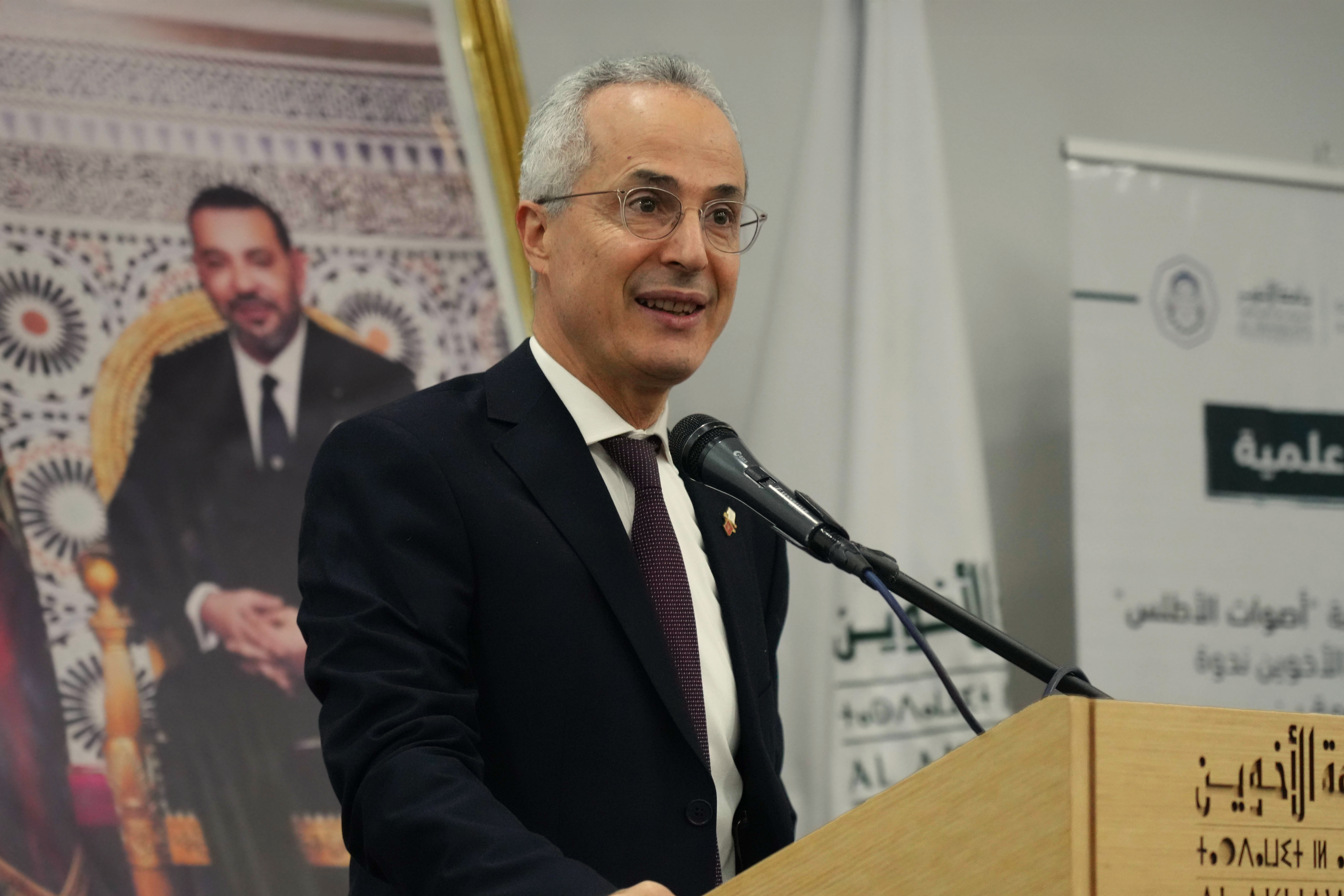
A Moroccan University Weaves Wellbeing into the Liberal Arts 

Visions of Morocco often conjure vast deserts and bustling cities. Al Akhawayn University, quietly tucked in among the Middle Atlas Mountains, is more likely to be covered in a dusting of snow than sand. The surprises don’t end there. 

Since 1995, A.U.I. has led with an American style of liberal arts education that is different from every other university in the country. The idea came out of a partnership between two monarchs — King Hassan II of Morocco and King Fahd of Saudi Arabia — who also inspired the university’s name “Al Akhawayn,” meaning “two brothers” in Arabic.

That founding emphasis on connection and mutual support — global and local — remains. Current President Amine Bensaid has been building out a particularly robust approach to student affairs based on helping students, struggling with wellbeing much like in the U.S., develop meaningful relationships with both each other and the world.

With LearningWell, Bensaid talks about pioneering and preserving the liberal arts core, while adapting to the unique needs of his students — and the country.

LW: I’m interested in how the liberal arts model came to A.U.I. and to Morocco. Could you tell us more about that?

AB: The vision for an American-model university in Morocco is something that late King Hassan II had, in the late 70s or 80s, I believe. The rest of the education landscape in Morocco is all modeled after the French system, so the general idea was to have a pilot, or just an experiment, in Morocco for an American-model university. And then when he finally got to do it — that was in the early 90s — it was clear that it would violate a number of things in Moroccan law on higher education with respect to pedagogical norms and governance. 

As a result, a separate law that would govern the university was created in the form of a Royal Dahir. In that royal decree, in the preamble, it was almost like he saw September 11th coming: He wanted the university to graduate a different breed of graduates who would be ready, willing, able to contribute to mutual understanding between different civilizations. We were not only going to do a university based on the American model but specifically a liberal arts and sciences kind of university. 

So that’s really where the whole thing came from. It felt like a little bit of a vision for a monarch that saw that there was this system that could give better results for the kind of transformation that he was imagining.

LW: And maybe with that, your work around student life is also really unique, right? What goes into that approach?

 AB: Historically, the model for student life in Moroccan public universities has been inspired by the model in French public universities, where it’s not designed to play a role in student success and identity. In Moroccan public universities, typical student life consists mostly of housing and meals, with housing provided to a relatively small percentage — maybe 10 to 20 percent of the student population. At A.U.I., about 85 percent of students live on campus; campus life and student activities make up a significant part of a student’s college years. By design, it is meant to be immersive and provide a transformational experience. A.U.I. also brings some of the learning even closer to the dorms through living and learning communities — for example, for first-year students. Today, many private universities in Morocco do offer student activities — in a way probably inspired more by A.U.I. than by the French model — in addition to housing and dining, although they’re still not on an immersive and transformational model where student life is at the heart of the university experience.

LW: How did you get so invested in the student affairs and residential life piece?

AB: The investment is really in the convergence between student affairs and academic affairs to provide an integrated transformational experience that makes a difference in the life of the student. So the short answer is we were looking to have an impact where it was most needed, which really is just being true to A.U.I.’s mission. The long answer has to do with A.U.I.’s history and journey.

A few years after A.U.I. started, it came to feel important to further institutionalize its practices and for some third party to make an external evaluation regarding A.U.I.’s mission of implementing the American liberal arts model in Morocco and the benefits it sought for its students. So A.U.I. embarked on NECHE’s process of accreditation, which was a process of seven years, and we received our first accreditation in 2017. In 2018, when the thinking started towards a new strategic plan, the reflection was: ‘Okay, well A.U.I. has now delivered on its mission because NECHE has certified that we have done what we were supposed to do.’ The question then became: ‘Okay, so what do we now do?’

Considering A.U.I.’s history and DNA, the answer came very naturally: ‘Let’s use what we’ve learned to contribute to Morocco’s human development efforts. Let’s capitalize on our experience to act as a living lab to address one of our country’s challenges.’ The colleagues who were working on this came back with a proposal: The economic situation in Morocco included a highly respectable G.D.P. growth of about 3.5 percent per year on average over 20 years. But socio-economically, it had not created enough jobs. 

And especially, there was a challenge of unemployment among young graduates. The team further suggested: ‘Considering the fast pace of change in the world of jobs and employers, shouldn’t we also be concerned at A.U.I. about what would happen to our graduates if employers start asking more for technical skills than for general education? So why don’t we extend our liberal arts and sciences model to extend our definition of student success as including career success?’

But then a group of faculty said, ‘Well, you guys want to take young Moroccans, and you want to work with them in order to adapt to the fast pace of change of the job market. But you don’t realize that for the past few years, we feel that these students of the new generation themselves have been changing!’ Some were saying, ‘Things I’ve done with my students that have worked well for 20 years now no longer work as well. I feel like they are different “breed” as students.’   

And so the team working on strategic planning went out and did some more desk research, and that’s when we — I, for one! — discovered the concept of Gen Z for the first time. So the team came back saying, ‘Yes, this generation may be different and what the colleagues are saying may be deeper than we think, and here are characteristics of this new generation. And by the way, there is an elephant in the room, which is the wellbeing mental health of this generation.’

“It was like, ‘Oh my God! We’re starting to see what was already happening in the U.S.!'”

So we decided then that we were going to further extend our model. In addition to augmenting our liberal arts model with a layer we refer to as career success — we called it, actually, R.O.I., return on investment — we’ll add another layer that we called V.O.I., value on investment, or student fulfillment. We decided to work with our student and find ways together that, by the time they graduate, will better equip them to pursue fulfilled lives. We became very excited about these strategic choices. The only trick is that our board approved this in February 2020 to go into effect starting fall 2020, and then we were hit by COVID in March 2020.

LW: Ah, so what ended up happening to life on campus? Were you fully remote during that time? 

AB: When we learned about the wellbeing challenges facing Gen Z, we were initially not seeing anything on campus in relationship to that. The only reason we started looking at this is because the faculty were saying they seem different in their teaching and learning. But we had no challenges with wellbeing whatsoever, and no challenges with mental health. A.U.I. is the only university in Morocco that, since 1999, hired a psychiatrist on a part-time basis for student support. But that was it; there was no mental health issue at all, and certainly not the issue we were reading about in the U.S. studies. 

But when COVID hit, yes, students were away for a semester, and then they came back in the fall of 2020. And when they came back, everything seemed to have changed. So what we were reading about that we were not seeing, we now started seeing. We had one student suicide, albeit not on campus. We had a waiting list to see psychologists that was about five or six weeks. So it was like, ‘Oh my God! We’re starting to see what was already happening in the U.S.!’

And so while our strategic project was forward-looking and aimed at ensuring that by the time our students graduate, they’re more resilient and better trained to pursue their fulfillment, they had a problem here and now! And we had to find the solutions, and the solutions that we discovered from universities in the U.S., we really did not think were adapted to us because they were just too expensive and not scalable for us. As we understood it at the time, the ratio of number of students to number of psychological counselors was key. For us, there were two or three challenges with that. One of them was that the Moroccan culture was such that it was a little bit taboo to actually go see a psychologist; two, it’s still too expensive. We were thinking, if we go the ‘American’ way, then by the time our students graduate, they would be dependent on a service they cannot afford once they leave the university.

So we started looking for something else. We decided to develop what we called the holistic strategy that is based more on prevention. (But, still, we hired two more psychologists ourselves and another part-time psychiatrist, and we brought down the waiting time on the waiting list to 48 hours. Now we don’t have any waiting list at all.) And we started working on this holistic strategy with sleep and sports and nutrition and substance abuse, thinking that we were going to speak to the emergency with the counselors but that we needed to do more work for a more fundamental solution. 

LW: Did you ever anticipate that student wellbeing would become such a big part of your work? How do you feel about it now?

 AB: I have an easy answer: No. I didn’t think at all that this was going to be a part of my work! But I believe that we have a critical mass of colleagues who are really passionate about the education that they try to offer. And as a result, from that perspective, I’m not surprised we got into this. Because with the parameters of the current equation, we believe we have to do this because it’s the right thing to do. In the same way that if there’s a problem with employment, you would do something about it, well, you have to do something about this challenge. And it’s deeper. And we feel it’s more in resonance with the spirit of the liberal arts tradition that, if you really want to make a difference — a meaningful difference — then you cannot afford to ignore this. And it’s a wicked problem. I mean, it’s not an easy one. So no, I did not expect it at all. But in retrospect, I believe it’s part of what we have to do if we’re sincere about the kind of difference that we want to make. 

LW: Post-pandemic, what does ensuring students get that “value on investment” look like? What are the priorities from the V.O.I. perspective?

AB: We have decided to work on four pillars. One is to work with our students on purposefulness.* You probably know about all the research that you’re more resilient when you have a purpose. Two is working on what we refer to as meaningful relationships. You know this long Harvard study on what makes a good life? So it turns out that the parameter that makes the biggest difference is these meaningful relationships or friendships. And so that’s our second pillar.

Our third pillar is about giving or generosity. Since 2004, A.U.I. has had service learning as a requirement. We were developing student skills and we were trying to give back, but we had not thought of it as really benefiting students’ mental health or wellbeing. We’ve now discovered we can also use it to loosen the grip of the ego and self-interest and shift the attention away from the self. 

“We decided that we were going to learn how to partner with our new generation of students.”

And the last pillar is about an observation, but then we were told that there was also some research for this: Our observation was that in Morocco, we were in a societal transition whereby parents did not seem to be as invested in educating their children. Traditionally, most moms did not work, but now both parents are working and have very little time for the children. And when they have some time for their children, they seem to spend it trying to become friends as opposed to educating. And similarly, when many of our faculty who are my age went to school, the neighborhood was also part of education — the neighbors would see behavior from a kid and would say, ‘No, you do this; you don’t do that.’ Similar things could be said about school.

So the feeling was that these components that went into a child’s education were weakening. And in parallel, our surveys of our students showed that on average, our students spent 40 to 60 percent of their time on social media. So it was like two phenomena happening in parallel — that on the one hand, they had weaker ties with their own environment and culture, and on the other hand, they were living in some kind of culture not tightly coupled with what they were living in physically. 

And so our assumption at the time was that, well, with this lack of cultural anchoring, one may be less resilient and more fragile. And as a result, we decided that we were going to offer an anchor, and that’s what we call the ‘cultural grounding.’ 

So these are the four pillars: purpose, meaningful relationships, giving, and cultural anchoring. Our assumption there — it’s a big assumption — is that if we work on these four things and our students get better on these four things during the four years or so that they spend with us, then that would improve their readiness for fulfillment.

LW: How do you go about helping them with those four pillars? Are there required activities? How do you tackle each one?

AB: So maybe there is one more element I should share with you. When we were finishing the work on our strategic plan in early 2020, we asked ourselves the question: What kind of relationship do we want to have vis-a-vis each stakeholder of the university? And the consensus was that vis-a-vis our students, we wanted to serve them the same way we serve our own children.

And so when we thought we were done, and we presented to students and said, ‘Here’s the kind of relationship we mean to have with you,’ then almost with one voice, consistently, they would say, ‘Oh, thank you. You’re so sweet, but no thank you.’ And we were like, ‘Okay, what kind of relationship would you like to have?’ They would say, ‘We already have a pair of parents, so thank you, but the relationship we would like a relationship is that of being a “partner.”’

So we decided that we were going to learn how to partner with our new generation of students. A.U.I. has had a student government from day one, but we decided to create another representative body of students that we call the Student Leadership Council, which is made up of the presidents of each club and association. We have over a hundred clubs, so it’s a large thing. The idea was that we were going to learn how to partner through that — through students who were closer to other students day to day. 

And the relationship to your question is that we took the entire V.O.I. strategy to this council. So we already had some ideas. For example, we started the work on purposefulness before we establlished this council. We adopted the human-centered design thinking. We started initially with the graduating cohort because we did not want them to leave without doing it. And then we included it in the work that we do for career preparation. And then we included it in our first-year experience and courses for academic success.

But at some point, we brought it to the students and we said, ‘Here’s our strategy. Here’re our four pillars. Here’s something that we’ve already done, but here is what we have not done.’ So they started working on the meaningful relationships. And so they made a plan, and they identified things that we had never thought about. So one of the things they came up with, for example, is that they feel that developing these kinds of relationships has happened for them more when they were working in teams on challenging academic projects. 

For the generosity and giving, we had almost 20 years of work on service learning, but now we were also trying to see how it could be used to contribute to wellbeing. And then for cultural anchoring, we found it more challenging. So we decided to move ahead with some actions while we keep working on the strategy for that. So the something that we did was, starting last year, we decided to offer our students an opportunity to discover our country through the different genres of music in different regions of Morocco. So we had a composer give a semester-long course on this, where over the course of the semester, he actually brought in different bands from different regions of Morocco, and they would talk about the history, the cultural aspect. But at the same time, they would actually play; they would perform. It was interesting, and it looks like the students liked it a lot. We’re now enriching that with a focus on deeper values in our culture and the way they can contribute to strengthening ethical leadership in our students.

LW: Have you been able to find partnership with other institutions along the way as your plans develop and change?

AB: Indeed! You know you sometimes think you’re the only one running into a challenge, and then you discover: ‘There are people like me out there.’ It’s so delightful and so exciting when you do! So just to say, our connections among colleagues and institutions in the U.S. who have similar passions and are acting on them, I believe, have been — I was going to say instrumental, but not just instrumental — a blessing. 

*The Path to Purpose initiative is A.U.I.’s four-year, campus-wide effort to help students reflect on and develop their sense of purpose. You can read more about it through the LearningWell Coalition

You can reach LearningWell Reporter Mollie Ames at mames@learningwellmag.org with comments, ideas, or tips.

Posted in Q&A

Warning: Your Attention is Being Fracked

Listen Here:

D. Graham Burnett is a professor at Princeton University. He is also a revolutionary in a movement aimed at protecting one of humanity’s most precious freedoms: our attention. For several years, he and his colleagues in the “Attention Liberation Movement” have been studying, teaching, and warning of the commoditization of human attention by tech companies who make trillions off their ability to capture and keep our eyes on a screen. What is at stake, according to the advocates, is human flourishing. 

The new book by Burnett and his co-authors — they call themselves the “Friends of Attention” — is called “Attensity!” It is a manifesto for attention activists (no training needed) to organize around what Burnett calls “the fight of our lives.” The book is both highly informative and surprisingly funny about a serious subject that appears to be hiding in plain sight. Everyone feels it, yet no one really calls it out, for reasons the book aptly explains. The prelude to each chapter affirms: “You are correct: something is seriously wrong.”  

In this interview with LearningWell, Burnett talks about how this movement came to form, how it is similar to social change movements of the past, what attention really means, and how we can band together to reclaim it. All proceeds from “Attensity!” go to the non-profit, the Institute for Sustained Attention, and its flagship project, the Strother School of Radical Attention. The book is available for preorder now.

Here is a preview of our conversation. To listen to the full interview, tune into LearningWell Radio on January 6.  

LW: This is a really important book, and it’s also really witty. I was literally laughing out loud. As a writer, I cannot help but ask: Was there a reason that you and your colleagues chose to write in this fun style on such a serious subject? 

DGB: Oh, thank you for that question. This book was literally written by a bunch of friends carving time out in the summers over a couple of years to take residency retreats and think and talk and periodically play wiffle ball, and then argue and talk and think more, and then draft, and then hammer it together. Some of what I think you’re referring to is the lively, uninhibited energy of the book, and I think we succeeded in capturing some of that rollicking vibe. 

LW: “Attensity!” is a call to arms. What is it that we are fighting against, and what is it we are fighting for? That’s a big question, I know. 

DGB: It’s big, but it’s also simple. I believe, and my colleagues and friends believe, we are in the fight of our lives. This is not a test. In the last 10 years, new technologies have made possible a new kind of human exploitation. It was not previously possible to turn the most intimate movements of the human spirit directly into cash. You could not monetize care, interest, or curiosity directly, but now you can with these extraordinarily powerful devices which we call phones, even though obviously they’re not really phones. They’re like little, mini supercomputers, highly networked in our pockets at all times. They’re cognitive prosthetics that have transformed the experience of personhood. 

“It was not previously possible to turn the most intimate movements of the human spirit directly into cash.”

These devices and the market gains they have made possible have enabled a multi-trillion dollar new industry that is quite literally commodifying the essential characteristics of human personhood. You know those books about how we have to learn to put our phones down? This is not that book. We all know that the devices are a problem, tied in complex ways to a global pandemic and when it comes to youth and mental health issues. They are seriously compromising features of what we thought of as our educational systems and our lives as individuals and in community. We know all that. 

Our book wants to point to the underlying cause of all this, which brings us to the idea of human fracking. The problem is not the phones. The problem is not social media. Because if the phones had been designed by your mom, you would use it to call your mom; and if social media had been designed by two artists and a Buddhist monk, social media would be like a groovy place for us to express ourselves. The problem is the underlying business model, which has essentially permitted a small number of heedless and greedy rational actors to maximize their return on investment. 

Their goal is to create systems that maximize our time-on-device selectively to stimulate components of our cognitive processes in highly Machiavellian ways to enhance our engagement experience at whatever cost to our emotional state. It is a project that is profoundly harming us. It is quite literally at odds with human flourishing in the most basic ways, and we need increasingly and clearly to call that out. 

Here’s where the book really makes its big move. We need to have a positive vision for an alternative, and this book swings in hard with a simple assertion: What we need is a movement. We don’t need screen time apps to assist us in protecting seven additional minutes of time with our device. We don’t need pharmaceuticals to assuage our cognitive capacities in their increasingly intricate anguish, although we are certainly happy that pharmaceutical products are available to help those of us who are suffering. But Big Pharma’s not going to save us. 

Big Tech’s not going to protect us from itself. And frankly, it’s not as if a bunch of regulators are suddenly going to appear and reign in the deepest pocketed, most technologically sophisticated corporations on the planet. That’s just not going to happen. What we need is collective action. We need to join together — recognize that the goodness of what we like to do with our mind and time and senses and with each other needs to be protected and enacted by us. We need to push back. 

You can reach LearningWell Editor Marjorie Malpiede at mmalpiede@learningwellmag.org with comments, ideas, or tips.

Posted in Q&A

New Thinking in College Student Mental Health

Alexis Redding has a clear perspective on the well-publicized struggles of today’s college students: The crisis narrative is not helping to solve the problem. Talking about the “crisis,” she argues, sets us up to look for a quick fix. But the issues are systemic, and it is time to address what her research shows are the persistent challenges that students experience during a stressful time of life.  

Redding is the co-author of “The End of Adolescence: The Lost Art of Delaying Adulthood,” which documents the emotional ups and downs of the college years based on a trove of lost interviews she uncovered that feature college students from the 1970s. In the tapes, she heard echoes of the experiences with loneliness, stress, and emotional angst that students talk about in her classroom today. This work and her teaching led her to question the stories we tell about student wellbeing in college. 

This spring, Redding will release a new book “Mental Health in College: What the Research Tells Us About Supporting Students.” The developmental psychologist, author, and professor brings together experts in college mental health, including students, to offer a new path forward. Redding and her co-authors argue for a community approach to student wellbeing and offer a deeper examination of the causes — both universal and specific — that make the college years challenging for so many students. 

Here is an excerpt from our recent interview. 

LW: Who is the target audience for the book?

AR: The book is written for student affairs professionals and campus leaders — the people who are making decisions about supporting student mental health at an institutional level. But I think that everyone, including students, faculty, and parents, can benefit from reading it. Each chapter is layered with student stories that make the challenges they are experiencing both tangible and relatable. We hear, in their own words, about the experience of being in college. And, once we listen to what they are telling us, we are better equipped to create a support structure that genuinely helps them.

LW: There is an underlying theme in the book that challenges the reader to think about college student mental health differently. Can you explain that thinking?

AR: One of the core distinctions of this work is that it focuses on the wellbeing of all students —not only those in crisis.

Developmentally, the college years are inherently unsettling and disorienting. Students struggle for many reasons that go beyond clinical diagnoses. We need to decouple two intertwined realities: the typical developmental challenges that come with growing up and the clinical mental health concerns that require specialized care. Only then can we respond appropriately to each.

The crisis narrative, while well-intentioned, often fuels panic — for educators and for parents sending their children to college. Out of fear of under-reacting, we sometimes overreact, even when students describe expected challenges, like loneliness, anxiety, or uncertainty, as they navigate transition. By defining everything as crisis, we end up addressing only those who meet clinical thresholds and overlook the broader developmental picture.

When institutions lean too heavily into this framing, the default solution becomes: more counseling. Of course, clinical care is essential for students who need it. But not every student meets that benchmark or feels ready to seek therapy. Directing everyone to counseling by default overwhelms already strained systems and can even limit access for those in acute distress.

This book is meant to reframe that conversation — to move from crisis response to community care. Every student needs connection, purpose, and a sense of mattering. When we recognize that, we can begin to design campuses where all students can thrive.

LW: How does this perspective connect with what your research shows about the state of college mental health throughout the decades?  

AR: What we know is that college students have always struggled. My archival research goes back to the 1940s and shows that students are struggling in many of the same ways that our students are struggling today. That’s not to say that we don’t have unique struggles in 2025. We don’t want to ignore the role of social media and the impact of the pandemic on youth development and what it means to grow up in the 21st century. Yet, the developmental challenges — how hard it is to grow and change and ask the big questions about who we are and what we want out of our lives — that is remarkably similar across generations. So, the challenge is to differentiate between what students have always struggled with and what is new in today’s experience. 

My hope is that we can pivot to a conversation about what is typical about stress and anxiety and loneliness — things that we know have been persistent across generations — so that we can find a way to both build a campus community in which we can better support students and change the culture more broadly. That will help us reframe what it means to get support in college and make systemic change. And it will also help us more clearly identify what is new and what needs a more targeted solution. 

“By defining everything as crisis, we end up addressing only those who meet clinical thresholds and overlook the broader developmental picture.”

LW: Where did the idea for the book come from?

AR: A couple of years ago, I was asked by our dean to create a professional development program on mental health in higher education as part of our Harvard Graduate School of Education professional development arm. Each year, we work with a cohort of practitioners that includes student affairs professionals, clinical mental health providers, members of the president’s cabinet, and faculty members. We have an exceptional faculty of 16 leading voices in the field, including Tony Jack (Boston University), Jesse Beal (University of Michigan), Dustin Liu (New York University), Adam Pierson Milano (University of North Carolina Chapel Hill), and a team from the JED Foundation. 

The course looks at the entirety of the student journey, thinking about the different transition points that students experience, from admissions to career search. We work hard to break down the silos we all experience in higher education to think more meaningfully about how we can work together to support students. I love the experience of running this program and being able to build a robust community of practice. But it is a small group by design, so I started to think about how to get these really important ideas in front of a wider audience. That was the spark for this book. 

LW: The book is organized into three parts with seven chapters, each written by a different author. Can you tell us more about this format?

AR: The first part of the book looks at the scope of the problem from two very different perspectives: the student’s and the institution’s.

Section one starts with Rainsford Stauffer (author of “All the Gold Stars” and “An Ordinary Age”), who is joined by three student authors, to give us a student perspective on navigating colleges and universities today. They share stories of struggling with mental health challenges, navigating the typical stress and anxiety around the experience of being a student, and their range of experiences in finding the right support. 

Next, Dr. Laura Erikson Schroth, medical director of the JED Foundation, and Dr. Janis Whitlock, founder of Cornell’s Research Program on Self-Injury and Recovery, bring us an institutional perspective of what is going on in our colleges and universities. Their clinical lens helps to underscore how we can meet the needs of students struggling with acute mental health crises, including suicidality and self-harm, as well as those navigating the more typical ups and downs of college. 

Together, these two chapters frame the book with student voices and national data on the two types of challenges students are experiencing — developmental vs. clinical — and help us to understand both the depth and breadth of the challenges. 

Part two focuses on how to build holistic supports for students who are more likely to struggle during the college experience: students who are under financial strain, community college students juggling school with other responsibilities, and military-affiliated students. The idea in part two is to deeply understand some of the challenges that those three groups of students are facing. This helps us to develop and design supports on campus that not only are targeted at helping those particular groups but benefit all students more broadly.

For example, the chapter on community college students, written by Amanda O. Latz of Ball State University, is focused specifically on what faculty members can do and how they can be part of this conversation about transforming our institutions. She shares actionable takeaways that are beneficial to faculty across institutional types. There are suggestions for using your syllabus to name and normalize struggles, encourage proactive help-seeking on campus, and to make sure we meet students where they are. She also asks important questions about how we can structure our classrooms and our assignments to recognize the realities of students’ experiences and to balance rigor with compassion.

LW: Part three focuses on transitions but not just the obvious ones. Can you tell us about that?

AR: We tend to put boundaries on the college experience. We talk as if the experience starts the day that students arrive and it ends the day they cross the stage. But that framing ignores the stresses they arrive with and the anxiety most people feel when thinking about what comes next. We’re trying to broaden the narrative of the student journey and to recognize that those experiences that bookend college also inform what happens during the undergraduate years. 

To think about admissions stress, we have Angél Perez, the C.E.O. of the National Association of College Admission Counseling (Nacac), and his colleague Melissa Clinedinst, Nacac’s director of Research Initiatives and Partnerships. They conducted research on the stress students experience in the admissions process and advocate for a more humane and holistic approach that considers student wellbeing. They offer actionable insights into how we can rethink the messages students receive and how we can better scaffold this transition. 

To consider the transition from college to career, we have a chapter that focuses on the lessons of Stanford’s Life Design curriculum by Dustin Liu (N.Y.U. Stern School of Business) and Joseph Catrino (Dartmouth College). They help us see that we all have a responsibility to help students consider what comes next. Inside the classroom, we really need to be thinking about building the kinds of conversations, the kind of supports, the kinds of mentoring relationships that help prepare students for their careers. We are preparing our students for life, and it is important to lean into what it means for them to be prepared in that transition to the workforce and to be able to thrive there as well.

LW: In the community college section, I’m assuming there will be an examination of different student profiles, including students with marginalized identities or first-generation backgrounds.

AR: Absolutely. Considering student identities and experiences is central to every chapter of the book. We did not want to silo any individual identity in a stand-alone chapter. Instead, we wanted a nuanced look at the lived experiences of a range of students to be embedded in each. This approach recognizes the reality that students hold many different identities at once. Each author in the book has been tasked with thinking across the realities of who our students are to capture the nuances of their lived experiences. And they’ve done that in a powerful way. 

LW: I was pleased to see you had a section on financial stress. Why did you think that was important to include?

AR: I’m excited about this chapter as well because we don’t talk enough about the impact on financial stress on student mental health and wellbeing. The authors, Bryan Ashton and Allyson Cornett, come to us from the Trellis Foundation in Texas. They really look at the complexity and nuance of what students are juggling while attending college, including student parents, by conducting large-scale research studies. Their chapter helps us to recognize the complexity of the student experience and to think meaningfully about designing a college community and robust support system that meets their needs. 

LW: Do you think faculty are opening up to the idea that they have a role here?

AR: Yes, I do. We each have a part to play in building the kind of campus where all students feel supported. This includes faculty, staff and administrators, campus leaders, and other students as well. I like to draw on the research of Laura Rendón and the Ecological Model of Validation about the power of each individual interaction that you have on a college campus. Faculty are key in creating the kind of community where students feel seen and heard. But these moments of validation can also come from staff in the library, the dining hall, and facilities and maintenance. We need to think of every single member of the institution as part of the solution of creating the kind of caring environment where all students feel seen, heard, and valued. 

You can reach LearningWell Editor Marjorie Malpiede at mmalpiede@learningwellmag.org with comments, ideas, or tips.
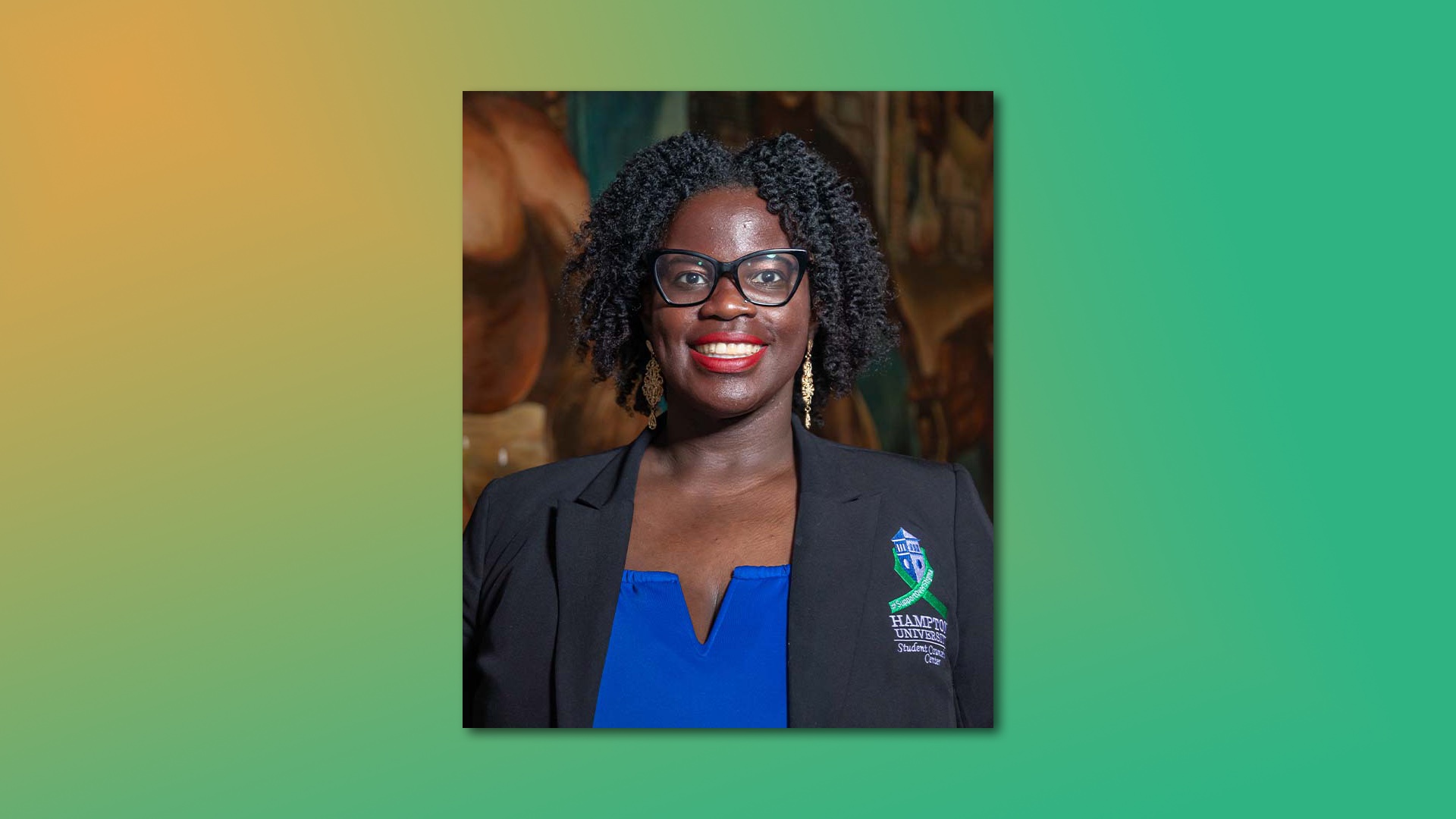
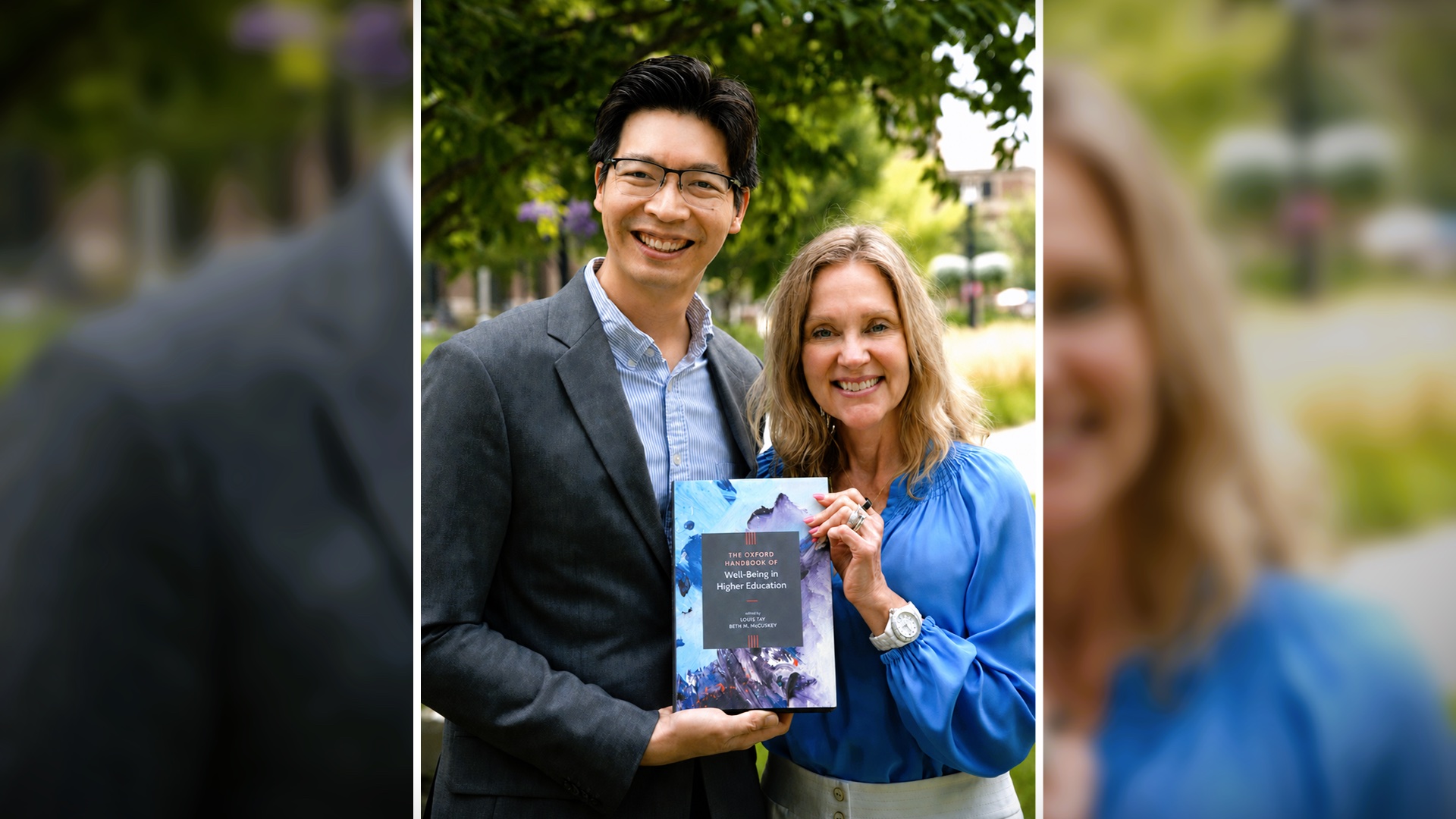
Posted in Q&A

Leading the Next Chapter of College Mental Health

When Eric Wood talks about the future of college mental health, he does so from the front lines. The longtime director of Texas Christian University’s Counseling and Mental Health Center and past president of the Texas University and College Counseling Directors Association has just been elected the next president of the Association for University and College Counseling Center Directors (A.U.C.C.C.D.). His tenure will begin in October 2026. 

Known for his innovative Comprehensive Collaborative Care Model and award-winning e-book, “A New Narrative for College Mental Health,” Wood is stepping in to lead the nation’s largest organization for campus counseling leaders at a moment when the field, like all of higher ed, is confronting change. We caught up with him fresh off hosting a national symposium on performing artists and athletes and took the opportunity to ask him about A.U.C.C.C.D.’s plans and priorities.

LW: Congratulations on your election as president-elect of A.U.C.C.C.D. What do you see as the major challenges for the organization in the coming year?

EW: We as counseling centers have done a really good job capturing the narrative of how important college mental health is. College mental health has a lot more significance than people realize. If you think about the demographic we serve, the traditional 18- to 25-year-olds, that’s a prime demographic for pretty much anything — substance use, suicide, emerging disorders. It’s also the best time to treat them because if you can treat them then, they may have fewer episodes later, or none at all. Whereas if they wait 10 or 15 years, it’s a lot more ingrained and harder to treat. 

Colleges and universities have greater access to that demographic than any other health-care system. They live, walk by, and travel by our campuses every day. So the question is: What opportunities does that create if government and other organizations really recognize this?

LW: You’ve become known for T.C.U.’s innovative model of collaborative care. Can you explain what that is and how it ties into your national leadership goals?

EW: We call it the Comprehensive Collaborative Care Model, and it’s reshaping how universities think about their role in mental health. We started it during the pandemic. The mindset had always been that college counseling centers were designed for developmental concerns — the stress that comes from change — not necessarily for students with high mental health needs. But those dynamics have shifted. Now we have students with much higher needs, and our systems weren’t designed for that.

So instead of building hospital-style treatment centers, we built bridges. We partner with community providers who were designed to work with individuals with high needs but who lack the infrastructure and access we have. They come onto our campus, use their programs, and our students stay in school, on our campus, in programs with other college students. It’s a win-win-win: The student’s insurance covers most costs so there’s just the co-pay, and we’ve gotten grants and donors so the treatment centers have the chance for little or no overhead. We’ve trained over 100 schools to replicate various parts of the model. 

LW: You mentioned that politics and policy changes are affecting mental health care on campuses. What are you seeing?

EW: If you’re in a university that’s depending on federal funding, there’s a new level of raised exposure. There’s a perception that if a state or federal funding source doesn’t like something at your institution, they’re going to cut your funding off. People don’t realize that even if it had nothing to do with college counseling centers, it is going to trickle down if schools have that cut in funding. When universities face federal or state funding cuts, that trickles down to us. A 20 percent budget cut across campus means a 20 percent cut for the counseling center, too. And yet the demand for services has never been higher.

A lot of the culture-war legislation, like D.E.I. bans, has had unintended consequences. Some states have medical exemptions for those laws, but others don’t. We’ve seen schools cut services that were never meant to be targeted, like gender specific groups with mental health and addiction issues. This is an age group much more likely to seek help on campus than they would after graduation, so when you remove those options, you lose opportunities to intervene early.

“When policymakers pass laws or set funding priorities, I hope they think carefully about how that affects college mental health.”

We’re trying to make lawmakers aware that mental health has never been a partisan issue. Surveys show eight out of ten Americans believe schools are responsible for providing health care to students. The narrative we’re pushing is: “Look at the possibilities higher education offers society. Why would you want to limit that potential?”

LW: What other issues are most pressing for college counseling centers right now?

EW: We’re still seeing the ripple effects of the pandemic. And we do know that in this age group one of the things that spiked is their likelihood to transfer. The students entering college now were in middle school during the shutdowns — the classes of 2028 through 2030. That’s a critical cohort with a lot of struggles. They missed key developmental years, and those formative years had a lot of disruption going from middle school to high school, and we see that in their social and academic adjustment carrying over to higher education. 

And as digital natives engaged in all the social platforms, they’re used to absorbing all the culture and content and polarizations in society. That’s their reference point, and a lot of them may not know what it’s like to not have that level of polarization. So they’re bringing that to campus. When they see politicians saying certain words or treating each other some way, you’re going to see that carry over to how they treat faculty. They see that people just break rules; you see that happening in politics and society, and that carries over into the res halls because that’s the frame of reference. 

We’re also seeing a higher level of parental involvement. Their parents spent more time with them during lockdowns, engaged in a closer front-row seat to their education, so now we’re seeing that continue — sometimes helicopter-level involvement — in college life. 

LW: What’s on your personal wish list as incoming president?

EW: To keep building that narrative and have a stronger voice nationally. We’ve had some success getting attention from politicians and national outlets, but there’s so much more to do. When policymakers pass laws or set funding priorities, I hope they think carefully about how that affects college mental health.

And college is where the developmental concerns play out because this is the prime age. The reason why colleges created counseling centers wasn’t because we thought every student had a clinical diagnosis. Most students do not. The centers exist because we define stress as heightened in times of major change, and a major one is when you start college. You only have about four or five of those moments in your life when everything can change. So starting college is one of them — you change where you eat, where you live, your identity, everything — and then graduating college is a second one. So you have so much change bookmarking the college experience. And then you do have associated stressors, like navigating the social environment, and we know that demographic tends to engage in high-risk behavior, so a lot of prevention work is important. That is why college counseling centers exist, and I contend colleges and universities are the best in the world at doing that. But because there’s currently a lot more students with high mental health needs coming to campus, the disconnect occurs that we aren’t good at what we’re doing. That couldn’t be further from the truth.

The mental health of young people is always going to be a popular, bipartisan cause. We just need to remind people of that and continue the collaboration.

LW: How do you see that collaboration playing out at the national level?

EW: Collaboration is essential. Some states have strong organizations, like Texas, but not all do. One of my goals is to help develop those networks. State laws affect us differently, so we need local collaboration as well as national unity. There’s strength in numbers, whether it’s state collectives, regional conferences, or collaborations across university systems, like the athletic conferences.

It’s also about mutual support. A lot of what’s in the headlines about higher education doesn’t directly involve counseling directors, but it still affects us through funding cuts, political pressures, or staffing shortages. Directors need to come together because having a collaborative amplifies our method, our messages. We need each other to stay resilient.

LW: You just hosted a symposium on athletes and performing arts. What can you tell us about the thinking behind spotlighting those populations?

EW: It really came out of conversations we were having on our campus about performing artists and athletes — two groups that represent the university in powerful ways but have very different kinds of support systems. Varsity athletes get a lot of institutional support, but there are just as many performers and non-varsity athletes who face similar pressures and injuries without the same safety nets. 

For example, if a student athlete gets hurt, the university often covers the care, and they can still progress toward their degree. But if a dancer or musician gets injured, they often can’t progress toward their degree because performance is part of their coursework. That difference really highlights why universities need to think more broadly about how they support these students. 

So we decided to organize a symposium to explore that. We reached out to experts from Johns Hopkins, Stanford, Harvard — literally the pioneers of performing arts medicine — and every single one of them said yes. We even had ballerina Tiler Peck as a keynote. It turned into a two-day virtual event that drew about 100 sign-ons per session; many of them were in classrooms watching together. It was the first time we’d done anything like it, and it really underscored how much synergy there is between athletic and performing-arts wellness.

LW: How long have you been at T.C.U., and what do you think your election says about A.U.C.C.C.D. and where it’s headed?

EW: I started at T.C.U. right out of my Ph.D. program in 2007 and became director in 2019, so I had one good semester before the pandemic hit. Everything we’ve built since then has been about adapting to change and meeting students where they are.

I’m honored by the role. I think part of the reason I was elected is because we’ve done a good job at innovation at T.C.U., and I think it shows a shift in the narrative about college mental health. For a long time, the assumption was that we as colleges were limited — that if a student had a serious mental health disorder, they needed to go elsewhere, just like you wouldn’t expect a university to perform surgery. But that’s changing. For example, one of our specialized programs is an intensive outpatient program on campus. I’d love to see every residential campus in America have one. The impact would be generational.

So, I think my election signals that people are starting to recognize the potential and the possibilities of what we can do — and that we can do it at a fraction of the cost, using programs that already exist. And why would you want to do anything to ruin that potential? To have my colleagues across the country say, “We want that kind of innovation leading us forward” — that’s deeply meaningful. It tells me people see the potential of college mental health, and they’re ready to invest in it.

Posted in Q&A

Questions and Answers with Wendy Kopp

Wendy Kopp was fresh out of Princeton when she launched Teach For America, the premier teaching corps for college graduates hoping to change education and, with it, the world. Along the way, Kopp was able to prove that early career choice involving proximity to social challenges was the most fertile ground for strong leadership. Her proof of concept is the success of the program’s alumni — a group that includes leaders of education, social innovation, and government.  

Over 35 years later, Kopp is working to reinvigorate the national call to service among a generation jaded by the weight of the world’s problems and drawn to a culture, on and off campus, that puts “I” before “We.” Kopp, who is now the head of Teach For All, has recently launched Rising Generation, a campaign of sorts to change the perception about what constitutes a successful career and what it takes to be the kind of leader the world needs. 

The initiative aims to counter the declining participation among recent graduates in social impact jobs and the prevailing narrative that lucrative careers are the best path for our brightest students. In this interview with LearningWell, Kopp lays out the barriers and opportunities inherent in bringing today’s students into jobs that will change people’s lives, as well as their own.

LW: What was your main motivation in launching Rising Generation?

WK: For 36 years and counting, I’ve been obsessed with the question of how to inspire the next generation, first, to commit themselves to the work of Teach For America and, now, to the similar organizations across the global Teach For All network. Working alongside many others across the world, I think we all felt collectively like we were pushing a boulder up a hill in terms of inspiring the engagement we need for this work. 

In a way, I would think that it would be easier than ever to recruit this generation to commit two years to teach in under-resourced communities — to go through that kind of learning journey that gives them the capacity to tackle these systemic inequities throughout their lives. The challenges of the world — the inequities of the world — are more visible than ever. And yet, statistically speaking, more recent graduates are foregoing these opportunities and putting their energy towards, say, finance, consulting, and tech, than they did even ten years ago. I’m just constantly obsessed with that puzzle, and that was one factor.

“The ability for young people to assume professional responsibility in proximity to injustices is really crucial for developing the leadership we need in the world.” 

And then the second is the growing evidence we have across the Teach For All network about just how transformative those two years are for young people. That’s led me to believe that the ability for young people to assume professional responsibility in proximity to injustices is really crucial for developing the leadership we need in the world. 

Our research shows that through these two-year commitments to teach, these young people come to believe in their own self-efficacy and agency and come to believe even more in the potential of students and families in low-income communities. Their analysis of the issues they’re addressing shifts from thinking it’s more a technical fix — that more funding will solve the problem — to believing it’s a deeply adaptive systemic challenge. 

And their priorities shift. Across the world, 75 percent of these individuals of all different majors and career interests, who begin their two-year commitments to teach unsuspectingly, end up committing themselves to this mission long term. They’re working long term as teachers, school principals, school system administrators, social innovators, advocates, policymakers, and elected officials.

What that research shows us is that not only are we getting a different group of people who might not otherwise have engaged in this work and are staying with it but this experience is turning them into the leaders we need: people who have a sense of agency, who have a sense of possibility, who understand there’s no silver bullet solution and are committed to tackling the issues long term. 

Another factor, I have to admit, is my own kids. I have college-aged kids and, in spending time with them and their friends, I’ve learned more about their experiences and what they’re thinking about, and that gave me a sense of possibility that we could do something about this. 

I think it’s all of that. It’s seeing the challenges of recruiting the next generation to this work, understanding just how formative these kind of professional experiences are in generating the leadership we need in the world, and then finally coming to believe that we could actually do something about this problem.

LW: In a LinkedIn message about Rising Generation, you note that data from the Deloitte Global 2024 Gen Z and Millennial Survey showed some of those generations’ lowest–ranked considerations in deciding where to work were “its values and purpose align with my own,” “the positive impact it has upon wider society,” and “the opportunities it gives me to address social problems.” I’m guessing that was disappointing. What do you make of this, and do you think it reflects a real turn away from social impact careers? 

WK: Initially, I thought it was really surprising because there’s so much evidence that this generation cares so deeply about the challenges facing the world. I think there’s a deep concern among many, many young people that they would love to help make the world a better place. But what the latest research shows us is that they’re not thinking that the way to do that is through their jobs.

This is not a new phenomenon. The more I’ve talked to people, the more I’ve come to think of this as a societal norm. We think about our jobs like our houses. We get a job. It meets our needs, and then it’s how we do our jobs that matters — how we work with others, how we vote, and what we volunteer for that enables us to make a difference in the world. 

We need to really challenge that and help people understand that to tackle these big systemic challenges, it is going to take a whole lot of full-time, long-term work in the arena. It requires being close to the roots of the issues. It’s going to take going through the learning journey, trying things, learning from that process, and really playing the long game. 

One thing I’ve discovered is that there is such power in just naming this issue. That’s true for young people. It’s true for people at the university level. The most valuable resource in the world is the time and energy of our most educated young people, and we need to be conscious about that. We need to start thinking a whole lot more about how to make sure that their energy is tackling our biggest challenges and that these young people have the early experiences that will enable them to actually be successful in tackling those issues.

LW: We hear a lot about “sellout jobs” — this idea that our highest performing students are just being funneled into higher paying careers at the expense of doing good in the world or even deriving purpose from what they do. What do you think has led to this phenomenon? 

WK: There are so many different factors, but let’s unpack it a bit. Many believe this is an economic issue — that students are graduating with greater debt and greater financial burdens and are more worried about their financial futures. Those factors are real, but it’s not right to attribute this phenomenon to these factors.   

“Instead of thinking these four years are going to be a time of great exploration, they are met early on — sometimes as early as freshman year — with corporate recruiters.”

First, we should question the financial narratives that young people are telling themselves. If you really start talking to these students who are taking the “sellout jobs” and get your head around what they think their baseline salary requirement is, you’d be shocked. 

What the research shows is that students are far more likely to work in consulting, finance or technology if they are from an economically privileged background, so we can’t attribute this whole thing to the financial state of affairs. 

I think a really important factor is that these young people aren’t experiencing a campus culture that fosters deep intentionality and reflection on what they see as their purpose in life. What are their values? Where do they want to put their time and attention? Instead of thinking these four years are going to be a time of great exploration, they are met early on — sometimes as early as freshman year — with corporate recruiters.  

Before they can even think about it, here comes the very lucrative summer internships and then these two-year, post-college programs. There aren’t the countervailing forces on these campuses to create a culture of reflection and intentionality, and that’s a huge part of it. 

I will say there’s something that’s giving me hope in looking at the research and talking to young people about what matters to them, and that is their priority around learning and development. The corporations have convinced them that the path to rigor and learning is through working for their firms. One of the things we’re thinking about with Rising Generation is how we can help young people understand that if they want to be a civic leader in our country and in our world, they need to find their way to a professional responsibility that gives them proximity to the roots of the social challenges we face; only then will they gain the perspective, the insights, the relationships, and the credibility to ultimately make a difference against the big systemic challenges we face.

LW: Do you think this reflects a kind of “I” vs. “We” culture on college campuses? 

WK: We think a lot about that at Teach For All because we really believe that we need to shift the purpose of education from being about individual attainment to equipping young people to shape a better future — not just for themselves but for all of us. And I think if we don’t shift what happens in our classrooms to work towards that end, we won’t ultimately have the world that we’re all hoping for.

LW: How do you approach a problem like that?

WK: Well, this is how we see our work across the Teach For All network. The independent, locally led organizations in our network are working to develop what we’ve come to call “collective leadership” for ensuring all children fulfill their potential. By this, we mean we’re developing a critical mass of diverse people working around the whole ecosystem around children who are all on the same mission and who are reflecting and learning together and collaborating. As we develop this leadership, we’re orienting towards a vision of a world where all children have the education, support, and opportunity to shape a better future for themselves and all of us. We’ve recently launched the Global Institute for Shaping a Better Future to foster learning among leaders everywhere — across and beyond our network — who are committed to reshaping education in this way.

Wendy Kopp meets with students on a visit to a rural school in Yunnan Province, China. Courtesy of Teach For All.

LW: Do you get the sense that graduates feel as though they will get to contributing at some point in their lives? 

WK: Yes. We have to give young people some perspective that you can’t go spend 15 years working in a skyscraper and be confident that you can shift gears and know exactly what to do to tackle the social inequities in the world. You have to go through a deep learning journey to be able to do that.

LW: What is it that’s unique about the Teach For America and Teach For All experiences in this regard? 

WK: I think that Teach For America and the Teach For All network partners are giving young people a chance to attain that proximity. You’re in a classroom; you’re seeing the microcosm of the world and all its social issues play themselves out in your classroom, and you’re on the front line directly working with students and families and others in the community. Our theory has always been that this would create leaders for social change far beyond education because the issues you see in a classroom are so systemic and cross-sectoral in their nature. 

LW: What can colleges and universities do to embrace that concept and try to help students think about the value of these early, social impact experiences? 

WK: I think this is so crucial. In the early years of Teach For America, we had so much allyship among professors and career service offices and college presidents in putting the Teach For America opportunity in front of their graduates. I think over time, we started hearing from folks that they needed to be neutral — that they couldn’t offer preferences for one job choice over another. And I’ve thought a lot about that because they’re professing neutrality, and yet honestly, they’re anything but neutral. 

A lot of people — a lot of career service offices — are encouraging young people to take more lucrative paths for a variety of reasons. There are notable exceptions. I think about Michael Crow at A.S.U., who every year invites the top few hundreds of students to his house and says, “I want you to do Teach For America.” That makes a big difference. There’s a lot that universities can do to help people think about these options that might not be as present for them, given the recruiting practices of these corporations. But by and large, that’s not our experience, and that’s very unfortunate.

LW: Finding meaning and purpose in your career has proven to lead to improved wellbeing, but you don’t hear a lot about that in corporate recruiting, I’m guessing.  

WK: This is one of the reasons we’re embarking on the Rising Generation initiative. I think we need to help young people understand — really think about — what it’s going to take for them to feel successful. I think we need to challenge the common narratives around that. There’s evidence showing that your wellbeing in the workplace is the biggest factor in your overall wellbeing. If you’re feeling the sense of purpose and connectedness to people through your work and a sense of agency and you’re able to contribute positively, that’s going to have a huge impact on your mental health. 

I think about the people I know who have done work that involves proximity to big issues and have stayed the course. They are some of the most connected, grounded, and fulfilled people I know. I think we need to help young people understand the long-term consequences of those first decisions that they make. 

LW: That’s a big part of Rising Generation, I assume. What are the ways you are going about this work?

WK: We’re really thinking about how to create a norm shift in how people think about first jobs.  

We’re organizing our work in three buckets initially. One is around data,  research, and learning — understanding how this issue is playing itself out differently across different segments of campuses and different student demographics and understanding what’s influencing young people and their job choices. We are going to pursue student-led focus groups to understand and inform the path forward. 

The second is what we’re calling University Community and Learning. We’ve found our way to so many people who are working on these university campuses, from some college presidents to career service office heads to professors and thought leaders, and all who are really focused on doing something different — who are challenging the prevailing narrative and working to foster more intentionality and reflection among students. We are aiming to bring them together and build community among them so that folks can support and inform each other and think together about how to propagate these experiments. 

The third bucket is around the options themselves because if you are a college student who doesn’t go the traditional path, it can be really hard to find your way to a job that gives you the kind of proximity you would hope for. We need to make the existing options more visible and create new ones. We think there may be some real opportunities to do that. 

You can reach LearningWell Editor Marjorie Malpiede at mmalpiede@learningwellmag.org with comments, ideas, or tips.
Posted in Q&A

Looking to Michigan

When asked about the state of higher education in America today, University of Michigan’s president, Domenico Grasso, is unabashedly ambitious about what needs to be done and who needs to do it. “As the most comprehensive and distinguished university in the world, the University of Michigan bears a profound responsibility not only to lead in scholarship and innovation but also to serve as a thoughtful compass in challenging times,” he wrote in a recent white paper. 

Grasso is leading Look to Michigan, a multi-faceted, multi-year mega-plan that is at once a capital campaign, media blitz, and strategic realignment aimed at optimizing Michigan’s inner and outer strengths. With five priorities, including the establishment of the American Dialogue Center, Look to Michigan assumes a leading role in demonstrating to the American public why higher education is such a valuable asset at a time of diminished support and extreme politicization. As the title suggests, Michigan asks, “If not us, then who?” 

Launching such a bold, public agenda may seem unusual for a president serving in an interim capacity, but Grasso vowed he was never going to be just a placeholder when he took over the role from former President Santa Ono. Grasso is the former chancellor of the University of Michigan-Dearborn, a branch of Michigan that serves largely first-generation students. He’s a staunch believer in the life-changing power of higher education.  

As a Michigan alum, and a rabid Wolverines football fan, Grasso is as comfortable talking about Michigan’s waste production during home football games as he is running the Prez Quiz during T.V. timeouts, when students answer trivia questions to win U-M swag. In this interview with LearningWell, President Grasso offers his perspective on the many issues he and his peers are dealing with and why he believes the best defense is a good offense. 

LW: As a Michigan alumnus and a chancellor here for many years, how did you feel when you were chosen to be president of the University of Michigan? 

DG: I would first say that I was surprised because I did not expect it. And I did not seek it. But of course, it was an honor because Michigan is, in my mind, the best university in the world. We have 110 programs in the top 10. We have a world-class medical center that’s unrivaled. We have an athletic enterprise that is second to none as well, and all that is together under one roof with three campuses that have different missions and constituencies. It’s just a terrific place.

LW: Speaking of the three campuses, U.M.-Dearborn, which you oversaw as chancellor, is very different from Ann Arbor. Have your experiences at Dearborn influenced your new role? 

DG: One of the things that I experienced at Dearborn is that it has a very close-knit family of students, faculty, and staff. Everyone is super nice. They are not internally competitive with one another. They come from modest means; they are authentic and are there to improve their lives. Many of them are very humble while also having a great deal of talent, and that always impressed me. 

The University of Michigan at Ann Arbor is a very high-powered school. There is a lot of, I would say, energy on this campus that we all benefit from, but I’m trying to bring some of the values — the empathy, the family-like interactions — I witnessed at Dearborn here to this campus.  

LW: I read your LinkedIn post with a message to your students about civility and kindness. Is that part of what you are talking about?

DG: I am a staunch advocate of the First Amendment, and I’ve said that in multiple places. But being a staunch advocate of the First Amendment doesn’t mean that we have to give up our kindness and civility in exercising our First Amendment rights. This is one of the things that I would like to bring to campus: the ability to talk across differences and perspectives in a way that we are truly trying to reach common ground and not just trying to preserve our own particular views.

LW: How do you go about doing that? 

DG: It’s not easy. I think that the first thing to do is to model it. I have a lot of people around me with very strong opinions. How I interact with them models how to interact with people that may have differing opinions from you. Before this semester, a number of my senior staff and I met with every single Jewish group that we could find in southeastern Michigan. And we also met with every single Muslim and Arab American group, all part of an effort to encourage a peaceful and collaborative reentry into the fall semester. 

So far it seems to have paid dividends because we have not had a lot of the acrimony that we had on this campus in the past. People want to be heard. They want to express their opinions, and they want to be taken seriously. And that’s what we’re trying to do. For me, it’s about this concept of intellectual empathy: trying to understand other people’s perspective. Not just tolerate it but to really understand it. You want them to find their voice but also have open ears.  

LW: You are hitting the ground running with the announcement of the Look to Michigan campaign. What is that all about? 

DG: We have our $7 billion capital campaign, which we recently launched, and a strategic vision we are now calling Look to Michigan, which is consistent with our capital campaign but different. 

There are five pillars of Look to Michigan. The first is transformative education: the need to deliver life-changing education focused on students’ agency and purpose, empowering them to lead with integrity, intellectual empathy, and rational thought. The second is human health and wellbeing, which has to do with all sorts of things for which Michigan is so well known, from health equity to cutting-edge medical care and transformative medicine. 

The third one is civic engagement and democracy. Here, we are launching a civil discourse center, tentatively called the American Dialogue Center. The fourth pillar is energy and climate change, and the fifth is advanced technologies — everything from AI to nanotechnology. We’re investing $1 billion over 10 years — a hundred million dollars a year — in these initiatives. This isn’t a check-the-box to get everything done in a year or two. This has a 10-year shelf life, and we’re only in year two. It’s a vision that spans a decade and is centered on these core initiatives.

LW: These are not just internally facing initiatives. This is also a public campaign, correct? 

DG: Absolutely. One of the main focuses of the Look to Michigan campaign is to regain the public’s trust in higher education. The University of Michigan was founded in the public interest in 1817, and it’s remained there ever since. A lot of schools have been struggling to make a case as compelling as ours in this regard, but here it is in our institutional D.N.A. 

“The United States of America is the greatest country in the world, in large part because we have the world’s greatest universities. If we do anything to threaten that, we’re threatening the future of the United States.”

The Look to Michigan campaign is also a media campaign. This month, we’re going to have full-pageads in the New York Times, The Wall Street Journal, the Economist, the Atlantic, and other publications — digital, print, audio, social media. And it’s going to explain that we are committed to the public interest and why that matters to every citizen in this country.  

The United States of America is the greatest country in the world, in large part because we have the world’s greatest universities. If we do anything to threaten that, we’re threatening the future of the United States, and we have to make that point very clear. Some of my colleagues at Princeton and Harvard are saying the same thing, but this is Michigan’s chance to move into the passing lane and to be the leader in reacquiring the public trust in the mission and purpose of higher education. 

We have 7,000 faculty members. I want each one of them to consider themselves public intellectuals and ambassadors for this cause. I want them to explain their work to the general public in terms everyone can understand. They have to be able to translate what we do in a way that a farmer in Nebraska, a textile worker in New England, or an office worker in the southwest will understand. As part of the campaign, we’re going to use digital storytelling to connect to the public good and explain why Michigan is so special — unique — in this area. 

LW: Does it help your message that you are such a highly regarded public university?  

DG: We are a public university, but I want us to stop using that as a qualifier because I don’t want us to be the best public university in the country or in the world. I want us to be the best university in the world that is in the public interest.  

LW: How much of this is to fend against what’s going on in Washington? Or is it more of a long time coming?

DG: I think it’s the latter. In certain ways, it is a defense against criticism that has been directed at higher education. But we should have been doing this whether it was Trump or Obama or whoever in the White House. I think we need to have a better social contract with the American people as to why higher education is so valuable, so worthwhile, and so worthy of investment and trust. The erosion of it started many, many years ago — well before MAGA. I watched this happen, and I thought it was devastating for universities and for America, and I thought that Michigan was well-positioned to take the lead on reversing this trend.  

LW: That’s a lot to take on for an interim president.

DG: I told the board of regents right at the start that I was not going to be just a placeholder. Either we were going to move the university forward or I wasn’t interested in the job, and everybody agreed with that.

LW: I am guessing that the “attack on science” is not going over well at Michigan.  

DG: No. We are a very science-focused school, and a lot of great things have come out of the University of Michigan. Science comes from “scientia,” which is the Latin word for knowledge, and it’s hard to argue against wanting to obtain knowledge. I know people think there are different views of it, but the whole scientific method — the Enlightenment — was all designed to help us improve the human condition, not to determine the human condition. For us to walk away from that at this point in time would be devastating for the future of humanity.

LW: Is it difficult to keep everyone on campus calm among such uncertainty in higher ed? 

DG: Everybody is concerned about the future because every time we open up a newspaper or a website, another school, or another nine schools, is in the hot seat. Everybody is a little bit on pins and needles, but I don’t want that to influence our commitment to who we are and to what we do.

LW: You’ve been a Wolverine for a long time as both a student and administrator. Now that you are head of the pack, are you having some fun as well?  

DG: It’s a lot of work — an enormous amount of work — and it is all-consuming, but it is also so much fun. As graduates — my wife Susan is a graduate three times over — we have such a sense of love and affection for this university, and it is terrific to be here in this position. It’s surreal, and it’s just been a wonderful experience. 

You can reach LearningWell Editor Marjorie Malpiede at mmalpiede@learningwellmag.org with comments, ideas, or tips.
//

Posted in Q&A