A Public Health Approach to the Campus Mental Health Crisis

The numbers are startling. Mental health challenges among United States college students increased by more than 100% in eight years, with the largest increase seen among non-white students, according to a recent study by the Healthy Minds Network. And, while the good news is that more students are seeking help and the stigma around mental illness is slowly fading, demand for support services far outpaces supply, particularly for students of color. 

As president of American University (AU), these numbers keep me up at night. I don’t have to look at the data to know that mental health challenges can impact every aspect of our students’ lives. I see these impacts across our campus every day, and I know others are experiencing similar trends on campuses across our nation. 

If we’re going to create and implement long-term solutions that address both the supply and the demand issues, we need to apply the same three-pronged approach we have used in other public health crises: prevention, detection, and response.  

At the same time, we must ensure we’re differentiating what services are needed throughout every stage of our approach by understanding the unique needs of each individual student, and by accurately assessing their situation to provide an appropriate level of care.   

At AU, our approach to prevention begins with a comprehensive focus on the whole person. Student thriving is a campuswide priority. We ask ourselves: What does our unique population of students need to be healthy physically, mentally, and socially? 

If we’re going to create and implement long-term solutions that address both the supply and the demand issues, we need to apply the same three-pronged approach we have used in other public health crises: prevention, detection, and response.

We are finding creative ways to meet those needs in our campus environment—from our 84-acre campuswide arboretum that provides space for our community to gather, engage, and recharge; to our specialty housing communities that bring students together to live and explore a common interest or academic pursuit. 

We know that financial challenges cause stress for many of our students. We’re working to address this stress through the Elevate Scholarship Initiative, a philanthropic effort to raise $25 million—matched by another $25 million from the university—to support undergraduate students enrolled at AU who are experiencing financial hardships. 

And we’re working to create a sense of inclusion and belonging throughout our community to ensure that our students have support networks that both help to counter feelings of loneliness and depression and provide opportunities to seek, and find, assistance.  

We believe that detection must be a community effort—our Care Network empowers all AU community members to identify students experiencing mental health and other challenges and help them access the assistance they need. 

And, as part of our strategic focus on scholarship, learning, and community, we’re working to address the root causes of this crisis on a macro level. Our faculty are at the cutting-edge of mental health research—from Dr. Terry Davidson’s work with the Center for Behavioral Neuroscience, which is poised to transform our understanding of addiction; to Dr. Kate Gunthert’s work with the Stress and Emotion Lab, which uses intensive daily monitoring techniques to better understand and address symptoms of depression. 

We also know that a comprehensive response is important, both in terms of providing timely and effective care, and being thoughtful about what we can do with our resources. Above all, we anchor our response in the idea of the whole student and our values of inclusion.

When students access our services, the first step is a solid initial assessment from a strong clinical team. We offer both individual and group therapy, with specific services for specific populations, such as racially-diverse clinicians who are skilled at providing services to students of color at predominantly white institutions, or through our use of technology to connect our students with a licensed clinician any time of the day or night. 

If we are to make progress on this crisis, we need to know what success looks like by asking ourselves crucial questions about growth, responsibility, and accountability. College students need to be supported and challenged to develop intellectually, socially, and morally. The college experience shouldn’t be so overwhelming that our students retreat and ultimately face mental health challenges, or so comfortable that there is no incentive to grow.  

And we must embrace the power of communities to act as the ultimate prevention tool—study after study has shown that building inclusive communities creates the social connections our students need to develop resiliency, be challenged and supported, and ultimately become the changemakers of tomorrow. 

Together, we can learn from today’s numbers and create a new story of mental health and wellness for our students.

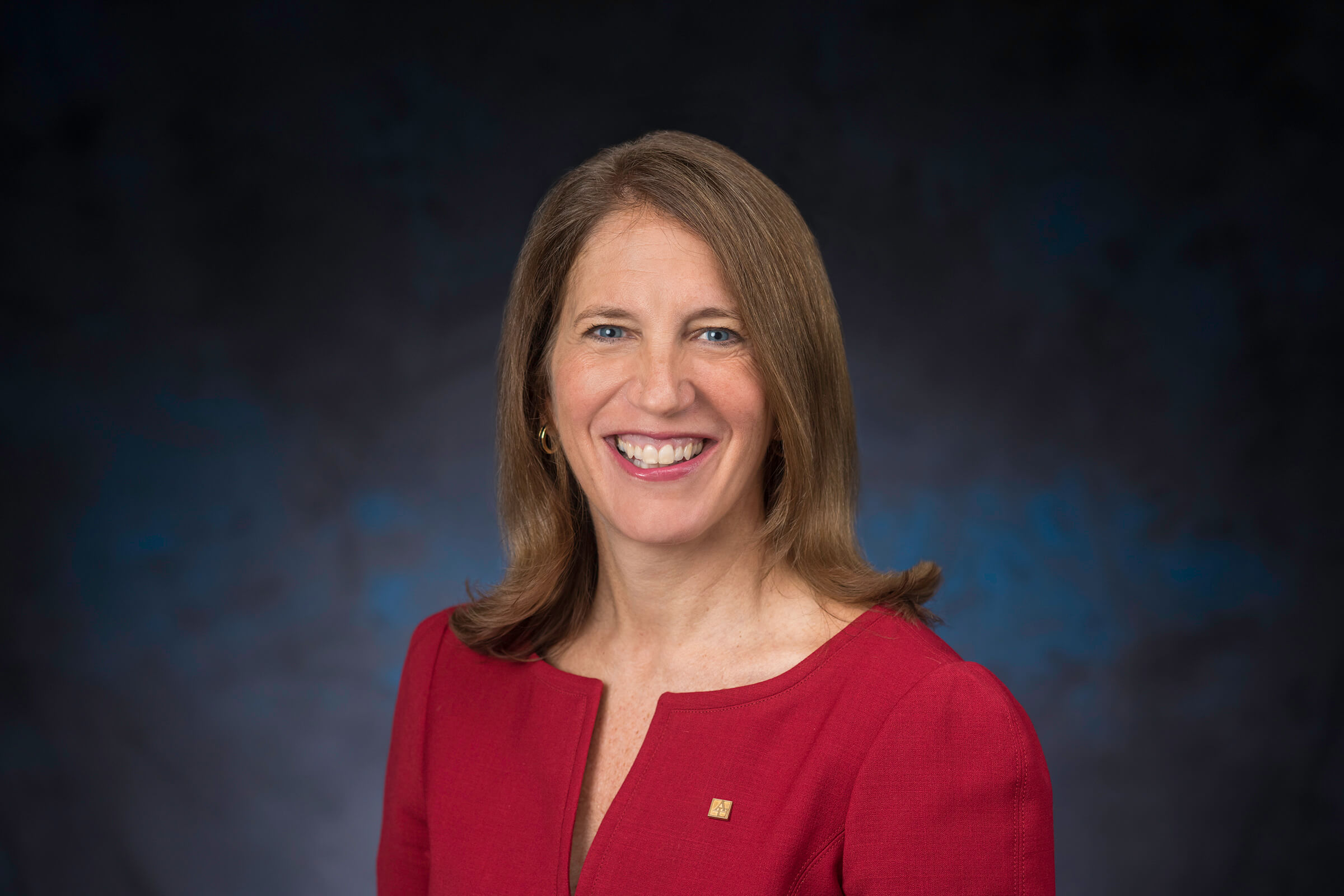
Sylvia Mathews Burwell is the 15th president of American University and the first woman to serve as president. She previously served as Secretary of the U.S. Department of Health and Human Services and as Director of the Office of Management and Budget. 

Blindspotting

Headshot of Lynn Pasquarella

In his recent book American Whitelash, journalist Wesley Lowery offers a stark portrait of contemporary American society, describing burgeoning levels of polarization and partisanship as signaling a “soft civil war.” Throughout his treatise, Lowery reminds readers that “One of our historical blindspots is thinking multiracial democracy—what America should be—is a settled question. Many people are not sure of that.” The recent Supreme Court rulings in the cases brought by Students for Fair Admissions against Harvard and the University of North Carolina confirm Lowery’s analysis. 

By striking down the use of race-conscious admissions, the current Court upended forty-five years of established precedent in cases spanning from Regents of the University of California v. Bakke (1978) and Grutter v. Bollinger (2003) to Fisher v. University of Texas at Austin (2013) and (2016), each of which affirmed a compelling state interest in a diverse student body as facilitating a critical educational goal. In the absence of a special justification or strong grounds for doing so, the majority’s rejection of the principle of stare decisis, from the Latin “to stand by things decided,” constitutes a monumental setback for higher education and for American democracy.

When Justice William Powell announced the landmark decision upholding affirmative action in the Bakke case, he not only noted the educational benefits that flow from racial diversity on campuses but also held that in order to promote “the most robust exchange of ideas,” an institution of higher education is “entitled as a matter of academic freedom to make its own judgments as to the creation of its student body.” Among the cases informing the majority opinion in Bakke was Sweezy v. New Hampshire (1957), in which Justice Felix Frankfurter argued compellingly that a “free society [depends] on free universities.” Frankfurter proceeded to warn of “the grave harm resulting from governmental intrusion into the intellectual life of a university,” according four “essential freedoms” to colleges and universities—to determine who may teach, what can be taught, how it is taught, and who will be admitted.     

By striking down the use of race-conscious admissions, the current Court upended forty-five years of established precedent.

The Supreme Court’s recent abridgement of these freedoms and their strict adherence to the notion that “the law is and must be colorblind,” even in the face of persistent structural racism, will inevitably exacerbate the growing economic and racial segregation in American higher education by creating further barriers to educational opportunity and social mobility for historically marginalized and underserved students. Evidence for this comes from the nine states that have already banned race conscious admissions, which include Arizona, California, Florida, Idaho, Michigan, Nebraska, New Hampshire, Oklahoma, and Washington. These states have witnessed a steady, long-term decline in their share of African American, Latine, and Native American students being admitted and enrolled at their public universities. For instance, after the University of California System passed Proposition 209, barring consideration of race in admissions at state colleges and universities, the enrollment of underrepresented minority groups dropped by 50% or more on UC’s most selective campuses. Similarly, when Michigan outlawed affirmative action, Black undergraduate enrollment declined from 7% in 2006 to just 4% in 2021, highlighting the fact that alternative policies designed to increase representation have proven inadequate. Two of the dissenting justices in Students for Fair Admissions, Sonya Sotomayor and Ketanji Brown Jackson, outlined several   contributing factors, such as students of color being more likely to attend under-resourced schools with fewer Advanced Placement courses and extracurricular activities, alongside less qualified teachers, a less challenging curriculum, and lower standardized test scores.         

The negative impact of eliminating race-conscious admissions extends to the entire student body, however. A multidisciplinary analysis of the research literature on the benefits of diversity at colleges and universities, conducted by Jeffrey Milem, demonstrates that the educational experiences and outcomes of individual students are enhanced by the presence of a multiracial and multiethnic campus community. It also illustrates the ways in which diversity enhances organizational and institutional effectiveness, while positively impacting quality of life issues in the larger society. Additional studies have shown the significant role that engagement with others who are racially different from oneself plays in identity construction and cognitive growth. Moreover, research on the effects of classroom diversity and informal interaction among African American, Asian American, Latine, and White students on learning and democracy outcomes has revealed the educational and civic importance of informal interaction with different racial and ethnic groups during the college years. 

Despite the availability of this evidence, and the expert claims offered by Harvard and UNC detailing the importance of a diverse campus for training future leaders in the public and private sectors; preparing graduates to adapt to an increasingly pluralistic society; producing new knowledge stemming from diverse outlooks; preparing engaged and productive citizens and leaders; and enhancing appreciation, respect, empathy, and cross-racial understanding, while breaking down stereotypes, Justice Thomas admitted to being “unable to understand how diversity yields any educational benefits.”

The negative impact of eliminating race-conscious admissions extends to the entire student body.

The decision that any use of race in the college admission process constitutes a violation of guarantees under the 14th Amendment to equal protection under the law comes amid a flurry of legislation aimed at eliminating Diversity, Equity, and Inclusion programs, policies, and practices; banning the teaching of Critical Race Theory, Gender Studies, and reproductive rights, even in medical schools; and eviscerating protections for LGBTQ+ students. Forty bills in 22 states have been introduced in support of these measures at a time when there are skyrocketing mental health issues on campuses, intertwined with a heightened sense of belonging uncertainty. The hidden and overt messages embedded in Students for Fair Admissions around who deserves a place at our nation’s elite colleges and universities creates a new sense of urgency for campus leaders around reassessing how we admit and enroll students, how we create spaces of welcome and belonging, and how we might employ pedagogies of kindness to fulfill the promise of American higher education for all. 

The American Association of Colleges and Universities’ mission of advancing the democratic purposes of higher education by promoting equity, innovation, and excellence in liberal education is grounded in the conviction that equity and excellence are inextricably linked, and that academic freedom is a prerequisite for a truly liberal education. A politicized Supreme Court has imperiled the capacity of colleges and universities to promote genuine diversity, which necessitates active, intentional, and ongoing engagement with difference in people, in the curriculum, and in the co-curriculum, as well as intellectual, social, cultural, and geographical communities, as a means of increasing one’s awareness, content knowledge, cognitive and empathetic understanding of how individuals act within systems and institutions. By engaging in blindspotting, a majority of justices in Students for Fair Admissions have handed down a decision that is likely to have negative repercussions for generations to come. The result will be a thwarting of the multicultural democracy to which Lowery refers, where all students are positioned for success in work, citizenship, and life within a globally interdependent, multiracial, and multiethnic world.  

Lynn Pasquerella is the president of the American Association of Colleges and Universities and served as the 18th president of Mount Holyoke College.