Students Share Wellbeing Concerns Ahead of New Year

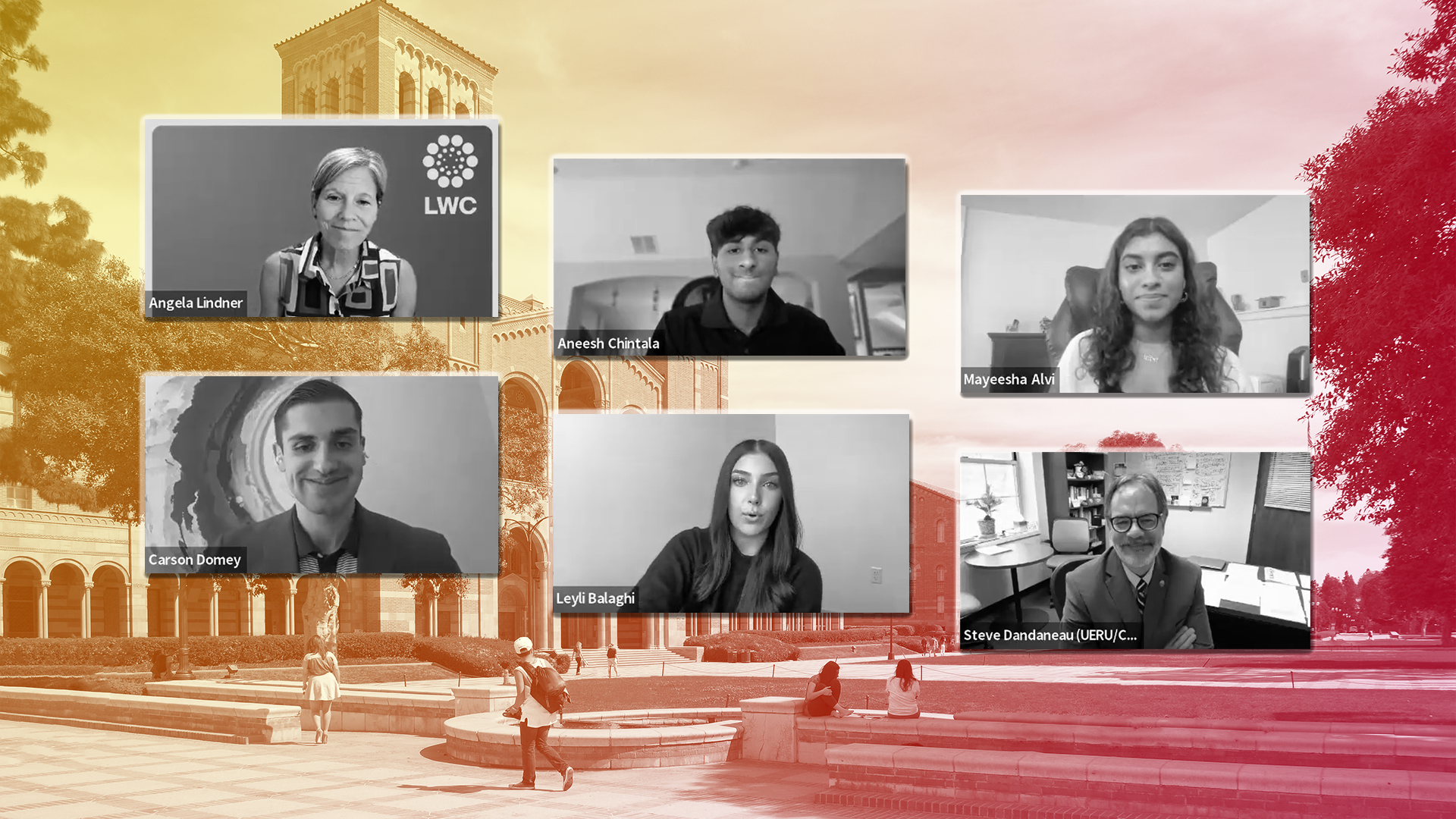
Ahead of the new academic year, a panel of undergraduates convened last Tuesday on Zoom to offer an audience of educators and administrators insight into some of the influences most affecting college student wellbeing today.

As the title suggests, “The State of Student Wellbeing: Navigating Pressure, Belonging, and A.I. on Campus” covered the young panelists’ views on a wide range of both academic and personal concerns, as well as ideas for how higher education leadership can help address them. 

The hourlong event was the second of its kind produced together by the Association for Undergraduate Education at Research Universities (UERU), a national consortium of leaders from research universities, and the Coalition for Student Wellbeing (C4SW), a student-led college mental health advocacy group. 

This time, the LearningWell Coalition, which promotes best practices in college student wellbeing, was also an organizing partner. The LearningWell Coalition is the publisher of LearningWell magazine.

After words of welcome from UERU Executive Director Steven Dandaneau, Angela Lindner, the executive director of the LearningWell Coalition, opened the session with an overview of trends in college student wellbeing, as well as ways forward. Recent measures of flourishing and purpose are troubling, she said, but evidence shows experiential educational experiences, like mentorship, internships, and research, can set students for long-term success.

“To fully support lifelong wellbeing, we must liberate our students and our own universities from the burden of the notion that the only purpose of college is to punch a ticket toward a job, and we must provide access to and participate in these relationship-rich, lifelong giving experiences available to all students, not just for a portion of our population,” Lindner said.

The remaining time was devoted to the student panel, which was moderated by Carson Domey, the founder of C4SW and a recent graduate of the University of Texas at Austin. He was joined by three of his members: Mayeesha Avi, a rising sophomore at Yale University; Leyli Balaghi, a rising sophomore at Arizona State University; and Aneesh Chintala, an incoming first-year at the Georgia Institute of Technology.

Time and again, the panelists highlighted how intertwined their academic experience is with their lives and struggles outside the classroom. 

Several of the stressors students identified might seem purely academic at first. Chintala spoke to his concerns about entering a university whose reputation for educational rigor he may not be able to keep up with. Avi pointed out how a prevalent “hustle culture” on her campus perpetuates the idea that “you’re always supposed to be doing more.”

But at a certain point, each of these academic anxieties became almost impossible to isolate from others, like financial or career-centered ones.  

In the nearly same breath that Chintala expressed his worry about maintaining an intense workload and top grades, he mentioned the coinciding urgency around “making sure that we have the internships, the experiences, and all of these different things needed in order to essentially get these jobs that we want.”

Avi, too, marked these entangled academic and professional pressures and how they can be exacerbated by financial need. “For students who are helping support not only themselves, but their families, it becomes even harder to slow down because success is tied to: How am I going to support my family in the future?” she said. 

According to Balaghi, financial concerns have the potential to influence just about every decision students make. Work hours could limit their class choices or ability to engage on campus in general. Earning requirements, not genuine interest, could dictate their major, extracurricular activities, or career path. 

There are also non-academic issues with potentially academic implications that are more personal or situational, the panelists revealed.

Balaghi opened up about the challenges of focusing on classes while grieving a close family member and far away from her support system at home. Avi said public and government scrutiny of her university, as well as general uncertainty about the future of higher education, has been distracting.

“There’s this underlying feeling that the landscape is constantly shifting,” Avi said. “As a student, that can feel very exhausting and confusing.”

Even the prevalence of A.I. in classrooms these days, the panelists noted, may have its roots in wellbeing issues. If young people were less afraid of failure, they might be more willing to trust themselves, instead of A.I.

If young people were less afraid of failure, they might be more willing to trust themselves, instead of A.I.

“I think it speaks a lot to the very kind of changing landscape of education that so many students are just so scared of making mistakes and so scared of not being perfect that they’re turning to tools like ChatGPT, like Gemini, countless others, because they know that it will usually output a correct answer,” Avi said.

To mitigate this reliance on A.I., Avi suggested “bringing it back to encouraging mistakes and encouraging the organic kind of thinking things through.” She mentioned a friend who was put at ease by a math professor who graded assignments based on proof of process, rather than the accuracy of final answers. 

A.I. chatbots are one tool the students all agreed should not be considered a mental health solution. 

Chintala recognized why young people, especially young men, might gravitate towards A.I. to work through emotional concerns. Its accessibility makes it a convenient option, he said, and a non-human sounding board could appeal to those hesitant to be vulnerable with others about their feelings. 

Still, Balaghi said, A.I. isn’t an appropriate replacement for professional, in-person mental health support. Institutions should educate students on its limitations, as well as provide the human resources they really need. 

“University leaders, I believe, should not simply tell students to stop using A.I. Instead, I believe that they should ask what A.I. is providing that [the] current support system at their institution is not,” Balaghi said.

All of the panelists agreed that one of the best buffers against college pressures have been the people and spaces that make them feel secure. A sense of genuine belonging, whether to cultural groups or living-learning communities, has helped each make second homes of their campus. Accessible and culturally responsive mental health resources on campus, they added, can reinforce that safety, too.

“Community has made all of the difference for me,” Avi said. “I think universities do a really great job when they create spaces where students can find people who share some part of their identity.” 

Often, the message the panelists seemed most keen to get across was that they are eager to be involved in determining and improving the decisions about how to address their own health and wellness. 

“One thing I hope university leaders remember is that today’s students are incredibly invested in their campuses. I mean, they serve as our second home for a large majority of the year,” Avi said in a closing statement. 

“We don’t want to just receive decisions. We actually want to help shape them.”

You can reach LearningWell Reporter Mollie Ames at mames@learningwellmag.org with comments, ideas, or tips.

Tilting Futures with Erin Lewellen

On this month’s episode of LearningWell Radio, the C.E.O. of a nonprofit experiential learning organization describes a global immersive experience where students undergo personal growth while building the skills and networks needed to address the world’s most pressing challenges.

Listen now on Spotify or Apple Podcasts.

You can reach LearningWell Editor Marjorie Malpiede at mmalpiede@learningwellmag.org with comments, ideas, or tips.
Learning Exchange

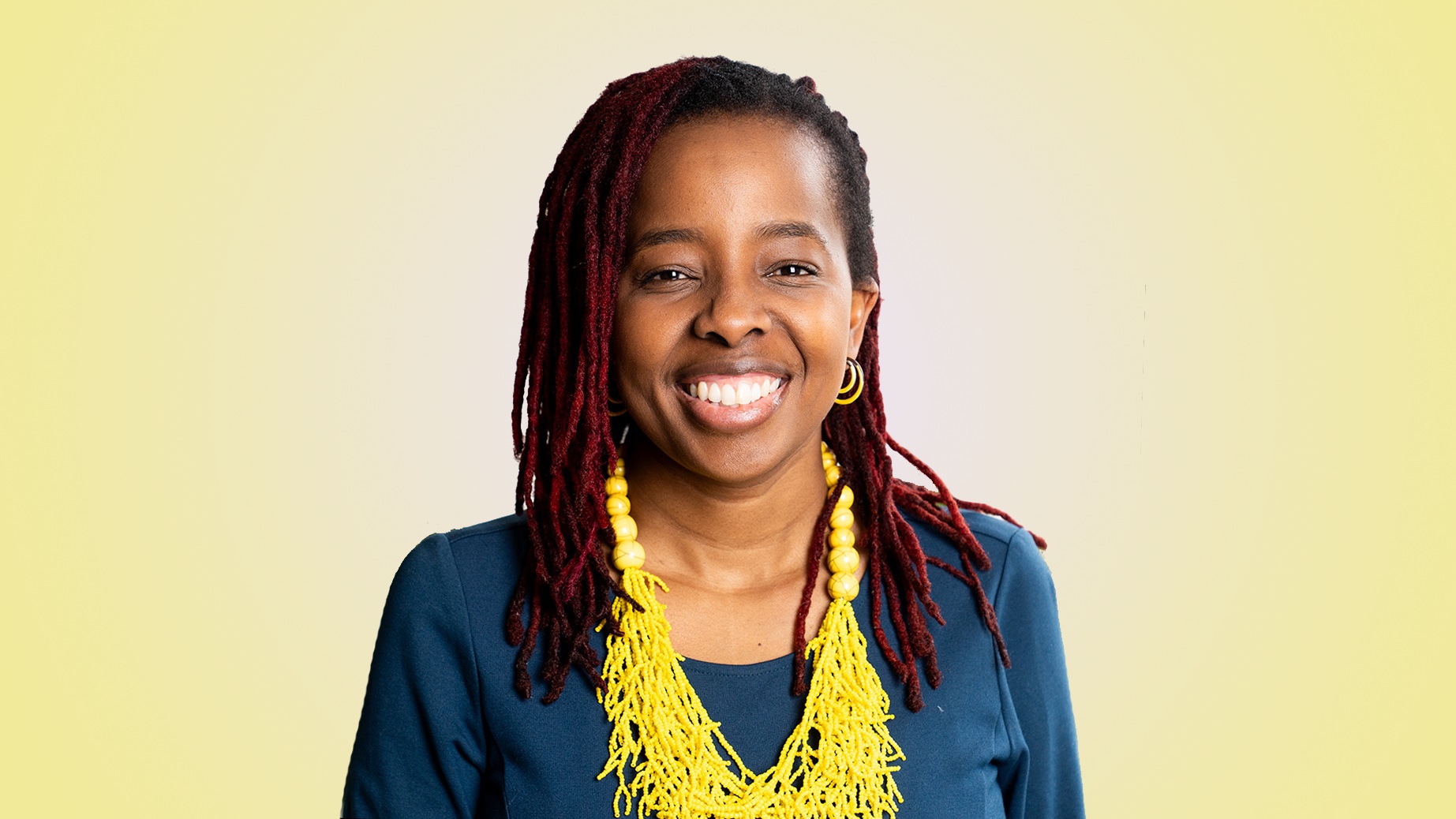
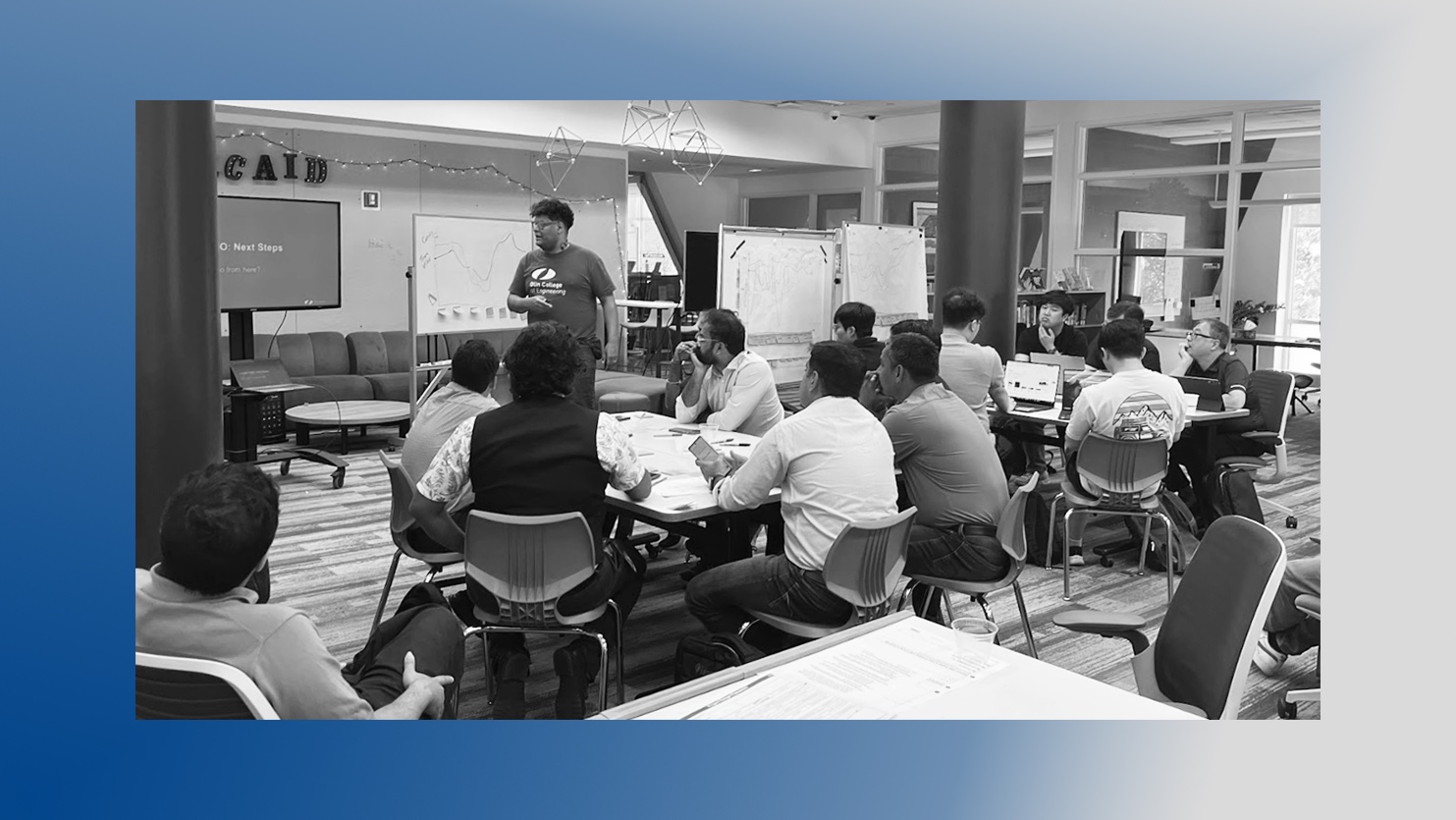
On the last day of the Summer Studio at Olin College of Engineering, four teams of faculty from around the world reflected on their experiences. They had spent the previous week pursuing a framework that would lead to engineering education improvements in their home countries. As the facilitator moved from table to table, it became clear the participants had succeeded in what they came to learn: how to apply what a start-up engineering college in Massachusetts did to transform engineering education. 

“We had heard of the Olin pedagogy, and it had many synergies to our own,” said Uday Roopavath, an assistant professor of bioscience and bioengineering at the Indian Institute of Technology Jammu. “Before coming to the Summer Studio, I had a vision of what I wanted to do with my students, but I wasn’t able to define it. Now I can.” 

For over two decades, Olin College of Engineering has not only practiced a groundbreaking way of teaching within its own institution but also shared its methods with the rest of higher education, both domestically and globally. The effort is more than just an example of best practice sharing. The theory is that by instigating changes within institutions, a cumulative effect will occur to alter the field of engineering education and the types of engineers it produces. 

“A big part of our mission is to transform engineering education,” said Olin President May Lee. “The Summer Studio is the flagship program for allowing us to do that, and it’s more important than ever. Olin provides the scaffolding for students to understand what it means to learn — not just take tests and get the right answer. This way of learning leads to a kind of agency within our students that is essential, particularly with the onset of A.I.” 

Lee’s commitment to Olin’s role in influencing engineering education comes from the fact she has seen it first-hand. When Lee was the chief strategy officer for institutional impact at Rensselaer Polytechnic Institute (R.P.I.), her colleague there, Professor Shayla Armand, participated in one of the Olin summer programs and came back promoting an entirely new way of thinking about research and teaching. Before she left R.P.I. for Olin, Lee incorporated much of that transformation into R.P.I.’s current strategic plan. She then brought Armand to Olin as provost, and the two leaders continue working together to extend Olin’s impact on the field. 

May is the third president of Olin College, succeeding the five-year tenure of Gilda Barabino and the 21-year tenure of founding president, Richard Miller. The school was chartered in 1997 by the F. W. Olin Foundation with a directive for Miller to operationalize what the engineering community believed to be much-needed changes in how engineers had traditionally been trained. The prevailing sentiment was that a reliance on technical skills-based learning alone would not be sufficient to address the major changes brought on by a more integrated global economy and the launch of the internet. Engineers would need to have business and entrepreneurship skills, teamwork, creativity, and a broader understanding of the societal contexts of engineering. 

Olin was created to become a form of privately funded national laboratory for engineering education redesign. What the college lacked in size — the highly selective school enrolls about 400 students — it more than made up for in innovation. From the beginning, Miller and his team did things differently, rejecting a number of deeply held convictions in higher education, such as academic departments and tenured faculty. 

“We were given a rare opportunity — and responsibility — to rethink what it means to be educated in the 21st century and what it means to be an engineer,” Miller said. “The expectations were extremely high.” While the campus was still being built, 30 students spent the first year living in construction trailers and acting as partners in designing pedagogy.“ The student ‘partners,’ together with the founding faculty and leadership team, developed a new paradigm for engineering education based on human-centered design and intrinsic motivation,” Miller said. 

Olin students develop a sense of identity and agency early on, many acquiring patents and starting enterprises before they even graduate.

The concept of students as co-creators continues today. Olin is perhaps best known for its student-centered, project-based learning whereby students frequently work in teams, building real solutions to real-world problems. The faculty, who team-teach across disciplines, still apply human-centered engineering to their teaching — an approach that combines technical expertise with empathy, design thinking, communication, and an understanding of human needs. 

As a result, Olin students develop a sense of identity and agency early on, many acquiring patents and starting enterprises before they even graduate. Not surprisingly, they tend toward emerging technologies. Olin alumni Evan Morikawa and Andy Barry founded Generalist, the leading A.I. research and product driven company building general intelligence for the physical world, a.k.a. “robots.”  

By the late 2010s, Olin was earning a global reputation as the producer of the new kind of engineer — one that creates solutions, not just products. In 2018, M.I.T., in its global state of the art in engineering education report, named Olin first among 10 universities cited as current global leaders in engineering. M.I.T., which came in second, used the Olin model when revising its own engineering curriculum. 

Learning by doing 

As satisfying as it may have been to be an example to the standard bearer down the street, having a superlative pedagogy was only the first metric of success in Olin’s founding mission. 

“If Olin only graduates good engineers than we have failed because we have not changed engineering education,” said Chris Lee, the interim dean of research and strategic partnerships at Olin. 

Dean Lee leads Olin’s efforts to share with the world what the college itself has built. This transfer of knowledge has taken many forms over the years. Since the college’s inception, visitors have come to campus to sit in on classes and converse with faculty and students, all hoping to see what the engineering education incubator was all about. Miller said that in his last 10 years at Olin, he hosted leaders of 800 universities from 65 countries who journeyed to Olin to see for themselves how the learning model works.

In 2009, Olin started the Collaboratory, which included more formal workshops for visitors who not only would observe Olin’s methods but could learn how to apply them to their own institutions. This eventually led to Olin’s residential summer program. Now called the Summer Studio, the on-campus program aims to help institutions accelerate their institutional initiatives related to teaching and learning. The Summer Studio is an intensive project-based professional development experience for the teams of educators that come to drive these projects forward. Teams of up to six participants pay $35,000 to attend. 

Participation in the Summer Studio has shifted over time from pre-Covid levels of 10 to 12 teams and over 80 participants to this year’s smaller group of four teams, all from outside the United States. In July, the campus hosted teams from Saudi Arabia, India, Bolivia, and Korea. Like Roopavath, most of the team members arrive with a specific problem they want to solve. But if they come looking for Olin’s secret sauce, Dean Lee tells them there isn’t one, or at least there isn’t one that could be universally applied. 

“We don’t give them the answers; we give them a process,” he said. “Every institution is different. You tell us what you want to do and what your culture is like, and we’ll adapt to it.” 

President Lee underscores the point.  “We would never be so presumptuous as to think that what we do ought to be copied exactly someplace else,” she said. “There are disciplinary and curricular considerations. Each institution has their own traditions, their own accreditation concerns; and there are, of course, size differences.”

The teams are each assigned two coaches, Olin faculty members, who meets with them before, during, and after the one-week engagement. During the week, the teams utilize design principles to work through an interactive loop of goal setting, constructive feedback, reflection, and re-engineering — just as they would in an Olin classroom. “We tell them at the very beginning: ‘You are going to experience what we do here. You are going to be the students,’” Dean Lee said.

“We tell them at the very beginning: ‘You are going to experience what we do here. You are going to be the students.’”

A primary educational framework they learn is called GAPA — goals, assessments, products and activities — which Olin uses with its students. At the Summer Studio, the process is introduced as a tool that can be applied to anything from a desire to increase attendance to redesigning first-year curriculum to starting an institution from scratch. “We tell them, ‘If this is your goal, what activities will you do? What products will you develop to show those activities are successful? How do you assess what you’ve done?’” Dean Lee said.

GAPA is only one of many takeaways of the Summer Studio. Educators from around the world share common goals, despite their different cultures and perspectives. Those that attend the Summer Studio are both receptive to new ideas and generous with their own body of knowledge. This makes for high-quality collegial relationships, even life-long friendships. 

For Olin College, the learning is bidirectional. “A critical piece of Olin’s DNA is that we are constantly learning,” President Lee said. “We are learning from the institutions who come as participants — observing how they might interpret what we say and listening with intention to their feedback. For me, that’s an important outcome of the Summer Studio.” 

With an opportunity to make her own mark on Olin, President Lee believes the Olin model, now well established, can be applied to a range of non-engineering institutions, from liberal arts colleges to state schools and historically Black colleges and universities — “all in service of extending our impact and transforming higher education.” 

You can reach LearningWell Editor Marjorie Malpiede at mmalpiede@learningwellmag.org with comments, ideas, or tips.
Going Upstream

For nearly two decades, the rising rates of mental health struggles among college students have been well researched and well reported. This much-needed awareness catapulted the issue to the top of administrators’ priority lists, resulting in task force recommendations that focused primarily on treatment expansion. In fact, the majority of the response to what the media has coined the “college student mental health crisis” has been just that — a response. 

A growing number of campus leaders across the country are now promoting a different lens through which to view college student mental health — one that is proactive and population-based. Encouraged by movements such as the Okanagan Charter, which advises colleges and universities to embed health and wellbeing into every aspect of campus life, this new thinking takes into account determinants of health, both protective factors as well as risk factors, that help or inhibit students from thriving. 

Part of the appeal of a health promotion approach comes from frustration about the unsustainability and limitations of the clinical model most colleges maintain. While experts support strengthening and expanding counseling services for those who need them, demand will continue to outpace resources at most institutions. At the same time, many students who could use some level of support aren’t asking for it, indicating there could be other non-clinical on-ramps that could help with issues that may be more developmental or environmental. And as with all downstream models, counseling treats those who have already developed a problem, begging a question about what might have helped earlier. 

As valid as these arguments may be, moving upstream by focusing on mental health, not just mental disorders, requires colleges and universities to make an institutional mindset shift. This is not always easy to achieve in a sector dominated by entrenched beliefs. The broader, more holistic approach takes interdepartmental coordination and buy-in (no more “not my job” rationalizations), introduces new phrasing like “psychological health,” and requires the currency with which institutional decisions and investments are made in higher education: evidence. 

“It really takes the wellbeing conversation away from, ‘What are the student affairs people doing about this?’”

“For a while now, we’ve been able to understand individual health outcomes which are easier to measure,” said Chris Dawe, the former chair of the U.S. Health Promoting Campuses Network, which is affiliated with the Okanagan Charter. “I think we need much better data on the kind of work we are doing at the systems level that allows us to make better decisions about what works and doesn’t work.” 

Researchers working in the field of college student mental health acknowledge this need and are helping to close the data gap on a preventive approach. Daniel Eisenberg, along with Sarah Lipson, directs the University of Michigan’s Center for Healthy Minds study, whose annual survey has been largely responsible for sounding the alarm on the rising rates of mental health issues among college students. They are now developing a best practices repository: a comprehensive, publicly accessible repository of evidence about the effectiveness of various public health and preventative programs, services, and policies that address college student mental wellbeing.

“Campuses offer an ideal setting for preventive strategies because there are so many different ways to reach students over a sustained period of time with supportive resources and practices,” Eisenberg said. “But campus leaders and administrators need to pay close attention to two major challenges in implementing these strategies. First, which strategies actually have strong evidence of effectiveness? Second, how can we ensure that these strategies actually reach a large number of students in a meaningful way?”

Innovative partnerships

Another key player in the evidence-based prevention research arena is MindArch Health, a company that partners with colleges and universities on improving community health. Founded by Nadine Wilches, a clinical social worker and researcher, MindArch uses a comprehensive software solution to assess and enhance mental wellbeing and resilience within campus populations. It is both a product and a strategy, starting with a survey tool institutions use with their students, and often faculty and staff, to determine a wellbeing protection/risk profile. 

“The mission behind our work is to reduce risk and reverse rates of mental and behavioral health problems,” Wilches said. “We do that by trying to predict those most at risk using a community mental health model which is more socioecological. We look at the whole campus system and the impact of mental wellness through what we call protective factors in the research.” 

The product, called MAP (MindArch Automation Pathway), is evidence-based, strength-based, and pre-clinical. MindArch uses an EQUIP model (Examine, Quantify, Unite, Inquire, Plan) for the process overall and the five elements of a systemic wellbeing framework in its surveys. These are: self-efficacy, psychological safety, emotional control, interpersonal attunement, and self-assurance. 

“We are measuring the factors that are known to buffer against mental health problems — things like security, belonging, connection, sense of self. And then we break all those down into questions that allow us to direct solutions,” Wilches said.

After the assessment, which includes qualitative research with key stakeholders, the MindArch process calls for bringing together leaders from across campus for a three-part planning phase that produces sustainable changes towards a tangible goal. The areas in consideration are the 4 P’s — policies, practices, programs, and places — with the question being: How has what we learned influenced these domains? Once interventions are in place, a pre- and post-assessment provides the schools with efficacy data. The outcome of the process can involve every aspect of the university, from the classroom to the surrounding community. 

“We’re working on changing environments and environmental conditions that produce stress that can be prevented rather than saying each individual on campus needs X, Y, and Z,” said Tim Ecklund, the vice president for partnerships at MindArch. Ecklund came to the company after many years in student affairs leadership positions, including at Stonybrook University and Utica College. He said, during his career, he was struck by how little colleges and universities were doing to strengthen mental health, while they focused most of their attention on how to address mental disorders. “MindArch was what I wished I had,” he said. 

MindArch’s preventive mindset, and its focus on strategies that can impact everyone on campus, appeals to many administrators looking for more comprehensive solutions. Cheryl Barnard, the dean of students at Miramar College, a community college in San Diego, is a customer of MindArch. She spent many years as a student affairs leader for private, four-year institutions on the east coast.

“In all my years as an administrator, mental health has always been about the delivery of a service to the students who come to counseling,” she said. “This is the first time where I feel like I have an evidence-based strategy that looks at the entire population and not just the 1 percent to 5 percent who find their way to the counseling center.” 

“This is the first time where I feel like I have an evidence-based strategy that looks at the entire population and not just the 1 percent to 5 percent who find their way to the counseling center.” 

Barnard said MindArch has allowed her to reach that larger student group with strategies that are specific to her campus. After receiving the data regarding protective factors and risk factors among students at Miramar, she pulled a task force together to consider what changes they might make on campus. One idea included putting together a skills building program for the school’s ANAPI population (Asian-American, Native Hawaiian, Pacific Islanders) after these students reported a deficit in their decision-making abilities. Another involved pooling resources that would combine supporting students’ health, mental health, and basic needs. 

Barnard’s favorite part is the data. “MindArch gives you evidence-based practices based on the data you’ve collected so you’re not guessing. It’s hard to argue with a result we’ve gotten from 300 of our own students.” 

MindArch’s broad application on campus means that many of its customers come from different corners of the institutions. Stuart Sidle served as the dean of the School of Social and Behavioral Sciences at Mercy University in New York. He now leads a $5.25 million U.S. Department of Education STEM Ready H.S.I.-STEM grant at the university. As an organizational psychologist and student success strategist, Sidle was particularly drawn to MindArch’s focus on resiliency and its correlation to persistence. 

“We’ve had some very good opportunities to use this data,” Sidle said, pointing to a new training for faculty that helps students with self-regulation by having them reflect on their own energy and time during exam periods. “We’re really looking at what we can we do to help people stay in a good place before they are struggling,” he said. “It really takes the wellbeing conversation away from ‘What are the student affairs people doing about this?’ to ‘Let’s all be aware of the adjustments we can make to help students thrive.’” 

MindArch was launched in September 2025 as a for-profit company, though Wilches prefers to call it a social enterprise, as it receives donations and puts profits back into research and development. At an average of $14,000 a year, it is now in seven schools and growing. Its pitch to higher education includes its advantageous use of competing resources given its scale. Here again, is where evidence comes into play. 

“One school saw an 8 percent improvement across four or five elements in just one academic year,” Wilches said. “Another saw an 11 percent improvement in psychological health by strengthening the protective factor they had targeted. In fact, 100 percent of our institutions have been able to get additional funding from the data we originally collected.” 

You can reach LearningWell Editor Marjorie Malpiede at mmalpiede@learningwellmag.org with comments, ideas, or tips.
Beyond the Academic Calendar: How to Support Student Mental Health Year-Round 

Dr. Bvunzawabaya is the director of Integrated Care Initiatives at the University of Pennsylvania’s Student Health and Counseling.

Students’ summer experiences can vary widely. For many, a break from school means travel or a resume-building internship. For others, it may mean losing access to critical campus resources such as housing, community, and social connection. Summer represents an essential opportunity for some students to earn as much income as possible through work.

While institutions often view college as a temporary place where students learn, build relationships, and prepare for future careers, some students navigate campus differently. For them, coming to college is an opportunity to create a new home. Being away at school can provide a haven where they feel safe exploring different aspects of their identity. Ideally, students regard their campus as a secure and supportive environment where they can engage in activities that support their development and help them achieve academic success. 

Mental health is central to this process. When students prioritize their mental health and wellbeing, it enables them to build meaningful relationships, immerse themselves in their academic work, and recognize areas for growth. Some students arrive on campus having successfully managed existing mental health challenges. For others, mental health concerns may emerge or intensify during their time at school. When these concerns go unaddressed, they can affect every aspect of a student’s wellbeing. As a result, the summer months can be an important time to regain stability. Being away from academic pressures may reduce symptoms of anxiety or depression, lessen concerns related to eating and body image, ease feelings of loneliness, reduce distressing trauma-related experiences, or make mood fluctuations more manageable. 

However, these challenges may be compounded by expectations from loved ones to contribute financially to the household, care for elderly or ill family members, or provide emotional support during difficult family circumstances. In short, many students are grappling with complex pressures that extend well beyond the classroom for which viable solutions may not be readily available. The hope is that rest and support over the summer will help alleviate students’ stress. 

Do they see campus solely as a place to learn before returning home, or has it become their primary community and source of support?

With students soon returning to campus, now is a good time to reflect on the importance summer breaks play in students’ lives and on their mental health. Do they see campus solely as a place to learn before returning home, or has it become their primary community and source of support? Keep in mind that even when students rely on their college or university, they may not necessarily trust it, which can make seeking help more challenging. Recognizing this distinction can help campuses better anticipate and respond to student needs. A student’s ability to use the summer as a period of recovery is influenced by several factors, including the proximity and availability of family and social support, financial resources, their willingness to seek help, and access to appropriate treatment. 

Higher education institutions need to figure out how to support their students during the summer when their routines change. While the academic calendar changes, the need for connection, support, and trusted resources continues throughout the summer. 

  1. Communicate institutional expectations, values, and opportunities clearly. By recognizing the diverse experiences students may encounter during their time on campus, colleges and universities can provide meaningful guidance, foster supportive environments, and help students understand what they can expect from their institution. Higher education institutions play a critical role in helping students develop the confidence to handle academic and social challenges. This support should extend through the summer months, allowingstudents to remain connected to campus. Institutions can also direct students to year-round digital resources that reinforce coping strategies, self-reflection, and help-seeking behaviors throughout the summer. (My Digital Sanctuary)
  1. Ask students early in the spring semester about their summer plans. Academic advisors, coaches, housing staff, and other student-facing professionals should be encouraged and trained to have these conversations, helping students identify needs and connect with available support. These discussions also provide a chance to establish realistic expectations regarding the services and resources a campus can offer. Consistent messaging that encourages early help-seeking and promotes awareness of signs of distress can further support student wellbeing. 
  1. Provide students with a comprehensive list of campus and community resources. These resources may include career services, on- and off-campus employment opportunities, local food pantries, housing and shelter resources, and mental health services. Information about low-cost or sliding-scale counseling options may also benefit students and perhaps their family members. In addition, share resources designed specifically for families, such as The Steve Fund’s Family Corner, which offers practical guidance, conversation starters, and tools to help families support students’ mental health and wellbeing throughout their college journey. 

Regardless of differences in summer experiences among students, they can all be successful. To achieve this goal, colleges and universities need to be creative in problem-solving and demonstrate year-round institutional commitment to the mental health and wellbeing of all students.

Dr. Batsirai Bvunzawabaya is a counseling psychologist with a small private practice in the suburbs of Philadelphia. She has been working with The Steve Fund as a mental health consultant for over five years. She is also the director of Integrated Care Initiatives at the University of Pennsylvania’s Student Health and Counseling. Dr. Bvunzawabaya is originally from Zimbabwe, and she is a proud graduate of Alabama A&M University, where she was a member of the women’s tennis team. She earned her Ph.D. in Counseling Psychology from Auburn University. She is the current president of Section I (Psychology of Black Women) of the Society for the Psychology of Women (APA Division 35) and past president of the Association for University College Counseling Center Outreach.

Exploring the Purpose of Higher Education

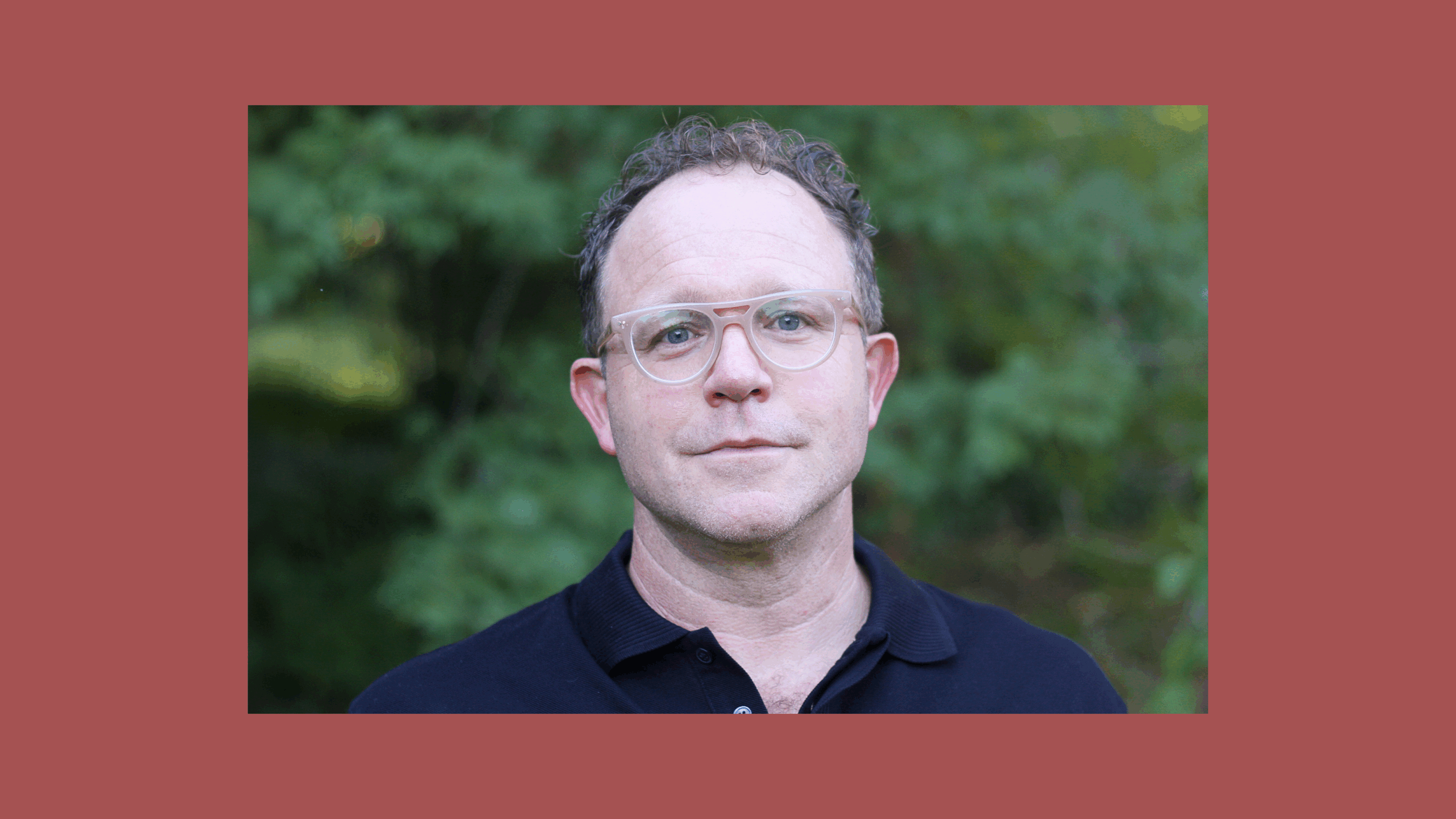
In his new book, “After the University,” Chad Wellmon answers a question many in higher education are currently asking: How did we get here? This autobiography of American higher education takes us from the European guilds and knowledge factories that inspired our current system to the modern research university that now defines it. In doing so, Wellmon reminds us that the university has always shaped and reshaped itself to serve political, social, and economic interests. His underlying concern is — at what cost to the goods of disciplined study? 

Wellmon, who is the Commonwealth Professor of English and German at the University of Virginia, writes that the recent intensity of these external pressures has made the sector almost unrecognizable to itself. Over the years, we have created what Wellmon calls “the other university,” known not by its intellectual vigor but by outputs such as earnings, workers, and research. 

Wellmon’s own reverence for, and frustration with, higher education is woven throughout the book in his personal stories: the utility of education as a means of escaping his past, his questioning of its purpose in the 2010s, and his eventual understanding that the love of knowledge itself — not necessarily the institution — is what we should hold dear. In July, Wellmon spoke with LearningWell about the book’s main messages, as well as his motivation and experience in writing it. 

LW: Let’s start with your own experience in academia, particularly at U.Va. where you’ve been witness to a lot of upheaval and changes in higher education. What were some of the things that motivated you to write “After the University”?

CW: This book turned out to be an exercise in trying to make sense of the world in which I had found myself. I grew up in a family and in a place in which the university was not a real presence, with parents and siblings who didn’t go to college. In many ways, I am a poster child for the American system of higher education. It was my way out — socioeconomically, intellectually, spiritually, materially, and geographically. That’s how I thought about the university. 

Through undergrad, graduate school, and the tenure process at U.Va., the university was just the world in which I thrived. I understood myself through it. And then in 2012, when [then-President] Teresa Sullivan was forced to resign by the Board of Visitors, I started to question that. I was standing there on the lawn that summer with my two kids. We had posters and were chanting, protesting for academic freedom, against poor governance, and for the university. And then, all of a sudden, I just stopped and thought, “Wait, what are we defending exactly?” It wasn’t a revelation. It was just befuddlement. What is this thing that I’m out here on a sultry southern afternoon protesting for? It has to be something much bigger than this person whom I don’t really know. 

That was over a decade ago, and ever since then, I’ve been thinking and writing about the university, trying to make sense of this institution. Another key experience was in August 2017. My family had just moved onto campus, when far-right neo-Nazis marched behind our house and up the U.Va. Lawn and Rotunda with tiki torches. This was also the period when I was helping to lead an effort to reform U.Va.’s undergraduate general education curriculum. It was a seven-year process. These experiences reconstituted my relationship, everybody’s relationship, with the university. 

My family and I had moved onto campus, because I had been appointed principal of Brown College, one of U.Va.’s three residential colleges, where about 300 students live together over four years in a group of dorms on the center of campus. We ate in the dining hall. Students spent a lot of time in our house, eating and hanging out. As I got to know students outside of the classroom and office hours, I encountered a completely different institution. 

All this was happening at the same time as the curriculum reform project. I quickly realized how naive I had been in assuming that if U.Va. just had a good curriculum, we [faculty] could make it the center of students’ lives again — we could reorient the institution to what we thought it was supposed to be about. But the more time I spent with these students, the more I realized that the curriculum was almost tangential to their lives at U.Va. Their lives were lived outside of the curriculum. They were lived in their dorms and managed by student affairs people and an entire institutional apparatus about which I had been totally ignorant. They led their lives outside the classroom as I had imagined it. So there was this second moment after 2012 of being disabused of how ignorant I was of the very institution to which I thought I understood.

LW: In the book, you write about the yawning gap between what we claim universities are for and what they actually do. So this gap you talk about, you saw this manifest in the students themselves?

CW: Oh, absolutely. In the book, I call it the “other university,” this completely other half — now I would say other three quarters — in which students actually led their lives and that formed them in profound ways, both good and bad. I know student affairs people who literally saved the lives of several of my students with mental health services, people who are unfailingly dedicated to the wellbeing of students but dedicated in a way that’s almost wholly separated from what the faculty and the curriculum do.

LW: This value you call “disciplined study” — which you describe as intrinsic learning, the joy of learning, the joy of reading — how has the university removed itself from that?

CW: That’s the question I tried to set out to understand. Why is it that this institution that is so obviously about education, so obviously about the life of the mind, so obviously about what I call discipline study — why is it also about none of those things and more clearly about moving up the social ladder and earning more than your parents? Why is it so obviously about the connection with labor markets? Why is it so obviously about the production of patentable knowledge and technologies? All the things that universities do or claim to do I had largely taken for granted. Of course that’s what universities do. But so many of these things pull the institution in different directions. In some instances, they’re contradictory. And so that’s what I wanted to understand. I wanted to know how this happened. I tend to think historically, so most of the book is an attempt to understand the development of this tension. 

The book goes back to the beginning of the 19th century and the rise of the German research university. My point here is that this is not the first time that universities are being called to serve other entities and competing ends. When you think of 13th-century University of Paris and its intimate but conflicted relationship with the church or 18th-century University of Göttingen in Germany and the pressure it was put under to provide revenues for a sovereign by trying to get more young English aristocrats to come from abroad to pay higher fees –– these types of conflicts are central to the history of the university. There have always been tensions between what the university has understood itself to be sustaining, which is something like the scholarly communities and scholarly inquiry, and the demands and expectations of the external entities that tend to fund these institutions. And the thing about institutions is that on the one hand, they’re sustaining these communities, these practices. But on the other hand, they do that by seeking financial support, by sustaining the material conditions that make it possible for these scholars to do the kinds of things they do. Over the past 150 to 200 years, however, these historical tensions have intensified.

“Why is it that this institution that is so obviously about education, so obviously about the life of the mind, so obviously about what I call discipline study — why is it also about none of those things?”

Some of these tensions have produced a lot of good. As the university has understood itself to be in service to the public, it has democratized knowledge and made itself more accessible. But this has also changed the institutional conditions of disciplined study and put all kinds of new pressures on the university as an institution. For example, when 19th-century Prussians directly linked the university to a job market — that job market being Prussian bureaucrats or the administrative state — everybody who was going to work in the higher ranks of the Prussian bureaucracy was required to have very high levels of education. And it was meritocratic in a way. It was, in many ways, a good thing. But what it also did is that it made the university this mechanism that was coupled with a competitive job market. 

My book traces various instances in which universities became more tightly connected to institutions or demands to which they had previously been more loosely related. Again, many of which were wonderful and good. Who is against democratizing the university? Who wants to argue that the post-World War II American system of higher education and higher education itself should be shrunk? These are some of the contradictions that just didn’t make sense to me and I tried to explore in the book. 

LW: In terms of the rise of the modern American research university, of which U.Va. is one, is this another example of the sector being tethered to something that is important but detached from its original goal? 

CW: First, I would say that I don’t know if there was an original goal. I think the modern university was some kind of settlement where the institution becomes this mediating force with scholars and knowledge on one side and the state and all these other interests on the other. And the university positioned itself as this go-between, this mediating institution. The 19th-century American research university adapted some elements of the German research university model, but with at least one very important distinction. From the beginning, the American research university cloaked itself in “democracy.” Around 1900, the first president of University of Chicago, William Rainey Harper, gives a speech in California describing the American research university as the prophet of democracy. It is not just going to work on behalf of democracy, it will embody and point the way to democracy.

In the American context, there are several things that followed. One is that the reluctance among 19th-century Germans to talk so explicitly about instrumental or useful knowledge was not a problem for the American university. University knowledge was useful knowledge. University knowledge should help to improve agriculture, help to expand the rail system, help strengthen the military. To be a democratic university was not simply to open up the doors to people who had never been allowed in the hallowed halls of Oxbridge or Berlin or Paris, but to open it to all kinds of knowledge. No knowledge was too instrumental or too useful to be kept out. 

Again, incredible goods come from these radical changes, but so, too, do new tensions, as well as an accumulation of external expectations about what universities ought to do and the ends they ought to serve. Now it’s no longer simply to be a finishing school for the sons of the aristocracy. It’s no longer just the production of elite bureaucrats. The expectation or promise universities themselves make is to sustain democracy and, eventually, to produce the knowledge required by a modern industrializing world. 

We need to recognize the expectations that have been put on universities. We expect universities to solve questions of social injustice and equity. We expect them to deliver high earning salaries to their students. We expect them to cure our grandparents and our neighbors and ourselves in hospitals. We expect them to entertain us and manage professional sports teams. 

“We need to recognize the expectations that have been put on universities.”

LW: What have we lost in all this?

CW: I don’t know if we’ve lost something in particular. Had I been born a hundred years ago, I wouldn’t have had access to the kind of higher learning that I have been blessed with. It’s crucial that we acknowledge that, because “After the University,” for me at least, is not a recovery project. We don’t need to recover something that never actually existed. The university never existed in a world in which the goods of intellectual study were freely given to for everyone.

LW: Maybe the better question might be: What aren’t we doing?

CW: I will start by talking about what I wasn’t doing. Even though I didn’t want to think of myself as writing a “what we lost” story — and I was operating on that for a while because the university continued to be this precious world for me — I couldn’t see the places and the people in which discipline study and the love of learning was alive and well. I was blind to that, which is ironic. That’s why I begin the book with my dad, who throughout his life diligently prepared for his church Bible studies. For too long, I assumed that he stood for everything that I was trying to get away from, which meant everything from non-college-educated, low-income America to his own kind of radical Christian piety.

That was what I didn’t want to be. And I never would’ve recognized him as a model reader. I saw his Bible study as just one of the many crazy things that he did. I couldn’t recognize that he actually taught me how to read. He modeled discipline study for me in a way that none of the professors I’ve ever had, none of my colleagues that I’ve ever had, have done. He wasn’t getting paid to fill his yellow legal pad with notes, to sit with five different concordances. He did it because he had to. He did it because he wanted to. He was so excited about it and loved it so much that he just wanted to share it. I couldn’t see that. I think we build and structure our lives and institutions in ways that mitigate against those kinds of possibilities — that these kinds of intellectual necessities are add-ons; they are superfluous, leisure-time activities instead of the core of who we are. And I’ve come to see that I was wrong. 

LW: One of the big questions in the book is, Can the goods of disciplined study be recognized on their own terms? Where do you come out on that? 

CW: I think so much about the structure of higher education mitigates against this. There’s dismissiveness among some university faculty — I think it’s less so now — about students who are worried about careers or worried about getting a job. Damn right they’re worried about getting a job, because we have created this system over the past 70 years in which the system of higher education is the only mechanism to a good life, or that’s what we’ve come to believe collectively — that the B.A. is the only path to a good life. But this system didn’t deliver on the equity promises that were trotted out in the early of 1960s. I think what has happened is that the expectation has become even more intense as the competition for fewer high-paying jobs has grown more intense. The tensions that were already in the university have become that much more immediate. 

Every year, when I meet a new class of undergraduate students for the first time, I know that they’re going to have these anxieties about what’s going to happen four years from now and that everything in between will be related to that anxiety. The B.A. has been made into this single pathway to the upper middle class, which in some ways is true but in a lot of ways isn’t. But maybe even more importantly, we haven’t really asked about how that affects what we claim to be doing in universities, which is educating people. We just talk about outcomes and outputs. But what about the flourishing of students and the ways in which these institutions are shaping them?

LW: If the goal is to encourage and motivate discipline study, what is it we need to do to the university? Are we trying to save the sector? Are we trying to change the sector? Are we not looking at this correctly?

CW: These were some of the many questions that I realized I was asking and had to figure out. I think in the midst of what I had done with the curriculum, being a professor, being a principal of a college, I kept thinking, “We have to fight for the university. It’s lost its core.” But as I said earlier, I don’t know if it ever had a core. But more than that, I’ve come to relate to it almost as an ethical question because each chapter I wrote, I just kept getting sadder and sadder. But then by the end, the only way I can describe it is, I felt liberated.

Being liberated through this broader understanding of realizing, Oh wait, I’m not actually fighting for the university. The university is just the most recent institutional form that the goods of higher learning and the goods of discipline study have taken. Libraries, museums, churches, monastic communities, craft shops, workshops — there are so many institutions which have nurtured and sustained the kinds of practices that I think we ought to be fighting for. For me it’s not about defending or saving “the sector” of higher education. It’s not about defending the university per se. It’s about recognizing and then fighting for the practices that I think so many of us already hold dear. The university, for the time being, is still one of the primary places that affords a certain material environment for these things, but it’s not at all, historically speaking or even now, the only place. I think for too long the university has monopolized these things. 

LW: Given that, how would you move forward within the university? 

CW: It’s not, for me at least, an excuse to detach myself from or just give up on the university. But it does motivate me and others, I hope, to try to build good and beautiful places for disciplines alongside and apart from universities — healthy institutions that shape meaningful lives. That’s a rather abstract response, but that’s where I am now. It frees me to relate to the institution in a different sort of way, because I don’t expect everything from it. 

And it helps me see what’s worth fighting for — not for particular institutional structures and interests but for the practices that give those institutions value in the first place. 

You can reach LearningWell Editor Marjorie Malpiede at mmalpiede@learningwellmag.org with comments, ideas, or tips.

Posted in Q&A

Digital Wellbeing at Dartmouth

Last fall, Dartmouth College made headlines after announcing the development of a new A.I.-powered tool for student wellbeing, called Evergreen. At a moment when concerns about the use of A.I. for mental health were coming to a head, Evergreen’s emergence signaled a continued interest in employing the technology in this way, in the right way. Already, Dartmouth has amassed $7 million of its $16 million fundraising goal to support Evergreen’s production.

But not everyone is equally ready to embrace the app. Over the last several months, students have expressed skepticism of the emerging resource, which has taken up a notable space in campus discourse. As institutions navigate how best to both regulate and leverage A.I. for students, the response at Dartmouth offers insight into when and how young people seem willing to accept the technology in their lives, as well as the kind of communication they may require from institutions introducing it in new ways.

Evergreen is far from Dartmouth’s first foray into A.I., nor digital health innovation. The Ivy League college has a longstanding tradition in both realms, including as the site where the term “artificial intelligence” was coined 70 years ago. In the spring, The Boston Globe reported on how the college has strived to live up to its history, outpacing its peers in the speed and breadth of its rollout of A.I., to mixed reviews. Evergreen is discussed, with a focus on Dartmouth’s recent partnership with the A.I. company Anthropic and potential plans to “integrate the tech into most facets of campus life.”

Meanwhile, since 2011, Dartmouth’s Center for Technology and Behavioral Health (C.T.B.H.) has been ground zero for pioneering research on digital interventions for the treatment of behavioral health issues. Lisa Marsch, the center’s founding director, described the goal of C.T.B.H. as leveraging the accessibility of modern technology, like phones and wearables, to make a broad and meaningful impact on health and wellbeing. Marsch, who specializes in technology and addiction treatment, is known for developing a related mobile tool which became the first F.D.A.-authorized “prescription digital therapeutic.”

“How do we think about the whole student body and ways that we can bring the science of flourishing to students in a way that scales?”

It’s now Marsch and several of her fellow experts at C.T.B.H. who are spearheading the Evergreen project. It launched as an opportunity to tackle the wellbeing challenges young people are facing nation- and worldwide, Marsch said, as well as fulfill an institutional priority laid out by current President Sian Beilock to better support student mental health at Dartmouth specifically. Unlike the counseling center, aimed at treating or diagnosing mental health conditions, a digital tool could offer everyday, in-your-pocket tips to strengthen wellbeing and ward off more serious crises.

“It’s about prevention,” Marsch said of her vision for Evergreen. “It’s about, how do we go upstream? How do we think about the whole student body and ways that we can bring the science of flourishing to students in a way that scales?”

In its current form, Evergreen has a few different functions. The interface is an A.I. chatbot, named Evie, through which students can engage with educational modules on different behavioral health topics. The first version of Evergreen’s A.I. isn’t generative, like well-known chatbots ChatGPT or Claude, meaning it doesn’t offer original or spontaneous responses. Instead, all the content comes from pre-scripted, expert-reviewed dialogues that offer insight into college-relevant issues, including sleep hygiene, nutrition, and physical activity. 

Those interested in a more personalized Evergreen experience have that option. By allowing the app to collect passive data on different contextual elements of their life, like step count, heart rate, and sleep patterns, students can receive targeted assistance for their health needs. Someone whose sleep cycle has fallen out of whack, for example, could get a nudge from the tool to review the sleep module. 

Evergreen’s capacities differ from traditional wearables because the app was designed with a Dartmouth-specific experience in mind. If users provide data on upcoming assignments and deadlines, the app can support them with time management. If they tell it about their extracurricular interests, it can point them towards relevant events on campus. If they decide to track their meals, it can show them the nutritional information for that day’s spread in the dining hall. 

As Evergreen takes in individual student data, it will also be able to spit out campus-wide trends. Another of the app’s services will be to present these types of broad insights into user behavior, so students can understand their wellbeing collectively. Throughout the semester, they could track how many hours of sleep their peers are averaging. During exam periods, they could watch what happens to visits to the fitness center or time spent outdoors.

It’s important to note at this point that Evergreen is still far from a live product. A year since its announcement, the app has only just entered an initial round of testing, involving 15 students, although that number is expected to jump to 200 in the fall. A second, more advanced version of Evergreen that does involve generative A.I. is being developed simultaneously and isn’t estimated to start testing until 2027.

By students, for students

The reason that Evergreen has already managed to secure an active role in the minds and lives of Dartmouth students is likely because hundreds of them have been employed to work on the project. Upwards of 250 of these project assistants, as they’re called, have been helping engineer the technology, deliberating on the issues Dartmouth students might need the app’s help navigating, crafting the scripts for the dialogues, and producing and narrating supplementary videos. It was a student’s idea, for example, to integrate the dining hall menu. And it was students who suggested Evergreen provide designated support for those who weren’t admitted to the fraternity or sorority of their choice, or at all.

The assertion of its student-centered ethos seems to have opened Evergreen up to particular scrutiny from, well, students.

It’s a key point of pride for Evergreen that it’s “Built by students, for students” (that’s essentially the greeting line on the home page of the app’s website). But ironically, the assertion of its student-centered ethos seems to have opened Evergreen up to particular scrutiny from, well, students. The promise that they’re in the driver’s seat ends up deepening skepticism of the enterprise altogether when they sense that they’re not.

In January, students’ hackles were raised after the editors of The Dartmouth, the student newspaper, revealed the author of an op-ed supportive of Evergreen had received payment from his employers at the app for the time he spent writing. His supervisors at Evergreen also provided feedback on a draft of his essay, which was titled “Why Evergreen.AI Deserves a Chance.” That headline alone suggests reservations about the tool were already brewing. Now there was another reason to imagine students weren’t really in charge at Evergreen. 

Then, later this spring, a similar publicity snafu rocked Evergreen when The Dartmouth again turned up some incriminating details about student involvement in the project. Three different student workers had come forward to admit they used A.I. to write dialogues for the Evergreen modules, which were branded as intentionally student — not A.I. — generated. 

In the article, Lisa Marsch affirmed this conduct was against the rules put in place to preserve the student voice of the content. More recently, she amended that, given the extent of the editing process for these scripts, some of the language having been originally A.I.-generated isn’t inherently concerning. “I don’t know that it would be that much of a problem because we have such a careful, thorough review of the quality from peers and experts that ultimately nothing’s going to make it into this that hasn’t gone through that rigorous process,” she said.

The biggest barrier to overcome for Marsch and her team moving forward may be how students feel about Evergreen. These feelings could be mixed up in views on A.I. generally, as well as Dartmouth’s specific efforts to champion it. To Trace Ribble, a rising sophomore, Evergreen is part of his school’s larger mission to “claim” A.I. as its expertise. “We want to be the A.I. school. We want to be on the cutting edge,” he said. By his account, he added, “there’s not much student support for it.” 

Ribble was responsible for another op-ed in The Dartmouth, expressing his view that “Evergreen.A.I. Is Not Good for Dartmouth.” He writes from a background in youth mental health advocacy, having founded a nonprofit to make resources accessible in rural areas like his home in Oklahoma. His concerns about Evergreen center on a wariness of the newness and therefore efficacy of A.I. for mental health support. Evergreen, he writes, is a “multi-million dollar cash sink designed to generically ‘support student success.’” The funds raised, he believes, would be better spent on expanding in-person care.

It’s true that people struggling with their mental health have turned to A.I. chatbots and received dangerous guidance, or lack thereof, in recent years. Generic large language models often aren’t trained to recognize warning signs or offer referrals for behavioral issues. Around the time students were first hearing about Evergreen, one major news story featured a teen boy who died by suicide after falling in love with a chatbot and his family’s effort to hold the A.I. company responsible. His parents aren’t the only ones.

Ribble understands Evergreen isn’t positioning itself as therapy, but he worries the slope is slippery. “They’re walking this fine line where they’re like, ‘Oh, we’re not trying to replace traditional therapy.’ But then they’re lauding their connection to, I think it’s called Therabot, which is just exactly what it sounds like — therapy A.I.,” he said. “I don’t know. It’s really icky to me.”

The biggest barrier to overcome moving forward may be how students feel about Evergreen.

Therabot is indeed the generative A.I.-therapy chatbot designed by two faculty members in the Dartmouth psychiatry department, Nicholas Jacobson and Michael Heinz, who are also leaders of Evergreen. They designed Therabot using current, evidence-based therapeutic best practices to prioritize safety and efficacy to an extent commercial platforms typically do not. In a recently published clinical trial, the first of its kind for this kind of software, Therabot users were found to have experienced a 51 percent average reduction in symptoms for depression and 31 percent for anxiety.

Still, Heinz confirmed Evergreen’s work is different. “I don’t think it’s the place for this app to deliver mental health services,” he said. Even the second version of the app that, unlike the first, will have a generative component will be “purpose-built in a way that it knows what it is, it knows its limitations.” So if a student started chatting with the bot about a serious mental health issue, it would be able to refer students to better resources for help. “It would know the off-ramps,” Heinz said. “We’re training this in right now, so it knows the resources at Dartmouth, and it’s able to connect students to those resources.”

The “off-ramps” are key to Evergreen, Marsch agreed. This digital resource is different from typical online content, she said, because it actually wants users to get off and engage beyond. “Unlike a lot of social media and other online things that people can do, which have algorithms designed to keep your eyes glued to the screen, this is all about the opposite. It’s about giving you resources to connect you to the real world.”

Keene Dampal, a rising junior at Dartmouth who has been involved in mental health advocacy since high school, is a project assistant for Evergreen. He said he knows that the app isn’t “the best perceived” among his peers, but while he’s an enthusiastic supporter, he doesn’t necessarily think the wider hesitance is such a bad thing. “In fact, I think it’s a very useful thing,” he said. “It just shows that people are critical before they actually just say yes to something that’s new.”

Clarifying the mission of Evergreen will be important, Dampal continued, but in the end, not everyone may want to use it. That’s okay, too, he said, as long it helps someone who does.

You can reach LearningWell Reporter Mollie Ames at mames@learningwellmag.org with comments, ideas, or tips.