Mattering at Michigan

Like most colleges and universities, the University of Michigan came out of the pandemic reeling, awash with a host of new and heightened community mental health concerns. True to Michigan’s culture, its response was to go big. 

In 2021, Michigan made wellbeing across campus an institutional priority by becoming one of the first eight U.S. universities to adopt the Okanagan Charter, a framework and commitment to infuse health promotion into policies and systems at every level. To serve and steer these goals, the administration founded the Well-being Collective, a hub for wellness efforts with university-wide infrastructure and influence.

Today, the work of the Well-being Collective continues, as leadership finds fresh and innovative ways to deepen the impact. One of the latest developments is the Mattering at Michigan Initiative, a push to expand three existing wellness interventions that have the promise of being particularly effective at “mattering” — a concept that is frequently misunderstood but increasingly recognized as critical to emotional and behavioral health.   

Mattering may sound familiar, thanks in large part to the work of journalist Jennifer Wallace. Earlier this year, around the same time that Mattering at Michigan launched, Wallace released her second best-seller, “Mattering: The Secret to a Life of Deep Connection and Purpose.” In it, she contends that feeling like we matter is one of our most fundamental human needs. But it’s not just about belonging or being part of a group; to matter means knowing we’re valued and that we add value. 

The timing of Wallace and Michgan’s work wasn’t just coincidental. The original idea to package and amplify mattering at Michigan came from the author, who has been studying and promoting mattering work at colleges and universities as an extension of her research. She’s currently collaborating with Harvard and realized, rather serendipitously, that Michigan might offer another model for evidence-based best practices in this area that could be implemented at scale.  

While attending a Michigan Wolverines football game, Wallace had looked out across the packed stadium and discovered the cheering sections were color-coded. Students had followed emailed instructions, she learned, to wear either maize or blue depending on their seat assignment and now formed vibrant stripes around the arena. To Wallace, this was mattering at work — intentional community building that invited everyone to play a role.

 “All different types of kids felt a deep sense of belonging there, whether they were former jocks or members of the marching band or really cerebral academics. It felt like everyone had a place to belong at Michigan,” Wallace said. She started talking to parents and faculty about why they thought Michigan was different. “What is this secret sauce?” she would ask them.

Michigan students wear their university’s signature maize. Photo courtesy of the Regents of the University of Michigan, via Nolan Bona

Wallace’s hunch that Michigan was ripe for mattering was met with enthusiasm from campus leaders in mental health. Lindsey Mortenson, Michigan’s inaugural chief mental health officer, said the university’s size and sprawling organization are often barriers to implementing services or fostering a wider culture around wellbeing. Mattering excited her as a framework and ethos that could unite and guide wellbeing on a broad scale. 

Mortenson also recognized mattering as a promising antidote to the achievement culture rampant on Michigan’s campus. Students often get caught up in the rat race of academic and other success, she said, so gaining perspective on what really matters — namely, connecting with and supporting others — might help right the ship. “Mattering felt like a way to be responsive to a focus on values, but in a secular way,” she said.

With funding from an anonymous donor, the Mattering at Michigan Initiative involves a build-out of three individual programs: wellness check-ins for large classes, a for-credit course on navigating wellbeing in college, and a new “social prescribing” effort to promote engagement in nature, the arts, and the wider community. The three interventions are not only among the most popular; they are specifically designed to give students a sense that “they matter.”  

Big Classes

An important question for students at Michigan is how to experience mattering when they are one of so many. The large course wellness check-ins are meant to help there. With an easy-to-implement protocol, the effort is a way of touching base with students enrolled in some of the university’s largest lecture classes. It’s part of a growing trend in higher education focused on personalizing the educational experience in settings that typically make students feel anonymous.  

Like the larger Well-being Collaborative, the check-ins emerged following observations about student mental health during and after the pandemic. Faculty concerned about their students, but busy fulfilling the traditional duties of teaching, wondered how they could best support these hundreds of adrift young people.

Part of the mattering is in the intention. As subtle as the nudge might be, even the quickest check-in can help students feel that their personal and academic success is valued.

Through a collaboration with the Wolverine Wellness, an implementating partner of the Well-being Collective, faculty can now work with a health promotion specialist, who will drop into classes mid-semester and present students with a digital form and the opportunity to seek help in three different ways. These include completing a brief survey on how they’re doing, signing up for a 20-minute check-in with a wellness coach, or requesting their professor to reach out to them. Wellness coaches will follow up with anyone who fills out the survey and indicates that their situation is “unmanageable.” They also share wellness resources with the class.

Part of the mattering is in the intention. As subtle as the nudge might be, even the quickest check-in can help students feel that their personal and academic success is valued. “We know that students who don’t even opt in for the faculty check-in or the wellness check-in respond that they feel like their faculty respects them, cares for their wellbeing, is looking out for them,” said Janet Jansen, one of the specialists from Wolverine Wellness. “Just showing up and naming it,” she added, can make a difference.

Currently, the wellness check-ins cover around 11 large courses and reach around 2,000 students each semester. In a survey assessing whether the check-in helped students “feel supported in this class,” 83 percent of first-gen students and 72 percent of non-first-gen students agreed. 71 and 65 percent, respectively, also agreed the check-in helped them “learn about wellness resources on campus.”

A Small Class

The second program in the Mattering at Michigan Initiative impacts fewer students but in an in-depth, semester-long way. ALA 240: Living Well in College & Beyond is a course designed to familiarize students with the major, wellbeing-related public health issues likely to impact the college experience and skills key to navigating them. The class is academic, and it’s personal.  

When it launched, the course was a two-credit, elective opportunity capped at 15 students. It met once a week for two hours with a lead instructor and two peer facilitators. But alongside the Mattering Initiative, the class is growing. Soon it will be worth three credits, in addition to now fulfilling a social science distribution requirement. Enrollment has been raised to 54, looking toward 72, with participants gathering first for a lecture and then in small, peer-facilitated discussion sections.

The topics covered in ALA 240 span top concerns from belonging and failure to substance use and sexual health. Through weekly readings, journaling, and conversation, students delve into these concepts both generally and in the context of their university. Discussions are especially important, encouraging the rich and varied perspectives of participants and peer facilitators from all four classes. Together students open up and break down shared challenges.

Timberlee Whiteus, a health promotion specialist, has been an instructor and involved in ALA 240 since 2023. She’s also a two-time Michigan graduate. To her, the class is really about general “campus culture” at Michigan, she said. Lately, she’s found the greatest or most pressing interest among students to revolve around social connectedness, or a lack thereof.

“It really is a shock sometimes to be in a room full of such bright people at such a great institution… to hear students saying that they really feel anxious to show up,” Whiteus said. “They feel like they’re the only one experiencing these problems or having these challenges, or they’re afraid that the person next to them is going to judge them.”

With students struggling in real time, the practical component of ALA 240 is as important as the theoretical. Major assignments are indeed experiential exercises in combatting the class’s central issues. The “Choose Your Own Adventure” series, for example, requires students practice four different skills, in whatever way they see fit: asking for help, being a buddy, perspective taking, and uncomfortable conversations. The final project asks them to go out into the community to bring the class content to at least 10 new people.  

Here, mattering is playing out on multiple fronts. The course’s existence, for one, signals to students that their school cares about them and their wellbeing. Participants also study mattering as a concept, contemplating how it functions at Michigan, and how to improve the culture around it. All along, they’re connecting with one another, working actively on their wellbeing, and helping others with theirs. 

Whiteus said students often tell her, “I don’t get this anywhere else. You all are really seeing me.” 

Beyond the Classroom

The newest of the Mattering at Michigan initiatives centers a fresh but increasingly popular practice in the wellbeing space: social prescribing. The basic idea is to connect people with opportunities to engage with others in the community. It’s a non-clinal approach to boosting mental and emotional health but with a clinical vibe that says this is serious. 

At Michigan, the effort is known as Experience Rx and involves wellness coaches or mental health counselors who refer students to a range of activities as if they were more traditional medical treatments. With the formal “prescription” of an authority and structure of an assignment, the thinking goes, young people may be more likely to actually get out there and seek the connection they need.

The origins of Experience Rx stem from Nature Rx, a student-led initiative launched at Michigan in 2019 to promote time in the outdoors for mental health relief. Nature Rx is still active, but now possible “prescriptions” also span experiences with the arts, service, exercise, and food. Some activities may be completed in a group; others could be done alone.

One of the critical elements of Experience Rx, and ideally social prescribing in general, is that the coaches and counselors do not assign experiences at random. The goal is to formulate a detailed profile of their students and then think intentionally about the type of engagement that would most benefit them. 

Lindsey Mortenson, who has been closely involved in the development of this project, explained the importance of getting this part right. She imagined the frustration a student could feel upon receiving a misaligned prescription: “You don’t know me at all,” they might think. “I’ve just told you I hate being outside with insects and bugs, and you just told me to get out into nature and go walk in the arboretum.” 

Mortenson added that the prescription-transaction model is another way to boost mattering. She reflected back to when doctors handed over a physical prescription to a patient, explaining that kind of verbal and physical exchange is, in itself health-promoting. Although the Experience Rx organizers hope to eventually increase accessibility by creating a way for the students to “self-refer” online, the activities themselves are only one part of the larger initiative’s endeavor towards mattering.

“I think one of the connections to mattering and [Jennifer Wallace’s] work in general is this desire that we all have to be seen and understood,” Mortenson said. “That’s where a really well-informed prescription or referral, that is really based on some attunement with the person in front of you, really matters.”

You can reach LearningWell Reporter Mollie Ames at mames@learningwellmag.org with comments, ideas, or tips.

Why Students Go to College and What They Gain

Going to college is a fate-determining decision that is often driven by external factors such as family expectations or securing a good paying job. Indeed, given the cost of tuition, knowing that your degree will lead to employment is one reason the value of higher education is increasingly being measured in metrics, namely first-year earnings. But does that mean that intrinsic gains like intellectual growth and finding your purpose in life are no longer part of the equation? 

A new survey asking students why they went to college and what experiences they value indicates otherwise. The survey, “What Students Value in College,” co-sponsored by the LearningWell Coalition* and the American Association of Colleges and Universities (AAC&U), shows that students go to college to get a good job and to grow as a person — in equal measure. The survey of 872 undergraduate students, conducted by Morning Consult, found that while more than a third of students cited career outcomes as the main reason they chose to go to college, a similar share (38 percent) cited factors related to intellectual and personal growth, identity formation, and giving back to their community as their number one reason. 

“Students continue to recognize higher education as one of the most important pathways to economic opportunity, but this survey reminds us that their aspirations extend well beyond career preparation alone,” said AAC&U President Lynn Pasquerella. “They are seeking a sense of purpose, opportunities for self-discovery, and experiences that help them understand who they are and how they can contribute to their communities and the broader world.”

When asked to name their primary reason for attending college, 38.5 percent reported it was “to get a good job.” 38 percent named other personal growth-oriented factors (17 percent for learning and gaining knowledge; 10 percent “to grow as a person;” and 2 percent “to give back to the community”) as their primary motivation. An additional 15 percent reported their number one priority was to support their family. 

“Students continue to recognize higher education as one of the most important pathways to economic opportunity, but this survey reminds us that their aspirations extend well beyond career preparation alone.”

The survey also shows that lower-income and first-generation students were less likely to prioritize career motivations than their higher income peers (32 percent of students from households earning under $50,000, versus 48 percent of students from households earning over $100,00.) This finding challenges an assumption that the less-resourced students are more inclined toward specialized certifications as opposed to a broader learning experience, a narrative that has driven higher education policy in the last several years. 

“What I see in the survey is that students want holistic experiences, and they want to be prepared for a career, and this extends to low-income and first-generation students, as well,” said Peter Felton, the executive director of the Center for Engaged Learning at Elon University and an author of “Relationship-Rich Education.” “But there is a narrative out there that holistic education is for privileged kids, and we need to remind ourselves that this is not true, particularly when we start designing programs or putting forth certain expectations about what students need.”

Relationships, Experiences, and Wellbeing 

The survey also explored student engagement in high-impact practices such as mentorships and internships and the effect of those experiences on their wellbeing. According to the survey, relationships with faculty and staff are among the most powerful elements of the undergraduate experience, with 76 percent of students saying having a mentor was “very” or “extremely” valuable. 

Students reported that applying their learning to the real world, like through internships, was important, with 78 percent rating those experiences as “very” or “extremely” valuable. Of note, the most highly rated college experiences — at 79 percent — were those that exposed students to people with backgrounds, viewpoints, or cultures different from their own. 

“If we’re thinking about what students perceive to be the value of college, a key driver of that is who they are connected to, so we know that relationships are really instrumental,” Felton said. “They help students stay motivated and connected, but they also give students a sense that all of this is purposeful; this is time and money well spent.” 

Felton called experiential learning opportunities “relationship accelerators.” “If you think about internships, service learning, student employment,” he said, “all of those things immerse students in relationships.” 

According to the survey, the effect of these experiences on improving student wellbeing is consistent with the literature. Using the PERMA framework for wellbeing, the survey shows that students with a faculty or staff mentor reported higher wellbeing (average score of 7.12) than those without one (6.62). Students who had participated in internships reported significantly higher wellbeing (7.22 vs. 6.65 for those without). 

Similar patterns emerge across other forms of applied learning. Students engaged in service learning reported higher wellbeing compared to students who had not engaged in service learning (7.15 vs. 6.59). 74 percent of those who did engage said these experiences were valuable. 

“These findings add to the evidence that relationships and experiences that promote connections are strongly connected to student wellbeing,” said Keith Buffinton, the executive director of the LearningWell Coalition. “At a time when students are struggling with mental health, loneliness and disengagement, higher education has the opportunity to tailor interventions inside and outside the classroom that can foster these experiences.”

But despite the evidence, the survey suggests a participation gap exists. The experiences students reported to find most valuable and have the strongest wellbeing outcomes are often the least accessible. This pattern applies to all students regardless of socioeconomic or first-generation status. Only 39 percent of students reported participating in an internship, and while 53 percent reported having a faculty or staff mentor, that leaves nearly half of all students not participating in one of the most influential experiences in college. 

“The findings underscore the transformative power of high-impact practices such as mentorship, internships, undergraduate research, and community-engaged learning,” Pasquerella said. “Yet they also reveal a troubling gap between what students value most and what too many actually experience. Institutions committed to educating for work, citizenship, and flourishing lives must ensure that every student has access to the relationships and real-world learning opportunities that foster belonging, wellbeing, and long-term success.”

Felton said that fostering relationships among faculty and students is critical but challenging given the numbers and suggests we need to think differently about what “relationship” means in the classroom. “If we imagine that the only way we can build meaningful relationships with students is one on one, it feels impossible. But I think what most students want is a professor who they think cares about them enough to challenge and support them, and I think we can do that at scale. We can make ourselves human. We can make ourselves approachable.”  

Felton said that even in online teaching and large lecture classes, professors can be relatable, as opposed to robotic. “That matters a lot to students.” 

“I think what most students want is a professor who they think cares about them enough to challenge and support them, and I think we can do that at scale.”

Motivation and Engagement in High-Impact Practices 

The case for expanding high-impact practices is made stronger with a separate brief culled from the survey that shows why students go to college influences how they go through it — and what that means for their wellbeing. “Motivation, Engagement, and Student Wellbeing in College” found that students who enter college with community and growth-oriented motivations are more likely to participate in high-impact practices. These experiences, in turn, are associated with higher wellbeing. 

The report groups students into three motivation categories. “Community-oriented” students are those who reported attending college to give back to their community. “Growth-oriented” students are motivated by learning, personal growth, and identity development, including gaining knowledge and developing a sense of who they are and what they are good at. “Career-oriented” students named getting a job as their primary motivation. 

At one end of the spectrum, community-oriented students indicate the highest levels of participation across nearly all high-impact practices. These students demonstrate especially high engagement in internships (74 percent), mentorship (86 percent), service learning (78 percent), research with faculty (67 percent), and study abroad (46 percent), far exceeding other groups. However, only 2 percent of respondents listed giving back to the community as a top reason for being in college; 23 percent ranked it in the top three reasons.

Growth-oriented students also reported engaging at relatively high levels across many experiences, though somewhat less consistently than their community-oriented peers. Participation remains strong in areas such as mentorship (71 percent, 51 percent, and 55 percent, respectively), service learning (62 percent, 45 percent, and 53 percent), and learning communities (71 percent, 65 percent, and 71 percent), suggesting that internally driven motivations are tied to engagement across high-impact practices.

Students that named career as their primary motivation show somewhat more moderate and uneven participation in high-impact practices. While many still said they engaged in key practices like internships (39 percent), their participation rates lag behind community- and growth-oriented students, particularly in mentorship (49 percent), learning communities (64 percent), and service learning (43 percent).

Motivation for being in college is also associated with student wellbeing. Using the PERMA framework, students reported an overall average wellbeing score of 6.88, with meaningful variation across motivation types.

Community-oriented students reported the highest average wellbeing (7.95), followed by those motivated to grow as a person (7.02) and to support their family (7.00). Students motivated by learning and gaining knowledge reported an average wellbeing score of 6.93, while those who named “getting a good job” as their primary motivation reported 6.90. 

Implications for Higher Education

The insights gained from this survey strengthen the argument that career development and human development are not competing priorities but rather interdependent goals for higher education that are often mutually reinforcing. Young people are not a monolith, and how colleges and universities balance students’ varied motivations and communicate those through messaging and policies will be important. 

The data is consistent, however, that relationships are one of the most valuable dimensions of college life, with faculty mentors and relationship-rich experiences reported to be highly sought after. This is another crucial point to keep in mind when formulating new programs and policies in the age of A.I. Finally, the findings, which align with other research on the benefit of high-impact practices, support working towards closing the access gap for these experiences with curriculum and/or financial accommodations that allow more students to participate.  

*The LearningWell Coalition is the publisher of LearningWell magazine.

You can reach LearningWell Editor Marjorie Malpiede at mmalpiede@learningwellmag.org with comments, ideas, or tips.

A Soldier’s Journey

When Adam Delaney entered college in 2024, he’d already honed a remarkable set of skills. He wasn’t fresh off captaining a high school team or founding a club like many other first-years. Around the time most of his classmates were born, Delaney was 19, joining the Marines, and readying for combat in Iraq and Afghanistan. In his 20s, he was concerned about life or death, rather than As or Fs. 

That doesn’t mean navigating higher ed came easily when he decided to go back for his bachelor’s at 40. His time in the service made him supremely competent at tackling situations most civilians can’t imagine; it also made doing anything else afterwards challenging in a way most will never understand.

So what can colleges and universities do to give veterans like Delaney the greatest shot at success? At Arizona State University, the expansion of services for military-connected students has been critical amid the ballooning of that population — up nearly 15,000 in the last four years alone. The approach, though, has gone beyond streamlining systems for processing G.I. benefits, as important as those are. Leadership at A.S.U.’s Pat Tillman Veterans Center is investing in a tailored and deeply relational style of support, aiming to pull in those like Delaney and keep them — through to graduation. 

While Delaney knew little about the Pat Tillman Center before enrolling at A.S.U., he now attributes it with restoring a sense of family he didn’t realize he’d missed. “It makes it feel more like we [veterans] belong than anything else,” he said. “Students who are there just out of high school or something like that, they all share that; they have that community with each other. So it was cool to have our own community as well.”

The Uphill Battle

In 2011, the Pat Tillman Center launched to offer military-connected students, who include current and former service members and their dependents, a designated space for advising and connecting with each other. Spanning 3,340 square feet in the basement of the student union on the main Tempe campus, the facility replaced the old face of A.S.U. veteran support: a window in the registrar’s office where students could go, slip their paperwork under the glass, and be on their way. 

When the center opened, fewer than 2,000 military-connected students attended A.S.U. Now there are 25,000. A surge in remote learning has been key to the rapid expansion of both the university’s military population and its general one. Of the 194,000 students at America’s largest public university, more than a third are remote; at least 11,000 of them are military-connected.

The expansion of services for military-connected students has been critical amid the ballooning of that population — up nearly 15,000 in the last four years alone.

Shawn Banzhaf, the executive director of the Pat Tillman Center, believes the center has helped drive enrollment, whether online or off, by sending a message to service members that they matter here. “The more you can understand them, the more they feel like they belong, the more they’ll stay here, and the more they’ll tell their buddies about it,” he said. The strategy is a self-fulfilling prophecy of sorts: The more vets who come in chasing the promise of community, the stronger it gets. Eventually it’s 25,000 and counting.

Of course, the numbers mean very little without the necessary support to back students up and bring them together. A point of pride for the Pat Tillman Center staff is that most served in the military, so they’re intimately familiar with the challenges their students can encounter. Banzhaf described a road through college riddled with fits and starts. In 1991, he enlisted in the Army National Reserve freshly out of high school, in large part to be able to pay for higher education. Once he found himself juggling a civilian career as a police officer, a family, and deployments, including 15 months in Iraq, he was forced to adapt. In the end, 20 years passed before he finished his degree.

From 2003 to 2010, Adam Delaney completed multiple combat deployments in the Middle East. Photo credit: Adam Delaney

Banzhaf said the challenges veterans encounter in college — and the Pat Tillman Center aims to address — are wide-ranging and sometimes surprising, especially to those on the outside. One of the most underestimated, he finds, is the financial strain. While the G.I. Bill may cover expenses like tuition and housing costs, it can leave others, from food to gas to medical bills, to pile up, while income has often stopped coming in. 

Adam Delaney had been out of the Marines for more than a decade when he decided to go back to school. Nervous about abandoning his six-figure salary as a sales manager at O’Reilly Auto Parts, he turned to the Pat Tillman Center early on, finding staff could walk him through options — scholarships, work-study, federal aid — to lighten the load. They armed him with a detailed checklist to guide him through finding and completing the necessary forms. “They took the stress away,” he said. “I could do this without having a job and, you know, survive.”

Other concerns for student veterans are more cultural. They don’t just tend to be older or in a different life stage than their peers; they’re adjusting to a vastly different way of life. Military tradition emphasizes structure, disciple, and respect for hierarchy, Banzhaf said. “Veterans are used to you saying, ‘Do this, then go here. Do this, then go here and do this.’ And if you don’t do all these things, somebody gets killed.” In college, there are far fewer rules and almost no play-by-play instructions. Veterans often chafe, Banzhaf said, at the sight of students glued to their phones in class, ignoring their professor. 

To help with this transition, A.S.U. offers specific orientations and a first-year College 101 course tailored to veterans’ needs and experiences. “Veterans don’t need to know how to live in dorms,” Banzhaf said. “They don’t need to know the best practices of staying away from the bars.” Instead, Student Success for Veterans covers issues like the “hidden curriculum” — rules and expectations often implicit in higher ed but unknown to those who have been out of school for a while. Students also learn how to help others navigate trauma, and Banzhaf said many come to realize the ones most in need of help are themselves. 

Trauma is a critical barrier the Pat Tillman Center recognizes can impede veterans’ success. Delaney said his alcoholism, which spawned from post-traumatic stress disorder after his tours in the Middle East, led to two uncompleted degrees at two different community colleges before he got to A.S.U. That’s why he’s now pursuing a degree in social work to support other veterans on similar recovery journeys. It’s also why Banzhaf and his team continue to build out a range of programming for holistic wellbeing, from equine and art therapy to guitar and cooking classes. “If you can think of a way,” Banzhaf said, “we’re doing it.”

Trekking Through

One of the Pat Tillman Center’s most unique offerings is a program called Treks for Vets, which involves leading a group of student veterans in a rigorous, multi-day hiking trip. Banzhaf was part of a team that started the program after participating in a similar one with a Colorado-based nonprofit, Huts for Vets. He spent four, ten-hour days in the Aspen Mountains, climbing between 9,000 and 12,000 feet in elevation, and found the experience as rewarding as it was exhausting. In the wild he learned he hadn’t resolved his trauma from the war as completely as he’d thought. 

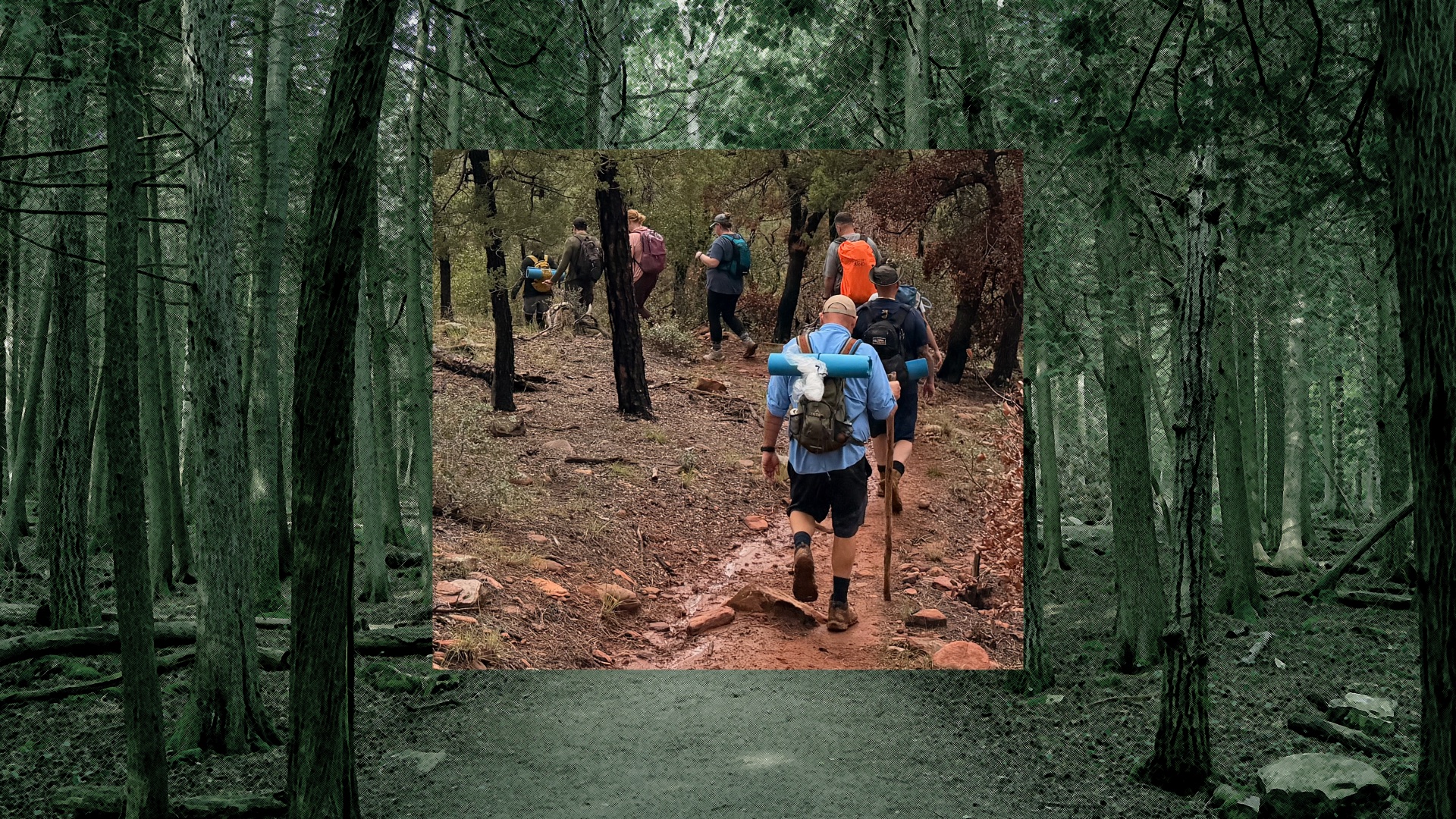
Back at A.S.U., Banzhaf was committed to helping recreate the opportunity for his students. Now, twice a year, he takes a group of seven to 10 A.S.U. veterans to a base camp in northern Arizona for four days of trekking — and then some. The students do readings and discuss them together. They relish in nature, disconnected from technology. They participate in morning Qigong, a meditative movement practice. They eat nourishing meals.

The bonds that form during this time are not so dissimilar from ones formed in military service.

The bonds that form during this time are not so dissimilar from ones formed in military service, Banzhaf said. In both contexts, participants are pushed together in a uniquely close way and made vulnerable by grueling exercise. An important differentiator is that, on Treks for Vets, students have the opportunity to be open, whether on the trail or in organized conversations, about some of the most challenging and raw elements of their service. There’s no rank or title here, Banzhaf likes to remind them. 

“All of a sudden these hard chargers that are used to not showing any emotion at all, because it could cost you your job or it could show that you’re weak and it could hurt your pride, start opening up because it really, truly doesn’t matter,” said Delaney, who was a participant in Treks for Vets before becoming a trip leader. He’s seen conversation topics run the gamut among his expeditions, though the through-line is veterans being open and connected in a rare and freeing way. Sometimes they talk about combat and trauma. Other times it’s the transition to college. “And that’s fine too,” Delaney said, “because it’s something people have been holding in, and we all sit and talk about it.”

Not everyone signs up for Treks for Vets wanting or expecting more than a camping trip. But most, Banzhaf suspects, “come because they need something.” Maybe it’s a change of scenery; maybe it’s connection or direction or meaning. Students who were contemplating suicide have told Banzhaf the trip kept some them from attempting. “It brought them to a place of hope and encouragement and community and all the things that all of us need anyway, but they just hadn’t found it, yet.”

Banzhaf’s only regret where Trek for Vets is concerned is that it can’t reach more students. Ideally, he said, he’d be running trips four times a year, but without the funding to train new staff, expansion just isn’t in the cards right now. At $15,000 per trip, Treks for Vets ends up eating up about a third of the Pat Tillman Center’s $100,000 annual operating budget, which depends on a per-student stipend from the Veterans Affairs Department. The university covers salaries for staff, but there’s always room for more. Where the V.A. recommends universities hire one School Certifying Official per 125 student G.I. Bill users, Banzhaf has just eight, attending to thousands.

The limitations on staff make the strength of connections among students that much more important. Delaney believes he’s never felt like a “number” among vets at A.S.U. because of the emphasis on peer support. In his first fall, it was often students — some working for the Pat Tillman Center, others not — who were his confidants and helped him learn about new opportunities for military-connected students or talk through challenges. This semester, Delaney and a friend from Treks for Vets buddied up to take all the same classes after discovering they share the same field of study. “We know who the other veterans are when we see them walking down the hallway like, ‘Yep, that guy’s a vet, or that girl’s a vet.’ You can spot them,” he said. “That starts the conversation.”

You can reach LearningWell Reporter Mollie Ames at mames@learningwellmag.org with comments, ideas, or tips.

SAMHSA Grant Reversal Fuels Additional Anxiety in the Field   

On Wednesday morning, Scott Delaney woke up to an email from an address he didn’t recognize. In a hasty 6 a.m. message, the writer explained to have been hearing from contacts at community-based organizations running substance use disorder and harm reduction programs that “their grants were all cancelled.” The stranger wondered: Had Delaney, who leads Grant Witness, an online database tracking federal grant terminations, heard the same?

In fact Delaney hadn’t — yet. By 10 a.m., NPR broke the story that, the previous night, the Trump administration had notified hundreds that their funding from the Substance Abuse and Mental Health Services Administration (SAMHSA) had been terminated, apparently due to misalignment with “agency priorities.” Upwards of 2,100 grants were cancelled, worth a total around $2 billion. Delaney’s Signal threads blew up. Emails and web form submissions reporting specific grant terminations and requesting information flowed in. The Grant Witness team spent the day building a new system to track SAMHSA grants. Come evening, Delaney had put his kids to bed and was settling back down at the computer when he learned the Trump administration had reversed its decision: The cancelled grants are now restored.

In that moment, following the news of reinstatement, silence fell upon the Grant Witness Slack chat. Delaney described a sense of relief, perhaps second only to disbelief: a stomach-clench of mixed emotions no doubt reflecting the experience of mental health professionals across the country. They had spent hours mobilizing, scrambling for answers, only to end up with a new set of questions, among them: Is it over?

This latest instance of federal policy whiplash plays into a larger pattern that makes it difficult for some to completely shake off concerns.

Certain developments on this front have been reassuring. That lawmakers from across the political aisle activated to restore the funding indicates vast support for these programs, which widely focus on suicide prevention and substance use treatment, including for young people. The letter SAMHSA sent rescinding the terminations also seems to promise a quick return to regular programming. “Your award will remain active under its original terms and conditions,” a copy of the email obtained by LearningWell states. “Please disregard the prior termination notice and continue program activities as outlined in your award agreement.” 

But this latest instance of federal policy whiplash plays into a larger pattern that makes it difficult for some to completely shake off concerns. This fall, LearningWell covered the ongoing uncertainty that has weighed on mental health researchers over the fate of federally funded projects. Throughout 2025, mass grant freezes and terminations by the National Institutes of Health, for example, disrupted scientific research across a range of disciplines. In the case of mental health, the particularly unfunny irony is of course that the stress of these cuts has been damaging to the mental health — and careers and livelihoods — of the researchers themselves. 

“It’s really hard to know and trust, frankly, the information and know how it’s going to play out,” said Sara Abelson, the senior director of training and education at The Hope Center for Student Basic Needs at Temple University. At the junction of mental health and higher education, the ground beneath her has felt shaky for a while now. Amid this week’s cuts, Abelson paid special attention to one grant impacted that provides funds to colleges and universities: the Garrett Lee Smith Campus Suicide Prevention program. According to research Abelson has been conducting on federal grants for student basic needs, between 2016 and 2024, G.L.S. touched nearly 250 campuses in 45 states and Puerto Rico. These are the kind of wide-reaching “lifesaving supports” she said have been threatened. Will next time be for real? 

Delaney also isn’t quite ready to unwind. Well-versed in the grant cancellation and restoration process, he worries about how long it will take this round. On Wednesday, some grantees shared with him documents, called Notices of Award, they received reestablishing their funding to zero. These NOAs are legal contracts, with the terms offset, in Delaney’s experience, only when a new one is issued. So, he wonders, are the grantees technically owed their original funds at this point? Will some end up pausing their work out of caution? SAMHSA did not respond immediately to a request for comment as to whether revised NOAs will be sent or the expected timeline.

Others worry, because the potential reasons for the original cancellations remain, future cuts may still be coming. Kathleen Ethier, the former director of the division of adolescent and school health at the Centers for Disease Control, believes U.S. Secretary of Health and Human Services Robert F. Kennedy Jr.’s expressed views on the over-discussion and over-pathologization of youth mental health issues don’t bode well for the future of related initiatives. “I do think that there is an ideological reason why these grants were targeted,” she said, “and I do think we have to remain vigilant about the ways in which this administration is going to support young people’s mental health in schools.” 

The continuous federal funding upheaval may have had at least one positive outcome for mental health advocates, though. Now they know how to respond. While Delaney said the initial rush following this week’s terminations — to organize his team and collect new information and field inquiries all at once — felt akin to Whac-A-Mol, previous experience helped him maintain a sense of control. “I think because we’ve done this before, honestly, I felt ready to tackle this,” he said. “We knew what to do, we knew who to contact, and we were going to be able to put together a database that was going to be really helpful, and we were going to be able to do it really well, really fast.”

“It’s really, really energizing to see the vast numbers of folks pull together, the communities activate and mobilize, and you can draw a lot of strength from that,” Delaney said.

You can reach LearningWell Reporter Mollie Ames at mames@learningwellmag.org with comments, ideas, or tips.
Student Mental Health Advocates Want 988 Lifeline on all College IDs

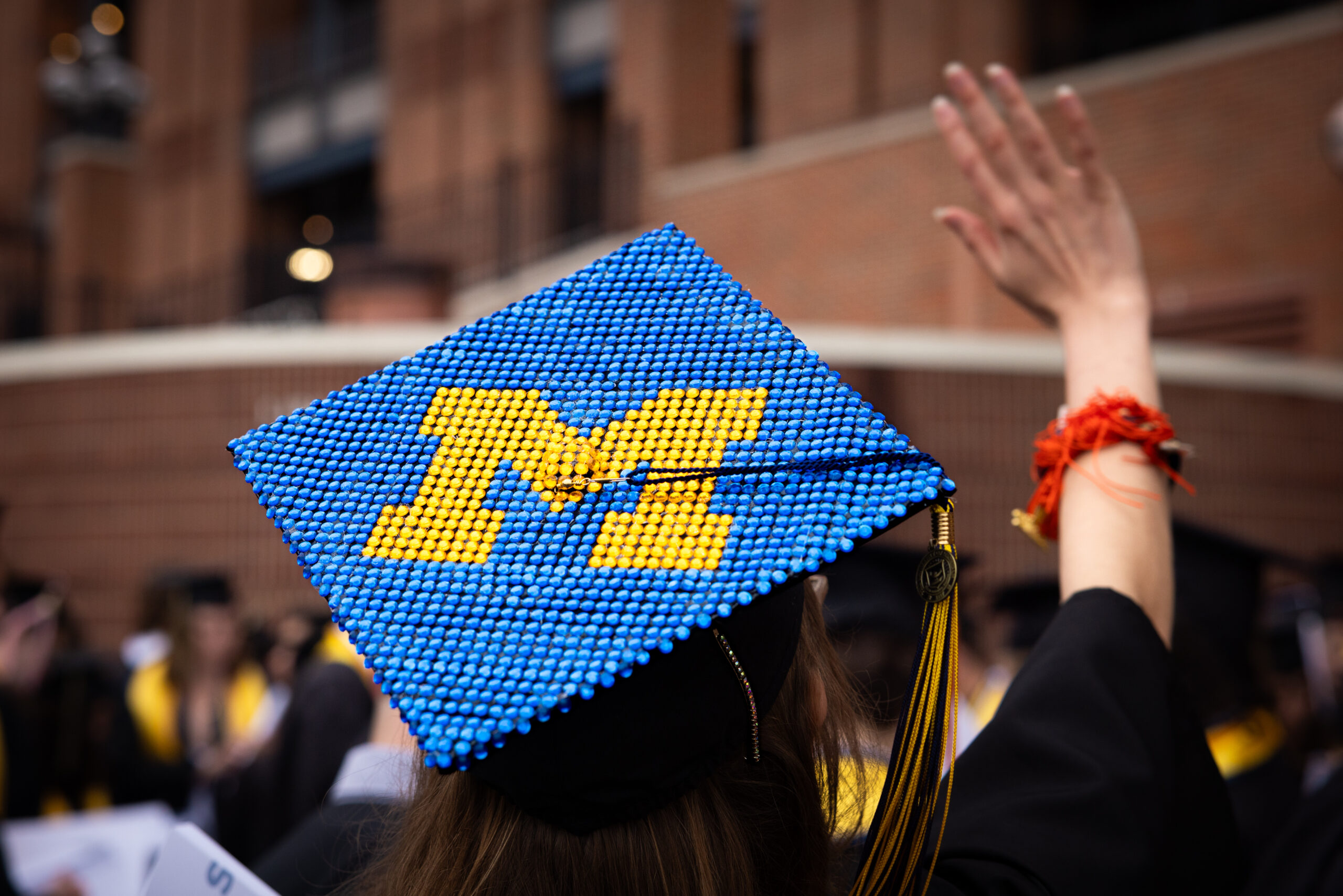
Two years ago, a common interest in mental health advocacy landed two young college students from different ends of the country in the same virtual room. They didn’t know it yet, but their meeting would launch not just a friendship but a working partnership with national implications. 

Carson Domey, then a sophomore at the University of Texas at Austin, and Shriya Garg, in her first year at the University of Georgia, started swapping strategies, sharing the trials and errors of their mental health advocacy work. Domey told Garg about his efforts as a teenager in Massachusetts to get schools to print the suicide prevention hotline on the back of student ID cards. Garg, intrigued, ran with the idea and found success with it on her own college campus.

Today, Domey and Garg are the leaders of the Coalition for Student Wellbeing, a nonprofit Domey founded in 2024 to unite college students across the country who want to affect mental health change at their institutions. The coalition’s first major campaign is to promote the inclusion of the now three-digit 988 Suicide and Crisis Lifeline on student IDs at as many colleges and universities as possible. 

Both Domey and Garg see the initiative as a relatively simple way to achieve critical, even life-saving, results. As Garg put it, “it’s just a small change that has a big, big impact.” 

18 to 25-year-olds report to suffer from mental illness more than any other adult demographic; yet they may be lacking a critical awareness of the resources that can help as well as the instinct to seek them out. 

In July 2022, 988 replaced a 10-digit number as the national hotline to call or text for support during a mental health or substance abuse-related crisis. But according to a 2023 study, nearly 57 percent of 1,345 college students surveyed didn’t know the 988 Lifeline existed; 20 percent said if they were in a crisis, they would not contact any services at all. 

A more recent poll found up to 82 percent of 18 to 24 year-olds had at least heard of 988, although only 28 percent of all respondents of any age indicated they were somewhat or very familiar with the service.

Adding 988 to college IDs places the tool literally in the palm of students’ hands. “You can’t get anywhere without a student ID,” Garg said of the card’s constant companionship. “It’s like your identity as a college student. You memorize your number — that’s how you take your tests, that’s how you get into all the buildings, that’s how you get into your dorm, that’s how you get into your dining halls.”

Perhaps even more than a resource, IDs that include 988 deliver a message to students: that their school and administration care about campus wellbeing and want to offer support. “It’s nice to know from the get-go that there’s someone or there’s something there for you,” Garg said. That comfort, she added, is not only for young people but also their parents, eager for assurances their student will be okay on his own.

“It’s nice to know from the get-go that there’s someone or there’s something there for you.”

The coalition’s campaign is not so much a new idea as it is a nudge towards one that has not yet reached its promise. Legislation in 25 states already mandates the inclusion of 988 on student IDs. To reach colleges and universities in the remaining 35, Domey and Garg have mapped a plan of attack, featuring their preferred three-pronged approach: education, advocacy, and collaboration, specifically across the student-administrator divide. 

So far, the coalition has partnered with the youth mental health nonprofit Active Minds to produce a toolkit for students interested in starting the campaign on their own campuses. They then followed up the release of the toolkit with a webinar to share additional information and field questions from students.

2026 is ushering in a new chapter of advocacy as the coalition launches an outreach campaign targeting the student governments at the five most populated colleges and universities in states where 988 is not yet required. The goal is to inspire existing student leaders to take up the initiative on their own campuses.

A particular benefit of the 988 appeal, especially as a starting point for the coalition, is that it requires a fairly low lift from the administrative point of view. Garg even called the effort “low hanging fruit.” 

“We’re not asking the school to come up with a new resource. 988 is free; it’s federally funded; it’s there,” Domey said. “We have a very strong case for why this should cost zero dollars and zero cents for schools.”

Keeping the Connection 

The coalition’s leaders are hopeful that developing a broad network of student changemakers will pave the way for their future projects. “I think there’s going to be so many long-lasting relationships with different campuses across the country that will be created from this initiative,” Domey said. “It really shows the value that we hope to demonstrate in terms of being a resource to student leaders.” 

As Domey and Garg well know, student mental health advocates need each other’s support; their battles are never easily won. Before Garg turned her attention to the 988 work, she was championing the implementation of student mental health screenings in universities. Though the cause itself is still alive, Garg’s progress stalled in the face of certain barriers, like privacy and liability concerns, too big to climb.

Domey is particularly familiar with the fits and starts of bureaucratic policy change, especially in large institutions where the coalition stands to have the deepest impact. “Even though we can have some of the most supportive administrators, faculty, and staff and students behind this,” he said, “things are still sometimes going to take time.” 

One asset in the coalition’s corner is the prominent advisory board of higher education leaders Domey has nurtured and engaged. Members include presidents Mark Gearan of Hobart and William Smith Colleges and Domenico Grasso of the University of Michigan.  

Kent Willis, another advisor, is the senior vice president for enrollment and student engagement at Stephen F. Austin State University. He said he’s been involved in the 988 campaign primarily to offer guidance on navigating diverse university systems and introduce Domey to personal connections on various campuses.

“Yes, all colleges and universities share some similarities, but the governance structure can be very different,” Willis said. He’s been counseling Domey, asking: “How is it that you create that common collaborative conversation for the initiative to get as far as it can in order to make the ultimate impact that we all hope that it would make?”

While ready to leverage his expertise and connection for the cause, Willis also stressed the importance that the messaging continues to come from students themselves. “It adds that other level of validity to the work,” he said, “because the student voice is extremely important and student leaders hold a significant role as a stakeholder group.”

Even if school leadership doesn’t ultimately institute the change to student IDs, Willis said the coalition’s campaign could be successful just by having reached the right ears in the right rooms. “It allows or invites a conversation that maybe hadn’t been happening in the highest level decision-making conversations.”

For Domey, the ultimate driving force of the campaign continues to be the number of students it stands to help. In the master spreadsheet he created — with the hundreds of student government contacts the coalition hopes to reach — he also included a column for the total enrollment at each school. 

“As we hopefully start to see the spreadsheet light up green with schools that have changed,” Domey said, “we can tangibly see how many students we’re impacting.”

You can reach the Coalition for Student Wellbeing at advocacy@c4sw.org for more information about the 988 campaign.

You can reach LearningWell Reporter Mollie Ames at mames@learningwellmag.org with comments, ideas, or tips.

Colors and Connections

Xochitl Casillas’ students were moping again. As the dean of Chicano Latino student affairs at the Claremont Colleges, she had come to expect this phenomenon: When February rolled around, and Valentine’s Day became imminent, those without partners seemed to feel their singledom more keenly than ever. She called them, affectionately, the “lonely hearts club.” She also wanted to help.

Starting last year, Casillas organized an event on Valentine’s Day-eve for students who didn’t want to be alone to come together. The main activity was an art workshop, called Campus Colors and Connection, which asks students to consider the feelings different colors provoke and then create abstract drawings to represent those feelings or related experiences. By sharing their work and thinking with each other, they could learn more about their peers, as well as themselves.

“This is the time where a lot of people who want partnership may not have it,” Casillas remembered telling the group. “But today, this is an opportunity to connect.”

The workshop Casillas led her students through was developed by The Foundation for Art and Healing, a nonprofit that promotes the arts as an intervention for loneliness. Jeremy Nobel, M.D., Ph.D., a physician and lecturer at Harvard Medical School, started the foundation to explore the impact of the arts on health generally but pivoted towards developing arts-based resources for loneliness about a decade ago. At that point, loneliness was emerging as a predominant mental health concern, and research had begun to suggest what Nobel already suspected: The arts could help.

Today, with loneliness widely considered a national crisis and young adults particularly affected, Nobel continues to believe in art as an antidote. Lately, he and his team have made a special push to bring their work to colleges and universities. Educators, like Casillas, all too familiar with their students’ struggles, have become eager partners. Even those who might question handing crayons to twenty-somethings are considering: Can they afford not to try?

“I think loneliness is where depression was 20 years ago,” Nobel said, “where people didn’t even want to say it out loud.” In other words, Americans may have come around to the idea that depression is a medical condition, rather than a personal defect, but they don’t necessarily treat loneliness with the same open mind. Nobel, whose background is in internal medicine, likes to say loneliness is just a biological signal that a person needs to connect, like feeling thirsty is a signal to drink water. He urges others to adopt this same understanding, or risk the consequences. 

Evidence shows that, physically, loneliness can make people vulnerable to inflammation, higher blood pressure, and a weaker immune system. Mentally, they may act less rationally and more impulsively; they may begin to see the world as threatening. And the lonelier they stay, the more threatening the world seems and the more difficult it becomes to develop connections in the future. Nobel calls this “spiraling.” 

Young people report to be the loneliest of any age group, despite seeming so well-connected online. Even considering the end of the pandemic and return to in-person learning, Gen Z continues to indicate widespread loneliness; in 2024, up to eight in 10 were saying they had been lonely in the last year. As for why, a slew of familiar explanations abounds, like the impact of social media, drawing youth away from “real” human interaction. 

Art and Healing

For Nobel, the connection between loneliness and the arts wasn’t immediately apparent. At first, his interest in the health impacts of creative expression was focused on how it might help treat acute trauma. He had personally sensed the benefits after using poetry to make sense of his feelings about the Sept. 11 attacks. A psychologist overseeing a similar brand of work in a more formal setting confirmed patients were finding relief, specifically across race and class backgrounds. 

“The arts seemed to be helpful across all these wide horizons,” Nobel said, “which meant something was going on that really rewired your brain in some important ways.” 

In 2003, Nobel launched The Foundation for Art and Healing, eager to explore the effects himself. He kept the focus on trauma-affected groups — first those with military backgrounds, then those dealing with sexual, domestic, meteorologic, and other forms of trauma. As the scope expanded, Nobel heard a common refrain: The programs “made them less lonely and more connected.” 

Brain imaging now shows how areas associated with social connection light up while subjects engage with art.

Science was catching up, too. Brain imaging now shows how areas associated with social connection light up while subjects engage with art. Other findings suggest it can reduce hormones associated with stress and increase “feel-good” ones, like dopamine, serotonin, and oxytocin. 

As evidence mounted, the foundation turned its attention fully to art’s possible sway over loneliness. In its current form, the organization aims to raise awareness and reduce stigma around loneliness, as well as disseminate research-based programs that help people connect. Offerings include original films, online exercises, and in-person workshops, all within the organization’s signature initiative, Project UnLonely.

Core to all this work, and meant to maximize its impact, is the foundation’s public health approach. The Foundation for Art and Healing team partners with other businesses and organizations to implement its services, rather than delivering them directly. It also prioritizes simple and low-cost interventions that don’t require prior medical or professional training to implement. “The key is to do things that meet three criteria: effectiveness, scalability, and sustainability,” Nobel said.  

While the foundation also targets the general public, the elderly, and workers in high-stress environments, Gen Z has become a particular focus. Community-based organizations like museums and libraries can be good partners for reaching the 18 to 28-year-old demo. But, Nobel said, “by far the most direct way is through colleges and universities.” 

So far, the foundation has reached more than 50 campuses and 6,000 students. The institutions range from Harvard’s T.H. Chan School of Public Health to large public research universities in the south and small community colleges on the west coast. The activities appeal to a range of campus community members, including those in student affairs, residential life, spiritual life, athletics, and even campus museums. 

At the Claremont Colleges, students used the Campus Colors and Connection exercise to explore their common cultural identity. When Casillas asked them to represent, through different colors and shapes, what brings them joy, for example, she said her Latino students depicted cooking with a grandparent in the Dominican Republic, swinging in a hammock in Puerto Rico, and speaking Spanish. She watched them become eager to tell their stories and encourage new friends to do the same. 

“People are like, ‘Oh, it feels like we’re back in elementary school. We’re just coloring,’” Casillas said. “But I think they didn’t realize how vulnerable they were going to get.” After the 45-minute Valentine’s Day session ended, students lingered to continue the conversation.

The simplicity, perhaps child-like nature, of the exercise might push some away. But Nobel said the playfulness is the point. It’s also part of the draw as a less intimidating, or clinical, form of self-care. “We never frame it as therapy,” he said of the workshops. “We often don’t even use the word loneliness in our promotion of it.” Instead, the directive is simple: “Create and connect.”

Expanding Connections

The University of New England was an early adopter of Campus Colors and Connection, starting about four years ago. Coming out of the pandemic, Dean of Students Jennifer DeBurro said she and her team decided to take a “10,000-foot view” of the student wellbeing issue: “We were asking ourselves questions about on-ramps: What are some of the additional ways that we could provide opportunities for students to connect with peers in a low-risk, easy way?” That’s when they were introduced to Nobel’s work. 

First a one-off program, Campus Colors and Connection is now part of U.N.E.’s orientation program. “They can just talk — talk about what’s making them nervous about going off to school, talk about what’s exciting, reflect on a memory,” DeBurro said of incoming students.

When it comes to evaluating the workshop, the primary mechanism is the survey students fill out after participating. Questions prompt them to reflect generally on the experience, and so far, the results are positive. The vast majority have reported they would recommend the workshop to others (96 percent), as well as feeling more in touch with their emotions (84 percent) and more connected to their peers (84 percent). 79 percent of those who indicated feeling lonely beforehand said they felt less lonely afterwards. 

Yet Nobel recognizes the survey work isn’t as robust as it could be. He hopes to expand assessment to consider the potential impact on student success, including academic performance and retention. “Does being more connected increase learning? All the evidence says it should,” he said. 

As the foundation aims to strengthen assessment efforts, Claremont and U.N.E. continue to extend their partnerships with the foundation. Casillas has now led Campus Colors and Connection not only for her Latino students broadly but with a group of student mentors, who learned to run a version of the session themselves. She also brought the workshop to fellow staff. 

U.N.E. recently began offering a tailored version of the Campus Colors and Connection for first-gen students. “We continue to talk about it in as many different corners of the university as we can,” DeBurro said, “so that any opportunity we have to bring it to a new population, we do.”

You can reach LearningWell Reporter Mollie Ames at mames@learningwellmag.org with comments, ideas, or tips.
Princeton Review Releases Latest Findings on Campus Mental Health Services

Gone are the days when state-of-the-art dining and fitness facilities alone could sweep prospective college students off their feet. When it comes to campus life, Gen Z has a new priority: mental health care. 

The Princeton Review is taking note. For the last two years, the company best known for its college admissions services, including test preparation books and tutoring, has been evaluating schools based on support for student wellbeing. 

On Wednesday, The Review, in partnership with the Ruderman Family Foundation, published the results of its second Campus Mental Health Survey, along with a Mental Health Services Honor Roll, which highlights colleges and universities with model commitment to student mental health and wellbeing.

This year’s survey found broad gains in mental health services compared to last year, indicating a shift towards more comprehensive, preventative models of care. The 2026 Honor Roll also lists 30 institutions, up from the previous 16.

“I’m really pleased with the results of the survey,” said Mark Reed, the director of the health service at Dartmouth College, a new addition to the Honor Roll. “It reflects the investment that people are making nationally to support the mental health and wellness of our college students.” 

Between fall 2024 and spring 2025, two separately polled groups participated in the survey: administrators who reported on the state of mental health policies and programs on their campuses, and students who reported on their sense of the availability of services and awareness of how and where to find them.

The administrators represented 540 different colleges and universities, more than twice as many as in the 2024 survey. Their responses reveal growth since the previous year in the portion of schools with a variety of mental health services.

This year’s survey found broad gains in mental health services compared to last year, indicating a shift towards more comprehensive, preventative models of care.

The percentage of schools with return-from-leave support programs increased by 18 points, for example; and the percentage of those with counseling centers with accreditation or following accrediting guidelines increased by 15 points.

Other notable areas of growth include the incorporation of wellness in residential life (now at 93 percent of schools), the adoption of for-credit or non-credit wellness education (70 percent), and the existence of a website consolidating information about campus mental health offerings (96 percent).

More than 31,000 students also responded to questions about their perceptions of mental health programming on campus. The percentage of students who agreed mental health services are readily available on their campus went up by five points; the percentage that agreed their institutions prioritize student mental health went up by another five.

79 percent of students said they know where to access resources on campus, although that figure reflects only a one-point increase from last year. 

Eric Wood, the director of counseling and mental health at Texas Christian University, another school named to the Honor Roll this year, believes the growing investment in mental health services reflects an understanding that these concerns impact not only where students choose to go to school but whether they persist to graduation.

“Protecting student retention is also one of the hallmarks of college mental health, so these findings are consistent with the notion that one way to address enrollment concerns is to invest in campus mental health services,” Wood wrote in an email. 

At Dartmouth, Mark Reed said the broad implications for student success are one reason the president, Sian Beilock, has made campus wellbeing her “number one priority.” 

“She’s made that sort of a key component to the academic success of Dartmouth — that if we don’t have the health and wellness of our community, then we really can’t be at our best,” Reed said. 

The Honor Roll schools, like Dartmouth and T.C.U., stood apart for their compliance with three main criteria: an administration that supports mental health through policies and programs; students who enjoy a quality of life that is healthy and “attentive to wellbeing;” and initiatives that empower students to address their own mental health (e.g. peer-to-peer offerings).

College ranking systems — most famously that of U.S. News & World Report — have been subject to controversy in recent years due to suspicions that narrow guidelines can end up neglecting otherwise quality schools deserving of recognition.

Wood views the Honor Roll as breaking the mold. He wrote it was “refreshing to see information based on details provided by schools as opposed to arbitrary national rankings that position schools against each other and don’t provide information about the survey samples.”

Wood hopes that schools — both named to the Honor Roll and not — will use the resource to connect and collaborate.

“College mental health is not a competitive world, and counseling center directors often share and borrow programs and ideas,” he wrote.

You can reach LearningWell Reporter Mollie Ames at mames@learningwellmag.org with comments, ideas, or tips.
Uncertainty Weighs on Mental Health Researchers

Last year, social psychologist Kathleen Ethier was going on 26 years at the Centers for Disease Control and feeling hopeful about the growing response to national mental health concerns, especially among America’s youth. 

The Covid-19 pandemic had ushered in new urgency to understand why young people were struggling and find solutions, including ones schools and colleges might help implement.

“In the 35 years that I had spent in the field, I had never seen us all come together in that way,” said Ethier, who was the director of the C.D.C.’s division of adolescent and school health for eight years. 

But that was another time and another administration. When Ethier left her post in January of her own volition to enter the private sector, her faith in the progress of her field was slipping. The conversations that had been fueling her optimism seemed to stop. “We were no longer talking about youth mental health,” she said. 

Since the beginning of the year, widespread cuts to federal funding for scientific inquiry have been chipping away at the advancement of work on student mental health. Despite the issue’s record of bipartisan support, pertinent research and services have become casualties amid slashes to government agencies, programs, and grants

On college campuses, the fallout is multi-fold, threatening the wellbeing of not only students who struggle with their mental health but researchers and practitioners who now find their livelihoods at risk. 

“All of these high points of funding were just taken away,” Ethier said of the shift under the second Trump administration. “Everyone on the other end of that — whether those are school systems or universities or researchers — are all suffering from the loss of those resources, which means the loss of viable alternatives for young people.”

This summer, a group of mostly Harvard University-affiliated researchers released their findings on the total cost of mental health- and substance abuse-related grants cancelled between February 28 and April 11: The estimated loss is more than $2 billion from 474 grants across the National Institutes of Health, National Science Foundation, and Substance Abuse and Mental Health Services Administration.

On college campuses, the fallout is multi-fold, threatening the wellbeing of not only students who struggle with their mental health but researchers and practitioners who now find their livelihoods at risk. 

While some grants have been reinstated since the spring, others still hang in the balance. An online database, Grant Witness, continues to update a list of all grants cancelled by both the N.I.H. and N.S.F. As of November 3, the tracker marked around 140 grants from the National Institute of Mental Health, spanning less than $50,000 to more than $9 million, as “terminated.”

In an unfortunate but telling irony, Grant Witness co-founder Scott Delaney launched the database after being conditionally laid off from his work as a researcher at the Harvard T.H. Chan School of Public Health, where a federal funding freeze had affected his salary. The former lawyer turned climate scientist called Grant Witness a “tool to fight for these grants and to fight for American science.” 

“We’re losing a huge competitive advantage in global research. We’re losing health benefits from research,” Delaney said of some of the concerns motivating his work. He also contributed to the report on mental health-related grant losses this spring.

Those N.I.M.H. grants that remain terminated had been supporting research on a range of populations and neurological and behavioral conditions. Researchers at the University of North Carolina at Chapel Hill, for example, had a $3.8 million grant cancelled that was funding a longitudinal study following preschoolers into adolescence to determine early risk factors of psychopathology. At the University of Michigan, Ann Arbor, another $3 million grant was cancelled that had been designated to help strengthen understandings of “Aging, Major Life Transitions, and Suicide Risk.”

Certain grants were terminated for backing projects deemed in conflict with the Trump administration’s orders against the promotion of ideas like “gender ideology” and diversity, equity, and inclusion. In the mental health context, these cancellations could threaten developing understandings of unique factors and barriers affecting the wellbeing of racial, gender, and sexual minority groups. More than one lawsuit is now underway in an effort to reverse these types of cuts to research on “disfavored topics and populations.” 

Another subset of grant losses has been the result of funding freezes on entire universities. Because these kinds of actions are targeting institutions, rather than particular research areas, mental health is one of countless disciplines implicated.

At Harvard Medical School, Professor Haiden Huskamp had been overseeing multiple training and research projects supported by the N.I.H. when the Trump administration froze more than $2 billion worth of federal funding for the Ivy League institution. 

The freeze came in April after Harvard refused to comply with a list of demands from the Trump administration that the Cambridge university considered overreach and an attempt to curb academic freedom. (These same events led to the frozen salary of Scott Delaney from Grant Witness.) 

For Huskamp, the fallout meant her research on the impact of telemedicine for the treatment of mental illness and opioid use disorder was put on hold. While Harvard launched a lawsuit to restore the funding, she grappled with the uncertainty of both her work and her team.

 “You’re in the middle of a project, and you’re moving full steam ahead, but you basically just have to stop,” she said. “You worry that, depending on how long it goes, will you have to lay people off? Will you not be able to keep accessing data? Will you be able to pick it up easily?”

After around five months, Huskamp was able to reclaim her funding when a judge sided with Harvard and ruled the government’s funding freeze unconstitutional. But the damage of the delay was done.

Harvard’s researchers may not be completely out of the woods. President Trump has promised to appeal the judge’s recent ruling in favor of the university, while his administration already launched separate proceedings to bar Harvard from all business — grants included — with the government.

For other mental health researchers, the challenge is not having lost grants but rather trying to raise money for the first time in this new funding environment. 

At Kent State University in Kent, Ohio, psychology professors Karin Coifman and John Gunstad are seeking support for what they hope will become one of the largest lifetime longitudinal studies ever on college student health, including mental health. For the aptly named Student Life Study, the researchers aim to recruit 10,000 students and collect health data from them throughout their lives. 

With an initial $450,000 from their institution to get them started, Coifman and Gunstad knew they would need to raise the rest of their funds — the majority — from other sources. What they couldn’t have anticipated was a confusing standstill at the N.I.H. this winter, just when they started applying for federal grants.  

In February, the N.I.H. temporarily stopped reviewing grant applications after the Trump administration blocked the agency from calling the necessary meetings. About 16,000 applications and $1.5 billion in funding hung in the balance as a result. At the same time, more than 1,000 employees at the N.I.H. had been laid off.

Given the upheaval, Coifman held off from reapplying for N.I.H. funding this spring. She only decided to reenter the fray in the fall after she served on a panel to review N.I.H. grant proposals and found things were once again proceeding smoothly.

Still, with the 2026 federal budget up in the air, the potential scarcity of available funds continues to stoke concern. President Trump proposed to slash the N.I.H. discretionary budget by a daunting 40 percent, or $18 billion, although his plans seem unlikely to pass given Congress’ push for funding at current levels or higher.

Preparing for all scenarios, Coifman said she will continue pursuing funding from every possible source: at the state level, as well as from private foundations and corporations. She understands other researchers, feeling a similar crunch, will be doing the same.

“There’s a lot of uncertainty and there’s a lot of vulnerability,” Coifman said. “Because we don’t really understand the processes and how they’re shifting.”

Eric Wood, the director of counseling and mental health at Texas Christian University, called the evolving state of federal funding at universities a “pendulum swing back and forth.” 

“I think what most people would want is just stability — just to be able to predict what’s going on,” he said.

Wood is also sensitive to what he believes to be growing perception of higher education as generally unstable. This narrative, he worries, could prevent not only researchers but clinicians like himself from wanting to work at universities, if they think the job security is precarious. 

“People wanted to work in higher education because you get so many different avenues, where you can explore different treatments; you have different populations of students,” Wood said. “But now I think people are saying, ‘Would I just have more freedom working in private practice?’”

“That obviously disadvantages our students if we can’t fill a position,” he added, referring to job openings for counseling staff.  

According to Sara Abelson, an assistant professor at Temple University’s Lewis Katz School of Medicine, graduate students who once planned for careers in research are similarly reconsidering their paths. Lately, they’ve been expressing their skepticism about the availability of future opportunities. 

“What can I do with my timing? How can I not come out as a new trained researcher in the current moment? Is it a safe and stable field to go into?” Abelson said students have been asking her.

So while Abelson has personally avoided funding cuts to her work, she maintains a front row seat to the fallout for not only colleagues but the wider mental health field. The message she said she and fellow staff are hearing is to “play it safe — pick something safe and do it perfectly.” She worries about how innovation in mental health work will suffer — about the capacity to make headway on behalf of all students going forward, and not just some.

“There’s no doubt that it is impacting the field,” she said of the funding upheaval. 

“It’s impacting the mental health and wellbeing of those who are the focus of the grants and those leading the work, and it’s going to have lasting impacts.”

You can reach LearningWell Reporter Mollie Ames at mames@learningwellmag.org with comments, ideas, or tips.

BentleyPlus

This September, The Wall Street Journal ranked Bentley University the 12th best college in America. Its criteria included considerations such as the institution’s impact on salary and how quickly the degree will pay for itself. While pleased with the bankable metrics, leaders at the Boston-based business university will tell you their real differentiator is fostering the personal formation of their students.  

“We put a lot of emphasis on technical fluency and quantitative literacy, but what really makes the difference in the marketplace is the ability of our students to think critically, to communicate extemporaneously with comfort and poise, and to exhibit confidence, not hubris,” said Brent Chrite, President of Bentley University.

Helping students gain and demonstrate these attributes is the thinking behind BentleyPlus, a competency development program focused on encouraging experiences that lead to dispositions such as resiliency, purpose, and agency. While reflecting the business university’s high regard for the liberal arts, BentleyPlus is a separate and intentional effort to get students to understand that marketable skills are not confined to the classroom. 

BentleyPlus began as a pilot in 2021 and is now a university-wide effort combining career readiness with dimensions of wellbeing. The program involves four major pillars, starting with an introductory program where first-year students select two out of 11 competencies to work on throughout their time at Bentley. The competencies, such as ethical reasoning, leadership, and work ethic, are organized into three buckets: cognitive skills (Think), intrapersonal skills (Develop), and interpersonal skills (Act).  

Students are then encouraged to pursue co-curricular experiences that help them develop these competencies — not by adding more to their plates but by making what they’re doing more meaningful. BentleyPlus advisors meet with students three times a year to help them reflect on their experiences and articulate their value. An awards ceremony with a BentleyPlus certificate completes the program. 

While a nod to the university’s holistic pedagogy, BentleyPlus also reflects a concern, among employers nationwide, about the lack of “durable” skills in entry-level employees — everything from communication and collaboration to grit and work ethic. Another factor driving the project is the persistent emotional and mental health issues college students and recent graduates are reporting, including disengagement with work and school post-pandemic.

While a nod to the university’s holistic pedagogy, BentleyPlus also reflects a concern, among employers nationwide, about the lack of “durable” skills in entry-level employees.

As vice president of student affairs, Andrew Shepardson has his eye on all of these phenomena. He sees BentleyPlus as more evidence of the university’s long history of student-centered education. In 2014, Gallup released the groundbreaking Gallup Alumni Survey, originally known as the Gallup-Purdue Index, showing the influence of certain college experiences on career readiness and wellbeing. Shortly afterward, Bentley became one of the first schools in the country to enlist Gallup in conducting its own alumni survey. 

As with the national research, Bentley’s alumni reported higher levels of wellbeing correlated to experiences like “having professors who make me excited about learning,” “having someone who cared about me as a person,” and actively participating in extra-curricular activities.  

“That information was huge for us in terms of sending a strong message to our students and faculty,” Shepardson said. “You may be a finance major fixated on working at a hedge fund, but you would really benefit from taking a discussion-based humanities course or working on an initiative off campus.”

Shepardson said that while students regularly participate in co-curriculars, he noticed they can struggle to articulate how these experiences transfer into skills in the marketplace. He recalled one example of a senior who became flummoxed when asked in a job interview how his experience as president of a club had helped prepare him for the position he was seeking.  

“He made no connection between this significant leadership experience and what might be expected of him in the real world,” Shepardson said. 

A natural partner for BentleyPlus was the team from the Pulsifer Career Development Center, who, as front-liners, recognized the importance of curating durable skills in addition to academics. “Our career folks thought this was phenomenal,” said Lauren Hubacheck, assistant vice president for student affairs. “They said, ‘We can do all the career development work with our students, but you all are connecting tangible stories that show skills like dialogue and leadership.’”   

While focused on competency building, BentleyPlus eventually took a stronger turn towards wellbeing, as Hubacheck and Shepardson began to see this as the through line in all of the work they were doing.   

“Employers were telling us that the greatest number of leaves of absences were with entry-level employees and for wellbeing purposes,” Hubacheck said. 

In talking with his staff and colleagues around the country, Shepardson was hearing about disengaged students whose anxiety was keeping them from talking with their professors or connecting with other students.  

“It became apparent that wellbeing was the higher order,” Shepardson said. “We needed to give students a clear understanding that their ability to work on a competency was not going to be successful if they didn’t have that wellbeing piece in place right from the beginning.”

This year, BentleyPlus 2.0 was launched with its own strategic plan; a full-time associate dean, director, and assistant director; and a commitment from leadership to promote wellbeing in all aspects of university life. 

The Underlying Competency 

Rebecca Jimenez is the newly hired associate dean of wellbeing and BentleyPlus. She said she had her first “pinch me” moment when working the negative mindset table at orientation, where students were asked to select from an array of cards displaying unhelpful concepts like blame and self-doubt.  

“I said to them, ‘Let’s work on how to change that,’ and they loved it. They did the exercise with such intention. I thought, Wow, they really care about this stuff.” 

Jimenez had been working on what she calls “wellbeing communications,” an effort to help people understand what wellbeing means in their lives and to arrive at a definition that incorporates all of its associated elements. Often confused with wellness (mindfulness and yoga), wellbeing can mean different things to different people. After extensive research, Jimenez created a new wellbeing narrative for the university that is part of the BentleyPlus strategic plan. 

“Wellbeing at Bentley is a dynamic balance of personal and community wellness, where students feel supported, connected, and empowered to flourish,” the plan now states. “It’s about caring for oneself, making intentional choices, nurturing meaningful relationships, and engaging in environments that promote joy, purpose and belonging.” 

As part of the BentleyPlus first-year program, students take a wellbeing self-assessment and develop wellbeing goals to be addressed over time with their advisors. Right now, all of the BentleyPlus advisors are student affairs professionals, but the enthusiasm they convey in working one-on-one with students has attracted the interest of other community members, including faculty.  

For Jimenez, bringing BentleyPlus into the classroom is an important next step. 

“Not only can we make wellbeing front and center in the classroom, we can help faculty connect what they are doing with wellbeing outcomes. We can help them say out loud to their students: ‘What we’re doing here is critical thinking.’” 

As with the pilot, the new version of BentleyPlus has the strong backing of career services. Staff there suggested that first-year students participate in the wellbeing self-assessment prior to a popular career development course, acknowledging that wellbeing work proceeds career prep. Perhaps most significant is the new way they encourage graduating students to consider their career choices. 

With support from BentleyPlus, they now ask: “Does the organization you are interviewing with align with who you are as a person? Do they value building relationships and connecting with others?” 

These may just be the questions today’s employers are waiting to hear. 

You can reach LearningWell Editor Marjorie Malpiede at mmalpiede@learningwellmag.org with comments, ideas, or tips.

Collective Wellbeing

Faculty and staff at Randolph College in Lynchburg, Va. don’t typically have resources for new campus initiatives that aren’t absolutely necessary. 

But when students at the formerly Methodist-affiliated school requested a renewed focus on spiritual life, administrators were able to answer those prayers. Renovations began on the college’s chapel, which was empty and in disrepair, to forge a revamped, interfaith space for not only religious gatherings but meditation, lectures, and performances.

The explanation for the sudden deepening of Randolph’s pockets is a share of a $3.275 million investment from the Endeavor Foundation. The two-year grant, which started in November 2023, funded the collaboration of 13 different small liberal arts colleges to develop new ways of enhancing student mental health and wellbeing. Last month, Endeavor announced it has committed another $5.22 million to launch a second phase of the project over the next three years. 

At a time when many are counting liberal arts colleges out, questioning their focus on broad intellectual development over vocational training, Endeavor is betting on them for the same reason. Its support of Randolph and peer institutions stems from a belief that their “whole person” educational approach and close-knit, engaged communities are uniquely poised to help young people find the sense of purpose and belonging that so commonly elude them. And by working together, the theory goes, the schools may push their innovation and impact even further.

“Ultimately, our hopes were to generate initiatives that would strengthen these institutions — that would showcase the liberal arts and the power of a liberal arts in a world that’s increasingly skeptical for various reasons of its value,” said Ashley Kidd, the program director of grants and research at Endeavor.

In 2016, Endeavor first united small liberal arts colleges after noticing a trend of “really wonderful, community-engaged” schools struggling against declining enrollment and finances, Kidd said. The foundation invited presidents from some of these at-risk colleges to discuss institutional issues and other developments, and the convening became an annual tradition.

Over the following years, Endeavor awarded various presidents small to mid-size grants to tackle discrete projects on their campuses. Toward the end of the Covid-19 pandemic, though, the foundation approached the larger group with a proposition: to form a collaborative of their schools with a focus on one issue of their choice.  

“The conversation turned to: ‘What do you really all need? And if we were to invest a larger sum of money in something that was a collaborative project or two, what would be the primary initiative or initiatives on your plate?’” said Lori Collins-Hall, who was involved at that point as interim president of Sterling College in Craftsbury Common, Vt. 

“The presidents very quickly gelled around student mental health and wellness, and from there, the collaborative was born,” she said. 

13 colleges from Maine to New Mexico, Ohio to North Carolina, signed on to join what has since been named the Endeavor Lab Colleges (E.L.C.) Collaborative. Collins-Hall also left her post at Sterling and became the E.L.C.’s project director. Beyond Sterling and Randolph, the initial member institutions included Antioch College; Bennington College; Blackburn College; Northland College; Prescott College; St. John’s College, Annapolis; St. John’s College, Santa Fe; Unity Environmental University; Warren Wilson College; and Wells College. 

Not all would make it. Wells and Northland have since closed, while Unity Environmental left the collaborative after structural shifts, including an emphasis on remote learning, meant it no longer shared the profile of the other member schools. 

Bennington College in Bennington, Vt. was particularly influential in the presidents’ decision to coalesce around wellbeing. Shortly before choosing this focus, the leaders had heard from Bennington President Laura Walker on the results of a study she commissioned to assess student needs and institutional gaps around mental health on her campus. That report, Walker said, “became kind of the foundation for not only our work at Bennington but also the work of the Endeavor project.”

“The presidents very quickly gelled around student mental health and wellness, and from there, the collaborative was born.”

Next, the presidents agreed on four areas to direct their collective and respective institutional energies: infusing curricula with wellbeing-related content; helping students explore their sense of purpose and meaning; creating experiential learning opportunities, especially in nature; and enhancing clinical and nonclinical services, like counseling and peer support.

The majority of the first Endeavor grant went towards compensating faculty and staff, who came from all levels across the institutions, in their joint work to determine the best ways of approaching and executing the collaborative’s priorities. The remaining money was split among the schools for practical capacity building according to distinct institutional needs. 

Randolph dedicated funds to not only the redesign of its chapel but the addition of a comprehensive telehealth service, TimelyCare, as well as mental health training and professional development for staff. A minor in contemplative studies, an interdisciplinary field exploring the human contemplative experience, also took off.

Bennington, meanwhile, invested in the renovation of its fitness center and a revamp of the first-year career preparation course. The college’s standing interest in the arts also inspired a pilot course combining art engagement with mental health processing.

“It was a wonderful mix,” Bennington’s President Walker said of the class. “The students reported they had increased motivation, reduced isolation, and positive changes to mental health. And because so many of our students are artists and creative, it also gave them the sense that they had power to change people’s lives and their mental health through their art.”

For both Randolph and Bennington, another perk of the Endeavor partnership has been the ability to leverage the funds to raise money from other sources. By pointing to dollars already secured for, say, bolstering interfaith programming at the chapel or building out career services, the schools have garnered even more support for their efforts.  

By the end of phase one, the collaborative’s ideative efforts had resulted in the transformation of the initial four priorities into five fine-tuned initiatives to guide future work: Cultivating Curricular Review and Innovation, Building Models of Community Care and Resilience, Center for Purposeful Life and Work, Mapping Belonging, and Nature Rx.

Mapping Belonging and Nature Rx evolved from the commitment to experiential learning, where Mapping Belonging uses reimagined campus maps to cultivate student belonging to the place and its history, while Nature Rx helps connect students to the school’s outdoor spaces.

Unlike phase one, when colleges might use their individual funding to pursue whichever of the priorities was most compelling to them, this next stage will urge every school to tackle each of the five initiatives. According to the president of Randolph, Sue Ott Rowlands, this part of the new grant is especially important. 

“We’re not just going to pick and choose what we do,” she said. “We’re going to commit to all of the five areas, and that’s going to push us — make us really expand our engagement and thinking and open up a lot of opportunities for our students.”

Also in the second phase, the collaborative efforts of the colleges will continue to grow. Currently, a working group of faculty from across the participating schools is spearheading each of the five initiatives, while the chief academic officers of every college also work together.

Part of the mission of the working groups is to devise a way of assessing the impact of their particular initiative. On a larger scale, each institution will measure how the whole of the Endeavor-funded work is affecting campus by conducting pre- and post-surveys on student wellbeing, as well as that of faculty and staff.

Despite the colleges’ limitations resources-wise, Bennington President Laura Walker said she’s been excited to have access to the wealth of “real talent” on their other campuses. “I think one of the best things about this project has been the collaboration among colleges and the support group,” she explained.

Collins-Hall said she thinks most participating faculty and staff have been similarly “jazzed” to work together and come to meetings. “I have people who have been doing this for two years on a biweekly schedule who are excited to be back for year three. That doesn’t happen with any committees in higher education.”

At Randolph, one of the unexpected challenges of Endeavor’s support has been acclimating faculty and staff to the idea that there are now resources to pursue projects that were once off the table — that they no longer need to stretch every dollar to the extent they might have before.

“It was a very interesting process to say, ‘No, wait, we can do that. We have Endeavor funds to help us with that,” President Ott Rowlands said.

Now she’s telling her team: “Think a little bigger.”

You can reach LearningWell Reporter Mollie Ames at mames@learningwellmag.org with comments, ideas, or tips.