Learning to Thrive 

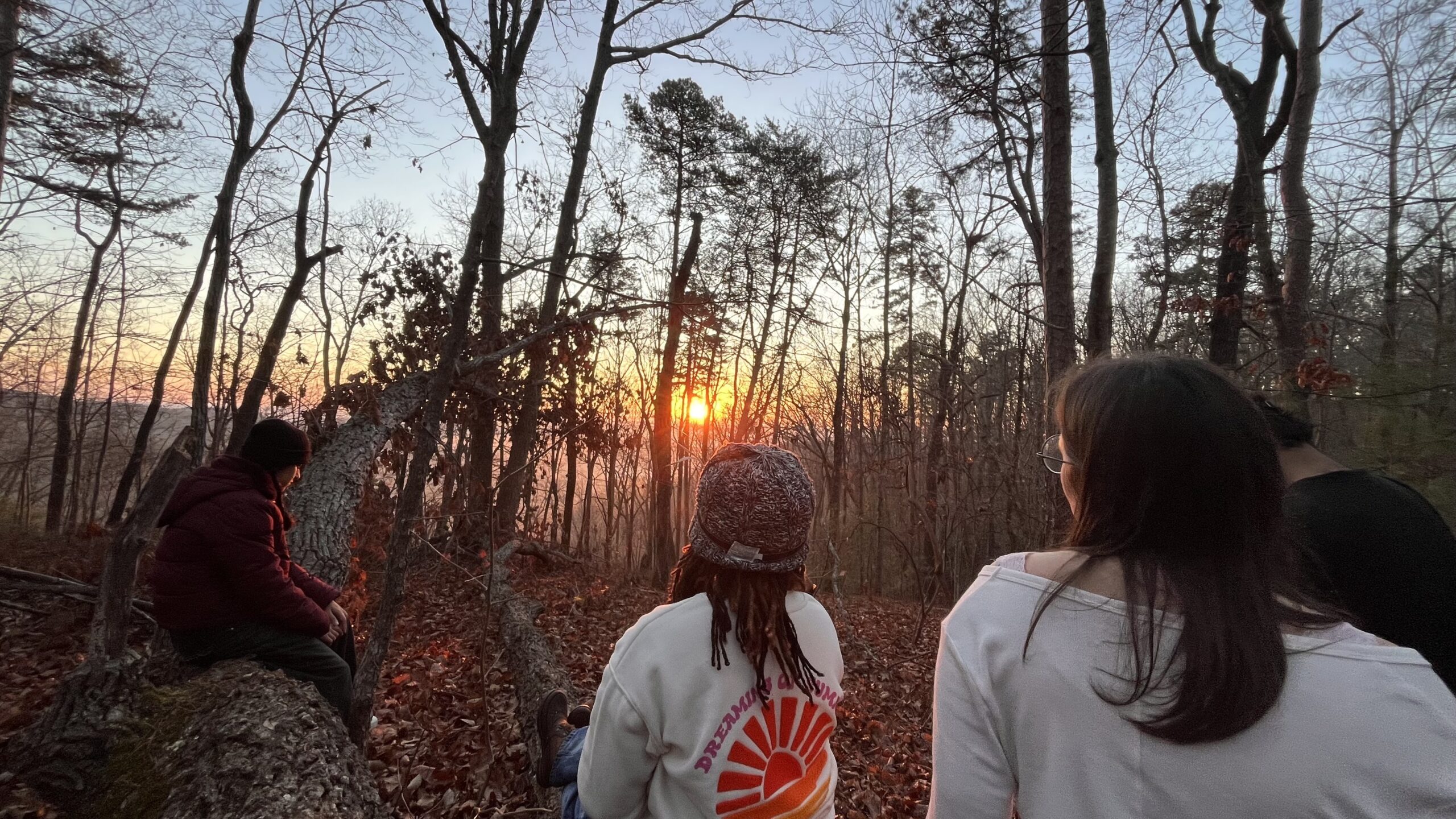
At the opening ceremony of Emory University’s ADVANCE program, students are asked to write down two things: something they want to gain from the experience and something they want to leave behind. After taking what is called “a walk of intentionality” at the camp where the program is held, students dispose of thing two — literally, by throwing the paper away — while sharing thing one aloud with their peers. And thus begins their five-day adventure in learning to live purposefully. 

The ADVANCE program is part of the Emory Purpose Project, which, in turn, is a major component of Emory’s Student Flourishing Initiative, one of higher education’s most explicit efforts to graduate students who thrive personally as well as academically. At Emory, the initiative is as transparent about what it discourages as what it promotes. For a highly selective university where a significant portion of the students choose “pre-health” majors, the Student Flourishing Initiative encourages students to see their college experience as more than just a credentialing exercise. 

“The initiative was a recognition that college shouldn’t only be about gaining knowledge, but also gaining wisdom,” said Ira Bedzow, the executive director of the Emory Purpose Project and one of the original creators of the Student Flourishing Initiative. “This involves having an understanding of who you are, who you want to be, and how you can achieve those possible selves in a way where success is internally measured as opposed to being based on societal or external expectations.”

Launched in 2021 under then-President Gregory Fenves, the Student Flourishing Initiative became a university-wide imperative as well as the flagship effort of a capital campaign of the same name. Spearheaded by then-Provost Ravi Balakanda (now president of Ohio State University), it was a demonstration of Emory’s commitment to undergraduate education at a time when college students nationally were reporting high levels of mental health struggles. 

“A lot of students will engage with the Emory Purpose Project because they are starting to feel that itch of ‘Okay, I’m doing everything right, but this success doesn’t feel good.’”

Wellbeing remains a strong component of the initiative, but it was designed to be much broader than a response to mental health. In embedding flourishing into all facets of the university, including academics, Emory’s Student Flourishing Initiative is an ambitious experiment in institutional change and one that challenges many of higher education’s longstanding practices. Now in its fifth year under a new administration, leaders hope that the many individual gains that have been made within the initiative will compound to create lasting change. 

The flourishing foundation

According to Bedzow, the first task in launching the Student Flourishing Initiative was to describe and communicate what flourishing means at Emory and then make something with “top-down recognition” a “bottom-up creation.” 

“In order to get students to reflect on who they are becoming, we needed to understand how we are teaching,” he said. “What does the culture and the ethos on campus look like? How are students taking care of themselves –— mind, body, and soul? And how do we look at this from both inside and outside of the classroom?”

The initiative’s leadership team explored frameworks for flourishing, including from the Jubilee Centre for Character and Virtues at the University of Birmingham which describes flourishing as not simply feeling happy but fulfilling one’s potential. They arrived at four components of university life that would from then on include an intentional focus on flourishing. Together, they covered curricular and co-curricular elements such as academics, career development, experiential learning, and health and personal growth. They called them: The Academic Experience, Professional Pathways, Purpose and Meaning and Community and Well-Being. 

Within each of these umbrellas there are numerous efforts underway including student flourishing fellows who receive training in active listening, empathy, dialogue and relationship-building and act as campus ambassadors; and wellbeing coaches who provide non-clinical support on emotional and physical health. 

Student participants in ADVANCE get to know each other, and themselves. Photo courtesy of Ira Bedzow

The Purpose and Meaning pillar of the initiative provides its philosophical foundation and is best represented by the Emory Purpose Project. According to its web site, “the project encourages students to examine their beliefs, values, goals, identity, and motivations — and then connect those reflections to their academic, personal, and professional choices.” Bedzow said it calls on students to reframe purpose as a practice, not just an outcome.

Bedzow, who is an ethicist and teaches in the Goizueta Business School, helps students discover their “why,” getting them to explore the reasons behind their goals so that they might better align with who they are or who they want to be. It is in many ways a response to what he sees as misaligned or externally driven influences, in which feelings of inauthenticity can limit wellbeing.

“A lot of students will engage with the Emory Purpose Project because they are starting to feel that itch of ‘Okay, I’m doing everything right, but this success doesn’t feel good,’” he said. 

The ADVANCE program (named to be the opposite of a retreat) is the flagship initiative within the Emory Purpose Project. It is described as a chosen interruption for students to think of themselves beyond productivity, achievement, or future outcomes. The latter half of the five-day retreat includes “stories we tell ourselves,” which Bedzow described as a way to understand how we create or limit how we grow based on the identities we form. 

Some of the exercises may be a little unorthodox for students who are used to controlling their environments, but Bedzow said straying outside of their comfort zone is actually the point. The program’s demand reflects the fact that a fair number of students are willing to try. 

One component of the Student Flourishing Initiative that crosses the purpose and academic domains is the Purposeful Teaching Fellowship, a cohort of self-selecting faculty who are learning how to develop a course that promotes student flourishing. Bedzow said he and others turned to the Center for Faculty Development and Excellence to workshop the idea, hoping to create a “contagion of desire” for professors who see the value of student-centered learning. 

Coincidentally, one of the instructors, Liesl Wuest, who is the director of learning design and leadership at the Center, had already been thinking about how to design a course based on elements of flourishing. Her faculty partners included professionals from different departments within the university, including Wesley Longhofer, who is the center’s director and Emory’s assistant vice provost for faculty affairs. 

“We were really curious about how to design a course that supports student agency — that helps them build confidence and supports their wellbeing,” Longhofer said. 

In doing her research, Wuest developed the Purposeful Course Design Model that includes course alignment, design for learning, and design for flourishing. The design for flourishing branch is based on self-determination theory which is predicated on three principles: student autonomy, readiness, and competence. 

Now in its fourth semester, the fellowship is taught over six weeks, every Friday morning for two to three hours. While the fellows receive a stipend, Wuest believes their time is more of a commodity and a better indication of their commitment. Because the course guides faculty fellows in incorporating elements of self-determination theory into their existing courses, it was critical it be flexible enough to appeal to faculty of all disciplines. 

“Some classes have a lot of space to give students choice in what they read or how they participate or how they are assessed whereas others, like the professional schools, have a very tight curriculum,” Wuest said. “Supporting autonomy might look more like empathizing with students or being transparent about how decisions are made” 

Wuest described one class where a language instructor gave students ample opportunities to work together while she set high expectations and gave rigorous assignments. The focus group with students at the end of the course revealed some surprising perspectives. 

“A lot of the students said it was the hardest class they took at Emory, but because they felt like they were in it together, where there was no competition, it made a big difference in their learning experience,” she said. “What really came through was how they had made friends.”

While some of the programs within the Student Flourishing Initiative were new to Emory, others had either existed or were emerging alongside the initiative. One notable innovation was the Emory College Pathways Center, founded in 2022.

“The Student Flourishing Initiative took advantage of very organic grassroots efforts that were happening at the university that needed some coherence and infrastructure around them,” said Branden Grimmett, the inaugural vice provost and associate dean overseeing the Pathways Center. 

The Pathways Center is both a concept and a building predicated on making career development at Emory a student-centered, holistic experience. Its very existence speaks to the university’s effort to help students navigate the many components of their career readiness so they may focus on their education.

“One of the things we do here is reduce the navigational energy that students have to use by putting everything in one place — things like internships, undergraduate research, advising around pre-professional directions, thinking about post-graduate fellowships like Fulbright, Marshall and Rhodes,” Grimmett said. “It is all here, including funding for these opportunities.” 

“For me, education has never been transactional. It’s always been about who our students are becoming, not what they are doing.”

The Center is also curricular in that it offers practical courses on internships or how to conduct research. It is aligned with a required 13-week first-year seminar that helps students develop their college identities and to begin thinking about the world of work. All of this supports Emory’s experiential learning requirement that can be fulfilled through internships, research, study abroad, community-engaged learning, or the applied arts. 

The Pathways Center strives to humanize the student career journey, encouraging students to connect with alumni not just for networking purposes but to gain real-world wisdom. As part of the second-year Sophomore Summit, students from the Atlanta and Oxford campuses (45 minutes away from each other) spend 24 hours together at a camp site where they hear stories of resilience and overcoming obstacles. The experiences are shared by alumni just five years out of school, upper class students, and faculty. One professor talked of the responsibility of becoming a caregiver at 12 years old to an epileptic parent. Another spoke of the challenges of establishing herself in academia as a young Black woman. 

While not seeming so on the surface, these attempts at understanding faculty and classmates as people are all part of preparing for life after college, Grimmett said. He himself is a classically trained pianist and has been a producer on Broadway. He believes non-linear pathways are more effective in preparing students for the twists and turns of the real world. “For me, education has never been transactional,” he said. “It’s always been about who our students are becoming, not what they are doing.”

Five years into the initiative, leaders of different programs within it have collected some data on outcomes, though understanding if this grand experiment really worked is hard to know. The efforts within the Student Flourishing Initiative are meant to build on one another, creating a cumulative effect that is strong but subtle. Bedzow said even the students themselves may not recognize they are participating in something bigger. 

“If we made flourishing so explicit for students, then it becomes a shiny object as opposed to the waters they are swimming in,” he said. 

The question that remains is knowing if these efforts have grown deep enough roots to withstand leadership transitions or priority shifts. This is a particular dilemma in higher education where flashy campaigns can quickly fizzle out with new administrations. At Emory, many of the original leaders of the initiative have moved on to other positions or institutions, though the hope is their original work will continue to bear fruit. 

Asked if he sees or feels a difference on campus since the initiative was launched, Bedzow shared the following: “I wake up every day excited to meet with students, faculty, and staff because I experience firsthand how inspiring and motivating it can be to work intentionally toward creating environments in which people can thrive. Most of all, I am excited by students who are developing the language and practices they need to become the people they choose to be.”

You can reach LearningWell Editor Marjorie Malpiede at mmalpiede@learningwellmag.org with comments, ideas, or tips.
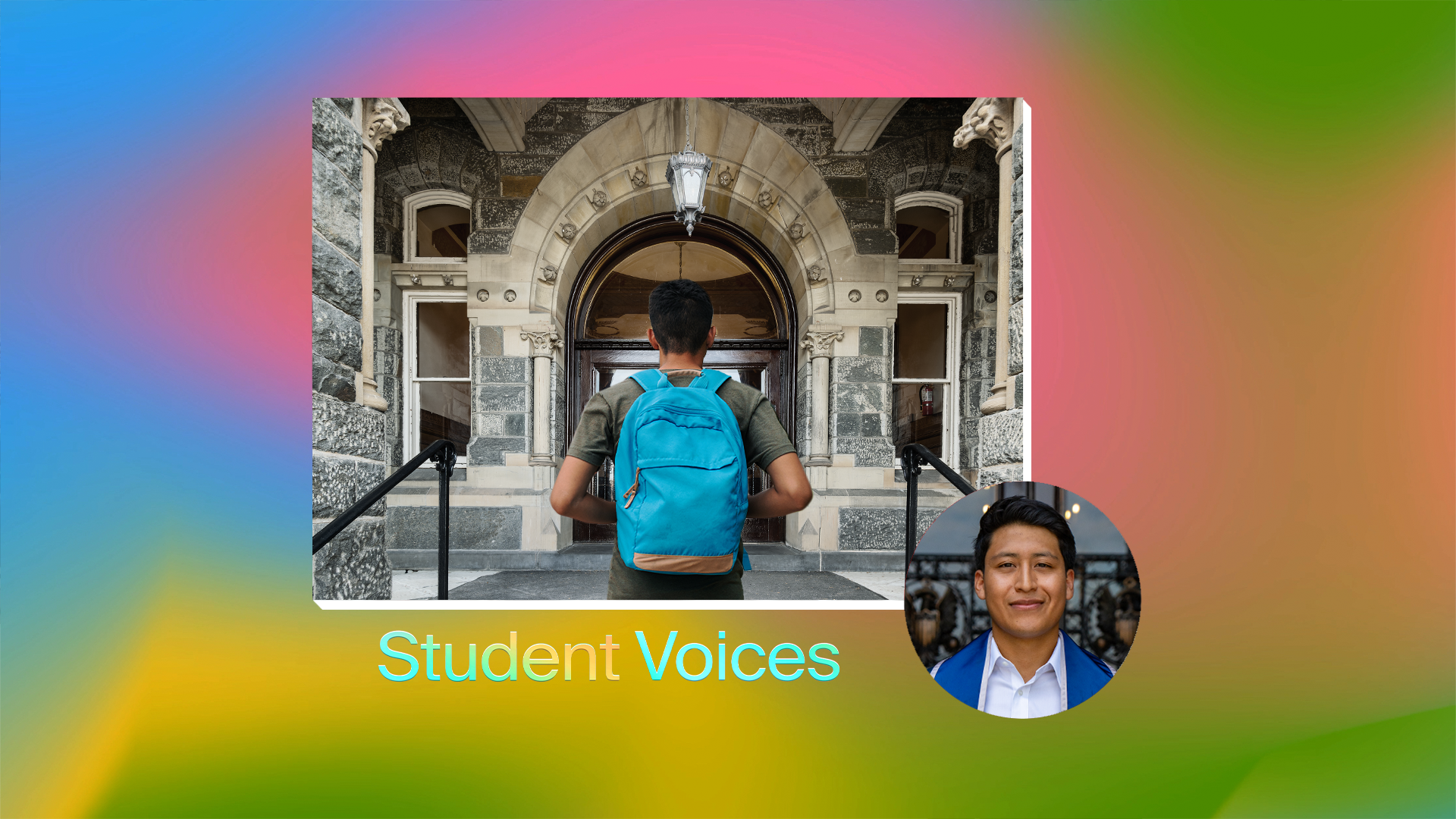
Don’t Silo Transfer Students. Bring Us into the Fold. 

When I received my admission letter to Georgetown, I was filled with a myriad of emotions and questions as I considered accepting the offer. Most stemmed from the same fear: How would I adapt to a new school environment as a junior transfer student? Reddit was filled with warnings — that it’s hard to find community, hard to catch up. I read every thread I could find before setting foot on campus, and they weren’t wrong, exactly. They just weren’t the whole story.

After arriving at Georgetown with my new identity — a “transfer” — I realized what I really wanted was to blend in. That meant somehow gaining, in a different way, the advantage of those first two years: the friend groups, the campus knowledge, the sense of already knowing how things worked. What I did not want was to be handed a separate track labeled “for transfers,” another thing to set me apart before I had even unpacked my dorm room. The real story, it turned out, was not that Georgetown lacked support for transfer students. It was that by treating us like any other incoming student, the school managed to cultivate a genuine sense of inclusion.

After arriving at Georgetown with my new identity — a “transfer” — I realized what I really wanted was to blend in.

It’s true that the logistics of transferring can be a nightmare. For me, it involved tedious tasks like credit audits that required digging up old syllabi or tracking down past professors. But that’s just the beginning. Once my credits were approved (not all, of course), I had to get acquainted with Georgetown’s core curriculum on my own. Figuring out the intricacies of my intended major meant scouring through a multitude of PDFs. How else would I have learned that finance electives are half-semester classes and some are only taught in the fall or spring, not both? Then came class registration, where I found that most of the courses, both inside and outside the business school, were already full, waitlists included. My schedule wasn’t what I wanted. Who willingly signs up for an 8:00 a.m. accounting class? 

Another big worry that manifested was the social gap. Although subtle, it was very present. First-years bond, partly because everyone is new at the same time. When they get to their second or third year, that sense of novelty tends to wear off. Transfers come into a class that has already built a year’s worth of shared experiences, whether in run-down freshman-year dorms or eating questionable food at the dining hall. I found people to be generally friendly, but the divide showed most clearly in Georgetown’s extracurricular club culture, where “recruiting” targets the first- and second-year classes.

Another big worry that manifested was the social gap. Although subtle, it was very present.

Thankfully, I was part of the Business Undergraduates Invested in Leadership Development (BUILD — note: Georgetown loves its abbreviations), a pre-orientation program at the McDonough School of Business open to incoming first-years and transfers alike. It was the first thing that made this all feel manageable. BUILD gave me something no Reddit thread could: an insider’s view of how the business school actually worked. Professors lectured on their own departments and the majors they offered, which is where my interest in international business first took shape. Days were filled with helpful workshops (like one on resume formatting, whose guidance I still use today) and site visits to companies like Deloitte and Boeing. It’s also where I learned about the Summer Undergraduate Research Fellowship, which I applied for and completed the following summer. 

Most importantly, at BUILD, I connected with new people, most of whom weren’t transfer students. I met not only incoming first-years but my mentor and coordinators in my own grade, all of whom were happy to talk about their own experiences and help out wherever they could. They took me out for coffee chats to learn more about clubs that interested me, and I got feedback on my applications from current members once recruiting season started. I wasn’t navigating these applications blind; walking into that process already knowing people who could talk me through it mattered more than I expected. The connections made that week stuck. Additional programming like intramural soccer kept me connected to the cohort (we lost in the playoffs… yet it’s one of my favorite memories from that fall semester).

Transfers make up a small share of BUILD’s cohort, but the program never made me feel like an afterthought. Part of that comes down to design choices most transfer-specific programming doesn’t make. Georgetown has a transfer community, too, with a council that hosts events connecting new transfers to each other. These spaces matter, but community with other transfers isn’t the same as being woven into the broader student body, and it’s not the thing most people struggle to find. 

What helped me most was BUILD’s mentor structure: two or three students per mentor, someone with enough bandwidth to actually answer questions or point me toward someone else who could. Compare that to new student orientation, which every transfer technically gets to attend. The ratio there is closer to two student volunteers for every fifteen new students, and the cohort isn’t a small group you get to know; it’s the entire incoming class. It’s no surprise that most transfers I knew skipped the bulk of it. BUILD, by contrast, caps its cohort at forty students and requires an application, so the people in the room actually want to be there. 

None of this was built with transfers specifically in mind. BUILD exists for anyone new to the business school, transfer or not, and that’s exactly what makes it work so well for us. The program isn’t solving “the transfer problem.” It’s just built well enough — small mentor ratios, a selective cohort, programming that runs all year instead of one week — that transfers benefit from the same design that helps everyone else. 

That’s the model worth copying: not a separate track designed “for transfers” but programs sized and structured so that anyone new, whatever kind of new, gets seen. I loved my BUILD experience so much that I came back the following year as a mentor.

Jorge Mendoza Castro graduated from Georgetown University in 2025. He studied finance and international business.

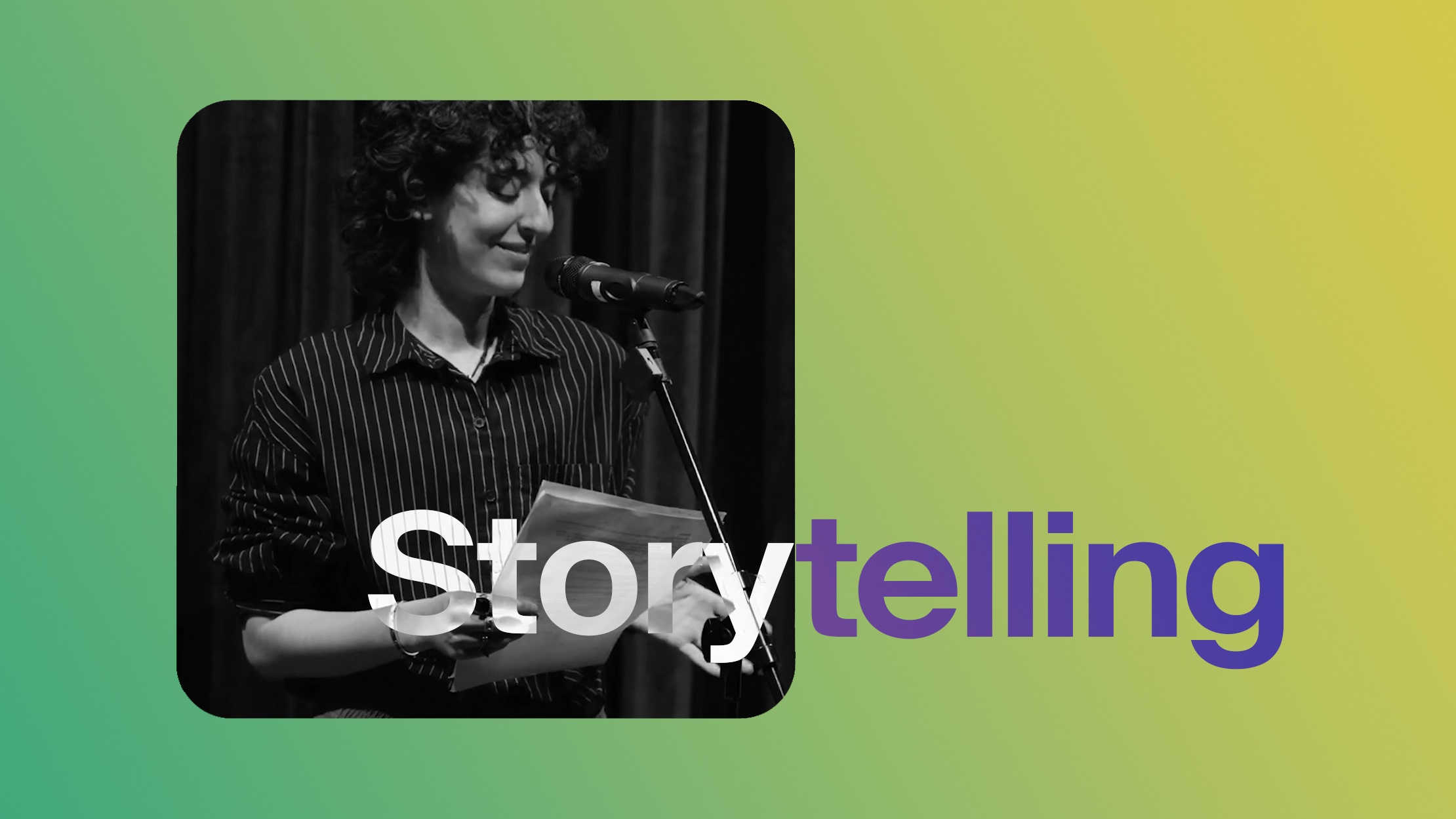
“Size Me Up,” PJ Bekkali

In this story, P.J. leans into the tactile metaphor of “who wears the pants” – exploring their inner swagger while also precariously navigating both gender and family constraints. P.J. bring us into a world where the circumstances of self-expression feel neither easy nor fully realized, reminding us of both the pain and the courage involved in tailoring an identity that fits.

This story was produced in partnership with the University of Connecticut Humanities Institute for their Story Slam centered on a university-wide theme of Connection and Disconnection.

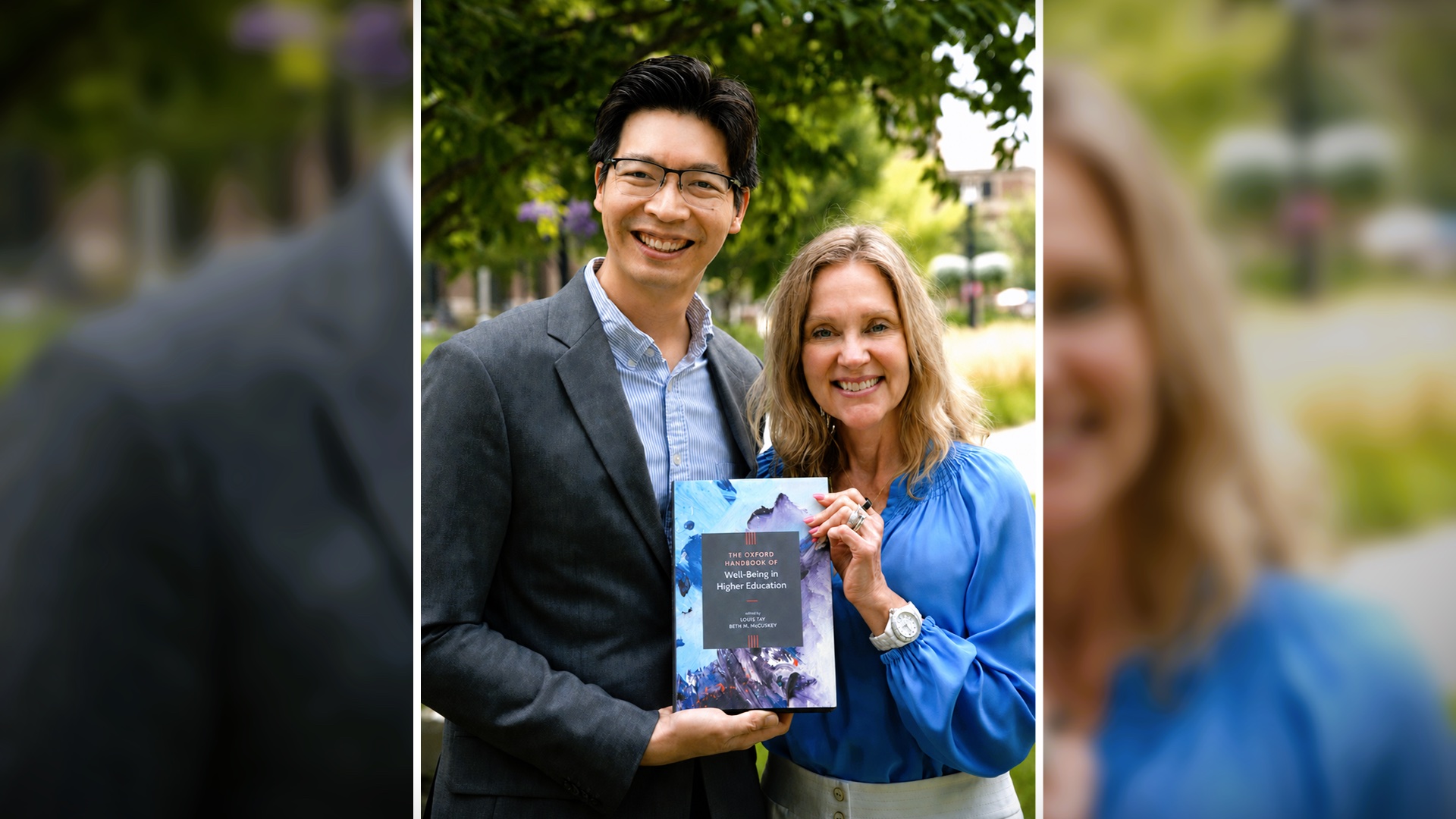
A Handbook for Student Flourishing

College students are increasingly willing to talk about their mental health and wellbeing — but the adults in their world don’t always know what to do with that willingness. How can a college community better help students build relationships, recover from failure, take risks, and develop the skills to flourish long after graduation? 

Those questions are at the heart of the newly published “The Oxford Handbook of Well-Being in Higher Education,” co-edited at Purdue University by Beth McCuskey, the vice provost for student life, and Louis Tay, the William C. Byham Chair in Industrial-Organizational Psychology. Drawing on the work of more than 120 researchers and practitioners around the world, the handbook looks at wellbeing across the higher-ed ecosystem. LearningWell spoke with McCuskey and Tay just before the release of the handbook to discuss what today’s students need most and why wellbeing belongs at the center of a university education.

LW: What was the motivation for creating the handbook? What need is it filling in the higher education landscape, and why now?

LT: A big part of the motivation is to recognize that higher education institutions do not merely have the responsibility of educating students in terms of passing down knowledge and skills but also imparting skills for wellbeing and character development. This has, I think, been a classical way of really viewing education in the first place — it’s really the whole person. Also it answers the call for the Okanagan Charter, where really the focus has been on making sure that health and wellbeing are central. There really hasn’t been a resource that consolidates all that we know in terms of research and also practice. So we felt like this was really timely and important to do.

BM: At Purdue, like a lot of campuses for probably a good 10 years ago now, we initially tried to solve the problem by ramping up our mental health services staff on campus. But it became crystal clear that we needed to look beyond that. It really became a campus-wide initiative to look at wellbeing more holistically.

In student life, which I oversee, we were asking, how do we build our services holistically so that we’re meeting a student where they are? Everybody has concerns or problems from time to time. Not every single concern or problem needs a therapeutic mental health intervention, but a student may need somebody to talk to. Maybe it’s study-skill development or something like that that’s underpinning the need.

We built out a programmatic model called Steps to Leaps, playing off the Neil Armstrong alumni connection to campus. It focuses on five areas: overall wellbeing, leadership development, impact, networks, and grit. Louis started working with Steps to Leaps from that research angle. He helped us think through things from that lens. Post-pandemic, he suggested maybe we should write something because I’m practitioner-based, he’s research-based, and so we can approach this from both angles. He had done some work with Oxford University Press before, so he had an editorial contact. About four years ago we pitched the concept, and it fit very neatly in their handbook model. 

LW: The handbook has an ambitious scope, with more than 120 contributors and 46 chapters. How did you decide what — and whom — to include?

BM: We started off with the backdrop of overall mental health and current issues and trends. There’s also a public-health approach to student development, and we talk about staff wellbeing, faculty wellbeing, and contingent faculty wellbeing. Then we look at integration and synthesis: How do we take the theories, the different research in different spaces, and apply it in the higher-ed setting? This includes everything from Covid impact to stress and coping, friendships and wellbeing.

Then we get into interventions and programs — programs that people have launched and research or outcomes for those. And then policy and program implementation: How have different campuses done this work? There’s an example of a first-year program, basic-needs work, the Okanagan Charter, and social-emotional wellbeing through campus housing. Then we have inclusive approaches and disciplinary and global perspectives. So it’s pretty broad.

LT: There are lots of different institutions that are doing amazing work here, and Beth and I are only doing a small slice. I think it’s really important to gather ideas and learn from the best. The fun part of being editors is we really get to read everything and learn from everyone. And of course we exchange ideas as well through that process.

LW: How does the handbook handle wellbeing, and is there such a thing as a baseline? What does “wellbeing” mean in this context?

BM: We’re defining wellbeing very basically. It is flourishing — human flourishing, helping people be their best. It’s broader than supporting the students because if our base is not well, we’re asking a lot of people to make things as well as possible for others. We’ve got to look at this as an ecosystem, and I think that’s what the book does. 

LW: How would you characterize where students are now compared with 10 years ago? What are some of the features of their state of wellbeing?

BM: We’re in a very different place, and I think we’re starting to see things evolving generationally. One of the key things we’ve been noticing is that over the past decade, more students are coming in presenting challenges related to wellbeing. Surveys show that more students have anxiety and depression, and fewer of them are flourishing.

Also starting about 10 or 12 years ago, we were seeing a whole shift in how students were approaching their education. We had seen students prior to that who wanted to experience a lot of different elements, maybe changing their major a lot, maybe even overcommitting — getting involved a lot of different places. About the mid-teens, we saw this huge commitment of students to, “This is the goal” — very goal-specific and ladder-like in their approach to how they were going to accomplish that goal, which was a very different mindset.

I think the pandemic did absolutely cause some concerns. We had the learning loss, and I believe the social learning loss. If you’re managing a residence hall, for example, you see this. People can’t have a conversation about dirty socks on the floor. How do you help people have those skills to address conflict, even tiny conflicts? That generation that came to campus right after the pandemic may have lost that skill-building in high school because of learning remotely. And then there’s the technology piece. The door is wide open here in terms of where this is going.

LT: They are digital natives, so a lot of interactions nowadays are filtered or mediated through technology. It’s not merely that most people are messaging rather than calling. Now we have A.I. in the mix, too. Youth are forming relationships with A.I. agents, and there are big companies actually working on that to address loneliness. But then it comes at a cost. Are young folks actually interacting with these A.I. agents and learning unhealthy patterns because it’s a frictionless relationship where you have zero obligation to the “person?”

At the same time, we know that social relationships are foundational for wellbeing. I think one of the significant challenges for a lot of students coming into college is being able to socialize well and relate to others and even tolerate disagreement.

A lot of students are aware and very authentic about where they’re at. They are very open to receiving help and receiving guidance. They come in with a lot of strengths. They also come in with some significant challenges because of how our world is.

LW: How does the handbook suggest colleges could think beyond counseling centers when they consider student wellbeing?

BM: Holistically, psychological services are an important element in how we support wellbeing, but there are a lot of other spaces, too. How is a campus a community? How do people find their people in that community? How do people get supported in that community? That is a huge part of the work, I believe.

LT: There is a critical need not only at Purdue but across different higher education institutions at different levels. A lot of students are coming in with significant needs. Often the ratio of a provider to the number of students is quite skewed. A lot of universities are struggling to find alternatives — peer support and now even A.I. support as almost a first response to help. I think we need to be very creative in those ways to really meet this growing need and demand and, at the same time, harness students’ own willingness to talk about these things.

“I don’t think we should see students merely as recipients but also as a wonderful resource to be able to help their fellow students.”

There are other types of formats where they’re coming together, and it’s not merely one-on-one. Again, one-on-one will never go away, but there are other ways that students can feel supported if they come as a group and support one another. There is research showing that those who are actually in the position to help others, fascinatingly, also grow more and are more resilient and have greater wellbeing. I don’t think we should see students merely as recipients but also as a wonderful resource to be able to help their fellow students.

LW: Resilience and learning from failure are recurring ideas in the handbook. Are institutions — or adults generally — doing enough to help students develop those skills?

BM: This is one of the elements of Steps to Leaps: helping students recognize that everybody fails. The most successful among us have failed. It’s much more about what you do when you fail. Not that you shouldn’t be sad or angry — that’s all normal. But how do you pick up from that? What do you incorporate in your own toolkit based on that failure?

Along with the failure element is this whole idea of a linear journey —helping students see that journeys are never linear. We can have the greatest intentions to make them so, and then life happens.

Sometimes alumni stories can be so incredibly powerful for students because they’re looking for their mentors and heroes. It’s so important that they hear somebody they’ve been admiring say, “Here’s how I screwed up this class,” or “Here’s what happened in my first job and what I learned from that that helped me be successful in my second.” Normalizing is a big part of it. And higher ed is such a great place for students to learn those skills because it’s a relatively safe place to fall on your face. There are lots of resources there to help you. We’re all works in progress, and our students are absolutely works in progress.

The worst thing we could do is encourage people never to take a risk. When you take risks — even calculated, educated, well-thought-out risks — sometimes it still doesn’t work. Nobody likes to fail, but you want to make sure there’s that learning piece. The looking back is sometimes the more profound learning.

LW: What do adults misunderstand about the wellbeing concerns young people express today?

LT: There is a lot of willingness among students to seek and receive help, and a lot of desire to talk about wellbeing. I think that can often be misconstrued as students having less ambition or being too privileged. But I think that it’s a healthy pushback against what we’re doing as a society, which is this relentless pursuit of success and more. The question is: Is that really the end goal of life? Just to have more money, more status? We see that on campus here and also in the themes in our book, as researchers and practitioners are noticing it as well. I think that’s something that would be helpful for adults to recognize and perhaps have a shift in how they think about these conversations.

BM: We’re all we’re works in progress, and we appreciate that our students are absolutely works in progress. How do we help them make the most of this environment and the resources in it as they’re experimenting? So much is grounded in having that social network. You know the people that have your back, who will hand you tissues as you’re sobbing, the people who can help you think through a problem. But a network isn’t just something you take from — you are giving to your network, and that’s partly why that’s so strong. A big part of what we’re trying to expand is how do you build these skills and mindset, and we know employers want those skills in our students.

LW: You had contributors from around the world. How did the global perspective influence your thinking about wellbeing?

BM: We know that different cultures experience things differently, but sometimes we can be so U.S.-centric in how we approach things. In our society, we tend to be more “me” focused, so here wellbeing is about me. I think in some cultures it’s about “we”— looking more at the collective mindset than the individual mindset. Having that written out helps put on the table that there are other approaches in the world. The context of wellbeing in Singapore, for example, is going to be very different than it is in the States, so we’re defining wellbeing very basically as flourishing, human flourishing. Helping people be their best, culture to culture, means different things, and we have to acknowledge that, too.

LT: I had thought that a lot of what we are talking about with wellbeing was perhaps a much more Western issue. However, reading some of these chapters from other countries made me realize that this is not just an issue in North America, but a global one. Somehow, all around the world, faculty and staff and students are experiencing significant challenges, and it’s something that we all need to confront.

At the same time, there are cultural differences, too. The approach to thinking about wellbeing here might be slightly different. There’s an increasing level of destigmatization, whereas in places like East Asia, it’s still very much stigmatized to seek mental health help. It’s a global phenomenon, and addressing it requires a much more culturally sensitive approach to helping students.

LW: Was there anything that surprised you as the handbook came together?

BM: I found the lens of the different disciplines interesting as you start unpacking it: how social science might take on certain things, versus someone approaching this from a public health lens, versus a practitioner running a housing organization on campus. Each one of these elements is a source of truth for the problem at large. It’s how we honor where people are in those processes and help facilitate that whole. If we’re talking about human flourishing, the book showed us that there’s still a lot of work to do to help people be their best.

LW: How do you envision the handbook being used, and by whom?

BM: We’re looking at this as multi-use. It can absolutely support the faculty side of things. The research can be used as a textbook in certain settings. But there are also practical application components to it, so we see colleagues in areas like mine deploying these ideas and having it as a resource. If I’m wanting to look at how I improve in this space, the handbook gives some good tips about how to look at what your needs are and how to build out a collaborative model. If I’m looking at it from my lens as the senior student affairs officer, I might use the book differently. If I’m a researcher, I may use the research elements as good places to get information about who’s doing what in this space. We would like to do some sort of a symposium, a place to convene and have a good dialogue on these topics with others.

LW: Was the handbook intended to be updated in future editions?

BM: Louis and I haven’t even talked about that yet! Just the A.I. influence alone — our book does not tackle A.I. one iota because we started four years ago. This last year has been the whole copy-editing process, and in just that time things continued to evolve quickly. From the mental health side of things, I think we’re still learning about A.I. in that space. Social media is one of the elements, and it’s not all bad, though sometimes people hang their hat on that. I suspect A.I. will be very similar, where there’s going to be parts that cause problems in the wellbeing space, and there will be parts that that support wellbeing growth and development. It’s just how we deploy it. Louis has a grant that’s doing some of that work right now. So absolutely, I think there’s an opportunity to take this and run with it.

Posted in Q&A

What We Get Wrong About College Cannabis Use

In recent years, the prevailing story where college substance use is concerned has been students’ declining alcohol consumption. This trend is, for all intents and purposes, a public health victory. And yet some have wondered if it’s not another sign, like their decreasing in-person socialization, of an overly anxious generation.

The question of cannabis often takes a back seat in this conversation. How, indeed, has the use of college students’ second-favorite drug changed amid a potential swing away from partying? In this case, there’s the legalization of recreational marijuana in 24 states to consider, as well. Is greater accessibility ratcheting up activity, and to what end for wellbeing? The answers may surprise you, as the saying goes, and not least of all because cannabis use is historically misunderstood.

Jason Kilmer, a professor of psychiatry and behavioral sciences at the University of Washington, is one of the country’s leading experts on substance abuse among young adults, including high school and college students. When we met on Zoom to discuss the latest trends in his field, his preferred longitudinal study on the topic had just released its 2025 results. Every year for almost 50 years, Monitoring the Future, led by researchers at the University of Michigan, has been collecting self-reported data about the drug-use habits of U.S. adults aged 19 to 65. 

The latest Monitoring the Future findings on college student cannabis use are notable because, in many ways, they’ve stayed constant — compared to last year, five years ago, even ten years ago. The data show that, despite what may be common perception, most college students are not using cannabis, nor are they using it significantly more than their modern-day predecessors. But just because the majority aren’t users doesn’t mean schools should unsound the alarms, Kilmer says. Also contrary to what some believe, researchers are only becoming more confident in the harm the drug can cause, particularly to developing brains.

Most college students are not using cannabis, nor are they using it significantly more than their modern-day predecessors.

One of the reasons Monitoring the Future is particularly helpful for higher education student affairs practitioners is that it breaks down data by not only age but college students versus non-college students (both one to four years out of high school). In 2025, the percentage of college students who reported using cannabis in the last 30 days was 25.2 percent. For non-college students, that rate was 30.9 percent — and tends to be higher across the board. Monitoring the Future then calculates whether these results differ significantly compared to one, five, and ten years ago. In this case, there were no significant changes in use for either college or non-college students within any time frame.

That lack of significant change also holds true for college and non-college students who reported daily cannabis use (using 20 or more times in the last 30 days). For college students in 2025, the latest daily rate was 5.3 percent. For non-college students, it was more than double: 12.6 percent. 

For Kilmer, the point worth driving home time and again is that, despite what many might think, far from all college students are using cannabis. It was in fact research on misperceived norms related to cannabis that first drew him into this line of study. In 2000, a colleague found that college students who used cannabis most were also more likely to overestimate use among their peers. Frequent users, likely surrounded by friends with similar habits, may struggle to believe that they’re in the minority.

One of the reasons recognizing the tendency to overinflate campus cannabis use is important is because that understanding could inform prevention tactics. An incoming student who incorrectly believes most of her peers use cannabis may be more likely to end up using it herself in an attempt to fit in, Kilmer said. But research suggests by righting the misperceived norm, some people’s real behavior can be changed — that is, in this case, they may reduce their use.

And it is best, medically speaking, for people, and especially young people, to reduce cannabis use. Notions to the contrary, Kilmer imagines, stem from another sneaky, and false, rumor: that cannabis can’t be harmful. Weed may be naturally occurring in theory, he said, but that doesn’t make it safe. Since the 70s and 80s, the concentration of T.H.C., the high-inducing component, has soared from around 2 or 3 percent to as high as 30 percent or more. “Science shows it stopped being natural a long time ago,” Kilmer said. 

As for the idea that you can’t overdose on weed, that you can’t become addicted, that you can’t experience withdrawal — none of that is true either, Kilmer emphasized. “It’s never been a question to researchers. We’re always struck by the fact: How did that message even get out there?” he said of the confusion. When he worked in student life, he remembered an undergraduate coming in and admitting he was worried he was addicted to weed. He wanted to know “if that’s even a thing” because “my roommates keep telling me it’s not.” 

The risks of cannabis use to young minds include links to mood disorders, attentional issues, and psychosis. Scientists are typically cautious about using the word “causal” to describe the relationship between any two variables. “This is a topic where we get to use the word causal,” Kilmer said. “High-potency cannabis causes psychosis.” Some people end up in an unfortunate cycle, where they think cannabis is helping them with issues like poor sleep, appetite, or anxiety, but in reality those are just the symptoms of cannabis withdrawal. So when they use more, the symptoms go away. Confidently diagnosing cannabis users with A.D.H.D. has become almost impossible, Kilmer added, because the drug’s effects can so closely mimic the disorder.

“This is a topic where we get to use the word causal. High-potency cannabis causes psychosis.”

As the executive director of Student Wellbeing at Boston University, Carrie Landa, a psychologist, is attentive to the ways larger social trends among college students may be affecting substance use habits. The fact that the rate of alcohol use is down, and weed use is stable, could be promising, she said. But she warns against focusing on how much they’re using at the risk of looking past the why of it all. In years past, she’s perceived people getting high in social settings, among friends. But now, she said, “with the current generation who is really facing struggles related to interpersonal connection without technology,” she worries use is often a mode of “self-medicating.” Young people may be using weed to target sleep or anxiety issues — ones that may or may not be connected to cannabis use in the first place. 

So perhaps social anxiety is at play in influencing student usage trends for cannabis and alcohol, even if the former is stable while the latter has gone down significantly (from 63.5 percent in 2015 to 52 percent in 2025). But it’s hard to say for sure. Kilmer said new research on the relationship between cannabis and alcohol use on campus could help clarify some of these “why” questions. In the early 2000s, he said, it was generally accepted that smokers also drank but drinkers didn’t necessarily smoke. Today, he awaits more updated information breaking down the “venn diagram” between different substances among college students. What if, for example, the smokers today don’t also drink?

What is clear to Kilmer is that alcohol and cannabis prevention efforts in colleges should remain a priority. Alcohol is still the most prevalent drug, and the effects of cannabis seem increasingly worrisome. Cannabis users may see the fallout in the classroom, too. In one study, the frequency of marijuana use among students was associated with skipping more classes, lower first-semester G.P.A., and taking longer to graduate. “Now that research has caught up, it really has told a very consistent story,” Kilmer said. “This is a substance worth taking seriously. It’s a substance that has very clear implications for mental health and wellbeing, student success.”

The continuing challenge, Kilmer added, is how to influence student behavior. Motivational interviewing has been a successful tactic in one-on-one treatment scenarios, he said. He also encourages university counseling departments to screen for cannabis use disorder. Perpetually, Kilmer is asking himself: “How do we get that science off the page of journals and out there in a way that actually has an impact?”

You can reach LearningWell Reporter Mollie Ames at mames@learningwellmag.org with comments, ideas, or tips.
Teachers: You Matter More than You Might Think

If you are a college professor or high school teacher, you may have some concerns about returning to school given the challenges many of you have reported about engaging Gen Z students. From being sidelined by their screens to getting “crickets” in class discussions, you may feel as though you’ve gone from the center of attention in your arena of influence to an interloper in your own classroom. It’s enough to make even the most optimistic educator frustrated. 

And yet, survey data consistently show that while it might seem like no one is listening, relationships with teachers are among the strongest determinants in a range of student outcomes, from academic performance to overall wellbeing – this according to the students themselves. 

Last week, the Walton Family Foundation and Gallup released the most recent edition of their annual Voices of Gen Z Study, which asked 1,758 Gen Zers in middle or high school what makes a school experience enjoyable and engaging. According to the responses, the strongest predictors of whether students enjoy school are having teachers who recognize and encourage their individual strengths and goals, along with feeling their coursework is interesting and feeling like they belong at their school. 

“The students who are the most engaged at school are those who are most likely to say that they have close, meaningful relationships with their teachers,” the report states. “These students say that they have at least one teacher who checks in on their personal wellbeing, and not only encourages their goals and ambitions, but also helps them understand and develop those goals.” 

Survey data consistently show that while it might seem like no one is listening, relationships with teachers are among the strongest determinants in a range of student outcomes, from academic performance to overall wellbeing.

In higher education, the correlation between relationships with faculty and overall wellbeing is well established. A long-term Gallup study found that six key college experiences are linked to preparedness and wellbeing later in life and that half of them involve relationships with teachers. These are: having at least one professor who makes you excited about learning, having professors who care about you as a person, and having a mentor who encourages you to pursue your goals. 

This past spring, the LearningWell Coalition (publisher of LearningWell magazine), together with the AAC&U and Morning Consult conducted the survey “What Students Value in College” and found that relationships with faculty and staff are among the most powerful elements of the undergraduate experience. 76 percent of students said having a mentor was “very” or “extremely” valuable, making it one of the top-rated college experiences in the survey. 

The impact of these relationships extends beyond perception into measurable outcomes. Using the PERMA framework of wellbeing, students with a faculty or staff mentor report higher wellbeing (7.12) compared to those without one (6.62), making mentorship one of the strongest contributors to student flourishing among all experiences studied.

The essential point is that educators matter more than even they might think. Despite the challenges in engaging pandemic-affected Gen Z students, they still expect and want their teachers to be present and to actually care whether they are learning. At LearningWell magazine, we have the privilege of reporting on teachers and faculty who are looking past the eye rolls and/or lack of eye contact to successfully connect with their students. This superpower may simply be the ability to engage with students as human beings, letting them know, “I care about you as a person.” 

Jennifer Woolard, a psychology professor at Georgetown University, begins every class with a breathing exercise as a way to ground students and ask that they pause and be present. She was one of the early participants in the Engelhard Project for Connecting Life and Learning, which engages faculty in making connections between students’ academic studies and their broader life experiences, especially in the areas of wellbeing, flourishing, and mental health. 

“For me, Engelhard is about modeling,” Woolard said. “Taking the time out of class to discuss these issues says to my students that I care about their wellbeing.” Student reflections confirm they get the message. One student reported, “I felt cared for — like the professor was genuinely interested in our wellbeing rather than us just churning out good grades.”

Nearly a decade ago, Matthew DeLeo began teaching the QUESTion Class to his sophomores at the Bronx Academy in New York City. The course gives public high school students in low-income neighborhoods the opportunity for self-reflection and personal development, with questions like: What is purpose? Is life about me, or is it about others? Why does it take courage to be yourself? 

DeLeo said the benefits of the class were remarkable, and bi-directional. “It was the students’ growth and development — and the way they express what the program has done for them — that has enabled me to learn and grow as their teacher.” 

Sunny Gaye Hallowell is a professor of nursing at Villanova University. She wanted her students to be able to connect the meaning of nursing practice to who they were becoming as adults, much like they might in a humanities course. She enrolled in a year-long faculty workshop offered by the university that embeds character education, particularly human development, into multi-disciplined curriculum. 

“I wanted to blend art and science to help students explore the human experience of health and healthcare through the eyes of both patients and providers,” Hallowell said, “and to help them form a professional identity.” 

Even at the largest universities, a professor’s desire to connect can be felt in her classroom. At the University of Washington, Elizabeth Kirk regularly arrives early to her introduction to nutrition class and stands outside the lecture hall to welcome her students inside — all 500 of them. Kirk participates in a program called Five for Flourishing that guides faculty members in the implementation of strategies to promote connection in the biggest classes across the university. 

These strategies include adding language to class syllabi that expresses support for student wellbeing, organizing small student groups that meet weekly, and instituting mid-quarter evaluations for students to offer feedback on the course. They may be small gestures, but they speak volumes about Kirk’s appreciation for belonging in her classroom. 

These educators will tell you they have good days and bad days when it comes to student engagement. But they, and hundreds like them, share a grounding principle that it is the students who are their reason for being, and not the other way around. Through all the credentials, the research and the publishing, it is the opportunity to enlighten someone through education that drives them forward. 

You can reach LearningWell Editor Marjorie Malpiede at mmalpiede@learningwellmag.org with comments, ideas, or tips.