Study Abroad Is Not for Everyone

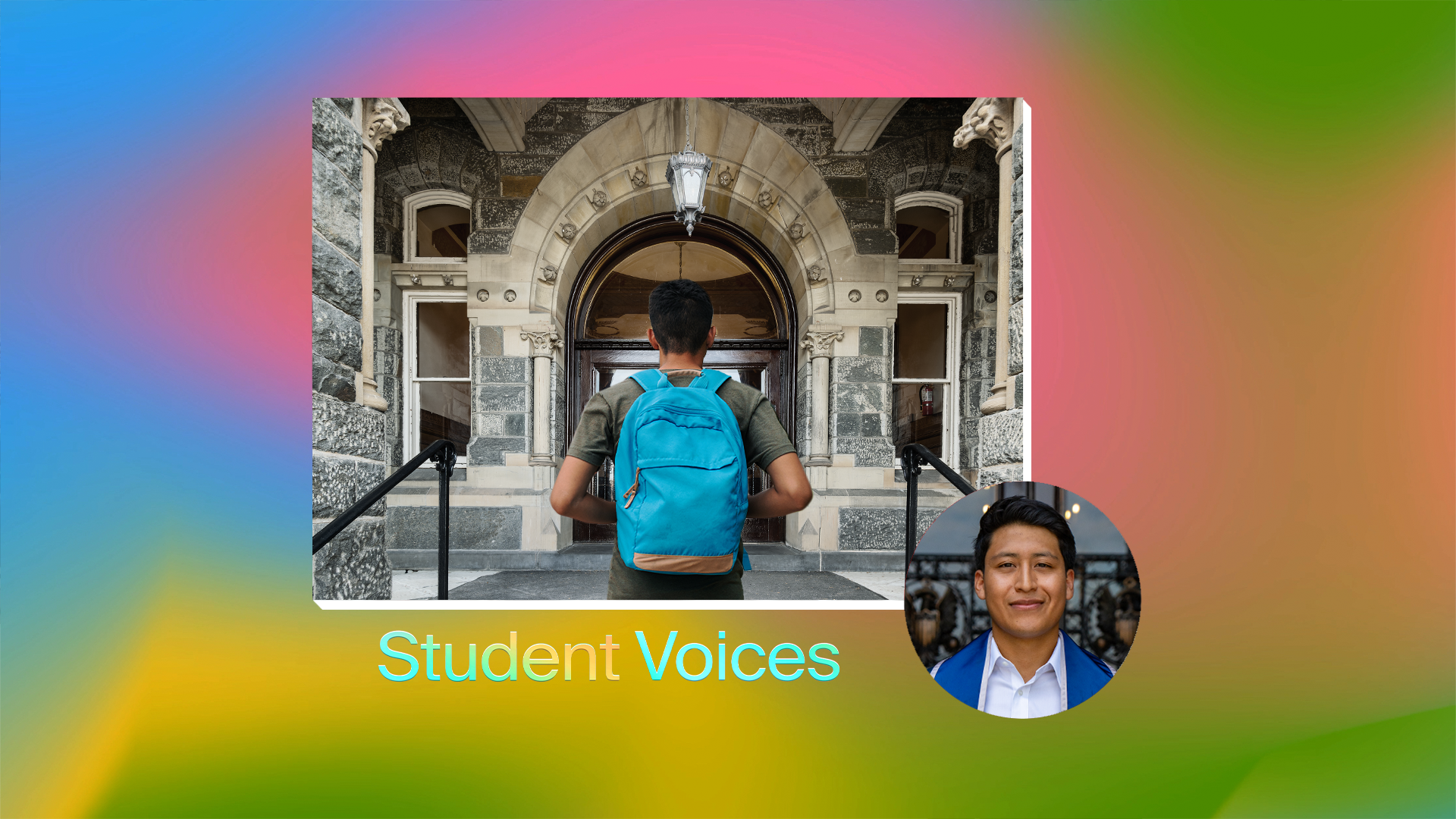
Adding three to the “staying” side and another three to the “going” side, I recently opened a spreadsheet to keep track of the friends who I will (not) see as often around campus throughout junior year. It was only once I began to record my friends’ impending study abroad adventures that I accepted the truth about my own college life: I will not sacrifice a semester at school in order to go abroad. 

I feel this looming sadness as a sophomore at Georgetown University, which has a particularly global-minded student body. Studying abroad at Georgetown feels more like a rite of passage than the right opportunity for a certain kind of student. About 16 percent of bachelors-earning undergraduates nationally will study abroad, while Georgetown boasts a 57 percent abroad rate. In our School of Foreign Service, the percentage hovers around 80 percent. For this reason, many Georgetown students no longer waste their precious breath to ask if a peer plans to study abroad. Rather, students ask each other where they are traveling and for how long. 

Whichever way the conversation goes, the student staying on campus becomes accustomed to bearing the burden of proof for his own decision. For some, foreign travel is just so obviously enriching for their career paths that they could hardly imagine it not applying as clearly to their friends’ journey. Others just cannot fathom how anyone could opt out of taking a semester-long adventure.  

Sometimes pursuing an unconventional path for the sake of being true to oneself actually requires as big a leap — as much self-introspection and reliance — as chasing adventures on the other side of the world.

The typical student who chooses not to go abroad is one familiar with hearing that he will regret it for the rest of his life. The language of regret is hardly unique to studying abroad. So many decisions to abstain from what others are doing are vulnerable to self-doubt when they are expressed. What was once an assured decision sounds uncertain in the voice of a student who has lost his confidence. Sometimes pursuing an unconventional path for the sake of being true to oneself actually requires as big a leap — as much self-introspection and reliance — as chasing adventures on the other side of the world. There is more than one way to realize our full selves in college, including by learning to trust our own instincts.

Especially at Georgetown, it is no coincidence that most students study abroad during their junior year. When I saw the peak of academic rigor, my junior fall, in the distance, I promised myself that I would instead opt for the rolling hills of Florence, Italy. Little could be better than escaping dining hall food for cacio e pepe, all while augmenting my pre-law G.P.A. with classes that past villa dwellers had told me were a breeze. 

But the longer I waited for my once-in-a-lifetime study abroad experience to begin, I realized that college itself was a life-altering experience. The opportunity to live abroad for such an extended period of time may never come again, but college also feels quite precious. Friends, classmates, and professors are an inevitable part of student life, but they only form a community when they live and work in close proximity. Study abroad professors offer valuable knowledge, but they are still unlikely mentors when compared to a professor whose office is just a short walk away from a residence hall back on campus. 

Even if abroad coursework covers major or general education requirements, there may be more that a student wants out of their degree. A degree can become more than an arrangement of words on a diploma since unique classes can imbue a student’s coursework with personal significance. Many college students still remember the drag of taking obligatory classes in high school and revel in realizing the academic freedom that was long withheld from us. 

The opportunity to live abroad for such an extended period of time may never come again, but college also feels quite precious.

That abroad coursework even covers major or general education requirements is also never guaranteed. For up to a week before new semester class registration, thousands of students are piecing together the right classes with the best professors, to fit the right requirements at the right time. For students like me who double major with a minor, a good semester schedule is already almost as puzzling as it gets in college. Nothing kills a good study abroad plan quite like discovering that two required classes conflict timing-wise and that overloading credits is the only excruciating solution. 

Students can find themselves studying abroad despite these constraints, but the pain tolerance should be higher for students whose course of study necessitates a journey abroad. If I was a Classics major, my degree path would feel incomplete without a semester abroad in Italy. As of now, I remain convinced that Washington D.C. is the right place to further my education and experience in American politics. 

Leading with what convinces me is enough to feel satisfied with my own decision to stay, even as so many people I care about are going. There is some irony here: the study abroad decision that I would most likely regret would have been prompted by an exogenous fear of regret itself. If I ever go abroad, I want it to be because I led myself there, not because I mistook someone else’s path for my own.

Aaron Polluck is a sophomore at Georgetown University studying government. He writes for The Georgetown Voice.

Knowing What We Seek 

Happiness today is most often associated with comfort, or momentary pleasure, but our founders envisioned something very different when they drafted the Declaration of Independence. Indeed, “the pursuit of happiness” may be the most misunderstood phrase in the national vocabulary. 

As we approach our 250th anniversary as a country, a new course at Arizona State University aims to clarify the term “happiness” and, in doing so, remind us of the virtuous ideals on which our nation was founded. “What the Founders Meant by Happiness: A Journey Through Virtue and Character” is a partnership between A.S.U. and the National Constitution Center, and course co-creators Ted Cross of A.S.U. and Jeffrey Rosen, the center’s C.E.O. emeritus.  

Based on Rosen’s book, “The Pursuit of Happiness: How Classical Writers on Virtue Inspired the Lives of the Founders and Defined America,” the course explores how the study of classical virtue shaped the founders’ understanding of happiness, character, and civic duty. But in creating the course, Rosen and Cross hoped to do far more than correct an interpretation that has been misconstrued over time. The course engages students in getting to know our founding fathers and mothers who, despite their flaws, made the pursuit of virtue something that would guide the growth of the country.  

The course’s title, “What the Founders Meant by Happiness,” is revealed in the first part of the course, stemming directly from Rosen’s body of work as a constitutional scholar. “The founder’s happiness did not mean ‘feeling good,’ but ‘being good’ — not the pursuit of immediate pleasure, but the pursuit of long-term virtue — meaning self-mastery, character improvement, and lifelong learning,” Rosen said. 

The course draws reflection from learners about how the original meaning of happiness can be held for individuals and society today. 

“We hope that students and learners become reflective on not only what happiness means to them but which of those values and virtues they would like to adopt in their own lives and what implications that may have on how we interact with one another,” said Ted Cross, who leads Principled Innovation,a character education initiative at A.S.U. that places character and virtue at the center of decision-making. 

The open access, online course has 12 modules and is currently available at A.S.U. without credit (though Cross hopes that will change over time) and on the National Constitution Center’s website. Those who complete all 12 modules receive a certificate. The co-creators describe the course as “providing a framework to cultivate civic identity and character at scale, modeling how institutions can democratize character education while reinforcing civic flourishing.”

Rosen said the aim of this course is to shed light on a critical pillar of our democracy: holding dear a common understanding of what it is we stand for.

The second part of the course revisits the founders’ stories — from Thomas Jefferson to Benjaman Franklin to Phyllis Wheatley — revealing their moral sources for recovering happiness as the pursuit of virtue and self-control. Key to this telling is their humanness in borrowing their insights from philosophers like Aristotle and Cicero and their admission that their quest for moral fortitude often eluded them. It was the pursuit that mattered most. Explained in this context, Cross said, the content becomes relatable. 

While it stands on its own from a content perspective, the course itself reinforces the missions of both its founding organizations. As part of A.S.U.’s Principled Innovation, it fits nicely within the character education framework, which has been adopted by A.S.U. President Michael Crow as a foundational design aspiration of the university. The school is promoting the course not just to students but to educators at A.S.U. Prep, the university’s preparatory charter school, and other K-12 educators. 

As the nation’s only institution dedicated to increasing awareness and understanding of the constitution, the National Constitution Center has been marketing the course throughout the country, hoping to attract students and life -long learners alike to engage with all or some of the modules. The course is the latest addition to the center’s growing suite of educational resources initiated by Rosen when he was the president and C.E.O. 

Rosen said the aim of this course is to shed light on a critical pillar of our democracy: holding dear a common understanding of what it is we stand for.

“People should think as they will and speak as they will, but we need models to inspire us,” Rosen said. “We need exemplars. Without a consensus about our heroes, it’s difficult to invite people to envision happiness in this once familiar but now forgotten way.”

The course underscores another important tenant of democracy in America by examining the juxtaposition of freedom and self-control, once again illustrated through the intentions and practices of our founders. “I’ve always believed that democracy depends on political self-government,” Cross said. “Our founders set up a system that has many degrees of freedom, but it depends on individual citizens being able to manage themselves and interact with each other in virtuous ways.”  

The course was launched in February 2026, and the response thus far has been positive, in part due to an engaging storytelling format (a hook Cross said was intentional for younger learners). But time will tell if deeper meaning about virtue and self-control will come through for a generation often criticized as being isolated and self-absorbed. The co-creators believe the lack of moral exemplars this generation has experienced, both in popular culture and leadership, may actually increase the course’s appeal. 

“We know that young people want to be happy,” said Cross, who has taught courses in positive psychology. “My contention is if you learn to be good, you will also feel good, that there is a root to feeling good that comes through character development, purpose, and meaning.” 

Rosen agrees and sees the course as an example of a renaissance of character education in the U.S. 

 “We’ve had a tremendous reaction to the course thus far and we are hoping that this will be part of the movement for the cultivation of virtue that is increasingly strong in America today,” Rosen said. “There’s a hunger for this right now in this country.” 

You can reach LearningWell Editor Marjorie Malpiede at mmalpiede@learningwellmag.org with comments, ideas, or tips.

“Split Ends” by Michael Costello

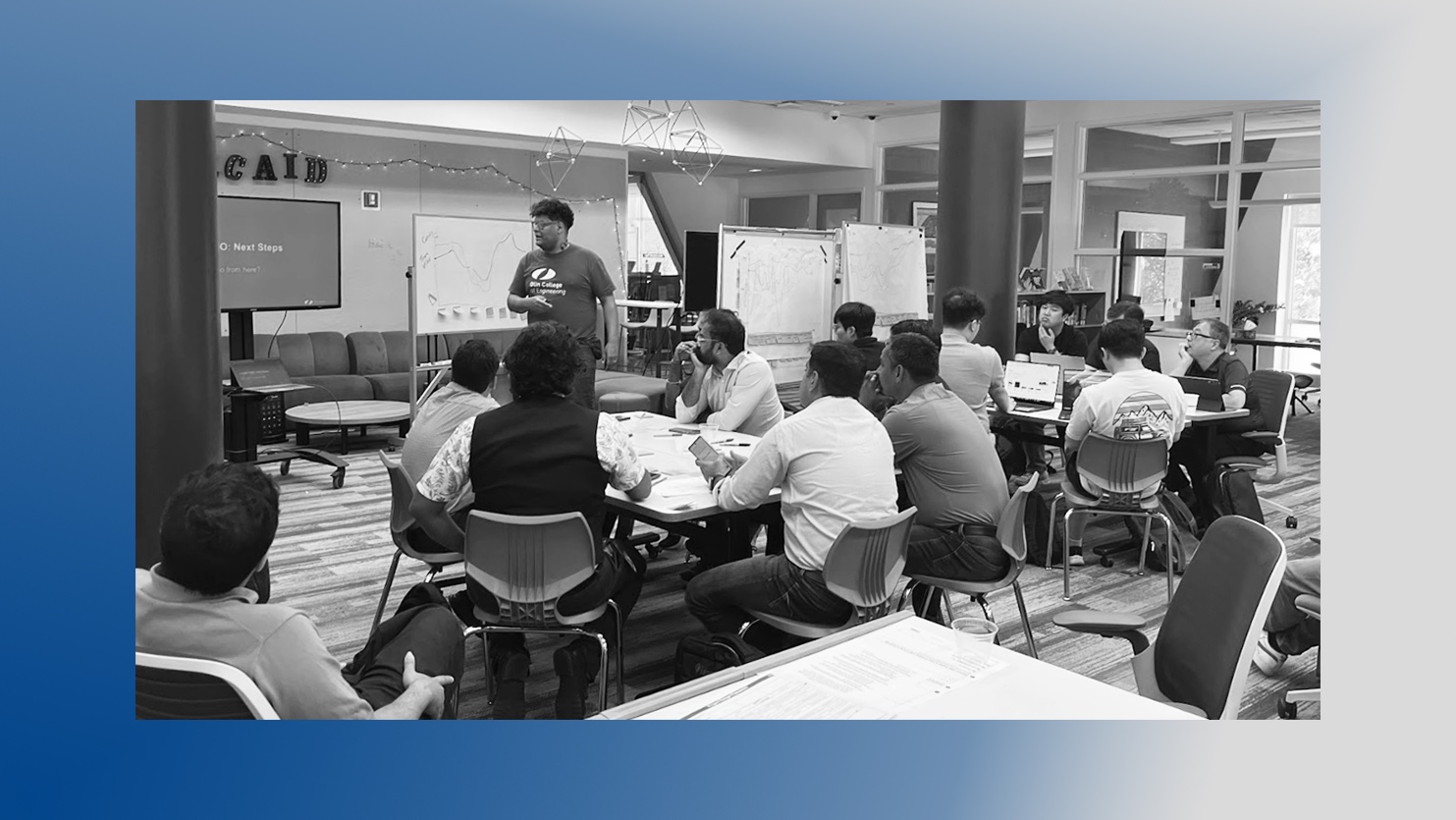
 This story from Olin College of Engineering graduate Michael Costello finds him wondering which pieces of his high school identity to bring into college. In the absence of actively cultivating his identity, he discovers his ability to flourish in college gets tangled up — like hair that hasn’t been cut in a while.

The Davidson Difference

At a time when public conversation often seems defined by fragmentation, colleges are increasingly asking how they can help students develop the habits of thoughtful disagreement. A growing number of institutions have created centers focused on civil discourse, hoping to foster intellectual complexity, humility, and respect. Davidson College’s new Institute for Public Good reflects this broader movement while also drawing on a distinctive institutional history — a culture shaped for generations by an Honor Code that places character formation at the center of learning.

In August, the small liberal arts school in North Carolina formally established the institute as a hub for civic engagement, ethical leadership, and open dialogue. Home to only around 2,000 students, Davidson has quickly attracted unusually strong support for the project, including more than $50 million from a combination of private and public funders.

The early momentum reflects a central claim of the institute’s leaders based on the school’s core identity: that the most meaningful civil discourse is rooted in a broader culture of character formation, rather than programming alone.

According to Chris Marsicano, the inaugural director of the institute and a Davidson graduate, this new initiative is the college’s “attempt to plant a flag in higher education and say, ‘We’re going to do this right.’”

“We’re going to develop the leadership for the next generation of leaders, and we’re going to do it in the ways that we care about when it comes to character,” Marsicano said. “We’re tired of seeing political leaders who do not have integrity, and certainly the American public are.”

The institute’s first major contribution came from the Educating Character Initiative (E.C.I.) at Wake Forest University, whose $750,000 grant and seal of approval evidently opened the floodgates. Since the beginning of 2026, Davidson has announced a $4 million grant from the Department of Education — the largest federal award in the college’s history — and, most recently, $47 million raised from a handful of alumni and individuals. In honor of one family of donors, the center has been renamed the D.G. and Harriet Wall Martin Institute for Public Good.

Honored Traditions

Marsicano didn’t always think of Davidson’s focus on honor and integrity explicitly as “character education.” But now, he finds, the shoe fits. 

“In some ways, I’ve always been into character education,” he said.

The same could be said of Davidson as a whole. Its signature Honor Code dates back to the college’s inception, and every year, the newest students continue to participate in a formal ceremony where they sign their names on the pledge not to lie, cheat, or steal. 

The implications are academic, but not only. Perhaps the most notable feat of the Honor Code is that it holds up beyond the classroom. Somehow, it doesn’t simply slip from students’ minds once they’ve closed their blue books or handed in their papers.

Connor Hines, a senior at Davidson, said the Honor Code shaped his thinking long before he arrived on campus. His mother, an alumna, had invoked the code to teach him the difference between right and wrong.

“I can hear her saying, ‘Well, when I went to college, we had this Honor Code and you weren’t allowed to do X, Y, Z,’” Hines said. “And so that really has been the lens which I’ve viewed most of my life through and grown up around.”

Hines, now the president of Davidson’s student government, insists the Honor Code really does play out in the everyday. He said his peers and professors operate with such a distinct level of care for and sense of accountability to each other that his friends from other schools comment on the difference when they visit. The vow to return a lost wallet, Hines explained, translates similarly to an effort to remember personal details about others and make them feel known on campus among the crowd.

“If it were just a parchment statement hanging up in our academic building that you don’t interact with, sure, it would probably fade away,” Hines said. “But just with the number of opportunities that you have to interact with the Honor Code, I think is what continues its enduring strength.”

Davidson’s emphasis on civil discourse has been similarly enduring. The school’s original debate clubs, the Philanthropic and Eumenean Societies, are known to have been the heart of early social life. The groups’ dueling members used to stand on the balconies of their adjacent matching brick buildings on the quad and battle back and forth on chosen issues. 

Although the societies don’t function today as they once did, the original sites remain, and every four years, the college republicans and democrats face off from the same balconies to debate the presidential election. A crowd of several hundred more students gathers to spectate. 

“The ability to disagree with each other is in our D.N.A.”

The Eumenean Society remains a student-run civil discourse organization, while Philanthropic took on a more literary focus. At current Eumenean meetings, students pull random topics out of a bowl to debate that range from federal housing policy to M&Ms versus Skittles. Davidson students continue to feel the pull towards intensive engagement with each other in both the liberal arts academic and social life.  

“The ability to disagree with each other is in our D.N.A. We are a liberal arts college in a purple state on the border between two states,” Marsicano said. “We have people who are conservative from New England and liberal from the south. We have people from abroad who are as libertarian as they come and socialist students from right down the street. That is who we are.” 

Marsicano added that the protections for freedom of speech upheld in Davidson’s constitution are among the strongest “of any college in America.” “Any student group can invite anybody to campus to speak, and the administration cannot stop it from happening,” he said.

Hines, a political science major who grew up a short drive away from Davidson, considers himself a moderate conservative. His best friend and roommate for the last four years is a communist, the first Hines had ever met.

“I’ve spent way too many long nights and hours in the library having discussions and debates around policy, politics, political theory, probably to the detriment of my work,” Hines said. 

“You can have those conversations because we’re a small school — 2,000 people — yes. But the diversity of thought within those 2,000 students is incredible.”

 A New Home

Now both the Honor Code and the tradition of civil discourse are taking up residence in a new home: the Martin Institute for Public Good, which will be operating out of the historic Philanthropic and Eumanean buildings.

With the Martin Institute organized into four categories of programming, the Honor Code falls under Ethics, Honor, & Leadership, while civil discourse is part of Deliberation & Free Expression. The other two areas of work are Public Policy & Research and Arts and Public Life.

These categories capture not just the variety of topics the Martin Institute is bringing together but the diverse approaches. Within the same center will be an arm for community engagement opportunities, for academic development and innovation, and for public policy and other research.

“It is probably the most ambitious academic initiative at Davidson College in the past 30 years because it is trying to follow a model that, at least to our knowledge, is not followed elsewhere fully,” Marsicano said.

“Our model is one that builds up character in a time where people are starving for it.”

The funding from the E.C.I. is supporting work in Ethics, Honor, & Leadership, where the primary initiatives include faculty grants to incorporate character education into curricula and a national convening bringing together student honor councils at various colleges.

The national convening, which has been held twice now, is a chance for students around the country interested in ideas of academic and general integrity to discuss their common or unique challenges and help each other work through them.

Artificial intelligence and its implications for cheating, for example, have become particularly pressing concerns in recent years. Even if no one is entirely confident in the best way forward, Hines said, it’s exciting to be building a “network of leaders between schools that we can rely on if we continue to have questions or as we just navigate the challenges that we face.”

Hines also spearheaded the production of Davidson’s first-ever Celebration of Honor, a week-long, all-campus event to highlight the impact of the Honor Code. Programming spanned a panel of stand-out Davidson alumni discussing the legacy of the Honor Code in their lives to less formal gatherings, like an ice cream social, Hines called opportunities to “just connect.”

Another effort benefitting from E.C.I. support is an ongoing attempt to develop a new version of the Personal and Social Responsibility Inventory, a tool used to assess different facets of campus climate, to include academic freedom. That resource would allow Davidson to measure its own success in that area and help other campuses do the same. 

The $4 million from the Department of Education will go towards Deliberation & Free Expression programming, specifically the development of a Deliberative Citizenship Network. Through the D.C.N., Davidson will be supporting a group of 100 other institutions in their efforts to train faculty, support students, form partnerships, and engineer new tools to strengthen campus discourse around contentious issues. 

Marsicano said he’s not overly concerned that the funds from the Department of Education could be affected — that is, revoked — like other federal grants to higher education in the last year. But he was firm that should the money be threatened, Davidson won’t be sacrificing its own vision or values for the sake of staying afloat.

While Davidson focuses on bolstering opportunities and resources for its own community where its traditions run the deepest, it anticipates a new road as a leader in this work for others.

“Our model is one that builds up character in a time where people are starving for it,”
 Marsicano said. “They’re starving for exemplars. They’re starving for training and education.” 

“We just happen to have a model that is set up to do it.”

You can reach LearningWell Reporter Mollie Ames at mames@learningwellmag.org with comments, ideas, or tips.

Gen Z at Work with Dustin Liu

On this episode of LearningWell Radio, Dustin Liu, the senior associate director of the Institute on Purpose and Flourishing at New York University’s Stern School of Business, joins for a conversation about the tropes and truths of working alongside Gen Z. He discusses the complexities of navigating today’s five-generation workplace and how educators and employers alike can make it one where everyone flourishes.

Listen now on Spotify or Apple Podcasts.

You can reach LearningWell Reporter Mollie Ames at mames@learningwellmag.org with comments, ideas, or tips.
Stacking Majors in an Age of Anxiety

Julia entered college in 2023 pretty sure of two things: that she wanted to major in either art history or French and that she wanted to study abroad. At the time, her dream career involved working in and around museums. 

Now a junior, she is majoring in both French and art, but considers her third major, business, her “primary field” — and sees going into finance a means to all her desired ends. She regrets that study abroad is no longer in the cards, collateral damage in the struggle to meet strenuous requirements for all three departments. 

“One day when I exit the corporate world and I’ve made enough money, I would love to use my business skills and connections in the art world and be able to travel,” Julia said. “When I got on campus, I started to appreciate that there’s a difference between the things you want to do and the things you actually do so you can someday work in the things you want to do.” 

Her calculation reflects a broader shift taking place on college campuses across the country. The rising number of students pursuing double majors — and sometimes triple majors — has increased five-fold at some universities, as students strive to differentiate themselves in a competitive job market and hedge against an uncertain economic future.

But as students stack credentials, advisors and mental health professionals are raising questions about what may be lost in the process: not only balance and wellbeing but also the exploratory, formative aspects of college that can shape a life and career in less easily quantifiable ways.

The Credentials Arms Race

Some observers note what they call a “credential arms race,” the growth of students accumulating academic achievements to remain competitive. 

Data from colleges across the U.S. suggest that the share of students graduating with more than one major has risen significantly over the past decade. Reporting by The Hechinger Report has documented a wide spectrum of increases: The University of North Carolina at Chapel Hill has seen a 20% increase; Brown University, 97%; Harvard, 334%; and Drexel, a 591% increase.

Administrators acknowledge the trend is part of a broader socio-economic picture: students worrying about job prospects and attempting to increase their career viability and areas of expertise. Students often frame the decision pragmatically; in an era of economic volatility, rising tuition costs, and rapid technological change, pursuing multiple fields of study can feel like a form of risk management.

In an era of economic volatility, rising tuition costs, and rapid technological change, pursuing multiple fields of study can feel like a form of risk management.

But advisors say the motivations are varied, and evolving. Today’s students are navigating a labor market shaped by automation, shifting industry demands, and heightened expectations around early career readiness. Many feel pressure to demonstrate both specialization and versatility at the same time — a challenging balance for anyone, let alone someone still discovering their intellectual interests. And as college costs skyrocket, many feel pressure to make a degree, or degrees, matter as much as they can.

“There’s a sense that students want to keep as many doors open as possible,” said Nigel Richardson, the assistant provost for university advising and student success at the University of Florida. Richardson said he and colleagues increasingly hear from students who arrive on campus already planning to double major or add multiple credentials. “A lot of students are thinking more means better,” he said. “If I have more credentials, that’s going to make me more competitive.” 

Hedging Bets in an Uncertain Economy

Students’ motivations for stacking majors are often deeply pragmatic. Many are aware that the labor market they enter after graduation may look quite different from the one that existed even a decade earlier. News headlines regularly discuss artificial intelligence, layoffs in once-stable industries, and the possibility that workers may hold many different roles over the course of their careers.

Even when students don’t explicitly cite A.I., advisors say the broader sense of uncertainty influences how they approach their education. Richardson noted that students are increasingly thinking strategically about how their academic choices position them for employment. Some combine technical and non-technical fields, pairing disciplines like data science with psychology, economics with public policy, or business with the arts. 

“Students are thinking about covering bases, but they aren’t fully aware of the costs,” Richardson said. “It’s this desire for more, and their answer — in this environment that they’re in and paying for — is another academic program.”

Alyssa, a sophomore at a highly competitive school in the northeast, has always found child studies fascinating. She speaks eloquently about her fascination with what makes children tick and evolve while maximizing their potential. Working with a nonprofit dedicated to the wellbeing of under-resourced children, she said, has always been her passion. But not her current path.

“I always knew I wanted to have a corporate moment first — to have a sustainable lifestyle — and later, after I’ve been a corporate strategy expert, I can segue into being the head of a nonprofit for children, get globally involved. I’m passionate about that work, but I’m more passionate right now about being corporate first because that’s going to make my life way easier to support in the long run.” 

She applied to college with child development as her intended major, knowing it was a less-competitive route into that school. Once she was accepted, she set the groundwork to add a major in business and set her sights on pursuing consulting firms. She just completed a career fair in New York to be introduced to the Big Four, an opportunity she secured by getting involved with her school’s career office early in her first year. 

“You have to do all these things because everyone else is doing all these things. It’s not enough to be a double major. You also have to be in the business frat — which I didn’t get into, after trying three semesters — and minor in Chinese or math or data science and have extra-curricular leadership. Everyone’s just generating anxiety,” Alyssa said. The competitive campus environment she describes is one where students are running on all cylinders to be and do everything, realizing that academic credentials alone may not be sufficient to secure employment. Energy and commitment might be the most valuable resources of all. “You have to be really intentional with your time,” she said. “You can’t risk not succeeding in a course, not graduating on time.” 

When Efficiency Meets Opportunity

Clearly, not all students double major expressly out of fear of job competition and instability. Many are making room for two strong interests. Some have the advantage of arriving on campus with significant numbers of Advanced Placement or dual-enrollment credits. This allows them to fulfill general education requirements quickly — and puts them on an efficient path, if they choose to maximize the use of credits towards multiple credentials for the same time and cost. Others benefit from financial aid structures that cover a set number of credits, encouraging them to maximize the academic opportunities included in that tuition.

In such cases, adding another major can appear to be an efficient use of resources. Students may reason that if they are already enrolled full-time, pursuing an additional field of study adds value without increasing cost. It’s just slicing and dicing your time in a focused way. Some institutions have also designed interdisciplinary programs that make double majoring cover even more ground. 

But efficiency can come with tradeoffs. Richardson introduces students to the idea of a “T-shaped” education — one that combines breadth across disciplines with depth in a particular area of expertise. He cautions that pursuing breadth can sometimes come “at the expense of depth,” limiting opportunities for sustained research engagement or deeper learning within a primary field. The major itself is only one piece of the professional profile, he stresses, along with research, volunteering, and shadowing, all part of a holistic experience. 

“If you’re not going deeper into a topic, you’re not increasing your level of understanding or opportunities for hands-on expertise or fruitful relationships with faculty and classmates. Students might think it’s going to make them more competitive. But they could miss that meaningful engagement that’s expected within each of these respective departments in their pursuit of this double or triple major.”

The Stress of Optimizing

Completing multiple majors calls for careful academic planning — timing when required courses are offered — and a willingness to take on heavy course loads. Students may need to coordinate requirements across departments, enroll in classes offered only once per year, and forgo scheduling flexibility.

Kirsten Behling, the associate dean of student accessibility and academic resources at Tufts University, said her office frequently works with students managing the demands of double majors or combinations of majors and minors.

“Students are generally a little bit overwhelmed with the amount of content that they have to cover and how tricky it is to organize getting into the courses you need when they’re offered,” she said. “With multiple majors, they hit the burnout button earlier. They may think they’re doing O.K., until they aren’t.”

“With multiple majors, they hit the burnout button earlier. They may think they’re doing O.K., until they aren’t.”

Academic coaching services can help students develop time management strategies and adjust expectations when workloads become difficult to sustain. Behling noted that students sometimes feel locked into rigid academic pathways once they commit to multiple programs or realize they have to miss out on certain options. The inability to participate in study abroad or other experiential learning opportunities can be a significant loss, she added, given the role such experiences play in developing independence, cultural competence, and professional skills.

Missing out on options also has a very everyday component: just plain missing out on hanging out. Mental health professionals find that heavy academic loads can reduce the time students have for social interaction, exercise, and rest.

Eric Wood, the director of counseling and mental health at Texas Christian University, said it is logical that students taking on multiple majors feel the weight of increased demands on their time.

“If you’re doing double majoring, you’re doing more courses,” he said. “You have more demand from faculty, more demand from coaches, and less time socially — even less if you also are holding a part-time job.” Wood said concerns about the job market are common among college students, particularly graduating seniors. “I think it’s only natural that they are absorbing what they hear and read about the economy and job market and A.I. and doing everything they can to protect themselves. But sometimes you don’t realize that frantic protection isn’t actually protecting you.”

When students respond to that anxiety by seeking ways to strengthen their academic profile, counselors try to gently remind them that additional coursework is not the only or best path to career readiness. “Some advisors encourage students to consider whether adding another major will genuinely support their goals or simply add pressure,” Wood said.

A Narrowing of the College Experience? 

College has traditionally been framed as a time for intellectual exploration and personal development, as well as career preparation. But students may feel pressure to optimize every aspect of their academic trajectory, leaving less time for activities that contribute to broader growth. Networking events, internships, leadership roles, and collaborative projects often require time flexibility that becomes harder to maintain alongside dense academic schedules.

Behling observes that many students increasingly approach higher education with a highly instrumental mindset. “There’s definitely a ‘means to an end’ mentality,” she said. “I have to do this thing that looks good in order to get this job or this graduate school entry, and sometimes this is emphasized by family, too. If the Tufts experience becomes a means to an end, it’s less about the collegiate, holistic experience — which is something I really believe in — and more the drive, drive, drive to get to the other side of graduation.”

Students are doing what they think they need to do to get a job, Behling said. But that perception may not always reflect employer expectations. Advisors often emphasize that internships, research experience, and interpersonal skills play a significant role in hiring decisions.

Richardson encourages students to ask why they want multiple majors and what they hope those additional programs will accomplish. A second major can contribute to intellectual growth, he advises, but it is not the only way to demonstrate versatility. Often, he finds that students are motivated less by curiosity than by a desire to reduce uncertainty. 

“Oftentimes when I’m having this conversation, what comes out is risk management: ‘I have to have the funds; I have to make sure the doors are opened.’ I often don’t hear much about intellectual exploration, and I try to find ways to help them remain curious,” he said. “There are many different ways to approach their preparation to graduate, which could include multiple majors, but there might be other skills and personal attributes that end up mattering a lot more.”

A Recalibration of Success

The rise of double and triple majors suggests that students are responding actively to changing expectations about education and employment. Yet advisors emphasize that academic credentials represent only one dimension of readiness. Relationships, experiences, and intellectual curiosity often shape opportunities in ways that transcripts alone cannot capture.

The challenge for students — and for institutions — may be finding ways to support ambition without sacrificing wellbeing or the broader developmental value of the college experience. Meaningful one-on-one conversations with influential faculty advisors can help. But it’s more easily done in the context of a larger culture shift. In an arms race, it’s hard to unilaterally walk away.

“I do think I do a pretty good job trying to be in the present and appreciate where I am. I love my school. It feels like home, and I love spending time kicking back with my friends,” Alyssa said. “But then I look around at what everyone else is doing, and I feel so dumb that I’m not doing more. It’s just so much harder than I thought.”

How to Flourish with Daniel Coyle

On this episode of LearningWell Radio, reporter Mollie Ames hosts best-selling author Daniel Coyle for a conversation about his latest book, “Flourish: The Art of Building Meaning, Joy, and Fulfillment.” He talks us through the biologically-rooted reasons humans need others to be and do well, and how educational settings can be particularly fertile ground for the kinds of connection that flourishing requires.

Listen now on Spotify or Apple Podcasts.

You can reach LearningWell Reporter Mollie Ames at mames@learningwellmag.org with comments, ideas, or tips.
Advising for Life

Despite battling a double-bout of Covid-19 and strep throat, Destiny Barletta is smiling when she joins our Zoom call. The director of alumnae connections at Wellesley College even dressed up for the occasion, sporting a lime houndstooth blazer (and summoning the signature pantsuits of her institution’s most famous graduate, Hillary Clinton). There’s very little, apparently, that could keep Barletta from talking about her work supporting the professional development of Wellesley alumnae.  

And that means all of them. Unlike many colleges and universities whose career centers focus on enrolled students and more recent graduates, the prestigious women’s college in Wellesley, Mass. has, for the last ten years, extended services to alumnae of any age or stage. As Barletta explains, career is rarely one-and-done, particularly in our rapidly changing world. At Wellesley, career development now means embarking on a lifelong search for growth and meaning. After all, even former Secretary of State Clinton navigated her share of job transitions — and weighty ones at that.

As the offerings at Wellesley’s Center for Career Education continue to become better known, more are taking advantage. 1,915 graduates attended advising appointments between June 2024 and 2025, nearly 300 more than in the previous year. With LearningWell, Barletta describes what that lifelong professional engagement looks like in practice, why it’s important for alumnae and students alike, and how it’s bringing a global institutional community closer together. 

LW: I thought we could start by talking about your title — the director of alumnae connections. What exactly does that entail? 

DB: So that entails thinking about career education in terms of alums and their careers, much in the way that many career centers work with students — exploration, industry advising, and support around very functional things, like cover letters and application materials and interviewing. All of those kinds of conversations that we have with students, we also have with alums, but tailored to where alums are in their careers — all the way from those second destination roles to thinking about what an active retirement might look like. 

Reentry to the workforce after a break for some kind of caregiving is something that happens a lot. Wellesley is a women’s college, so that is an important part of many conversations. And then we’re also thinking about opportunities and programs for alums to connect with students as a part of career exploration. So, how can alums be a valuable resource for lived professional experience for students? 

LW: Was yours a role that always existed at Wellesley? Or at what point did you all decide to dig more into the alumnae piece?

DB: This did not always exist at Wellesley. About 10 years ago, the career center at Wellesley was reimagined and became what now we call Career Education. And at that time, with a very generous gift from an alum, we began to offer career advising for alums for their whole careers. So at that point in time, this role came into existence.

LW: Do you know what the thinking was behind that decision to invest more in alumnae engagement?

DB: It was a commitment to the idea that graduation isn’t a stopping point for an intentional career journey. We do such good work around experiential learning to help students see that their professional identities, in a variety of ways, are integrated into their broader life experience, and it’s not just one thread that you can pull out that then stops the moment you graduate. So if we are doing our work really well, students graduate and see their career journey is just that — a journey. It’s something that you continue to tend to and navigate, as you build skills, build experiences, build connections, and explore. 

“If we are doing our work really well, students graduate and see their career journey is just that — a journey.”

And so that ability to continue to connect with Wellesley around networking and advising becomes really important. And we appreciate that requires an investment. It’s an investment in staffing and in training and in funds. But it also helps our students to see that when we say that this is ongoing work, we mean that. We’re here through the duration of that, and your fellow people in your Wellesley community are here for that.

LW: I like that because I imagine with Wellesley grads, who are so high performing, there could be a lot of that feeling like, “My first job needs to be my last.” Do you find that’s a pretty common sentiment?

DB: Yes, that is very true — true of Wellesley students and grads, but also more broadly. There is this sense that what comes on the other side of graduation needs to be right. You need to get it right. And helping graduates think about what does “right” mean for them, that is a values question. But also, what we know about the future of work is that having a flexible, skills-based approach that is grounded in some really solid experiential learning can prepare grads for a variety of first destination roles, with this kind of underlying assumption that there isn’t a single “right” thing. There is just a thing that is going to utilize skills and experiences you’ve built and provide you with additional opportunities for meaning and growth so that you have a sense that what comes next is also important.

LW: Do you see trends in terms of the age or stage of alumnae who come to you most often?

DB: We do. So we think of engagement in two ways: individual advising appointments and then participation in a webinar, an event, a cohort, programming. In terms of appointments, probably 60 percent are 10 years out or less, and then about 40 percent are folks who are further along in their career. Engagement in programming, events, webinars, cohorts tends to be a bit more even across class years. 

But we do see, in terms of advising, now that our model of engaging with alums throughout their whole career has been in place for a decade, our appointments are increasing. Because as you continue to have students who know, as they graduate, that this is an opportunity that remains available to them, they continue to engage. 

LW: What about trends in industry or profession? Are there certain jobs you see alumnae come to you for help getting?

DB: I mean, there are trends for Wellesley students broadly, and our alum data tracks mostly with our first destination data in terms of industry. But we do see a five-years-out uptick, when many alums are entering a career transition: “I thought I was going to do X, and now I realize that is not the path I’m interested in pursuing. So what am I thinking of next?” You see it almost like clockwork. And while that uncertainty is hard, the ability to seek more intention than just checking a box and climbing a ladder is, in and of itself, a really positive thing.

LW: You mentioned individual advising as one key service. Are there others that you think of as being most impactful or popular?

DB: We do a yearly webinar series, which generally features alum panels with conversations about what it looks like to work in certain industries — human resources, environmental impact, patient-facing healthcare, biotech, consulting, all of these kinds of different industries. And so that gives alums an opportunity to hear from other alums working at various stages in their career and in various roles in a broader industry and then to continue to connect with those alums for career resources. 

We also offer a program based on the Design Your Life program out of Stanford for alums who are in a place of transition and want to be in an alumnae cohort as they use that Design Your Life framework. The sessions are led by our alumnae career advisors, and we do those twice a year in a series. This is the fifth year, and participants find it very helpful. They bring a certain shared experience of their Wellesley time, which creates a foundation that feels safe and can be very generative. 

“They bring a certain shared experience of their Wellesley time, which creates a foundation that feels safe and can be very generative.”

LW: Do a lot of alumnae come to you with questions around changes in the workplace or for guidance around technology and A.I.-type skill building?

DB: We definitely do talk about upskilling. Because how people are thinking about skill development is shifting — I think rightfully so — in terms of the idea that you go in this kind of linear or vertical fashion, and then sometimes you need to stop and build a new skill, and then you continue up. It really is a much more fluid and ongoing approach. And you’re always thinking about: What are your skills? What are your experiences? What tools do you need to onboard? And then those tools offboard, and something else comes along. 

It’s been really interesting. So much of just the career space is teaming with conversations about A.I. You can’t escape it. But one of the threads that’s coming through is the power of a really solid liberal arts education that helps as a foundation for navigating all of these changes. And we definitely see that’s true. 

LW: Do you see a throughline between your career services work with alumane and a generally more engaged culture of alumane, either with students or with each other? 

DB: Wellesley does have a very strong alumane network. I also think there is a sense of being motivated toward sharing and generosity because people often remember a time of uncertainty, of vulnerability. And it’s such an opportunity for people who felt, in their own experience, that there was an opening for support, for guidance, for information, when they see that they’re now in a place to provide that. 

And it gives a sense of perspective, especially in this moment. This is a challenging time for students to be graduating into the workforce, and having that voice of alums who have gone before can provide a sense of perspective: “I graduated in ‘08 when the collapse happened and what I came into also felt really challenging.” Just this ability to see that others have navigated different, but also challenging, experiences in a way that was ultimately successful for them can create a support line that is important for students who are graduating, and then also for the alums.

LW: Do you think that culture is also strengthened or unique in some ways because Wellesley is a women’s college?

DB: I do. There seems to be this kind of structure when conversations happen within a Wellesley context that you have the expectation that you will be seen and heard, and you don’t have to fight for that, which is really powerful.

You can reach LearningWell Reporter Mollie Ames at mames@learningwellmag.org with comments, ideas, or tips.

Posted in Q&A

Fighting for Funding

Pursuing a Ph.D. is a demanding, tiring, and long mission, but one that many who undertake it welcome. In most cases, Ph.D. students are passionate about their line of work and willingly make sacrifices to achieve that level of scholarship. Finding time to work outside their research programs can be difficult, if not impossible, so doctoral students often count on stipends and a combination of funding programs to help make the journey possible.

Jesus Alexander Lopez, a current Ph.D. student researching impulsivity behavior, knows this well. Until this year, Lopez was thankful for a combination of programs from his university that allowed him to focus fully on his project and studies. But in September, the funding Lopez counted on was slashed by the U.S. Department of Education. 

The department announced it was canceling $350 million in federal grants it provided to minority-serving institutions (M.S.I.s), including Hispanic-serving institutions (H.S.I.s), claiming the funding was unconstitutional. The D.O.E. created the H.S.I. program in 1992 as a part of its grants programs to M.S.I.s, which also include historically Black colleges and universities (H.B.C.U.s) and Tribal colleges and universities (T.C.U.s). About 70 percent of M.S.I.s qualify as an H.S.I. Criteria dictate that 25 percent of the full-time student body identify as Latino, and 50 percent or more of the school’s students must receive federal need-based aid. Additionally, the core expenses per full-time employee must be lower than the average institutional group. 

Advocates for H.S.I.’s often center their argument around a different point: the contributions that H.S.I. graduates make to the economy. H.S.I.s enroll over 5.6 million students nationwide, including two-thirds of all Latino undergraduates in the country.  Anne Marie Nunez is the executive director of the Diana Natalicio Institute for Hispanic Student Success at the University of Texas at El Paso. “H.S.I. students are a workforce lynchpin and contribute to global economic leaderships,” she said. “Students who attend them operate at only 68 cents of a dollar, compared to non-H.S.I. schools, so they are more efficient. Seventy-seven percent of H.S.I. graduates recoup the tuition cost within five years, and their education is likely to provide them with three times the economic mobility than other students.”

Additionally, Nunez says H.S.I.s do not specifically serve Hispanic students or give them preference, nor do they limit students from other demographic groups. According to the Hispanic Association of Colleges and Universities, the cut funding is a loss for every student at these schools, not just Hispanic-identifying students. H.S.I. funding is race-conscious but not race-exclusive. The funding can be used toward new buildings, resources, and services, for instance, that help every student on campus. A 2022 report from the U.S. Government Accountability Office broke down the need for such funding. It found that many of these schools had maintenance backlogs, the need for modernization, and technology gaps that peer universities did not. In total, about 602 public and private institutions meet the qualifications for H.S.I. designation. 

About five percent of H.S.I.s are considered R1 institutions, a designation for colleges and universities that produce the most academic research and confer the most doctoral degrees — a selective set of schools. Nunez sees an enterprising student body at H.S.I.s, one that has sparked innovation and delivered a strong return on investment for the nation. “These cuts harm students who otherwise wouldn’t have access to higher education,” she said. 

The Fallout

Graduate students also benefit from H.S.I. grants. Lopez, who attends one of the nation’s top H.S.I.s, said that when the D.O.E. “reprogrammed” the money that had been helping him get through school, his experience changed dramatically.  

“In my first year, I joined my university’s research initiative for scientific advancements,” Lopez explained. “This allowed me to pay for tuition, receive a stipend, and receive a research assistant position. It was nice not to have to work outside the university and simply focus on my research.”

As Lopez advanced in his studies and began working collaboratively with a second university, his expenses began to rise. He applied for a second funding program, which allowed him to attend workshops on research ethics and personal development, as well as join a cohort group of under-represented students. “Life was getting more expensive, but I was able to spend a lot of time in the lab, attend conferences, and mentor undergrads,” Lopez said. “Many of them benefited from H.S.I. funding, as well.” 

When the federal government pulled H.S.I. grants, both the programs that were helping him afford his Ph.D. journey lost their funding. Everything changed for Lopez and his students. “Many of my students had to take out student loans or quit school altogether,” he said. “They already come from poor socioeconomic backgrounds, and when they must work full-time jobs, it becomes a stressor. You must have an immense amount of drive to manage all that.” 

For his part, Lopez also had to pivot. While he’s continuing his research, he’s now also fighting for competitive teaching assistant positions to support himself. In addition, Lopez has been picking up late-night bartending shifts to keep afloat. “When people ask me what I miss in life while working toward a Ph.D., I always say sleep,” he said. “Because it’s a hard road. But now I’m sometimes getting home from work in the middle of the night, then getting up to go to school tired. It’s a stressor I didn’t count on.” 

Manuel Del Real, the executive director of the H.S.I. Initiatives and Inclusion Program at Metropolitan State University of Denver, is also facing the reality that his school must figure out new revenue streams for its students. “We had an expectation that it might come to this, so we started preparing for that outcome,” he said. 

Since achieving H.S.I designation in 2019, M.S.U. Denver has received nearly $20 million in grants and funding from the federal government. With a 37 percent Hispanic-identifying population and 60 percent first-generation student body, the cuts to H.S.I. grants are impactful. 

“We have used the funding in a variety of ways,” Del Real said, “including scholars’ programs in science, nutrition, cybersecurity, and more.” 

The money has also allowed M.S.U. Denver students to pursue research in a variety of academic areas, including STEM, and helped faculty and staff with certificate programs to enhance their teaching. Additionally, M.S.U. Denver created a consortium of current and emerging H.S.I.s to provide collaboration between the schools to build organizational capacity to serve the state’s Latino students. M.S.U. Denver’s efforts earned it several awards, including the Seal of Excelencia and a Fulbright H.S.I. Leader designation from the State Department. 

Now, however, Del Real is doing his best to find new sources of funding for the school. “We’re working closely with our staff and faculty to support them with grant writing,” he said. “It’s about reimagining and pivoting.”

M.S.U. Denver is also conferring with its H.S.I. consortium to support collaborative efforts, look for more state grants, and tap into foundations that are willing to fill in funding gaps. Del Real said the school is mining data to support any applications for new funding. “That works well for us, allowing us to tell our story,“ he said. “We are sticking to our mission of serving our students, and we continue to communicate that to them.”

The Lawsuits

No one can say for sure the motivation behind the D.O.E.’s funding cuts, but it likely began with a federal lawsuit filed last summer by the state of Tennessee and the Students for Fair Admissions (S.F.F.A.) group — the same group that successfully sued Harvard over race-conscious admissions, taking the case to the Supreme Court in 2023, where it won. In the current suit, the S.F.F.A. asserts that all colleges serve Hispanic students and that eligibility requirements for H.S.I. grants are discriminatory to all students. Tennessee is one of several states that have no designated H.S.I.s, although all schools in the state serve some population of Hispanic students. The groups are asking that the court strike down the program’s ethnicity-based requirements.

Indeed, the H.S.I.’s are up against some formidable opponents with a very different point of view. Dan Morenoff is the executive director of the American Civil Rights Project, a nonprofit law firm that is representing the eastern district of Tennesee in the lawsuit. “This is an effort to ensure Americans aren’t treated differently because of their race,” he said. “The litigation asks the court to declare unconstitutional the discriminatory qualifications for the funds and open the doors for other schools to compete.”

In the meantime, Senator Jim Banks, Republican of Indianna, has introduced a bill that would allocate the former H.S.I. funds to any lower-income student. Morenoff supports this approach. “The federal government has many grant opportunities,” he said. “Why are some schools where students aren’t well off barred from competing for these streams of money?”

H.S.I. advocates push back on that argument, using data to support their case. While H.S.I.s represent 15 percent of all nonprofit colleges and universities, they enroll most Hispanic college students. Some H.S.I.s meet the minimum designation of 25 percent Hispanic students, others range from 60 to 100 percent. These same schools also serve larger proportions of Black and Native students than H.B.C.U.s and T.C.U.s combined. Research shows that there are an additional 300-plus institutions that rank as “emerging H.S.I.s,” indicated by growing Hispanic populations in several states. As Nunez and others point out, supporting this sector of education is critical to the nation’s educational and workforce goals. 

H.S.I.s are not eligible for Title III and Title V funding through the D.O.E. or other federal agencies, so that is not an optional avenue. Data supports the fact that H.S.I.s can use the extra support. A 2023 analysis demonstrated that Hispanic students graduate at lower rates than their white peers. 

In response to the lawsuit, LatinoJustice PRLDEF and the Hispanic Association of Colleges and Universities have filed a motion to intervene. If the court grants the intervention, the groups intend to argue that the H.S.I. program is lawful, essential, and equitable.

Moving Forward

While much has changed for the schools, students, and faculty at H.S.I.s, they recognize that for now, they must operate without the funding. In some cases, this has resulted in cutting support programs for first-generation students or “future scholars” programming that introduces students to career paths they might not otherwise learn about. 

 Some states with a high number of H.S.I.s are investigating ways to provide funding where the federal grants left a hole. California’s legislature, for instance, which is home to 167 H.S.I.s — the largest concentration of any state — has introduced a bill that would create a carve-out to state law that would allow community colleges to backfill funding. 

For Lopez, the cuts mean he’s had to fight to remain in his Ph.D. track, even when his school encouraged him to “master out” instead because the master’s program had more funding available. His work environment also looks different today. “I’ve had to use my own money to buy supplies for the lab,” he said. “I’m tired and stressed and so are my students. It slows down our motivation and our research as a consequence.” 

Despite all that, Lopez remains committed to his research and considers himself lucky to have been so far along with it when the funding cut hit. “I’m trying to frame things optimistically,” he said. “They can cut funding based on culture, language, gender, but it only makes the community stronger.”

Like Del Real, Lopez said the H.S.I. community will continue to seek funding from other sources, especially for younger undergraduate students and those who will follow them. “I see how many students are ambitious and still want to get into higher ed, and it’s my responsibility to continue to believe in them,” he said. “As long as the demand is there, I believe the universities will continue to find ways to help these students, as they’re our future.” 

Del Real is encouraged by the support M.S.U. Denver continues to give its student body considering the funding cuts. “We continue to communicate with our students, faculty, and staff that we are here, and we’ve seen this before,” he said. “We’re very proactive and intentional in our support.”

While the future is murky when it comes to any potential restoration of H.S.I. grants, the impacted institutions will continue to creatively find ways to replace lost dollars and keep their students in the fold. “In science, we love a challenge, and language is one of our strong points,” Lopez said. “We will get creative and find new ways to phrase our funding requests.”

Talking College Student Mental Health with Alexis Redding

On this episode of LearningWell Radio, we hear from Alexis Redding — psychologist, researcher, and faculty co-chair of the higher education program at the Harvard Graduate School of Education — about her new book, “Mental Health in College: What Research Tells Us About Supporting Students.”

Listen now on Spotify or Apple Podcasts.

You can reach LearningWell Editor Marjorie Malpiede at mmalpiede@learningwellmag.org with comments, ideas, or tips.