When The Steve Fund began in 2014, youth mental health was just beginning to break into the national conversation. But the nuanced needs of young people from underserved and under-resourced communities and first-generation college students were largely invisible in both research and practice.
The numbers tell part of the story: over one million students impacted through our programs, five million people reached through our Family Corner digital platform, and 66 colleges engaged in our Excellence in Mental Health on Campus Initiative. But behind every statistic is a young person who found support, a family that learned to recognize warning signs, a campus that transformed its approach to student wellbeing.
Our signature initiatives have reshaped how institutions think about mental health support. Perhaps most importantly, we’ve always kept youth voices at the center. The Steve Fund’s Excellence in Mental Health Initiative provides evidence-based strategies for creating inclusive campus environments. Our Young, Gifted & Resilient conferences bring multi-disciplinary, cross-cultural, and cross-sectoral stakeholders together at universities across the nation, each event co-created with the host institution to address its unique challenges. My Digital Sanctuary, our newest digital platform, takes a fresh approach by speaking to concepts like love, hope, and creativity — shifting away from traditional medical models to more inclusive, spiritual, cultural, and artistic approaches that resonate with young people.
But we face a critical moment. Schools, families, nonprofits, and communities are facing significant reductions in resources at a time of sustained high need. Important systems that young people have long counted on are being dismantled. Intense pressures are being placed upon our nation’s most resource-limited youth and families that may have to suffer in silence due to unmet need and lack of access to mental health care and resources.
“There’s a real risk that young people may feel hopeless, uncertain, and fearful about the direction in which the country is going — anxious about violence, climate change, and civil rights rollbacks.”
There’s a real risk that young people may feel hopeless, uncertain, and fearful about the direction in which the country is going — anxious about violence, climate change, and civil rights rollbacks. That’s precisely why our work on risk and protective factors matters so much right now. We’re equipping youth and communities with resilience strategies and helping them learn to cope with stress, build supportive relationships, identify mental health services, and access restorative resources like nature, creativity, and rest.
The Steve Fund operates in a space where research meets practice, leading to direct impact and measurable outcomes. Our groundbreaking partnerships with the United Negro College Fund to assess mental health at H.B.C.U.s, our work with the Child Mind Institute on family mental health barriers, and our national student surveys inform every program we design. We ensure that our interventions are both culturally responsive and truly effective.
As we look toward the next decade, we’re scaling bold solutions that are youth-guided, family-centered, and grounded in rigorous research. We’re leveraging technology and embracing A.I., not as a replacement for human connection but as a tool to expand access and personalization for communities often overlooked in mental health practice.
The work of The Steve Fund matters now more than ever. When we support young people’s mental health and emotional wellbeing, we’re building the kind of future we want to live in.
What began in a dining room as a family’s response to loss has grown into a national movement and a community of action. The Steve Fund’s first decade laid a compelling foundation built on research, collaboration, and a belief in the promise of every student. As we enter our second decade, we remain steadfast in our mission: to ensure that all young people have the support they need to thrive.
Because no young person should face their struggles alone. And every family deserves to know that help is available.
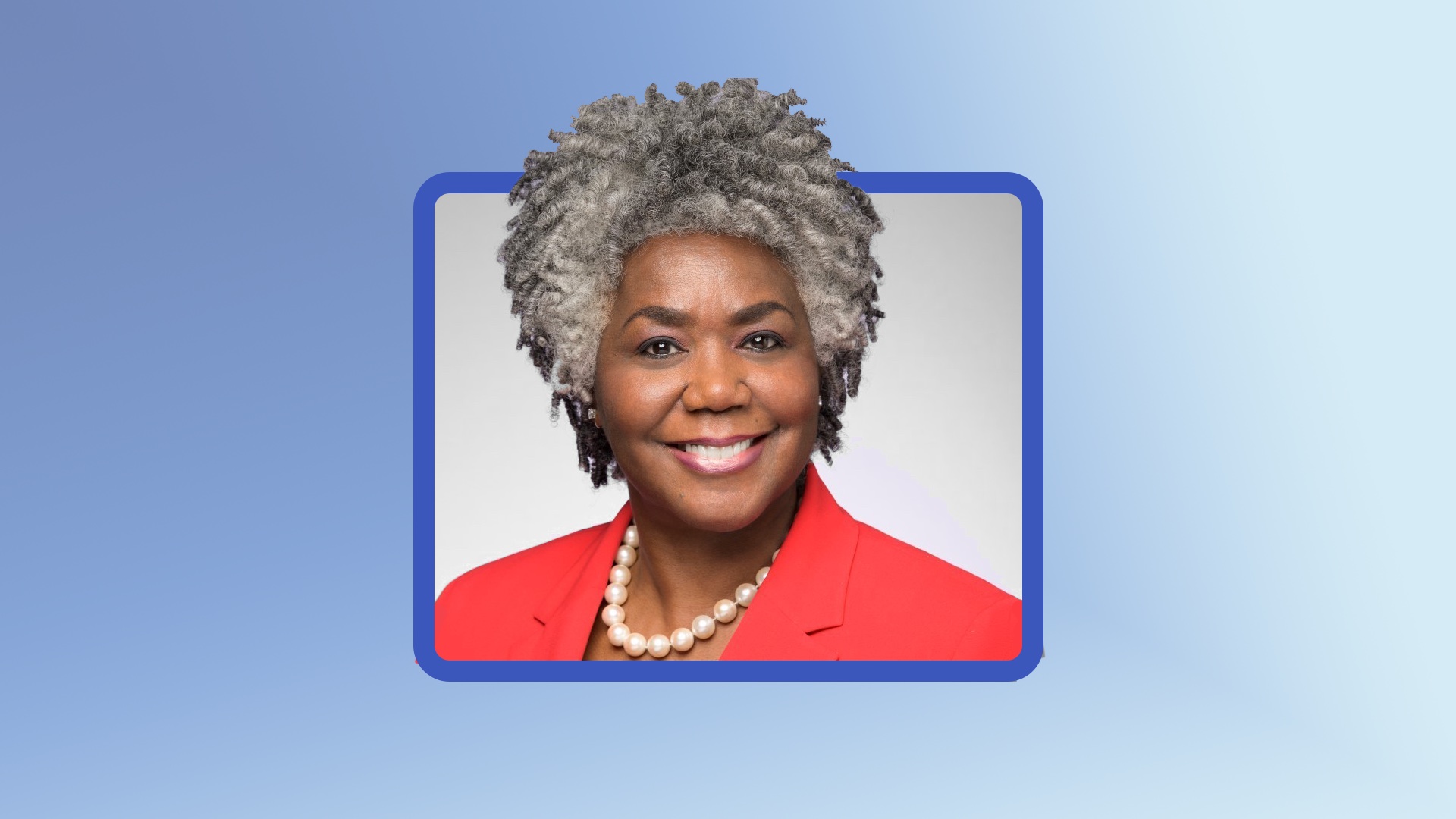
Dr. Annelle Primm is senior medical director of The Steve Fund, a leading nonprofit dedicated to promoting the mental health and emotional wellbeing of young people from underserved and under-resourced communities.
D. Graham Burnett is a professor at Princeton University. He is also a revolutionary in a movement aimed at protecting one of humanity’s most precious freedoms: our attention. For several years, he and his colleagues in the “Attention Liberation Movement” have been studying, teaching, and warning of the commoditization of human attention by tech companies who make trillions off their ability to capture and keep our eyes on a screen. What is at stake, according to the advocates, is human flourishing.
The new book by Burnett and his co-authors — they call themselves the “Friends of Attention” — is called “Attensity!” It is a manifesto for attention activists (no training needed) to organize around what Burnett calls “the fight of our lives.” The book is both highly informative and surprisingly funny about a serious subject that appears to be hiding in plain sight. Everyone feels it, yet no one really calls it out, for reasons the book aptly explains. The prelude to each chapter affirms: “You are correct: something is seriously wrong.”
In this interview with LearningWell, Burnett talks about how this movement came to form, how it is similar to social change movements of the past, what attention really means, and how we can band together to reclaim it. All proceeds from “Attensity!” go to the non-profit, the Institute for Sustained Attention, and its flagship project, the Strother School of Radical Attention. The book is available for preorder now.
Here is a preview of our conversation. To listen to the full interview, tune into LearningWell Radio on January 6.
LW: This is a really important book, and it’s also really witty. I was literally laughing out loud. As a writer, I cannot help but ask: Was there a reason that you and your colleagues chose to write in this fun style on such a serious subject?
DGB: Oh, thank you for that question. This book was literally written by a bunch of friends carving time out in the summers over a couple of years to take residency retreats and think and talk and periodically play wiffle ball, and then argue and talk and think more, and then draft, and then hammer it together. Some of what I think you’re referring to is the lively, uninhibited energy of the book, and I think we succeeded in capturing some of that rollicking vibe.
LW: “Attensity!” is a call to arms. What is it that we are fighting against, and what is it we are fighting for? That’s a big question, I know.
DGB: It’s big, but it’s also simple. I believe, and my colleagues and friends believe, we are in the fight of our lives. This is not a test. In the last 10 years, new technologies have made possible a new kind of human exploitation. It was not previously possible to turn the most intimate movements of the human spirit directly into cash. You could not monetize care, interest, or curiosity directly, but now you can with these extraordinarily powerful devices which we call phones, even though obviously they’re not really phones. They’re like little, mini supercomputers, highly networked in our pockets at all times. They’re cognitive prosthetics that have transformed the experience of personhood.
“It was not previously possible to turn the most intimate movements of the human spirit directly into cash.”
These devices and the market gains they have made possible have enabled a multi-trillion dollar new industry that is quite literally commodifying the essential characteristics of human personhood. You know those books about how we have to learn to put our phones down? This is not that book. We all know that the devices are a problem, tied in complex ways to a global pandemic and when it comes to youth and mental health issues. They are seriously compromising features of what we thought of as our educational systems and our lives as individuals and in community. We know all that.
Our book wants to point to the underlying cause of all this, which brings us to the idea of human fracking. The problem is not the phones. The problem is not social media. Because if the phones had been designed by your mom, you would use it to call your mom; and if social media had been designed by two artists and a Buddhist monk, social media would be like a groovy place for us to express ourselves. The problem is the underlying business model, which has essentially permitted a small number of heedless and greedy rational actors to maximize their return on investment.
Their goal is to create systems that maximize our time-on-device selectively to stimulate components of our cognitive processes in highly Machiavellian ways to enhance our engagement experience at whatever cost to our emotional state. It is a project that is profoundly harming us. It is quite literally at odds with human flourishing in the most basic ways, and we need increasingly and clearly to call that out.
Here’s where the book really makes its big move. We need to have a positive vision for an alternative, and this book swings in hard with a simple assertion: What we need is a movement. We don’t need screen time apps to assist us in protecting seven additional minutes of time with our device. We don’t need pharmaceuticals to assuage our cognitive capacities in their increasingly intricate anguish, although we are certainly happy that pharmaceutical products are available to help those of us who are suffering. But Big Pharma’s not going to save us.
Big Tech’s not going to protect us from itself. And frankly, it’s not as if a bunch of regulators are suddenly going to appear and reign in the deepest pocketed, most technologically sophisticated corporations on the planet. That’s just not going to happen. What we need is collective action. We need to join together — recognize that the goodness of what we like to do with our mind and time and senses and with each other needs to be protected and enacted by us. We need to push back.
Alexis Redding has a clear perspective on the well-publicized struggles of today’s college students: The crisis narrative is not helping to solve the problem. Talking about the “crisis,” she argues, sets us up to look for a quick fix. But the issues are systemic, and it is time to address what her research shows are the persistent challenges that students experience during a stressful time of life.
Redding is the co-author of “The End of Adolescence: The Lost Art of Delaying Adulthood,” which documents the emotional ups and downs of the college years based on a trove of lost interviews she uncovered that feature college students from the 1970s. In the tapes, she heard echoes of the experiences with loneliness, stress, and emotional angst that students talk about in her classroom today. This work and her teaching led her to question the stories we tell about student wellbeing in college.
This spring, Redding will release a new book “Mental Health in College: What the Research Tells Us About Supporting Students.” The developmental psychologist, author, and professor brings together experts in college mental health, including students, to offer a new path forward. Redding and her co-authors argue for a community approach to student wellbeing and offer a deeper examination of the causes — both universal and specific — that make the college years challenging for so many students.
Here is an excerpt from our recent interview.
LW: Who is the target audience for the book?
AR: The book is written for student affairs professionals and campus leaders — the people who are making decisions about supporting student mental health at an institutional level. But I think that everyone, including students, faculty, and parents, can benefit from reading it. Each chapter is layered with student stories that make the challenges they are experiencing both tangible and relatable. We hear, in their own words, about the experience of being in college. And, once we listen to what they are telling us, we are better equipped to create a support structure that genuinely helps them.
LW: There is an underlying theme in the book that challenges the reader to think about college student mental health differently. Can you explain that thinking?
AR: One of the core distinctions of this work is that it focuses on the wellbeing of all students —not only those in crisis.
Developmentally, the college years are inherently unsettling and disorienting. Students struggle for many reasons that go beyond clinical diagnoses. We need to decouple two intertwined realities: the typical developmental challenges that come with growing up and the clinical mental health concerns that require specialized care. Only then can we respond appropriately to each.
The crisis narrative, while well-intentioned, often fuels panic — for educators and for parents sending their children to college. Out of fear of under-reacting, we sometimes overreact, even when students describe expected challenges, like loneliness, anxiety, or uncertainty, as they navigate transition. By defining everything as crisis, we end up addressing only those who meet clinical thresholds and overlook the broader developmental picture.
When institutions lean too heavily into this framing, the default solution becomes: more counseling. Of course, clinical care is essential for students who need it. But not every student meets that benchmark or feels ready to seek therapy. Directing everyone to counseling by default overwhelms already strained systems and can even limit access for those in acute distress.
This book is meant to reframe that conversation — to move from crisis response to community care. Every student needs connection, purpose, and a sense of mattering. When we recognize that, we can begin to design campuses where all students can thrive.
LW: How does this perspective connect with what your research shows about the state of college mental health throughout the decades?
AR: What we know is that college students have always struggled. My archival research goes back to the 1940s and shows that students are struggling in many of the same ways that our students are struggling today. That’s not to say that we don’t have unique struggles in 2025. We don’t want to ignore the role of social media and the impact of the pandemic on youth development and what it means to grow up in the 21st century. Yet, the developmental challenges — how hard it is to grow and change and ask the big questions about who we are and what we want out of our lives — that is remarkably similar across generations. So, the challenge is to differentiate between what students have always struggled with and what is new in today’s experience.
My hope is that we can pivot to a conversation about what is typical about stress and anxiety and loneliness — things that we know have been persistent across generations — so that we can find a way to both build a campus community in which we can better support students and change the culture more broadly. That will help us reframe what it means to get support in college and make systemic change. And it will also help us more clearly identify what is new and what needs a more targeted solution.
“By defining everything as crisis, we end up addressing only those who meet clinical thresholds and overlook the broader developmental picture.”
LW: Where did the idea for the book come from?
AR: A couple of years ago, I was asked by our dean to create a professional development program on mental health in higher education as part of our Harvard Graduate School of Education professional development arm. Each year, we work with a cohort of practitioners that includes student affairs professionals, clinical mental health providers, members of the president’s cabinet, and faculty members. We have an exceptional faculty of 16 leading voices in the field, including Tony Jack (Boston University), Jesse Beal (University of Michigan), Dustin Liu (New York University), Adam Pierson Milano (University of North Carolina Chapel Hill), and a team from the JED Foundation.
The course looks at the entirety of the student journey, thinking about the different transition points that students experience, from admissions to career search. We work hard to break down the silos we all experience in higher education to think more meaningfully about how we can work together to support students. I love the experience of running this program and being able to build a robust community of practice. But it is a small group by design, so I started to think about how to get these really important ideas in front of a wider audience. That was the spark for this book.
LW: The book is organized into three parts with seven chapters, each written by a different author. Can you tell us more about this format?
AR: The first part of the book looks at the scope of the problem from two very different perspectives: the student’s and the institution’s.
Section one starts with Rainsford Stauffer (author of “All the Gold Stars” and “An Ordinary Age”), who is joined by three student authors, to give us a student perspective on navigating colleges and universities today. They share stories of struggling with mental health challenges, navigating the typical stress and anxiety around the experience of being a student, and their range of experiences in finding the right support.
Next, Dr. Laura Erikson Schroth, medical director of the JED Foundation, and Dr. Janis Whitlock, founder of Cornell’s Research Program on Self-Injury and Recovery, bring us an institutional perspective of what is going on in our colleges and universities. Their clinical lens helps to underscore how we can meet the needs of students struggling with acute mental health crises, including suicidality and self-harm, as well as those navigating the more typical ups and downs of college.
Together, these two chapters frame the book with student voices and national data on the two types of challenges students are experiencing — developmental vs. clinical — and help us to understand both the depth and breadth of the challenges.
Part two focuses on how to build holistic supports for students who are more likely to struggle during the college experience: students who are under financial strain, community college students juggling school with other responsibilities, and military-affiliated students. The idea in part two is to deeply understand some of the challenges that those three groups of students are facing. This helps us to develop and design supports on campus that not only are targeted at helping those particular groups but benefit all students more broadly.
For example, the chapter on community college students, written by Amanda O. Latz of Ball State University, is focused specifically on what faculty members can do and how they can be part of this conversation about transforming our institutions. She shares actionable takeaways that are beneficial to faculty across institutional types. There are suggestions for using your syllabus to name and normalize struggles, encourage proactive help-seeking on campus, and to make sure we meet students where they are. She also asks important questions about how we can structure our classrooms and our assignments to recognize the realities of students’ experiences and to balance rigor with compassion.
LW: Part three focuses on transitions but not just the obvious ones. Can you tell us about that?
AR: We tend to put boundaries on the college experience. We talk as if the experience starts the day that students arrive and it ends the day they cross the stage. But that framing ignores the stresses they arrive with and the anxiety most people feel when thinking about what comes next. We’re trying to broaden the narrative of the student journey and to recognize that those experiences that bookend college also inform what happens during the undergraduate years.
To think about admissions stress, we have Angél Perez, the C.E.O. of the National Association of College Admission Counseling (Nacac), and his colleague Melissa Clinedinst, Nacac’s director of Research Initiatives and Partnerships. They conducted research on the stress students experience in the admissions process and advocate for a more humane and holistic approach that considers student wellbeing. They offer actionable insights into how we can rethink the messages students receive and how we can better scaffold this transition.
To consider the transition from college to career, we have a chapter that focuses on the lessons of Stanford’s Life Design curriculum by Dustin Liu (N.Y.U. Stern School of Business) and Joseph Catrino (Dartmouth College). They help us see that we all have a responsibility to help students consider what comes next. Inside the classroom, we really need to be thinking about building the kinds of conversations, the kind of supports, the kinds of mentoring relationships that help prepare students for their careers. We are preparing our students for life, and it is important to lean into what it means for them to be prepared in that transition to the workforce and to be able to thrive there as well.
LW: In the community college section, I’m assuming there will be an examination of different student profiles, including students with marginalized identities or first-generation backgrounds.
AR: Absolutely. Considering student identities and experiences is central to every chapter of the book. We did not want to silo any individual identity in a stand-alone chapter. Instead, we wanted a nuanced look at the lived experiences of a range of students to be embedded in each. This approach recognizes the reality that students hold many different identities at once. Each author in the book has been tasked with thinking across the realities of who our students are to capture the nuances of their lived experiences. And they’ve done that in a powerful way.
LW: I was pleased to see you had a section on financial stress. Why did you think that was important to include?
AR: I’m excited about this chapter as well because we don’t talk enough about the impact on financial stress on student mental health and wellbeing. The authors, Bryan Ashton and Allyson Cornett, come to us from the Trellis Foundation in Texas. They really look at the complexity and nuance of what students are juggling while attending college, including student parents, by conducting large-scale research studies. Their chapter helps us to recognize the complexity of the student experience and to think meaningfully about designing a college community and robust support system that meets their needs.
LW: Do you think faculty are opening up to the idea that they have a role here?
AR: Yes, I do. We each have a part to play in building the kind of campus where all students feel supported. This includes faculty, staff and administrators, campus leaders, and other students as well. I like to draw on the research of Laura Rendón and the Ecological Model of Validation about the power of each individual interaction that you have on a college campus. Faculty are key in creating the kind of community where students feel seen and heard. But these moments of validation can also come from staff in the library, the dining hall, and facilities and maintenance. We need to think of every single member of the institution as part of the solution of creating the kind of caring environment where all students feel seen, heard, and valued.
When Eric Wood talks about the future of college mental health, he does so from the front lines. The longtime director of Texas Christian University’s Counseling and Mental Health Center and past president of the Texas University and College Counseling Directors Association has just been elected the next president of the Association for University and College Counseling Center Directors (A.U.C.C.C.D.). His tenure will begin in October 2026.
Known for his innovative Comprehensive Collaborative Care Model and award-winning e-book, “A New Narrative for College Mental Health,” Wood is stepping in to lead the nation’s largest organization for campus counseling leaders at a moment when the field, like all of higher ed, is confronting change. We caught up with him fresh off hosting a national symposium on performing artists and athletes and took the opportunity to ask him about A.U.C.C.C.D.’s plans and priorities.
LW: Congratulations on your election as president-elect of A.U.C.C.C.D. What do you see as the major challenges for the organization in the coming year?
EW: We as counseling centers have done a really good job capturing the narrative of how important college mental health is. College mental health has a lot more significance than people realize. If you think about the demographic we serve, the traditional 18- to 25-year-olds, that’s a prime demographic for pretty much anything — substance use, suicide, emerging disorders. It’s also the best time to treat them because if you can treat them then, they may have fewer episodes later, or none at all. Whereas if they wait 10 or 15 years, it’s a lot more ingrained and harder to treat.
Colleges and universities have greater access to that demographic than any other health-care system. They live, walk by, and travel by our campuses every day. So the question is: What opportunities does that create if government and other organizations really recognize this?
LW: You’ve become known for T.C.U.’s innovative model of collaborative care. Can you explain what that is and how it ties into your national leadership goals?
EW: We call it the Comprehensive Collaborative Care Model, and it’s reshaping how universities think about their role in mental health. We started it during the pandemic. The mindset had always been that college counseling centers were designed for developmental concerns — the stress that comes from change — not necessarily for students with high mental health needs. But those dynamics have shifted. Now we have students with much higher needs, and our systems weren’t designed for that.
So instead of building hospital-style treatment centers, we built bridges. We partner with community providers who were designed to work with individuals with high needs but who lack the infrastructure and access we have. They come onto our campus, use their programs, and our students stay in school, on our campus, in programs with other college students. It’s a win-win-win: The student’s insurance covers most costs so there’s just the co-pay, and we’ve gotten grants and donors so the treatment centers have the chance for little or no overhead. We’ve trained over 100 schools to replicate various parts of the model.
LW: You mentioned that politics and policy changes are affecting mental health care on campuses. What are you seeing?
EW: If you’re in a university that’s depending on federal funding, there’s a new level of raised exposure. There’s a perception that if a state or federal funding source doesn’t like something at your institution, they’re going to cut your funding off. People don’t realize that even if it had nothing to do with college counseling centers, it is going to trickle down if schools have that cut in funding. When universities face federal or state funding cuts, that trickles down to us. A 20 percent budget cut across campus means a 20 percent cut for the counseling center, too. And yet the demand for services has never been higher.
A lot of the culture-war legislation, like D.E.I. bans, has had unintended consequences. Some states have medical exemptions for those laws, but others don’t. We’ve seen schools cut services that were never meant to be targeted, like gender specific groups with mental health and addiction issues. This is an age group much more likely to seek help on campus than they would after graduation, so when you remove those options, you lose opportunities to intervene early.
“When policymakers pass laws or set funding priorities, I hope they think carefully about how that affects college mental health.”
We’re trying to make lawmakers aware that mental health has never been a partisan issue. Surveys show eight out of ten Americans believe schools are responsible for providing health care to students. The narrative we’re pushing is: “Look at the possibilities higher education offers society. Why would you want to limit that potential?”
LW: What other issues are most pressing for college counseling centers right now?
EW: We’re still seeing the ripple effects of the pandemic. And we do know that in this age group one of the things that spiked is their likelihood to transfer. The students entering college now were in middle school during the shutdowns — the classes of 2028 through 2030. That’s a critical cohort with a lot of struggles. They missed key developmental years, and those formative years had a lot of disruption going from middle school to high school, and we see that in their social and academic adjustment carrying over to higher education.
And as digital natives engaged in all the social platforms, they’re used to absorbing all the culture and content and polarizations in society. That’s their reference point, and a lot of them may not know what it’s like to not have that level of polarization. So they’re bringing that to campus. When they see politicians saying certain words or treating each other some way, you’re going to see that carry over to how they treat faculty. They see that people just break rules; you see that happening in politics and society, and that carries over into the res halls because that’s the frame of reference.
We’re also seeing a higher level of parental involvement. Their parents spent more time with them during lockdowns, engaged in a closer front-row seat to their education, so now we’re seeing that continue — sometimes helicopter-level involvement — in college life.
LW: What’s on your personal wish list as incoming president?
EW: To keep building that narrative and have a stronger voice nationally. We’ve had some success getting attention from politicians and national outlets, but there’s so much more to do. When policymakers pass laws or set funding priorities, I hope they think carefully about how that affects college mental health.
And college is where the developmental concerns play out because this is the prime age. The reason why colleges created counseling centers wasn’t because we thought every student had a clinical diagnosis. Most students do not. The centers exist because we define stress as heightened in times of major change, and a major one is when you start college. You only have about four or five of those moments in your life when everything can change. So starting college is one of them — you change where you eat, where you live, your identity, everything — and then graduating college is a second one. So you have so much change bookmarking the college experience. And then you do have associated stressors, like navigating the social environment, and we know that demographic tends to engage in high-risk behavior, so a lot of prevention work is important. That is why college counseling centers exist, and I contend colleges and universities are the best in the world at doing that. But because there’s currently a lot more students with high mental health needs coming to campus, the disconnect occurs that we aren’t good at what we’re doing. That couldn’t be further from the truth.
The mental health of young people is always going to be a popular, bipartisan cause. We just need to remind people of that and continue the collaboration.
LW: How do you see that collaboration playing out at the national level?
EW: Collaboration is essential. Some states have strong organizations, like Texas, but not all do. One of my goals is to help develop those networks. State laws affect us differently, so we need local collaboration as well as national unity. There’s strength in numbers, whether it’s state collectives, regional conferences, or collaborations across university systems, like the athletic conferences.
It’s also about mutual support. A lot of what’s in the headlines about higher education doesn’t directly involve counseling directors, but it still affects us through funding cuts, political pressures, or staffing shortages. Directors need to come together because having a collaborative amplifies our method, our messages. We need each other to stay resilient.
LW: You just hosted a symposium on athletes and performing arts. What can you tell us about the thinking behind spotlighting those populations?
EW: It really came out of conversations we were having on our campus about performing artists and athletes — two groups that represent the university in powerful ways but have very different kinds of support systems. Varsity athletes get a lot of institutional support, but there are just as many performers and non-varsity athletes who face similar pressures and injuries without the same safety nets.
For example, if a student athlete gets hurt, the university often covers the care, and they can still progress toward their degree. But if a dancer or musician gets injured, they often can’t progress toward their degree because performance is part of their coursework. That difference really highlights why universities need to think more broadly about how they support these students.
So we decided to organize a symposium to explore that. We reached out to experts from Johns Hopkins, Stanford, Harvard — literally the pioneers of performing arts medicine — and every single one of them said yes. We even had ballerina Tiler Peck as a keynote. It turned into a two-day virtual event that drew about 100 sign-ons per session; many of them were in classrooms watching together. It was the first time we’d done anything like it, and it really underscored how much synergy there is between athletic and performing-arts wellness.
LW: How long have you been at T.C.U., and what do you think your election says about A.U.C.C.C.D. and where it’s headed?
EW: I started at T.C.U. right out of my Ph.D. program in 2007 and became director in 2019, so I had one good semester before the pandemic hit. Everything we’ve built since then has been about adapting to change and meeting students where they are.
I’m honored by the role. I think part of the reason I was elected is because we’ve done a good job at innovation at T.C.U., and I think it shows a shift in the narrative about college mental health. For a long time, the assumption was that we as colleges were limited — that if a student had a serious mental health disorder, they needed to go elsewhere, just like you wouldn’t expect a university to perform surgery. But that’s changing. For example, one of our specialized programs is an intensive outpatient program on campus. I’d love to see every residential campus in America have one. The impact would be generational.
So, I think my election signals that people are starting to recognize the potential and the possibilities of what we can do — and that we can do it at a fraction of the cost, using programs that already exist. And why would you want to do anything to ruin that potential? To have my colleagues across the country say, “We want that kind of innovation leading us forward” — that’s deeply meaningful. It tells me people see the potential of college mental health, and they’re ready to invest in it.
Wendy Kopp was fresh out of Princeton when she launched Teach For America, the premier teaching corps for college graduates hoping to change education and, with it, the world. Along the way, Kopp was able to prove that early career choice involving proximity to social challenges was the most fertile ground for strong leadership. Her proof of concept is the success of the program’s alumni — a group that includes leaders of education, social innovation, and government.
Over 35 years later, Kopp is working to reinvigorate the national call to service among a generation jaded by the weight of the world’s problems and drawn to a culture, on and off campus, that puts “I” before “We.” Kopp, who is now the head of Teach For All, has recently launched Rising Generation, a campaign of sorts to change the perception about what constitutes a successful career and what it takes to be the kind of leader the world needs.
The initiative aims to counter the declining participation among recent graduates in social impact jobs and the prevailing narrative that lucrative careers are the best path for our brightest students. In this interview with LearningWell, Kopp lays out the barriers and opportunities inherent in bringing today’s students into jobs that will change people’s lives, as well as their own.
LW: What was your main motivation in launching Rising Generation?
WK: For 36 years and counting, I’ve been obsessed with the question of how to inspire the next generation, first, to commit themselves to the work of Teach For America and, now, to the similar organizations across the global Teach For All network. Working alongside many others across the world, I think we all felt collectively like we were pushing a boulder up a hill in terms of inspiring the engagement we need for this work.
In a way, I would think that it would be easier than ever to recruit this generation to commit two years to teach in under-resourced communities — to go through that kind of learning journey that gives them the capacity to tackle these systemic inequities throughout their lives. The challenges of the world — the inequities of the world — are more visible than ever. And yet, statistically speaking, more recent graduates are foregoing these opportunities and putting their energy towards, say, finance, consulting, and tech, than they did even ten years ago. I’m just constantly obsessed with that puzzle, and that was one factor.
“The ability for young people to assume professional responsibility in proximity to injustices is really crucial for developing the leadership we need in the world.”
And then the second is the growing evidence we have across the Teach For All network about just how transformative those two years are for young people. That’s led me to believe that the ability for young people to assume professional responsibility in proximity to injustices is really crucial for developing the leadership we need in the world.
Our research shows that through these two-year commitments to teach, these young people come to believe in their own self-efficacy and agency and come to believe even more in the potential of students and families in low-income communities. Their analysis of the issues they’re addressing shifts from thinking it’s more a technical fix — that more funding will solve the problem — to believing it’s a deeply adaptive systemic challenge.
And their priorities shift. Across the world, 75 percent of these individuals of all different majors and career interests, who begin their two-year commitments to teach unsuspectingly, end up committing themselves to this mission long term. They’re working long term as teachers, school principals, school system administrators, social innovators, advocates, policymakers, and elected officials.
What that research shows us is that not only are we getting a different group of people who might not otherwise have engaged in this work and are staying with it but this experience is turning them into the leaders we need: people who have a sense of agency, who have a sense of possibility, who understand there’s no silver bullet solution and are committed to tackling the issues long term.
Another factor, I have to admit, is my own kids. I have college-aged kids and, in spending time with them and their friends, I’ve learned more about their experiences and what they’re thinking about, and that gave me a sense of possibility that we could do something about this.
I think it’s all of that. It’s seeing the challenges of recruiting the next generation to this work, understanding just how formative these kind of professional experiences are in generating the leadership we need in the world, and then finally coming to believe that we could actually do something about this problem.
LW: In a LinkedIn message about Rising Generation, you note that data from the Deloitte Global 2024 Gen Z and Millennial Survey showed some of those generations’ lowest–ranked considerations in deciding where to work were “its values and purpose align with my own,” “the positive impact it has upon wider society,” and “the opportunities it gives me to address social problems.” I’m guessing that was disappointing. What do you make of this, and do you think it reflects a real turn away from social impact careers?
WK: Initially, I thought it was really surprising because there’s so much evidence that this generation cares so deeply about the challenges facing the world. I think there’s a deep concern among many, many young people that they would love to help make the world a better place. But what the latest research shows us is that they’re not thinking that the way to do that is through their jobs.
This is not a new phenomenon. The more I’ve talked to people, the more I’ve come to think of this as a societal norm. We think about our jobs like our houses. We get a job. It meets our needs, and then it’s how we do our jobs that matters — how we work with others, how we vote, and what we volunteer for that enables us to make a difference in the world.
We need to really challenge that and help people understand that to tackle these big systemic challenges, it is going to take a whole lot of full-time, long-term work in the arena. It requires being close to the roots of the issues. It’s going to take going through the learning journey, trying things, learning from that process, and really playing the long game.
One thing I’ve discovered is that there is such power in just naming this issue. That’s true for young people. It’s true for people at the university level. The most valuable resource in the world is the time and energy of our most educated young people, and we need to be conscious about that. We need to start thinking a whole lot more about how to make sure that their energy is tackling our biggest challenges and that these young people have the early experiences that will enable them to actually be successful in tackling those issues.
LW: We hear a lot about “sellout jobs” — this idea that our highest performing students are just being funneled into higher paying careers at the expense of doing good in the world or even deriving purpose from what they do. What do you think has led to this phenomenon?
WK: There are so many different factors, but let’s unpack it a bit. Many believe this is an economic issue — that students are graduating with greater debt and greater financial burdens and are more worried about their financial futures. Those factors are real, but it’s not right to attribute this phenomenon to these factors.
“Instead of thinking these four years are going to be a time of great exploration, they are met early on — sometimes as early as freshman year — with corporate recruiters.”
First, we should question the financial narratives that young people are telling themselves. If you really start talking to these students who are taking the “sellout jobs” and get your head around what they think their baseline salary requirement is, you’d be shocked.
What the research shows is that students are far more likely to work in consulting, finance or technology if they are from an economically privileged background, so we can’t attribute this whole thing to the financial state of affairs.
I think a really important factor is that these young people aren’t experiencing a campus culture that fosters deep intentionality and reflection on what they see as their purpose in life. What are their values? Where do they want to put their time and attention? Instead of thinking these four years are going to be a time of great exploration, they are met early on — sometimes as early as freshman year — with corporate recruiters.
Before they can even think about it, here comes the very lucrative summer internships and then these two-year, post-college programs. There aren’t the countervailing forces on these campuses to create a culture of reflection and intentionality, and that’s a huge part of it.
I will say there’s something that’s giving me hope in looking at the research and talking to young people about what matters to them, and that is their priority around learning and development. The corporations have convinced them that the path to rigor and learning is through working for their firms. One of the things we’re thinking about with Rising Generation is how we can help young people understand that if they want to be a civic leader in our country and in our world, they need to find their way to a professional responsibility that gives them proximity to the roots of the social challenges we face; only then will they gain the perspective, the insights, the relationships, and the credibility to ultimately make a difference against the big systemic challenges we face.
LW: Do you think this reflects a kind of “I” vs. “We” culture on college campuses?
WK: We think a lot about that at Teach For All because we really believe that we need to shift the purpose of education from being about individual attainment to equipping young people to shape a better future — not just for themselves but for all of us. And I think if we don’t shift what happens in our classrooms to work towards that end, we won’t ultimately have the world that we’re all hoping for.
LW: How do you approach a problem like that?
WK: Well, this is how we see our work across the Teach For All network. The independent, locally led organizations in our network are working to develop what we’ve come to call “collective leadership” for ensuring all children fulfill their potential. By this, we mean we’re developing a critical mass of diverse people working around the whole ecosystem around children who are all on the same mission and who are reflecting and learning together and collaborating. As we develop this leadership, we’re orienting towards a vision of a world where all children have the education, support, and opportunity to shape a better future for themselves and all of us. We’ve recently launched the Global Institute for Shaping a Better Future to foster learning among leaders everywhere — across and beyond our network — who are committed to reshaping education in this way.
Wendy Kopp meets with students on a visit to a rural school in Yunnan Province, China. Courtesy of Teach For All.
LW: Do you get the sense that graduates feel as though they will get to contributing at some point in their lives?
WK: Yes. We have to give young people some perspective that you can’t go spend 15 years working in a skyscraper and be confident that you can shift gears and know exactly what to do to tackle the social inequities in the world. You have to go through a deep learning journey to be able to do that.
LW: What is it that’s unique about the Teach For America and Teach For All experiences in this regard?
WK: I think that Teach For America and the Teach For All network partners are giving young people a chance to attain that proximity. You’re in a classroom; you’re seeing the microcosm of the world and all its social issues play themselves out in your classroom, and you’re on the front line directly working with students and families and others in the community. Our theory has always been that this would create leaders for social change far beyond education because the issues you see in a classroom are so systemic and cross-sectoral in their nature.
LW: What can colleges and universities do to embrace that concept and try to help students think about the value of these early, social impact experiences?
WK: I think this is so crucial. In the early years of Teach For America, we had so much allyship among professors and career service offices and college presidents in putting the Teach For America opportunity in front of their graduates. I think over time, we started hearing from folks that they needed to be neutral — that they couldn’t offer preferences for one job choice over another. And I’ve thought a lot about that because they’re professing neutrality, and yet honestly, they’re anything but neutral.
A lot of people — a lot of career service offices — are encouraging young people to take more lucrative paths for a variety of reasons. There are notable exceptions. I think about Michael Crow at A.S.U., who every year invites the top few hundreds of students to his house and says, “I want you to do Teach For America.” That makes a big difference. There’s a lot that universities can do to help people think about these options that might not be as present for them, given the recruiting practices of these corporations. But by and large, that’s not our experience, and that’s very unfortunate.
LW: Finding meaning and purpose in your career has proven to lead to improved wellbeing, but you don’t hear a lot about that in corporate recruiting, I’m guessing.
WK: This is one of the reasons we’re embarking on the Rising Generation initiative. I think we need to help young people understand — really think about — what it’s going to take for them to feel successful. I think we need to challenge the common narratives around that. There’s evidence showing that your wellbeing in the workplace is the biggest factor in your overall wellbeing. If you’re feeling the sense of purpose and connectedness to people through your work and a sense of agency and you’re able to contribute positively, that’s going to have a huge impact on your mental health.
I think about the people I know who have done work that involves proximity to big issues and have stayed the course. They are some of the most connected, grounded, and fulfilled people I know. I think we need to help young people understand the long-term consequences of those first decisions that they make.
LW: That’s a big part of Rising Generation, I assume. What are the ways you are going about this work?
WK: We’re really thinking about how to create a norm shift in how people think about first jobs.
We’re organizing our work in three buckets initially. One is around data, research, and learning — understanding how this issue is playing itself out differently across different segments of campuses and different student demographics and understanding what’s influencing young people and their job choices. We are going to pursue student-led focus groups to understand and inform the path forward.
The second is what we’re calling University Community and Learning. We’ve found our way to so many people who are working on these university campuses, from some college presidents to career service office heads to professors and thought leaders, and all who are really focused on doing something different — who are challenging the prevailing narrative and working to foster more intentionality and reflection among students. We are aiming to bring them together and build community among them so that folks can support and inform each other and think together about how to propagate these experiments.
The third bucket is around the options themselves because if you are a college student who doesn’t go the traditional path, it can be really hard to find your way to a job that gives you the kind of proximity you would hope for. We need to make the existing options more visible and create new ones. We think there may be some real opportunities to do that.
When asked about the state of higher education in America today, University of Michigan’s president, Domenico Grasso, is unabashedly ambitious about what needs to be done and who needs to do it. “As the most comprehensive and distinguished university in the world, the University of Michigan bears a profound responsibility not only to lead in scholarship and innovation but also to serve as a thoughtful compass in challenging times,” he wrote in a recent white paper.
Grasso is leading Look to Michigan, a multi-faceted, multi-year mega-plan that is at once a capital campaign, media blitz, and strategic realignment aimed at optimizing Michigan’s inner and outer strengths. With five priorities, including the establishment of the American Dialogue Center, Look to Michigan assumes a leading role in demonstrating to the American public why higher education is such a valuable asset at a time of diminished support and extreme politicization. As the title suggests, Michigan asks, “If not us, then who?”
Launching such a bold, public agenda may seem unusual for a president serving in an interim capacity, but Grasso vowed he was never going to be just a placeholder when he took over the role from former President Santa Ono. Grasso is the former chancellor of the University of Michigan-Dearborn, a branch of Michigan that serves largely first-generation students. He’s a staunch believer in the life-changing power of higher education.
As a Michigan alum, and a rabid Wolverines football fan, Grasso is as comfortable talking about Michigan’s waste production during home football games as he is running the Prez Quiz during T.V. timeouts, when students answer trivia questions to win U-M swag. In this interview with LearningWell, President Grasso offers his perspective on the many issues he and his peers are dealing with and why he believes the best defense is a good offense.
LW: As a Michigan alumnus and a chancellor here for many years, how did you feel when you were chosen to be president of the University of Michigan?
DG: I would first say that I was surprised because I did not expect it. And I did not seek it. But of course, it was an honor because Michigan is, in my mind, the best university in the world. We have 110 programs in the top 10. We have a world-class medical center that’s unrivaled. We have an athletic enterprise that is second to none as well, and all that is together under one roof with three campuses that have different missions and constituencies. It’s just a terrific place.
LW: Speaking of the three campuses, U.M.-Dearborn, which you oversaw as chancellor, is very different from Ann Arbor. Have your experiences at Dearborn influenced your new role?
DG: One of the things that I experienced at Dearborn is that it has a very close-knit family of students, faculty, and staff. Everyone is super nice. They are not internally competitive with one another. They come from modest means; they are authentic and are there to improve their lives. Many of them are very humble while also having a great deal of talent, and that always impressed me.
The University of Michigan at Ann Arbor is a very high-powered school. There is a lot of, I would say, energy on this campus that we all benefit from, but I’m trying to bring some of the values — the empathy, the family-like interactions — I witnessed at Dearborn here to this campus.
LW: I read your LinkedIn post with a message to your students about civility and kindness. Is that part of what you are talking about?
DG: I am a staunch advocate of the First Amendment, and I’ve said that in multiple places. But being a staunch advocate of the First Amendment doesn’t mean that we have to give up our kindness and civility in exercising our First Amendment rights. This is one of the things that I would like to bring to campus: the ability to talk across differences and perspectives in a way that we are truly trying to reach common ground and not just trying to preserve our own particular views.
LW: How do you go about doing that?
DG: It’s not easy. I think that the first thing to do is to model it. I have a lot of people around me with very strong opinions. How I interact with them models how to interact with people that may have differing opinions from you. Before this semester, a number of my senior staff and I met with every single Jewish group that we could find in southeastern Michigan. And we also met with every single Muslim and Arab American group, all part of an effort to encourage a peaceful and collaborative reentry into the fall semester.
So far it seems to have paid dividends because we have not had a lot of the acrimony that we had on this campus in the past. People want to be heard. They want to express their opinions, and they want to be taken seriously. And that’s what we’re trying to do. For me, it’s about this concept of intellectual empathy: trying to understand other people’s perspective. Not just tolerate it but to really understand it. You want them to find their voice but also have open ears.
LW: You are hitting the ground running with the announcement of the Look to Michigan campaign. What is that all about?
DG: We have our $7 billion capital campaign, which we recently launched, and a strategic vision we are now calling Look to Michigan, which is consistent with our capital campaign but different.
There are five pillars of Look to Michigan. The first is transformative education: the need to deliver life-changing education focused on students’ agency and purpose, empowering them to lead with integrity, intellectual empathy, and rational thought. The second is human health and wellbeing, which has to do with all sorts of things for which Michigan is so well known, from health equity to cutting-edge medical care and transformative medicine.
The third one is civic engagement and democracy. Here, we are launching a civil discourse center, tentatively called the American Dialogue Center. The fourth pillar is energy and climate change, and the fifth is advanced technologies — everything from AI to nanotechnology. We’re investing $1 billion over 10 years — a hundred million dollars a year — in these initiatives. This isn’t a check-the-box to get everything done in a year or two. This has a 10-year shelf life, and we’re only in year two. It’s a vision that spans a decade and is centered on these core initiatives.
LW: These are not just internally facing initiatives. This is also a public campaign, correct?
DG: Absolutely. One of the main focuses of the Look to Michigan campaign is to regain the public’s trust in higher education. The University of Michigan was founded in the public interest in 1817, and it’s remained there ever since. A lot of schools have been struggling to make a case as compelling as ours in this regard, but here it is in our institutional D.N.A.
“The United States of America is the greatest country in the world, in large part because we have the world’s greatest universities. If we do anything to threaten that, we’re threatening the future of the United States.”
The Look to Michigan campaign is also a media campaign. This month, we’re going to have full-pageads in the New York Times, The Wall Street Journal, the Economist, the Atlantic, and other publications — digital, print, audio, social media. And it’s going to explain that we are committed to the public interest and why that matters to every citizen in this country.
The United States of America is the greatest country in the world, in large part because we have the world’s greatest universities. If we do anything to threaten that, we’re threatening the future of the United States, and we have to make that point very clear. Some of my colleagues at Princeton and Harvard are saying the same thing, but this is Michigan’s chance to move into the passing lane and to be the leader in reacquiring the public trust in the mission and purpose of higher education.
We have 7,000 faculty members. I want each one of them to consider themselves public intellectuals and ambassadors for this cause. I want them to explain their work to the general public in terms everyone can understand. They have to be able to translate what we do in a way that a farmer in Nebraska, a textile worker in New England, or an office worker in the southwest will understand. As part of the campaign, we’re going to use digital storytelling to connect to the public good and explain why Michigan is so special — unique — in this area.
LW: Does it help your message that you are such a highly regarded public university?
DG: We are a public university, but I want us to stop using that as a qualifier because I don’t want us to be the best public university in the country or in the world. I want us to be the best university in the world that is in the public interest.
LW: How much of this is to fend against what’s going on in Washington? Or is it more of a long time coming?
DG: I think it’s the latter. In certain ways, it is a defense against criticism that has been directed at higher education. But we should have been doing this whether it was Trump or Obama or whoever in the White House. I think we need to have a better social contract with the American people as to why higher education is so valuable, so worthwhile, and so worthy of investment and trust. The erosion of it started many, many years ago — well before MAGA. I watched this happen, and I thought it was devastating for universities and for America, and I thought that Michigan was well-positioned to take the lead on reversing this trend.
LW: That’s a lot to take on for an interim president.
DG: I told the board of regents right at the start that I was not going to be just a placeholder. Either we were going to move the university forward or I wasn’t interested in the job, and everybody agreed with that.
LW: I am guessing that the “attack on science” is not going over well at Michigan.
DG: No. We are a very science-focused school, and a lot of great things have come out of the University of Michigan. Science comes from “scientia,” which is the Latin word for knowledge, and it’s hard to argue against wanting to obtain knowledge. I know people think there are different views of it, but the whole scientific method — the Enlightenment — was all designed to help us improve the human condition, not to determine the human condition. For us to walk away from that at this point in time would be devastating for the future of humanity.
LW: Is it difficult to keep everyone on campus calm among such uncertainty in higher ed?
DG: Everybody is concerned about the future because every time we open up a newspaper or a website, another school, or another nine schools, is in the hot seat. Everybody is a little bit on pins and needles, but I don’t want that to influence our commitment to who we are and to what we do.
LW: You’ve been a Wolverine for a long time as both a student and administrator. Now that you are head of the pack, are you having some fun as well?
DG: It’s a lot of work — an enormous amount of work — and it is all-consuming, but it is also so much fun. As graduates — my wife Susan is a graduate three times over — we have such a sense of love and affection for this university, and it is terrific to be here in this position. It’s surreal, and it’s just been a wonderful experience.
Despite her long career in academia, Hilary Link is a bit of an anomaly in higher education. Since becoming president of Drew University in 2023, she has been working hard to embrace change by seeking advice from the outside world.
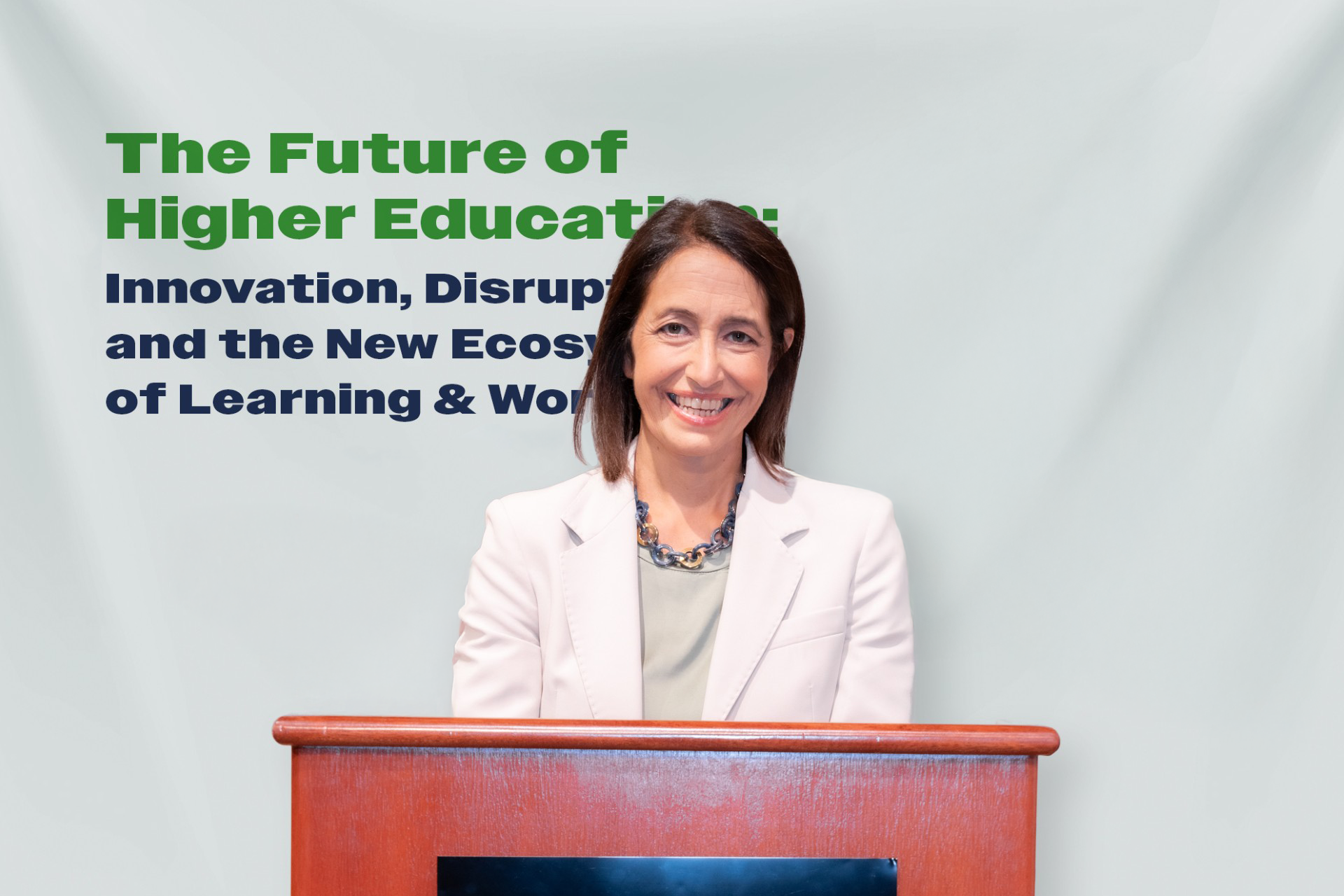
At a time when many in the sector are battening down the hatches, Link is throwing the doors wide open, viewing this challenging time as a watershed moment for higher ed. In November, Link will continue her Presidential Innovation Series, for which she invites leaders at the forefront of innovation and disruption in their industries to lead conversations that will help steer the future of higher education.
Link has instituted her own major changes at Drew, a small school in Madison, N.J. with an iconic, leafy green campus and devotion to the liberal arts. Recruited to shore up the institution’s financial position, Link has worked with the Drew community to reimagine its pedagogy to better accommodate industry’s demand for job-ready graduates. At the same time, she emphasizes what should not change, like the ability of the liberal arts to help develop the human skills needed to navigate a complex world.
In this conversation with LearningWell, President Link shares what she is learning and how she is going about crafting a “dream future” for Drew — one in which, she said, “everyone can be 100 percent themselves.”
LW: You are both a president and a thought leader in higher education. What motivated you to start the Presidential Innovation Series and your upcoming convening “The Future of Higher Education”?
HL: As a scholar of Renaissance Italian Literature, I was trained to analyze texts, see patterns, employ words and visuals — as a window into other cultures and societies. I have always loved the meta process of stepping back from the text or artwork in which you are immersed to ask, “What is really going on here? What does this work tell us about the cultural, linguistic, artistic, religious, political context in which it was produced?”
My scholarly work focuses specifically on theories of artificial perspective, so I embrace the concept of shifting where one stands to better understand the “big picture.” I see the convergence of being a president and being a thought leader in the higher education sector in similar ways. I have now been president at two institutions and dean of another, and while that work is all consuming, I always push myself to step back and puzzle over the “bigger picture.” How can what I am seeing at Drew University translate across the industry? What does my reading and careful analysis of this institution — like with a text or artwork — tell us about higher education in general and also this moment in our country, our world, our society? The fun for me of planning, crafting, and hosting the Innovation Series or speaking at a public convening is the chance to step back from my day-to-day work about Drew and learn from experts both inside and outside of higher ed — to help me and others see “the big picture.”
LW: In the series, you engage partners outside of higher education. What have you learned from that, both for higher education and for Drew University specifically?
HL: I have always been an interdisciplinary scholar, thinker, and do-er. My dissertation was on ekphrasis — written descriptions of visual works of art — which is a true convergence of art and literature. I have always felt that I saw new and different things in texts because I saw them through a visual lens, and vice versa. Similarly, as I have been on an “innovation journey” for Drew over the past 18 months, I have learned so much from innovators and disrupters in fields related to education but also completely separate.
Often, the “aha” moments come from the concept of “far transfer” that David Epstein talks about in “Range,” one of my favorite books. I see how someone has evolved or transformed their sector, and it makes me see a higher ed-related problem in new ways; it makes me get creative about how we might do something similar in a very different context. The panelists at our November convening are just a sample of some of the fascinating people I have had the opportunity to learn from and be inspired by, and I am excited for other higher ed leaders — and really anyone interested — to learn from them and bring new ideas or ways of thinking back to their campuses or fields.
LW: You are an advocate for new models for liberal arts education. What needs to change? What changes have you made at Drew in this regard?
HL: Since arriving at Drew, I feel like I have been on a journey to understand where the rapid changes in our world are pushing higher ed, and quickly. I started by having deep conversations with anyone who would speak to me — innovators, entrepreneurs, investors, educators — and then crafted a white paper of my dream future for an institution.
But then I put that aside because I knew this couldn’t be driven only by what I thought. Universities are complex organisms, and if we had any chance of evolving, these ideas had to bubble up more organically. So I brought in a brilliant scholar, Dr. Michelle Weise, who spent a year leading some of our most innovative faculty and staff on their own discovery journey. Michelle exposed them to many different models for education, introduced them to people thinking in very different ways about “K-Gray” education, and pushed them to iterate and ideate in really liberating ways.
At the end of last year, we hosted a design-thinking charrette for about 40 campus members, and everyone agreed that any new direction for Drew needed to focus on the following human skills or qualities that we already value and prioritize: resilience, commitment to a common good, complex problem solving, and creativity and curiosity.
Three future-oriented visions emerged for higher education, and groups of faculty and staff spent the past summer designing around those four values to arrive at possible prototypes to present to the community. We encouraged them to think big and challenge existing systems, while focusing on specific challenges Drew needs to solve. It was up to them to define those challenges. While the groups landed in very different places, their prototypes actually gravitated around the same critical features, which was a surprise: student-enabled, personalized/individualized learning; intentional, structured mentoring; applied learning; and accessible, lifelong learning based in problem-based/experiential frameworks. While we already do these things in small ways, the groups were telling us that this is where we need to go big. The coolest part? All of the prototypes in certain ways overlapped strongly with my original “white paper” vision, which further convinced me we are on to something.
The challenge now is finding the space where we can prototype these big, system-changing ideas while protecting the excellent learning experience our university has long provided and will continue to provide for current, traditional students. One idea is to create an incubation hub at Drew where we can play with the most compelling concepts, allowing a small group of students to collaborate with us in shaping a new educational pathway that includes all four critical features from the work of our staff and faculty. This approach can allow us to rapidly learn and find the clarity we need to move forward in the accelerating changes around us. This can of course be tricky. We know we have to move fast, but higher education’s DNA is to move only after deep, comprehensive thinking on matters; it’s how we have been trained as scholars.
I also think it is important to remember that institutions like Drew and higher ed in general do plenty of wonderful, transformative, and life-changing work already, and we see its effect in our current students. So I want to emphasize not just what needs to change but also what needs not to change about Drew and similar institutions: Even as liberal arts colleges might shift from disciplinary majors to more thematically organized knowledge focusing on the problems facing our world, the benefits of a liberal arts approach are amplified, not reduced. The broad interdisciplinarity that develops individuals who can think for themselves, face the uncertain and unknown, and contribute meaningfully to local communities and society at large remains. We’re essentially remixing our strengths for a new audience who are already arriving with different interests and needs.
LW: There’s strong evidence showing that how someone experiences college affects their wellbeing long after they graduate, particularly if they have had mentors and hands-on learning. Do you take that into account in thinking about policies on campus?
HL: I love that you asked that question! In fact, as we have been leaning into redefining the liberal arts for the future in ways that incorporate and employ technology and A.I., we have doubled down on those two concepts: the “human in the loop” — or even better, “at the helm” — or the need for strong mentoring in a new educational model; and the need to interweave applied learning, inquiry-based curriculum, and problem-based approaches with content acquisition. These are things that technology cannot do for us, yet, and these are the aspects that I believe must drive education forward. Those of us in higher ed and those of us who parent young people know all too well the challenges in mental health, isolation, lack of resilience, and need for community young people present with today.
At Drew, we are trying to re-imagine higher education in ways that make it not just financially sustainable but that give young people the tools to engage with big global challenges, to learn through applying their knowledge, to have more say in what, when, and how they learn, and to give them a sense of human connection and relationship that they crave. We of course do many of these things already, but not systematically and not sustainably. We are pushing ourselves to be more intentional here — to shift and evolve so that we give students not just the tools to be well throughout their lives but also a desire to keep coming back to us in meaningful ways as they grow and evolve.
LW: Do you see this as a seminal moment for higher education? Given the attack on higher ed, do you think the sector can move out of its defensive position and into a position of strength?
HL: I absolutely see this as seminal moment and a moment when most institutions have no choice but to lean hard and fast into innovation: different ways of teaching, less traditional definitions of a “student,” new modes of delivery and crediting experiences and applied learning, and more flexible ways of creating a sense of community. As the author and Drew Honorary Degree recipient David Epstein writes in his forthcoming book, “Inside the Box: How Constraints Make Us Better,” institutions that embrace this moment of scarcity, overreach, and challenge to be creative and resilient and that reinvent themselves for a future that is already here, will thrive.
While it is easy to fret and feel defensive and “batten down the hatches” while we hope for and wait for things to change or improve, I see this as a watershed moment.
While it is easy to fret and feel defensive and “batten down the hatches” while we hope for and wait for things to change or improve, I see this as a watershed moment. If we can come out of these challenges having heard and thoughtfully tried to address some of the public critique about higher ed and particularly the liberal arts — too politicized, too costly, broken, offering no value for workforce preparation — we can envision entirely new prototypes and models for the sector that are accessible, affordable, more relevant to all, and better suited to equipping future generations to control what they learn and when, in order to apply what they learn to solve big global issues. I have been beating this drum for more than a decade, but I think the sector is now being squeezed and pushed so much that real and lasting change can happen.
LW: What do you love about Drew?
HL: From the moment I stepped on campus as president, I fell in love with the tranquil and beautiful campus, the open, thoughtful, unpretentious and welcoming students, the inspiring faculty, and a community that cares deeply about each other and the institution. I love that Drew is a little quirky and that it holds space for everyone — no matter who you are. I love that you can be 100 percent yourself here. And I love that at a moment of deep crisis for the higher ed sector as a whole, this community has been open to change, willing to lean into where the future is leading us, and incredibly thoughtful about what we do well, as well as where we can be more agile, focused, and open to new ideas.
John Volin, Ph.D. is the new President of Gustavus Adolphus College, a small liberal arts school nestled in the scenic Minnesota River valley town of St. Peter, Minn. In his convocation address, Volin told his fellow “Gusties” that being there reminded him of his upbringing in South Dakota — of the rural roots that shaped him and his desire to pursue higher education in the first place.
“We are not just beginning a new school year, we are beginning a year of discovery, growth, and possibility,” he said, revealing his signature optimism. Before leading Gustavus, Volin, an environmental scientist, was provost at the University of Maine and, prior to that, vice provost of academic affairs at the University of Connecticut.
As a long-time college administrator and frequent first line of defense against external threats to higher ed, Volin might be less zealous about assuming a role many others are exiting. Instead, he says he has taken to heart Gustavus’ new slogan — “Go Beyond” — which for him means focusing on what’s possible, even as you manage what’s facing you. Volin has long hoped to lead an institution that would align with and benefit from his robust body of work in student-centered, transformational education. In Gustavus Adolphus, which is guided by the Lutheran mission to educate students with purpose, he has found it.
In this candid interview with LearningWell, President Volin talks of first impressions, early priorities, and how college can be a pathway to life-long wellbeing.
LW: You are a first-time college president at a very challenging time for higher education. What keeps you so engaged and optimistic?
JV: I was reminded just the other day of why all of this is so important. A couple weeks ago, we had our first-year students arrive with their parents. There are all the hugs, the occasional tears. And you see this new cohort of students that have this energy, this curiosity. They’re nervous, maybe even scared, but they have all these aspirations as well. And it really reminded me of the awesome responsibility that we have — this privilege to help shape the conditions that are going to allow those students to thrive, not just during their undergraduate years, but well into the future. And that is something that gets me excited and keeps me engaged. It was the reason I got into higher ed in the first place.
LW: What drew you to Gustavus? And how does the culture here resonate with your own philosophy on learning?
JV: I grew up in the upper Midwest, so I knew of Gustavus and remember being intrigued by its residential liberal arts setting. As family tradition, we all went to South Dakota State University, and I’ve always been in public comprehensive research universities. So when Gustavus first reached out to me to throw my hat in for president, I was like, ‘Oh, this is exciting.’
But the mission to educate students to lead purposeful lives is what resonated deeply for me. The Lutheran tradition, similar to the Jesuits, is to educate the whole student — mind, body, spirit — and that is really alive here. It’s more than a slogan. It really is part of the core, and you can never take that for granted. I think there is a real motivation for faculty and staff to mentor our students beyond the classroom — to help them develop a sense of belonging, a sense of community, to give them agency and character development to lead lives that contribute to society. That’s what really drew me here.
For me, this opportunity has been a long time coming. Early in my career, I started to see this huge responsibility we have to focus on the formation of our students as human beings. And data is starting to really show the benefit of that in terms of life-long wellbeing. It really does make a difference when students know that they’re cared for — that they belong — even as we challenge them in the classroom. And then we need to open up opportunities for students to be able to take what they’ve learned in the classroom and get a really authentic experiential learning engagement. Whether it’s through an internship or research experience or service learning, we know that those high-impact practices lead to overall wellbeing during the undergraduate years and well beyond. These students tend to have a higher chance of flourishing later on in life, have greater career satisfaction. And so that for me, is a real driver.
LW: Can you describe an example of this type of approach?
JV: Let’s take curriculum development. I have been a part of two very large university curriculum redesign initiatives. And yes, it’s exciting to make change, but often it’s been incremental change — over a six- or seven-year period. And it’s always compromise after compromise, and no one really feels completely great about the product. But here, the faculty and staff came together and, in an eight-month period, redesigned their curriculum into a really innovative model: A third of the students’ credits are in their major; a third are in general education; and a third are in electives. So it allows for that depth that the students need and but also the breathing room to try new things. And the results have been really exciting.
My wife Valaria and I live on campus, and every night, we walk our dog — our 15-month-old golden retriever named Sofia. Invariably, our half-hour walks turn into 45 minutes to an hour because we end up talking with students, and I noticed that I would get very different answers to the typical question: “What are you majoring in?” Students will say “business and music” or “biology and theater,” and I love it because that’s what a true liberal arts education can offer. They are using their whole brain.
LW: What are some of the big things you’re working on?
JV: There’s amazing momentum here, but we can’t just be the best kept secret. We need to better define and communicate what we do. There’s been a lot of work done in marketing and communications, and our new brand, which I was introduced to this summer, is “Go beyond.” I love it because it’s an action phrase that can mean so many things: “Gusties go beyond.” “Go beyond the Hill,” which is what campus is often called.
That’s part of a new strategic visioning and planning process I just announced at convocation. By the way, they tell you as a new president, you should never do a strategic plan your first year, and yet here we are. Actually, this was a mandate coming in, so it’s perfect timing. We’re looking at this as a significant opportunity to shape the institution’s future with purpose and collective ownership. It’s about who we are and where we want to go, and it involves all members on campus. We will ask ourselves: What do we do well? Where must we do better? What can we imagine that doesn’t yet exist?
LW: Do you think your message about the student-centered work you are doing here will resonate with the public at a time when there is so much skepticism on the value of a college degree?
JV: I hope it will. I think, historically, higher education has isolated itself too often from the public. But when you’re on a college campus, at least in my experience, it doesn’t always feel that way. I think we can all agree that we need to be clearer and much more transparent about the outcomes of a college education. That includes career readiness, but it also includes critical thinking, adaptability, and, importantly, civic engagement. We need to demonstrate that higher ed is not a luxury; it is a public good that benefits communities as well as individuals and helps advance humanity. At the same time, we need to hold ourselves accountable on affordability and access and making sure our students succeed. We are fortunate that we have a great track record here on four-year graduation rates, but we can never stop working on that. I think trust will come when we show through action and not words that we’re preparing our graduates to thrive, to contribute in meaningful ways, and to find high satisfaction in their careers. But that’ll take time.
LW: Gustavus is a Lutheran school. Your experience has been in public, secular universities. Now that you’re here, do you see a place for faith and religion on campus?
JV: Yes. We have five core values here: Excellence, Community, Justice, Service, and Faith, and that’s everywhere. We don’t shy away from these core values. At the same time, there’s no pressure on students. This is a place, where, in the Lutheran tradition of acceptance, you can come with faith, no faith — wherever you’re at — and we will accept you.
There’s a 20-minute service on Tuesday, a 20-minute service on Thursday midday, and one on Sunday afternoons that are all run by students. We have three chaplains on campus. No matter where anyone is on their own journey, they have the chance to plug in if they choose to. A lot of this is about being present and finding spirituality, whatever that may be. Christ Chapel, which is right in the center of campus, is gorgeous. And it’s open 24 hours a day. When we first moved here, I found myself going in there one evening. I pulled the door open, and there’s this little fountain running, which gives the sound of trickling water. The sun was setting, and I thought, “Wow, you can’t help but feel well here.”
LW: So you see a connection here to wellbeing?
JV: I think the faith-based dynamic gives us an extra advantage. I’ve never been at a university where we can actually talk about it, and I do think it helps, particularly if you put this in the context of community. It’s really all about relationships and connection. We’re hosting Bob Waldinger on campus next spring, and I’ve asked students, faculty, and staff to read his book “The Good Life.” Bob is the director of the longest continuously running study on what makes people happy, and at the end of the day, it’s relationships. In a very intentional way, I want to bring this message to campus to reinforce that element here.
LW: Do you think about how technology, particularly AI assistance and online learning options, will affect relationships between students and faculty or students with each other?
JV: I definitely think about that. And I also think it’s an opportunity for us to get ahead of it. We certainly can’t put our head in the sand, but we need to be very thoughtful about how we use technology. For the liberal arts, we need to fulfill the promise we make to families that we are institutions with high touch, smaller class sizes — all those opportunities. We have to be present. That’s our strength.
After the pandemic, there was discussion here about whether we should continue with some online courses, and my understanding is the students overwhelmingly voted no. They wanted in-person classes. What that signals to me is the students who come here want to get to know their professors, and they want to be able to be in the classroom and have those relationships.
LW: As president in a challenging time for higher education, how do you “lead” through it?
JV: It is tricky, for sure, because you are in some ways the main translator for your college. You are one that sets the tone and delivers the message, and there’s a real balance to uphold. You have to help bolster morale in very difficult times, but you don’t want to come off as Pollyannaish. You need to be authentic and truthful. This is a hard time for higher ed. There’s a real assault on academic freedom and a misunderstanding of what academic freedom really is. It’s our mandate as leaders to be supportive of and consistent with the values of academic freedom and open inquiry, but it’s very challenging. We just have to keep moving forward.
When a group of us recent graduates from Georgetown University were asked to be Hoya Fellows, we weren’t sure what to think. As Fellows, we were expected to weigh in on strategies and policies that affect Georgetown students, an area that we believed did not often involve listening to students. Students are seldom invited to be true active participants in the complex decision-making processes that dictate their campus experience. Most of the time we aren’t even familiar with how the process operates. As recent graduates ourselves, we wondered how much impact we could really have.
Our degrees did not qualify us to oversee university initiatives, let alone challenge the culture of a centuries-old institution like Georgetown. But the school’s vice president of student affairs, Dr. Eleanor Daugherty, trusted in our abilities to make an impact. Dr. Daughterty, who had invited us into the process, had years of experience studying adolescent development while working in higher education, but she admitted she was far removed from knowing firsthand what the adolescent world is like. “I am the expert on your tomorrow, but you’re the expert on your today,” she often said.
With that, we were thrown into the deep end, and like the child that learns to swim this way, we kicked our legs hard enough to keep our heads up. Rather than assigning us simple administrative tasks, Dr. Daugherty handed us complex challenges, like bolstering an atmosphere of “belonging and mattering” among Georgetown students. We weren’t told to be cogs in a machine; we were empowered to build new ones. We were asked to lead the way in designing new initiatives and solutions to address issues that we dealt with firsthand as students, like finding community within the university or balancing working hard with caring for ourselves while being away from home for the first time.
There would be constant pressure, not necessarily to succeed, but to maintain unwavering ambition and creativity. We were required to bring our respective passions and skillsets into conversation with the spirit of innovation, all in the name of creating a world we thought we could only imagine.
What we learned is that the deep end is not a place to drown; it is a place to learn. It is a place where Fellows are trusted to take on unsolved institutional challenges, to move beyond our comfort zones, and to think beyond our own years of experience. It is where we are asked to address student impostor syndrome while managing our own, tasked with changing a culture we were not sure we had the authority to critique.
What we learned is that the deep end is not a place to drown; it is a place to learn.
We were given access to the full resources of the Division of Student Affairs and encouraged to collaborate with university leaders. We relied on each other and drew from our own experiences as alumni, as well as from the students who are still attending. Most importantly, we were not afraid to make mistakes because we were guided by leadership who encouraged us to take risks. For Fellows, there was no consequence for failure besides learning a lesson and trying again. It’s inevitable that we’d falter along the way, and we agreed that the only thing that fearing failure does for us is hinder and delay our eventual triumphs. Failing didn’t mean the journey ended; it just provided us another memory, lesson, and motivator to propel us towards results.
Since the beginning of the Hoya Fellowship in October 2023, the Fellows have helped student affairs launch a number of initiatives and projects, which have proven almost overwhelmingly successful. Each Fellow was encouraged to pursue projects aligned with our own strengths and to collaborate and learn from each other in the process.
One of our biggest accomplishments came directly from our own experiences. A major goal of student affairs has been to focus on “belonging and mattering” on a campus, which is welcoming but also often too perfect for its own good. On a campus like Georgetown, many students find it difficult to be anything other than perfect. This cycle of pretending to be perfect causes some of the brightest adolescent minds to wonder if they really belong in a place where everyone is as smart or smarter than they are. From this came the development of a class called “Blowing Up Perfection,” meant to teach students some of the skills they might not learn in other classes: how to build authentic friendships, how to face conflict, how to be resilient in the face of difficulties, how to embrace vulnerability. These skills help students understand that belonging comes not from perfection but from connection and self-acceptance. It is something we had to learn ourselves.
Another related initiative is Hello Hoyas, a summer program where university leadership travels around the country to visit incoming first-years in their own hometowns. Particularly impactful for first-generation and low-income students, Hello Hoyas offers a powerful message that students and families belong here and that we will be here for them when they arrive. Hello Hoyas expanded from five cities in 2024 to 10 cities in 2025 and has welcomed hundreds of students before they even reach campus across both years.
Expanding our impact beyond Georgetown, Fellows even helped advance scholarship and research on adolescence, most notably by leading a national research symposium that reimagined how we approach adolescent development within the context of today’s challenges and opportunities. The gathering, called “The Promise, Possibility and Power of Adolescence,” convened K-12 and higher-education administrators, educators, non-profit leaders, and renowned researchers, who were brought into conversation with adolescents themselves — the very people who would be impacted by the work. Like the Hoya Fellowship, the hallmark of the symposium was that the youth led the way. There, young people spanning 14 to 22 years old worked alongside adult participants to co-create innovative solutions aimed at promoting universal adolescent thriving, regardless of one’s location or access to resources.
Our experience as Fellows made us realize that the distance between students and administrators didn’t come from disagreement, but from mutual misunderstanding. While institutional leadership can offer frameworks of what young people should be, only young people themselves can speak authentically about their own current reality. The Fellows program has helped expand the opportunities for students and administration to communicate directly with one another. Our office initiatives include a student advisory, which invites all students to join university leaders for dinner and discussion. There are Hoya Family Forums, which invite curious parents to meet different student, professor, or staff panelists and keep families informed about what happens on campus. The Fellows have helped build bridges between Georgetown leadership, families, students, alumni, researchers, and everyone who is invested in making universities everywhere a better place for adolescent wellbeing.
Through these initiatives and projects, the Fellows have helped reframe how the university approaches its students. There are many more opportunities for students to connect directly with leadership, even before their time on campus. And in turn, leadership can better understand the state of adolescents today. The Fellows have helped blow up the culture of perfectionism and exclusivity which permeated the otherwise very welcoming Georgetown community, and we hope to continue doing so in the future.
We never thought we’d be working for the university, let alone teaching classes or organizing national conferences. We’re driven by our pride in being members of the Georgetown community, and we’re honored that we get to serve as a connector between students and administrators, all of whom want the best for our university. The issues we tackle — adolescent development, student wellness, belonging and mattering, to name a few — reach far beyond Georgetown’s gates. Through the Hoya Fellowship, we aim to show how empowering young people to lead not only develops them but also ignites impact at scale.
One last note: When you throw people like us into the deep end, we’ll never want to leave the pool.
Since October 2023, Hoya Fellows have worked in key university offices across Student Affairs to develop strategic initiatives focused on student life and well-being. These positions enable the university to benefit from the experience and insight of alumni who understand the lived experience of our students, while also empowering these new graduates to help build Georgetown into the institution they hope to leave for future generations of Hoyas.
David Kelley is the Donald W. Whittier Professor of Mechanical Engineering at Stanford University, but most know him as the creator of the Hasso Plattner Institute of Design, or simply the d.school. Kelley, who celebrates 50 years at Stanford this year (as both student and professor), presents more like an eloquent historian than an engineering genius. But it should be no surprise that the founder of an institute that invented “outside the box” thinking would be such fun to talk with.
The founder of design firm IDEO and recipient of numerous honors and awards, Kelley describes his work as“helping people gain confidence in their creative abilities.” He and his brother are the authors of “Creative Confidence: Unleashing the Creative Potential Within Us All.”In it, they argue that labeling people, particularly children, as creative or non-creative is as limiting as it is incorrect. In this interview with LearningWell, Kelley talks about the connection between creativity and discovery, how human-centered design is changing the world, and how the d.school got its name.
LW: I’m very curious about one of the main focuses of your book, which is creative confidence — unleashing the creative potential within us all. What do you think the implications of that idea are in the context of higher education?
DK: Most of my work could be categorized as helping people gain confidence in their creative ability. That would be what I care about the most. And I think we start out by people thinking of themselves as not creative, and I’ve tried to convince people — and prove — that everybody’s wildly creative. They just have blocks in the way of it. So you need to change the mindset from teaching people to be creative to giving them credit that they’re already a creative organism and remove the blocks keeping them from doing that. The psychologists call it self-efficacy — that you believe that you can accomplish what you set out to do. I mean, that’s just it. Wouldn’t you like to give every one of your students the notion that they can accomplish what they set out to do and have that confidence? I really think that’s the goal here.
So how do you go about that? The way you go about it, especially with students, is to help them have some success. You set it up so that it’s a problem that’s easily solved, and you hold people’s hands, and you lead them through it, and they’re successful at some small thing. Then you do another one, and then you do another one. Pretty soon, people are saying, “Oh my god, I am creative.” So I guess I’ll summarize: The main thing about creative confidence is how you help people remove those blocks. And the main reason that they have that block is that they are worried about the judgment of others.
LW: And that has something to do, I imagine, with what they’ve been told they are, right?
DK: Yes. You do something that’s not conventionally creative, or just doesn’t seem like it has a direction that’s creative, and then pretty soon you’re “not creative.” And people hear that when they’re nine years old. They hear, “You’re not creative,” and then they never address it again. It’s like, you try to play the piano, and you’re not good when you sit down for the first three seconds. You are not good at playing the piano, so you don’t continue. It’s hard. Doing things that matter is hard.
“The main thing about creative confidence is how you help people remove those blocks. And the main reason that they have that block is that they are worried about the judgment of others.”
LW: So you’re encouraging people to have a wider view of creativity and what that can mean?
DK: Yes, for sure. Sometimes, early on — I’m talking about child development — creativity is defined as drawing, believe it or not. If you can’t draw well without any practice and you just don’t naturally draw well, you’re identified as not being creative. Well, maybe this person’s musically wildly creative, or maybe they’re creative in a different way. So the problem is that, whatever the conventional way of doing something, if you are off that, you’re not creative. You’re also not conventional. It’s a funny dichotomy. But the main thing, yes, is that people are branded as not creative for a bunch of reasons, and we need to see that as wrong.
LW: It sounds like there’s an urgency around this. Because if people are limited in thinking about themselves as being creative, then we have arguably less creative people. Why is it important to have more creative people?
DK: It’s only if you care about the future that you think creativity is important. That’s how you cure disease and how you make advancements in technology — is people being confident in their career ability and doing new things that change the world for the better. Our phrase that we like to use is: It’s your job to paint a picture of the future with your ideas in it. The funny thing is once you can use your creativity and paint a different picture of the future, then everybody else can have an opinion. They can help you. They build on the ideas of other people when they can visualize it — when they can see it. So that ability to visualize the future is inherently a creative task.
LW: Let me ask you a little bit about the founding of the design school. Can you just give me a quick overview of that?
DK: Back to the notion of creativity —when you have a diverse group of people, you come up with better ideas. You can define diversity in any way you want: age diversity, racial diversity, or geographic diversity. But having those people — the mashup of those different people that come from different viewpoints — greatly increases the probability of you coming up with something new to the world. So that’s something I wanted to codify at the university.
And so basically the notion of the d.school was to have a place that everybody wants to come to. A lot of the classes students take in college are required classes, and so the teacher doesn’t really want to teach them, and the students really don’t want to be there. I wanted a place where everybody wanted to be there all the time — that they opted into this place because it was so enjoyable, so fulfilling, rewarding, informative. So the d.school is really based on that notion of making a crossroads, where professors and students from all over the university would come together. And I’m so gratified. It turned out so great. And the reason — they all say the same thing, particularly the professors: “When I cross the threshold, I know I’m allowed to act differently here.” And that’s just like music to my heart.
LW: Was it a difficult concept to communicate within the school?
DK: It started out with a bunch of us in a room talking. It wasn’t going anywhere particularly, but it got started. And then, fortunately, as we went further along, we had a perfect storm of administration. So we had a department chair and a dean and a provost and a president that all resonated with the idea. It took giving us the donation. I don’t know that I ever would’ve gotten it started if it hadn’t been for the generous donation from Hasso Plattner. But the president, John Hennessy, came to me and said, “What would it take for all Stanford students to be more creative — to be more confident in their creative ability?”
It really helped to have that. I mean, faculty are very siloed and more concerned about their little empire than somebody else’s. So getting everybody’s attention was difficult. It took a long time to get the place up and running to the point that people were drawn there naturally. But it did snowball. It accelerated beyond my wildest dreams because it turned out to be true — that it was super interesting for these geniuses from different departments to get together and duke it out on different topics. They really liked being there. They liked teaching together. And the way we used to do it before was I’d go in and lecture in somebody else’s class, or they’d come in my class and give a lecture. But that’s not a collaboration. Once people started to team-teach classes — somebody from political science teaching with somebody from the ed school or the business school or the law school — when they were actually standing in front of the class together for the whole class, then we knew we had it. That’s what we were after.
On a side note, one of the most interesting things that happened was how much the students loved watching the faculty fight. Somehow it was really cathartic for the students. They were used to the sage-on-stage, saying their point of view unchecked by anybody else in the room. So as soon as you get a couple of strong-willed experts in the room talking about a subject and they disagree, it’s really interesting. I think, for the students, the faculty became more human to them, and maybe there’s not a direct, correct answer to every question.
LW: I hear there is an interesting story about the naming of the school?
DK: Actually, it is not a school at all. It’s completely separate from the academic hierarchy. I remember sitting around a room — a couple of my graduate students and friends — and we were figuring out how to make this happen. And it wasn’t clear. We are a small organization and felt we weren’t very well understood. So there was the business school — the “B-school” — that was a really big deal on campus, and to feed off their importance, we decided to call ourselves the d.school.
LW: That’s fantastic! Can you define for our readers what you would call design thinking?
DK: Yeah. Design thinking is just a description of the methodology and process that we use to routinely innovate. The way I talk about it is mostly around human-centered design. So there’s plenty of people who have methodologies that are business-based or technology-based, and those are all good, and we employ those. But we seemed to lack a human-centered approach. What’s feasible and viable is nice, but what’s desirable? How do you make it more useful or convenient for people? How does it fit better into people’s lives? To me, that’s what design thinking is. It’s a human-centered approach. And all the discussion about design thinking is the steps — the methodology — that you use to do that, but it’s all centered on: How do you make it better for people?
LW: What has been the reaction to this method at the d.school from the students?
DK: Well, at first, all of our classes were electives. So the students were choosing something that they were particularly interested in. And by having different faculty, there were two wildly different points of view in the same room. So the students were excited about that. I’m going to go back to the same thing about human-centered design: Everybody can buy into this because it’s so human. I mean, we’re all humans, and the driving force is: How is this going to be better for the students? Or how is this going to be better for the people we’re trying to design something for? That humanness is just really enjoyable.
And today, one of the consequences is that I used to be able to tell the students to design a clock radio or something like that. I’d be shot if I said something like that now. They want to do something that has social value. They want all their projects to be something that’s good for the world. And I think that’s a consequence of the human-centered approach. What they want to do is improve the lives of people who live in a village somewhere and don’t have the internet. As a steady diet, that’s what they really want to do, which is encouraging for that whole generation if you ask me.
LW: You’ve been at this a long time. Any other observations about how your field has changed?
DK: Design was just not a big deal in the world as a discipline. I always say I felt like I was at the kids’ table, and then through mine and a lot of other people’s efforts, we’re now at the adult table. And I think that has to do with our way of thinking — that finding the right problem to work on is as important as the problem we are solving. Before our language, everything was problem solving, problem solving, problem solving. And after design started to take off, it was all: What’s a project worth working on? Need-finding, more than just problem solving. So that put it front and center: the messiness of trying to understand what people really want, what would make their lives better.
Part of everybody’s process now is this human-centered approach where you go out and try to understand — we call it the need-finding —what’s valuable to people. It’s a messy phase. At most companies, people want to sit there and look at their laptops in a conference room. They don’t want to go out into the field and experience what’s really going on with people. And I don’t understand why that is, but we’re getting better and better in that more and more organizations start out by trying to understand what’s a good problem to work on by understanding what people really want. And I think that’s a consequence of design having more agency in the world.
And I can tell you a million stories. One of the ones that comes to mind with my students is this class called “Liberation Technologies.” They were asked to look at fire prevention in these villages in Africa, and I thought they would end up doing a low cost fire extinguisher. But when they got down there and used our process and talked to the people, they started to realize that, yes, they were afraid of fires, but they’re really afraid of losing their documents in the fire — their immigration documents that prove they were allowed to be in this building. And so students changed the problem from fire prevention to document preservation.
Their solution was a pickup truck with a scanner in it. And they went from village to village and scanned everybody’s documents and put them up in the cloud. When you have a mindset of understanding what’s the real problem by talking to people, then you solve the problem in a completely different way or you even solve a different problem. But for your question, I think that’s the contribution of design being in the world and our methodology having some impact.
LW: Do you worry about people making things that aren’t good for the world?
DK: We used to teach an ethics class and now there’s ethics in every class — to try to understand the consequences of what you’re going to do. We have a culture of prototyping, where we take a first pass at what we’re going to make, and then you take it out and actually get it into the situation where it’s going to be used. So before you’ve committed to what it’s going to be and get it out there, you’ve seen the consequences of it. Before you commit to doing something bad or something good, you want to know the non-obvious things that are going to happen when that invention enters the world.