UR Well

For the first 30 minutes, University of Rochester academic advisor Hana Goldstein thought her advisee seemed totally fine. Suddenly, she broke down in tears. 

“I was about to say to her, ‘Okay, have a great day. We’ll chat in a couple of weeks.’ And then she just started crying,” Goldstein said. “She opened up to me.”

It’s not uncommon for Goldstein to find her one-on-one sessions with students veering from the academic to the personal. Some students are quick to tell her about an issue they’re facing outside the classroom, she said, while others choke back those troubles, at least initially. “You never know what someone’s going through.”

There is a growing acknowledgement on college campuses that student mental health is influenced by a community of care, and not just one office or service. But taking a more public health approach to college mental health suggests all community members must be prepared to respond if a person reaches out or breaks down. At the University of Rochester, a new wellbeing initiative hopes to fill that need with a curriculum-based training program that helps faculty and staff support struggling students, and each other, in a way beyond “report and refer.”   

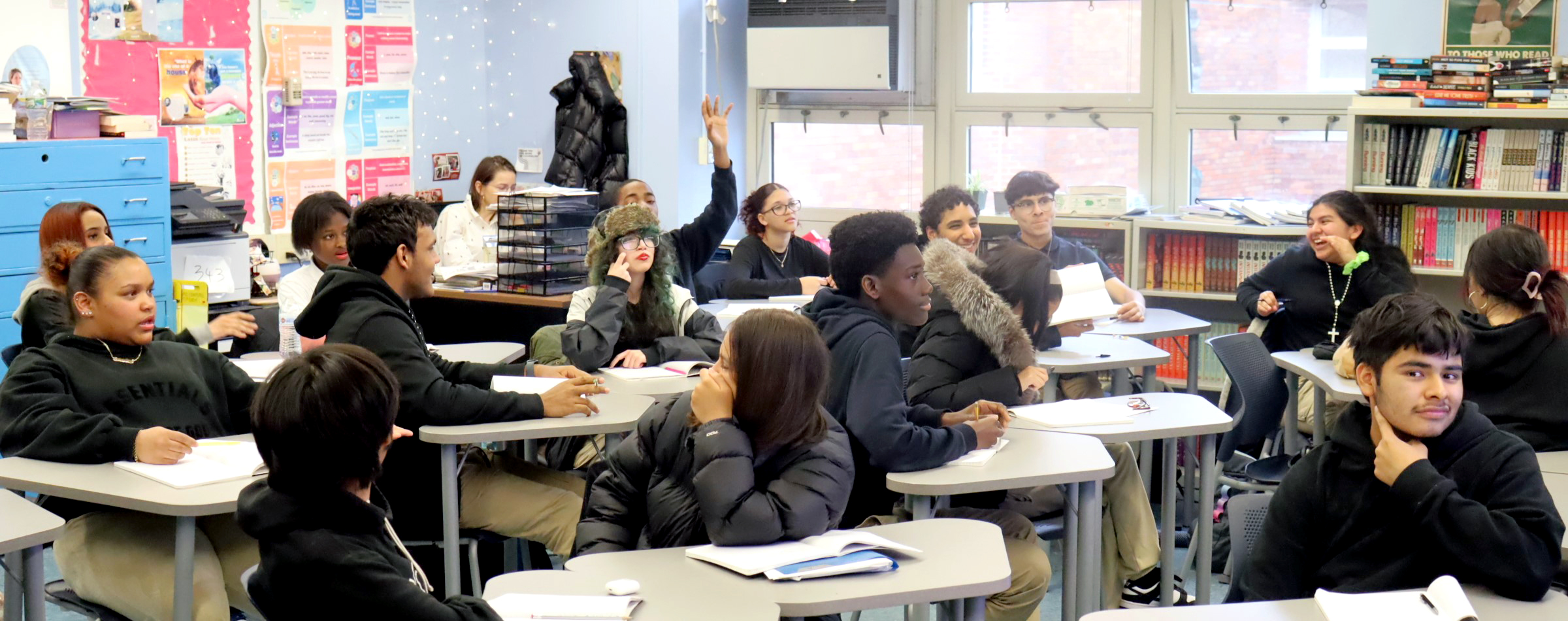
This fall, the Health Promotion Office at the University of Rochester launched the Well-being for Life and Learning Training Program, designed for student support staff like Goldstein, who are hungry for tools to support struggling students. The opt-in, self-paced program requires participating faculty and staff to take four core and two elective workshops on a range of wellbeing topics from supportive communities and suicide prevention to intercultural communication and religious diversity.

At its core, the Well-being for Life and Learning Program is a student success initiative, born from the understanding that if students are living better, they will learn better. Rochester’s Health Promotion Specialist for Student Well-Being, Rebecca Block, leads the Well-being for Life and Learning Training Program. She said faculty and student support staff interactions are particularly important to this work. 

Photo by J. Adam Fenster / University of Rochester

In 2021, when the Boston University School of Public Health, Mary Christie Institute, and Healthy Minds Network published a report on The Role of Faculty in Student Mental Health, Block found statistical support for the challenges she’d witnessed teachers confront first-hand. Of the more than 16,000 faculty surveyed, nearly 80% said they’d spoken to students about their mental health in the last year, while only 51% said they could confidently identify a student in distress. The majority (73%) said they would welcome opportunities to improve their skills in this area.

“That report made it more acceptable, I think, at a research institution to say, ‘Okay, this data came out of this study with over 12 universities’ faculty reporting this issue. This means that we should do something about it,’” Block said. 

That same year, in 2021, Block launched the Support Student Mental Health workshop series, bringing together ten experts to lead sessions on topics including trauma-informed pedagogy, recognizing students in distress, and educator self-compassion. By spring, 2023, the Health Promotion Office was polling Rochester’s faculty and staff, finding 85% had spoken to students about their mental health in the last year, but more than half had never received formal training to “navigate discussions with students in distress.”

Upon the success of the workshop series, Block began considering an even more formal, expanded platform to provide faculty and staff with the tools to support not only student mental well-being but their own well-being and that of the community generally. The result, launched this fall, was the Well-being for Life and Learning Training, complete with two unique tracks for faculty and staff, respectively, and offered both online and in-person. By showing faculty and staff how to care for not only struggling students but also themselves, the course tries to relieve some of the pressures that might otherwise detract from their own wellness and ability to teach. 

“This is really the first thing I’ve done that’s really focused on students’ well-being and mental health and how we as staff people can actually make an impact on their lives.”

Block said she first became passionate about faculty wellness as a teacher in New York secondary schools. She noticed how instructors’ stress, often internalized from their students, affected teaching. “Working in those classrooms really was the pivotal moment for me. I was like, ‘These kids are not going to learn. They’re not going to be well if their teachers are not able to regulate their own emotions, if they’re not able to support students in the ways that they need.”

For Amy McDonald, director of Rochester’s Health Promotion Office, one of the primary functions of the Well-being for Life and Learning Training Program is its contribution to a more institutional approach to student mental health and wellness. Historically, McDonald said she’s found a gap between the 70 or 80 health education programs run every year at Rochester and the reality of student health outcomes. “We were working so hard to help these students on an individual level, but it really wasn’t impacting their health. So, we really started to shift our thinking to, ‘How can we take a more systems and settings approach to this?’”

“Because we can teach them skills and give them the knowledge,” McDonald added, “but if they don’t live and exist in an environment that supports those choices and makes those choices easy, it’s going to be impossible for them to achieve that well-being.”

So far, the Well-being for Life and Learning Program has managed to draw employees from a variety of areas on campus with diverse levels of expertise in mental health care. Before enrolling, Hana Goldstein, for example, had already participated in a range of trainings and certifications to inform her student care as an academic advisor. Still, she said she was able to find workshops covering issues she had yet to explore in depth, including addressing grief and loss with students.

Because Health Promotion staff designed these workshops specifically for faculty and student support staff at the University of Rochester, Goldstein said she thinks they’ve chosen facilitators well-suited to advise their unique audience. She said she appreciated the leader of the elective workshop on “Compassion Fatigue” coming from Rochester’s Employee Assistance Program, which manages mental health services for employees. “Compassion fatigue can kind of seem like, ‘Oh, it’s just about self-care, and feel a bit redundant at times,’” Goldstein explained. “It was nice to hear about it from the perspective of someone who is not necessarily student-facing, but from someone who is more staff- and faculty-facing.”

Other staff who have participated, like Claudia Pietrzak, the user experience and social media manager for Rochester’s River Campus libraries, arrived at the workshops with a more limited background in mental health training. “This is really the first thing [I’ve done],” Pietrzak explained. “I mean, I have done safe space training and racial justice training here at Rochester and at previous institutions, but nothing that’s really focused on students’ wellbeing and mental health and how we as staff people can actually make an impact on their lives.”

The opportunity for formal training was exciting for Pietrzak, who said she would otherwise approach the mental health issues of students like those of friends. “It’s kind of like, ‘Well, I know what I would do for a friend, but I don’t know what I can do or what I should do as this person that I am on campus—where I’m an adult, even though I don’t often feel like it.”

In the four workshops she’s taken since early October, Pietrzak has already found practical applications in her everyday life. The suicide prevention course left “an impression on me [where] I know more what to look out for when working with other people and I know more about what it is I can do,” she said. The same compassion fatigue class that Goldstein took also came in handy, Pietrzak said, as she had just recently spoken to a coworker struggling under the weight of students’ rising stress levels as finals neared.

“The session on compassion fatigue was really good because, as a friend to this colleague, I felt very empathetic towards her, but I’m also kind of stressed out, too. So it’s like, ‘How do I take care of myself and not absorb this person’s stress?’” The course reaffirmed the importance of setting boundaries, Pietrzak said, to help her avoid ‘sinking with the ship.’ 

Moving forward, Rebecca Block hopes the Health Promotion Office will be able to connect the impact of the training to improved student success outcomes. “How can we tie GPAs or graduation rates or retention rates to students that attend classes from the people that have completed the training?” she said. “Is there any correlation there?”

For now, at least anecdotally, the Health Promotion team feels heartened by the positive feedback from the community, as they try to raise awareness around the initiative. “I worked with one of our athletic trainers a couple weeks ago, and he was going to bring [the program] to the director of athletics to see if it could be mandated that all head coaches complete the training,” Amy McDonald said.

“So that would be our goal—that it’s seen as something that is so beneficial that it’s required for employees to take.”

Just Patrick:

Everyone has a story to tell but not everyone’s story means so much to so many. At the turn of the century, Ghanaian-born Patrick Awuah, Jr. was an engineer at Microsoft in Seattle when he returned to Ghana to start a new university aimed at inspiring young Africans to become ethical, entrepreneurial leaders among historic, systemic challenges. After nearly twenty years since its founding, Ashesi University has changed the course of higher education in Africa, and, with it, the lives of thousands of students and their families.

Awuah’s decision to return to Ghana was a difficult one, particularly for someone who had so successfully transcended the circumstances that encumbered many of his peers. Awuah was educated at Swarthmore College in Pennsylvania where the liberal arts pedagogy encouraged curiosity and debate. As an engineering student, he was writing code and building things as well as studying philosophy and political theory.  The government-run university system in Africa was more rote learning than critical thinking, providing only a monolithic option for the less than 5% of young people in Ghana who attended college at the time. Awuah became convinced that to enact economic and political change in Africa, there needed to be a mindset shift in teaching and learning that would encourage that small percentage of young people to think big. 

A few things happened then that would lead him to act on his conviction. Crisis in Rwanda and Somalia painted a negative picture of Africa in the American media, which made Africans in America eager to change the narrative.  In the late 1990s, Microsoft’s annual earnings exceeded Ghana’s gross national product, igniting a sense of moral obligation for those who had left and done well. In 1995, Awuah had a son, born in the US, and he worried for the first time about the racism that is uniquely experienced by African Americans. With a business plan he and his colleagues created while at UC/Berkely, a foundation that would serve as a fund-raising vessel, and the support of his wife, Rebecca, Awuah returned to Ghana in 1998 to begin the process of establishing Ashesi, which means “beginning” in Akan. The university enrolled its first students in 2002.

Photography provided by Ashesi University

Awuah faced a chilly reception from accreditors and peer organizations but nonetheless launched Ashesi with 30 students, half of whom received need-based scholarships. Today, it serves about 1,400 students and has a target of growing to 2,500.  Ashesi is now recognized as one of the finest universities in Africa with a proven track record in fostering ethical leadership, critical thinking, an entrepreneurial mindset, and the ability to solve complex problems. Through its example, it has changed the way Africa educates its young people and has created a learning community throughout the country and the continent.

As the story continues, Awuah talks about how he did what he did, what he learned, and what it will take to realize his dream of an African Renaissance.    

LearningWell: How did your experiences in the US influence your decision to focus on education in Ghana?

Awuah: Higher education in Africa has been about looking at the past and regurgitating things that others have discovered.  At Swarthmore, faculty were not interested in me memorizing information and repeating it back to them.  In fact, if you did that, you got a bad grade. It was about active learning.  In terms of my time at Microsoft, the company’s success was largely dependent on the US economy and how it operated within that.  But, very importantly, it was, and is, influenced by the people who work there. They were innovative, they created things, they always thought about what they wanted to do next, and they competed with other companies that were doing interesting things. I realized that this had a lot to do with the kind of education that they’d had. I realized then that we needed a different way of teaching and learning and of nurturing future leaders.

LearningWell: You set out to influence the percentage of people who go to college in Ghana, not on raising the college participation rates.  How did this become your goal?

Awuah: At the time I was thinking, “I am an individual living in Seattle with limited means. What can I do that would make the most difference?” It seemed to me that if you could change the way that, say, 5% of the people are educated, you can change the country, because they are the people who are going to run businesses. They are the people who will run the courts, the government, the police force, the military, etc.  And the way they view the world and the way they engage with the world has profound implications for everyone else.  I felt like I could demonstrate a different way of teaching and learning for Ghana that would get to these same outcomes. 

“The people who learn first how to take intellectual risks in the classroom are the people who can eventually take risks in business.  The most important thing is for a mind to not be afraid.”

LearningWell: What was your vision for the university?

Awuah: We wanted to establish a university that moved away from rote learning to a model that nurtured people to be philosophical and active learners about what our society should look like and understand that thinking that way would bring tremendous value to society. First of all, it was very important to me that I founded a university that I would want to work in, whether I was a man or a woman.  And one that I would be happy sending my kids to—inclusive and high quality.  I also wanted it to be an institution that reflected Ghanaian society and, ultimately, African society.

We want to educate people who are going to be good leaders.  And for us that meant people that sit at the intersection of leadership, scholarship, and citizenship. Scholarship means everyone’s a student and everyone’s a teacher.  That means we are sharing our knowledge with each other and we are asking questions that expand conversations, not narrow them.  Leadership is about helping others be more successful, helping society be more successful.  We want people who are collaborative, who engage the talents of others, who communicate effectively, which means they listen well and speak well. And we want good citizens—people who care about the common good, who are ethical. They think about the long-term implications of the decisions they make.

I also, right from the beginning, wanted to make sure that striving for excellence did not mean being afraid of making mistakes or afraid of owning up to mistakes. Sometimes people think that excellence and imperfection are at odds with each other, but the day you lose excellence is the day you think you have achieved perfection.  So that is the culture I set out to build.

LearningWell: What was the initial response to your plans among the academic community and others?

Awuah: The people in corporate Ghana were glad to see something like this in the works.  They were just skeptical I could stay the course.  “Ok, great idea but is this guy really going to do it?”  (I was young then and looked even younger.) 

Ghana’s accreditation system involves a peer review process and the faculty that came to review our curriculum didn’t really like it.  They didn’t like the multi-disciplinarity of it.  The liberal arts core curriculum they didn’t understand.  “Why would a computer science student take courses in philosophy?  They should just do more math.” There was a lot of push-back and a lot of convincing. 

I think that some people felt somewhat disrespected by Ashesi’s reason for being.  “What is so wrong with us that you need to disrupt what we’re doing?” When it came to hiring faculty, we got no applicants from Ghana.  No one in academia here took me seriously.  Private universities were not allowed in Ghana until the late 1990s and the whole thing was such a new idea.  But after a couple of years, this started to change.  I was very fortunate to have a senior professor from the University of Ghana who joined my advisory board, and she eventually joined my team as the dean of faculty and that made a huge difference.

“Some of our African American friends would say to us Africans, “You guys don’t seem to have a Black consciousness.”

LearningWell: You had a strong social justice mission. What does equity look like at Ashesi? Is it different than in the United States?

Awuah: I think in the US, there are too many labels and that affects people’s mental health and sense of belonging. Here, we just see people as people. We now have students from all over the continent.  The fact that someone is from Rwanda or Kenya or Nigeria or Zimbabwe–or if someone is poor–this is not a label. We try to only see them as who they are—all of us just engaging with other people. 

I’ve advocated for this here because of what I saw in the US.  When I was first in college, there was something I didn’t understand. I actually didn’t understand it until my son was born. Some of our African American friends would say to us Africans, “You guys don’t seem to have a Black consciousness.” Our response was “Of course we know we’re Black, what do you mean?” But the difference was that when I was growing up, I didn’t move around the world with this notion I was Black, I was just “Patrick.” When I go to other countries where the first thing they think of me is “You’re Black,” that creates a lot of barriers.

So we’ve tried to be very careful about not doing that here, especially as we become more diverse.  For example, we want this campus to fully reflect Ghanaian society in terms of physical and learning disabilities.  We’ve set a goal that 4% of the Ashesi community will be people with disabilities. We’ve asked our HR department and hiring managers to think about what jobs someone with autism or Down syndrome might do. And then these people will just be part of our community. They’ll just be “Kofi” or “Adwoa” or “Sarah.”  This makes for a healthy, compassionate place where people feel like they belong and that helps with wellbeing. 

LearningWell: After nearly 20 years, what do you feel has been achieved at Ashesi? What’s still needed?

Awuah: Things are quite different now than they were 20 years ago. The way we approached education was challenged very strongly. Now, there are 50 or 60 private institutions in Ghana. The accrediting system now encourages universities to have what they call a general studies component, what we call our core curriculum. There’s a notion that educating people broadly is a good thing.  

We see a lot more engagement.  We started a collaborative about six years ago and we said, “Let’s get together and share pedagogy and ideas on how we run our universities.  About 10 universities joined us at that time and we now have 400 universities from all over the continent.  There’s a palpable sense of excitement and optimism about lowering the barriers between our institutions and learning from each other. 

I can honestly tell you there are thousands of people whose lives are very different than what they would have been had Ashesi not existed.  Their families have changed and that is very gratifying to see. And it has had an impact.  When we first presented to the accreditation board, we had a goal: 90% of our students would find employment or graduate school placement within six months of beginning their search.  No one thought this was going to happen.  This is in a country where it was accepted that 90% of graduates would take five years to find their first employment.  We’ve met our goal every year.  The last class we measured was something like 96%.  So, the expectation was very low and it is now very different.  Everybody’s asking universities to track how they’re doing on career placement and that’s going to compel all of us to be educating people in ways that actually enable the economy.

Everybody is now talking about educating people in such a way that they can be job creators, they can be entrepreneurs.  There are people who say, “If you want to educate entrepreneurs then have them take a course in entrepreneurship.”  They don’t realize that the liberal arts is a really good way to educate entrepreneurs—individuals who know how to question the status quo or imagine new things. The people who learn first how to take intellectual risks in the classroom are the people who can eventually take risks in business.  The most important thing is for a mind to not be afraid.  

In terms of what still needs to happen? Our graduates are highly sought-after in industry, but are our graduates able to uphold high ethical standards in the outside world? Each year, alumni return to campus to share personal examples of being invited to join corrupt schemes. These alumni tell current students how they successfully chose the ethical path, sometimes turning down a great deal of benefit.

I am grateful for Ashesi’s growing reputation, and proud of the work of our students, alumni, staff, and faculty. But Africa needs even more from Ashesi and needs more institutions like Ashesi. Sitting in Africa’s classrooms today are students whose education will set Africa’s course over the next 20-to-30 years. When more African universities follow Ashesi’s model, we will see a better future for Africa and for the world.

How do you build a career you love?

When Hannah Herrera entered college, she thought she wanted to be an athletic trainer and physical therapist. In high school she’d been on the cross-country, track, and dance teams, and had a strong inclination towards helping student athletes.

At Tulane University, she took a class in life design principles, and gained some insights into her own motivations and goals. The first was that she didn’t love science classes. The second was that she wasn’t actually passionate about working with athletes, per se—she just really wanted to help young people. A third and pivotal bit of self-awareness was a greater appreciation of herself as a first-generation college student, and how it shaped her ambitions.

“There’s a strong sense of imposter syndrome among first-generation students, and a need to do well and make money so we can pay our families back. And that’s completely valid. But after taking these life design courses, I came to feel that I didn’t have to make the salary of someone in medicine to make a difference,” she said.

Hannah graduated last year and is now working as a wellness support coordinator in Residential Life. Her tentative plan is to get a master’s degree in a wellness field. “I can work with students who were like me four years ago, and if I can help a couple of students realize their dreams, I feel like that’s very much worth it. But I don’t have to decide. I just have to be headed in a direction that feels right.”

The life design classes were offerings in Tulane’s Phyllis M. Taylor Center for Social Innovation and Design Thinking. The center was founded in 2014, and in the years since, has evolved to include an intentional approach to career and life planning. Around the same time, on the other side of the country, Stanford University’s Bill Burnett was expanding the Life Design Lab he’d co-founded. The book he wrote applying the principles and class exercises to the general public would shoot those concepts into the motivational stratosphere. Designing Your Life became a #1 New York Times bestseller, shaping the public dialogue on building a career and life that is meaningful and productive. But it would also boomerang the conversation back to higher education, where Burnett and his team would have to manage a floodgate of inquiries from educators interested in bringing the work to their campuses.

At its core, life design is about curiosity, a desire to see what might be possible rather than coasting on autopilot to the next expected thing. At a time when the public dialogue (and every cash-strapped family) is asking about the value of a degree, schools applying design thinking to career development are providing students with a new way of thinking about not just their careers, but themselves.

Stanford’s Life Design Studio—and thanks to COVID, the Virtual Life Design Studio—has brought hundreds of schools like Tulane into the conversation. From Bowdoin to Berkeley, Northeastern to Northwestern, Harvard to Harvey Mudd—and across Europe, South America, Asia, and Australia—faculty and administrators in the workshops learn to guide students through envisioning many directions their lives might take based on their interests, aptitudes, and values. And because of this, increasing numbers of students are learning that their options are both more mappable and limitless than they’d ever imagined.

“After I took that class, I was able to identify the things that really mattered to me, the things I wanted from my career,” Hannah said. “It opened my mind to the possibilities that are out there by allowing yourself to try things out and see what sticks.”

For all its impact, Stanford’s Life Design Lab doesn’t have its own building, and isn’t a department students can major in. It’s a modest teaching lab that consists of four full-time staff lecturers tucked within the mechanical engineering department, simply because that’s where Burnett already taught product design. Classes are available to students whether they dream of being doctors, dancers, or data crunchers. The Lab team wants them to approach their goals by thinking like a designer, by which they mean, creating a methodology for creative problem-solving. It involves reframing challenges to generate out-of-the-box solutions, prototyping new ideas, and testing these prototypes with real users to create successful products. It’s called design thinking because you are actually designing your options the way you would a house, or a suite of software.

“After I took that class, I was able to identify the things that really mattered to me, the things I wanted from my career,” Hannah said. “It opened my mind to the possibilities that are out there by allowing yourself to try things out and see what sticks.”

Conceptually, Designing Your Life applies the process to adults in a range of life stages—early, mid, late career, or retirement (the “encore”)—and offers approaches to the various ways people get stuck. First, the individual needs to define what problem it is they’re actually solving—is it income, experience, time, connections, geography?—and take stock of the obstacles. The methodology is both mental, and visual; a new way of seeing things is called a successful reframing. And much of the language is tangible and evocative. People might be facing obstacles that are unfightable, which are “gravity problems” (essentially unchangeable), or merely “anchor problems” (you’re held back, but not by the immutable laws of physics). The process involves getting rid of dysfunctional beliefs to generate fresh ideas, then using the better ones to build experiments, or prototypes.

For students, prototyping might include trying out internships. Some tools take the form of exercises. Writing in a Good Time Journal involves listing your activities over the course of several weeks, and keeping track of which ones you find most engaging—quite literally, catching yourself in the act of having a good time. Mind Mapping uses a free association of words building outward from a core idea, making secondary connections quickly to bypass your inner censor. (For example, your censor might rule out “music” on the Mind Map, because you’d been told that karaoke performance wasn’t your finest hour.)

Tools can also be marching orders, activities to increase your knowledge base and test your hunches. An assignment to, say, simply go talk to people who do what you’re curious about doing.

“You wouldn’t think that would be life-changing. But for many people, it actually is. Because once you’re in conversations with people about things you’re curious about, then opportunities start to happen. Doors open,” said Kathy Davies, the managing director and studio lead for Stanford’s Life Design Lab. “But it’s no small step for a lot of people. Just getting in the practice of talking to people, especially post-Covid, frankly, can be hard to do.”

This way of thinking and the habits formed to solve problems have lasting effects for students stressed about their place in the workforce after graduation.

“What we hear from students over and over is:  ‘This is a place I get to have conversations that I don’t have anywhere else.’ And, ‘This gave me the tools to figure things out,’” said Davies. “When we’re looking at efficacy, we have data that show it reduces career anxiety, increases career agency, and increases people’s ability to be creative and diverge in their thinking before they convert.”

Big Thinking on the Ground  

Bowling Green State University (BGSU) has one of most extensive interpretations of Stanford’s life design programs in the country, applying the principles from the admissions process all the way through alumni relations. Life Design at BGSU began as a small pilot program in 2019. In 2020, 60 faculty and staff members from different departments participated in Bill Burnett’s three-day training, a collaborative examination of the key aspects of life design and how to apply them to shape student experience. Thanks to a $13.5 million alumni gift, the Geoffrey H. Radbill Center for College and Life Design, (along with the Michael and Sara Kuhlin Hub for Career Design and Connections) was built to be a comprehensive dual-focused program addressing students’ journeys through the school, and then their career visions.

Adrienne Ausdenmoore, executive director of the Radbill Center, had already been engrossed in life design concepts when she attended Stanford’s first studio workshop for educators in 2017. Bowling Green’s President Rodney Rogers had been in the process of creating a strategic plan to redefine student success when he picked up Designing Your Life on a trip and was so motivated by the concepts and curriculum that he asked Burnett’s team to lead a workshop on campus.

“The team at Stanford has built a really incredible global learning community that’s valuable from a professional development standpoint, as well as a global movement perspective,” said Ausdenmoore. “There are hundreds of schools that have participated in the workshops. Some come away and end up offering it in the form of one small workshop, and then you have universities doing it on a very large scale. We’re definitely one of those.”

“Students are trained to just ‘get through this,’ and they’ll come out with something at the other end. They’ve just been in linear thinking for so long, seeing their life as a progression of climbing the ladder.”

What does this look like for students experiencing the existential angst of what to do with their lives?  In the Radbill Center, there are collaborative workspaces strategically built around the perimeter, primarily used for one-on-one sessions with their assigned coaches. Most first-year students begin their initial semester at Bowling Green with a life design seminar that meets for an hour a week.  By the time they are seniors, they will have incorporated life design programming into their academic experience as well as career readiness needs.

Bowling Green also offers a life design track dedicated to addressing the unique needs of student athletes, in partnership with the athletic department. The goal, says Bryan Mestre, assistant director for student-athlete development, is to introduce them to design thinking skills to navigate challenges and discover solutions while partnering them with career mentors to explore career possibilities in addition to, or beyond, their sports. Thinking about their wellbeing is an added dimension. 

“The Life Design program empowers student athletes to champion their mental health, transforming challenges into opportunities through empathy, innovation, and resilience,” said Mestre, who co-teaches the class with a Life Design coach. One of his exercises walks student athletes through designing a “dashboard” to consider different dimensions of their lives—Academics, Career, Purpose, Well-Being, and Connections—and gauge how well-balanced they are.

Like Bowling Green, Tulane also has life design classes for freshmen, and for student athletes. Because of the city’s devastating legacy of Hurricane Katrina, Tulane has a strong focus on service and equity. It’s no accident that the life design program is anchored in the Phyllis M. Taylor Center, founded in 2014 to help students identify their path in making change. Tulane further extends its focus on equity by offering a life design course to its Bridge Program, geared toward students who benefit from added academic supports.

“Our unique lens is to help students hone in on a social or environmental challenge that they care about, and then use that as a portal to understand the ecosystem of people that are working to address that challenge,” said Dr. Julia Lang, the associate director of Career Education and Life Design, and the first staff member at the Taylor Center. “New Orleans is such a hotbed for so many of the social and environmental challenges that we see in the world, and it’s also a hotbed of innovation. Phyllis Taylor’s vision was to create a one-stop-shop kind of hub for students interested in changemaking while learning about design thinking, with the tools and methodologies that could help them be creative problem solvers.”

Recent graduate Zach Rubin is one example of Tulane’s integration of innovation and changemaking. When he arrived at Tulane, he knew he wanted to study business, and assumed he’d go into finance, maybe work in an investment bank. Once he delved into really exploring his interests and aptitudes, he zeroed in on architecture and urban planning, and wrote his honors thesis on sustainable design. He won Tulane’s change-maker Catalyst Award and Spark Innovation Award, which he used to travel to Singapore and continue his honors research.  He just graduated and is working in venture capital at the intersection of real estate development and community enrichment.

“I’m a very community-oriented person, so I’m looking to create change on issues that require a lot of deep domain expertise and knowledge,” he said. “So, I’m doing the hard work upfront, and [I’ll] pivot down the road to what I eventually want it to become.”

The applications of life design are as individual as the schools that conceive of them, and Stanford’s website has a page of clickable school logos to learn about the directions different institutions have taken. At Johns Hopkins, some faculty members set out to use design thinking to reframe the traditional annual performance review process with an annual self-review. Smith College created Designing Your Life for Women. Trinity College wanted to create a solution to a particular retention challenge: high achieving students who were not deeply engaged and disposed to thinking about transferring to other colleges. At Northwestern, the career center for the Kellogg School of Management decided to roll out a series of life design workshops for its alumni. And in remote western Australia, Curtin University applied a grant it received to focus on the region’s rural women by creating a life design program geared toward their economic empowerment and career sustainability. The options are as unlimited as a mind map.

Whatever the application, Life Design fills a self-examination gap for college students often constrained by externally imposed “tracks.” 

“We’re always considering the questions, ‘What do I want to do with the rest of my life?’ And ‘How do I get there?’ None of my friends from home, from high school, are doing something like this,” said Madeline Loiacono, a senior in the Nursing program at Bowling Green. “None of them have the same directionality and the same drive that life design has given me. I think when you give vocabulary to such a profound problem-solving process, and you give vocabulary to the growth mindset, and you really pick apart the way you think, it provides a new direction for what it means to think about your career.”

Dr. Lang finds it “mind-blowing” that students can spend a decade in school and thousands of dollars in tuition, but never be given the help to develop a thoughtful plan.

“Students are trained to just ‘get through this,’ and they’ll come out with something at the other end. They’ve just been in linear thinking for so long, seeing their life as a progression of climbing the ladder,” she said. “But if you don’t choose where and why you’re climbing, then all of a sudden you’re 40 and you go to open up this treasure that’s supposed to be hanging up at the top in front of you, and you realize there’s nothing actually there.

From Paycheck to Purpose

On-campus jobs tend to be born from necessity, largely transactional, and not viewed as particularly meaningful. But what if brewing coffee in the campus cafe, or making calls in the development office, could be supported by mentors and learning modules that made these experiences an integral part of students’ educations and careers? At Arizona State University (ASU), a few innovative thinkers started asking that question.

“So many students are engaged in work while they’re going to school,” said Brandee Popaden-Smith, director of the Work+ Learn program at ASU. “How do we help those students get every bit that they can out of that experience?” 

Students may work because they need to, says Popaden-Smith, but that doesn’t mean they shouldn’t gain high-quality employment experience in the process.  She and her team imagined student employment could be fulfilling in more ways than one—not only for the coinciding paycheck, but for providing students critical professional development skills and complimenting their studies in the classroom.  

In 2020, Work+ was piloted and then developed at ASU’s University College as an initiative supporting student success. Focused on students currently employed by the university, Work+ is, at a minimum, a win-win strategy to help busy student-employees get the most out of their dual roles.  At its core, it’s about equity and access. 

Around 40% of full-time college students and closer to three-quarters of part-time students in the U.S. are “working learners,” or those employed during the school year as they complete their degrees. The majority are lower-income or first generation students. At ASU, the largest public university in the country, 35% of their approximately 140,000 students (undergraduate and graduate) are the first in their families to go to college. Around 11,000 are working learners, teeing Work+ up to be a program with wide-reaching impact, both locally and nationally. 

Work+ offers several online modules, or “levels,” for student employees to gain critical career skills and contemplate professional pathways. This content responds in part to the 2019 study from Gallup and Bates College, “Forging Pathways to Purposeful Work: The Role of Higher Education,” which suggests students who participate in a course or program encouraging them to think about pursuing meaning in their work are more likely to secure this type of employment. The same research established a positive correlation between college graduates who find purpose in their work and their overall well-being.

Sukhwant Jhaj is ASU’s vice provost for Academic Innovation and Student Achievement and is the point person on the project for ASU Provost Nancy Gonzales. “I focus on issues of institutional strategy as they connect with questions of academic innovation and student success,” Jhaj said. “Things like, “What’s next?’”

According to Jhaj, Work+ targets three questions, with a particular focus on the second. “How do you end achievement disparities that exist? How might we redesign for an integrated work and learning future? And how might we design services using design thinking analytics?” These objectives then align with the larger university’s charter, which emphasizes not only academic excellence and innovation as a research institution, but the fundamental importance of access and inclusion to that end.

Part of this accessibility mission is to elevate on-campus work to the status of the often-sought-after-but-less-widely-available internship. “For a long time, internships were kind of the main high value work experience that students could get while they were pursuing their degree program,” said Popaden-Smith. “But they’re not easily scalable, especially for an institution our size where we’re trying to ensure that every single learner has these types of opportunities.”

Making work more integral to education also creates a sticking factor for students at risk of stopping out. “When you take a look at our working learner populations broadly across the nation, they’re highly representative of historically marginalized groups, and they are the ones facing the significant barriers to persisting through their educational experience,” said Popaden-Smith. She said programs like Work+ that infuse employment with education help students, who might otherwise be forced to choose one over the other, to stay in school. 

Crystal Woods, a psychology major in her last semester at ASU, said she has appreciated participating in Work+ through her job as an academic peer advisor, especially in anticipation of her upcoming graduation. “I feel like the closer you get to graduating, the harder it gets to really decide what you want to do.” Even though she had amassed plenty of professional experience already, working since she was 16 and often two jobs throughout college, Woods said Work+ modules helped her develop career skills she wouldn’t have known how to approach otherwise. She has taken quizzes to learn more about potential career paths that could suit her and kept a record of all her progress along the way. 

“So many students are engaged in work while they’re going to school.  How do we help those students get every bit that they can out of that experience?”

Woods believes ASU offers a supportive environment in general for first-gen students like herself, and engaging with Work+ boosted her confidence further. “Entering school, I never thought I could be doing what I’m doing or getting the grades or even graduating early. And so reflecting back on it, I’m like, ‘Oh my gosh. I did do it as a first-generation [student].” The work experience helped her shift from a deficit to an asset mindset. “I don’t walk into interviews as nervous as I was. I kind of walk in [with the attitude of] ‘they need me more than I need them’—even if I really do need them.” 

A critical part of making Work+ effective for students comes down to the role of their employers. Supervisors who engage with Work+ help lead their students through their online modules, providing continuous support and feedback to reinforce the coursework on professional development in practice. These advisors also gain access to a wealth of resources designed to facilitate their own experience, from approaching the hiring process to navigating a mentorship relationship. 

For Kate Armbruster, who is not only a student-employee supervisor but a doctoral student at ASU researching working learners, the impact of student-supervisor relationships is hard to overstate. “This is not just about student employment, student-employees,” Armbruster said of Work+, which she engages with as both a supervisor and researcher. “It’s very much about the supervisor, as well, because we need the supervisor to have buy-in and be motivated and understand how important their role is in student success—how much of an impact they have on student employees.”

Crystal Woods attributes much of her progress as a working learner to her boss and mentor, Amanda, who introduced her to Work+ and also comes from a first-generation background. “Since she was the person who encouraged me, I was able to get research opportunities and work in labs, which I didn’t even think I was smart enough to do. But here I am.”

As successful as it has been for her, Woods admits Work+ is not always an easy sell for students with little time left in their already-strapped schedules. “I know that when you’re already at work and you’re a student and you have homework, it’s just so much on your mind. Work, work, work. Why would they want to do another sort of work? But it’s beneficial at the end of the day.”  That’s what she tells other students.

Meanwhile, Work+ Learn Director Popaden-Smith plans to continue trying to reach as many students as possible, if not all of them, with opportunities Work+ offers. “We’re actually in the process, in order to scale to the entirety of the institution, of shifting to, ‘How are the values and how is the framework of Work+ the foundation for all student employment at ASU?” she said. She envisions the larger Work+ philosophy permeating all student employment experiences and benefiting each and every student employee and supervisor.

For Vice Provost Jhaj, the destiny of Work+ extends well beyond his ASU. “We are focused on how we might reimagine the experience of students that we employ and, in doing so, help rethink work-study nationally,” he said.

Welcoming Wellbeing into the Classroom

In 2005, Georgetown professor Joan Riley was walking across campus when she had an epiphany that would change the way she thought about teaching.  Riley has just been to an evening meeting of the “Friends” group—an intradepartmental team of administrators, students, and faculty members who were working together on harm reduction strategies to combat student alcohol misuse.  The silo-crossing activity was unusual for higher ed and got Riley thinking from a different perspective.

“I remember stopping in the middle of campus and asking myself, ‘What can I, as a professor, do to help address this problem?” The next day, she told the undergraduate students in her Health Promotion and Disease Prevention course to throw away their syllabi. For the rest of the semester, they studied the effects of alcohol throughout one’s lifetime, from the metabolic breakdown of alcohol, to familial alcohol patterns, to binge drinking, all in a way that engaged students both academically and personally.

“When you bring topics like these into the academic setting and use evidence to describe them, students listen in a way they don’t with other interventions,” said Riley.  “I started asking, ‘Why aren’t we talking about these subjects inside the classroom?’”

Riley’s seemingly simple question would lead to a precedent-setting initiative in curriculum infusion called the Engelhard Project for Connecting Life and Learning. Launched in 2005, out of Georgetown’s Center for New Designs in Learning and Scholarship (CNDLS), the Engelhard Project engages faculty in making connections between students’ academic studies and their broader life experiences, especially in the areas of well-being, flourishing, and mental health. You don’t have to be in health studies or psychology to teach an “Engelhard course,” as it is not so much about the topic as it is about the technique of combining learning with personal growth. While this approach is often touted, it is reluctantly applied in higher education, even at schools like Georgetown that seek to teach to the whole person.

“The tradition of academe, especially in highly competitive settings, was the radical mind-body split,” said Randy Bass, who led the creation of Engelhard as executive director of CNDLS and now oversees an education innovation unit at the school. “Classrooms were places for your head and the rest of the campus was the place for your body and soul.”

Building the Bridge

For Georgetown, the Engelhard Project’s effort to fuse these personal dimensions has been a steady progression, starting shortly after Riley’s course shake-up, and continuing to this day with the full weight of the president’s office behind it.  Georgetown President John J. DeGioia sees the project as the embodiment of the Jesuit school’s mission and is quick to thank the other woman who made it possible. Sally Engelhard Pingree funded CNDLS’ first proposal to infuse wellbeing into the classroom through Bringing Theory to Practice (BT2P), a fund she launched with Don Harward, who was, at the time, president of Bates College. Motivated by the personal experiences of Pingree’s daughter when she was a student at Bates, BT2P seeded campuses with the support to craft programs that focus on the intersection of student well-being, engaged learning, and civic engagement.

At an early BT2P conference, Riley met a faculty colleague in the Department of Philosophy named Alisa Carse and learned that she, too, was doing similar integration. Together with a student and the head of the counseling center, the Georgetown team began to explore how to make curriculum infusion its own program.  Under the leadership of Professor Randy Bass and Todd Olson, who was then vice president of Student Affairs, and others, Georgetown sought and received two rounds of multi-year funding to establish the framework, staff, and criteria for the new inter-disciplinary program. They named the program the Engelhard Faculty Fellows, with a nod to the professors who were recruited to mold the classes to their own design and comfort level. In 2010, they received an endowment gift from Pingree for what is now called The Engelhard Project for Connecting Life and Learning.

“The tradition of academe, especially in highly competitive settings, was the radical mind-body split. Classrooms were places for your head and the rest of the campus was the place for your body and soul.”

“I wanted students to be healthier and supported and Georgetown was a perfect fit as a campus already dedicated to looking at the whole person,” said Pingree. “I feel very lucky to be included and able to interact with faculty and staff doing this work in the Engelhard community of practice and to witness the positive impacts on faculty and the Georgetown community.”

“Georgetown leaned into something that was deeply connected to their mission and then went about engaging faculty in ways that honored their time and seeded ownership,” said Ashley Finley, who was a national evaluator for BT2P and is now vice president for research and senior advisor to the president for the American Association of Colleges and Universities (AAC&U).  In addition to the “faculty first” mentality, Finley said the intra-departmental nature of the work, led by an advisory committee of faculty, staff, and administrators, created a unique and powerful learning community.  

What began as five original classes has grown to over 500 courses in a wide variety of disciplines, with a combined student enrollment of 25,000 and the involvement of over 150 faculty members. Joselyn Lewis was a graduate associate at Georgetown when Engelhard first launched and she now leads the project as part of her education development work for faculty and graduate students at CNDLS.

Lewis is responsible for a large portion of faculty coming into the program and is adept at identifying the “sweet spot” that might get them engaged in designing or redesigning their course to integrate an element of student wellbeing.  Part of the recruitment involves reassuring faculty members who worry they will cross a boundary by bringing personal issues into the classroom or will “screw up” the unfamiliar approach.  Lewis addresses this by offering a robust orientation session and continued support along the way.  Monthly meetings and social gatherings for all Engelhard participants, past and present, are another level of security and offer friendships with colleagues one might not otherwise get to know. 

Part of reducing the barrier to entry is the program’s intentionally simple criteria. Faculty are asked to choose a wellbeing topic that connects to the course they teach. For one course meeting, they bring in a partner from a student-facing service area. This can be a clinician from Counseling and Psychological Services (CAPS), an expert in healthy eating, a Title IX coordinator, a DEI officer, even a financial aid advisor.  They then ask students to do a reflective writing piece about the experience.  

What does this look like for students? Lewis said most are unaware that they are in an Engelhard course as the wellbeing topics are so well integrated into the subject matter. They may study mental health within Foundations of Biology; examine sexual assault as part of Introduction to Ethics; or discuss anxiety in The Physics of Climate Change. The difference, whether they know it or not, is that the courses are designed to make connections that build relationships with their professors and with each other. 

Lewis said while the student affairs professionals appreciate the effectiveness of sharing important information inside the classroom, the program’s effects on teaching and learning at Georgetown have been profound. She said some faculty choose to do just the basics which allows students to make a connection between the content they are learning and their own wellbeing. Others do “All Engelhard, all the time,” embracing a full pedagogical shift that welcomes students’ interior lives into the learning process.

“I have faculty say to me ‘Engelhard gives me permission to teach the way I’ve always wanted to,” said Lewis. “I just didn’t know that it would be valued.’”

Just Breathe

Jennifer Woolard was one of the first faculty members to teach an Engelhard course at Georgetown and continues to do so today. As a psychology professor, she was eager to find a way to humanize mental health topics and found that forging a partnership with a professional from CAPS was a powerful statement that said, “Mental health is part of life.”  She begins every class with a breathing exercise as a way to ground students and ask that they pause and be present. For high achieving “perfectionists” like many of those who attend Georgetown, taking a moment like this can mean a lot.

“For me, Engelhard is about modeling,” said Woolard. “Taking the time out of class to discuss these issues, to invite colleagues from other departments in to join me, says to my students that I care about their wellbeing.”  Woolard said that the student reflections confirm this. One student reported, “I felt cared for—like the professor was genuinely interested in our wellbeing rather than us just churning out good grades.”

“I think the most powerful thing about being an Engelhard faculty member is that it allows you to communicate to your students that you care about them as people,” said Bass.

“I have faculty say to me, ‘Engelhard gives me permission to teach the way I’ve always wanted to,’” said Lewis.  “‘I just didn’t know that it would be valued.’”

In the near two decades since Engelhard was launched, rates of anxiety and depression reported by college students have nearly doubled.  During the 2020–2021 school year, more than 60% of college students met the criteria for at least one mental health problem, a near 50% increase from 2013, according to the Healthy Minds Study.  The stress and isolation of the COVID-19 pandemic exacerbated these issues.  A 2021 survey of over 1,000 faculty across 12 diverse institutions by the Mary Christie Institute, the Boston University School of Public Health and the Healthy Minds Network found a strong majority (87%) believed that student mental health had “worsened” or “significantly worsened” during COVID-19. Almost 80% had one-on-one phone, video, or email conversations with students about their mental health. 

“There isn’t a faculty member in this country that doesn’t see that our students are struggling,” said Riley, pointing to a list over her door of the mental health issues she asked her students to identify having experienced. Loneliness topped the list.

“At the beginning, we didn’t talk a lot about addressing mental health issues in recruiting professors,” said Lewis. “They were really concerned about crossing that line into counseling, which is why our early work focused more on awareness of the campus safety net and referring students to CAPS.” Now, she said, faculty are becoming more comfortable with discussing mental health with their students; many open up about their own struggles. “A lot of our faculty say, ‘If I’m asking my students to come as whole people, I have to be able to model that.’”

While many professors value the Engelhard Project’s role in prioritizing mental health issues amidst alarming prevalence numbers, others resonate with decades of strong evidence on the impact of relationship-based learning on a range of positive student outcomes.  In their book, Relationship-Rich Education: How Human Connections Drive Success in College, Peter Felten and Leo M. Lambert cite ample evidence of this, including Mathew Mayhew’s book How College Affects Students, and write, “Students’ interactions with peers, faculty, and staff positively influence the breadth and depth of student learning, retention and graduation rates, and a wide range of other outcomes, including critical thinking, identity development, communication skills, and leadership abilities.”

Lewis said referencing literature on the strength of the pedagogy has convinced many professors to join the Engelhard Project and is one reason its appeal has crossed over into numerous departments.  While the faculty representation skews heavily female, the program has a good ratio of humanities and STEM courses.  One neuroscience professor told Lewis, “It’s not my job to know who my students are, but I am open to doing this because I believe it will make them better scientists.”  

Randy Bass said that some of the places the Engelhard Project has worked the best are those that are the least obvious, like in the sciences.  “If you ask students to examine the biological basis of any mental health issue,” as they do in a long-running Engelhard course taught by Heidi Elmendorf, “they will choose topics such as their mother’s alcoholism, their brother’s autism, their own eating disorder, or someone they know who was suicidal.  These are unbelievably personal connections that deepen their knowledge and appreciation of what it means to study biology.”

Can this Idea be Scaled?

Engelhard leaders are not aware of the existence of another wellbeing curriculum infusion program, to this degree, on any other US campus. They receive a fair amount of requests for information from other schools and try to respond among limited time and information. Outcomes for the project are largely anecdotal, but they have begun a check list for other schools on what needs to be in place for a program like this to gain traction, starting with a multi-stakeholder leadership team, an academic orientation, and the availability of willing student affairs professionals. This last category can be a problem for schools with fewer resources, but for the most part, the project is low cost, particularly when compared to more direct mental health interventions.  It is an important equity consideration as advocates like Felton and Lambert argue that high-impact practices, like those within the Engelhard Project, are particularly beneficial for first-generation, low-income students, and students of color.

At Georgetown, enrollment in the project has stayed about the same for several years despite a growing acknowledgement of its many benefits. Part of the plateau may be a continued reluctance, on the part of some faculty, to embrace the personal side of students. While this appears to be changing, Woolard says professors who view Engelhard as too “touchy feely” should probably sit out.  “There may be some faculty members for whom this is not a good option,” she said. 

Riley, who also recruits for the Engelhard Project, said professors are worried the project will take time away from their many responsibilities.  “The irony is the Engelhard method makes you a better teacher—like exercising over time—and that works in your favor when it comes to managing multiple roles.”

Another theory is that the Engelhard Project may still be ahead of its time. “I think what education will become about is the development of the inner self in relationship to the capacity to do external work, what we’ve called “the inner/outer” problem,” said Bass.  “That’s the next frontier in higher education, but most of higher education doesn’t know that yet.”

New Classroom Tech Tool Gets Students Talking

As faculty consider which technology tools to try this school year, they may be interested to know there is now one available that helps their students speak up in class. AskClass is a simple teaching tool that gets students talking and lets professors know who to call on next.  Part AI and part behavioral science, AskClass may appear rudimentary, but founders hope that it can help higher education address new concerns about academic disengagement and social anxiety among Gen Z students. 

Damon Moon, a management consultant turned adjunct business professor at San Jose State University, created AskClass with a development partner.  He uses the tool in all his classes and has made it available as a commercial product for professors across the country. Moon said the absence of normal conversation caused by students’ preoccupation with phones and social media, coupled with the emotional side-effects of the pandemic, served as motivation to create a tool that would bring robust conversation back into the classroom.  

“Today’s students can go for hours without talking and the first thing they’ll likely ask is, ‘Do you have a charger?’” Moon joked, though he believes the ramifications of this are serious from both a teaching and a mental health perspective.    

He described the tool as a combination of gamification, data analytics, and a little bit of nudging. The formula is simple and straightforward.  When students enter class, they are met with classical piano music and an “icebreaker” question projected on the AskClass screen, often side-by-side with class content.  The question could be anything from “If you have $100 to donate, where would you give it and why?” to “What is your favorite movie?” Students are asked to discuss their answers with their classmates, as music continues in the background.  Those that share with the entire class are given points that are tallied in real time on the roster on the AskClass screen which displays all of the students’ first and last names.

The point system continues throughout the lecture with many opportunities for students to speak up and get credit.  Professors are encouraged to create class experiences that naturally lead to discussion, like team projects that require a “report out,” providing another chance at points.  A timer helps guide the more introverted students, letting them know there’s a start and finish to their efforts.  Professors, acting more like coaches, yell motivational instructions like “Lucas, you have two minutes to recap the discussion. Go!”

An advantage for faculty, particularly those teaching in large lecture halls, is that they can see who has not participated and can welcome them into the conversation.  Another tactic, the Random Person Selector, calls on students indiscriminately, removing any perception of bias on the professor’s part.

“Raising your hand can be really uncomfortable for some students, particularly those from Eastern Asian countries where it is contrary to our culture,” said Moon, who is from Korea.  “But at the same time, being asked to participate, or having your name randomly come up on the screen, can be the onramp many students need to join the conversation.”

Outcome data from Moon’s classes show that 96% of students said they are more comfortable speaking up in class; and 95% of students said they had better team dynamics compared to other classes. Additionally, 98% of students made a new friend as a result of AskClass.

“AskClass is pretty much your best friend starting the conversation for you in a group of kids,” said Diamon, a senior at San Jose State who is originally from East Africa. “And the points are awesome,” he said. 

Moon said the point system is a reinforcing mechanism that works well with students in direct and subtle ways. Students are familiar with “rewards” programs, like those at Starbucks or their credit cards, and are comfortable competing in digital games.  For classes where professors offer participation credit toward grades, as Moon does, it is a significant motivator.

Outcome data show that 96% of students said they are more comfortable speaking up in class; and 95% of students said they had better team dynamics compared to other classes. Additionally, 98% of students made a new friend as a result of AskClass.

“I am a very competitive person, so for me to be able to see in real time the points I get, made me really want to participate every single day,” said Lily, a student at San Jose State.  “It makes participation fun; It’s like a game.”

Bob DuBois, PhD, known as ‘Dr. Bob,” is associate director of undergraduate studies and a senior lecturer in the psychology department at the University of Tennessee, Knoxville. He said any way to get students talking in class was of interest to him as a professor. When he heard about AskClass from a podcast featuring Moon, he decided to pilot it in his classroom. He now says it has played a big role in building community in his class.   

“It just changed the entire dynamic,” he said.  “What was once the same three or four students dominating the discussion suddenly became everybody wanting to join in because they could see that they were getting credit for that and watching their points go up.”

DuBois believes students learn more as a result, particularly first-generation students (of which he was one), who often lack the confidence to take risks within the classroom.  He also sees AskClass as a way for busy students to make friends in a place where they spend so much of their time.  “I see AskClass as kind of a scaffolding for building relationships, which is incredibly important on modern campuses where students are so busy that they are not prioritizing making friends.” 

Building relationships that lead to better mental health is an intended benefit of AskClass and one that Moon talks about in his sales pitch. Keith, a recent San Jose State graduate who met his girlfriend through Moon’s class said, “Just being able to put yourself out there in a low stakes environment, especially a learning environment, is so good for your mental wellbeing.”  

“You no longer feel like a spectator. You’re not just sitting there, getting the information and storing it in your brain. Instead, you feel a part of everything.”

Nareg, a former student in Moon’s class, said AskClass creates an environment where people can freely share what’s going on in their lives.  “I think it really creates a sense of belonging for students of any kind of background.  Anyone can come into engagement and find something to talk about, something they have in common with the person next to them.  And then when the professor ties it all together, it creates a holistic environment where everyone has a sense of belonging.”

For Julia, who is from Brazil, the five-minute icebreaker that gets students talking doubles as a stress reliever when moving from one content-rich class to the next. But what she appreciates most about AskClass is the way it gives students agency in the classroom. 

“You no longer feel like a spectator,” she said. “You’re not just sitting there, getting the information and storing it in your brain.  Instead, you feel a part of everything.”

AskClass is now being used by 700 professors at 130 institutions across the country, and Moon is eager for it to expand even more. The tech entrepreneur and business professor said generating a profit from the relatively modest licensing fee is not his motivation, and it is unclear if his technology-based engagement tool is the real differentiator in the satisfaction his students so eagerly reported.  Is it good technology or just good teaching?

Dr. Bob said, “AskClass makes the process of asking questions and soliciting answers structured in a way that we don’t forget how important that is.”

Bucknell on Purpose

The Bucknell University seniors trod onto the grassy quad outside the Breakiron Engineering Building. Their professor, Joseph Tranquillo, explained the rules of the game, which were straightforward, though not necessarily intuitive: Make a human chain with your teammates without touching them. The students eyed each other nervously, waiting for someone else to kick things off. 

One walked out and turned to face the others, striking a pose before them. Then another moved to his side, making a shape with her body that linked with his. The rest of the class followed suit, sticking hands under bent elbows and air-hugging arms around ankles. Eventually their tangle of shapes came together to form a sculpture of limbs and torsos.  

Professor Tranquillo then asked them to complete the task more quickly, requiring a higher level of teamwork and a lower threshold for awkwardness. They met the challenge and got into a rhythm that taught them instinctively what Tranquillo was hoping to impart: When entering an existing situation, always look for the open opportunity. On a new team or organization, consider: “What can I learn here and how can I leave my own mark behind?”


This exercise was part of “Bucknell-on-Purpose,” a Senior Dinner Seminar Tranquillo, associate provost for Transformative Teaching and Learning, co-teaches with Keith Buffinton, dean emeritus of Engineering  at Bucknell. Part of the university’s Residential College Program, Bucknell’s Senior Dinner Seminars bring together an intimate group, in this case 17, once a week for an hour-and-a-half. Over two semesters, the students build trust and connection with each other and their instructors, while eating and exploring their course topic of choice.

In Tranquillo and Buffinton’s class, this topic—“purpose”—required students to reflect on their college experiences and, as those came to an end, their futures beyond just post-graduate jobs or degrees. Even Tranquillo’s warm-up exercises, like the game of allegorical Twister, emphasized collaboration and letting go of self-consciousness, but also prompted them to consider how they envision contributing to the wider world.

“We spend a lot of time preparing students academically for their professional lives after graduation but less so on their human development—their values and sense of purpose and how those align with what they decide to do,” said Keith Buffinton. “We chose to offer this seminar so seniors will ask themselves these important questions before they leave here.”

An emphasis on discovering purpose has become more prevalent in educational and professional spheres as a way to combat personal and professional discontent and increase engagement. Another driving force is its effect on wellbeing for an emerging generation experiencing widespread mental health issues. A 2019 report, “Forging Pathways to Purposeful Work: The Role of Higher Education,” produced by Gallup and Bates College, showed 80% of college graduates believed having purpose in their work was important, but less than 50% had actually found it. Graduates who reported having high purpose in their work were nearly ten times more likely than their low purpose peers to have high overall wellbeing.

“We spend a lot of time preparing students academically for their professional lives after graduation but less so on their human development—their values and sense of purpose and how those align with what they decide to do.”

The object of Tranquillo and Buffinton’s course was not necessarily to help students decide what career path would be most satisfying but to help them conceive of a more general blueprint by which to live their lives. Stanford University engineering professors Bill Burnett and Dave Evans popularized this work—taking an intentional approach to plotting the future—with their course, “Designing Your Life: How to Build a Well-Lived, Joyful Life.” In “Bucknell-on-Purpose,” students read excerpts and participated in activities from the Palo Alto team’s book by the same name.

“We looked, in particular, at balancing ‘Workview’ and ‘Lifeview’ and asked the students to complete worksheets from the book to better understand and to reconcile their ‘philosophy of work’ and their ‘philosophy of life,’” Buffinton wrote in his report on the class for Bucknell President John Bravman.

Coursework for the Bucknell seminar ventured beyond the “Designing Your Life” curriculum. In the first session, the seniors determined three major themes to guide the class: Discovering the Purpose Within, Exploring Purpose in Others, and Finding Purpose in Community. To explore these areas, they engaged in activities, including using body outlines and post-it notes to map their “external self” (how the outside world views them from surface-level interactions) compared to their “internal self” (more hidden thoughts or elements of who they are); and research and interviews to develop insight into and empathy for the unique experiences and senses of purpose of others. Guest speakers included Rev. Kurt Nelson, director of Religious and Spiritual Life at Bucknell, who talked about finding purpose through communal connection; and President Bravman, who participated in the external/internal mapping exercise. 

“Engaging students in any way that’s not their typical structure is difficult,” Tranquillo said of the course’s variable structure and emphasis on self-exploration. The instructors said they enjoyed allowing students to dictate the material, moving away from putting restrictions on what or how they choose to learn. Students also encountered a space, rare in most classrooms, to focus on better understanding themselves, rather than scholarly concepts. “We have faculty willing to go there [help students through questions of self or identity], but that’s not the point of their courses,” Tranquillo added. He and Buffinton hope similar, less traditionally “academic” forums will become available for not only seniors but all classes in the future.

As for teaching “purpose,” those interested in expanding the work may need to clarify what it entails for not only faculty but students. Some seniors in “Bucknell-on-Purpose” admitted to enrolling for the free dinner or because they already knew a friend or professor involved. “I had zero expectations. Someone I respected told me about it, so I took it,” one student revealed. He ended up getting more than he bargained for. “It surpassed my expectations because I thought I would just kind of learn facts, and it’s actually made me think about the world in a different way.”

The experiential nature of the course helps with understanding and internalizing purpose. One guest speaker asked the seniors, “When you were a child, what did you want to be when you grew up?” One student grew up an aspiring car salesman, with a sister who planned to open a bakery attached to his dealership, but is now pursuing computer engineering to pay off tuition debt. Another was an animal lover whose veterinary dreams ended when she realized she wasn’t interested in dealing with blood but evolved into her current plans to build prosthetics for humans. One young man, David, talked about how his experience as an immigrant from Soweto, South Africa influenced his identity, how he thinks of himself, and what he hopes to do.

“I migrated to the inner cities of the U.S., and the question I always asked myself, growing up in Crenshaw, Los Angeles, was, ‘What would an average Black man who lived in the inner city, what could they see themselves becoming?’” David shared. He described feeling like his parents’ perspective as immigrants prompted him to envision a future outside the neighborhood where he grew up. Their encouragement continues to shape his plans for the future. “I think some form of the idea of stability has always been important to me—the idea of, ‘How do I make sure that if anything were to happen, my family comes first?’”

One of the ways in which the course changed students’ outlooks involved reframing the pressures they’ve internalized around professional success. “I feel like if you don’t have a job post-grad right now, it’s seen as a failure on your part,” Maya, who was also in the seminar, said. “This class really framed it more as a reflection of maybe that you don’t know what you want to do—and that’s okay. It’s okay to be kind of floundering or looking for new opportunities.”

“I think in our society, we correlate purpose with career a lot, and this class has opened up my perspective to show it’s more about the relationships that you make,” Emma, another student, added. “You can make relationships through your career, but other things outside of your career can also relate to purpose.”

While the prospect of graduating remains daunting, this course gave students tools to combat the uncertainty, even after they leave. “It has made me realize that I need to make space for these conversations in the future, regardless of where I am,” Maya said. She envisions herself carving out room for similar discussions when she matriculates to graduate school in the fall.

“I don’t think it needs to be this exact same structure of a class, but I think the idea of ‘Let’s think about things critically when we think about our future and our purpose’ is something I will be able to recreate, and want to, after this course.”

Research and Belonging at UMaine

Sometimes first experiences can last a lifetime, which is why colleges and universities are raising the bar on programs that start before students begin school and continue throughout that important first year. From camping to community service, these experiential learning programs double as socializing opportunities to acclimate students to college life and to each other.  

The University of Maine System (UMS) has a track record of investing in first-year experiences, many involving the state’s rural environment. The University of Maine at Farmington’s popular “Fusion Week” includes overnights spent lakeside for the class “Freshwater in the Anthropocene” or in the woods hunting Sasquatch for “Bigfoot.” These early experience courses offered throughout the UMaine System are now expanding with the launch of a student success and retention initiative called UMS TRANSFORMS. This initiative has three programs, with two of the three focused primarily on the initial two years of a student’s college experiences, given their outsize influence over a student’s college trajectory as well as their ability to serve as a key retention driver. The first program within UMS TRANSFORMS, launched at the flagship, UMaine, is called “Research Learning Experiences” (RLEs) and consists of research-based experiential learning courses that have the added value of exposing young minds to research, a domain previously reserved for more senior undergraduate and graduate students.  

Boys doing research

“We know that engaging in research makes you a part of something bigger, something important, and it allows you to form relationships with peers and professors who are in this with you,” said John Volin, executive vice president for Academic Affairs and provost at UMaine-Orono, who spearheaded the effort. “Why wouldn’t we want students to experience this right as they enter college?”

UMS TRANSFORMS is a $20 million initiative that is only a part of a much larger endeavor fueled by an extraordinary gift from the Harold Alfond Foundation aimed at reinvigorating public higher education in Maine. In October 2020, the foundation gifted $240 million to the UMaine System to be allocated over 12 years. At the time, it was the largest investment in a public institution of higher education in New England and the eighth largest in such an institution anywhere in the United States.

Investing in the retention and advancement of the next generation is particularly critical in the Pine Tree State. Today, Maine has the highest median age in the country. Between 1990 and 2019, the largest segment of the Maine population shifted from the 25- to 44-year-old to the 55- to 74-year-old age group. As of 2018, the number of residents between 16-24 and 25-34 was projected to continue declining through 2028, while the number of those 65 and over increases. The trends don’t bode well for enrollment in the public higher education system, and to make matters worse, just 54% of the dwindling high school graduates in Maine are going on to higher education afterward, whether in state or out. 

“We know that engaging in research makes you a part of something bigger, something important, and it allows you to form relationships with peers and professors who are in this with you. Why wouldn’t we want students to experience this right as they enter college?”

The quarter billion-dollar investment stands to help ensure those students who do matriculate at UMS make it to graduation, bolstering the ranks of young professionals within Maine’s workforce. Given the early success of the RLEs in the first two years of its implementation, the initiative could make a big impact. Already by the second year, two of the universities, UMaine and UMFarmington (UMF), had 20% of their first-year students participating in an RLE. 

In the fall of 2023, the other two programs in the initiative, Gateways to Success (GTS) and Pathways to Careers (PTC), will also launch. The ultimate plan is for all three to be offered throughout students’ four years and across all seven universities. Could these efforts succeed in improving outcomes for young people as well as influencing the economic fate of a state struggling to retain young citizens? And, in the process, could “creative student success” programs become the “UMaine thing”—a model for similar systems to retain and engage students for the sake of the individuals, their campuses, and the wider community?

Personal Research 

The website for Research and Learning Experiences (RLEs) at the University of Maine is engaging and student-friendly, using active language to advertise courses like “Print in 3D and Explore Off-Shore Wind,” “Hunt for Viruses,” and “Explore What you Eat.” These subjects, and many others, are the first installments of a large, collaborative process involving the provost’s office at the flagship and faculty and leadership throughout the UMaine System.  

“When we first started, for each one of these programs (RLEs, GTS, PTC) we established three very large committees of 18 or more faculty and staff from all seven universities. Since then, hundreds of people have been involved and built it together,” said Volin.

Shalin called the class “the biggest head start I could get.”

The provost’s office determined that the major reasons for students leaving college before graduation are academic success and finances, as well as social factors, including a low sense of belonging and mental health issues. To start, UMS prioritized building belonging. In 2021, faculty submitted proposals for the RLEs—small, one-credit seminars that would introduce first-year students to each other by having them do research together. While the intimate setting of the classes aims to bond classmates and their instructors, curricula focus on exploring open-ended questions geared toward less structured, college-style learning. A pre-orientation “Bridge Week,” following the model of UMF’s “Fusion week,” also immerses students in the work before the official start of the school year.

“RLEs have basically two distinct goals,” said Brian Olsen, professor of Ornithology at UMaine and executive director of UMS TRANSFORMS. “One is a wellness goal, which is a student success goal, and the other one is a preparation goal for more of a research or scholarship mindset.” 

Indeed, the crux of RLEs is the personal connections they cultivate. The success of the students both socially and academically depends on “the same base relationships,” Olsen said, “because that’s just the way that humans work.” Confronting the uncertainty of making friends or working through a complicated research question require talking and turning to others for support. “All of those things come down to sitting in a strong social network, where you’re supported by your peers, you’re supported by your faculty, you’re supported by the staff,” Olsen added. “You know where to go when you need help. You expect to run into snags now and again. You expect that everybody in that network runs into snags now and again. And you are neither doing any worse or any better necessarily than anyone around you.”

Olsen said that the key to this level of support is the dynamic built between professor and student, which is often determined by the way in which the class is taught. “There’s nothing an instructor wants more than their students to succeed, but to do that, you have to be able to understand them and empathize with them,” he said. “That takes repeated interactions, and not repeated actions while standing in front of the classroom. For really good teachers to function at their best, they have to understand the students that they’re working with, and they have to be able to have conversations with them and realize, ‘Whoa, you were thinking about it like that? That’s cool.’”

Though they may not have been part of the design, students within RLEs report appreciating the pedagogical difference. Dom, a first-year student at UMaine, participated in Phage Genomics RLE, or “Phage,” this past academic year, and said it was one of the most important experiences he has had at UMaine. “Most freshman courses are these huge lecture halls, and you don’t really get to talk to anyone. But in my Phage course, there were like 15 students, and we sat at small tables, and you have a single partner for the rest of the year, and it allows you to build connections that are otherwise hard to make.” 

The research component of the RLEs is a unique and added benefit, giving students who are drawn to the specific area of study offered in an RLE a leg up in their academic careers while exposing others to a field they may not have thought about. “I don’t know another university in the U.S. that gives the opportunity for all students to authentically engage in the very first semester in a research project across every discipline at the university,” said Volin.  

The research work students are exposed to in the RLEs provide research experience a first-year student would not otherwise get, and it also gives students agency—something that has shown to increase wellbeing.  “It is a really amazing opportunity,” said Dom. “By the end of the year, you will have written two manuscripts. You’ll have at least one publication, possibly two or more, and you get all sorts of experience that is so beneficial for your future. I would say 90% of the students in the class as freshmen are now working in labs. And they are not pressured to do it.” 

Students are confirming that the impact of RLEs on support and belonging are their greatest strength as well on their academic mindset. Asked in surveys about the benefits of taking RLEs, students often referred to acclimating to campus and making friends during Bridge Week, or Fusion week as it’s known at UMF. Compared to those who didn’t participate, students in RLEs were also more likely to report feeling supported or strongly supported by their classmates (68% of RLE students, compared to 45% of non-RLE students). Shalin, one of the first-year students at UMF who participated in the RLE “Urban Maine: The Stories and Sounds,” called the class “the biggest head-start I could get.” 

Man cutting oysters

One of the challenges of RLEs comes down to the opt-in nature of the program. Because the courses emphasize college-level research training, the academic intimidation factor seems to be turning some students away. Students with GPAs over 3.5 have been more likely to sign up for RLEs than those with lower scores, while those eligible for Pell Grants and first-generation students have been less likely to enroll than their counterparts. “Our preliminary data from last year really made it seem like those who have the most anxiety about college were the least likely to sign up,” Olsen said. He recognizes why students concerned about failure would be apprehensive to take on extra work, but laments that the students who might benefit most from the hands-on support aren’t getting it. “They end up then self-selecting into a very difficult social environment and academic environment because they’re only doing the necessary things. Those necessary things are only the large-scale things.”

Compared to those who didn’t participate, students in RLEs were also more likely to report feeling supported or strongly supported by their classmates (68% of RLE students, compared to 45% of non-RLE ones).

To ensure that RLEs bring together as diverse a group of students as possible, the program directors decided to test out a new marketing strategy. For incoming students this fall, half will receive the same information about RLEs published in past years, emphasizing “research,” while the other half will see new content emphasizing “connection.” The goal is to determine whether the traditional, research-forward advertising pushes prospective students away. 

Starting this fall, exactly two years since RLEs first launched at UMaine, the courses will be active at all seven universities in the system, with over 1,000 seats available for students. More than two-thirds will also now earn students more than one credit. In addition, the system plans to replicate the small-class, experiential format to courses offered throughout all four years. The cumulative effect of this on retention and, by extension, on the state’s economy and workforce, will not be realized for several years.  But for Volin, this is only part of the equation. In his view, what began as a way to address Maine’s retention problems has become a catalyst for a new dimension of the student experience.

“Being able to expand this approach and scale it across a system of very different institutions is pretty remarkable,” he said.  “It demonstrates a deep desire for something new, something that helps students understand who they are and what they are capable of.”

Can Character be Taught?

In his first-year seminar class, Commencing Character, Professor Michael Lamb asks his students to consider how seven strategies for character development are exemplified in some of history’s most memorable commencement speeches.  At the end of the semester, the students are asked to write their own addresses, revealing the virtues they have internalized, or at least found most salient. Lamb’s class is not about speechwriting.  It is about learning how to become a better person, a concept that may seem naïve, unattainable, or even inappropriate in 2023 America, but it is one Lamb believes students and society urgently need.  

“We’re facing a crisis of leadership in our country where we don’t have many leaders that are embodying the kind of virtues and values that we need to lead with courage, humility, justice and compassion,” said Lamb. “At the same time, institutions that once served as training grounds for moral formation are now playing less influential roles, leaving a gap for colleges and universities to shape the character of students, many of whom want guidance on how to live.”   

Lamb argues that college is an important time to teach character since emerging adults are already experiencing existential angst and self-discovery.  He and his colleague, Kenneth Townsend, run the Program for Leadership and Character at Wake Forest University, a multi-dimensional center of curricular and co-curricular activities, scholarship, training, and public engagement focused on creating leaders of good character in a range of disciplines and fields. While character education is not new (it was central to much American higher education in the past), Lamb, Townsend, and their team have revitalized a focus on character as they integrate it into leadership development, positing character as a catalyst for flourishing both within a person and for a community.  With early funding from the Kern Family Foundation and a recent infusion of $30 million from the Lilly Endowment, Inc., the program is poised to grow into a national center on character education.  To get there, it is focused on two key questions: Can character be taught? And if so, why aren’t we teaching it everywhere? 

“We’re facing a crisis of leadership in our country where we don’t have many leaders that are embodying the kind of virtues and values that we need to lead with courage, humility, justice and compassion.”

Pro Humanitate

It is no coincidence that Wake Forest is now among the country’s leading institutions in character-based leadership.  The founding motto of the liberal arts school in North Carolina is Pro Humanitate (“For Humanity”), connoting both a holistic approach to teaching and “a beyond the self” dimension. With a long tradition of study in this area, Wake Forest faculty like Christian B. Miller, Eranda Jayawickreme, William Fleeson, and R. Michael Furr are worldwide experts on character.  In 2017, then President Nathan Hatch, a longtime advocate of this work, cemented the distinction by launching the Program for Leadership and Character and recruiting Lamb to run it. 

Lamb grew up on a farm in Tennessee. Though his parents did not graduate from college, they taught him how to live with integrity. He did community service 10 hours a week in Memphis as part of his scholarship to college.  He later became a Rhodes Scholar and went to Princeton University for his doctorate.  “That experience of connecting deep exploration of how we ought to live with practical engagement in the community really helped me see the ways in which a liberal arts education could inform how I think and live,” he said.  

As a postdoctoral fellow at Oxford, Lamb helped launch the Oxford Global Leadership Initiative within the Oxford Character Project, where he gained recognition as an expert on the subject with a distinctively pragmatic approach. He argues that leadership steered by virtues of character has enormous benefits, including building trust among citizens and employees, making institutions stronger, and improving results. He cites research showing that, despite the current tolerance for disinformation, people value leaders who can make ethical decisions and are trustworthy. 

Like Lamb, Kenneth Townsend’s decision to teach character to the next generation of leaders is deeply personal.  Townsend also rose from humble roots in the rural south and went on to receive dual degrees in law and divinity at Yale University.  Townsend and Lamb met twenty years ago when Townsend was also a Rhodes Scholar, and the two became friends.  “My commitment to my work at Wake Forest is very much rooted in what I learned from my own education—the sense that students need to have an opportunity to live, think, and act in holistic sorts of ways; where their lives and work can be integrated and they’re not forced to separate who they are from what they do,” he said.

Townsend oversees the program’s work with the university’s professional schools and programs—law, medicine, engineering, and divinity—where the absence of character in leadership can have enormous consequences. He views what they teach in the program as far beyond ethics-as-compliance.  “For this to stick and for people not to just roll their eyes, we have to make the case for how having empathy, for example, will make law students better lawyers,” he said.  “If this is viewed as just another box to check, it won’t be taken seriously, and it won’t have as great of an impact in students’ lives.”

Two women speaking
Photo provided by Wake Forest University

Christopher Stawski, senior program director and senior fellow of the Kern Family Foundation, said the foundation had its eye on Wake Forest’s character work for some time, given its own mission “to build flourishing lives anchored in strong character.” After productive conversations with President Hatch, they arrived at supporting a new engineering program at the school that would explicitly integrate character into the curriculum.  In 2021, with strong support from the current Wake Forest President Susan R. Wente, Kern invested $8.6 million in the Program for Leadership and Character that would expand this approach into the professional schools and pre-professional programs at Wake Forest, reflecting a philosophy already underway at the Kern National Network for Flourishing in Medicine. 

“You want to embed character into the educational process early so people are considering this at the onset of their professional journeys,” said Stawski.  “‘What kind of lawyer, or doctor, or engineer do I want to be?’ And they need to have that vision of themselves when they confront difficult decisions, whether it’s in medical ethics or artificial intelligence.” 

Overall, Wake Forest’s Program for Leadership and Character is divided into three pillars that, taken together, create a prototype for how to teach, test, and scale character-based leadership.  The student experience includes courses within both undergraduate and graduate schools, discussion groups focused on topics such as the “purpose of college” and the “role of friendship,” and creative programming that explores leadership and character through art, athletics, and religious life. Rounding this out are the Leadership and Character Scholars, an annual cohort of students from diverse racial and socioeconomic backgrounds who have exhibited leadership and character in high school and receive merit and need-based scholarships to participate in the program’s activities throughout their four years at Wake Forest.

The second pillar is the curriculum development work that is done in a series of workshops and trainings of varying intensity with faculty. This allows interested faculty in every school or department within the university to incorporate character into what they are teaching, in some instances redesigning courses, be they in communication or computer science.  In many ways, this is the most transformative element of the program in that it puts character-based leadership in any domain, grounding it into the pedagogy.  

The third component involves a research and assessment team tasked with evaluating the strategies that are used to promote character growth in the programming and courses.  This involves continuously collecting data on student outcomes.  

Lamb’s Commencing Character course informs the faculty training and is where the foundational learning takes place for many undergraduates.  The course uses seven strategies that are consistent with an Aristotelian approach to character development and supported by research in education, philosophy, and psychology.  Each strategy gets unpacked with relatable language and comes with practical exercises that students apply to their own lives with the goal of attaining virtues such as purpose, justice, courage, and gratitude. 

“You want to embed character into the educational process early so people are considering this at the onset of their professional journeys. ‘What kind of lawyer, or doctor, or engineer do I want to be?’”

The course is proactive and self-reflective. The first strategy, “habituation through practice,” suggests you can’t just read about virtues, you must learn them by performing virtuous actions. “Engagement with virtuous exemplars” involves examining role models who have exhibited good judgment in challenging situations—the proverbial “What would Jesus/my mother/Ted Lasso do?” Another, “reflection on personal experience,” asks students how and why they act in a certain way under certain circumstances. With “increasing awareness of influence and biases,” students are shown examples of how to understand their own assumptions and develop curiosity about differences.  One of the weightier ones is “moral reminders”—psychological alerts that keep us from doing the wrong thing by recalling a commitment to important values or norms. 

The course is open to anyone but is a requirement for the Leadership and Character Scholars, the undergraduates who have been given the challenge and the privilege of becoming people of good character.  Here is also where the importance of embedding character development into leadership is personified.  “These students are the ones that, by and large, are going to have some measure of power and agency in the world,” said Ann Phelps, a trained jazz musician with a degree in theology and the arts from Yale, who runs the undergraduate program with Lamb and oversees the Scholars.  “We want them to understand that their choices will impact the lives of others and, at the very least, not to ignore the hard questions.”

Leaders in Training

While making a case for why an individual’s character growth benefits others, Phelps is witness to how this work can transform a person’s own life.  Her involvement with the Scholars includes everything from recruiting and onboarding students, to running programs and discussion groups, to supporting them personally when the growth gets hard.  She is perhaps best positioned to refute the notion that character is hardwired or only for those with proper upbringings.  “Anyone has the capacity to develop strong character,” she said. “These students arrive at college with limitations and opportunities for growth (like we all have), often covered by talent, work ethic, intelligence, or pure luck. They could easily thrive in life without trying to become kinder, more courageous, or more just, but in this space, they work on developing virtues anyway.”  On a Zoom call in late spring, she asked two of her students to discuss their experiences in the Leadership and Character Scholars program.

Sofia Ramirez Pedroza is in her junior year and is excited she still has a quarter of the program left. She said it has had a profound influence on her, both in terms of how she sees herself and what she would like to do with her life. “Whether it’s a big goal or a small goal, I just see the world differently now,” she said.

Sofia had a full ride to Wake Forest and didn’t think too much about the impact of what she had just been granted, but the intentionality of the program soon became evident.  “This was not a loose kind of thing,” she said.  “I came to understand that this was a place where they really cared about the cultivation of good people.  Ann and Dr. Lamb and the rest of the people involved were very much invested in who we were becoming.”  

At first, she didn’t know what that would look like for her.  Sofia is Hispanic and credits her loving family with a confidence that clearly shows in her outgoing personality. But despite her easy nature, she says she developed a tough exterior to shield her from a lifetime of feeling undeserving—the “quota girl,” she said, who wouldn’t have made it otherwise.  “I was very much a pessimistic person so I didn’t even know I had the capacity of understanding that I really could grow into the person I want to become.” 

Sofia said the virtues she most wanted to cultivate with the seven strategies were gratitude and hope, which she wrote about in her end-of-semester commencement speech and said she owes to the people in the program. A subtle but important clue to her character growth is revealed when she discusses her career, which she now views as not just about herself.   

“I’ve always wanted to do something in sports, but as a Hispanic female I didn’t really think there was a space for me,” she said.  “Then I thought, why not? I decided to go for it, not just for me, but for the sea of people that come behind me that didn’t get granted these opportunities.” 

Rachel Edwards just graduated and was among the program’s first cohort in 2019. When she first received the scholarship into the program, she said she was intrigued by the concept but didn’t really know what to expect.  “Maybe I’d become a leader of a club or something, but I had no idea the extent to which I, Rachel Edwards, would change as a person.” 

When Rachel came to Wake Forest, she was a pre-med major determined to fulfill her and her family’s dream of becoming a doctor.  Shortly after she arrived, she intervened in a sexual assault on behalf of her friend and was left “wrecked by it.”  Her mental health suffered, and she went to Phelps for advice, thinking she might transfer.  

“At the same time, we were reading Aristotle’s book, Nicomachean Ethics, and I was really curious about what this old white man had to say about justice,” she said. “It ended up being something I could hold onto and do something with instead of just going away, so I began to form a conception of justice as a virtue.” 

Group photo with C2C artwork
Photo provided by Wake Forest University

Rachel also began working at the school’s Title IX office where the staff was scrambling to adapt to then Education Secretary Betsy Devos’ new regulations on sexual assault. She dove into the work and remained involved throughout her four years at Wake Forest.  “This is what justice for my friend looked like for me,” she said.  She eventually found the courage to tell her parents she wasn’t going to become a doctor.  In the fall of 2023, she is headed to law school. 

When asked about her wellbeing, Rachel said, “I think when you develop your character, you’re simultaneously developing your wellbeing – you’re developing skills to approach the world. In every situation that took me to the lowest of lows, it was the program, and the people in it, that brought me back.  And it wasn’t a superficial thing like, ‘I get to hold Ann’s hand.’ It was what Ann was teaching me.  It was the content.” 

The Case for Character

While Rachel and Sofia’s stories anecdotally demonstrate what the program is capable of, Lamb and Townsend have more tangible evidence to show the academic community.  Numerous papers convey the results of the assessments they have done that show that students in Lamb’s course grew in seven targeted virtues compared to control groups; strengthened a sense of purpose including a “beyond the self” purpose that focused on flourishing within a community; and developed a growth mindset—a belief that self-improvement is possible if they try.  The faculty training workshops have proven to increase professors’ understanding of character education as well as their confidence in incorporating these ideas into their classes.  

​​When asked if all students should receive character and leadership training, Sofia said, “Of course. I mean, why wouldn’t you want to be a better person?”

Accompanying these materials are infographics showing that between all three pillars, and a fourth involving external-facing conferences and seminars, the program can count over 25,000 individual engagements in the last three years alone, including hundreds with faculty and staff at other colleges and universities.  This is an important metric as the program uses the new Lilly Endowment, Inc. grant money to make character education contagious throughout the country. 

Though not stated, these documents also serve to fend off the critics of this work, the “eye rollers” Townsend refers to who believe it’s “soft stuff,” or others who see it as preachy or patronizing. Lamb says the urgency for character-based education may be the strongest defense in a world where leadership is confused with celebrity and young people are hungry for something to believe in. 

When asked if all students should receive character and leadership training, Sofia said, “Of course.  I mean, why wouldn’t you want to be a better person?” 

Teaching Happiness in High School

Can today’s students, having grown up in this fast-paced, digital world, inundated by content capped at 60 seconds, learn to slow down? At The Noble and Greenough School in Dedham, Massachusetts, Jen Hamilton arranged for her high schoolers to try with the help of “savoring stations,” including sweet treats, rich smelling oils, a bucket of water beads and a lava lamp with green and blue floating goo. As the kids drifted between stops, Hamilton asked  them to consider the last time they’d savored a meal. “You ever notice that when you’re on your phone, all of a sudden the food is gone?” 

Hamilton is the director of counseling at The Noble and Greenough School, or Nobles, a private high school in suburban Boston, and the students are in a course called “Psychology and the Good Life,” which she co-teaches with Dr. LaTasha Sarpy. The class may sound familiar, given it’s a junior version of one by the same name made famous by professor Laurie Santos—the most popular class in the history of Yale University. The savoring stations were Hamilton and Sarpy’s idea but the rest of their curriculum tracks closely to the lectures Santos designed to teach her Ivy League undergraduates “a set of scientifically-validated strategies for living a more satisfying life.” More recently, teachers like Hamilton and Sarpy have set out to find whether this approach can work for high schoolers, many of whom are a mirror image of the Yale students’ younger selves.

Laurie Santos speaking
Laurie Santos, Professor of Psychology, Head of Silliman College, Yale University

Santos is strongly behind the idea. “When we first developed a course at Yale, it went viral on campus, and when we started getting press attention, I kept hearing from parents and educators who said, ‘This is so great that you have a class for college students, but I wish we could get something for students who [are] younger.’ So even when I first taught the class back in 2018, I was already thinking of ways that we could develop this content for younger learners.” 

Nearly 1,200 students gravitated to Santos’ class at Yale during its first semester in 2018 for the opportunity to learn what really makes humans happy, as opposed to what they think will make them happy, and how to apply that knowledge to better themselves and their communities. Its popularity is encouraging while also reflecting the unrelenting desire for today’s college students to “feel better.” In 2020-2021, the Healthy Minds Study found more than 60% of college students met criteria for one or more mental health problems—a 50% increase since 2013. Wary of increasing demand for psychological services, experts have emphasized the importance of preventing mental health problems before they come up, rather than only confronting them after the fact. Perhaps, pioneer professors like Santos considered, teaching students how to build healthy habits that stave off larger emotional problems could do just that.

As for the high school setting, Hamilton, too, is on the cutting edge. The seasoned counselor, going on 22 years at Nobles, was one of the first to work with Santos to bring her lessons to high schoolers, who, like their college peers, need significant mental health support. According to the 2021 Youth Risk Behavior Report from the Centers for Disease Control and Prevention (CDC), more than four in ten high school students (42%) reported feeling persistently sad or hopeless, while more than one in five (22%) reported considering suicide, and one in ten (10%) attempted suicide. Sixty percent of women and 70% of LGBTQ+ students also reported feeling persistently sad or hopeless. A quarter of women reported making a suicide plan and a quarter of the LGBTQ+ sample reported attempting suicide.

Still, the fate of wellness curricula in high school remains to be sealed. Teaching the material to teens touts the appeal of starting mental health detection and prevention sooner. Plus, the structured nature of high school means these classes stand to have a more comprehensive reach, as opposed to the opt-in basis of many college interventions. Could Santos and Hamilton’s work be a model for secondary schools interested in cultivating wellbeing for students before their next stage of life, whether in college or elsewhere? The question of scalability seems to hinge on not only the outcome of classes like Hamilton’s but the logistical feasibility of finding the resources they require—outside the gates of the nation’s most elite institutions.

Nearly 1,200 students gravitated to Santos’ class in its first semester for the opportunity to learn what really makes humans happy, as opposed to what they think will make them happy.

In January, 2018, Hamilton learned about “Psychology and the Good Life” with much of the rest of the world—from a feature in The New York Times. The article described the course’s unprecedented influence, surprising even Santos, who began to wonder whether the entire campus wasn’t on the brink of a wellness reformation. “With one in four students at Yale taking it, if we see good habits–things like students showing more gratitude, procrastinating less, increasing social connections–we’re actually seeding change in the school’s culture,” she told The Times about three weeks after the class made its astounding debut. Then, a promising teaser: Santos revealed she would be releasing a pre-recorded, seminar-style version of the content, called “The Science of Well-Being,” through the online course provider Coursera. 

Hamilton was hooked. “I was really intrigued reading the article that a course like this is even being taught,” she said. “So I just kind of kept watching Coursera, watching Coursera, and when it was available, I immediately took it.” After she completed the online offering, released in March, 2018, the Nobles counselor couldn’t stop thinking about the content and, in applying it to her own life, experienced first-hand the “huge difference” she said it can make for personal happiness. When she reached out to Santos to inquire about a version of the material tailored to high schoolers, she never expected to hear back. Santos responded right away, explaining she planned to develop a course for younger learners but hadn’t yet had the chance. 

“We actually received a grant to do that at the end of 2019 and we were planning to film that new class in the summer of 2020,” Santos said. “We all know what happened then, unfortunately.” Santos would eventually be able to release “The Science of Well-Being for Teens,” a high school version of her adult course, on Coursera in early 2023.

Hamilton felt the content was too valuable to shelve for future use. With the support of Santos and her team, she set out to preserve the key tenets of their original class, while adding her own flair. An elective for seniors and the occasional juniors, the Nobles class started meeting three times per week in the fall of 2019. Students watch and discuss the Yale lectures in class or watch them for homework and come into class to discuss and engage in practical activities. They focus on a number of scientifically-backed techniques, which Santos calls “rewirements,” to “rewire” their brains and help them feel happier. They receive a dynamic “toolkit” for not only dealing with life’s lows but appreciating its highs, Hamilton said. “It’s Psychology and the Good Life—how to enjoy the good life when it’s good, instead of just kind of being a zombie and marching through your life without paying attention.” 

The structured nature of high school means these classes stand to have a more comprehensive reach, as opposed to the opt-in basis of many college interventions.

Despite being designed for a college audience, the bulk of the original material didn’t need to change. High school students, like college students, tend to stress about factors like academics, social life, and the future, Santos said, so their wellness needs end up being aligned. One of the ways the content may be particularly helpful for younger learners, however, is by addressing their tendencies toward self-criticism. “Their thought patterns are filled with rumination and worry,” Santos said. “And so what we’ve seen is that a lot of the high schoolers who’ve taken the class that we’ve talked with say that the part of the class that’s really on changing your thought patterns was most beneficial to them. I think this is a set of skills that all high schoolers really need and that they’ve really appreciated.”

“We focus on this in the college class, but we really wanted to give even more strategies to high school students that they could use in the trenches to really regulate their emotions and change their thought patterns from being more self-critical to more self-compassionate or more sort of scattered and taken up with technology to being a little more present,” she added. 

Its ability to target self-critical thinking is also one of the main reasons Hamilton saw a future for the course at Nobles. At the prestigious prep school, where tuition exceeds $60,000 and almost a third of seniors matriculate at the Ivy League, perfectionism abounds. “I think about Nobles kids as being very similar in profile to kids that end up going to Yale,” Hamilton said. “They’re very, very high achieving. At times, they don’t know how to take their foot off the gas.” Hamilton said she often witnesses her students in a perpetual cycle of working intensely towards a goal, convinced they’ll be happy when they reach it. When the satisfaction ends up being fleeting, they start work toward the next promising thing. “What they’ve been doing is practicing being miserable.” She tells her students that taking care of their wellbeing doesn’t make them weak but can actually help them perform at their highest level.

It didn’t take long for Hamilton’s course to become popular, much like at Yale. After the first semester, a waitlist to enroll formed for the next one. Many of the students in her current class said they wanted to participate after hearing positive reviews from former students. “When we’re in a pressured situation and we have so much going on, we don’t really get to reflect and think about our mental health,” said Brian, who took the class in the spring of 2023. As a senior, he found the lessons particularly helpful for tackling some of the stressors that come with reaching the end of high school. “In this class, we learn that certain things don’t give you long term happiness, like the car you get or getting into the college of your dreams. I feel like that’s super helpful to learn, especially at this time where kids are getting accepted or not accepted into where they want to go.” 

Childrens' hands
Photo by Mollie Ames

Beyond the content, the class meetings themselves can provide welcome relief to students typically stressed by school activities. “We’re still learning science-y things but in a different way,” another student in the Class of 2023 said of the “break” the class offered her during a demanding senior spring. On the day of the savoring stations, almost no one brought their backpacks into the classroom. They started the session as usual, with meditation, this time set to a cover of Tracy Chapman’s “Fast Car.” After some self-conscious giggles, they settled into the song and eventually the rest of the class, chatting and relaxed. Hamilton traveled the room, surveying, but also engaging. She’s the kind of teacher that doesn’t need to try to form connections with students—she just does, one of her former students said. She asked students about the sports they were playing that season and whether they had attended their future colleges’ admitted students day. At times, she opened up about her own life and answered questions about her family. 

“Jen Hamilton has been such an ally in this quest to make sure we can help high school students get the right strategies that they can use to get more resilient and feel better,” Santos said. “The program she’s been able to develop at Nobles is so comprehensive. It really allows students to not only learn the scientific content that we teach in the class, but to really put it into practice in an excellent way.”

Young people get out of the class what they put in, Hamilton believes. “I say to kids, ‘If you’re taking this class because you think it’s going to be easy, it could be,’ but it also could be the hardest class you’re ever going to take because we’re really asking you to change your behavior,’” she said. For their final assignment, called the “Hack Yourself Project,” students choose a different wellness “hack” or habit and apply it to their own life. After tracking the hack’s impact on their happiness through weekly evaluations, they write a final paper on their findings and present it to the class. In Brian’s class, he said almost everyone recorded positive results.

Hamilton will be teaching the material as a required course for all 11th graders at the start of the 2023-2024 school year. In contrast to the senior elective she’s offered thus far, the junior class will meet once per week without homework. She called the opportunity to extend the reach of this content within her own campus “a dream.” Her hope for the future is that other educators investigate the Coursera offering and take it for themselves. “Even if you’re not going to teach it at your school, if you take it, you’ll probably incorporate a lot of these different techniques into your own life, which will make you a better teacher, first of all, but then you’ll also probably want to use a lot of them in the classroom.”

“I think in schools often we think, ‘Oh, this stuff is too soft. We really have to just focus on being rigorous with our academics and help our kids get to the next highest thing that they want to achieve,’” Hamilton said. “But I really think that if a school cares about their students and their students’ achievement, then they have to care about their wellbeing.”

“And if they care about their wellbeing, then they have to be willing to devote some time to it.”