Seeing the Unseen

In the landscape of higher education, student fathers face a particularly stark lack of recognition and support. A new report by Generation Hope,”EmpowerED Dads: Amplifying Voices, Advancing Higher Education for Student Fathers,” sheds crucial light on the unique challenges and needs of these individuals. As we strive for a more inclusive and equitable educational environment, it is imperative that we amplify the voices of student fathers and advocate for policies that support their success.

Student fathers often juggle multiple roles, balancing their studies with the demands of caregiving and employment. This multifaceted responsibility is compounded by societal stereotypes that frequently cast fathers, particularly fathers of color, as absent or uninvolved in their children’s lives. The report highlights that Black and Latino student fathers, in particular, face significant obstacles, including higher rates of basic needs insecurity and lower utilization of support services​.

Despite these challenges, student fathers demonstrate remarkable resilience and dedication. They are not merely pursuing degrees but striving to provide better futures for their families. However, their efforts are often overshadowed by a lack of visibility and recognition within the academic sphere. This invisibility can profoundly impact their self-esteem and academic performance, perpetuating a cycle of underachievement and disengagement.

The Need for Tailored Support

To address these issues, tailored support systems that acknowledge and address the specific needs of student fathers must be developed and implemented. Policies and institutional practices must evolve to provide flexible scheduling, accessible childcare, and financial assistance for this demographic. Additionally, mental health services should be made readily available to help student fathers manage the stress and anxiety that come with balancing their multiple roles.

As we strive for a more inclusive and equitable educational environment, it is imperative that we amplify the voices of student fathers and advocate for policies that support their success.

Furthermore, creating a campus culture that celebrates the contributions of student fathers can go a long way in fostering their sense of belonging and purpose. Universities should promote awareness campaigns and support groups that provide a platform for student fathers to share their experiences and build a supportive community.

Policy Reforms and Institutional Changes

Policy reforms are crucial in driving systemic change. Legislators and educational institutions must work together to ensure that student fathers are included in discussions about higher education support strategies. Financial aid policies should consider the unique financial pressures faced by student parents, and academic policies should offer greater flexibility to accommodate their schedules.

Generation Hope’s report underscores the importance of including student fathers in the broader conversation about diversity, equity, and inclusion in higher education. By advocating for policies that recognize and value the experiences of student fathers, we can create a more equitable and supportive educational environment for all students.

A Call to Action

The journey of a student father is marked by resilience and a deep commitment to their families and education. It is time for us to recognize and support their efforts. By amplifying their voices and addressing their unique needs, we can help student fathers achieve their academic goals and secure better futures for themselves and their children.


Brittani Williams is the Director of Policy, Advocacy and Research at Generation Hope.

Generation Hope engages education and policy partners to drive systemic change and provides direct support to teen parents in college as well as their children through holistic, two-generation programming.

Democratizing the Liberal Arts

As part of his listening tour, Matt vandenBerg, the new president of Ohio Wesleyan University, created a YouTube and TikTok video of himself not listening to a legendary superstition that stepping on a seal outside of University Hall would bring bad luck. In the hilarious parody, vandenBerg cautiously steps, then stomps, dances, and jump-jacks on the seal before he is beset by a series of calamities that have him appearing at a university function sporting tattered clothes and a black eye. 

@ohiowesleyan

POV: your university president decides to test fate and steps on the seal – bad luck level: Presidential Edition!

♬ original sound – Ohio Wesleyan University

There is much to unpack here. First, it takes a certain level of confidence for a new president to humble (vandenBerg might say “humiliate”) himself in front of his students, and on their own medium at that. It is also refreshing to see a college president bringing some levity to a position that, certainly of late, is not perceived as being much fun. His inauguration on April 19 was another opportunity to depart from the implied rules. In referring to Paul Revere’s famous ride on the same date, vandenBerg evoked a rebellious spirit in laying out nine new initiatives the school would be taking on, including partnerships with the community and other institutions that would increase access and affordability. In his speech, vandenBerg rejected a number of “unhelpful” conventions in higher education – the idea that faculty and administrators are naturally at odds, that host communities are either competitive with or overly-reliant on their university partners, and, perhaps most importantly, that the liberal arts are for the fortunate few and will not bring the kind of return on investment Americans are looking for in a college degree. 

In our interview, President vandenBerg talks about that speech, as well as what drew him to Delaware, Ohio, how he plans to distinguish OWU’s mission from “what everyone else promises,” and what new college presidents might learn from the public’s current frustration with higher education. 

LearningWell: You were most recently at Presbyterian College in South Carolina. What made you leave there and come to OWU? 

MV: My family and I were committed to staying at Presbyterian College for a good number of years, but serendipity hits in your life at times, and for us, serendipity hit in the form of an old friend calling me to say, “I know you’re not looking for a new job opportunity. I just need you to pick up the phone and listen.” This friend happened to be leading the search for the presidency of Ohio Wesleyan University, and I realized that from that short conversation with her, I didn’t just want to know more about Ohio Wesleyan; I needed to know more.

So much of the spirit of the institution, its situation in the higher education landscape, and its aspirations resonated with me. But I also thought it might bring some important enhancements to the life of my family. After a consultation with my wife, I decided to throw my hat in the ring, and the rest is history. 

We had some trepidation, but in the end, moving my family to Delaware, Ohio, was a no-brainer, primarily for three reasons. Number one, the people. The students, faculty, staff, trustees, alumni, and the community members that we met were really special. They wanted to do big things. Together, we were going to be able to do transformative work to elevate and amplify a tremendous institution. 

Number two, the community. The city of Delaware, in Delaware County, loves its university. It was evident to us at first blush. There’s been a bedrock of trust built over decades between the institution and the community. That stands in stark contrast to where a lot of small, private, residential liberal arts institutions are situated. They are often in struggling communities and are the sole anchor that is relied upon to drive the local economy, to bring all of the artistic and humanistic enhancement to the community. That’s simply not the case with Ohio Wesleyan University and the city of Delaware and Delaware County. This is a healthy place looking to go from great to phenomenal, and that is always a charge that I get excited about. 

The third thing that got me so excited to come here was the transformative impact that OWU has on the lives of young people. I believe that in higher education we often focus on the transaction: How much does it cost? What degree do you graduate with? What is your first-year salary? Are you seeing that immediate return on investment? To me, if done well, higher education is not a transaction. It is a transition into adulthood, and it is supposed to be transformative. Ohio Wesleyan University intrinsically understands that. It’s baked into the ethos of this place. They’ve got 40,000 success stories to showcase that impact. So, that’s how I went from not looking for another position to realizing the calling of my life was to come to this spot in Ohio. 

LW: You recently had your inauguration. Tell me a little bit about what you said that day. What was most important for you to lay out in terms of your vision for the school?

MV: We wanted to be rebellious in terms of what an inauguration actually is. They are often kind of boring, stuffy — too focused on the new person getting the job. I believe that an inauguration should be an inflection point in an institution’s trajectory. It should be an opportunity to celebrate the past and everything that brought us to where we are. It should be a chance to grapple earnestly and honestly with the challenges and opportunities that we have today. And then it should also be a way to galvanize ourselves around an exciting future. 

If you’re a college president and you’re not leveraging the concerns and criticisms for self-reflection and self-improvement, you’re missing a big opportunity. 

That day, we made the case that we need to seek and secure distinction in this overcrowded higher education landscape. We were pretty direct in tackling that head-on. Not only will we not thrive in the future if we don’t figure out what it is that makes us distinctive, but we’re also doing a tremendous disservice to students and families by not pointing out the meaningful differences between institutions. We all tend to sell ourselves the same way using the same tired cliches: “Come here because we have small class sizes, faculty who really care about you and who know your name. We have tight-knit communities. We have beautiful campuses. We have successful alumni. We’ll give you a job or an internship. You’ll learn how to apply what you’re learning in the classroom to an external context.” Those are things that every institution is saying right now, and it can contribute to this sense of white noise that students and their families have when they go on different campus tours.

I want Ohio Wesleyan University to be able to answer the question of what makes us truly unique. The title of my inaugural address is “What’s in the Water?” — What is it about Ohio Wesleyan that we offer to students that they can’t or don’t or won’t get anywhere else? And how do we channel our energy, our resources, and our focus in the same direction so that our unique, meaningful, defensible value proposition truly shines? 

We invoked the spirit of 1842, our founding year, and we connected that to the historic spirit of the day on which the inauguration actually occurred. It was April 19th — the day of Paul Revere’s ride and the day of the Battles of Lexington and Concord.  That day sparked the American Revolution. So, we invoked the spirit of rebellion of that day to discuss how OWU began and to proclaim with confidence and joy where we were going. 

In 1842, a local Methodist minister went door-to- door, just like Paul Revere did, to rally the countryside in a call to do something important and in service to a greater purpose. That was a fun message to deliver, but it had a serious undertone. The idea was to apply a sense of rebellion to the way we move forward, and that means categorically rejecting all of the things in higher education that are broken, all the things that we think are supposed to be truisms but that are absolutely not. For example, the understanding that faculty and administrators are supposed to be at odds with each other — we categorically reject that notion. The idea that the liberal arts are not inherently valuable as an educational model, that they don’t lead to good careers, that they are a poor choice if you’re looking for return on investment. We categorically reject those notions. And lastly, we wanted to showcase that at OWU, we don’t just talk about things; we do them. Our love language is action. We made nine significant announcements that day, and they all boil down to three different things. One is investing in people, especially our students, faculty and staff; two is building community, especially through investments in our infrastructure; and three is changing lives through innovative partnerships. 

LW: Can we talk a little more about that third goal? 

MV: Establishing partnerships is a big part of what we want to do. We want to radically expand affordability and accessibility and build equitable pathways that help students get to where they want to go in their lives. We want to deliver on the student’s timetable, not necessarily just higher education’s timetable. So, we announced a few new ways of doing just that. 

Columbus State Community College is the major two-year institution in central Ohio. Together, we launched a powerful three-part partnership to help community college students realize that there is a viable pathway for them to a four-year degree at a liberal arts institution. The first component of our partnership is called “Preferred Pathway.” It’s fairly common for community college students to want to pursue a bachelor’s degree once they graduate. The problem is that, at many institutions, their credits don’t always fully transfer and they don’t maintain their hardfought status in their major.  They are promised this two-year pathway to a bachelor’s degree, and then they discover that it’s going to take them longer and cost them more to graduate than they were told. It can feel to them like a bait-and-switch. Moreover, for a lot of students, including those transferring in from a community college, just the idea of going to a private liberal arts college can sound expensive – perhaps even out of reach, financially. We knew we could improve that experience for students. In partnership with about 25 different professors, we hand-built transparent, hassle-free two-year pathways for students across 20 different majors. It’s the most comprehensive pathway program that Columbus State has among national liberal arts universities.

The second part of the partnership attacks the real and perceived cost issue, head-on. For up to 25 students with at least a 3.5 GPA at Columbus State, we have a tuition match program, so they actually pay the Columbus State tuition rate to attend and complete their Ohio Wesleyan University degree. The tuition match program means that students now not only have the logistical means to succeed, but they now have extraordinary financial support as well. No other university, public or private, can match that commitment.

We want to democratize access to the transformative benefits of a liberal arts education.

The third part of our partnership addresses a vexing national issue – and certainly one that affects our region as well. It’s the looming teacher shortage and the dearth of people entering the teaching profession. We don’t think that we can solve that problem on our own, but one of the things that we can do is begin to reduce the barriers to entry for people who do have an interest in the teaching profession. How do we encourage those students who feel a calling toward this work to get their credentials and degrees without saddling them with crippling debt?

In partnership with our local Delaware County school systems and Columbus State, we found a new way to deliver extraordinary value and encourage more teachers to enter the system. Using the College Credit Plus program in Ohio, students in their junior year of high school are able to earn credit toward their associate degree from Columbus State. By the time they graduate from high school, they get not only a high school diploma, but also an associate degree, and then they can jump seamlessly into Ohio Wesleyan University and complete their bachelor’s and teaching certificate in just two years. This program cuts the time to completion in half and reduces their costs dramatically. 

Another partnership, the Delaware County Promise, is a great example of our vision for the future. Delaware County is considered the healthiest, wealthiest, and fastest-growing county in the state of Ohio, and the unfortunate truth is that not everyone participates equally in that prosperity. We can prove over and over again that higher education is the great social mobility agent, but a lot of people who are from disadvantaged backgrounds, even in Delaware County, don’t think about going to their local liberal arts college, because they dismiss it as being out of reach. This was one of the earliest problems I remember thinking about when I came here. I started talking with city and county leaders, and we came up with an exciting program to tackle that problem, which we announced at the inauguration. “If you are from Delaware County or go to school in Delaware County, and you earn a 3.5 GPA in high school and your family makes $100,000 a year or less, you can now go to Ohio Wesleyan University absolutely tuition-free.” We worked out a way, through our own investments in financial aid, to make that possible and then partnered with the community and the Delaware County Foundation to make it happen. 

Ultimately, what we really want to do is to democratize access to the transformative benefits of a liberal arts education. We want to be able to reach anyone for whom the liberal arts can be a life-changer. We want a student’s personal choice to determine where they attend college, rather than financial barriers, social constraints, self-confidence constraints, or other challenges. We want personal choice and fit, as decided by the individual, to be the ultimate determinant. 

LW: Major change, as opposed to tradition, is not something we often associate with higher education. What are your thoughts on that?

MV: Higher education certainly features some significant strengths. For example, shared governance, academic freedom, and free speech strengthen what we do and how we do it. But we can improve in some areas.  Among our relative weaknesses is our sense of toxic egalitarianism — the idea that we have to do everything with the same amount of effort, that we can’t give anything we do more attention unless we give an equal measure of attention and investment to everything else. Most people who start a business, or run a business, understand that that is no way to succeed. We need to know our distinctive value proposition and make disciplined and strategic decisions accordingly.

Moreover, higher education has tended to have an incremental approach to mustering its way through challenges by adding a few programs here or there, adding a few more students, and reducing operating expenses a little bit. My abiding notion is that this moment in our history is not a time for incremental strategies alone. We should be thinking about continuous improvement — how we can be better and better at what we do — but if we don’t start breaking some of the implied rules about what higher education is and what it is supposed to be, we are going to miss the mark as our society – and students’ needs – continue to change at unprecedented levels.

LW: Do people ask you why you wanted to become a college president at a time when higher education, and presidents in particular, are under such scrutiny? 

MV: The presidency of a college can be a hard job, no doubt, as I said to a group of aspiring vice presidents and presidents in Washington, D.C., last week. I told them, “If you’re thinking about a presidency simply because it gives you a fancier title, because the pay is better, because you think people will respect you more, or because you receive more visibility, this job will eat you alive.” 

One underrated quality of liberal arts institutions is that we’re fundamentally good for democracy.

You have to want to do this work because it’s a calling. I’ve known I wanted to do this job since I was 20 years old. I know that is an oddly specific sense of vocation for a 20-year-old to have, but I have always believed in the value of higher education and particularly in the power of liberal arts colleges to transform lives. I don’t think liberal arts colleges are for everyone, but I do think they are for a lot more students than who currently realize it. That is what gets me out of bed in the morning. Religious connotations aside, I see myself as a liberal arts evangelist, helping to bring the word of what we do to more people who would benefit enormously from this important educational philosophy and delivery model.

Without a doubt, higher education is under attack by some, and many in our society question the value of a college degree. The truth of the matter is that going to college brings enormous financial and other benefits over the course of one’s career. An educated populace also benefits humanity writ large. But affordability concerns, rising costs, political rancor, the alarming deterioration in our public discourse, and other factors sometimes cloud how people understand that value. Nevertheless, for many, perceptions are reality. So, our job is to educate others and clarify what we do and why it matters. It seems to me that, for higher education leaders, now is a time for us to listen, to reflect, and to respond. I try to use what I’m hearing to become a better leader and to help OWU to improve. If you’re a college president and you’re not leveraging the concerns and criticisms for self-reflection and self-improvement, I think you’re missing a big opportunity. 

One underrated quality of liberal arts institutions is that we’re fundamentally good for democracy. We promote and engender in our students an appreciation for civic participation, free speech, intellectual inquiry, and service to others. And in these fractious times, we think it’s critical for our institutions to serve as an antidote for the deficits we see in our society’s discourse. Our educational approach is uniquely effective at training students to engage in constructive dialogue, especially amidst disagreement and difference. We believe that more people need to learn how to be productively engaged citizens who understand how their government works and who can work to address problems in ways that bring others together, rather than in ways that exacerbate divides. In the coming months, OWU will seek to amplify its role in that vital work. We think it’s essential to our democratic republic. And that work is just one more example of the vital role of higher education.

Posted in Q&A

The Jed Foundation at 25

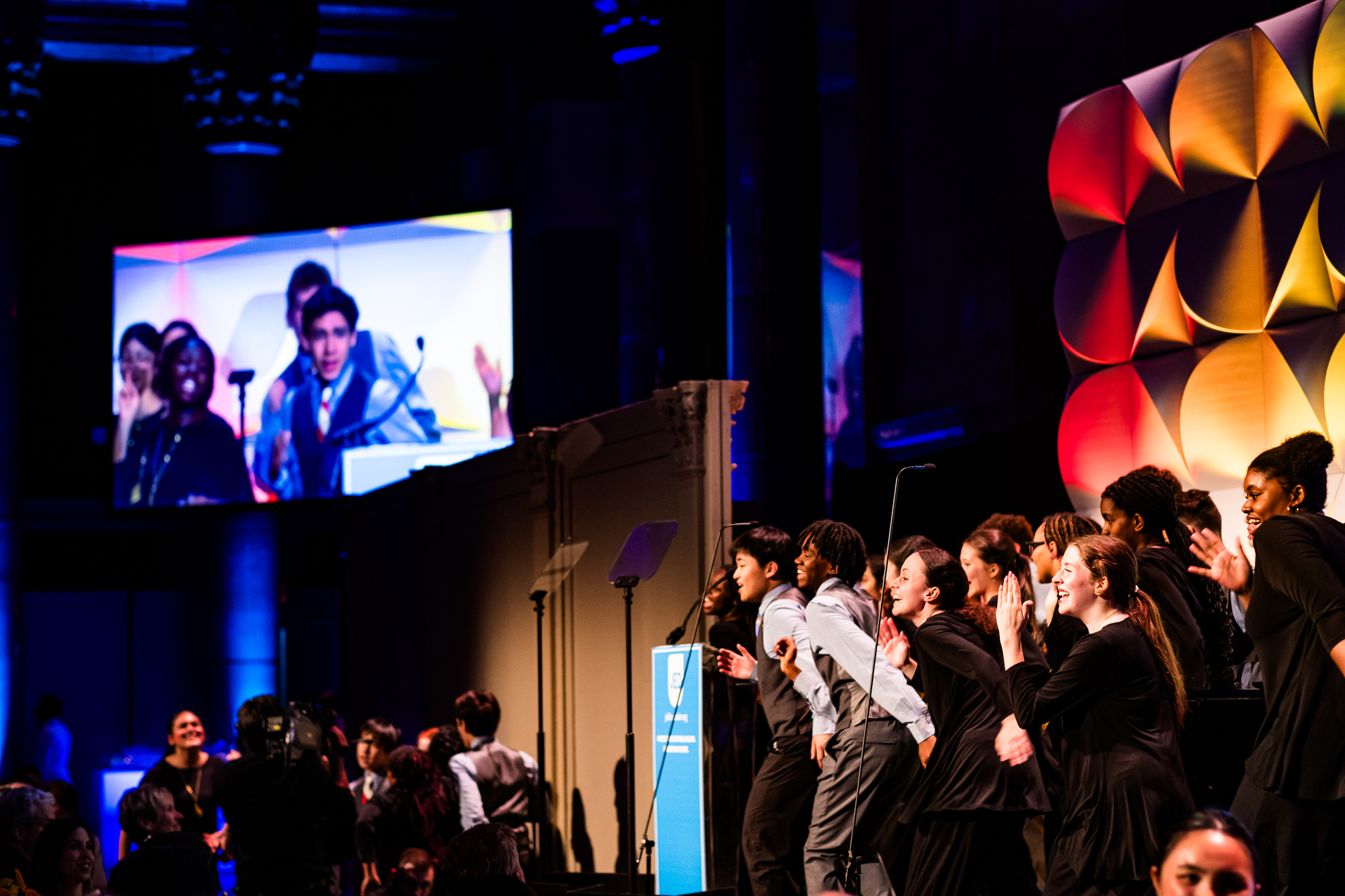
The Jed Foundation (JED) annual gala in New York City never fails to impress. The beautifully choreographed event at Cipriani’s in Lower Manhattan draws participants of all kinds, from celebrities and well-heeled patrons to behavioral health advocates and young people from across the country. But behind the production and couture is a non-profit start-up with a remarkable influence on the mental health and well-being of high school and college students — and one of the country’s most significant and little-known success stories.  

This year’s gala was particularly inspirational, breaking records in attendance and fundraising while featuring personalities such as TV anchor Savannah Sellers and New England Patriots owner Robert Kraft, who bestowed a lifetime achievement award on his friend and former college classmate, Phillip Satow. The gala honored the twenty-fifth year of the country’s leading non-profit dedicated to protecting emotional health and preventing suicide in young people, as well as the retirement of Satow, its co-founder, who has moved from Chairman of the Board of Directors to Chairman Emeritus and Board member. 

Phil and Donna Satow launched The Jed Foundation in 2000 in acknowledgement of the life and sudden death of their youngest child, Jed, who died by suicide two years earlier when he was a student at the University of Arizona. What the Satows chose to do with their unimaginable grief would change how colleges and universities view their role in protecting their students from tragedies such as Jed’s.

JED’s work in the past twenty-five years has not only provided an evidence-based model for suicide prevention, it has brought to the surface the important and sensitive truth that, for many, the college years are the most developmentally challenging of their lives. 

In accepting his award, Satow told the story of when, shortly after Jed’s death, the president of his son’s university asked him and his wife Donna the question that would lead to the launch of the Foundation. “What can I do to improve the safety of my 30,000 students?” Satow, who was already a highly successful pharmaceutical executive, responded in the best way he knew how: he and Donna devoted themselves to finding an answer to the question. 

Satow’s first “kitchen cabinet” was made up of medical professionals, suicide prevention experts, and business colleagues. After years of raising awareness and developing JED’s Comprehensive Approach to Mental Health Promotion and Suicide Prevention for Colleges and Universities, the organization began offering JED Campus. Launched in 2013, the program engages colleges and universities in collaborative work with a dedicated JED Campus Advisor over the course of four years. After conducting an initial needs assessment, the Campus Advisor draws on the data to create a strategic plan with actionable opportunities that span seven domains: develop life skills; promote social connectedness; identify students at risk; increase help-seeking behavior; provide mental health and substance misuse services; follow crisis-management procedures; and promote means safety. 

In April 2024, JED published an impact report detailing improvements to student mental health at schools that completed JED Campus titled A Decade of Improving College Mental Health Systems: JED Campus Impact Report. A decade of data (2013 to 2023) from JED Campus schools and the Healthy Minds Network survey were analyzed and found schools that completed JED Campus saw statistically significant improvements in student mental health at the end of the program. Students at participating institutions were 25% less likely to report a suicide attempt, 13% less likely to report suicide planning, and 10% less likely to report suicidal ideation. Students whose schools make more progress on their JED strategic plans are more likely to demonstrate improvement. 

JED Campus is now in over 450 colleges and universities in the United States, reaching 5.6 million students, with the core of its programming expanding into high schools and school districts throughout the country. In 2022, JED received a $15 million grant from Mackenzie Scott, which Satow hopes will triple the number of students it reaches over the next several years, someday reaching more than 50 percent of colleges and universities. JED has recently doubled its staff from 40 to 95 to cover its expanding programming, which includes webinars and trainings, original research and reports, consulting services, public awareness campaigns, youth mental health resources, and policy, advocacy, and government relations work on the local, state, and federal levels. 

Shortly after the gala, Satow spoke with LearningWell about these accomplishments, including living up to expectations, proving the organization’s impact, and finally being able to answer the University of Arizona president’s question. 

LearningWell: Did you believe back in 2000 that the Jed Foundation would grow to this size and scope?

Phillip Satow: In many ways, yes. This was a hope that I had after I lost my son, when I thought about how many other kids were in similar situations and how many other families would be affected by a loss like ours. And here was a college president, obviously a very bright man, and he had no constructive idea what to do. And it dawned on me that we could have an incredible impact if we could establish a safety net under thousands of kids across so many campuses.

Shortly after Jed died, I brought together a number of experts and posed the question that I was asked by Jed’s college president.  They responded by suggesting the applicability of a model, sourced from the U.S.  Air Force and published in The British Medical Journal, with outcome data that showed it actually reduced suicide. So we had a model with evidence, and when we first started, one of the things we thought about was how broad our approach should be. Should we think horizontally or vertically? Should we bring this information to one school at a time, or should we bring awareness to all campuses in the United States and let them know a prevention model like this could really work to reduce suicide on their campuses? We ended up going horizontal, and even though we were small, we wanted to make sure that as many college counseling centers we could get to would have this information. I really did have that dream.

It would be very hard for many presidents not to feel obligated to call on JED, because we know we can indeed make a difference on their campuses.

LW: For a non-profit, JED is very entrepreneurial. You started outside of higher education and now serve so many colleges and universities and high schools. Do you ever think about how what you built can be applied in other scenarios? 

PS: I do, often. The idea for the model was far-sighted in many ways. In boundaried communities, you have leadership in a position to say, “Here is our policy that I am asking you to follow.” If you look at suicide in general in the United States, so many occur in boundaried communities like prisons and large health care systems. I believe there is something to our model that allows it to be applied more broadly than in colleges or in other academic spaces. We now consult with corporations and other organizations like national fraternities and even professional sports organizations. 

LW: What were some of the big milestones for you in JED’s 25-year history?

PS: I think there were a few things that really changed our growth trajectory. The decision to put “boots on the ground” made a big difference. At first, we put our model out there, but it was up to the schools to implement it. Over time, we decided it was important to have people assigned to schools and committees formed that we could collaborate with. That became the JED Campus program. Another major milestone for us came about due to the pandemic, which of course made things difficult for us, as for everyone, but it did bring the JED message alive – that mental health was an important priority for schools. And the third area that really distinguishes us is our data collection effort. We have an extraordinary amount of data that we can continuously display as evidence of our impact. From the beginning, we were always looking to collect support data for our impact framework.  I think that’s what sets us apart.

LW: When did you feel as though you had an answer to the question Jed’s college president asked you? 

PS: We had a subjective feeling as we were rolling out the JED Campus program into hundreds of schools but in the last couple of years there’s been real evidence of this. The American Council on Education released a survey in 2021 that showed that over 70% of college presidents reported that student mental health was their number one priority. Our impact report really shows how the needle has moved. Students at JED schools were 25% less likely to report a suicide attempt. This is all real data that shows how much has changed since 2000. 

LW: What directions do you see JED going in now?

PS: There’s much more to do in the college space. I think that, with the data we have, it would be very hard for many presidents not to feel obligated to call on JED, because we know we can indeed make a difference on their campuses. There are also around over 20,000 high schools in the United States, and we have a lot of work to do there. We’ve just launched a partnership with AASA, The Superintendents Association,  with the goal to help many K-12 school districts implement a comprehensive approach to mental health and suicide prevention

I think we will end up expanding significantly, but at the same time, we don’t want our success to hamper us. I know from my business career that if you take on too much, you may not do anything very well. And when we’re talking about kids’ lives, you’ve got to do everything superbly. So, I think the real challenge will be how we successfully assure high quality control in all those thousands of high schools and colleges. I don’t think anyone wants to see JED, as we continue to expand, be an organization of hundreds of employees.  We’ll need to use the latest technology in every way possible in order to provide excellent support in each school we serve.

LW: What do you think has been the secret to JED’ success?PS: First of all, it’s the people, starting with John MacPhee, our CEO for 12 years. Also our medical and clinical personnel, and of course, our excellent development department. We have also used leverage very well to scale our work – our partnership with AASA, The Superintendents Association, is an example. We are not just doing this one-school-at-a-time, and that has really benefited us. And the last thing would be our focus on outcomes data. Most organizations in the mental health field don’t have the data to prove that what they’re doing works. I think the fact that I came from the pharmaceutical industry (as did John) was helpful in that regard. We know that, in the health care world,you can’t promote anything that doesn’t have data to support it. I think that’s been a highly important concept that has been transferred to our work at the Jed Foundation. 

Posted in Q&A

Building Support for Student Parents

One out of every five college students is a parent. As with most students, student parents are balancing many and often competing demands on their time, including classes, studying, and work. Unlike their peers without kids, student parents also have to manage the complex scheduling puzzle of childcare responsibilities on top of everything else they handle each day.   

Parenting students are trying to succeed, while receiving limited support from higher education and financial aid systems that were not designed with them in mind. It is long past time for policymakers to recognize the need for targeted support to help this group flourish. Decision makers must pay more attention to parenting students with inclusive and specialized efforts. It will take better data collection, holistic wraparound services, and building trust through consistent action over time. 

This is especially important as colleges face enrollment challenges created by changing demographics. By supporting parenting students, and adopting student-centered policies, colleges and universities can become environments where student parents feel welcomed and supported to succeed—a win for student parents and for colleges trying to alleviate the enrollment crunch. 

Supporting parenting students is more than just a matter of fairness. It is also an issue of economic development and mobility. After all, when we ensure student parents succeed, we ensure their families succeed. As policy leaders are considering supports to retain historically undersupported students, student parents should be at the top of the list. Juggling the responsibilities of parenthood and being a college student is hard enough, the way in which our systems and policies are structured shouldn’t make it even harder.

Several states, including Texas, California, Illinois, and Oregon, recognized the need and enacted legislation to support parenting students in higher education. These state-level policies aim to dismantle barriers by mandating data collection, support services and accommodations on college campuses. And, while progress has been made, more needs to be done in acknowledging and addressing the unique challenges faced by parenting students.

Why support parenting students?

The landscape of higher education is rapidly evolving, and institutions must adapt to the needs of the increasingly diverse student body encapsulated by the incredibly diverse student parent population. Student parents are more likely than non-parent students to be people of color, women, and veterans, all groups that are entering higher education at increasing rates but often face barriers to success.

Research from the Institute for Women’s Policy Research and Ascend at the Aspen Institute shows that parenting students face significant challenges in completing college compared to their peers without children. Only 37 percent of parenting students graduate with a certificate or degree within six years of enrollment, in contrast to nearly 60 percent of students without children. 

Parenting students encounter obstacles related to childcare, basic needs insecurity, time constraints, financial insecurity, and mental health, which can disrupt their path from enrollment to graduation day. We know that one of the fastest paths to economic security for a family is for a parent to gain a degree or other credential. Given these statistics, supporting student parents is not just the right thing to do—it also makes economic sense by creating opportunities to increase household incomes, reducing reliance on public benefit programs and ensuring a well-educated workforce to help drive economic growth and development. 

Supporting parenting students is good for colleges and states

Targeted support for parenting students can also help states meet their postsecondary  attainment goals. States need to increase the proportion of individuals with postsecondary credentials, such as degrees or certificates to help provide the skilled workforce that drives economic growth. State and federal governments should invest in students because that investment confers important community and societal benefits as well as individual benefits.

Without addressing the barriers faced by parenting students, states risk leaving behind a substantial portion of their population and falling short of their attainment targets. By creating a more inclusive and supportive environment, colleges and universities can attract and retain a diverse pool of students, thereby mitigating persistence barriers.

Mitigating persistence barriers for parenting students starts with better data collection at the state and federal levels. Evidence suggests that targeted support can enhance the success rates of parenting students. However, the lack of comprehensive data on this group creates a significant gap in colleges’ ability to address their needs effectively. The absence of data is a missed opportunity for the federal government, states, and institutions to improve student outcomes and underscores the need for greater attention to the unique challenges faced by students with children.

Parenting students encounter obstacles related to childcare, basic needs insecurity, time constraints, financial insecurity, and mental health, which can disrupt their path from enrollment to graduation day.

Targeted support needs for parenting students are equally important for mitigating persistence barriers. In our work at Generation Hope, we have seen targeted and direct services and supports make a massive difference in the success of students. This is why federal policymakers should integrate wraparound support services, such as counseling, mentoring, and access to resources like housing assistance and healthcare, to address the holistic needs of parenting students to help them increase degree attainment. 

Moreover, recognizing parenting students’ diverse backgrounds and experiences is crucial in designing effective support programs. Federal and state policy leaders should employ culturally responsive and trauma-informed approaches that consider the unique needs and challenges faced by parenting students, creating inclusive and supportive learning environments where all individuals feel valued and empowered to succeed.

If policy leaders and influencers do more to provide support for groups with the most complex needs, they can also make life easier for all students who face similar challenges like managing conflicting work and school schedules and struggling to provide for their basic needs. When we smooth the path to college completion for student parents, we make it just a little bit easier for other historically under-supported populations to get from enrollment to graduation day.

Brittani Williams, Director of Policy, Advocacy and Research at Generation Hope.

Generation Hope engages education and policy partners to drive systemic change and provides direct support to teen parents in college as well as their children through holistic, two-generation programming.

Edward Conroy, Senior Policy Advisor, New America Higher Education Policy Program. 

New America’s Higher Education team focuses on creating a higher education system that is accessible, affordable, equitable, and accountable for helping students lead fulfilling and economically secure lives. New America’s Student Parent Initiative conducts research, policy analysis, and advocacy work in the student parent space.

A Joyful Enterprise

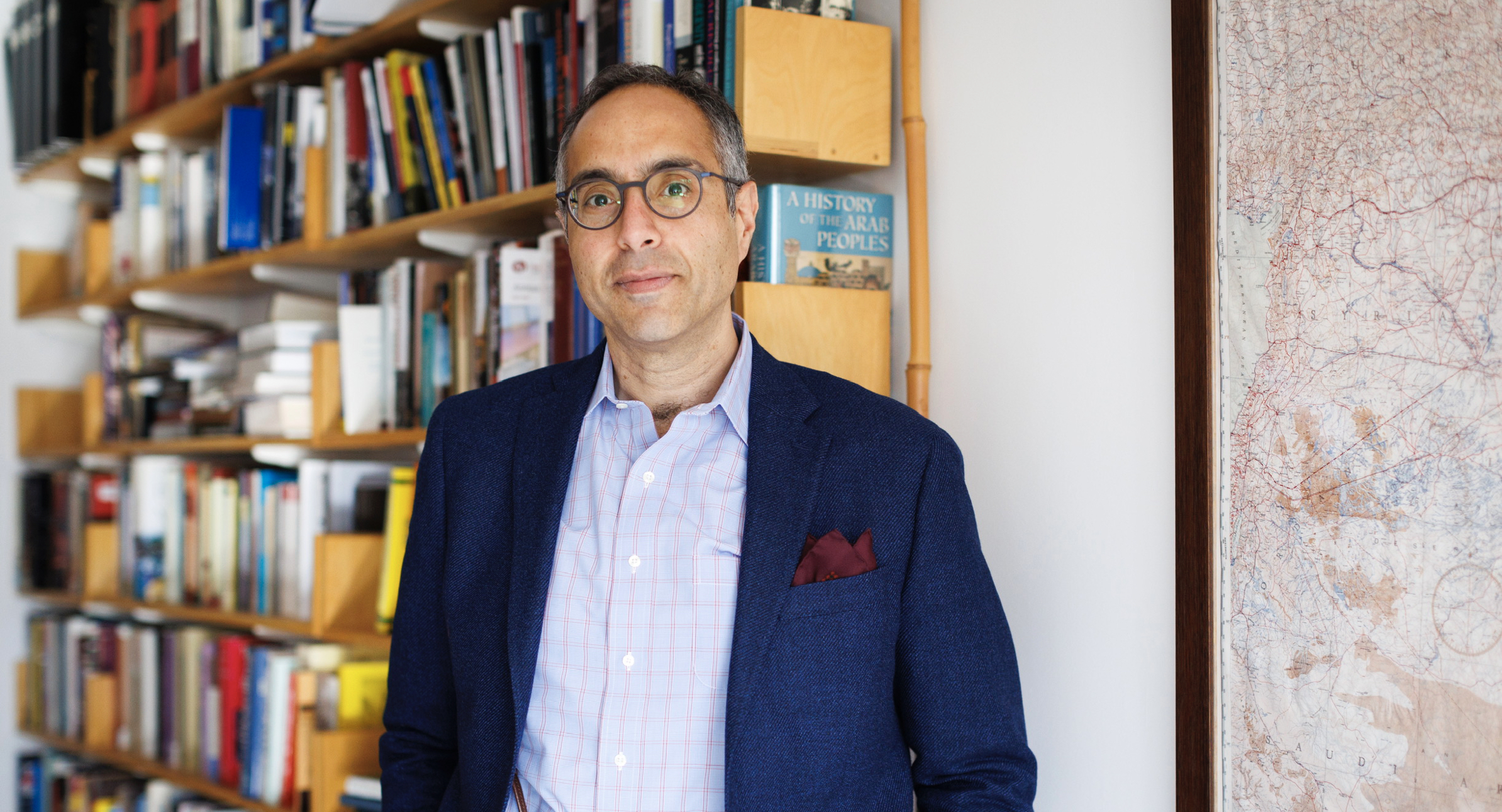
Professor Tarek Masoud found his work the object of dissent across the political aisle earlier this year when he organized a Middle East Dialogues series featuring voices on both sides of the Israel-Palestine debate. In six one-on-one conversations, Masoud, the Director of the Middle East Initiative at the Harvard Kennedy School, invited figures with opposing but similarly divisive politics to explain and defend their stances. 

None of Masoud’s guests may be strangers to controversy, and neither is he. Reproving posts and concerned colleagues didn’t dissuade Masoud, whose choice to examine unpopular opinions on stage mirrors his teaching philosophy in the classroom. His experience leading students in intense, often tense debate and his belief they appreciate it nonetheless led him to write an op-ed in the Wall Street Journal titled “Students Aren’t the Obstacle to Open Debate at Harvard.” He goes on: “It is us: faculty and administrators who are too afraid—of random people on social media, hard-core activists, irritable alumni, assorted ‘friends’ of Harvard—to allow a culture of open debate and dialogue to flourish.”

So how does the expert on democracy and governance in the Middle East approach concerns about student safety and belonging in the classroom, while encouraging pupils to confront topics and opinions they disapprove, even despise? Unease about pervasive mental health challenges on college campuses has fed debate over whether exposing students to objectionable content facilitates wellbeing by cultivating resilience, or puts them in harm’s way by leaving them feeling unsupported and disrespected. With LearningWell, Masoud discusses challenging students through argument, empowering them the same way, and his overriding conviction that learning, in all its discomfort, poses “some of the most joyful activities in the human experience.”

On LinkedIn, you posted about how the classroom should feel more like the gym than like home — that universities should be encouraging student discomfort, as opposed to a commonly talked about value, which is belonging. Can school be a gym where you also belong? 

I think school can absolutely be a gym where you belong. It can be a place of very rigorous inquiry that you nonetheless feel a very deep attachment to and feel deeply connected to. But the connection of the student to the community should be based on the right foundation. It should be based on the fact that we are here as a community of learners and teachers, who are engaged in this very difficult but very fruitful task of expanding the limits of human knowledge, testing what it is we think we know against what it is that others think they know. I want people to belong to Harvard. I want people to feel that they are home at Harvard, but not because we’re part of something called “Club Harvard,” not just because we’re the random people who happen to get lucky to be chosen by admissions officers, but because we are people who have this very deep commitment to this very important value of dedicating all of our energies to the task of open and honest inquiry.

In your own classroom, are there ways you try to foster both of those things, discomfort and belonging, with student mental health in mind? 

I think I have a high degree of confidence in my students. And I think student mental health is extremely important. And we as instructors obviously need to be very careful that what we’re doing is strengthening our students and not weakening them. I’m constantly thinking and rethinking about how I’m teaching to make sure that I’m not putting students in situations where their mental health is at risk. I strive not to put things in the conversation that are gratuitous and that aren’t going to serve any educational purpose except to shock and cause people to feel uncomfortable in ways that don’t advance the learning mission. So for me, the kind of uncomfortable position I might put my students in would be to read somebody whose views they don’t agree with. 

I teach in graduate school, which is also a little bit different. The teaching environment I’m in is one where sometimes I wish my students would think about my mental health because I will get very vigorous and rigorous pushback. I might say something that I think is completely anodyne, and some student will, in a very sharp way, show me all of the ways in which it reflects some less than noble aspect of my positionality. But in all of these places, we need to remind everybody that this is an institution of learning. And if I, Harvard, am prioritizing your comfort and I am making it possible for you to avoid discomfort and not strengthening you so that you can face discomfort and defeat it, then I’m not doing my job for you. You’re paying me an inordinate amount of money, and my job is to make sure that you come out of this place much stronger and much smarter. And I guess what I’m saying is there’s no way of avoiding, then, the discomfort. And what I think the institution needs to do is really help our students learn to manage discomfort, to transcend discomfort, and even to seek it out in the rest of their lives because they know that’s how they get stronger.

You touched on this in terms of graduate school versus undergraduate, but do you think that this approach would be effective, or come with different risks, at a school that isn’t Harvard and struggles more with things like retention and completion? 

First of all, in any institution, we as faculty need to be in touch with our students as persons and not just as disembodied brains into which we’re pouring information and with which we are having arguments. We always have to be attuned to our students as persons. And I probably have, in many cases I know I have, over the course of my career gone too far and had students say, “I felt that you were pushing too hard on me or not respecting me as a person.” So we should never allow the situation to get to that point. I would be distressed if somebody interpreted my call to center learning and debate and argumentation as somehow being a call to ignore the fact that we’re teaching human beings, and human beings have emotional reactions to things. 

The point is I want our students to come away with a feeling that they have a great deal of power. And there are arguments out there that they might deem to be harmful, that have caused them to conclude that they don’t have a lot of respect for the holders of those arguments. But you have a lot of power and a lot of strength to confront those arguments. And so I just want our students to develop a powerful sense of their own efficacy that is born fundamentally from the fact that these are super highflying and bright people.

And in terms of empowering students intellectually and otherwise, is that coming back to the idea that instead of being something that turns people away, this kind of debate could actually boost people’s interest in their own education?

So that’s the theory. I’ll also just tell you some empirics. A few years ago, I had some undergraduates take my class and ask to meet me. And I was fairly certain that what I was going to be told was that there was a feeling of a lack of safety in my classroom because I really do try to engage in rigorous argument and get people to argue with each other. And these students never agreed with anything I said. So I met with them. “So how are you finding the class?” And the ringleader said, “Oh, this is our favorite class. You are the only professor we’ve had at Harvard who is not afraid of us.” And I said, “Well, actually, I’m quite afraid of you. I just am not very smart, and I have low impulse control.” 

“I want our students to come away with a feeling that they have a great deal of power.”

I really do feel that our students want to be treated as adults and that means disagreeing with them sometimes. I really do have that belief, as long as they understand that the professor’s goal—this is very important— as long as they understand the professor’s goal is not to preach some gospel, rather to teach them and to make them stronger. So I think one thing students definitely get out of my classes is they’re like, “Tarek Massoud is not trying to convince me of anything. He is not trying to convince me of what he thinks.” In fact, I would be horrified if my students came out of my class as little copies of Tarek Masoud, spouting Tarek Masoud-isms. What the students, I think, come away from my class believing, and I do say this always, is that “What Tarek wants me to do is really know why I think what I think and to be able to defend my position.” And so I’m trying to make you the best version of yourself. I’m not trying to make you a version of me. And it doesn’t come out of any kind of strategy. None of this is terribly theorized in advance. It’s just kind of who I am. It’s why I got into academia. I got into academia in part because I’m not sure of what I know, in part because I love to argue, in part because everything I’ve ever learned, I learned by first arguing with it. 

Your comment about students enjoying this kind of debate more than people might expect reminds me of the article that you wrote for The Wall Street Journal. In that article, you place the responsibility more on faculty and administration, rather than students, for not cultivating these debates. I wonder, for other faculty who are interested but maybe hesitant, do you have advice for how they can establish these kinds of dialogues in their classrooms?

Look, I think it’s not easy. And I would certainly not say that every faculty member needs to do that. But my view is that those of us who do want to foster this space for open debate and inquiry should not find the administration of the university to be an obstacle to that. What I don’t want the administration of the university to do is tell us to do anything. I would not like the email from the administration of the university that says, “You must now foster debate on this.” I think we’re a heterodox enough institution that there are those of us who want to do that. And there are others who would prefer to have more comity in their classrooms in order to maximize the possibility that people learn. We teach different classes, different things, et cetera. So my plea is really for administrators to help those of us who want to expand the space for debate and discourse on campus, but not to say that everybody needs to be like me. I think that would not be a recipe for a healthy institution.

“I’m trying to make you the best version of yourself. I’m not trying to make you a version of me.”

And for faculty who are interested in leaning more into this kind of debate or dialogue, you mentioned taking a personal approach to it. What do you mean by that? 

I think, again, about the things that I mentioned earlier, number one being you can’t just foster this culture of debate without being attentive to your students as persons. And so you have to have that front of mind. The other point I would make is that one must also have a sense of humor. And I do think that one of the ways in which I am lucky is that I don’t take myself too seriously. Somebody wrote about me that I had a Midwestern sense of humor. It’s actually an Egyptian sense of humor. And I do think that helps, as well, because it reminds students that we are actually engaged in a very joyful enterprise. And we are among — “we” being people attached to universities, not just people attached to Harvard University — we are some of the most fortunate people in the world, engaged in what should be some of the most joyful activities in the human experience. And just reminding ourselves of that, from time to time, with smiles on our faces, with periodic reflections on how lucky we are to be in communion with each other, I think, is also helpful. 

Have you also encountered students who don’t like this culture of dialogue or have negative feedback about it? How do you help them through that discomfort?

Without question. Typically, it will express itself in the following way, this discomfort with dialogue. It will express itself with students being aggrieved that I platformed a certain position that they believe is unworthy of being even discussed at Harvard. It comes from actually quite a noble place that our students have very deep commitments to conceptions of what is just and what is right. And it grieves them when they see a professor who’s a figure that they should respect at a place like Harvard, no less, who is platforming these views or who is making people read these views that they believe should be consigned to the ash heap of history. 

And what I try to convince my students of is that I’m not platforming the views so much as I’m platforming them. I’m trying to give the student the opportunity to develop the most powerful arsenal against these arguments that they find to be unworthy. I’m starting from the premise that I believe you, the student, have valid reasons for thinking that this is unworthy. I want you to bring them to my class because there are other people, by the way, who don’t know, and you may convince them. Or, in the process of trying to convince them, you may detect where there are some gaps in your knowledge or argumentation. You either fill them, or you’ll change your mind. There isn’t a way in which this is bad for us, if our goal is to expand our knowledge, to become smarter, to know why it is we hold certain views.

What do you think about the perception that so-called “Wokeism” has radicalized this generation of students more than those before it?

I really don’t like the term “Wokeism” because it doesn’t take seriously the constellation of very deeply held values that I think animate a lot of our students and indeed our colleagues. And I think these values have been quite a constant presence throughout the academy. I saw a whole front page of The Crimson from the 1960s, and it literally could have been written today. I mean, did they use the term “structural racism”? I don’t think so. But they talked about the phenomenon, and the students were very angry and wanted the curriculum to be revised in ways that our students today say. So I don’t feel that this is a new phenomenon that has emerged out of the inundation of the students with a particular set of newfangled ideas. These are very deeply held ideas that emerge from, frankly, a kind of liberal belief in the primacy and value of humans and individuals. And I think it’s part of what makes students such a joy to interact with because they’re motivated by these ideas that are quite valorous. 

What has changed, probably, is there is more of a sense of the university and the classroom as a place for the playing out of public conflict and the classroom as a kind of public space in which people are taking stances and positions that will be or are public, as opposed to part of a private learning experience. Part of it is the move in our culture where everybody thinks of themselves now as a brand, as a social media presence, as an influencer. And so consequently, if all of this is happening in public, it’s much harder to change my view. I have always argued, “Look, the very best technology for increasing the quality of our pedagogy is not using clickers in the classroom or some newfangled program that tracks students doing this or that. It’s having a small class size.” And that is the original safe space. Because a small class size is where we can first develop the relationships to each other as persons that make it possible for people to venture with difficult and maybe even sometimes heterodox arguments. And it’s also small enough that the feeling of embarrassment and the imperative of winning and defeating one’s opponents is minimized.

Posted in Q&A

“Be Prepared to Be Lucky”

As graduates consider the next chapter of their lives, a new book provides inspiration and guidance through the unfolding story of a career well spent. Paul Grogan was a student at Williams College when the anti-Vietnam and civil rights movements set the pathway for his life and career. “What, if anything, can I do about this?” said his younger self. Mentors, who saw something in him he couldn’t see, encouraged him to become a “change agent.” It was a term that was unfamiliar to him at the time but one he would live to embody in his fifty years in public service. 

In “Be Prepared to be Lucky,” Grogan imparts lessons about leadership, mentorship, and agency as relevant today as they were when he and his co-author Kathryn Merchant were both young graduates working to make a difference in the world. Among his many roles, Grogan has been a political staffer, a CEO of a national nonprofit, and a giant in philanthropy. His career is capped by his presidency of the Boston Foundation, one of the nation’s oldest and, arguably, most successful community foundations, providing a unique combination of policy and philanthropy that has shaped what Boston is today. 

Readers follow along as Grogan tells the story of his ambitious career: a combination of opportunity, intentionality, and grit. From navigating the emotional politics of the desegregation of the Boston public schools; to building public/private partnerships to save American cities in the 1970’s and 80’s; to helping heal the town/gown tensions between Harvard and Boston, Grogan provides powerful examples of how to make a positive impact on your community, and in turn, how to live a meaningful, fulfilling life. 

MM: Paul, you’ve spent your whole career devoted to public and community service and this book has so many lessons about that from your decades of experience. But let’s start by talking about the young Paul. You went to high school in a very small town, Clinton, New York, and then went off to Williams College. How did your college experience influence your career choices? 

PG: My father was a lifelong educator — a public school teacher and administrator throughout his career — so I had a lifelong interest in education and education policy. And then two giant phenomena, the Vietnam war and the civil rights movement, brought me to that path of service. Growing up in a very small town with zero diversity, I was not anywhere close to these issues except through the nightly newscast. It was a religion in our family to sit down and watch at least one of the national newscasts, and I continued that habit throughout college. Obviously, the news was just devastating for much of that period. It led me to ask,  “What, if anything, can I do about this?”

A pivotal conversation I had was with an uncle of mine who was a dear counselor throughout my early adult life. He said to me in one of our long talks, “It really sounds to me like you ought to think about being a change agent.” I had never heard that term, but we talked about it, and I came to understand what it meant. It was not just reading the newspapers as a knowledgeable person or voting as an involved citizen. I wanted to do more than that. And I was excited about that prospect.

MM: What experiences in college helped you develop that part of yourself?

PG: We had a number of quite powerful faculty student committees at Williams in those days, and I ran for office and was elected chairman of one of them. We took a proposal to one of our meetings with the faculty as a whole to stop grading creative writing courses as a limited experiment. But Williams is a conservative place, and this was quite a debate which ultimately occurred in front of the entire faculty of the college. It took place in a hall, one of these double decker halls with a balcony going all the way around. Some of the faculty were down on the floor and many of them were up above me, and I had not said anything in the discussion, which was not going terribly well. Finally, the chairman of the committee, a psychology professor, leaned over and whispered, “If you don’t speak, this is going down.” So I gave a speech. It went extraordinarily well, and the faculty went from a unanimous no vote to a unanimous yes on the proposal. I think it was one of my first brushes with public speaking that mattered and seeing that we came back with something and won the day, that was a tremendous experience for me. 

MM: Were there other people – like your uncle – who believed in you back then? 

PG: Yes, and it was so important, particularly in college where, if you’re intimidated by the whole experience, not sure of yourself, you wonder how you’re going to do and you think you’re probably not going to do very well. Certainly, that was confirmed by the grades I got my freshman year: horrendous. But in fact, you almost always know more than you think you do, and other people see things in you that you may not see in yourself. In this case, there were two history professors who took an interest in me — I couldn’t have told you why, but they did. And they became my mentors through the rest of college and early in my career. I gained a new level of confidence as a result. They pushed me to do an honors thesis, which I had not thought of before, which became my first book, and it just put me on a higher, more ambitious path.

MM: Kathy, what’s your take on that?

KM: I just want to add that things can be very different depending on where you go to school. I went to a very large public university – there are 40,000 people who go to Indiana University in Bloomington — and finding a mentor is like hunting for a drop of water in a rainstorm. I think the point of encouragement here is also: Don’t wait for a mentor to find you – go looking for one. 

MM: Why did you choose the title Be Prepared to be Lucky

PG: “Be prepared to be lucky” is an adaptation of my favorite quote that originated in 1949 with E.B. White, the famed essayist and poet. He was talking to a young man who was about to go to New York City to make his fortune. White said to him, “No one should come to New York to live unless he is willing to be lucky.” And the first time I heard that, which I think was in college, it just stunned me as a unique insight into how the world really works. It wasn’t just good luck, it wasn’t bad luck. It was an acknowledgement of a complex process, which is not controllable, but which can be harvested in a certain way. And so we adopted that and we tried to apply it. Certainly, if I look at my career, I can see time after time where being alert, being watchful for opportunities, led to great things, not every time, but often enough to really justify that kind of state of mind. 

“You almost always know more than you think you do, and other people see things in you that you may not see in yourself.”

MM: If I’m understanding the interpretation, it’s a combination of luck, fate, and being open to opportunities that may come your way. And it’s about agency too, correct?  

KM: The agency part is really important. When Paul and I were both still very young in our careers, we were often given responsibilities that were way beyond what we were probably qualified to do. As we say in the book, “always say yes, even when you want to say no, and then you’ll open up opportunities for yourself.” 

PG: I call it “the virtue of hanging around.”

MM: There’s a lot that you thread through the story of your career: working for two city mayors, running the Local Initiatives Support Corporation (LISC), resolving town/gown issues between Harvard and Boston, and then transforming the Boston Foundation – you mention the importance of ambition, leadership, and courage. What are some other big lessons from all these experiences? 

PG: I think just about everything you’re asking about has to do with how ambitious you want to be in the world. Certainly, the social and community service world is full of wonderful organizations doing great work. Much of that work though, is confined to a small space because those institutions lack the resources to take their idea to scale. The people I attracted to work with me, we wanted real impact at scale. We didn’t just want to feel good about having helped some people. We wanted to look at some of these institutions that were greatly important in the lives of people and say, how could this be different? How could we be doing much more than we are currently doing?

MM: I love that point. As a message to young people, focusing on impact is different than just developing your purpose or working on something you care about – it is actually working towards outcomes. You seemed to reach a lot of outcomes through partnerships. Can you give some examples?

PG: One example is when I got into the housing field. When you looked at the landscape, you had federal housing programs, state housing programs, and local housing programs, and they were not coordinated in any way or were directed at a particular narrow goal. Everybody had their own idea about it. But we managed to put together a new partnership, which became a permanent institution called the Boston Housing Partnership and had as its aim fostering collective and cross-sector efforts to improve the housing situation. Then to execute, you have to figure out how to get everybody credited for their support and participation. Particularly in the public sector realm with elected officials, they need to get credit for doing good things. And that’s where the non-politicians have to be attentive to their political partners, not by being political or partisan, but by understanding that politicians are dealing with a different kind of accountability than regular citizens. And there has to be a sophistication about making it rewarding and accountable for elected officials.

Many of the politicians that we were dealing with around the country had a zero sum mentality. They assumed that if a “such and such” nonprofit was getting their name in the paper in a positive way, then that would take away from the opportunity for the elected official to get recognized. What we were able to demonstrate after a period of time was that these partnerships were a way to add value that wasn’t there before. So you didn’t have to take something away from somebody in order to get their cooperation. 

MM: Speaking of partnerships and politics, tell us more about your experience at Harvard.

PG: Sure. Well, as we all know, Harvard is sort of the college and university capital of the United States, the pinnacle of higher education. But the whole Boston area or indeed New England is populated with just an enormous number of institutions of higher education. So it’s a big issue for the future of Boston and for the region. And despite the importance of those institutions and the need to make sure that they are going to be healthy going forward, the relationships that should have developed between the colleges and universities and cities and state government, and the corporate sector for that matter, really hadn’t developed before the turn of the last century. They were out of sync with the reality of it or they didn’t acknowledge how important these relationships were. So relationships that should have existed — strong, cooperative, knowledgeable relationships between government and higher ed, for instance — were just truncated in some way until there were problems.

One set of problems, but not the only one, is the whole question of land and value. Because when institutions of higher education get land, it comes off the tax rolls and gets used primarily for the higher ed community. So that’s where there is the kind of thinking that if this land is going to go to the universities, it’s going to be taken away from the community. And, particularly in the low-and moderate-income neighborhoods, there was a real fear that people were going to be forced out of their homes by the rising value of the real estate. So there was one particular transaction where the university was trying to acquire a very large plot of land in Allston, which is a neighborhood of Boston, to create a major new science and technology district. 

This was hung up for years because the city was refusing to approve the sale of this land, which was held by a railroad company. And it was just stuck as the years went by and the university didn’t seem to have the wherewithal to do anything about it, which you’d think is so odd. These institutions are so big and powerful. But in Harvard’s case, they really hadn’t made any real effort to understand the local political scene in order to engage people who might help them. But that finally did happen. A couple of very active Harvard trustees went to the president of Harvard and said, we have got to have a capacity developed here at the university to relate to the mayor (then Thomas Menino), to relate to folks who are going to be important to this process. Knowing I had a long-standing relationship with the mayor, Harvard asked me to help with this and I built a department focused entirely on external issues like this. After that, the meetings just went to a different level of seriousness and purpose, and with relative ease, we secured the approval. 

MM: Here’s a question from the last chapter of the book. Why would you encourage students to go into either public service or community work, besides just it being a good thing to do? 

PG: Well, again, I come back to this word impact and a sense of what you want your life to be about. Are you going to be a change agent? To be willing to dwell on those questions with trusted friends, advisors, and family members is a very important thing to do if you have friends and family who are willing to do that. So I think that’s a big piece of it in terms of why do it, it really has to do with what you want your life to be about. Senator John McCain was very fond of saying “believe in something larger than yourself.”

I think this is really fundamental. I’ve met too many people throughout my life who have been very successful in conventional terms but have just a sad feeling that they haven’t done anything that’s really helped anybody else or been an effort to lift someone else up. It is a uniquely satisfying thing to do and it makes society healthier at the same time. So I think it does come down to that kind of existential construct you decide to devote your finite resources to.

KM: An important point to add to that is that working in public service doesn’t have to be forever. If you have other things that you want to do, the skillset that you acquire working in those sectors are increasingly attractive to the corporate world. The opportunity to make partnerships and the fungibility of being able to move from one sector to another throughout a career is very valuable. 

MM: My last question is related to the fact that a lot of the impact that you have made in your career was largely based on listening to the other side. That appears to be a very big problem right now. Is there any advice that either of you would give to the graduates of today on that? 

PG: I think everybody should move to Massachusetts. That’s the fastest way to reduce polarization.

MM: Well, Massachusetts does have an out-migration problem, so that would be good.

PG: I’m only half kidding. We have a huge stake in the immigration outcome. It’s not something that would just be nice, it’s something that is absolutely essential. If we don’t do a better job of attracting young people and convincing people not to leave the state, things are going to be very dire in Massachusetts. And one of the positive things about Massachusetts bears directly on the ability to do the kind of partnerships that we’ve been discussing — the lack of polarization. There are conflicts, but they don’t involve the bitter, divisive, and hateful politics that we see in city, county, and state after state. Our elected officials of whatever party seem to find a way to work together, although they too need to be more ambitious than we’re being. But it is a fundamentally different environment. 

KM: Call me a Pollyanna, but I think that what we’re experiencing right now, this too shall pass. We’re now old enough that we’ve seen cycles and waves of this over time where there’s divisiveness and an inability to listen and act together, and then that calms down and we can get more things done. So I really don’t know how to stop what’s going on right now. It’s alarming. Very scary. It seems worse than it’s ever been, but every moment that’s been like this seems worse than it’s ever been. I am going to borrow Paul’s phrase, we need to practice defiant optimism.

Posted in Q&A

Adopting Education For Life as a Guiding Principle for Health Professional Education

The COVID-19 pandemic catalyzed seismic transformation in education, particularly for Health Professional Education (HPE). Following a decade of imaginative innovations, the pandemic disrupted education systems everywhere, accelerated adoption of online technologies, forced major institutional rearrangements to accommodate hybrid instructional models, and laid bare pre-existing inequalities in access to educational resources within and among countries.

In the report “Challenges and Opportunities for Health Professional Education in the Post-Pandemic Era”, recently published by The Lancet, my co-authors and I evaluated how transformative developments have emerged, including in competency-based education, interprofessional education, and especially the large-scale application of information technology to education.

By tracking institutional and instructional reforms, we pose two crucial questions: What has happened to Health Professional Education over the past decade, and how has the Covid-19 pandemic altered the education process?

While the pandemic did not initiate such transformations, it greatly accelerated them, and they are likely to have a long-term impact on HPE. These educational developments converge with broader societal shifts exposed and fostered by the pandemic. 

The challenge is not merely to adapt to a new normal, but to proactively build a better normal. The first step in this endeavor is to develop novel ways of conceptualizing the models that could shape Health Professionals Education in the post-pandemic era.

Two main forces are driving this transformation. First, advances in educational technologies rooted in cognitive sciences are revolutionizing how we teach and learn. Second, the rapid evolution of health systems, marked by technological and organizational complexities, demands a more dynamic approach to education. The traditional notion of completing education before entering the workforce is no longer viable, as new jobs emerge and existing ones evolve faster than educational programs can keep pace.

This means that initial instruction is not sufficient to assure successful performance, either in terms of professional proficiency or of personal well-being. At the same time, new educational technologies make it possible to extend competency development beyond the traditional confines of formal full-time instruction, thus blurring the borders between the previously separate life stages of learning and work. 

Taken together, the two drivers of change demand a strategic shift in higher education towards a model that could be called Education for Life, with profound implications for both instructional and institutional design.

Based on our assessment, we offer three core recommendations, the first of which highlights the importance of adopting Education for Life as a guiding principle for health professional education. The concept of Education for Life encompasses three dimensions—learning throughout life, learning to promote and restore healthy lives, and learning to live one’s own life.

The challenge is not merely to adapt to a new normal, but to proactively build a better normal.

Learning throughout life refers to education that lasts a person’s entire lifetime, rather than merely during a defined period. Traditional educational models divide the life course into separate stages for learning, work, and retirement. Closed educational systems that front-load the content and cost of education before learners enter the labor market should be complemented and eventually superseded by open systems designed to meet the evolving needs for new competencies along the entire career trajectories of health professionals.

Learning to promote and restore healthy lives is at the heart of the substantive content of HPE, which centers on developing the competencies to preserve and improve the lives and well-being of individuals, families, and communities. In other words, this is education to help the lives of others through the technical expertise and service ethic of health professionals.

The final dimension, learning to live one’s own life, highlights that part of the educational experience should enable learners to preserve their sense of purpose and mental well-being. This involves learning to balance work life and family life. It also means learning to cope with stress and adversity. Preventing burnout, however, is not only a matter of developing these individual capabilities but also of learning how to transform the organization of work in ways that promote the well-being of all team members, while promoting equity among the different categories of the health workforce.  In the face of increasing workloads, adequate staffing is essential for freeing up time to manage the stress and pressures that compromise wellbeing. 

If institutions providing HPE are to effectively implement the three dimensions of Education for Life, they must face the challenges and leverage the opportunities presented by technological innovations and health system disruptions, which were already present before the pandemic but have since become even more crucial drivers of change.

Health Professional Education will continue to be challenged to respond to societal concerns over health equity and to strengthen a new professionalism that incorporates concern for the individual and the community. Meeting these challenges while nurturing the core values of the healing professions should remain a vital goal for health educators.

Julio Frenk is a global public health expert and president of the University of Miami.

Reading Between the Lines

The average age of a college president today is sixty. That makes them too young to have participated in the major social movements of the 1960s and not too old to be keenly aware of the emotional and mental health problems reported by young people today. These leaders are now navigating the minefield of issues laid bare by student protests over the war in Gaza, including the internal and external political pressures that have pushed them into defensive positions. As they contend with conflict in the most public of ways, they should make a connection amid the chaos to something most have long advocated for: the wellbeing and personal development of their students as they stand in solidarity around an issue for which they care deeply.  

Every protest movement has a wide range of viewpoints, and this does not excuse any of the bad actors or extreme views on any side of this issue. But for someone who has reported on college student mental health and wellbeing throughout the “college mental health crisis,” I cannot help but link the most active campus protests we’ve seen in years with some of the elements of emotional wellbeing we hope our young people will experience – agency, empathy, belonging and sense of purpose. The absence of these elements has created the loneliness and isolation that Surgeon General Vivek Murthy included in his young adult mental health advisory of 2021 and his book Together, wherein he discusses America’s loneliness epidemic and the healing power of human connection. 

For over a decade, college students have reported a significant increase in anxiety and depression, along with high rates of loneliness, plateauing during the pandemic and remaining prevalent today. Gen Z students, who have been dubbed “The Anxious Generation,” are also feared to lack independence, to be overly tethered to their parents, and to be unable to advocate for themselves. College administrators have addressed this problem in myriad ways, from increasing mental health support resources to experimenting with co-curricular programs designed to help students build resilience and a sense of belonging. First-year programs now frequently include reflection about purpose and meaning as a way to center anxious students and give them the grace of seeing themselves in the bigger picture. Affinity groups, often organized by the school, help socially wary young adults find their people. 

The students united in protest, some in traditionally opposing camps, are their own curated affinity group.

There is a connection here between students’ fervent reaction to the war in Gaza and their social and emotional health that is understandably buried in the severity of the issue and the thorny consequences of the protests. Participation in protests can improve students’ sense of belonging and identity, leading to positive mental health outcomes. “In higher education, we want students to feel like they belong to a community. Participating in activism, such as protests, allows students to be in a community with other people who share their same values and can provide them with meaningful connections to others,” wrote Dr. Samantha Smith in an op-ed for LearningWell.  

The literature is particularly robust on the connection between purpose and wellbeing. Research indicates that having a purpose in life is significantly associated with lower levels of depression and anxiety and may increase resilience after exposure to negative events. To the extent that their method of protest aligns with their good intent, we should recognize that the majority of these students are standing up for the humanity of others — and that is a good thing for a generation accused of obsessing about their images on social media. 

The more the movement grows, the more valid these arguments become. Given the momentum, administrators can no longer view this as the predictable behavior of certain student groups. There is something bigger going on. Perhaps most promising is that the movement is entirely student-driven. The students united in protest, some in traditionally opposing camps, are their own curated affinity group. Their passion is evidence that the teenagers who finished high school in their bedrooms and on their screens have learned to find their outside voices. Let this be a positive element in an otherwise complex and difficult leadership challenge.

Happiness, Gen Z style

This month, Gallup and the Walton Family Foundation released a report examining happiness among Generation Z (12- to 26-year-olds), highlighting key drivers of Gen Z’s happiness. The survey revealed that while 73% of Gen Z-ers consider themselves happy (somewhat or very), the percentage declines substantially as they reach adulthood. The report identified the strongest predictors of happiness to be: a sense of purpose in school and work, positive social connections, and having enough time to sleep and relax. We asked Stephanie Marken, the senior partner of Gallup’s education division, to explain the findings and their implications. 

LearningWell: The research reveals that the most influential driver of Gen Z’s happiness is their sense of purpose at school and work. However, just 48% of Gen Z-ers enrolled in middle or high school feel motivated to go to school, and only 52% feel they do something interesting every day. What does that say about curriculum and school-based experiences? 

Stephanie Marken: We know from our research at Gallup, that many students are less engaged in their schoolwork as they progress through schooling. We anticipate much of this is that students are unfortunately not specializing in topics that excite them as they progress through their educational experiences. We need more relevant, applied experiences in the K12 student experience to further engage and excite students about what they’re learning and how it will prepare them for the real world. 

LW: The report also shows a relationship between love and support and happiness, which perhaps isn’t surprising. Combined with the finding on a sense of purpose, do you see a reflection of previous Gallup work in the wellbeing area, specifically the Alumni Survey and the Forging Pathways to Purposeful Work study at Bates College. It seems that a sense of purpose and supportive relationships are key drivers of wellbeing across groups.  

SM: Supportive relationships are difference makers. In our prior, related research we find students who have a mentor and feel cared about as a person are more likely to be engaged in their work upon postsecondary completion and more likely to thrive in their wellbeing. We all need support, but given staggering mental health needs among Gen Z members nationally, we need that more than ever. This will only become increasingly important as this current generation continues to struggle with mounting mental health needs. 

LW: The report shows that Gen Z’s sense of love and support declines as they age. It seems like there is a turning point around 18-21, when typically young people would be leaving the house they grew up in, considered to be adults. Is this a pattern that is typical during this age range or is there something specific about Gen Z in that they are experiencing a decline in feelings of support and connection as they get older, more so than previous generations?

SM: We know that launching into the “real world”, whether that be from high school into the workforce, or high school into college, is a very stressful and complicated experience for many students. We should always expect students to report emotional stress, anxiety and worry during this difficult time. However, we also need to make sure they have a net to catch them when they struggle—mentors, and people in their postsecondary pathway and workplace—can be that net. This also reminds us that we need to prepare Gen Z members with resilience building activities and experiences early on in their development so that they can bounce back when they experience these setbacks and challenging times (because they will inevitably come). 

LW: The report also finds that feelings of significance and purpose decline as Gen Z gets older. Survey items like “My life matters” and “My life has direction” go from 69% and 85% for 12-14 year olds to 55% and 65% for 24-26 year olds, respectively. Is that replicating a pattern that you’ve seen in previous years or in previous generations? Do you have any hypotheses about why that may be happening?

SM: Unfortunately, we don’t have historic data on these important questions so we cannot compare generation to generation on these particular items, but we do know that this generation craves purpose in their workplace in a way that we do not find for prior generations. In their workplace, Gen Z workers, as an example, are seeing opportunities at work to learn and grow and looking for opportunities to work at organizations that make a difference. This crave for purpose, impact and significance shows up in these important data, as well as other research we’ve conducted. 

LW: Many young people in Gen Z report that they don’t get enough sleep and don’t have enough time to relax during the week, which are stronger predictors of happiness than physical or financial safety. Are there policies that workplaces or schools could implement to allow for their employees and students to have more time to unwind during the week, which would potentially have great impact on their happiness, thriving and wellbeing? 

SM: We know that technology, and our relationship with technology, is having an impact here. We see a lot of students struggling to manage their relationship with technology—not necessarily social media itself, but sometimes with social media—and that technology can make sleep, restful sleep, and positive sleep habits challenging. We need to teach young people—and older people too—these tools, so that they can detach and reset as we all need to do in order to sleep restfully. 

LW: There is a substantial piece of the report dedicated to social media, and related to that, comparison with others. The survey found that social comparisons have a clear negative relationship with happiness. 40% of happy Gen Z-ers say they often or always compare themselves to others, compared to 55% of those who are not happy. And 12–15-year-olds who spend more than 3 hours per day on social media were two times as likely to exhibit symptoms of depression and anxiety. Those two findings are clearly related. Could you speak to those findings? SM: It’s a great question. The comparison with others is a really critical and concerning finding—we know that social media is a tool that can allow for that comparison which is problematic. Many people who are tuning to social media are comparing their every day to someone else’s best day and that can cause a lot of self-hatred and sadness for many who feel like they are insufficient.

Posted in Q&A

“Embrace Your Freedom”

Philip Glotzbach’s new book Embrace Your Freedom: Winning Strategies to Succeed in College and Life has as many lessons as it does audiences. As its title implies, it is written primarily for graduating high school students anxiously hovering between post-admissions and their first year of college, but it also speaks to their parents, who will undoubtedly read along, with advice about letting go that is not always easy to hear. Those in the field will connect themes such as “why are you going to college?” and “fall in love with your fallback school“ with some of the biggest challenges in higher education today such as skyrocketing tuition, inflated rankings, and student wellbeing.  

With a non-didactic tone, Glotzbach combines the experience and authority of a college president with the hindsight and candor of one who no longer holds the title. His advice to first-year students on making the most of this seminal period has a fair share of practical information, as well as wisdom rooted in philosophy, developmental theory, and political science. As he writes plainly about personal responsibility and pride in achievement, he reminds students we are all shouldered by our communities. Perhaps most distinctive is Glotzbach’s message about freedom itself, something students may first take to be about the absence of external controls, but which the book quickly clarifies as the joy that comes from setting and reaching goals that align with who you are as a person. His book is available for pre-order now (Simon & Schuster, Barnes & Noble, Amazon, Post Hill Press, etc.); its publication date is July 9, 2024.

You have been in academia for decades and a college president for seventeen years. What motivated you to write this book and what are your hopes and dreams for it?

I wrote it, frankly, as a labor of love. Over my career, my greatest pleasure came in seeing how undergraduates develop both intellectually and personally over those four years. It was especially satisfying to see that transformation reflected through the joy in their parents’ eyes. This book came out of talks that I gave to new students and parents every year at Skidmore in which I offered my best advice about how to realize this promise of a college education. Following those talks, I would repeatedly get asked for copies of my remarks – which I never really had available to share in any formal way. So, I knew I wanted to capture those exchanges in some fashion. 

In the book, I approach that same audience in a conversational way – not to preach at them or talk down to them, but to talk directly to them in a way that is accessible. At the same time, I wanted to have enough substantive content in the book so that, if a college decided to use it as the common read for the incoming class, faculty members could actually enjoy teaching it. It isn’t just, “Hey, here’s how to do your laundry.” Frankly, I’d love for people to review Embrace Your Freedom and say, “This book should be required reading for all new students.”

You have many important messages in the book, but what would you say is the overarching theme?

I’ve always believed that what students most need coming into college is just to pause and think about where they are at this stage of their life and how to take charge of moving forward toward where they want to go. That’s a major theme that recurs throughout: You’re in charge; you’re responsible for your life. What does that mean? You’re responsible both for what you think and for what you do. I’ve always thought those ideas are very important for new students to consider. 

I think they’re even more important today for a couple of reasons. So many students go through such a frenzy getting into college. It’s just such an anxiety-producing experience with too many thinking that if they didn’t get into their first choice school their life is over. What I am trying to encourage young people to do is look beyond all that, come through to the other side of that angst, and embrace what’s about to happen to them – and a lot of it is going to be very positive. But this is a very anxiety-ridden generation. They have been really closely engaged with their parents (or their parents have been engaged with them). Their parents have probably organized their lives in a very directed way over the years, and with all the right intentions. Given this background, and particularly coming out of COVID – which really threw a monkey wrench into their educational process – I think that the messages in this book are especially important for this generation. 

“Going to college should be an intentional project – not just the expected next step after high school.”

Now, all of a sudden, they’re away at college. What are they supposed to do? And how are they going to do it! I remind them that they are in charge of their life, even if so many cultural and social forces have been telling them that they’re not – even if people have been telling them that they’re victims. Ultimately, they have to take charge of their own life if they’re going to realize the opportunities that are before them. This book makes that case and offers a lot of practical guidance about just how to do so. It suggests ways to deal with the sometimes scary aspects of that freedom.

Given what you’re saying, it is not surprising that you wrote the book for both students and parents. Do you also have a strong message for them?

The two chapters for parents are, first, how to partner with your student and, second, how to let go. And I’ll come back to those chapters in a moment. I’ve always intended to include parents in this book because, when I was giving those talks at Skidmore, they were sitting there too. I very much wanted them to hear what I said to the students. Now I want parents to read all the student chapters, because they tell a coherent story about what their students should be focussed on as undergraduates: understanding some key concepts (like freedom, liberal education, etc.), making big plans, following through to execute those plans, taking good risks, understanding the ethical dimension of their lives, and winning a “victory for humanity.” Parents have always had an enormous investment in their kids’ lives, but even more so today. One crucial role they can play now is to reinforce these ideas with their kids.

And of course, today’s parents have their own questions. How do they navigate the (probably) unfamiliar landscape of their kid’s college? How should they engage with all those different people who are there to try to help their student, without being overly intrusive in their kid’s life? I try to help them think through these issues, in the context of partnering with their student. It may sound paradoxical to say partner and then let go, but the idea is for their partnership with their child to evolve – to take a new form that’s more appropriate for the relationship they will have post-college. So, one of the most important chapters is about letting go and how to do it, while acknowledging that it’s not easy. 

For one thing, we all know that college is enormously expensive. Many parents are literally mortgaging their lives to pay for it, and they want to make sure that this train isn’t going to go off the tracks. And what if it does? Parents are in closer communication with their kids today than in the past. So, if their student is having trouble, they’re likely to hear about it. How should they react to that situation? What’s their appropriate role? Part of what I’m saying in the parent section is, “Give them the space to handle their own problems to learn from those experiences.” But there are times when it is appropriate for parents to become more active in working with the school. I give some very practical advice here as well, such as: “Contact the school at an appropriate organizational level. I.e., don’t call their professors; don’t call their roommate’s parents or the RA in their residence hall.” The primary message is: “Don’t get between your student and the people they should be working with on a day-to-day basis.”

Can you explain the title “Embrace your Freedom” – it’s not what most people, particularly students, would think, is it? 

For the traditional age student, when you go off to college, all of a sudden you have a lot more freedom or autonomy than you did even a few months ago. But becoming a mature, fully-functioning adult doesn’t happen automatically…or overnight. There’s a lot you have to learn and go through. And so my contention in this book is that if you start off thinking about some of these ideas – beginning with the concept of freedom – you will be better positioned to do the work of becoming a mature adult.

You’re in charge; you’re responsible for your life. What does that mean?”

That’s why I talk about two different ways of interpreting freedom – beginning with the “negative interpretation,” which is just the absence of constraints. Which is our typical way of looking at it, right? Freedom means nobody’s telling me what to do. Well, that’s fine; it’s important. But the more meaningful and mature concept of freedom is what I call the “positive interpretation,” which is freedom as self-regulation. It requires taking charge of yourself and deciding what you want to do and how you do it, which is more difficult than just throwing off the constraints of your earlier life. 

In the book, I quote the Eastern European physician and poet Miroslav Holub, who says that “a marathon runner is more free than a vagabond, and a cosmonaut than a sage in a state of levitation.” To be a marathon runner, you have to devote yourself to an extended program of intense training and preparation to get ready to run your race. It requires a whole lot of self-regulation. But when you get to the point where you actually can run 26.2 miles, you experience a level of freedom or ability that you never would’ve had if you hadn’t put in all that work. And the second part of this message is that you’re necessarily doing this in the context of a community. You can’t do these things alone. And that fact, in turn, entails certain obligations to that community.

The notion of embracing your freedom really has to include this positive sense of freedom. And as you go through the book, that idea recurs as a motif. Every time I talk about taking charge of this or that aspect of your life, it’s another example of embracing your freedom. So again, it’s moving beyond the limited conception of freedom in which you no longer have anybody to tell you what to do, and finding out what it is that you want to do. What are your goals? What are you trying to get out of this college experience? Then what do you need to do to accomplish those objectives? What sequence of events has to occur? And, by the way, what does all that have to do with your decisions about drinking and sex and other aspects of your life (e.g., eating well and getting enough sleep)? How do those choices affect your ability to do the things you most want to do?

I also say to the students, “Look, you don’t have to have all the answers right away. You don’t need to have worked out all your big plans in your first year – and certainly not in your first semester/quarter. And be prepared to change your mind as you go along. But do start thinking about all this from day one. In Chapter 9, “Begin Now!” – which I think is one of the most important ones – I urge students to realize that their college career begins on that very first day. Not next semester or quarter. Not next year. That’s a good moment to begin thinking about where you want this journey to take you. 

One of the most vivid ways to do so is to envision yourself at your college commencement, the beginning of the next phase of your adult life. At that point, as you look back over your undergraduate career – and as people are asking you questions about how you’ve spent your time – what will you be proud of? What might you regret? What will you have done to gain the maximum benefit from this once-in-a-lifetime opportunity?

One of the questions you ask students upfront is “Why are you going to college at all?” – what are you getting at here? 

Going to college should be an intentional project – not just the expected next step after high school. So ask, “Okay, just why am I going to college? What do I hope to get out of it – especially given what it’s going to cost in time, energy, and money? How do I expect my college education to help me move to the next step in my life?” Again, it’s not at all necessary – or likely! or even desirable! – to have all the answers at this point. And whatever answers you might have are likely to change. But it really helps focus your mind to ask these questions – and to realize that there are other options (e.g., a gap year, military service, volunteer service, trade school, and many others). Let’s be clear: I’m not in the least trying to discourage anyone from going to college. But they will be much more likely to succeed – to come away feeling proud of what they’ve accomplished – if they do it on purpose.

Why do you begin, in Chapter 1, with liberal education?

This book emphasizes the various dimensions of what an undergrad career should offer to students. The first chapter talks about the power of becoming broadly educated. For one thing, this outcome is enormously important if one is to thrive in the professional world today’s graduates will be entering. I include several stories of students I have known whose life pathways illustrate this point. For example, one young man who initially wanted to be a writer ended up working on the New York Times’ digital site as a senior software engineer. Today he’s running his own software company. He didn’t study computer science in college, and he certainly didn’t think about it as a potential career. But he gained a broad liberal education, and above all he learned how to keep learning.

My argument is that in the context of today’s professional world, the more narrow your course of studies in college, the shorter its shelf life. Because when you get out there, the professional world is going to continue changing. It’s evolving at a pace that is hard for any of us to wrap our heads around. So, you have to be intellectually flexible. You have to be able to access – and synthesize – knowledge and information from a variety of areas. And once again, you have to be able to continue learning.

In sum, the traditional skills you learn in a liberal education will set you up for life: critical thinking, reading, drawing upon different areas of knowledge, understanding how different areas of inquiry create knowledge in their own ways, appreciating what different cultures have to teach us and valuing the humanity of people who might present as being different from us, developing your creative imagination and the capacity to communicate effectively, and so on. 

“Colleges and universities don’t just create personal good.  They also create social good.”

Another idea I emphasize is the value of studying a subject – choosing a major, minor, or concentration – that inspires your passion. If passion drives what you’re doing, you’re more likely to excel. Studies have shown that students who choose a major based on their interests do better in college (and they do better in the rest of their lives, as well!), as opposed to students who choose a major just because they think it’s going to get them a well-paying job. Choose a course of study based on your interests so you can really get into it and get the most out of it. Be fortified with the complementary capacity to think broadly. Then you’ll be prepared for whatever the professional world throws at you. 

You talk in the book about the responsibility of becoming a good citizen as part of a student’s education. That’s not always the first thing today’s students are hearing from their administrations.  

As a college or university president, it’s easy to succumb to the temptation of saying “let me tell you about the great jobs our graduates are getting.” That’s not unimportant. Sure, we want our students to be gainfully employed. But if that’s all we are saying, we’re ignoring the other critical goal of a college education, which is why the second half of Chapter 1 addresses the topic of citizenship. And why I quote Thomas Dewey who wrote, “Democracy needs to be reborn every generation. And education is its midwife.” 

Colleges and universities don’t just create personal good. They also create social good. The people who graduate from colleges and universities in this country become citizens of our democracy, often leading citizens in both private and public life. And, in fact, the intellectual abilities and knowledge that position a graduate to thrive as a professional are precisely the same as those required to function as an informed, caring, and responsible citizen. We need them to do so today, perhaps more than ever before. So, as I’m advising students to become intentional stewards of their own education; I am also challenging them to educate themselves to become effective citizens of our democracy. 

And what does that mean? You should be able to participate in political discussions in a constructive way, including listening actively to what someone else is saying, and not just shouting across the room at them. You should be intentional about accessing good sources of information. You need to know what it would take to change your mind on a given political topic. And college should be the best place to develop those skills. If you look at the mission statements of most colleges and universities, you’re likely to find some reference to responsible citizenship or leadership. But that doesn’t mean those values are automatically prominent in the experience of their students. 

So, what I’m saying to students is, “Yes, it’s really important that you prepare yourself for the professional world. But it’s equally important – and in some ways, even more important – that you prepare yourself to be an informed, caring, responsible citizen. And you may have to do that work yourself. Your college or university may not show you what you have to do. But if you pay attention to what I’m talking about in the book, you will be well positioned to claim that part of your college education as well. You will graduate as someone well prepared to participate as an effective, caring, responsible, informed citizen of our democratic republic.”

You have two chapters dedicated to wellbeing – one on the body and one on the mind – and it also seems to be a theme woven throughout the book. What are some big takeaways there?

One of the places where I really expanded the book (beyond those original talks) was in thinking about the notion of wellbeing. I have no illusions that any book for new students will “fix” all their problems or guarantee they won’t make some mistakes along the way. That’s just part of what happens at this stage of our lives. What I am trying to do, however, is first, to provide as much science-based information as I can about a range of topics relating to physical and mental wellbeing. And second, to encourage students to use this information to make good choices as much as they can…and to get help when they need it. 

I also bring up the subject of happiness. There’s been no shortage of commentary about happiness in popular culture, and it’s very much on the minds of today’s students. But it’s so important to realize that genuine happiness – as opposed to, say, pleasure – is elusive. If you pursue it, it’s likely to run away from you. And you’re not going to catch it. The way we become truly happy is by finding a purpose in life and doing meaningful work with other people. That’s how we make it possible for happiness to find us. So that’s why I encourage college students to think in those terms – to find a cause to embrace (along with their freedom). Chapter 8, specifically, talks about giving back and paying it forward. I tell them that, as a college graduate, you’ll be part of approximately 40% of the American population who has a bachelor’s degree. Only 40%. That alway sounds like a pretty small number to me. And if you look to the world at large, there are about 8 billion people out there, and probably fewer than 10% have a college degree. This means you’re in a position of privilege – not entitlement, but privilege – just by virtue of having this opportunity. So my challenge to students is: “What are you going to do with it?” Or, as I asked before (quoting Horace Mann), “What ‘victory for humanity’ are you going to win?” This is a question all of us should consider, but it’s particularly relevant for college students. If we go to college to realize both personal and social goods, then it’s incumbent upon us to ask: “What am I prepared to do to leave the world a better place than I found it?”
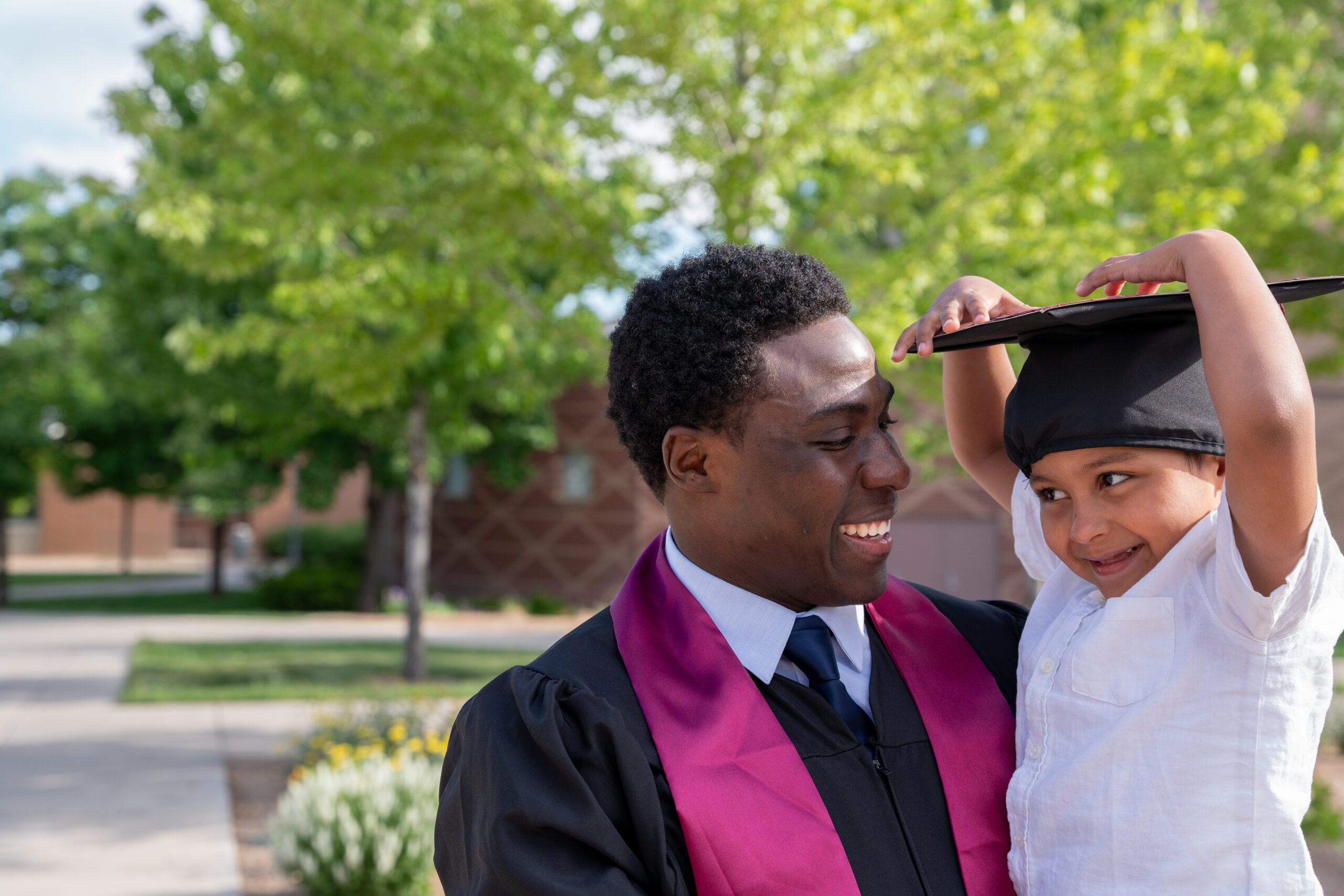
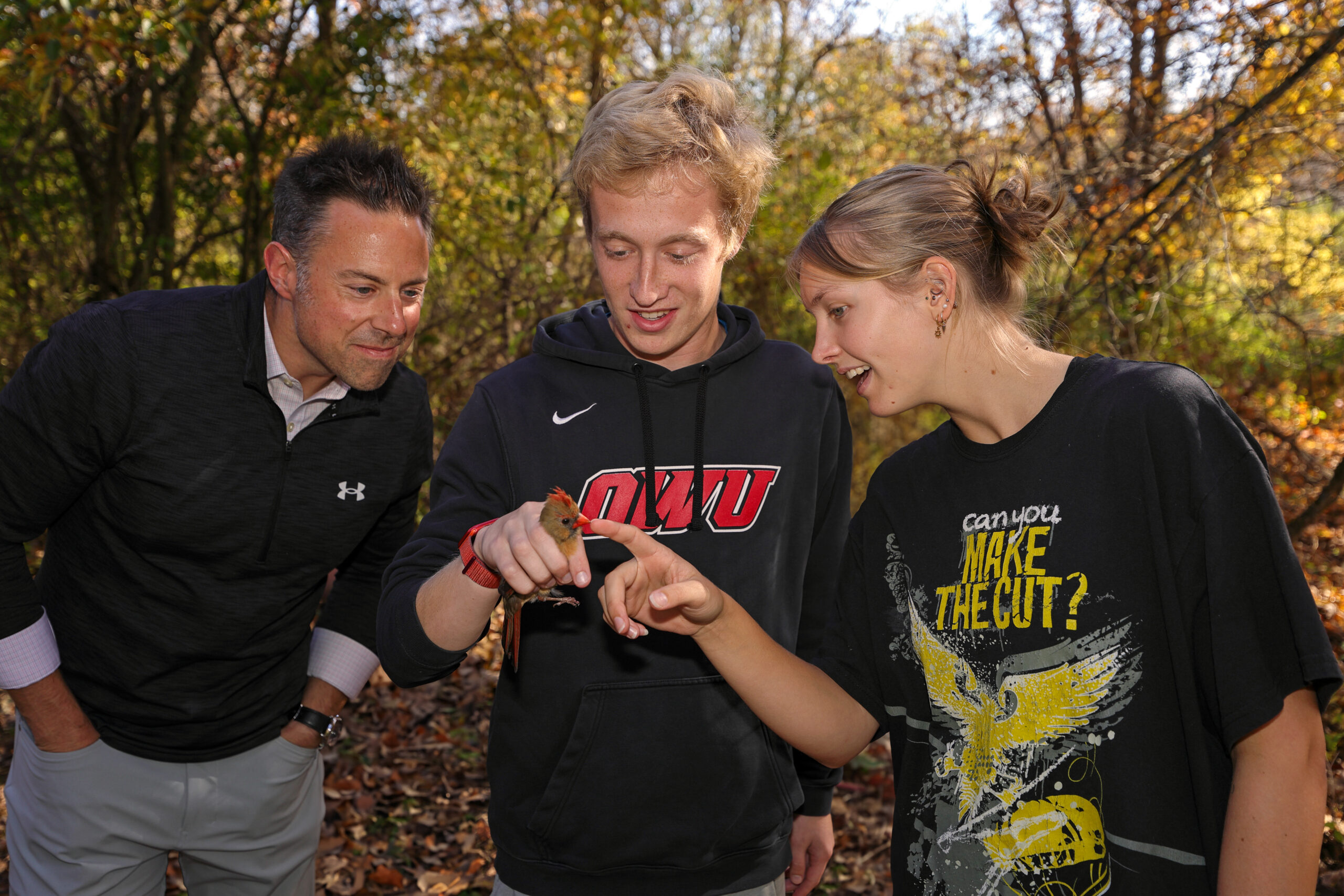
Posted in Q&A