Looking to Michigan

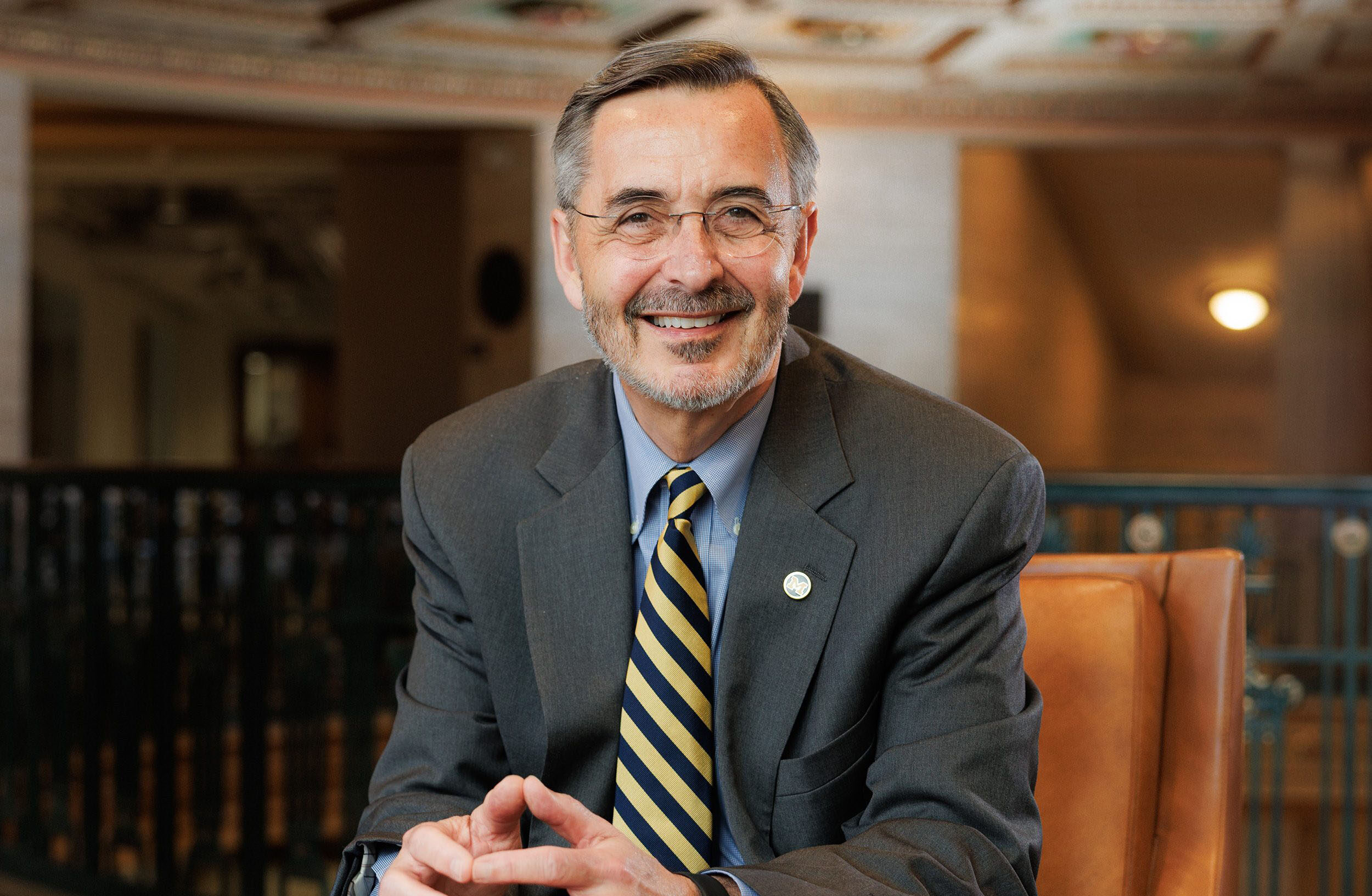
When asked about the state of higher education in America today, University of Michigan’s president, Domenico Grasso, is unabashedly ambitious about what needs to be done and who needs to do it. “As the most comprehensive and distinguished university in the world, the University of Michigan bears a profound responsibility not only to lead in scholarship and innovation but also to serve as a thoughtful compass in challenging times,” he wrote in a recent white paper. 

Grasso is leading Look to Michigan, a multi-faceted, multi-year mega-plan that is at once a capital campaign, media blitz, and strategic realignment aimed at optimizing Michigan’s inner and outer strengths. With five priorities, including the establishment of the American Dialogue Center, Look to Michigan assumes a leading role in demonstrating to the American public why higher education is such a valuable asset at a time of diminished support and extreme politicization. As the title suggests, Michigan asks, “If not us, then who?” 

Launching such a bold, public agenda may seem unusual for a president serving in an interim capacity, but Grasso vowed he was never going to be just a placeholder when he took over the role from former President Santa Ono. Grasso is the former chancellor of the University of Michigan-Dearborn, a branch of Michigan that serves largely first-generation students. He’s a staunch believer in the life-changing power of higher education.  

As a Michigan alum, and a rabid Wolverines football fan, Grasso is as comfortable talking about Michigan’s waste production during home football games as he is running the Prez Quiz during T.V. timeouts, when students answer trivia questions to win U-M swag. In this interview with LearningWell, President Grasso offers his perspective on the many issues he and his peers are dealing with and why he believes the best defense is a good offense. 

LW: As a Michigan alumnus and a chancellor here for many years, how did you feel when you were chosen to be president of the University of Michigan? 

DG: I would first say that I was surprised because I did not expect it. And I did not seek it. But of course, it was an honor because Michigan is, in my mind, the best university in the world. We have 110 programs in the top 10. We have a world-class medical center that’s unrivaled. We have an athletic enterprise that is second to none as well, and all that is together under one roof with three campuses that have different missions and constituencies. It’s just a terrific place.

LW: Speaking of the three campuses, U.M.-Dearborn, which you oversaw as chancellor, is very different from Ann Arbor. Have your experiences at Dearborn influenced your new role? 

DG: One of the things that I experienced at Dearborn is that it has a very close-knit family of students, faculty, and staff. Everyone is super nice. They are not internally competitive with one another. They come from modest means; they are authentic and are there to improve their lives. Many of them are very humble while also having a great deal of talent, and that always impressed me. 

The University of Michigan at Ann Arbor is a very high-powered school. There is a lot of, I would say, energy on this campus that we all benefit from, but I’m trying to bring some of the values — the empathy, the family-like interactions — I witnessed at Dearborn here to this campus.  

LW: I read your LinkedIn post with a message to your students about civility and kindness. Is that part of what you are talking about?

DG: I am a staunch advocate of the First Amendment, and I’ve said that in multiple places. But being a staunch advocate of the First Amendment doesn’t mean that we have to give up our kindness and civility in exercising our First Amendment rights. This is one of the things that I would like to bring to campus: the ability to talk across differences and perspectives in a way that we are truly trying to reach common ground and not just trying to preserve our own particular views.

LW: How do you go about doing that? 

DG: It’s not easy. I think that the first thing to do is to model it. I have a lot of people around me with very strong opinions. How I interact with them models how to interact with people that may have differing opinions from you. Before this semester, a number of my senior staff and I met with every single Jewish group that we could find in southeastern Michigan. And we also met with every single Muslim and Arab American group, all part of an effort to encourage a peaceful and collaborative reentry into the fall semester. 

So far it seems to have paid dividends because we have not had a lot of the acrimony that we had on this campus in the past. People want to be heard. They want to express their opinions, and they want to be taken seriously. And that’s what we’re trying to do. For me, it’s about this concept of intellectual empathy: trying to understand other people’s perspective. Not just tolerate it but to really understand it. You want them to find their voice but also have open ears.  

LW: You are hitting the ground running with the announcement of the Look to Michigan campaign. What is that all about? 

DG: We have our $7 billion capital campaign, which we recently launched, and a strategic vision we are now calling Look to Michigan, which is consistent with our capital campaign but different. 

There are five pillars of Look to Michigan. The first is transformative education: the need to deliver life-changing education focused on students’ agency and purpose, empowering them to lead with integrity, intellectual empathy, and rational thought. The second is human health and wellbeing, which has to do with all sorts of things for which Michigan is so well known, from health equity to cutting-edge medical care and transformative medicine. 

The third one is civic engagement and democracy. Here, we are launching a civil discourse center, tentatively called the American Dialogue Center. The fourth pillar is energy and climate change, and the fifth is advanced technologies — everything from AI to nanotechnology. We’re investing $1 billion over 10 years — a hundred million dollars a year — in these initiatives. This isn’t a check-the-box to get everything done in a year or two. This has a 10-year shelf life, and we’re only in year two. It’s a vision that spans a decade and is centered on these core initiatives.

LW: These are not just internally facing initiatives. This is also a public campaign, correct? 

DG: Absolutely. One of the main focuses of the Look to Michigan campaign is to regain the public’s trust in higher education. The University of Michigan was founded in the public interest in 1817, and it’s remained there ever since. A lot of schools have been struggling to make a case as compelling as ours in this regard, but here it is in our institutional D.N.A. 

“The United States of America is the greatest country in the world, in large part because we have the world’s greatest universities. If we do anything to threaten that, we’re threatening the future of the United States.”

The Look to Michigan campaign is also a media campaign. This month, we’re going to have full-pageads in the New York Times, The Wall Street Journal, the Economist, the Atlantic, and other publications — digital, print, audio, social media. And it’s going to explain that we are committed to the public interest and why that matters to every citizen in this country.  

The United States of America is the greatest country in the world, in large part because we have the world’s greatest universities. If we do anything to threaten that, we’re threatening the future of the United States, and we have to make that point very clear. Some of my colleagues at Princeton and Harvard are saying the same thing, but this is Michigan’s chance to move into the passing lane and to be the leader in reacquiring the public trust in the mission and purpose of higher education. 

We have 7,000 faculty members. I want each one of them to consider themselves public intellectuals and ambassadors for this cause. I want them to explain their work to the general public in terms everyone can understand. They have to be able to translate what we do in a way that a farmer in Nebraska, a textile worker in New England, or an office worker in the southwest will understand. As part of the campaign, we’re going to use digital storytelling to connect to the public good and explain why Michigan is so special â€” unique — in this area. 

LW: Does it help your message that you are such a highly regarded public university?  

DG: We are a public university, but I want us to stop using that as a qualifier because I don’t want us to be the best public university in the country or in the world. I want us to be the best university in the world that is in the public interest.  

LW: How much of this is to fend against what’s going on in Washington? Or is it more of a long time coming?

DG: I think it’s the latter. In certain ways, it is a defense against criticism that has been directed at higher education. But we should have been doing this whether it was Trump or Obama or whoever in the White House. I think we need to have a better social contract with the American people as to why higher education is so valuable, so worthwhile, and so worthy of investment and trust. The erosion of it started many, many years ago — well before MAGA. I watched this happen, and I thought it was devastating for universities and for America, and I thought that Michigan was well-positioned to take the lead on reversing this trend.  

LW: That’s a lot to take on for an interim president.

DG: I told the board of regents right at the start that I was not going to be just a placeholder. Either we were going to move the university forward or I wasn’t interested in the job, and everybody agreed with that.

LW: I am guessing that the “attack on science” is not going over well at Michigan.  

DG: No. We are a very science-focused school, and a lot of great things have come out of the University of Michigan. Science comes from “scientia,” which is the Latin word for knowledge, and it’s hard to argue against wanting to obtain knowledge. I know people think there are different views of it, but the whole scientific method — the Enlightenment — was all designed to help us improve the human condition, not to determine the human condition. For us to walk away from that at this point in time would be devastating for the future of humanity.

LW: Is it difficult to keep everyone on campus calm among such uncertainty in higher ed? 

DG: Everybody is concerned about the future because every time we open up a newspaper or a website, another school, or another nine schools, is in the hot seat. Everybody is a little bit on pins and needles, but I don’t want that to influence our commitment to who we are and to what we do.

LW: You’ve been a Wolverine for a long time as both a student and administrator. Now that you are head of the pack, are you having some fun as well?  

DG: It’s a lot of work — an enormous amount of work â€” and it is all-consuming, but it is also so much fun. As graduates — my wife Susan is a graduate three times over — we have such a sense of love and affection for this university, and it is terrific to be here in this position. It’s surreal, and it’s just been a wonderful experience. 

You can reach LearningWell Editor Marjorie Malpiede at mmalpiede@learningwellmag.org with comments, ideas, or tips.

//
Posted in Q&A

Learning and Belonging at Drew University

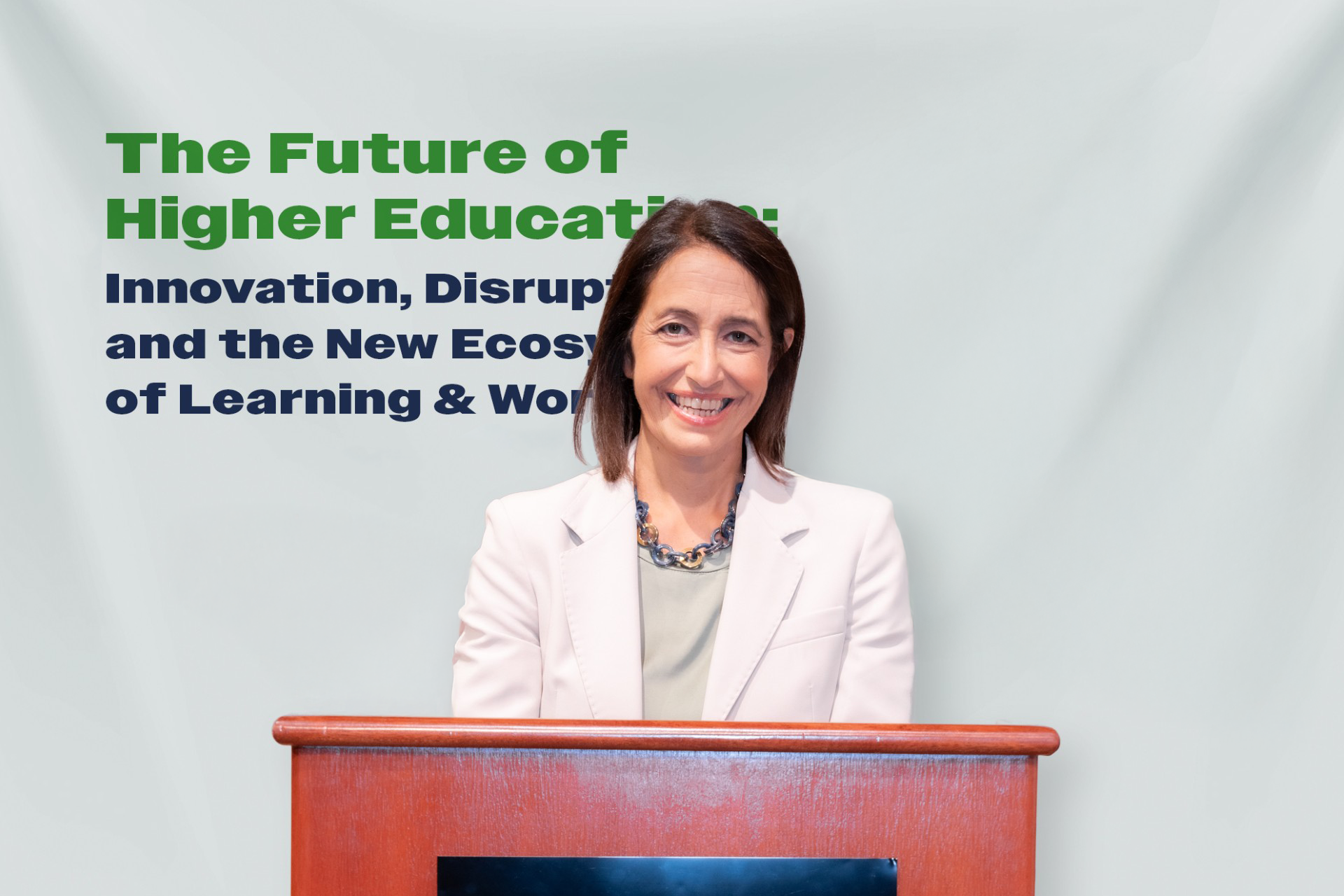
Despite her long career in academia, Hilary Link is a bit of an anomaly in higher education. Since becoming president of Drew University in 2023, she has been working hard to embrace change by seeking advice from the outside world. 

At a time when many in the sector are battening down the hatches, Link is throwing the doors wide open, viewing this challenging time as a watershed moment for higher ed. In November, Link will continue her Presidential Innovation Series, for which she invites leaders at the forefront of innovation and disruption in their industries to lead conversations that will help steer the future of higher education.  

Link has instituted her own major changes at Drew, a small school in Madison, N.J. with an iconic, leafy green campus and devotion to the liberal arts. Recruited to shore up the institution’s financial position, Link has worked with the Drew community to reimagine its pedagogy to better accommodate industry’s demand for job-ready graduates. At the same time, she emphasizes what should not change, like the ability of the liberal arts to help develop the human skills needed to navigate a complex world. 

In this conversation with LearningWell, President Link shares what she is learning and how she is going about crafting a “dream future” for Drew — one in which, she said, “everyone can be 100 percent themselves.”   

LW: You are both a president and a thought leader in higher education. What motivated you to start the Presidential Innovation Series and your upcoming convening “The Future of Higher Education”?

HL: As a scholar of Renaissance Italian Literature, I was trained to analyze texts, see patterns, employ words and visuals — as a window into other cultures and societies. I have always loved the meta process of stepping back from the text or artwork in which you are immersed to ask, “What is really going on here? What does this work tell us about the cultural, linguistic, artistic, religious, political context in which it was produced?”  

My scholarly work focuses specifically on theories of artificial perspective, so I embrace the concept of shifting where one stands to better understand the “big picture.” I see the convergence of being a president and being a thought leader in the higher education sector in similar ways. I have now been president at two institutions and dean of another, and while that work is all consuming, I always push myself to step back and puzzle over the “bigger picture.” How can what I am seeing at Drew University translate across the industry? What does my reading and careful analysis of this institution — like with a text or artwork — tell us about higher education in general and also this moment in our country, our world, our society? The fun for me of planning, crafting, and hosting the Innovation Series or speaking at a public convening is the chance to step back from my day-to-day work about Drew and learn from experts both inside and outside of higher ed — to help me and others see “the big picture.”

LW: In the series, you engage partners outside of higher education. What have you learned from that, both for higher education and for Drew University specifically?

HL: I have always been an interdisciplinary scholar, thinker, and do-er. My dissertation was on ekphrasis — written descriptions of visual works of art — which is a true convergence of art and literature. I have always felt that I saw new and different things in texts because I saw them through a visual lens, and vice versa. Similarly, as I have been on an “innovation journey” for Drew over the past 18 months, I have learned so much from innovators and disrupters in fields related to education but also completely separate.  

Often, the “aha” moments come from the concept of “far transfer” that David Epstein talks about in “Range,” one of my favorite books. I see how someone has evolved or transformed their sector, and it makes me see a higher ed-related problem in new ways; it makes me get creative about how we might do something similar in a very different context. The panelists at our November convening are just a sample of some of the fascinating people I have had the opportunity to learn from and be inspired by, and I am excited for other higher ed leaders — and really anyone interested — to learn from them and bring new ideas or ways of thinking back to their campuses or fields.

LW: You are an advocate for new models for liberal arts education. What needs to change? What changes have you made at Drew in this regard?

HL: Since arriving at Drew, I feel like I have been on a journey to understand where the rapid changes in our world are pushing higher ed, and quickly. I started by having deep conversations with anyone who would speak to me — innovators, entrepreneurs, investors, educators — and then crafted a white paper of my dream future for an institution.  

But then I put that aside because I knew this couldn’t be driven only by what I thought. Universities are complex organisms, and if we had any chance of evolving, these ideas had to bubble up more organically. So I brought in a brilliant scholar, Dr. Michelle Weise, who spent a year leading some of our most innovative faculty and staff on their own discovery journey. Michelle exposed them to many different models for education, introduced them to people thinking in very different ways about “K-Gray” education, and pushed them to iterate and ideate in really liberating ways.  

At the end of last year, we hosted a design-thinking charrette for about 40 campus members, and everyone agreed that any new direction for Drew needed to focus on the following human skills or qualities that we already value and prioritize: resilience, commitment to a common good, complex problem solving, and creativity and curiosity. 

Three future-oriented visions emerged for higher education, and groups of faculty and staff spent the past summer designing around those four values to arrive at possible prototypes to present to the community. We encouraged them to think big and challenge existing systems, while focusing on specific challenges Drew needs to solve. It was up to them to define those challenges. While the groups landed in very different places, their prototypes actually gravitated around the same critical features, which was a surprise: student-enabled, personalized/individualized learning; intentional, structured mentoring; applied learning; and accessible, lifelong learning based in problem-based/experiential frameworks. While we already do these things in small ways, the groups were telling us that this is where we need to go big. The coolest part? All of the prototypes in certain ways overlapped strongly with my original “white paper” vision, which further convinced me we are on to something.

The challenge now is finding the space where we can prototype these big, system-changing ideas while protecting the excellent learning experience our university has long provided and will continue to provide for current, traditional students. One idea is to create an incubation hub at Drew where we can play with the most compelling concepts, allowing a small group of students to collaborate with us in shaping a new educational pathway that includes all four critical features from the work of our staff and faculty. This approach can allow us to rapidly learn and find the clarity we need to move forward in the accelerating changes around us. This can of course be tricky. We know we have to move fast, but higher education’s DNA is to move only after deep, comprehensive thinking on matters; it’s how we have been trained as scholars.

I also think it is important to remember that institutions like Drew and higher ed in general do plenty of wonderful, transformative, and life-changing work already, and we see its effect in our current students. So I want to emphasize not just what needs to change but also what needs not to change about Drew and similar institutions: Even as liberal arts colleges might shift from disciplinary majors to more thematically organized knowledge focusing on the problems facing our world, the benefits of a liberal arts approach are amplified, not reduced. The broad interdisciplinarity that develops individuals who can think for themselves, face the uncertain and unknown, and contribute meaningfully to local communities and society at large remains. We’re essentially remixing our strengths for a new audience who are already arriving with different interests and needs.

LW: There’s strong evidence showing that how someone experiences college affects their wellbeing long after they graduate, particularly if they have had mentors and hands-on learning. Do you take that into account in thinking about policies on campus?

HL: I love that you asked that question! In fact, as we have been leaning into redefining the liberal arts for the future in ways that incorporate and employ technology and A.I., we have doubled down on those two concepts: the “human in the loop” — or even better, “at the helm” — or the need for strong mentoring in a new educational model; and the need to interweave applied learning, inquiry-based curriculum, and problem-based approaches with content acquisition. These are things that technology cannot do for us, yet, and these are the aspects that I believe must drive education forward. Those of us in higher ed and those of us who parent young people know all too well the challenges in mental health, isolation, lack of resilience, and need for community young people present with today.  

At Drew, we are trying to re-imagine higher education in ways that make it not just financially sustainable but that give young people the tools to engage with big global challenges, to learn through applying their knowledge, to have more say in what, when, and how they learn, and to give them a sense of human connection and relationship that they crave. We of course do many of these things already, but not systematically and not sustainably. We are pushing ourselves to be more intentional here — to shift and evolve so that we give students not just the tools to be well throughout their lives but also a desire to keep coming back to us in meaningful ways as they grow and evolve.

LW: Do you see this as a seminal moment for higher education?  Given the attack on higher ed, do you think the sector can move out of its defensive position and into a position of strength?

HL: I absolutely see this as seminal moment and a moment when most institutions have no choice but to lean hard and fast into innovation: different ways of teaching, less traditional definitions of a “student,” new modes of delivery and crediting experiences and applied learning, and more flexible ways of creating a sense of community. As the author and Drew Honorary Degree recipient David Epstein writes in his forthcoming book, “Inside the Box: How Constraints Make Us Better,” institutions that embrace this moment of scarcity, overreach, and challenge to be creative and resilient and that reinvent themselves for a future that is already here, will thrive. 

While it is easy to fret and feel defensive and “batten down the hatches” while we hope for and wait for things to change or improve, I see this as a watershed moment.

While it is easy to fret and feel defensive and “batten down the hatches” while we hope for and wait for things to change or improve, I see this as a watershed moment. If we can come out of these challenges having heard and thoughtfully tried to address some of the public critique about higher ed and particularly the liberal arts — too politicized, too costly, broken, offering no value for workforce preparation — we can envision entirely new prototypes and models for the sector that are accessible, affordable, more relevant to all, and better suited to equipping future generations to control what they learn and when, in order to apply what they learn to solve big global issues. I have been beating this drum for more than a decade, but I think the sector is now being squeezed and pushed so much that real and lasting change can happen.

LW: What do you love about Drew?

HL: From the moment I stepped on campus as president, I fell in love with the tranquil and beautiful campus, the open, thoughtful, unpretentious and welcoming students, the inspiring faculty, and a community that cares deeply about each other and the institution. I love that Drew is a little quirky and that it holds space for everyone — no matter who you are. I love that you can be 100 percent yourself here. And I love that at a moment of deep crisis for the higher ed sector as a whole, this community has been open to change, willing to lean into where the future is leading us, and incredibly thoughtful about what we do well, as well as where we can be more agile, focused, and open to new ideas.

Posted in Q&A

A New President Strives to “Go Beyond” 

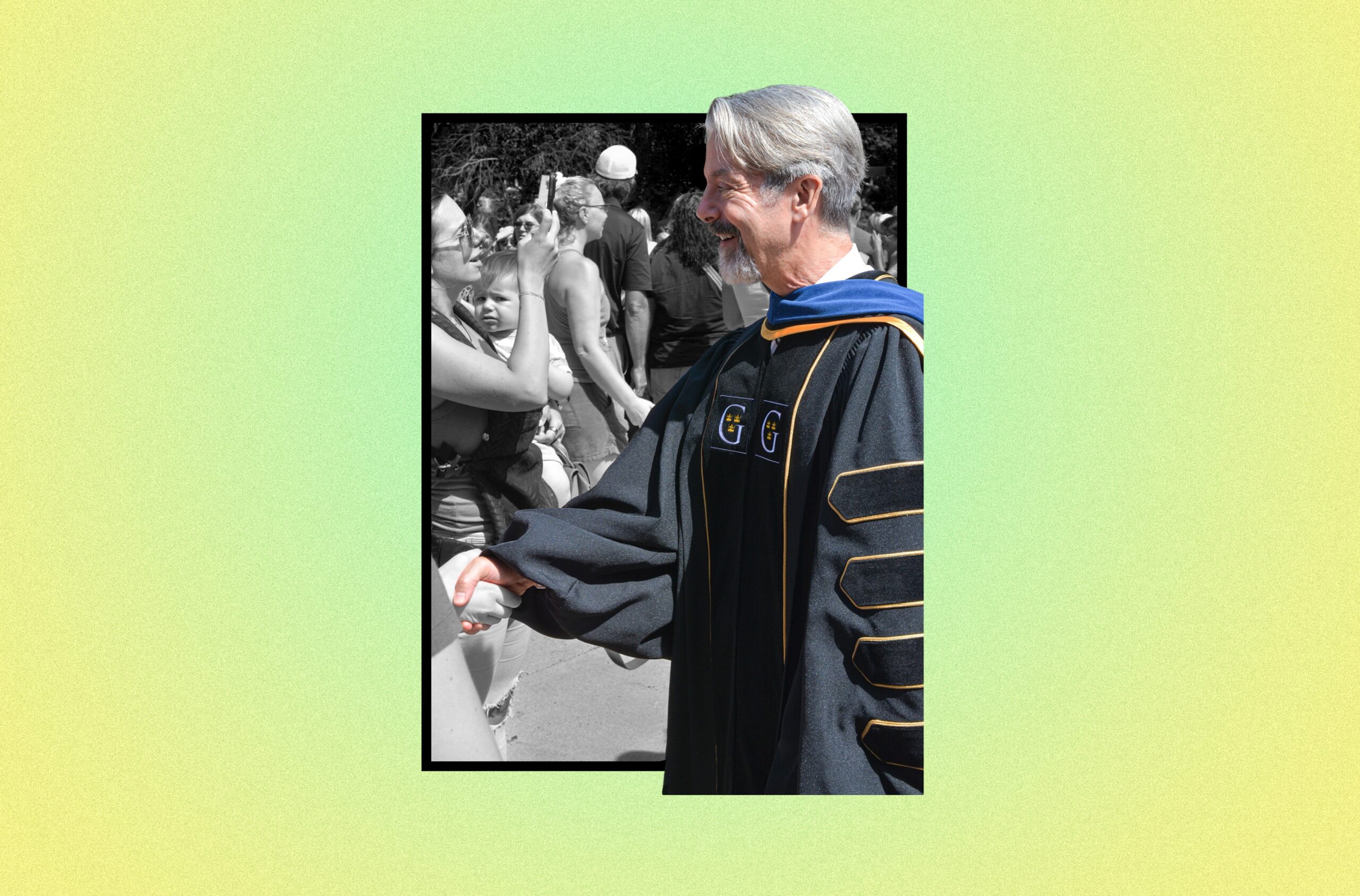
John Volin, Ph.D. is the new President of Gustavus Adolphus College, a small liberal arts school nestled in the scenic Minnesota River valley town of St. Peter, Minn. In his convocation address, Volin told his fellow “Gusties” that being there reminded him of his upbringing in South Dakota — of the rural roots that shaped him and his desire to pursue higher education in the first place.

“We are not just beginning a new school year, we are beginning a year of discovery, growth, and possibility,” he said, revealing his signature optimism. Before leading Gustavus, Volin, an environmental scientist, was provost at the University of Maine and, prior to that, vice provost of academic affairs at the University of Connecticut.  

As a long-time college administrator and frequent first line of defense against external threats to higher ed, Volin might be less zealous about assuming a role many others are exiting. Instead, he says he has taken to heart Gustavus’ new slogan — “Go Beyond” — which for him means focusing on what’s possible, even as you manage what’s facing you. Volin has long hoped to lead an institution that would align with and benefit from his robust body of work in student-centered, transformational education. In Gustavus Adolphus, which is guided by the Lutheran mission to educate students with purpose, he has found it.  

In this candid interview with LearningWell, President Volin talks of first impressions, early priorities, and how college can be a pathway to life-long wellbeing.  

LW: You are a first-time college president at a very challenging time for higher education. What keeps you so engaged and optimistic? 

JV: I was reminded just the other day of why all of this is so important. A couple weeks ago, we had our first-year students arrive with their parents. There are all the hugs, the occasional tears. And you see this new cohort of students that have this energy, this curiosity. They’re nervous, maybe even scared, but they have all these aspirations as well. And it really reminded me of the awesome responsibility that we have — this privilege to help shape the conditions that are going to allow those students to thrive, not just during their undergraduate years, but well into the future. And that is something that gets me excited and keeps me engaged.  It was the reason I got into higher ed in the first place. 

LW: What drew you to Gustavus? And how does the culture here resonate with your own philosophy on learning? 

JV: I grew up in the upper Midwest, so I knew of Gustavus and remember being intrigued by its residential liberal arts setting. As family tradition, we all went to South Dakota State University, and I’ve always been in public comprehensive research universities. So when Gustavus first reached out to me to throw my hat in for president, I was like, ‘Oh, this is exciting.’

But the mission to educate students to lead purposeful lives is what resonated deeply for me. The Lutheran tradition, similar to the Jesuits, is to educate the whole student — mind, body, spirit — and that is really alive here. It’s more than a slogan. It really is part of the core, and you can never take that for granted. I think there is a real motivation for faculty and staff to mentor our students beyond the classroom — to help them develop a sense of belonging, a sense of community, to give them agency and character development to lead lives that contribute to society. That’s what really drew me here.

For me, this opportunity has been a long time coming. Early in my career, I started to see this huge responsibility we have to focus on the formation of our students as human beings. And data is starting to really show the benefit of that in terms of life-long wellbeing. It really does make a difference when students know that they’re cared for — that they belong — even as we challenge them in the classroom. And then we need to open up opportunities for students to be able to take what they’ve learned in the classroom and get a really authentic experiential learning engagement. Whether it’s through an internship or research experience or service learning, we know that those high-impact practices lead to overall wellbeing during the undergraduate years and well beyond. These students tend to have a higher chance of flourishing later on in life, have greater career satisfaction. And so that for me, is a real driver. 

LW: Can you describe an example of this type of approach? 

JV: Let’s take curriculum development. I have been a part of two very large university curriculum redesign initiatives. And yes, it’s exciting to make change, but often it’s been incremental change — over a six- or seven-year period. And it’s always compromise after compromise, and no one really feels completely great about the product. But here, the faculty and staff came together and, in an eight-month period, redesigned their curriculum into a really innovative model: A third of the students’ credits are in their major; a third are in general education; and a third are in electives. So it allows for that depth that the students need and but also the breathing room to try new things. And the results have been really exciting. 

My wife Valaria and I live on campus, and every night, we walk our dog — our 15-month-old golden retriever named Sofia. Invariably, our half-hour walks turn into 45 minutes to an hour because we end up talking with students, and I noticed that I would get very different answers to the typical question: “What are you majoring in?” Students will say “business and music” or “biology and theater,” and I love it because that’s what a true liberal arts education can offer. They are using their whole brain.

LW: What are some of the big things you’re working on?

JV: There’s amazing momentum here, but we can’t just be the best kept secret. We need to better define and communicate what we do. There’s been a lot of work done in marketing and communications, and our new brand, which I was introduced to this summer, is “Go beyond.” I love it because it’s an action phrase that can mean so many things: “Gusties go beyond.” “Go beyond the Hill,” which is what campus is often called. 

That’s part of a new strategic visioning and planning process I just announced at convocation. By the way, they tell you as a new president, you should never do a strategic plan your first year, and yet here we are. Actually, this was a mandate coming in, so it’s perfect timing. We’re looking at this as a significant opportunity to shape the institution’s future with purpose and collective ownership. It’s about who we are and where we want to go, and it involves all members on campus. We will ask ourselves: What do we do well? Where must we do better? What can we imagine that doesn’t yet exist?

LW: Do you think your message about the student-centered work you are doing here will resonate with the public at a time when there is so much skepticism on the value of a college degree?  

JV: I hope it will. I think, historically, higher education has isolated itself too often from the public. But when you’re on a college campus, at least in my experience, it doesn’t always feel that way. I think we can all agree that we need to be clearer and much more transparent about the outcomes of a college education. That includes career readiness, but it also includes critical thinking, adaptability, and,  importantly, civic engagement. We need to demonstrate that higher ed is not a luxury; it is a public good that benefits communities as well as individuals and helps advance humanity. At the same time, we need to hold ourselves accountable on affordability and access and making sure our students succeed. We are fortunate that we have a great track record here on four-year graduation rates, but we can never stop working on that. I think trust will come when we show through action and not words that we’re preparing our graduates to thrive, to contribute in meaningful ways, and to find high satisfaction in their careers. But that’ll take time.  

LW: Gustavus is a Lutheran school. Your experience has been in public, secular universities. Now that you’re here, do you see a place for faith and religion on campus?  

JV: Yes. We have five core values here: Excellence, Community, Justice, Service, and Faith, and that’s everywhere. We don’t shy away from these core values. At the same time, there’s no pressure on students. This is a place, where, in the Lutheran tradition of acceptance, you can come with faith, no faith — wherever you’re at — and we will accept you.  

There’s a 20-minute service on Tuesday, a 20-minute service on Thursday midday, and one on Sunday afternoons that are all run by students. We have three chaplains on campus. No matter where anyone is on their own journey, they have the chance to plug in if they choose to. A lot of this is about being present and finding spirituality, whatever that may be. Christ Chapel, which is right in the center of campus, is gorgeous. And it’s open 24 hours a day. When we first moved here, I found myself going in there one evening. I pulled the door open, and there’s this little fountain running, which gives the sound of trickling water. The sun was setting, and I thought, “Wow, you can’t help but feel well here.”  

LW: So you see a connection here to wellbeing?  

JV: I think the faith-based dynamic gives us an extra advantage. I’ve never been at a university where we can actually talk about it, and I do think it helps, particularly if you put this in the context of community. It’s really all about relationships and connection. We’re hosting Bob Waldinger on campus next spring, and I’ve asked students, faculty, and staff to read his book “The Good Life.” Bob is the director of the longest continuously running study on what makes people happy, and at the end of the day, it’s relationships. In a very intentional way, I want to bring this message to campus to reinforce that element here.  

LW: Do you think about how technology, particularly AI assistance and online learning options, will affect relationships between students and faculty or students with each other?  

JV: I definitely think about that. And I also think it’s an opportunity for us to get ahead of it. We certainly can’t put our head in the sand, but we need to be very thoughtful about how we use technology. For the liberal arts, we need to fulfill the promise we make to families that we are institutions with high touch, smaller class sizes — all those opportunities. We have to be present. That’s our strength. 

After the pandemic, there was discussion here about whether we should continue with some online courses, and my understanding is the students overwhelmingly voted no. They wanted in-person classes. What that signals to me is the students who come here want to get to know their professors, and they want to be able to be in the classroom and have those relationships. 

LW: As president in a challenging time for higher education, how do you “lead” through it? 

JV: It is tricky, for sure, because you are in some ways the main translator for your college. You are one that sets the tone and delivers the message, and there’s a real balance to uphold. You have to help bolster morale in very difficult times, but you don’t want to come off as Pollyannaish. You need to be authentic and truthful. This is a hard time for higher ed. There’s a real assault on academic freedom and a misunderstanding of what academic freedom really is. It’s our mandate as leaders to be supportive of and consistent with the values of academic freedom and open inquiry, but it’s very challenging. We just have to keep moving forward.  

You can reach LearningWell Editor Marjorie Malpiede at mmalpiede@learningwellmag.org with comments, ideas, or tips.

Posted in Q&A

Thanks for Asking 

When a group of us recent graduates from Georgetown University were asked to be Hoya Fellows, we weren’t sure what to think. As Fellows, we were expected to weigh in on strategies and policies that affect Georgetown students, an area that we believed did not often involve listening to students. Students are seldom invited to be true active participants in the complex decision-making processes that dictate their campus experience. Most of the time we aren’t even familiar with how the process operates. As recent graduates ourselves, we wondered how much impact we could really have. 

Our degrees did not qualify us to oversee university initiatives, let alone challenge the culture of a centuries-old institution like Georgetown. But the school’s vice president of student affairs, Dr. Eleanor Daugherty, trusted in our abilities to make an impact. Dr. Daughterty, who had invited us into the process, had years of experience studying adolescent development while working in higher education, but she admitted she was far removed from knowing firsthand what the adolescent world is like. “I am the expert on your tomorrow, but you’re the expert on your today,” she often said.  

With that, we were thrown into the deep end, and like the child that learns to swim this way, we kicked our legs hard enough to keep our heads up. Rather than assigning us simple administrative tasks, Dr. Daugherty handed us complex challenges, like bolstering an atmosphere of “belonging and mattering” among Georgetown students. We weren’t told to be cogs in a machine; we were empowered to build new ones. We were asked to lead the way in designing new initiatives and solutions to address issues that we dealt with firsthand as students, like finding community within the university or balancing working hard with caring for ourselves while being away from home for the first time.  

There would be constant pressure, not necessarily to succeed, but to maintain unwavering ambition and creativity. We were required to bring our respective passions and skillsets into conversation with the spirit of innovation, all in the name of creating a world we thought we could only imagine.

What we learned is that the deep end is not a place to drown; it is a place to learn. It is a place where Fellows are trusted to take on unsolved institutional challenges, to move beyond our comfort zones, and to think beyond our own years of experience. It is where we are asked to address student impostor syndrome while managing our own, tasked with changing a culture we were not sure we had the authority to critique.  

What we learned is that the deep end is not a place to drown; it is a place to learn.

We were given access to the full resources of the Division of Student Affairs and encouraged to collaborate with university leaders. We relied on each other and drew from our own experiences as alumni, as well as from the students who are still attending. Most importantly, we were not afraid to make mistakes because we were guided by leadership who encouraged us to take risks. For Fellows, there was no consequence for failure besides learning a lesson and trying again. It’s inevitable that we’d falter along the way, and we agreed that the only thing that fearing failure does for us is hinder and delay our eventual triumphs. Failing didn’t mean the journey ended; it just provided us another memory, lesson, and motivator to propel us towards results.

Since the beginning of the Hoya Fellowship in October 2023, the Fellows have helped student affairs launch a number of initiatives and projects, which have proven almost overwhelmingly successful. Each Fellow was encouraged to pursue projects aligned with our own strengths and to collaborate and learn from each other in the process.  

One of our biggest accomplishments came directly from our own experiences. A major goal of student affairs has been to focus on “belonging and mattering” on a campus, which is welcoming but also often too perfect for its own good. On a campus like Georgetown, many students find it difficult to be anything other than perfect. This cycle of pretending to be perfect causes some of the brightest adolescent minds to wonder if they really belong in a place where everyone is as smart or smarter than they are. From this came the development of a class called “Blowing Up Perfection,” meant to teach students some of the skills they might not learn in other classes: how to build authentic friendships, how to face conflict, how to be resilient in the face of difficulties, how to embrace vulnerability. These skills help students understand that belonging comes not from perfection but from connection and self-acceptance. It is something we had to learn ourselves. 

Another related initiative is Hello Hoyas, a summer program where university leadership travels around the country to visit incoming first-years in their own hometowns. Particularly impactful for first-generation and low-income students, Hello Hoyas offers a powerful message that students and families belong here and that we will be here for them when they arrive. Hello Hoyas expanded from five cities in 2024 to 10 cities in 2025 and has welcomed hundreds of students before they even reach campus across both years.  

Expanding our impact beyond Georgetown, Fellows even helped advance scholarship and research on adolescence, most notably by leading a national research symposium that reimagined how we approach adolescent development within the context of today’s challenges and opportunities. The gathering, called “The Promise, Possibility and Power of Adolescence,” convened K-12 and higher-education administrators, educators, non-profit leaders, and renowned researchers, who were brought into conversation with adolescents themselves — the very people who would be impacted by the work. Like the Hoya Fellowship, the hallmark of the symposium was that the youth led the way. There, young people spanning 14 to 22 years old worked alongside adult participants to co-create innovative solutions aimed at promoting universal adolescent thriving, regardless of one’s location or access to resources. 

Our experience as Fellows made us realize that the distance between students and administrators didn’t come from disagreement, but from mutual misunderstanding. While institutional leadership can offer frameworks of what young people should be, only young people themselves can speak authentically about their own current reality. The Fellows program has helped expand the opportunities for students and administration to communicate directly with one another. Our office initiatives include a student advisory, which invites all students to join university leaders for dinner and discussion. There are Hoya Family Forums, which invite curious parents to meet different student, professor, or staff panelists and keep families informed about what happens on campus. The Fellows have helped build bridges between Georgetown leadership, families, students, alumni, researchers, and everyone who is invested in making universities everywhere a better place for adolescent wellbeing.  

Through these initiatives and projects, the Fellows have helped reframe how the university approaches its students. There are many more opportunities for students to connect directly with leadership, even before their time on campus. And in turn, leadership can better understand the state of adolescents today. The Fellows have helped blow up the culture of perfectionism and exclusivity which permeated the otherwise very welcoming Georgetown community, and we hope to continue doing so in the future.  

We never thought we’d be working for the university, let alone teaching classes or organizing national conferences. We’re driven by our pride in being members of the Georgetown community, and we’re honored that we get to serve as a connector between students and administrators, all of whom want the best for our university. The issues we tackle — adolescent development, student wellness, belonging and mattering, to name a few — reach far beyond Georgetown’s gates. Through the Hoya Fellowship, we aim to show how empowering young people to lead not only develops them but also ignites impact at scale. 

One last note: When you throw people like us into the deep end, we’ll never want to leave the pool.

Since October 2023, Hoya Fellows have worked in key university offices across Student Affairs to develop strategic initiatives focused on student life and well-being. These positions enable the university to benefit from the experience and insight of alumni who understand the lived experience of our students, while also empowering these new graduates to help build Georgetown into the institution they hope to leave for future generations of Hoyas. 

A Creative Conversation

David Kelley is the Donald W. Whittier Professor of Mechanical Engineering at Stanford University, but most know him as the creator of the Hasso Plattner Institute of Design, or simply the d.school. Kelley, who celebrates 50 years at Stanford this year (as both student and professor), presents more like an eloquent historian than an engineering genius. But it should be no surprise that the founder of an institute that invented “outside the box” thinking would be such fun to talk with.  

The founder of design firm IDEO and recipient of numerous honors and awards, Kelley describes his work as“helping people gain confidence in their creative abilities.” He and his brother are the authors of “Creative Confidence: Unleashing the Creative Potential Within Us All.” In it, they argue that labeling people, particularly children, as creative or non-creative is as limiting as it is incorrect. In this interview with LearningWell, Kelley talks about the connection between creativity and discovery, how human-centered design is changing the world, and how the d.school got its name.   

LW: I’m very curious about one of the main focuses of your book, which is creative confidence — unleashing the creative potential within us all. What do you think the implications of that idea are in the context of higher education?

DK: Most of my work could be categorized as helping people gain confidence in their creative ability. That would be what I care about the most. And I think we start out by people thinking of themselves as not creative, and I’ve tried to convince people — and prove — that everybody’s wildly creative. They just have blocks in the way of it. So you need to change the mindset from teaching people to be creative to giving them credit that they’re already a creative organism and remove the blocks keeping them from doing that. The psychologists call it self-efficacy — that you believe that you can accomplish what you set out to do. I mean, that’s just it. Wouldn’t you like to give every one of your students the notion that they can accomplish what they set out to do and have that confidence? I really think that’s the goal here.

So how do you go about that? The way you go about it, especially with students, is to help them have some success. You set it up so that it’s a problem that’s easily solved, and you hold people’s hands, and you lead them through it, and they’re successful at some small thing. Then you do another one, and then you do another one. Pretty soon, people are saying, “Oh my god, I am creative.” So I guess I’ll summarize: The main thing about creative confidence is how you help people remove those blocks. And the main reason that they have that block is that they are worried about the judgment of others.

LW: And that has something to do, I imagine, with what they’ve been told they are, right?

DK: Yes. You do something that’s not conventionally creative, or just doesn’t seem like it has a direction that’s creative, and then pretty soon you’re “not creative.” And people hear that when they’re nine years old. They hear, “You’re not creative,” and then they never address it again. It’s like, you try to play the piano, and you’re not good when you sit down for the first three seconds. You are not good at playing the piano, so you don’t continue. It’s hard. Doing things that matter is hard.

“The main thing about creative confidence is how you help people remove those blocks. And the main reason that they have that block is that they are worried about the judgment of others.”

LW: So you’re encouraging people to have a wider view of creativity and what that can mean?

DK: Yes, for sure. Sometimes, early on — I’m talking about child development — creativity is defined as drawing, believe it or not. If you can’t draw well without any practice and you just don’t naturally draw well, you’re identified as not being creative. Well, maybe this person’s musically wildly creative, or maybe they’re creative in a different way. So the problem is that, whatever the conventional way of doing something, if you are off that, you’re not creative. You’re also not conventional. It’s a funny dichotomy. But the main thing, yes, is that people are branded as not creative for a bunch of reasons, and we need to see that as wrong. 

LW: It sounds like there’s an urgency around this. Because if people are limited in thinking about themselves as being creative, then we have arguably less creative people. Why is it important to have more creative people?

DK: It’s only if you care about the future that you think creativity is important. That’s how you cure disease and how you make advancements in technology — is people being confident in their career ability and doing new things that change the world for the better. Our phrase that we like to use is: It’s your job to paint a picture of the future with your ideas in it. The funny thing is once you can use your creativity and paint a different picture of the future, then everybody else can have an opinion. They can help you. They build on the ideas of other people when they can visualize it — when they can see it. So that ability to visualize the future is inherently a creative task.

LW: Let me ask you a little bit about the founding of the design school.  Can you just give me a quick overview of that?

DK: Back to the notion of creativity — when you have a diverse group of people, you come up with better ideas. You can define diversity in any way you want: age diversity, racial diversity, or geographic diversity. But having those people — the mashup of those different people that come from different viewpoints — greatly increases the probability of you coming up with something new to the world. So that’s something I wanted to codify at the university. 

And so basically the notion of the d.school was to have a place that everybody wants to come to. A lot of the classes students take in college are required classes, and so the teacher doesn’t really want to teach them, and the students really don’t want to be there. I wanted a place where everybody wanted to be there all the time — that they opted into this place because it was so enjoyable, so fulfilling, rewarding, informative. So the d.school is really based on that notion of making a crossroads, where professors and students from all over the university would come together. And I’m so gratified. It turned out so great. And the reason — they all say the same thing, particularly the professors: “When I cross the threshold, I know I’m allowed to act differently here.” And that’s just like music to my heart. 

LW: Was it a difficult concept to communicate within the school?

DK: It started out with a bunch of us in a room talking. It wasn’t going anywhere particularly, but it got started. And then, fortunately, as we went further along, we had a perfect storm of administration. So we had a department chair and a dean and a provost and a president that all resonated with the idea. It took giving us the donation. I don’t know that I ever would’ve gotten it started if it hadn’t been for the generous donation from Hasso Plattner. But the president,  John Hennessy, came to me and said, “What would it take for all Stanford students to be more creative — to be more confident in their creative ability?”

It really helped to have that. I mean, faculty are very siloed and more concerned about their little empire than somebody else’s. So getting everybody’s attention was difficult. It took a long time to get the place up and running to the point that people were drawn there naturally. But it did snowball. It accelerated beyond my wildest dreams because it turned out to be true — that it was super interesting for these geniuses from different departments to get together and duke it out on different topics. They really liked being there. They liked teaching together. And the way we used to do it before was I’d go in and lecture in somebody else’s class, or they’d come in my class and give a lecture. But that’s not a collaboration. Once people started to team-teach classes  — somebody from political science teaching with somebody from the ed school or the business school or the law school — when they were actually standing in front of the class together for the whole class, then we knew we had it. That’s what we were after.

On a side note, one of the most interesting things that happened was how much the students loved watching the faculty fight. Somehow it was really cathartic for the students. They were used to the sage-on-stage, saying their point of view unchecked by anybody else in the room. So as soon as you get a couple of strong-willed experts in the room talking about a subject and they disagree, it’s really interesting. I think, for the students, the faculty became more human to them, and maybe there’s not a direct, correct answer to every question. 

LW: I hear there is an interesting story about the naming of the school?

DK: Actually, it is not a school at all. It’s completely separate from the academic hierarchy.  I remember sitting around a room — a couple of my graduate students and friends — and we were figuring out how to make this happen. And it wasn’t clear. We are a small organization and felt we weren’t very well understood. So there was the business school — the “B-school” — that was a really big deal on campus, and to feed off their importance, we decided to call ourselves the d.school.   

LW: That’s fantastic! Can you define for our readers what you would call design thinking?

DK: Yeah. Design thinking is just a description of the methodology and process that we use to routinely innovate. The way I talk about it is mostly around human-centered design. So there’s plenty of people who have methodologies that are business-based or technology-based, and those are all good, and we employ those. But we seemed to lack a human-centered approach. What’s feasible and viable is nice, but what’s desirable? How do you make it more useful or convenient for people? How does it fit better into people’s lives? To me, that’s what design thinking is. It’s a human-centered approach. And all the discussion about design thinking is the steps — the methodology — that you use to do that, but it’s all centered on: How do you make it better for people?

LW: What has been the reaction to this method at the d.school from the students? 

DK: Well, at first, all of our classes were electives. So the students were choosing something that they were particularly interested in. And by having different faculty, there were two wildly different points of view in the same room. So the students were excited about that. I’m going to go back to the same thing about human-centered design: Everybody can buy into this because it’s so human. I mean, we’re all humans, and the driving force is: How is this going to be better for the students? Or how is this going to be better for the people we’re trying to design something for? That humanness is just really enjoyable.

And today, one of the consequences is that I used to be able to tell the students to design a clock radio or something like that. I’d be shot if I said something like that now. They want to do something that has social value. They want all their projects to be something that’s good for the world. And I think that’s a consequence of the human-centered approach. What they want to do is improve the lives of people who live in a village somewhere and don’t have the internet. As a steady diet, that’s what they really want to do, which is encouraging for that whole generation if you ask me.

LW: You’ve been at this a long time. Any other observations about how your field has changed?

DK: Design was just not a big deal in the world as a discipline. I always say I felt like I was at the kids’ table, and then through mine and a lot of other people’s efforts, we’re now at the adult table. And I think that has to do with our way of thinking — that finding the right problem to work on is as important as the problem we are solving. Before our language, everything was problem solving, problem solving, problem solving. And after design started to take off, it was all: What’s a project worth working on? Need-finding, more than just problem solving. So that put it front and center: the messiness of trying to understand what people really want, what would make their lives better.

Part of everybody’s process now is this human-centered approach where you go out and try to understand — we call it the need-finding —what’s valuable to people. It’s a messy phase. At most companies, people want to sit there and look at their laptops in a conference room. They don’t want to go out into the field and experience what’s really going on with people. And I don’t understand why that is, but we’re getting better and better in that more and more organizations start out by trying to understand what’s a good problem to work on by understanding what people really want. And I think that’s a consequence of design having more agency in the world.

And I can tell you a million stories. One of the ones that comes to mind with my students is this class called “Liberation Technologies.” They were asked to look at fire prevention in these villages in Africa, and I thought they would end up doing a low cost fire extinguisher. But when they got down there and used our process and talked to the people, they started to realize that, yes, they were afraid of fires, but they’re really afraid of losing their documents in the fire — their immigration documents that prove they were allowed to be in this building. And so students changed the problem from fire prevention to document preservation.

Their solution was a pickup truck with a scanner in it. And they went from village to village and scanned everybody’s documents and put them up in the cloud. When you have a mindset of understanding what’s the real problem by talking to people, then you solve the problem in a completely different way or you even solve a different problem. But for your question, I think that’s the contribution of design being in the world and our methodology having some impact.

LW: Do you worry about people making things that aren’t good for the world?

DK: We used to teach an ethics class and now there’s ethics in every class — to try to understand the consequences of what you’re going to do. We have a culture of prototyping, where we take a first pass at what we’re going to make, and then you take it out and actually get it into the situation where it’s going to be used. So before you’ve committed to what it’s going to be and get it out there, you’ve seen the consequences of it. Before you commit to doing something bad or something good, you want to know the non-obvious things that are going to happen when that invention enters the world.

You can reach LearningWell Editor Marjorie Malpiede at mmalpiede@learningwellmag.org with comments, ideas, or tips.

Posted in Q&A

A Voice for High-Needs Students

Not many academics find mainstream success with the publication of their first book. Anthony “Tony” Jack, Ph.D. did.

In his award-winning debut, “The Privileged Poor: How Elite Colleges Are Failing Disadvantaged” (2019), Jack explores how elite colleges and universities tout mounting diversity but tend to recruit students of color from private and preparatory high schools rather than local, more distressed ones. His second book, “Class Dismissed: When Colleges Ignore Inequality and Students Pay the Price” (2024), tracks the fallout of the pandemic for students with little to no support at home, and how institutions failed to anticipate and respond to their needs.

From assistant professor of education at the Harvard Graduate School of Education, Jack joined the faculty at Boston University in 2023 as an associate professor of higher education leadership. At B.U., he is the inaugural faculty director of the Newbury Center, a resource office for first-generation students across undergraduate and graduate programs. From his perch as researcher, educator, and student affairs insider, he offers a unique understanding of the challenges facing high-needs students, as well as those supporting them. He’s also committed to being part of the solution — one that hinges on scholarship and student services working together. 

LW: To start, could you give a bit of background on your research and areas of expertise up to now?

TJ: In my first book, “The Privileged Poor,” I discussed an overlooked diversity in higher education. Universities were doubling their efforts to recruit lower-income and first-generation college students, and many universities had actually almost doubled the number of Pell-eligible students who they were admitting. But my question was always: Where are they getting those students from? And what I show in my first book is that they were actually going to get their new diversity from old sources: boarding, day, and preparatory high schools. And I called those students the “privileged poor,” lower-income students from boarding, day, and preparatory high schools. And I called their peers who went to low-income — typically distressed — public schools the “doubly disadvantaged” and showed how students’ trajectories to college shaped their trajectories through. 

One thing in that book that I wish I was able to engage with more was how the inequality at home so often comes to campus. “Class Dismissed” was born out of a pebble-in-a shoe-type moment, where all the presidents of universities were like, “I didn’t know our students didn’t have internet at home. I didn’t really know what kind of communities they were coming from.” And I’m just like, but you do. Your admissions officers know. From their personal statements — because you make them pimp out their poverty — you know where they come from. You know what they’re returning to. “Class Dismissed” was a response to that. What was important for me to bring to “Class Dismissed” is to say that COVID exacerbated the very inequalities that students were suffering with in silence. 

LW: And you are now involved in translating some of those lessons into practical supports, right? At the Newbury Center at B.U.? Could you say a bit about what goes on there and what it means to be the “inaugural” faculty director? 

TJ: The Newbury Center is this amazing opportunity to put my research into action because the Newbury Center is a resource center for first-gen undergraduate, graduate, and professional students. There usually isn’t this coordinated, university-wide effort to support students who are first in their families to go to college. And so the Newbury Center is unique in that sense. And it’s a really amazing opportunity, as well as a monumental task. Because we have people who are coming in at 17 and 18, and we also have people who are coming in at 30 and 40.

My inclusion is to put research more central to the endeavor: How do we support our undergraduates to go to study abroad? How do we make sure that we understand the best practices to help them get internships — to get opportunities to extend learning beyond the classroom? Those are the kind of things that I’m able to do and support with research. During the summer, we actually help students who take on unpaid or low-pay internships with stipends. It is so stressful to be able to have this amazing opportunity to work in a field that you love, but you can’t afford to live where the internship is. We can help fill that gap for lower-income students. Not as much as I would hope, but that’s also why I’m helping to expand the center so that we can help more people. 

LW: So had you heard of the Newbury Center when you were at Harvard, and it became sort of a driving force for you to move over and get more involved? 

TJ: The Newbury Center is still a very young center. Five years. The ability to craft its trajectory from early on was an attractive piece to get me to think about going from just being a producer of research to now also being tasked to create policy and advocate on behalf of students across the country. 

My work on food insecurity is a huge piece, where I can actually engage with deans. I was doing that in addition to my work at Harvard, but now it is part and parcel of my advocacy work at B.U. My work on mental health has shifted from being a finding that I have about how students do or do not seek help to now being able to invite directors of mental health services to campus as part of an annual conversation. 

LW: It’s interesting that you say that. I was thinking about that dual role you’re playing as a professor and then in more of a student services role at the Newbury Center. Did that feel like kind of a natural balance for you to strike? Was there ever any kind of hesitation or feeling like you needed to stay in one lane? 

TJ: No, for me, from the very beginning, my philosophy was: Why just write about it when you can do something about it? 

In “Class Dismissed,” I have this line: “Now that we know what we know, what are we going to do about it?” Don’t just relegate a very, very important possible policy change — one that could fundamentally change the everyday existence for tens of thousands of students across the country — to a paragraph at the end of the paper. Why not give more life to it? It’s ethical research. It’s theoretically informed. It’s empirically rich. Why not add that fourth element? And then also to write in an accessible way so that a president, a professor, a dean, a parent, can learn about what the children in their life are going through. 

“In ‘Class Dismissed,’ I have this line: ‘Now that we know what we know, what are we going to do about it?'”

LW: Right. On that note, what are young people going through right now? This is a broad question, but what are your major concerns at the moment for students, especially first-gen or low-income ones?

TJ: The thing that’s top of mind right now? I mean, where do we go? We can talk about affirmative action, withholding of funds. It’s just a lot, to be honest. But one thing that I think people need to realize is happening on campuses in this McCarthy-era-style politics that we find ourselves in — what we are seeing — is labeling what were once good student affairs practices as “benefits.” And any limiting of that newly labeled benefit to a particular group is seen as unconstitutional. That is a very different way of doing student affairs. Student affairs was saying, “Hey, we are here for everyone, but we also know that we have to take particular steps to welcome different groups. And we do that by allowing — supporting — affinity groups and hosting these different offices because we know that our campuses were literally not made for people here, who are here now.” 

Now that work is said to be giving an undue benefit to someone else and discriminating against, essentially, a white man, which is now the reference point for any kind of support service that you have. And that list is going to get longer and longer. It’s going to go just from being a white student to a white male student to a white Christian male student to a white rich male student. And it’s just going to keep getting longer and longer until that reference is a very narrow person, who is not the modal group on campus, and yet all policy and all practices are going to be seen as: Are you not allowing this person to feel comfortable here? 

LW: Have you been experiencing that firsthand through the Newbury Center or otherwise — restrictions to your work or your ability to support people?

TJ: To be honest with you, it’s a day to day thing. We don’t know when we’re going to get another “dear colleague” letter. We don’t know when another executive order is going to come out. We don’t know if any university is going to keep fighting it through the justice system, knowing that the Supreme Court is what it is. And so we’re waiting day-by-day to figure out: Can we continue to do the work that we do across the country?

LW: But so far, do you feel like — notwithstanding daily challenges or pivots — you’ve sort of been able to maintain the level of support that you had in years past?

TJ: So far. 

LW: And in terms of your student interactions, what are you hearing from them about the things that they’re most nervous about? How do you guide them through that, if that’s part of your role? 

TJ: It’s generalized anxiety about what is next — what’s going to be possible. And so what we are trying to do is still encourage students to put themselves out there — go for every internship, go to study abroad, pick out your favorite spot in the library that you are going to be known for at your 20-year reunion: “I would always see you in the library right at your favorite window.” They can still make memories and take advantage of all the things that college provides. That is incredibly important. That’s just huge. 

LW: What else are you thinking about going forward with this school year? What are you anticipating will be the biggest challenges both for your own work and also for the students that you support? 

TJ: If it’s two things that rob people of so much, it is scarcity and precarity. Right now, everything that we are trying to do is to make ends meet with less and in less time. And to be honest with you, this is the year that I want to be fully present for students and hear from them — learn from them — so that, as I craft out my next project, it is one that is going to not only expose what they went through but think critically about the policy and practice changes that can help support them going forward. 

LW: Is that something that you feel hopeful about? The idea that the policy change could really happen and make a difference? 

TJ: First-gen-as-pawn is something I’m really grappling with right now because a lot of people are flocking to first-gen — to recruit first-gen. But they’re not ready. They’re still not ready.

LW: Not ready to support students once they actually come to campus? 

TJ: Yeah, yeah. Those are some things I want to just grapple with. 

LW: In terms of a future research opportunity or just in general? 

TJ: Well, for me, everything is going to be tied to investigating it. Students’ voices inform the policy suggestions that I present to colleges because I believe that in students’ voices are the keys to success and a more equitable future. 

LW: Is it encouraging to see other actors or organizations with a similar outlook and doing similar work?

TJ: It’s absolutely encouraging. Because that means that people are intentionally invested in making campuses not only more accessible but equitable. They would probably never be equal. But to have a more equitable space — people who are being intentional about removing some of the hurdles that disproportionately hurt, humble, and quite frankly, sometimes just destroy those who believe in education the most. Not as, “Oh, I have to go because my family has always gone.” But literally the people who believe in it because they believe in the power that they can completely transform their life. 

LW: So still feeling like that’s possible? 

TJ: I’m a first-generation college student myself, so this work is inherently personal, as well as it is professional. I do believe in the power of research to change things. I do still believe in the power of education to be transformative. I believe in the power of research to make that transformative experience more accessible to more people. 

One thing I would love is a push for more researchers to write in an accessible way and not ignore general audiences. Because it’s important — especially now in this age of misinformation — for more people to actually understand what goes into research and how our findings are not manipulated. We need to stop talking at people and have conversations with people. And so I don’t think that work is any less theoretical just because people can understand it. 

You can reach LearningWell Reporter Mollie Ames at mames@learningwellmag.org with comments, ideas, or tips.

Posted in Q&A

Disrupting, Politely

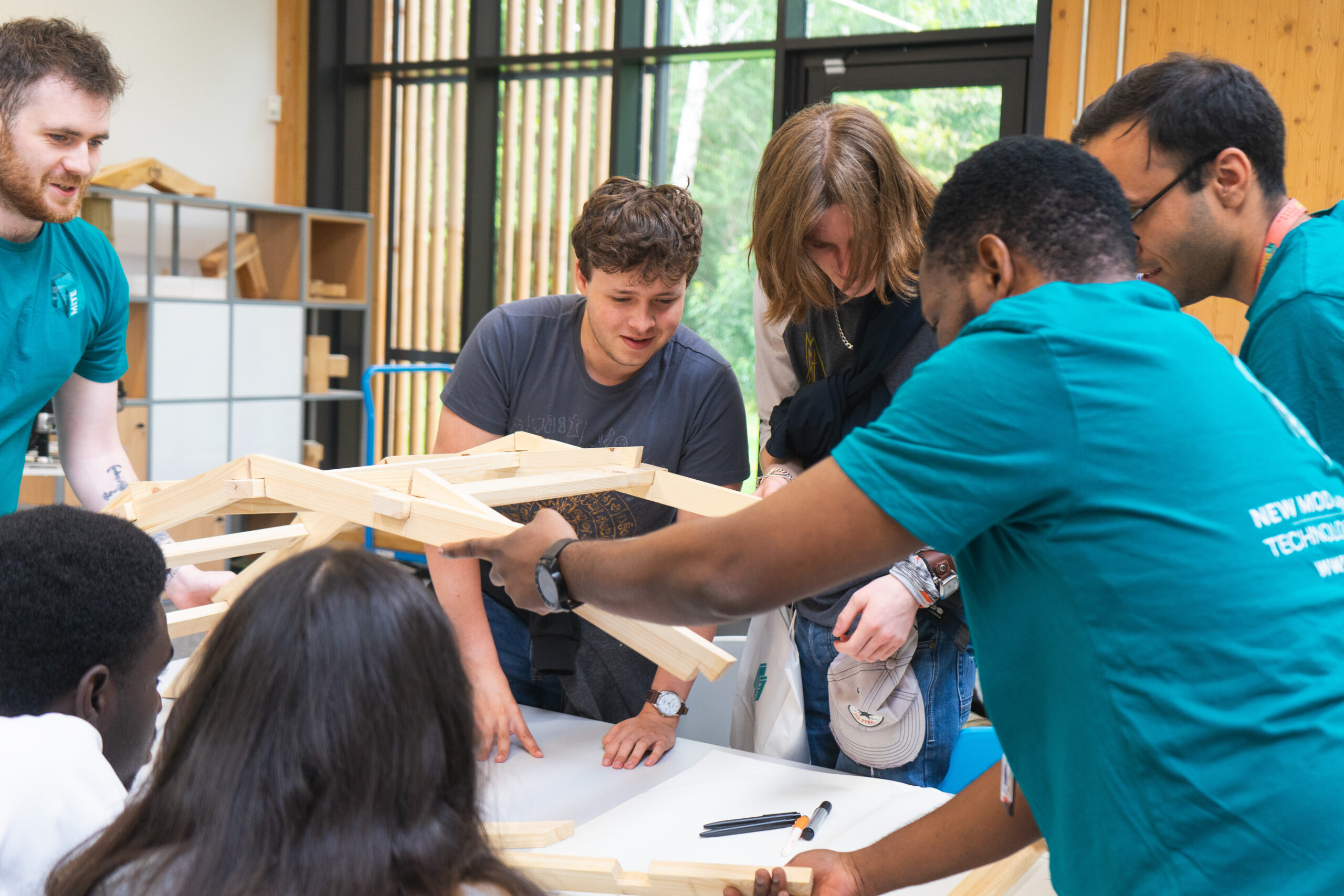
The New Model Institute for Technology and Engineering (NMITE) in western England offers an unorthodox approach to university life and learning by any standard. In the United Kingdom, where tradition reigns in higher education and has for several hundred years, NMITE President and Chief Executive James Newby says the fresh concept behind his college is especially radical.

Around 2021, when NMITE welcomed its first class of students, Newby joined the team of what he calls “closet revolutionaries,” dedicated to forming a new generation of engineers uniquely prepared for career. The approach centers highly practical, collaborative assignments that mimic dynamics in the workplace. The intimate, immersive, and accelerated pathway attracts a wide range of students, all hungry to get the most out of their education — and their money.

With LearningWell, Newby discusses the big idea behind NMITE and the many small deviations from the standard that bring it to life. He’s leading with the “politeness” to navigate British education from the inside and the boldness to envision how one institution could launch a movement.

LW: Tell us a bit about the concept behind your work and its history. Why is this new approach important right now?

JN: NMITE is a very rare thing in the U.K. higher education system — a new university starting entirely from scratch. It’s very unusual in the U.K. for new universities to happen at all, but to happen without evolving from some precursor institution is incredibly rare. 

There are really two key strands to our mission. The first is that the U.K. engineering employers have, for about 20 or 30 years, been complaining that the graduates they get from the traditional higher education sector just aren’t what they need — don’t have the right skills. They’re not ready to work. It takes too much time, too much money, and too much effort to convert them into really good, valuable employees. So we wanted to create a university that would just prepare a different type of engineering graduate, and our key focus was to make those graduates work-ready. It’s not just about producing brains on a stick or graduates who are good at winning pub quizzes. They need to be able to work and interact and understand what they’re doing. 

The second key strand of the mission was to put a university in a part of the country in the U.K. where there hasn’t been one before and, therefore, where very few young people went to university. When I explain this to Americans, they’re always very surprised because we always look like such a small country from the American vantage point. But there’s such significant regional variation in the U.K. that we feel like a number of very different countries all crammed onto this very small island. So the part of the U.K. that we’re in near Wales is very sparsely populated, and, actually, very few young people who grow up in this part of the U.K. will ever go to university and enjoy all the life benefits that come from having that level of education. There’s just a lack of ambition regionally. There’s a lack of pathways that are really clear and easy to access for young people here. So we wanted to create a new type of engineer and really warm up this higher education cold spot in the U.K.

Those are the two things we were set up to do. It’s fair to say it took a long, long time to get us off the ground. We knew we didn’t want to create something that would just add more capacity to an already quite crowded higher education sector. It had to be different. We had to be quite disruptive — in as positive a way as we can — to a sector in the U.K. that had really not undergone any kind of major reform, any structural reform for generations. Most young people in the U.K. who go off to university to do a degree do it in the same institutions in the same kind of way that they’ve always done it. Every other sector of our economy has been completely reformed in the last 30 or 40 years through market disruption or political prioritization. But higher education has largely grumbled on in the same way. 

LW: Was the prospect of leading that sort of rare change in U.K. higher education what personally compelled you to get involved with NMITE? What stage in your career were you at when you joined the team?

JN: I had been working in a big, traditional university — the sort I’ve been describing in disparaging terms. So I was probably part of the problem. But I was approached and asked whether I might be interested in this really mad idea of building a new university. It was one of those questions where you think, If I say no now and then just go and do another job similar to what I’ve been doing for the last few years and just plop on through to retirement in that way, then I’ll just regret for the rest of my time that I never did this. So I took the plunge and did it. I’ve never regretted it.

We tend to attract staff who are sort of “closet revolutionaries.” They’re really frustrated by the system they feel stuck in, and they really want to do something exciting and different. Even if it might fail, you just want to do it. Or we recruit people who just don’t come from the same traditional background. A lot of our team are early career academics, so they’re in their late twenties, perhaps postdoctoral students. They’re not embedded in academic traditions. They’re good at innovation. 

I lived near London when I joined. I was in the part of the U.K. where all the economic activity and the main jobs are, and all the innovation is. So I did have to grapple with moving my family to this rural corner of the country to do this. That was not an easy decision, frankly. I remember it because it’s the decision we ask a lot of our students to take when they come from London or Birmingham or Manchester. It gives you empathy, if you just remember how you felt. So I did it, and I can tell them it is the best thing I ever did, and they should give it a try. And when you’re 18, you should do things like that. You should take a few risks.

LW: So despite being positioned to bring in a new type of student in its rural area, NMITE also serves students from far and wide? 

JN: It’s both. The U.K. system actually isn’t as regionally rooted as the American system. Most of our institutions have a national outlook and a national focus, whatever the location of their campus. Some of the smaller ones, just by virtue of their geography, do tend to recruit more local students. And there’s a trend towards attending your local university slightly more than there used to be, but that’s because it’s so much less expensive to do that than to have to pay for accommodation at some distant institution. And that’s another reason why well-off kids can make all the choices that they want to make and less well-off kids simply don’t have the same choices. That’s something else we’ve always been conscious of. We want to drive social mobility and give opportunities — the same kind of opportunities for the same kind of quality — to kids who generally can’t move around the country just because of economic constraints. Our split between local students and those recruited nationally is about 40-60 in favor of national students, but 40 percent is a significant minority in the U.K.

LW: Got it. Can you elaborate on some of the other specific ways you’re flipping the script on educational tradition in the U.K.?

JN: Well, the model is distinctive in the following ways: We adopt block learning. Our students learn one topic at a time in the form of an immersive learning experience in a single module. That’s unusual in the U.K. Generally, degrees are built from various modules of building blocks, but you’ll learn them in a timetable that moves you around the campus from one topic to another in any given week. It’s a very inefficient way of learning. I often draw the comparison to learning to play the piano. You learn much quicker if you spend three weeks doing it in a completely immersive way with a full-time tutor teaching you the whole time than if you’ve split the same number of learning hours across a year and do it once a week for one hour along with everything else. That immersive form of learning significantly accelerates learning gain for students. They learn and become technically proficient much more quickly. 

The other thing that’s distinctive is we accelerate the program, so we compress the learning into a shorter time period. Whereas it takes three years to do an undergraduate degree in a normal U.K. university, it only takes two years at NMITE. The reason for that is we make our students work nine to five Monday to Friday in this immersive way. That’s a much more efficient use of time. It reflects much more accurately the rhythms and patterns of a job — the workplace. It’s really good for developing a work ethic. We work very hard to make sure our students are on task for much more of the time. That means they’re working on something purposeful.

When we say that, it sounds very earnest. But we try to inject quite a lot of fun. We definitely don’t disapprove of fun. But what we really want them to be doing is meaningful, on-task work. That’s because our observation of traditional universities is students just spend an awful lot of time rattling around between lectures, not engaged in anything purposeful. And when you are paying by the year, that’s just not getting you the payback for the money you are spending. It’s just not good value for the student or the taxpayer or the university. 

Our students are always working on challenge-based learning. Instead of putting them in lecture theaters and transmitting theory to them via PowerPoint presentation or a lecture, they’re working in a hands-on way. There may be a series of quite short, sharp seminars to transmit technical information, but most of the time, they’re working on something that delivers an output that reflects what happens in a workplace. They might be building a prototype or a series of codes or a circuit board. We don’t test them by traditional exams. 

We’ve developed a whole pedagogical approach whereby students only succeed if the team succeeds, and they have to work in teams. We’ve designed it so you can’t possibly do the course — it’s too much — to do on your own. You could only succeed if you work as a team — divide the work up. And it’s just the social skills that develop, the extra support that inevitably provides — the nurturing that gives to people who are more neurodiverse and who struggle with self-directed learning common in traditional universities. That scaffolding is just provided in a much more real-world kind of setting. We find that’s hugely effective. 

So those are the main elements of the model that are different from a traditional degree. One of the things we’re quite obsessive about is the accusation we might not be academically rigorous — that this is just too vocational in its style. We obsess about academic quality. We are absolutely determined that the students we produce will have the same level of technical knowledge and proficiency as a student from a top university. But what will be different is they’ll have much more practical capability and much more emotional intelligence. 

LW: And when you heard from employers unsatisfied with newest engineers, were those the main things — work ethic, work experience — companies said young people were lacking? Are there other areas this model is directly responding to?

JN: We wanted our students to be really ethically conscious. We do that by teaching them quite a lot of liberal studies. They have to know how to do some engineering, but they have to know why they should do it — or why they should not do it.

Just being able to do something doesn’t mean it’s the right thing for you to do. We want them to understand the sociological impacts, the climate impacts — the ethical things you have to grapple with. We do a lot of work with the defense and security industry in the U.K., and that creates lots of really fascinating engineering challenges, but it creates quite a few ethical things to think about, as well. If you are building a drone, you might be building it for humanitarian purposes to deliver aid to disaster areas, but it could quite easily be repurposed to deliver munitions in a war zone. We can’t make the world simpler than it is, and we can’t make those problems go away, but we can equip students with the emotional intelligence to cope with the debate that happens around them, so they can choose where they want to apply their skills and who they want to work for.

LW: And I imagine that ethical training serves the more academic focus you were talking about, in contrast to those detractors who may say this school is totally devoted to professional development.

JN: Yeah, I’m not entirely sure how it is in the American system, but in the U.K., we have this rather tedious binary debate about vocational versus academic training. I mean, it sort of goes without saying you need both to really survive in this world and to thrive in this world. You have to be good at the practical teamworking elements, but you have to have good theoretical knowledge, as well. We want to create students who can think and do — not one or the other. We try not to overcompensate on the risk that we are viewed as too vocational and not academic enough. But on the other hand, we try not to say we’re one or the other or that one is more important than the other. The whole point is you can only succeed if you’ve led them both and produce people with genuine intellectual intelligence but practical and emotional intelligence, too.

LW: How does NMITE differ from other schools in terms of its criteria related to math and science?

JN: That was a really important thing when we started. So to do an undergraduate engineering degree in the U.K., it’s nearly always a prerequisite that you have a maths or physics A-level. An A-level is an advanced level of pre-university study, and to get a maths A-level is quite hard. It’s one of the hardest pre-university subjects you could do. Physics is hard, as well. And because they’re difficult, fewer kids do them than really should. But what we found when we were developing the NMITE courses was that most of what you need for that maths A-level doesn’t actually present until much later on — year two or year three. So we asked ourselves the question: Why do we exclude people from engineering because they don’t have that maths A-level, when they actually don’t need the content in the maths A-level until at least a year into the course? That would give us plenty of time to get them up to speed — recover their maths learning — and it would stop us having to exclude them from becoming an engineer. But if we did that, we would open up the profession of engineering to this fantastically new pool of people who are currently excluded. 

Would you believe that includes an awful lot of women because women don’t do engineering in the U.K. in anything like the numbers they do in other countries? About 15 percent of engineers in the U.K. are female. So there’s a massive diversity problem. Most engineers look and sound like me — not enough females, not enough from different backgrounds, and not enough ethnicity in the profession. We wanted to focus on was the gender problem: Can we set a target to have 50 percent of our cohort as female, so that when we recruit a girl onto our courses, we don’t put her in a class with 28 other boys, so she just feels like a minority the minute she walks in the door? What we found was bright girls in the U.K. who do maths A-level almost never go into engineering. They go into medicine and other disciplines. But actually, girls who don’t do the maths A-level quite like going into engineering. We’ve got quite a lot, and they’ve really thrived. 

We tracked the attainment – their mathematical and their other attainment – and we found that students with the maths A-level perform at a higher level than those without in the first year of the program, as you might expect. They’ve had better academic preparation. But by the middle of the second year, they perform at exactly the same level. The playing field is leveled, and that’s because their attainment is being tested on engineering progress, not mathematics progress. You don’t need the maths A-level. You do need maths, but you need it in a way we’re teaching it. There is no reason for universities to exclude people because of the certificates they hold.

LW: Moving to the student life side of things, you said you’re not an “anti-fun.” I imagine that’s in the classroom and outside the classroom, but what does student life look like holistically at NMITE?

JN: NMITE is right for a certain type of student. We are not right for everybody. That’s the first thing. We don’t claim to have all the answers or to be the model that will replace all other models. We are right for students who value working in a smaller institution, where everybody knows each other’s name. We want our students to know that they matter and to feel like they matter. They’re not a statistic or a number in a big cohort. Most of them will say they really like just the personal nurturing atmosphere that the small teams and the smallness of the institution brings. 

Most of them like the fact that they’re kept busy and on-task, especially if you are slightly socially awkward or shy. And for a lot of neurodiverse kids, it often presents as a kind of social awkwardness or a difficulty in forming connections and relationships. They do well here because they can work in a small team that isn’t scary or intimidating. It feels quite nurturing and after a period of time, they gain quite a lot of social confidence from being able to practice in the safe place that a small team provides. So we are often struck by the fact that some of our kids join us without being able to even look you in the eye or talk to you properly. And then by the end of the course, they’re like George Clooney. They’ve got all this charisma and this confidence. That’s the transformational change that we really see.

The students that this isn’t right for are the ones like, frankly, my two sons, who want to go to a big city, where there’s loads of social things to do and sports facilities and bars and restaurants and thousands of other students and loads of clubs you can join. We are not the right institution for students who want to do that. 

LW: Right. Is it a challenge to attract students who maybe didn’t see college on their path, even if the school is in their backyard — to get them to see this as an option and to come?

JN: It was a real challenge to start with. It’s becoming a smaller challenge as we go, the more we deliver good results. We’ve now got a graduated cohort of students out in the workplace. Our first-ever intake has gone all the way through and has now left – finished, graduated – and they’re in the workplace. That’s enormously helpful to telling people, “This could be you.” That’s reflected by our application rates, which are very strongly up. But to start with, that was really difficult. Our opening pitch was, “Come to a university you’ve never heard of in a part of the country you’ve never heard of to do a degree that’s really hard and no one wants to do. How ‘bout it?”

LW: On that note, what is the buzz like in the engineering community around this program? Are you seeing a lot of students who were once planning on a traditional path but then looked at this model and said, “Wow, this is a lot more interesting”? 

JN: We get a lot of those. A lot of our students could have chosen any university in the country. They have the means and the academic preparation to do that. A lot wouldn’t have been given a second glance by the traditional system, but a lot could have. And the buzz from the employers is just fantastic. It’s very important we work closely with employers in our challenge-based learning in our studios. That’s an important part of our model. Employers are embedded in our curriculum in a way they’re not anywhere else, and there’s a bit of altruism involved. A lot of employers just wanted to get involved with this really interesting experiment in higher education. But now we’ve got employers who want to join because they know the graduates are so work-ready — so capable — by the end of their course that they want to get in early so they can pick them off before they get picked off by some other employer. So most — in fact all — of our first cohort of graduates got jobs before they graduated, and most of them got those jobs from partners they’d worked with during the course. They just formed those relationships. That’s a key part of the model. It smooths the transition from university to work. It’s not a completely continuous transition, but it’s very close to it.

LW: And what might you be looking forward to from here on?

JN: Because we’re small by design, our aim is not to grow bigger and bigger and bigger and then dilute the model, as we start reverting to the sameness of the sector. But we do think there’s an opportunity, at least in this country, to replicate the model. It can become a kind of surgical intervention in areas that are economically disadvantaged because we’re a small, quite agile university. So instead of the normal hundreds of millions of dollars or pounds it would take to build an academic infrastructure that universities normally involve, we see ourselves as a small, modular, nuclear reactor that could be put into an area, and then it can just warm it up. It creates new jobs — creates more knowledge-based jobs — which is hugely important, and it creates more really good opportunities for a professional, rewarding, economically secure life for kids who would otherwise never have the opportunity to do that. 

You can reach LearningWell Reporter Mollie Ames at mames@learningwellmag.org with comments, ideas, or tips.

Posted in Q&A

What is “Academic Flourishing”?

Tyler VanderWeele, Ph.D., has in interesting C.V. He is a social scientist, an epidemiologist, and a theologian. And in the world of flourishing research, he is somewhat of a celebrity. VanderWeele is the director of the Human Flourishing Program at Harvard’s Institute for Quantitative Social Science. The initiative aims to study and promote human flourishing and to catalyze knowledge across disciplines that intersect with key components, including family, friendship, virtue, community, work, beauty, forgiveness, religion, purpose, and meaning. 

The program’s most recent research, the Global Flourishing Study, made headlines around the world for its eye-opening preliminary findings. Among them was the collapse of the U-shaped pattern of flourishing, which traditionally indicates greater levels of wellbeing among young people and older adults. According to the report, it was the poor mental health and wellbeing of the Gen Z cohort that caused the disruption. 

This month, VanderWeele and his team launched a separate initiative examining flourishing among young people — this time college students and their role in what VanderWeele calls “academic flourishing.” He describes the concept as “the relative attainment of a state in which all aspects of an academic community’s life are good,” including the degree to which institutions help students grow as human beings. 

The Academic Flourishing Initiative invites colleges and universities throughout the country to join in data collection and reflection in three areas: the individual flourishing of students, the flourishing of the campus community, and students’ perceptions as to how university life has contributed to their own formation. The last area excites VanderWeele, as he sees the understanding of how colleges contribute to attributes such as citizenship, character, purpose, and meaning as both innovative and, in some cases, controversial. 

In his office in Cambridge, VanderWeele offers coffee and conversation about the issues he has made the center of his scholarship and curiosity. 

LW: How did the Academic Flourishing Initiative come about? 

TV: Our working definition of flourishing is “the relative attainment of a state in which all aspects of a person’s life are good, including the contexts, the communities, the environments in which they live.” And while we’ve been looking at this at a global scale across numerous countries with our Global Flourishing Study, we do also firmly believe that a lot of the actual work of promoting flourishing happens in more local institutions. And from our prior reviews, we suggest four major institutional pathways to flourishing: family, work, education, and religious community.

As we’ve continued to reflect on how to promote flourishing in practice, we’ve thought that what we need to do is focus on each of these institutional pathways — on the dynamics that are specific to each of them and on how we can further strengthen opportunities to flourish. That led to work with schools and thinking about colleges and universities as well. On the school front, we partnered with the O.E.C.D. to develop a framework for metrics for education, for flourishing, which we’re also now working on operationalizing. But being embedded ourselves in an academic context, we thought we should take these notions seriously for our own university community.  What does it mean for an academic community to flourish?  It certainly involves the individual flourishing of the students, the staff, and the faculty which involves our established flourishing assessments — happiness and health and meaning and relationships and character and financial security.

But the flourishing of the community is more than that. It is also about good relationships within the community, proficient leadership, healthy structures and practices in place to help sustain the community with a sense of belonging and a common mission. To that end, we’ve taken our community wellbeing measure and adapted it for university context. But then we also thought, let’s turn to the mission and vision statements of colleges and universities and see how they reflect on their own understanding of themselves.

“Let’s turn to the mission and vision statements of colleges and universities and see how they reflect on their own understanding of themselves.”

You see pretty consistent themes, especially in research universities, related to the generation, preservation, and transmission of knowledge. But you also see, very regularly, notions of student formation — that institutions are here to help shape citizen leaders of the future, to help develop students who can contribute in important ways to society, to develop leaders who have creative capacities to address, in an ethical manner, some of society’s most challenging problems.

And we started thinking, Well, if we’re going to take the mission of these institutions seriously, we should start by assessing whether these beautiful, grand, important aspirations are, in fact, being achieved. Perhaps we can begin by asking students whether they think they’ve been shaped in these ways as part of their university or college experience. Has the university helped them to grow in wisdom and justice and leadership and capacities to work across difference — in addition to, of course, developing knowledge and capacities for critical thinking? It was those sorts of considerations that really led to this work and what we’re calling “academic flourishing.”

LW:  What is your pitch to institutions on why they should participate?   

TV: Essentially, we’re saying that the data collection that is typically taking place — often on retention rates and academic performance, job placement and salaries, mental health, experiences of bias and discrimination — is generally good. This is important work that should be done. But students who come to universities, and parents who send their children to universities — indeed, the universities themselves — often aspire to more. And if that’s the case, why aren’t we doing assessments on these other matters: whether there has been a growth in wisdom; whether they have greater capacity to think critically; whether they have been prepared for leadership; whether this has helped them to clarify their life purpose and define meaning? Students want this. If parents want this, and if universities and colleges aspire to this, let’s collect the data.

This is not being presented as an alternative to what colleges and universities are already doing, but rather as a supplement. And if colleges and universities don’t want to do that, then so be it. But what we’ve seen is that a number of them do, and so this is just an invitation to do so.

LW: In terms of the invitation to the colleges and universities, what exactly are you inviting them to do? How do you engage with them?

TV: We’re inviting them to participate both in assessment and data collection campus-wide, and then also to join a community of practice with other colleges and universities that are doing similar data collection. The idea is to reflect on the data, to try to understand it, and to try to work out together what the best ways forward are. How do you address the weaknesses as well as the strengths within a particular institution?

The heart of this academic flourishing survey is focused on — again — first, the individual flourishing of the students; second, the student’s assessments of whether the university or college is flourishing as a community; and third — and this is the real innovation — the students’ perceptions of the contribution of university life to their own development: to their growth and knowledge and critical thinking, yes, but also to their moral formation and character development and their capacities for leadership and citizenship, and their ability to find meaning and growth in the process of their college experience.

And so we’ve included 24 of these student formation questions, in addition to the individual flourishing and the community wellbeing questions. Universities are being invited to collect this data, and we have an automated Qualtrics survey to do this in a very straightforward manner. And we’ve now set up infrastructure to immediately convert that survey into a report for the individual school. And then that data will be used in a much larger database to try to understand dynamics across schools and universities. In addition, we’ll be hosting meetings and events to discuss the similarities and differences across institutions. If one university has a particular strength, we’ll talk about how this came about. How can the other universities strengthen in this regard?

LW: Do you get push back from people saying that flourishing and this student formation work is outside of the scope of higher education?

TV: In our academic paper, we include a principle with regard to the appropriate scope of efforts for flourishing in education. And we would agree that it’s not the school’s or the university’s responsibility to sustain all aspects of a student’s flourishing. This requires families. This requires neighborhoods. This requires workplaces. This requires religious communities. You can’t make the school responsible for everything, and they’re not equipped to do so.

On the other hand, just to say education is only about vocational career preparation seems too narrow because you have these extraordinary narratives — anecdotes — about transformative experiences. There’s real potential there, and we don’t want to restrict that potential. We’ve said what we’ve proposed is that the proper scope of educational efforts oriented towards flourishing concerns those aspects of flourishing around which societal consensus can be attained and for which educational leaders and staff and faculty are prepared to address.

LW: What has been the reaction to the student formation work?

TV: Different institutions each have a very different focus, and that needs to be acknowledged. We have divided the student formation questions into these four domains: knowledge and critical thinking, character formation, citizenship and leadership, and then meaning and growth. Not all of these aspects of student formation will necessarily be of interest to all institutions.

We think pretty much any college would be interested in increasing cognitive capacities and knowledge, so those we feel are always core. What we’ve also argued is, even for institutions that don’t embrace character formation as part of their mission, some of this is necessary to accomplish the cognitive and epistemic goals of their institutions. You need a certain level of perseverance to work through difficulties and to push one’s mind. You need a certain level of courage to work through controversial or challenging questions. And you need honesty in test-taking and research practices. We need justice and patience to be able to hear different perspectives we might not like.

I think everyone would agree on a lot of this. Take courage. Do we want our students to be cowardly? Let’s get a show of hands amongst the trustees and the faculty — who wants our students to be cowardly? What about honesty? Who wants our students to be dishonest? What about your practical wisdom? Who wants our students to be foolish? You’re just not going to get many takers. There’s a lot of individual character strengths that I think we can agree are important.

A number of colleges and universities have real visions of flourishing for their students, and that includes meaning and growth. Different institutions may place different weights on these various aspects of student formation, and we are not trying to be prescriptive. What we’re saying is, collect the data and hopefully your strengths align with where your primary areas of focus are. And if not, then it’s time to work on it.

LW: Do you find that schools are interested in flourishing because of the mental health association?

TV: Yes, I think there may be interest in flourishing because of mental health concerns, but we are trying to broaden beyond this. I think there may be roughly equal interest in the flourishing of the students and in these student formation questions. We’ve been leading with student formation as the real innovation here because there are other universities collecting wellbeing data. But all these aspects are related. I do think the mental health and wellbeing crisis amongst youth has gotten much of society to take these matters more seriously and to reflect upon them. What are the sources of that decline? I do think one of the sources is a lack of meaning, a lack of purpose. This is evident in surveys as well, when asking younger adults and students: What do they long for? What are they seeking? I think meaning is increasingly a common theme there.

LW: Four of your student formation questions are included in the Wall Street Journal college rankings. What does that indicate?

TV: We are certainly pleased that they would take these matters seriously, but we’ll let the college and university rankings folks continue their work. We are, however, going to try to use this data collection with the Wall Street Journal to launch the movement, but our goal after this is not to directly participate in any sort of ranking endeavors. We are focusing on the relative strengths and weaknesses of each institution, rather than comparing them. What can you be proud of and perhaps use in your marketing materials? Where are areas for growth, which you may not put in your marketing materials but want to work on internally? And then what do you learn from other institutions that may have different strengths and weaknesses than you?

LW: What’s next for the Academic Flourishing Initiative?

TV: We’re just starting out, and we’re focused on students. But as discussed in the academic piece, ultimately, if we’re talking about the flourishing of a community, that includes faculty and staff as well. So that’s another direction we would like to eventually go. We’d also like to look at alumni and parents. I think employers would be another interesting aspect of this. But we needed to begin somewhere, and students seem to be the right place to being.

Posted in Q&A

Student Mental Health is Complex

Whether you’ve studied psychology for four years or one semester, textbook theories often pale in comparison to the lived experiences of those around you. As I navigated the diverse and layered culture of the University of Miami — both as a student and mental health peer educator — I came to understand just how vital and nuanced mental health is for such a malleable population.

Whenever our group, Counseling Outreach Peer Education (COPE), organized classroom presentations, housing events, or tabling sessions aimed at marginalized communities, I saw firsthand how deeply mental health is shaped by trauma, identity, and the pressures of socioeconomic hardship.

While this may seem like a fairly obvious point to make, a short conversation with someone outside your own echo chamber illustrates just how detached we all are from the dynamics that feed into our mental processes. 

In the banality of it all, we have forgotten how to ground ourselves and acknowledge the emotions that come with our most difficult experiences. One unfortunate effect of an individualistic culture is the tendency to downplay the severity of our traumas.

Mental health is not a one-size-fits-all experience. It is deeply nuanced, shaped by an individual’s upbringing, identity, environment, and lived experience. It cannot be measured solely by diagnostic labels or external behaviors.

Mental health is deeply nuanced, shaped by an individual’s upbringing, identity, environment, and lived experience. It cannot be measured solely by diagnostic labels or external behaviors.

For college students in particular, mental wellbeing exists at the intersection of transition, expectation, and uncertainty. What looks like resilience on the surface may mask exhaustion, and what is labeled as disengagement may actually be emotional burnout.

Understanding this complexity is vital, especially in peer support sessions, where emotional nuance is often the difference between surface-level interaction and meaningful connection.

I know the sentiment may seem rich coming from a student at a private institution, but if you look beyond the name of my university, you’ll see a community filled with students from backgrounds far removed from the monetary comfort that surrounds Coral Gables.

Many of us work tirelessly to support ourselves, trying not to place any additional burden on our families. We throw ourselves into student-led organizations to show our parents that being here means something — that their sacrifices weren’t made in vain. For some, excelling academically and remaining emotionally composed are not just goals. They are expectations. 

Within this context, peer-to-peer roles take on deeper meaning. Student leaders are not only building campus communities but also helping one another manage the weight of invisible pressures.

At nearly every event I participated in through COPE, I spoke with students facing unimaginable financial stress, complicated family dynamics, or overwhelming mental health crises — often with multiple factors compounding at once.

Although the student population is majority White, students from all backgrounds — especially those from marginalized communities — often face significant cultural stigma around mental health. In many cases, families may attempt to dismiss or hide mental health struggles to save face, or they may believe that mental illness cannot exist in a “first world” country.

As a result, some students do not seek psychiatric care and instead turn to peers for emotional support. Peer education becomes vital in these cases, offering a space where students feel safe to share difficult truths they cannot express elsewhere. These conversations are not clinical interventions, but they are deeply effective, meeting students where they are and giving them space to feel heard.

College can be an isolating experience, but in those brief moments as peer educators, we create a space where students feel seen — because they know we understand what they are going through. We are not outsiders offering advice; we are peers navigating the same struggles.

Almost every student is struggling in silence, and what matters most is knowing that both their peers and their administration are showing up with genuine support. The effort to create safe, consistent spaces is what helps prevent this generation from repeating the silence of the last.

All of this reinforces the simple but often overlooked truth: Mental health conversations and peer education are essential to building a healthier student body.

Anisah Steele graduated in 2025 from the University of Miami, where she served as co-chair of Counseling Outreach Peer Education (COPE). Starting this fall, she will pursue her master’s in epidemiology at the University of Florida, hoping to bridge psychology and public health to inform more equitable, evidence-based mental health interventions.

Disclaimer: The views expressed in this article are solely those of the author and do not represent the University of Miami, its Counseling Center, or Counseling Outreach Peer Education (COPE).

When Questions Are the Answer 

At Roanoke College, purpose is part of the brand. With the motto, “Our purpose is to help you find yours,” the school prides itself on guiding young people towards full and rich lives focused on doing good in the world.  

The champion of this bold expression of formative education is Roanoke’s President Frank Shushok. With degrees in education and 30 years of experience in the field, Shushok is passionate about the role higher education can play in young people’s personal and professional growth and has compelling reasons for why they should be intertwined. In this interview with LearningWell, Shushok talks about creating counter-cultures on campus in which students are frequently asked meaningful questions without binary answers.  

LW: How has your background influenced your role as a college president?  

FS: First of all, I am a person of faith, and what I mean by that is my whole life has been shaped by a sense that life is for a purpose. Believing that my own life can push forward goodness in the world is something that both centers me and compels me. I’ve also been focused on interfaith curiosity and collaboration, and along the way, that has drawn me into many conversations about how people find meaning and purpose in their lives. 

Almost all people yearn to understand why they’re here, and I find very few people who, at the end of that question, don’t believe their life should be for something good. Whether I’m sitting at a table with Muslims, Buddhists, agnostics, Christians, or atheists, I have found that when we begin a conversation about how we find meaning and purpose in life, designing a life toward virtue is a really powerful connector. 

That framing says a lot about how I view higher education. I absolutely believe every student should be able to graduate and find work that can support them economically and support their families. But I also want them to find purpose in that work and to find an alignment between their gifts and talents and a need that the world has. When that happens, energy and hope abound, and who doesn’t want more of that?

I’m such a fan of the good work that’s being done on the science of hope and the idea that hope has three actionable components: goals, pathways, and agency. In short, to have hope, you need a goal you’re shooting for and practical ways to go after it. You also need pathways and a consistent belief that you can get there — agency. What I love about the agency part is some people have plenty of agency and some people are growing in their agency, and that’s the golden time when they need someone to walk alongside them until they have the confidence to make progress toward their goals. That’s our job. Fundamentally, I believe that higher education is there to inspire in students a sense of purpose, shaped by character, and that makes life so much richer for them and for everyone in their orbit — their families, communities, workplaces, etc.  

But for whatever reason, I find a lot of college students haven’t thought about how their education can be about connecting to much more than a job-slash-career. Often, it’s not a question or a conversation they’ve been having at home. And it’s not a conversation that they’ve been having in the educational environment they were in prior to college. Sometimes, they make it all the way through college and never have this dialogue with anyone, even within themselves. In fact, they mostly have had one conversation, which is about the return on investment question: “If I go to college, what should I study so I can get a certain job, so I can have a particular level of economic security?” 

Those are also good questions, but they’re much more powerful if they’re coupled with other questions like the imperatives we have in our strategic plan, which champions the exploration of purpose, the pursuit of character, and the graduation of leaders. This is a distinction of the Roanoke experience. We’ve created this entity called PLACE (Purpose, Life And Career Exploration) drawn from our old career center model, and what we’re saying here is this process is about so much more than getting a job.  

LW: Do you think these imperatives are particularly important at this moment in time?  

FS: Absolutely. I found a report released by the Harvard Graduate School of Education sobering. Thirty-six percent of young adults aged 18 to 25 are struggling with anxiety, and 29 percent are dealing with depression. The study reveals some likely suspects, including worrying about finances, feeling pressure to achieve, being concerned with the world unraveling, and feeling like they don’t matter to others. But the number one driver of poor mental health for young adults was a lack of meaning, purpose, and direction in their lives, with 58 percent reporting. We can’t ignore that deep yearning to understand what makes life matter.

LW: How do you go about “meaning making” with students?  

FS: There are many practices to engage, but we need practices that shape culture so that culture shapes practices. What I mean by that is we first ask good questions, which will help us get good at being thoughtful and spur us to think more deeply about better questions worthy of our time. In a way, it’s countercultural. The power of a question is a crucial thing to acknowledge. Occasionally, I experiment to see how long it takes for someone to ask me a meaningful question — a question that asks me to reveal something about who I am, what I believe, where I’m going, what’s motivating me, and why I care.

If you pay attention, you can go a whole day without anyone asking you that kind of question. I think what we can do in a place like Roanoke College or any institution of higher education is to create a culture where we teach ourselves to be countercultural and to ask questions of meaning and purpose, questions that engage all of our not-so-disparate parts: our intellectual selves, our emotional selves, our moral selves. But we have to acknowledge we live in a world where people are moving at warp speed. Technology overwhelms people, and no one’s asking them meaningful questions. In turn, they’re not developing the habit of asking other people meaningful questions. Without meaningful questions, there is little need for astute listeners. And when we don’t develop astute listeners, we’re often not encouraging thoughtful learners.

“Without meaningful questions, there is little need for astute listeners. And when we don’t develop astute listeners, we’re often not encouraging thoughtful learners.”

I have two questions that I keep at the forefront of my mind every day as I approach my work: First, what am I trying to increase the probability of occurring through my daily activities, conversations, and experiences? And second, what am I doing when I’m doing what I’m doing? See, every one of us is engaged in seemingly unidimensional transactions, but underneath them is a greater purpose. Whether you’re serving food in the dining center or you’re advising or you’re standing in front of a classroom, the kinds of questions you ask and the kinds of listening you do and the way that you view your purpose — what you’re doing when you’re doing what you’re doing — it shapes everything. So many people on a college campus don’t understand the incredibly transformational and powerful role they play as educators when they enact the important and powerful pedagogical practice of asking meaningful questions, followed by deep and curious listening.

LW: How do you get a whole campus to embrace this approach?  

FS: It’s slow and iterative, like all transformations. In many ways, the headwinds pull you away from doing these things, so you must drive into the wind. You must be committed and undeterred when the car’s shaky. Sometimes, you have to slow down a little, meaning it will take a little extra time, but it will be worth it. But if you believe that the whole world can shift by doing this, you can stay the course.

There’s a book that I’m particularly fond of by Peter Block called “Community: The Structure of Belonging,” where he talks about the small group as being the unit of transformation. You think of these movements as top-down, and they are to some degree because one of the first things you must do is declare a shift. In our case, we determined and stated that we would make the exploration of purpose, the pursuit of character, and the graduation of leaders a distinction of Roanoke College. 

But a stated plan becomes a cultural transformation at the small group level. It’s the small conversations. What new conversations do we want to have, where will we conduct them, and who at every level will start? These things happen at the micro level, and then they become exponentially more likely to occur naturally on a campus. Over time, you’ll be surprised that everything has been transformed.

My assumption about how we build people of character and shape virtue and moral fiber is that none of it happens outside the context of community, and you can’t desire community until you’ve experienced it. One of the immediate structural challenges when people enter a new environment is to help them experience community. There are a lot of young people who come to a college campus who haven’t experienced it, and they don’t know that they need it. They’re not going to look for it. We have many, many lonely young people. It’s up to us to play a structural role in creating an environment that increases the likelihood that community happens. 

LW: Would you connect this work to what employers say we need more of: people who understand people? 

FS: Yes. When you think about the technical skills that are required to build a 21st century aircraft, it requires incredible knowledge of physics, engineering, aerodynamics. But we also need people that can convene other people from different vantage points and communicate in adaptive ways that allow for understanding based on different acculturation. And look what happens from a character or virtue standpoint. If there is pressure to produce something in a particular timeframe that may not be safe, that’s not a technical question. That’s a moral question.

You really need expertise and character. You need a competent “what” and a firm “why.” You need to know what you’re doing when you’re doing what you’re doing. Are you taking care of humanity? Are you loving people? Are you looking for opportunities to lift others up? Are you viewing yourself as part of a greater community? Those are the kinds of questions, the kinds of values, that when coupled with the job that you have, make such a powerful combination.

LW: Does higher education have a role to play in addressing the polarization we are experiencing on so many levels? 

FS: Yes. I think this is why I’m attracted to this conversation of character. Most of the skills that are important in character formation are learning to listen and asking good questions, which may be as simple as forming a meaningful question, versus a question with a binary answer. You get better at these things when you’re equipped, and then you get to practice in an environment where there are people with diverse viewpoints and different backgrounds. And I think a legitimate critique of higher education is that we have preferred echo chambers and haven’t been interested in listening to and learning from some voices, and there are some good reasons why that’s been the case. But if we view leadership as growing the skill and capacity to bring people together to achieve a common goal that is good for all, then yes, we can widen the circle. And I think those who can do that most effectively must be well-informed people of character. Because that is what will keep you in a place of productivity when times are tough and conversations are hard.  

You can reach LearningWell editor Marjorie Malpiede at mmalpiede@learningwellmag.org with comments, ideas, or tips.

Posted in Q&A