Physician, Heal Thyself

In his book Languishing, psychologist Corey Keyes describes burnout as “finding it hard to bring joy or meaning to activities that you once found greatly fulfilling.” This flattening out of your emotions takes many forms: the parent struggling to read a bedtime story to his child; the graphic artist unable to remember the thrill of creation; or the mid-career physician who wonders, “How did I get so removed from the work I once loved?” In the medical profession, burnout is particularly insidious. Its hold is both personal and systemic, moving from institution to practitioner to patients, families, and communities. 

Fortunately, that same causality can work in the reverse. The Kern National Network for Flourishing in Medicine (KNN) has started a movement to bring connection and fulfillment back to the medical profession in the hope of transforming a system that, in many ways, is putting the health of its stakeholders at risk. The KNN is infusing a framework for flourishing into medical schools and academic medicine so that what is taught, learned and practiced is not just skill and competency, but also models of character, ethics and purpose. Recognizing the interconnectedness of medicine, and its relationship to public health, the KNN is also working with health systems and within health professions to rethread medicine’s frayed social compact. 

“With the ever-changing demands in healthcare, physicians are met with complex challenges testing their ability to make the best decisions for their patients, communities and their own flourishing as practitioners, said Dr. Cheryl Maurana, the Founding Director of KNN and professor and senior vice president at the Medical College of Wisconsin (MCW). “KNN places an intentional focus on character, caring and practical wisdom to ensure that physicians are best positioned to successfully navigate these demands.”

The theory is that centering these values and behaviors within individual students, faculty, residents, and practitioners will have a cascading effect on the profession and health systems overall. It’s not about payment reform, though market dynamics are a consideration. And it’s not about individual wellbeing, though that, too, is a part. The KNN’s framework for flourishing in medicine is inherently relational and rooted in connection with others. Though it addresses deficits in the system, it adopts an asset-based approach that involves drawing from one’s own strengths and values when making some of the most ethically challenging decisions any professional can make. 

The movement, which began several years ago, may just now be reaching its tipping point, thanks to a number of factors including two large grants from the Kern Family Foundation and the global pandemic which exposed long simmering issues within the healthcare system. As early as 2012, Foundation leaders were meeting with a group of medical educators, including Maurana, who were struggling to address growing problems within medical schools and academic medicine. These included burnout characterized by the deterioration of hopefulness and vigor in medical students and faculty. Studies have demonstrated that high rates of burnout correspond with lower levels of physician empathy and altruism in caring for patients. “We were looking for an antidote to that,” said Maurana.

By the mid 20-teens, in addition to MCW, the group included six other medical heavyweights: Dell Medical School at The University of Texas at Austin, Geisel School of Medicine at Dartmouth, Mayo Clinic Alix School of Medicine, University of California San Francisco School of Medicine, University of Wisconsin School of Medicine and Public Health and Vanderbilt University School of Medicine; along with passionate leaders like Dr. John Raymond who was early in his presidency of MCW and dedicated to helping transform medical education towards these goals. 

Many within the profession felt as though the pendulum had swung so far in medical education that it was concerned only about competence, and it had lost the idea of the whole person formation. The schools’ believed what the medical profession needed was a foundation for flourishing and they set about establishing the pillars that would lead to that outcome by working together and examining the literature. They eventually arrived at: character, based on the elements of the Jubilee Centre’s framework of moral, civic, intellectual and performance virtues; caring, described as “emphasizing an ongoing practice and approach that recognizes human interdependence and works toward a stronger democracy”; and practical wisdom, as noted in the work of Kenneth Sharpe and Barry Schwartz, which is continually developed through experience and critical reflection toward action, something Maurana calls “doing the right thing, at the right time, for the right reason.”

“What flourishing in medicine means is reflected in the solid framework the KNN has developed so It’s not just a nice word to hear – who doesn’t want to flourish? – it provides a research base to consider flourishing in individuals and systems and to understand practices and conditions conducive to flourishing,” said Christopher Stawski, senior program director and senior fellow of the Kern Family Foundation, which formally established the consortium as the KNN with their first investment in 2017. Another grant, approved in 2022, is helping to fuel its growth. 

Kimara Ellefson is KNN’s National Director of Strategy and Partnership, a position that reflects the expansion of the organization’s targeted impact. She says the focus of the KNN, and the Foundation, has grown from medical education, to all medical professions, to health systems overall, in an acknowledgement of the interdependency of these domains, once again laid bare by the pandemic. She points to work KNN is now doing with hospital systems, including large, for-profits which are concerned about the wellbeing of their residents and the effect it can have on patient care. While the systems work is nascent, individuals representing over 50 organizations within the health care ecosystems are now engaged with the KNN in a variety of ways through student chapters, organizational members, and project partners. 

“We hope that the lens of flourishing is adopted by the majority of medical schools and healthcare systems in this country so that policy decisions, education decisions, staffing decisions, and leadership decisions are made through a flourishing lens,” she said. 

Living the Movement

When asked what “flourishing in medicine,” means to him, med student Vincent Busque said “to me, flourishing in medicine means taking pride in the authentic ways in which we take care of our patients, both through medical care and especially as fellow humans, while contributing to and being supported by the broader medical community.” 

Busque is a third year student at the Geisel School of Medicine at Dartmouth and has been involved with the KNN since he arrived in both formal and informal ways. He attends KNN student conferences and has led student workshops but he also incorporates the KNN principles into everyday actions like sending congratulatory notes to his classmates at the end of the year. A natural optimist with a gift for coaching, Brusque tries hard not to let negativity, like attitudes between battle-worn educators and anxious students, get him down. But Brusque is also the first to say, “med school is no joke.” As he begins his clinical rotation when the challenges of his chosen profession become very real, he will lean heavily on the KNN framework which he says gave him a unique kind of mental toughness. 

“I try to do something caring every day – even if it’s little things like getting someone a blanket or popping back in on a patient,” he said. “I think that is what is going to make me a better physician because when the going gets tough, you need to connect back to why you went to medical school in the first place and for most of us that’s about caring for people in really difficult and emotional situations.” 

“Flourishing in medicine means taking pride in the authentic ways in which we take care of our patients, both through medical care and especially as fellow humans.”

As a KNN student leader, Busque helps his classmates understand what words like flourishing, caring and practical wisdom mean in a clinical scenario, particularly a challenging one. He says use of love languages like affirmation, physical touch and acts of service can help illuminate caring. Relevant questions like how best to support a struggling colleague provide relatable examples for practical wisdom. 

“KNN has allowed me to say that it is actually OK in medical school to care about your values, your character, and your community. With time, we will all come to understand the science (of medicine), but it is these things that are going to allow us to be truly great physicians,” he said.

One of Busque’s models for professional excellence is Dr. Roshini Pinto-Powell, an educator and administrator who is co-leading the KNN curriculum development at Geisel. She is also the school’s associate dean of admissions and only partly jokes that she is personally responsible for dedicated learners like Vincent Busque. A physician for forty years, Pinto-Powell is a KNN devotee who sees the framework not so much as programming, but as a mindset shift and a pledge that permeates everything that goes into medical education. She is currently completing a masters degree, funded by the Kern Family Foundation, from the University of Birmingham at the Jubilee Centre for Character and Virtues. 

Pinto-Powell will be using the KNN framework in her “On Doctoring” class, and this coming year will include a new seven-session pilot class called “Professional Values Formation.” This is a re-envisioning of Geisel’s Coaching Program which was created in 2019 to connect all incoming medical students with a faculty coach for the duration of their studies, to maintain consistent academic & professional support throughout training. In this program, students connected with their coaches in small group coaching sessions, focusing on broad topics like the medical school roadmap, professional identity formation, professional enculturation, and self-regulated learning. Students also met with their coach to receive individualized support in building and reflecting on their goals, challenges, and experiences.

As Geisel dives into developing the new “Professional Values Formation” pilot, leaning deeply into the KNN framework, Pinto-Powell is particularly focused on bringing the appropriate vocabulary to this pilot program, which will be introduced with both students and faculty, in order to have a common vernacular she believes was lost with the secularization of education. She says that while biomedical ethics has an important role in medicine, a practical wisdom framework of thinking allows for nuance and particulars, critical to wise decision-making.

“The separation of church and state has sort of muddled the idea of morality and virtue in medicine into thinking its religiosity and it’s not,” she said. “I think our young people really lack moral vocabulary as a framework and we need to bring that back for them.” 

Pinto-Powell has a strong advocate in Dr. Sonia Chimienti, the school’s Dean of Educational Affairs. In an indication of the school’s broad perspective on health care, she also oversees the masters in public health and masters of science programs as well as the MD program at Geisel. “What we are trying to do is create opportunities to do more learning together earlier in education. This will help us to understand each other better, and ultimately improve how we work together,” she said. 

Chimienti believes Pinto-Powell’s work with faculty, as well as students, is a critical part of the KNN framework. “A focus of our work in creating our learning collaboratives is to help with the development, the nurturing, the appreciation, and the ongoing respect of our educators so they can role model and be those physicians that the students aspire to be,” she said. 

In many ways, Busque, Pinto-Powell and Chimienti are the embodiment of the KNN movement. While they acknowledge the challenges inherent in health care, they all hope to change the conversation from burnout and blame to a renewed sense of joy within the profession itself. 

“When I think about this as a movement, I think about reclaiming the narrative of what it means to be a professional, a physician, a public health specialist, a nurse in this era, in this time,” said Chimienti. “It’s about showing up every day and bringing the character and caring that you grew up with and developed to the moment that you are in; to the person who is front of you – whether it’s a student, a patient, or a colleague – and upholding the standards of the profession we all hold so dear.”

What’s Your Story?

When Kylie Martin was studying abroad in Gdansk, Poland, she visited the Stutthof concentration camp with classmates. They walked the paths where victims took their last steps, and somberly regarded the piles of shoes. But the quiet detail Martin found most arresting was one that few others even noticed: In the women’s housing, wooden support beams were covered with old graffiti, messages etched in languages she couldn’t read.

“I couldn’t stop thinking about it. Here were these women experiencing genocide first-hand, yet something had moved them to carve messages on the columns. Was it an act of rebellion? A source of motivation to keep going? Or was it just a form of preservation, to nick up a beam with writing that could endure after death?” wrote Martin in the pages of her journal. As an aspiring journalist, she found herself naturally attuned to finding meaning in small details. “To me, that represented something so magnificently human — leaving behind something that’s proof to ourselves and the world, ‘I was here’.” 

When she returned for her senior year at the University of Michigan-Dearborn, she was invited to share her reflections as part of the school’s new Digital Storytelling Program. The program had been launched with a grant from the Coalition for Transformational Education, designed to encourage Dearborn students to craft personal narratives in a multimedia format. It also allocated funds to hire the students to become digital storytelling mentors to other students, in turn teaching them the skills they’d learned. 

Martin’s five-minute digital story included curated images of Stutthof, paired with the audio recording of her script. In its conclusion, she wondered if this was to be her role in the world — amplifying the voices of others unable to share their stories.

Using the storytelling format in an academic setting was new for her. “Digital storytelling was a method of portraying what you’ve learned that’s so much more meaningful than an academic paper. It says something very unique about the person who created it. You’re seeing a whole other side to them that you wouldn’t see if you were just reading a paper,” says Martin, who has since graduated and is working as an intern at the Detroit Free Press. “Storytelling might not come naturally or easily to some students, but it’s a strong way of getting across a message or experience. Creativity can be like a muscle — the more you work at it, the better it gets.”

The University of Michigan-Dearborn is one of a growing number of campuses recognizing the power of storytelling as a life skill worth teaching. This isn’t news for students in the arts, media, or communications, and the ability to build a compelling narrative has obvious applications and benefits across all kinds of industries — sales and marketing, law and politics, conservation and urban planning, and so on. This is what happened. This is what we need to solve. This is why it matters. In recent years, the job title “Chief Storyteller” has infiltrated the org chart in companies like Nike, Microsoft, and IBM, and narrative techniques are becoming more widely applied in STEM fields like engineering and medicine. Storytelling combines the “hard” skills of problem-solving with the “soft” skills of communication and empathy, bridging the personal and the professional. Little surprise then that campus leaders find storytelling a good tool to approach a range of important conversations including equity, career development, wellbeing, and more.

More Than a Single Story

Dr. Domenico Grasso, Chancellor of the University of Michigan-Dearborn, was first intrigued by how storytelling might influence identity formation in students when he watched, and was deeply moved by, the “The Danger of a Single Story,” the TEDGlobal talk by Nigerian novelist Chimamanda Adichie. Adichie recalls arriving on campus in the U.S. and meeting her roommate, who was surprised to learn Nigerian people spoke English and listened to more than tribal music. In her talk, Adichie warns about the risk of widespread cultural misunderstanding that occurs when people make assumptions about a group of people, thinking one version of the way they live represents the narrative of an entire place.  

The message made an impact on Grasso, who saw the beneficial applications for breaking down cultural misperceptions on his suburban Detroit campus. “Storytelling is the act of considering the things we take as a given and articulating them, so that they’re out in the open,” he says. “When we put into words what we assume or presume, we put it on the table to be able to talk about it.”

Dr. Grasso worked with Dr. Maureen Linker, Associate Provost and Professor of Philosophy, to create a digital storytelling project that would solicit, hire, and train students in the art of multimedia technology. After two successful cohorts of the digital storytelling project, he had an idea: What if the skills of storytelling, and the benefits of learned empathy, could be harnessed in the service of more authentic Diversity, Equity And Inclusion (DEI) initiatives? 

Just last month, he revolutionized the school’s DEI process, and re-established it as the Office of Holistic Excellence. An important part of the new office’s outreach takes the form of learning about other people’s perspectives through storytelling, with a model that takes inspiration from NPR’s StoryCorps. 

“The initial concept of DEI was to bring onto campus people with diverse ideas and views and origin stories,” he said. “But in our traditional DEI approach, we never asked people to tell their stories. It was enough that they checked the box, which was African-American or Hispanic or LGBTQ or veteran, and so on. And then that was it. That was where the DEI ended. We have a very diverse and heterogeneous community, but we never asked them to enrich the campus by engaging with their stories.” 

In the initial digital storytelling project, as in as her philosophy classes, Linker worked with the students in the storytelling cohorts—which often began with overcoming their default mode of assuming their lives weren’t “storyworthy.”

“We have students who say, ‘Those aren’t my skills. I can’t do that.’ And we say, ‘Are you human? Then you’re a storyteller.’”

“They could look at philosophical writing from the lived experience of people on the margins, but still say their own life was not particularly interesting. And once they started working on assignments and had to share aspects of their lives, they were fascinating and complex and full of insight,” says Linker. “It has a lot to do with our demographics as a regional campus, a commuter campus. There are so many stories and perceptions of the Detroit metropolitan area. So I used Adichie’s work as a springboard for the digital storytelling project, and I was interested in having the students address and lean into the myths and stereotypes about the area and tell stories from their point of view.”

Storytelling is as old as humanity, traced back to our earliest ancestors’ campfires and cave paintings. Narratives have always been used to pass down knowledge, traditions, and culture; they make sense of the world, foster shared identities, and ensure survival. Evolutionary biologist Stephen J. Gould calls humans “primates who tell stories.”

And yet we aren’t born with the ability to tell a story; we have to acquire language to communicate, and function in social circles so we have others to communicate with. It’s a basic but critical life skill to live in community with others: persuasive storytelling compels others to partner with you, listen to your vision, and avoid the dangerous path, follow your plan. Storytelling as a genre is a broad umbrella, encompassing the skills of telling a story — the rollout and pacing of critical details, sometimes incorporating humor, culminating in a relatable larger message. But it can also mean knowing how to understand and tell your story, with the self-awareness of the personal narrative.

“We have students who say, ‘Those aren’t my skills. I can’t do that.’ And we say, ‘Are you human? Then you’re a storyteller,’” says Jonathan Adler, a psychology professor at Olin College of Engineering. Adler is also co-founder of The Story Lab at Olin, designing and coaching storytelling experiences grounded in literary practice, the performing arts, and psychological science. Beyond Olin, he also works with doctors in the Health Story Collaborative, a non-profit organization aimed at elevating personal stories in the healthcare ecosystem. 

Medicine, engineering, STEM — they all rely on stories, he stresses, as much as the so-called arts. “The narrative is sort of the default mode of human cognition. Even if you’re going to spend your life writing computer code, you’ve got to be able to explain what you’re doing and why you did it that way and why it matters to the people around you. ‘Well, my goal was X, so then I did Y.’ That’s a story,” he says. “Effective communication depends on narrative fluency. And there is no profession about which you don’t have to communicate the work you’re doing.” 

The narrative ecology we live in starts young. High schoolers need to tell their stories to get into college, and are asked in job interviews, Why do you want to work here? Why are you the best person for the job? Students might have spent their school years crafting persuasive academic essays. But the careers they’re entering require narrative powers of expression to put their goals in context. And sometimes they call for the self-awareness and insight to fit themselves into the story, making the case for their vision, and why they’re the person to make it happen. 

“Storytelling has the potential to do something much deeper and more transformational, which is to help people articulate why they care about the things that they care about, and what they’re trying to do with their lives,” he says. 

For Olin’s Story Lab, one of the key forums for students to perform their narratives is a story slam held during Candidates’ Weekend, when accepted undergraduates visit to decide whether this is the place they want to matriculate. It’s a bold move and an act of faith for the college to display these authentic voices at the same time the college admissions office is spinning its own persuasive narrative. In this context, student storytelling does more than entertain and inform with candor and empathy. It lets the listener in on the secret that it’s okay not to be perfect — to experience academic stress, social anxiety, identity confusion — which might just make Olin the perfect place to feel at home.

Adler recalls one impactful story — “a tell-without-telling story” — in which a student shares an episode of taking care of her little sister. In the course of the narrative, it becomes clear that the experience took place in the context of poverty, darker than expected, and that she was in fact only three years old trying to microwave a hot dog for a baby. 

“Working with students on their stories, we’ve developed a really good attunement for what’s the right amount of vulnerability to share in a story. When it became clear that we were dealing with trauma here, it took us all by surprise, and we decided, ‘Let’s just tell the story of making the hot dog in the microwave,’” recalls Adler. “Then the story can be infused with little moments where you as the listener are like, Oh, there’s more here, it goes a lot deeper, while keeping things on this subtler level in a way that was manageable, and resulted in a really captivating story. And partly what was captivating was that you knew there were layers beneath that you weren’t getting access to.”

In this way, he helps students master this technique of understatement, telling-without-telling, to help them process the story and keep it from becoming too raw. 

“And that’s what makes these experiences brilliant and beautiful. It’s a metaphoric way of thinking that I take for granted, because that’s the way I live in the world, but the students experience it for the first time as a superpower. Once they do that, it’s a skill that’s going to serve them for life, because they’re not going to need you sitting on their shoulder telling them where their metaphorical moments are like epiphanies.”​

Students who gain a well-developed sense of their own story benefit from the combined biological maturity and cognitive perspective to weave together the past, present, and future —and if they’re fortunate, with humor and grace. This is particularly true of young people who dealt with trauma, or shame. The act of processing the experience — and then sharing it and being received with support and understanding — helps them better appreciate variables that were beyond their control. 

“When we share our story with others, it reorganizes our experiences, makes them more categorized, and makes sense of it,” says Laura McKowen, founder of the recovery community The Luckiest Club dedicated to substance-use disorder. McKowen is a fan of storytelling because cognitively linking our life experiences — and seeing others identify with our experience — helps de-fang the otherness and humiliation. “We are meaning-making machines, and what we can’t put into a story and don’t have words for stays disorganized and festering and causes suffering and shame.”

Stories Are Pathways to Wellbeing

Will Schwalbe is a writer whose thoughtful insights into relationships characterized his 2012 memoir, The End of your Life Book Club. Last year he published a second memoir, We Should Not Be Friends, about an unlikely and lifelong relationship between him (gay theater kid) and Maxey (ebullient jock-Navy Seal) forged in a secret society at Yale in the early 1980s. This small society’s members, hand-selected for their vastly different paths in life, share awkward meals twice weekly until a capstone storytelling experience called the “audit.” Each member is given an entire evening to tell their life story — uninterrupted, for hour upon hour. 

“Each drew the group closer. Most of us admitted to suffering from imposter syndrome; there was relief in that admission. Inadequacy loves company,” he wrote. “It wasn’t the stories that bound us; it was the way we framed them for one another and the fact that we shared them in the first place.”

Advocates believe students who are making this cognitive leap in understanding their own stories are far better equipped to be making new connections with others — their peers, their professors, their coaches, their future bosses, and partners. They gain insight into which of their narratives land well — humility versus grandiosity. And they become far better listeners, better able to see the meaning behind the words and stories others share and respond in a way that means more than awkward small talk. The self-aware storyteller understands that the purpose of the story is connection, not painting himself as impressive.

“If you’ve got the floor in front of a group of people and go on about how great you are, or the greatest thing you did, you would really have to find some way to couch that to make it socially acceptable. For most people who have normal situational awareness, it’s going to tamp down the urge for self-aggrandizement or to boast, because it keeps you from connecting and getting anywhere,” says Matthew Dicks, a nine-time winner of The Moth GrandSLAM (the championship round of the country’s premier live storytelling competition) and author of Storyworthy: Engage, Teach, Persuade, and Change Your Life Through the Power of Storytelling. “The need to show yourself like a perfectly curated story or Instagram post is dishonest, when you’d be better off telling a story that’s funny, with a certain amount of deprecation, or a small disaster that led to moments of realization. Better knowledge of storytelling encourages people not to share their glorified moments, because those aren’t the ones that are going to connect.”

The therapeutic value of storytelling, among emerging adults, remains one of the craft’s most important benefits. The chronic loneliness that exists for young adults today isn’t made any easier by time spent reading their phones instead of reading the room. “Storytelling forces you to make eye contact with another human being. And then they say things that make you remember things from your own life, and connect to that person,” says Dicks. “I think the value in that is enormous for people trapped on their screens all the time. It used to be pretty normal in the world for that to happen, but I think now it actually sort of has to be coached and encouraged.”

This time in late adolescence is when young adults are laying down the first version of what scientists call their narrative identity, Adler says. So for traditionally aged college students, the college experience is happening while they are in the process of laying down the first draft of their story. “And we know that draft is going to stick around and influence their wellbeing over the course of their lives.”

Questions to Live By

Read by Laura Walker, President of Bennington College and former CEO and President of New York Public Radio

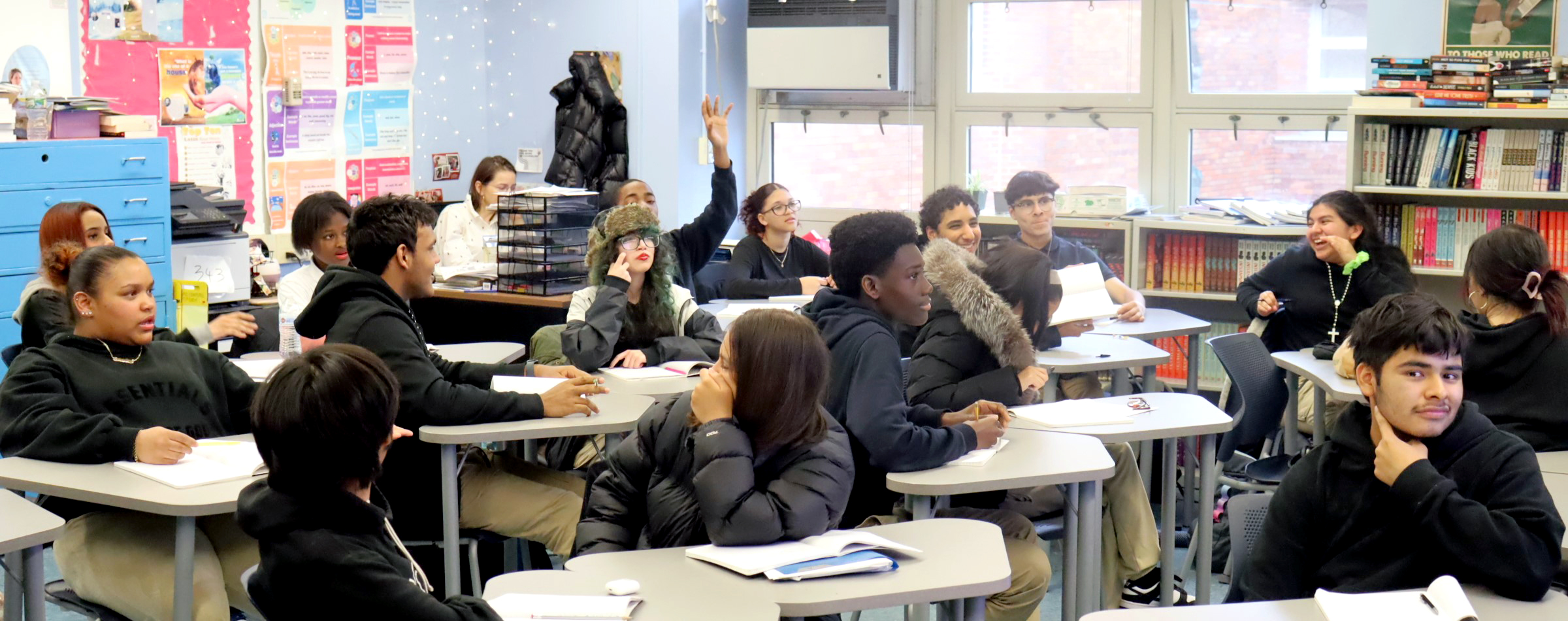
It is 8th period at the Bronx Latin School and twenty or so sophomores are taking turns attempting to answer some of life’s biggest questions: “What is purpose?” “Is life about me or is it about others?” “Why does it take courage to be yourself?” As hands go up and down across the classroom, some common themes emerge: vulnerability, interconnectedness, and acceptance. There is not a phone in sight. 

These students are taking the QUESTion Class, an evidence-based course offered in public high schools in low-income neighborhoods that gives young people the opportunity for self-reflection and personal development. Now in 10 schools in New York City, the curriculum uses a method whereby a series of questions — categorized by theme and developmentally sequenced — help students explore and form their own identities and strengthen their sense of agency in school and life. With superlative outcomes, both formal and anecdotal, the QUESTion Class may be one answer to how to prepare children to become adults in a complex and challenging world. 

“I think the class allows students to realize they can be resilient and that they have these inner strengths to make it through difficult situations,” said Matthew DeLeo, the students’ teacher at the Bronx Latin School and a trained QUESTion Class instructor. “It helps them realize that they’re stronger and more capable than they might otherwise have thought.”

The class is part of a larger effort known as the QUESTion Project, an initiative of the Open Future Institute, a non-profit founded by Gerard Senehi and his wife Francesca Rusciani. The project is, in many ways, the result of the founders’ personal quest to provide better support for the emotional development of emerging adults, something he says “allows them to understand themselves and what they choose to do rather than simply follow a script.” The class was designed for students with less of life’s advantages but its ability to build character and confidence is widely applicable and, many would say, universally lacking. 

“I know from my own experience, there’s not enough support out there to figure out who you are as a person and how that influences your decisions in life,” said Senehi. 

Senehi is an academic and entrepreneur who, himself, has held a number of identities. An alumnus of Amherst College with a master’s degree in education, Senehi has been a social worker, a teacher, and a successful entertainer doing mystery shows to help off-set his non-profit work. His role as a mentalist has made him appreciate the process of discovery that students experience in taking the QUESTion Class.

“One of the things we learned early on was the importance of making room for the unknown,” he said. “Questions about purpose and identity are really profound and intangible and we need to let students know they don’t need to have an answer but to be true explorers.”

The questions themselves are designed to empower the agency of students by encouraging intrinsic thinking as opposed to skill-building.

The QUESTion Project includes the QUESTion Academy, in which teacher training, professional development, and coaching take place and the QUESTion Leadership Program where students take leadership roles including co-teaching the class. The curriculum took four years to develop and was originally co-created and piloted with college students at the Florida State University and Amherst College, as well as students from public schools in the South Bronx where word spread to other public high schools. All of them are “Title I” schools that receive federal assistance to provide quality education to children from low-income families. A portion of the schools are college prep, where principals often look for tools to support first generation students in their transition to college. 

“What principals tell us is that it helps students with motivation for college but also with the skills needed to stay in college, which is a big issue for public school students,” he said. 

Senehi says the program’s approach – and the questions themselves – are designed to empower the agency of students by encouraging intrinsic thinking as opposed to skill-building. An advocate of learner-centered pedagogy, he differentiates this work from other social and emotional programs that might recommend the right choices, versus connecting them with the agency to understand those choices for themselves. It is a dynamic that can be jarring, but ultimately transformative for students. 

“I remember in my first QUESTion class I was like ‘whoa, why am I speaking more than the teacher?’ ‘Why are other kids telling me how they feel?’” says Alexander, a graduate of the Bronx Center for Science and Mathematics, now at SUNY Purchase studying acting. “In American education, we don’t really get to see students as the captains of their learning.” 

The QUESTion Class curriculum is 80 lessons, divided into five core units with different themes, topics and perspectives. They are Choice, Purpose, Fearlessness, Interconnectedness, and A Bigger Picture. In Choice, students might explore aspects of freedom and responsibility, and how the choices they make may affect others. Within the Fearlessness section, students begin to understand their fears within the context of others and explore the role of fearlessness in being true to themselves. Each curricular unit builds upon the others, and by the end of the course, students consider “a bigger picture” with a closing session in which they explore their place in a larger world. 

If there is a foundational pillar, it is purpose, or bringing meaning to your life in a way that is outside yourself, for which there is a well-documented connection to wellbeing. Purpose scholar William Damon, whose team from Stanford did a formal assessment of the program, wrote, “Alumni demonstrated that the QUESTion Class was effective in nurturing their sense of purpose and their feeling of being connected to others through their shared humanity. They learned to see purpose as a driving force now and throughout their lives.” Damon called the students he observed in the Bronx “as insightful, engaged, thoughtful, and articulate as any group of students I have ever seen.” 

The principal of the Bronx Latin school, Annette Fiorentino, said she had been searching for the QUESTion Project long before she knew what it was. Bronx Latin is a public high school in a low-income neighborhood of New York City with a large percentage of college-bound students. 100% of them are students of color, largely Latinx and Black. 

“When we share our opinions, we don’t divide ourselves.”

“Some of our top students, going to top universities, would come back to the Bronx in between terms and just seem so lost,” she said. “Some of them wanted to drop out of school. They weren’t sure who they were. They weren’t sure where they were going or what they wanted to study. I knew I needed a program to better prepare them emotionally for college and a principal friend of mine said, ‘Annette, you need the QUESTion Class.’” 

Fiorentino says the class gives students confidence in who they are and builds a resilience muscle to flex when things get tough. The process helps prepare students for the real world of college, particularly in PWI’s (Predominantly White Institutions) with cultures and norms that are unfamiliar to first generation college students whose families can’t tell them about the sudden discomfort they might experience. 

“I grew up with mostly Black and Brown people,” said Alexander. “The way we speak to each other is very different than the way I do now, now that I am in a PWI. There are certain things I need to be mindful about within this community and certain things I need to advocate for myself about. Taking the QUESTion Class gave me the fearlessness I need to be able to go up to someone who is different from me and be able to have those conversations that may be difficult or uncomfortable.” 

For Fiorentino, what started out as a college transition tool became so much more. She is particularly impressed by the value of the interconnectedness unit which was critical in addressing loneliness during the pandemic and helps students learn to see others through their shared humanity, not through their labels. 

“I think after they go through this program, they really understand that we’re more alike than we are different,” she said. Asked if she was familiar with other types of social and emotional learning programs, she said, “nothing as powerful as this.”

In a review of the program by Stanford’s Center for Adolescence, Senior Researcher Heather Malin wrote, “Students who participate in the QUESTion Class gain confidence in their ability to navigate a path forward through their choices, while becoming more comfortable with an uncertain future. As they engage with their most important questions with peers, their feelings of isolation start to dissipate. They connect with a sense of direction based on their own understanding of the meaning of life and the purpose they hope to fulfill. Most striking to us has been seeing their fears and concerns for the future replaced by a sense of joy, positivity and confidence about the possibilities ahead.”

Among the results of the report’s alumni survey, 89% of respondents said the class provided opportunities to think deeply about the future choices they were making, take responsibility for their choices, or explore the unlimited choices available to them; 78% said the class provided opportunities or greater capacity for being open to or accepting of perspectives of others, recognizing the humanity of others, and seeing connection with others despite our differences; 100% said it helped them improve their autonomy and agency. 

The report cites additional research on the value of purpose education among students, particularly those who’ve grown up in poverty and the added benefit this holds for others and for society. “Society benefits when individuals pursue a life of beyond-the-self purpose. Communities benefit from the prosocial activities of their members, and from being made up of individuals who are living lives of purpose.” 

Matthew DeLeo doesn’t need an assessment report to understand the impact the QUESTion Class has on his students, or on others. He sees it every day during 8th period when they file in ready to get to work. Sometimes students who aren’t even in the class will ask to sit in. Now in his eighth year of teaching the course, Deleo said the class has been a learning process for him personally. “It was the students’ growth and development – and the way they express what the program has done for them – that has enabled me to learn and grow as their teacher.” 

One afternoon in March, Gerard Senehi visited DeLeo’s class to ask, “What has this class helped you with?” The first indication may have been the level of seriousness the students gave to Senehi’s question. The room was silent. All eyes were on the visitor. Slowly, the hands went up. Some students asked for clarification: “What do you mean by helped me?” Others jumped right in: “It makes you OK with who you are, who you were, and who you want to be.” Another student added, “It opens up more doors to get to know yourself.” 

Asked if the class is a little like therapy, some answered yes, in that it allows them to share thoughts they have inside that they can’t always speak with their families about. Hearing other students share similar thoughts lets them know they are not alone. Other links to mental health and wellbeing include comments such as “there is no judgment here” and “it is a place of comfort.” 

Senehi’s last question moves the conversation from the individual to the collective. “How is it different here than what you see happening in the world outside in terms of polarization?” The answers to this are eerily spot-on and reflect a wisdom beyond their years. “When we share our opinions, we don’t divide ourselves.” “We’re not judging and we’re able to listen.” “In this class, it feels like there is no right or wrong, just people sharing their point of view,” all said with a remarkable lack of self-importance. 

As they burst into the crowded hallway after class, it is impossible not to hope that what they take with them that day will stay with them for the rest of their lives.

How to Build a Global Citizen

Listen to this article, read by Ezza Naveed.

The year is (sometime in the future), and a network of global leaders are working together across continents, languages, and disciplines on some of the world’s biggest problems. Be they scientists, artists, industry executives or NGO directors, they are particularly well-equipped with the skills needed to navigate a world with diverse cultures and common threats. Within their toolbox of competencies are empathy, agency, open-mindedness and grit. 

This is not a utopian fantasy, but rather the strategic vision that centers Mike Magee, PhD, and his students at Minerva University, a recently formed, selective institution aimed at developing the global leaders of the future. 

“Our mission is to develop leaders, problem-solvers, and entrepreneurs from every corner of the globe and to weave them together as one community committed to a world that is safe, sustainable and equitable,” said Magee, President of Minerva. 

Accredited in 2021, the university was originally called The Minerva Schools at Keck Graduate Institute, founded by Ben Nelson and operated by the Minerva Institute for Research and Scholarship, where former US Senator and President Emeritus of the New School Bob Kerry served as executive chairman. Based in San Francisco, Minerva utilizes a hybrid platform of online learning and study away to engage high achieving students from around the world in a different kind of education. Within their regular studies, students work on location-based assignments in seven international cities. 

By design, it is the world’s most diverse university: less than 15% of its 600 students are from the US, and many come from low-income communities. Minerva has also been ranked “the world’s most innovative university,” and for good reason. To achieve a goal as ambitious as Magee describes within a system as traditional as higher education, Minerva had to reinvent pretty much everything. With minimal infrastructure, an unusual faculty profile, and a unique pedagogy, Minerva offers a fresh approach to higher education at a time of deep frustration with the status quo. 

College — reimagined 

One of the most obvious differences between Minerva and its elite peers is the environment in which students learn. Large, theater-style lecture halls do not exist. In fact, the school has minimal infrastructure which keeps the tuition about half that of many colleges. Classes of no more than 20 students are live and online and involve pre-class work and full participation. The goal is to create intimate learning environments that are dialogue based where students build relationships with peers and professors, even as they are mostly remote. After spending their first year in San Francisco taking the same general education curriculum, students move in cohorts to an additional 6 cities each semester: Berlin, Buenos Aires, Seoul, Taipei, and London.

“It’s a very special type of person who wants to work here.”

“From the beginning, we decided we were not going to build beautiful campuses. We were going to intentionally teach young people to treat economically and culturally vibrant cities as their campuses – to use their libraries, museums and labs and to immerse themselves in their cultures.”

Another feature that sets Minerva apart is the kind of people it attracts. Michael Horn is a trustee at Minerva and has been involved with the school since the beginning. “I see Minerva as a disruptive entrant into the elite higher education segment,” said Horn, who has authored several books including one with Clayton Christenson, considered the father of disruptive innovation theory. “It puts the learner and their needs first and prepares them for a complex world in a way that’s much more front and center than other higher ed institutions who are often asking themselves ‘Are we a research-first institution? Why do we exist?’ At Minerva, we are very clear. We are a learning institution.” 

A former international relations professor at the University of Southern California, Dollie   Davis taught in one of those large lecture halls and eventually left higher ed feeling unfulfilled. She worked in the non-profit sector until the chance to join Minerva lured her back to teaching. She is now Minerva’s dean of faculty.

“It’s a very special type of person who wants to work here,” she said. “We don’t have a publishing requirement and we don’t have tenure. Without the requirement to publish, we focus primarily on teaching. We care about our specific model of teaching and being engaged with our students.”

Davis says everything about Minerva is intentional which translates into a collective “buy-in” of the unusual culture. 

“The students know they are coming into a challenging university where classes are taught in the active learning style,” she said. “They know that they are going to be called on so as soon as they log on, they’re ready to go. It’s on us, the faculty, to promote a strong sense of community and a safe space in the classroom so they feel comfortable sharing new ideas. That’s a big part of our training.” 

Minerva professors are trained in an active learning pedagogy and the technology that enables it. With students and professors throughout the world, Minerva’s digital platform is critical, and the university is quick to distinguish it from the online accommodations colleges were forced to make due to the pandemic. The platform delivers real-time information to faculty and students during classroom discussion, which allows them to display material for the purpose of informing the conversation. Students and faculty see one another on a digital “stage” and can be moved around the screen. If students have worked together on a pre-class project and need to present, the professor can visually pair them with their material alongside them. Davis believes a digital theater can be more intimate than an actual classroom where it is easier to hide. 

Magee says many schools use online learning simply for knowledge transmission when they can be working the technology around the science of learning. “The technology should enable the pedagogy you choose. What do we want the classroom experience to be like? What type of outcomes are we trying to achieve for students?” In Minerva’s case, it is the evidence that emerging adults retain more knowledge from experiences and dialogue than they do from simply receiving information. 

An important distinction in the curriculum is the relevance of real-world problems which students work on in location-based assignments. Students in Buenos Aires taking Dean Davis’s economics class, for example, will attend a financial museum and discuss the history of the city’s economy and policies with the local experts there. Students who take sustainability courses on topics like energy or water can apply what they learn to projects they will work on in Seoul or Berlin. The variation in these experiences teaches students how different people and systems respond to similar challenges. 

To build their cultural competencies, students learn to master what the school calls “HC’s” – 75 habits and concepts that are basic tools for critical thinking and effective communication that students will use across their lifetime. They are particularly important when working across differences – a foundational principle in global citizen-building. Students are introduced to the HC’s in their first year and are assessed on them throughout their time at Minerva. Davis says the HC’s are continuously “pulled” throughout class and are referenced by hashtags that get students to think instantaneously. 

“When talking about a geopolitical conflict, I might say “hashtag – audience” to remind students of how what they’re saying affects others; or “hashtag – break it down” when we are working on problem-solving,” she said. 

The HC’s include personal characteristics such as purpose and resilience, which are linked to improved mental health and wellbeing, something that is highly valued at a school that asks a lot of its students. “Our curriculum is intentionally designed to build resilience in students and have them grow in those ways,” said Horn. “Resilience is incredibly important to wellbeing because things aren’t always going to be great, and it is how you respond that is important.” 

Magee said the challenges students face in becoming global citizens are not minimal. “I don’t want to give the impression that any of this is easy,” he said. “It’s really hard when you have young people who are by and large between the ages of 17 and 22 and they’re wary of one another and they’re still trying to develop their own sense of how the world works. And there’s a lot they still need to know about history and politics and identity.”

“If anyone wants to ‘do Minerva,’ you should be prepared that it will upend much of what you know about the world,” said Ezza Naveed, a Minerva alumnus of the class of 2021.

Naveed was a highschool student in her native Pakistan when she told her guidance counselor she was not interested in a traditional four-year university. “If it were up to me, I would have traveled the world instead of going to college – I think it would teach me more,” she said. But her mother had other ideas and so her guidance counselor suggested an alternative — Minerva. Naveed was an excellent student, though her grades had slipped that year due to a significant personal loss. She had achieved much in her young life including working on class poverty within her community, which she wrote about in her application. She was overjoyed when she was accepted.

“I think Minerva saw in me someone who, if given this education, was going to run with it and make a difference in people’s lives,” she said.

Naveed now says Minerva was the exciting, soul- searching, transformational experience she had hoped for, building her sense of empathy and understanding of different cultures and helping her discover new parts of herself. 

“The most formative experiences in my life happened in all of these cities around the world, in all these unique cultures where I learned new customs and made best friends for life,” she said. In Seoul, she joined the local debate team at Hanyang University and was amazed that she became a quarter finalist for the Seoul National Debate Tournament. During her trek to Patagonia whilst living in Buenos Aires, and doing solo hikes by herself, she realized something. “I, as a woman, can compete and do anything, anywhere in the world,” she remembers thinking, countering the cultural narrative she grew up with about the inferior capabilities of women. 

“For me, Minerva was about ‘unlearning that,’” she said. 

Naveed wrote her Minerva capstone on gender immobility of Pakistani women. “I was always passionate about this issue, but I wasn’t confident in my ability to bring that forward,” she said. “Minerva gave me that toolbox. I lived in 5 out of the 7 countries where I got to see what ‘normal’ was like for women in different parts of the world.”

When she returned to Pakistan after graduation, she sensed that her peers did not get the same opportunities and had not grown in the same ways, even those she considered “really smart.” She attributes that to a systemic and personal investment gap in their education. “At Minerva, my professors knew me so well, the staff knew me so well. They were so invested in my success, and they really cared for us, my friends cared for me, it was just a deeply caring community. I realized that’s not a universal thing.” Shortly after graduating, she formed a partnership with Codematics, a tech company in Pakistan to teach low-income students, aged 18 to 25, for her project “Young Leaders Program” at Urraan, both hard tech skills like coding but also personal, pragmatic skills like public speaking, how to pitch an idea and networking. She is particularly proud of the outcomes she has seen in her female students.

“I think Minerva saw in me someone who, if given this education, was going to run with it and make a difference in people’s lives.”

Naveed is now a student at Harvard Graduate School of Education where she runs the student organization, Women’s Education Movement which recently hosted a leadership forum for School of Leadership Afghanistan, Afghanistan’s first and only boarding school for girls.  She continues to feel the personal growth that occurred when at Minerva – “My friends and I can literally go anywhere and figure it out” — but she cautions that the school is not for everyone.

When asked about the challenges she encountered, Narveed is candid about the emotional toll it can take on students, particularly those, like her, who had suffered a loss or were emotionally vulnerable.

“The mental, emotional load of it was really tiring,” she said. “We had to uproot and reroute and establish community from scratch in all these places — and then there was the pandemic — it really took a toll on me, mentally, emotionally and physically.” Naveed said students, particularly in the early classes, felt particularly dependent on one another and their professors. “The only sense of stability came from our own friendship and community.”

The school has worked on strengthening its mental health services platform which included coordinating therapy appointments around countries and time zones which Naveed said was a problem early on. Her ability to put these challenges in the context of her overall experience hints at the resilience Minerva believes is a part of global leadership.

“It can be challenging but it is extremely worth it. If I could go back and do it all again, I absolutely would.” 

Expanding the pipeline

If there was one thing Magee would change about Minerva it would be to make it available to more students around the world which reflects a deep personal commitment to and experience with educational equity. An academic for many years, Magee left higher ed to found a network of new, racially integrated public schools in Rhode Island before coming to Minerva. 

“Since I was a child, I’ve been really fascinated by and passionate about the role that schools can play in bringing young people together from lots of different backgrounds and across many lines of difference into community and belonging with each other.”

Magee acknowledges that the rigorous pedagogy and international campus require a certain level of skill and maturity, (as Ezza Narveed points out, it’s not for everyone), but he hopes to open Minerva up to more students for whom the unique method would be beneficial. Last year, the school grew its student body by 20% and plans to do the same in the coming year. With faculty that can be onboarded anywhere in the world and ample real estate available in their host cities, Minerva’s model makes it easy to expand.

“I think it’s fair to say that none of us is satisfied with limiting this to 600 students,” said Michael Horn. 

In regard to being a prototype for change, Magee hopes other institutions will acknowledge the value of low capital costs to solve one of higher education’s biggest barriers, the rising cost of tuition. Magee blames the current unaffordability of higher ed for many Americans, and the resulting decline in public support for it, on a growing trend toward a business model more akin to a luxury brand or a country club membership. “The elite institutions started this trend by intentionally constraining supply, astronomically raising prices, emphasizing their elitism and not thinking about how to create an experience that is more available and less alienating,” he said. Magee believes the strategy pays off for the relatively few institutions whose alumni will enjoy a lifetime of social capital but is a debilitating trend for the rest. 

“It has really broken higher education in America.” 

If Minerva can offer an alternative path, one that can be scaled to reach far more of the future global citizens the world needs, Magee is happy to share it. His focus on growth also reveals a desire to prove something to those who may interpret “innovative” as “experimental.”  

“I think we can do a real service to higher ed by growing to a size where we’re a little less easy to dismiss.”

The Furman Advantage

When Elizabeth Davis became President of Furman University in 2014, she looked to promote what was most distinctive about the small liberal arts school in Greenville, South Carolina. Furman had its share of awards and recognitions but Davis was seeking to capture what her listening tour had convinced her was a very different college experience for students, faculty and staff.  

Engaged, student-centered learning was part of Furman’s culture as far back as the early 1930’s.  Internships and study away had been available since the late 1960’s and undergraduate students had been offered research opportunities for decades. The faculty-as-mentor concept had been embraced at Furman long before it was linked to life-long wellbeing but no one was really talking about it. It occurred to Davis that combining all of these elements provided an advantage waiting to be named at a time when student emotional and behavioral health was becoming a national concern. 

“I had become really interested in the Gallup Purdue work that identified the big six experiences that you need to have in college in order to thrive in life and work and it was clear to me that many of our students were getting all six,” she said.  “We had faculty and staff who were interested in creating that kind of environment for our students and I thought this was really a differentiator.” 

The problem, according to Davis and her team, was bigger than finding the right slogan. In order to make Furman’s engaged learning culture an institutional asset, and a true promise to its students, they needed to increase the percentage of them who were experiencing these high impact practices. That meant informing more students about what was available and reducing the barriers to participation for students who, for whatever reason, were not taking part. 

In October, 2016, Furman launched a new strategic plan called The Furman Advantage (TFA).  Equal parts pedagogy and programming, TFA is a four-year individualized educational experience that progresses developmentally, is guided by specially trained advisors and exposes all students to engaged learning experiences like undergraduate research, study away, and internships. Underpinning all of it is a commitment to reflection — urging students to consider questions such as “What am I good at?” “What do I most care about?” 

The journey begins with Pathways, a two-year, 4 credit class of 15 students, taught by a professor or trained staff member who becomes a student’s pre-major advisor. Its curriculum covers topics like study skills, time management, and academic integrity, while exploring concepts such as belonging, identity, and empathy. Once their major is declared in year two, students spend years three and four on engaged learning experiences, and career and post-graduate exploration and preparation.  

“All of the things that were part of the core from a liberal arts education are in there,” said Beth Pontari, Provost at Furman and one of the lead architects of TFA. “It was just sort of highlighting and amplifying the things we care deeply about and ensuring access for all students by providing a level playing field that is foundational.”

Nothing says “we care about you,” like a personalized, developmentally-appropriate pathway of curricular and co-curricular activities.

The Furman Advantage has its own significant advantage in that it was funded by an extraordinary gift from The Duke Endowment. Now celebrating its 100th anniversary, the Duke Endowment was established by industrialist James B. Duke to continuously fund, among other pursuits, four schools in North and South Carolina: Duke University, Davidson College, Furman University, and Johnson C. Smith University.  The unusual funding relationship allows the schools to experiment with concepts before they are proven.   

“We work really closely with the leaders of all four institutions to understand what their institutional priorities are and then determine how The Duke Endowment can best support them,”  said Kristi Walters, director of higher education at The Duke Endowment which funded the Furman Advantage in three large grants totaling around $75 million over several years.  “Our hope is that our support leads to high value education across all the schools.” 

At Furman, the Endowment’s backing fueled an institutional transformation that is difficult to achieve in higher education.  While The Furman Advantage is perceived as more of an iteration than a major change, making it the dominant nomenclature at the school took years of hard work that involved perennial challenges like getting faculty buy-in, aligning independent departments around common goals, and hoping the students would respond. 

Photos courtesy of Furman University

Building the Advantage

Nothing says “we care about you” like a personalized, developmentally-appropriate pathway of curricular and co-curricular activities curated with the help of an engaged advisor. But the team at Furman does not want TFA to be confused with coddling students. In fact, when Elizabeth Davis was looking at Furman with fresh eyes, a group of administrators, faculty, researchers and practitioners were already participating in a multi-institutional effort to address what they saw as a lack of resilience among students.  

Early strategic discussions involving all Duke Endowment-funded schools concluded that student mental health was among each of their highest concerns. They agreed the best cumulative response was to focus on preventative strategies rather than service delivery only.  Hearing this, the Endowment agreed to fund a $3.4 million, five-year project called The Student Resilience and Well-Being Project with a mission “to better understand the challenges students face in college and to identify individual, interpersonal and institutional factors that promote and detract from student well-being in the face of challenge and stress.”  The aim was not to make things easier for students but to help them cope with the stresses of college and to develop the skills that would help them flourish in school and beyond. 

The project was launched in 2014 and involved nearly 20 faculty and administrators across the institutions focused on tracking the undergraduate class of 2018 through their entire collegiate experience.  It collected data on more than 6,600 variables across 11 waves of data collection from more than 2,000 students.  Some say the study itself did not reach its full potential due to pandemic-related disruptions, but the individual schools have benefited from the findings in a number of ways. 

By all accounts, Furman took the Resiliency Project, and the data it provided, very seriously.  Pontari says while academic rigor is expected at Furman, they were surprised to see that the level of academic stress reported by students, and continuing throughout their four years, was higher at Furman than at the other schools. Advising was another red flag. Furman had faculty advising only and as committed as many were to the practice, quality advising was reported to be inconsistent, leaving outcomes up to what they called “the advising lottery.”  

“When you see the data, you know what you’re dealing with and these were things we were not going to ignore,” said Pontari, who, through The Duke Endowment, hired Gallup to provide a baseline of knowledge about students’ experiences at Furman. For Davis, the Resiliency Project provided more material for the strategic initiative. Not only did the project identify key challenges that would make their way into TFA, it strengthened another one of Furman’s little known and unusual assets – the collaboration between academic and student affairs. In the Resiliency Project, Psychology professors found themselves working alongside mental health practitioners. Student affairs professionals and academic deans got to know and respect one another through years of working groups. 

Photos courtesy of Furman University

Throughout the process, Pontari, who at the time was Associate Provost of Engaged Learning, worked hand in hand with Connie Carson, Furman’s Vice President of Student Affairs. Many, including Davis, consider their continued partnership to be one of the most important outcomes of the multi-year research project.

“The two domains of a student’s life – the in-class/out-of-class thing – they can either work well together or they can play against each other.”

“Beth and Connie developed a learning relationship that was so important to what we ended up doing,” she said. “The academic side got to learn what student life brings to the table.  It’s not all fun and games. It’s a real understanding of student development theory.” 

Carson sees the alignment as something that institutions can choose to value.   

“Higher education can be very competitive with lots of curiosity about who gets credit,” she said. “The two domains of a student’s life – the in-class/out-of-class thing – they can either work well together or they can play against each other.  Here, all we cared about was the impact on the student and so we said, ‘let’s make this an asset.’”

That asset is woven throughout The Furman Advantage, starting with Pathways, which involves both student affairs personnel and faculty as student advisors as well as teachers of a specially designed curriculum for first and second year students.  Based on a five year pilot that involved a student control group, Pathways is a best-practice boot camp of sorts where new students get exposed to college life, its stressors and opportunities, and build both academic and emotional skills. Students meet once a week for a 50 minute class led by their Pathways program advisor and a peer mentor who are trained to discuss issues like conflict resolution as easily as they are how to choose a major. Faculty and staff are compensated for their time, either through a stipend or by folding the course into their teaching load.  

 “The Furman Advantage concept was really thinking about – how do we engage in this developmental model and create it in a way where students will understand what they need to be doing and when in order to reach the goal of being prepared for work and life,” said Michelle Horhota, a psychologist and faculty member who is Furman’s first Associate Dean of Mentoring and Advising. “The Pathways program is the glue that holds it all together.”

Results from the Pathways pilot showed a 3% increase in first-year to sophomore retention, an 11% increase in first-year to sophomore retention in students of color; improvements in advising satisfaction among first-year students and increased utilization in services like career development and counseling. Surveys also showed a 9% increase in first-years’ sense of belonging; a 10% increase in feeling that they matter; and a 5% increase in first-years reporting they strongly agree that professors care about them as individuals. 

By design, Pathways exposes students to engaging learning experiences, but Pontari points out that “just because they know about them, doesn’t mean they will participate in them.” She says one of her most important roles at Furman has been to eliminate the barriers to participation, the most common of which are money and time. The school’s summer fellowship program began to include compensation for students who rely on summer income for undergraduate research and internships. It created a flexible study away program and on campus internships for athletes whose schedules did not allow for significant time away. 

Participation in Furman’s big three – study away, internships and undergraduate research — is now at around 95% which comes close to Davis’ original goal, though the cultural change is ongoing.  Not everyone on campus envisioned TFA as clearly as its leaders did and Davis says more work needs to be done to articulate the concept both internally and externally, particularly with faculty, many of whom voted against making Pathways a graduation requirement. 

Tim Fehler has been a history professor at Furman for nearly 30 years.  He said he “backed into” TFA by having been the Director of Undergraduate Research and Internships in the early 2000’s. He talks about his own “conversion” from the inside-the-classroom mindset to an understanding of how the intentionality of TFA might affect student development as well as the integrity of teaching at Furman. 

Fehler had been working with students on summer research projects for years, despite being in the humanities which didn’t naturally lend itself to the practice.   

“Doing research with me or in the chemistry department doesn’t mean you’re going to become a professor, in fact, most of our students will not,” he said. “But what they learn is just as valuable. Working in research helps you understand yourself and your abilities and your approach to problems. And it got me to see that students can do this kind of work and the effect it can have on them.”  

But despite leading these efforts and even joining The Furman Advantage committee, Fehler said even he had to be convinced about some of its components. 

“I understood research but when it came to internship applications, I was kind of like ‘who cares?’ – isn’t this just a job?” 

Fehler says it took reading the student’s reflections on their experiences with internships to understand that they were an opportunity to get students to think about who they are and who they will eventually become, not just another bullet point on a resume.  

Asked about faculty buy-in for TFA and the Pathways program in particular, Fehler said it was mixed with a fair amount of “eye rolling.” He says that while Furman was always a place that put teaching first, many saw Pathways as a separate duty that was placed on them and could distract them from what the university was really going to reward. For younger faculty, getting tenure is still the primary goal.  

“Some faculty still have that kind of expectation that this student-facing component is not quite what I went to graduate school for,” said Fehler.  “However, when faculty can witness the growth potential among students, we see how these activities can improve our work both in the classroom and professionally, plus the mentorship experiences can become deeper and richer.”

As Furman continues on its cultural journey, results from the Gallup study delivered good news. Furman alumni surpassed the national average in Gallup’s “Big Six” college experiences. The survey also found that Furman students are 3.4 times more likely to be engaged at work and 2.9 times more likely to be thriving in wellbeing.

Folks at Furman now call TFA an educational philosophy, as opposed to an initiative. “It’s just the way we do things now,” said Davis. Those in higher education who hope to follow Furman’s example might ask “Would Furman’s success with TFA be possible without its deep history of engaged learning? or the significant financial support of the Duke Endowment?”   

Davis says changing the philosophy around the co-dependence of activities inside and outside of the classroom remains the biggest lift even for a school that was ready for it.  In regards to funding, she acknowledges that it allowed them to accomplish a great deal quickly but encourages other schools to look at what Furman has already paid for. “We spent years having faculty and staff develop Pathways,” she said. “Now it exists.” 

Asked if she thinks The Furman Advantage is an even bigger advantage at a time when the value of higher education is in question, Davis is cautiously optimistic.  

“There is perceived value – rankings and acceptance rates and whatever you see on the web site – and then there is real value,” she said. “We can influence perceived value to some degree, but we really have to keep working on what the real value is – being able to sustain the promises we make to prospective students.” 

Transformational Learning

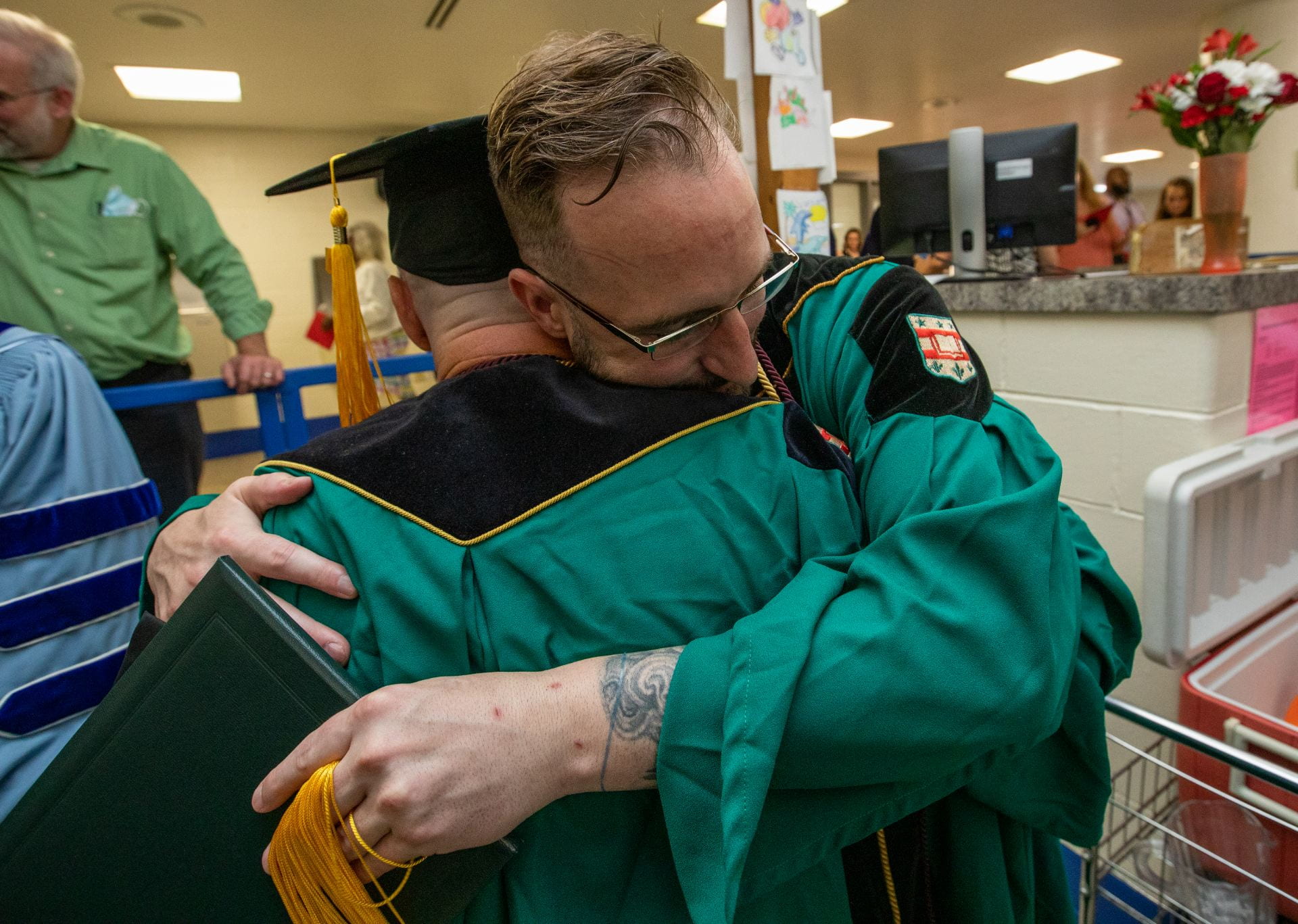
In 2011, a consortium of faculty members at Washington University in St. Louis responded to what they saw as a glaring disjunction between theory and practice. The university was conducting research on mass incarceration, offering courses and hosting guest lecturers on the topic—but no campus program existed to address mass incarceration in their own community. The lives of incarcerated individuals were a subject of academic study, rather than an area of tangible change. Their concerns led the faculty members to found the Prison Education Project, a competitive liberal arts degree program for incarcerated students in the Missouri Department of Corrections. The project launched its first courses in 2014 at the Missouri Eastern Correctional Center, a men’s prison in Pacific, Missouri. 

The United States incarcerates more of its population than any other democratic nation, including those with higher crime rates. Missouri’s incarceration rate is even higher than that of the United States—meaning that Missouri, along with the 23 other states whose incarceration rates exceed the national rate, imprisons more of its population than any democratic nation on earth. Black Americans are overrepresented in our nation’s prisons, making up 37 percent of the prison population compared to 13 percent of the general population. Alongside race and ethnicity, education is one of the most decisive contributors to mass incarceration. 30 percent of incarcerated Americans have not attained a high school diploma or equivalent degree, and fewer than 4 percent hold a postsecondary degree (compared to 29 percent of the general population). High school dropouts are 3.5 times more likely to be arrested than adults who completed high school. The correlation continues in the reverse for those who have been released.  

“We have a huge body of research, decades-long, longitudinal studies that tell us that, yes, people are far less likely to go back to prison if they receive a college education,” says Kevin Windhauser, PhD, the director of the Prison Education Project at Washington University, who noted that students who enroll in postsecondary education programs while in prison are 48 percent less likely to be reincarcerated. 

While much of the discourse on the impact of prison education programs emphasizes reduced recidivism, Windhauser says that the benefits for individuals go beyond crime reduction. “I think focusing only on recidivism is a relatively reductive way to look at it. While we offer something to incarcerated students, incarcerated students make our university better. Our students are admitted to WashU, which means if they’re released and still working on their degree, they can continue their degree. And our students show up on campus bringing new perspectives, life experiences, and personal knowledge. They make the campus richer. They make discussions richer.”

According to Windhauser, prison education programs can improve the mental health of incarcerated students and enrich the learning environments of participating colleges and universities. He began teaching at Taconic Correctional Facility in Westchester County, New York in 2017, when he was a graduate student at Columbia University. He felt that the program was “doing something that I thought a university, especially a big, very wealthy university, should be doing: using its educational mission to reach people who traditionally have been kept out or denied access to those kinds of spaces.” 

“Our students show up on campus bringing new perspectives, life experiences, and personal knowledge. They make the campus richer. They make discussions richer.”

While many state and federal prisons have historically offered vocational training, the Prison Education Project’s liberal arts model sets it apart. “The ethos from the beginning was to create a liberal arts college in prison,” says Kevin Windhauser, “Missouri has, like many states, something of a tradition of vocational education in prisons, trades work in prisons, job training in prisons—but a liberal arts degree, especially a liberal arts degree from a major R1 university, was just not something that was on offer.” 

As an English professor in the program, Windhauser has taught courses on subjects ranging from introductory composition to Shakespeare, Milton, and Melville. Often, he says, reading the Western canon is yet another form of social capital that incarcerated people, often victims of the school-to-prison pipeline, have been denied. In part, he says, incarcerated students enrich discussions of literature due to their distinct perspectives and skills: “People who are incarcerated are often really great noticers, because it’s a space where you have to notice things. Just to stay safe in there, you have to be a very good noticer, and it means that there’s some incredible, intuitive close reading ability. With a lot of the literature I’m teaching, I’m bringing out that skill which is already there, and so I find that really exciting.”

Since 2017, Windhauser has seen higher education in prison expand into larger and better programs. “My first course in 2017, I taught once a week in a three-hour block. My students had nothing but pencil and paper and whatever readings I could print out and give them. It looked as close as I could get it to a college course. In all honesty, it may have looked a little bit like what a college course looked like in 1970.” Now, says Windhauser, his classes at the Missouri Eastern Correctional Center more closely resemble their on-campus counterparts. Students have laptops, Canvas accounts, and utilize research hubs like JSTOR. Windhauser holds regular office hours to ensure students receive individualized attention and support. Class sizes typically range from 10 to 20 students—in part to align with the program’s commitment to a liberal arts education, and also because college in prison requires focused attention on each individual student, who is attending college amid unique logistical, personal, and environmental challenges.

These distinct challenges include limited privacy, time constraints, and loud living conditions. “One of the most common misconceptions people have about college in prison,” Windhauser says, is that incarcerated students “have a lot of time on their hands.” It’s a sentiment he hears often when describing his work to outsiders. On the contrary, he says, “Missouri, like many states, requires every incarcerated person to have a job. So our students, like a lot of students on any given campus, are balancing work with study. They’re often balancing being parents, parenting from a distance, parenting by phone and by visit. They are balancing concern for others. They’re often mentoring other people or doing informal peer support work. They are dealing with environmental disruptions. A lot of people do all of their homework with music blaring in headphones, and that’s not necessarily because they love that. It’s because they’d rather have that than the din of everything going on.”

For some, a liberal arts education in prison can be a step toward healing the trauma of incarceration, giving students a sense of agency in an otherwise chaotic world within the prison walls.

Mental health and the psychological toll of incarceration also affect students pursuing college degrees in prison. “Nationwide, there’s increasing attention being paid to mental health challenges faced by college students. And I think a lot of the mental health challenges faced by incarcerated college students are somewhat similar. Yes, there are a lot of unique challenges to the space and people’s lives and the trauma of incarceration, but there are also a lot of very familiar challenges if you’ve ever taught on any college campus. There are people who are really concerned about academic performance, really worried about their GPA. There are people who are really frustrated to not be understanding something, or anxious about an exam or a particular subject. So you have this pairing with all the familiar concerns, and then they’re back-loaded with all of the unique concerns to that space.” 

For some, a liberal arts education in prison can be a step toward healing the trauma of incarceration, giving students a sense of agency in an otherwise chaotic world within the prison walls. George Putney, an alumnus of the Prison Education Project, is currently pursuing a Master of Social Work degree in the Brown School at Washington University in St. Louis. “It gives you a sense of purpose while you’re in school,” Putney says of the program, “and it extends that sense of purpose to when you exit.” 

Putney is a statistical outlier—he entered prison with a Bachelor’s and a Master’s degree. While incarcerated, he began informally mentoring some of the students in the Prison Education Project. The former PEP director asked Putney to join the program, which he did, taking classes and working as a teaching assistant. The program inspired him to pursue his MSW, which he plans to use to work with formerly incarcerated people to try to assist them in some of the major areas of need, including housing, employment, healthcare, and general reacclimation to society. Putney currently works with a St. Louis organization that provides housing assistance, trauma counseling, and substance abuse training to formerly incarcerated women in Missouri.

“I think it allows a person to reach potential that they didn’t know they had. And I only say this anecdotally, but I think it allows people to reintegrate into society in a much more effective manner, where they actually have opportunities and hope of being successful.”

References

Hemez, Paul, John J. Brent, and Thomas J. Mowen. 2019. “Exploring the School-To-Prison Pipeline: How School Suspensions Influence Incarceration during Young Adulthood.” Youth Violence and Juvenile Justice 18 (3): 154120401988094. https://doi.org/10.1177/1541204019880945

National Center for Education Statistics. 2016. “Highlights from the U.S. PIAAC Survey of Incarcerated Adults: Their Skills, Work Experience, Education, and Training: Program for the International Assessment of Adult Competencies: 2014.” https://nces.ed.gov/pubs2016/2016040.pdf

Prison Policy Initiative. “Getting Back on Course: Educational Exclusion and Attainment among Formerly Incarcerated People.” October 2018. https://www.prisonpolicy.org/reports/education.html
Widra, Emily, et. al. Prison Policy Initiative. “States of Incarceration: The Global Context 2021.” September 2021. https://www.prisonpolicy.org/global/2021.html#methodology.

Not to Be Overlooked

Listen to this story:

For more than a decade, the cost of college tuition in the U.S. has been steadily rising as enrollment continues to drop. Higher ed’s price tag, now averaging $33,000 per year after financial aid for private universities and $19,000 for public ones, is one factor driving away prospective students reticent to bet their degree could one day pay itself off. According to new research taking into account both the earnings and debts of graduates, the wealth gap between college degree-earners and high school graduates is in fact closing. That message is not lost on prospective students of lower income or minority backgrounds for whom the stakes are even higher. 

Among this group of students at greater risk of not realizing the gains of a college degree are those from rural communities. They are often first in their families to go to college and less exposed to the opportunities that surround students in urban economic centers. For university leaders hoping to regain the public’s trust in higher education, one possible avenue to explore is an increase in experiential learning opportunities. By facilitating outside-the-classroom professional experiences for students before they graduate, experiential learning may help raise the value of a college degree, in practice and perception.

“Historically, internships and other experiential learning opportunities have had greater participation among more privileged students with larger networks,” said John Volin, Executive Vice President for Academic Affairs and Provost at the University of Maine, who is spearheading an effort to expand student internship opportunities through the newly created Rural Careers Pathway Center.  “Given the value of these programs, particularly in terms of career readiness and attainment, it’s more important than ever to make a greater effort to expose less connected students with these opportunities earlier and more frequently.”

Appearing on more and more college campuses nationwide, experiential learning is a hands-on approach to education designed to allow students to “learn by doing.” It promotes projects, spanning research, internships, travel, and performances, that bring classroom material to life.  

But the practice doesn’t just offer a new, engaging way to learn. It’s many benefits include creating life-long wellbeing, helping with retention, and providing pathways to obtainable careers. 

At the University of Nebraska at Kearney (UNK), students are required to take one designated experiential learning class before graduating, thanks to a mandate by the Higher Learning Commission which is instituting a project to improve campus outcomes. “Experiential learning has been shown to have so many benefits for students,” said Beth Hinga, UNK Assistant to the Senior Vice Chancellor for Academic Affairs, who spearheaded the experiential learning course requirement launched in fall 2020. “It keeps them enrolled, so retention rates are higher. Satisfaction rates with their education are higher.”

Career-oriented experiential opportunities may help reassure families concerned about their children’s job prospects after college.

At the rural and smallest campus in the University of Nebraska system, this potential boost for career development and attainment is especially meaningful. Four in ten UNK students are the first to attend college in their families, who tend to come from farming backgrounds. Without many other professional connections but with what Hinga called “a “phenomenal work ethic,” these students often thrive doing independent work and are able to foster positive service-learning or internship experiences that lead to employment down the road.

Hinga said she also notices a correlation between experiential learning engagement and job attainment. “These students tend to get jobs quicker after graduation,” she said. “Or, at least in some cases, what we saw is that our students were being offered jobs at the same locations where they interned.” According to UNB’s outcome data, 48% of college of business and technology students who completed an internship were offered a full time position with the company they interned with. 68% of these offers were accepted.  

As a result, career-oriented experiential opportunities may help reassure families concerned about their children’s job prospects after college. “What I’m hearing from students is that [experiential learning] is a really valuable opportunity for them to show their parents that there are jobs out there that let them do these kinds of things that they want to do,” Hinga said. “The parents get excited because, ‘Gosh, my students do an internship and it’s paid,’ and so they’re able to help pay for their own school and those kinds of things.”

In the rural setting, experiential learning may also be mutually reinforcing for students and the local community. “So many businesses have been great about welcoming students in to do those internships and I think a lot of these students are making a very positive impact on them,” Hinga said. Impressed by how much the young students can offer, employers have continued bringing in more. “Those are the students that they want to hire.”

Moving forward, Hinga said she hopes the university can begin introducing younger students, in their first and second years, to experiential learning. “Students have told us that if they could get those experiences earlier in their college career, it would help them to make sure they know what the proposed career they’re thinking about is all about and make sure it’s really what they want,” she said. 

The University of Maine at Farmington (UMF), another small, rural campus within a larger public university system, has embraced experiential learning as an engagement and retention strategy for some time. In October 2020, a $240 million gift to the UMaine System from the Harold Alfond Foundation spurred a $20 million student success and retention initiative called UMS TRANSFORMS, which centers on experiential learning opportunities, starting with “Research Learning Experiences” (RLEs) and moving onto “Pathways to Careers.” RLEs allow student to pursue research as early as their first semester, while Pathways creates professional preparation and work opportunities.

As early as their first semester, UMF students can engage in professional development through not only traditional work or internship experiences but wider career exploration. In a first-year course focused on sustainability, for example, students visited Maine Hudson Trails and Sugarloaf Mountain to speak with the respective director and sustainability coordinator about each of their job trajectories. In another course called “Popular Horror Narratives,” a unit on horror video games included a visit from one indie video game designer, who spoke about her experience developing a break-out game.

At a school where nearly half the student body comes from first-generation backgrounds, this chance to consider and connect with potential career routes can be transformational. “I think it’s so great for the students to hear from people who aren’t coming from a privileged background, given a lot of our students are coming from rural Maine,” Steve Grandchamp, who taught the course on horror narratives, said. “They can hear, ‘Okay, well, how could you get into this industry?’ Or, ‘how can you kind of forge your own path in all of these different creative ways?’” 

As those who do this work in places like Farmington, Maine and Kearney, Nebraska attest, engaging rural students in real world experiences that can lead to post-college opportunities may also serve to address another challenge for higher ed: letting these students know, “We value you.”

UF Quest Hits Its Stride

In his UF Quest course “Soccer Explains the World,” Professor Quinn Hansen brings first-year students through the history of the game, from its origins as a gentlemen’s sport in British public schools to its emergence as a vessel for fervent patriotism to its current status as a multi-billion-dollar business. Hansen says what starts as an engaging exploration of a popular and relatable topic becomes a series of thought-provoking discussions about a host of issues ranging from equity in education and child labor laws to gender politics, nationalism, and what it feels like to be a player bought and sold like a commodity. 

“It’s a bit of a bait-and-switch,” said Hansen, a linguist who also teaches Portuguese. “The topic is what excites the students, and when everybody is excited, great things happen in the classroom.”  

If Hansen’s class feels like a typical small-group elective offered at a liberal arts college, it is meant to. It was designed specifically for UF Quest, part of the general education curriculum at the University of Florida, recrafted over the past several years to create intimate, interactive learning communities within the large land-grant university in Gainesville. The intent behind UF Quest is to provide students, particularly FTICs (first time in college), an opportunity to learn how to learn from faculty who know their names before settling into the more impersonal tracks dictated by their declared major.  These classes typically involve critical thinking and robust debate about some of the world’s biggest problems, a process the web site describes as “engaging students in questions that are difficult to answer but impossible to ignore.” 

“With Quest, students begin a journey to understand what their potential roles are in answering some of these questions, whether it’s obvious to them or not” said Angela Lindner, Associate Provost for Undergraduate Affairs, who has led the development of Quest since her arrival at UF in 2015.  She is the first to admit it has been a hard-won endeavor.  At “Quest Day” in November, which commemorated the program’s 5-year anniversary, Lindner told an enthusiastic crowd, “My colleagues throughout the country repeatedly say to me ‘how in the world did you pull this off?’” 

Getting to Quest

Lindner is an engineer by training with a PhD from the University of Michigan and fond memories of her liberal arts undergraduate experience, which included strong relationships with her professors.  She was drawn to the school because of its student-centered culture and its early adherence to a core shared curriculum. In scouring historic catalogues (the university graduated its first class in 1857), she took as inspiration an adage that aligned with her philosophy on the developing student. “The choice of professional work is postponed until the student knows better his capacity and disposition to undertake work that will be profitable to himself and society…avoiding the handicap of narrow specialization,” it read.  

Lindner’s own adage was to “leave them alone” in their first two years as they transition from the black-and-white of high school to the gray abstract of the university.  This, and the belief that liberal arts-like experiences can happen anywhere, drove her to create the vision for what would eventually become UF Quest. 

But general education reform is not easy anywhere, and certainly not in public universities in Florida where the legislature weighs in on curriculum. The trend toward vocationalism in education and away from the humanities as the foundation for learning has been hurtling along for the past decade, accelerated by the great recession of 2008 and 9. Predictable barriers such as faculty push-back, turf wars, and the pace of committee decision-making, all made the eventual release of UF Quest in 2018 seem miraculous. Lindner says they had to redesign the UF Quest logo three times.  

Fortunately, long before Lindner’s arrival, the UF Task Force on Undergraduate Education of 2010 paved the way for Quest in calling for the creation of signature experiences for first-time in college students that are themed: an increase in academic experiential learning, service learning, and civic engagement opportunities. Its most notable change was the addition of the required course “The Good Life,” which gave FTIC’s exposure to great book philosophers and the Socratic method.  While the course itself is largely considered disappointing, the breakthrough of establishing a shared, core curricula for 6,500 incoming students provided a platform that could be revised. 

After countless hours of expansive consensus-building on campus, and the solid but intentionally understated support of then President Kent Fuchs, Lindner and a multi-disciplinary team of faculty, staff and academic administrators unveiled the first version of UF Quest in 2017, centered on “the exploration of grand challenges” (hence the name) in the Humanities, Natural and Social Sciences. The content of UF Quest 1 courses reflect one of five themes representing grand challenges in the Humanities – the Examined Life, Identities, Justice and Power, Nature and Culture, War and Peace.  

Quest 2 courses, also required, focus on what Lindner calls the “wicked questions” of the natural or social sciences. Quest 3 and 4, which are currently electives, rely more heavily on experiential learning components to send students into the world to try on for size what they have learned in the classroom. Quest 4 is a discipline rooted faculty-driven capstone course that allows them to synthesize their learning and hear from voices outside of higher education.  

Unlike other courses in the general education curriculum, UF Quest has a number of “non-negotiables” reflecting its mission. Every Quest course has to have small classes, faculty have to engage closely with students – they are expected to know every student’s name; they have to include reflection assignments and some element of experiential learning. In addition, every course has to pose an essential question. For example, in the anthropology course “Indigenous Values,” the instructor asks, “How can indigenous values about the relationship between nature and culture help us address the challenge of climate change, food insecurity, and public health?”

Faculty Expertise, Student Choice

It is clear that the role of the faculty in the development and execution of UF Quest cannot be overstated, both in terms of their buy-in and ownership of the program and in the way it has allowed them to teach.  UF Quest’s excerpt is “Faculty Expertise, Student Choice” which speaks volumes about the essential elements of the program.  “The only way this was going to work was to have faculty backing it,” said Quinn Hansen, who was introduced to UF Quest by a faculty colleague who thought he would be a good fit. “And the best way to get faculty bought in is to say to them ‘talk about what you like and what you’re passionate about.’  It’s all about proposing your own adventure.” 

Lindner believes Quest has influenced teaching generally at UF with professors reporting they now teach their other courses as they do their Quest courses – with a much stronger connection to their students. “I can’t tell you how many times I hear the word ‘love,’ from faculty,” she said. “They love their students, they are excited to get back to their ‘first love’ – teaching.” 

So how does all this feel for the students themselves, nearly all of whom are unaware of the general-ed revisions that were made on their behalf?  

Claire is a senior on full scholarship at UF. She is double majoring in biology and Japanese and is on her way to veterinarian school. Her UF Quest journey was not so much about discovering what she wanted to major in as it was about experiencing a different side to what she had already chosen to pursue. For her Quest course, Claire chose “The Anatomy of a Story,” mostly, she said, because it had anatomy in the name. The instructor used several media sources – books like When Breath Becomes Air and The Immortal Life of Henrietta Lacks, as well as documentaries, poetry, and artwork – to convey the experience of either the patient or the practitioner. With humanities-related topics weaved throughout, the class was largely discussion-based, and students submitted a final essay interpreting one of the media sources they chose. 

“I can’t tell you how many times I hear the word ‘love,’ from faculty. They love their students, they are excited to get back to their ‘first love’ – teaching.”

“Being a biology major, a lot of what I do is listen to lectures and regurgitate information so having a discussion-based class where you hear other people’s opinions, that’s what I found most valuable about Quest,” she said. Claire’s experience included forging a close relationship with her professor. “She made a big impact on me because of how passionate she was about the material,” Claire said. “She has been a phenomenal mentor to me.”

Andrew, a third-year engineering major at UF, was also impressed with the energy and commitment faculty put into their Quest courses.  He took the “Good Life” in Quest 1 and while he was “meh” about the course, he said the instructor impressed him. “The professor made it way more than just about the material itself,” he said.  “He was a passionate musician, and he brought his music into different points of the course and gave us his own personal view.  He was also very interested in what we had to say.”  

Like Claire, Andrew viewed his Quest requirement as a respite from the load he was taking in engineering where he is studying digital arts and sciences. “As a student in a Quest course, you’re embracing a very different way of thinking than your major probably tracks you into,” he said. For Quest 2, Andrew chose “What’s Love Got to Do with It?” which he described as exploring what love, sex and romance actually mean.  “Each week we did readings that we would discuss, and we talked about how they made us feel, how this pertained to our own lives, and I think we all grew as people as a result,” he said.

In discussing the level of faculty engagement within his Quest courses, Andrew offered an astute observation even Lindner may not have anticipated. “The Quest instructors have more freedom and can arrange the curriculum with more fluidity in a way that’s productive and engaging and that tends to produce a higher quality of instruction.”

The Quest Forward

17,849 students have now successfully completed their Quest 1 requirement and 8,800 students have completed Quest 2 courses. Over 200 faculty from 69 units have developed and offered UF Quest courses and the qualitative and quantitative data have been positive. But UF Quest still faces a number of internal and external challenges that will determine just how much a change agent it proves to be for the university. 

Marketing the program wasn’t included in “getting it over the finish line” and there is a long way to go before students move from checking the box on their required Quest courses to promoting them as transformative experiences on TikTok. A related problem is getting traction on Quest 3 and 4. As important as it would seem to bring students through the full Quest trajectory, it is a tougher lift for third- and fourth-year students who are fully ensconced in their majors. In many ways, the challenge in implementing Quest’s later stages bumps up against the problem the program was created to address: students are worried they won’t have the time or the credit latitude for courses outside of their area of study. As excited as Andrew was to have participated in UF Quest, he was unsure if he would pursue Quest 2 and 3 when asked about it.  “As an engineering major, I have a lot of other big stones to step on.” 

Perhaps Quest’s biggest challenge is the chilling effect reported on college campuses in states, like Florida, with active legislation that restricts content of courses, combined with the increasing drumbeats calling for a return to prescribed classical education in core curriculum (both at odds with Quest’s excerpt of “Faculty Expertise and Student Choice” to encourage freedom of exploration, discovery, and meaning-making). Today, despite its tangible, transformative successes, this uncertainty leads to the question of whether Quest will be allowed to reach its full potential now that it has indeed hit its stride.  

Angela Lindner has recently retired from her position as Associate Provost, something she said she planned in anticipation of a research-based sabbatical that will lead to a teaching position in the engineering department. As proud as she is of the signature work she led with UF Quest, she said her greatest satisfaction came when people, particularly faculty, started calling it their own. 

UR Well

For the first 30 minutes, University of Rochester academic advisor Hana Goldstein thought her advisee seemed totally fine. Suddenly, she broke down in tears. 

“I was about to say to her, ‘Okay, have a great day. We’ll chat in a couple of weeks.’ And then she just started crying,” Goldstein said. “She opened up to me.”

It’s not uncommon for Goldstein to find her one-on-one sessions with students veering from the academic to the personal. Some students are quick to tell her about an issue they’re facing outside the classroom, she said, while others choke back those troubles, at least initially. “You never know what someone’s going through.”

There is a growing acknowledgement on college campuses that student mental health is influenced by a community of care, and not just one office or service. But taking a more public health approach to college mental health suggests all community members must be prepared to respond if a person reaches out or breaks down. At the University of Rochester, a new wellbeing initiative hopes to fill that need with a curriculum-based training program that helps faculty and staff support struggling students, and each other, in a way beyond “report and refer.”   

This fall, the Health Promotion Office at the University of Rochester launched the Well-being for Life and Learning Training Program, designed for student support staff like Goldstein, who are hungry for tools to support struggling students. The opt-in, self-paced program requires participating faculty and staff to take four core and two elective workshops on a range of wellbeing topics from supportive communities and suicide prevention to intercultural communication and religious diversity.

At its core, the Well-being for Life and Learning Program is a student success initiative, born from the understanding that if students are living better, they will learn better. Rochester’s Health Promotion Specialist for Student Well-Being, Rebecca Block, leads the Well-being for Life and Learning Training Program. She said faculty and student support staff interactions are particularly important to this work. 

Photo by J. Adam Fenster / University of Rochester

In 2021, when the Boston University School of Public Health, Mary Christie Institute, and Healthy Minds Network published a report on The Role of Faculty in Student Mental Health, Block found statistical support for the challenges she’d witnessed teachers confront first-hand. Of the more than 16,000 faculty surveyed, nearly 80% said they’d spoken to students about their mental health in the last year, while only 51% said they could confidently identify a student in distress. The majority (73%) said they would welcome opportunities to improve their skills in this area.

“That report made it more acceptable, I think, at a research institution to say, ‘Okay, this data came out of this study with over 12 universities’ faculty reporting this issue. This means that we should do something about it,’” Block said. 

That same year, in 2021, Block launched the Support Student Mental Health workshop series, bringing together ten experts to lead sessions on topics including trauma-informed pedagogy, recognizing students in distress, and educator self-compassion. By spring, 2023, the Health Promotion Office was polling Rochester’s faculty and staff, finding 85% had spoken to students about their mental health in the last year, but more than half had never received formal training to “navigate discussions with students in distress.”

Upon the success of the workshop series, Block began considering an even more formal, expanded platform to provide faculty and staff with the tools to support not only student mental well-being but their own well-being and that of the community generally. The result, launched this fall, was the Well-being for Life and Learning Training, complete with two unique tracks for faculty and staff, respectively, and offered both online and in-person. By showing faculty and staff how to care for not only struggling students but also themselves, the course tries to relieve some of the pressures that might otherwise detract from their own wellness and ability to teach. 

“This is really the first thing I’ve done that’s really focused on students’ well-being and mental health and how we as staff people can actually make an impact on their lives.”

Block said she first became passionate about faculty wellness as a teacher in New York secondary schools. She noticed how instructors’ stress, often internalized from their students, affected teaching. “Working in those classrooms really was the pivotal moment for me. I was like, ‘These kids are not going to learn. They’re not going to be well if their teachers are not able to regulate their own emotions, if they’re not able to support students in the ways that they need.”

For Amy McDonald, director of Rochester’s Health Promotion Office, one of the primary functions of the Well-being for Life and Learning Training Program is its contribution to a more institutional approach to student mental health and wellness. Historically, McDonald said she’s found a gap between the 70 or 80 health education programs run every year at Rochester and the reality of student health outcomes. “We were working so hard to help these students on an individual level, but it really wasn’t impacting their health. So, we really started to shift our thinking to, ‘How can we take a more systems and settings approach to this?’”

“Because we can teach them skills and give them the knowledge,” McDonald added, “but if they don’t live and exist in an environment that supports those choices and makes those choices easy, it’s going to be impossible for them to achieve that well-being.”

So far, the Well-being for Life and Learning Program has managed to draw employees from a variety of areas on campus with diverse levels of expertise in mental health care. Before enrolling, Hana Goldstein, for example, had already participated in a range of trainings and certifications to inform her student care as an academic advisor. Still, she said she was able to find workshops covering issues she had yet to explore in depth, including addressing grief and loss with students.

Because Health Promotion staff designed these workshops specifically for faculty and student support staff at the University of Rochester, Goldstein said she thinks they’ve chosen facilitators well-suited to advise their unique audience. She said she appreciated the leader of the elective workshop on “Compassion Fatigue” coming from Rochester’s Employee Assistance Program, which manages mental health services for employees. “Compassion fatigue can kind of seem like, ‘Oh, it’s just about self-care, and feel a bit redundant at times,’” Goldstein explained. “It was nice to hear about it from the perspective of someone who is not necessarily student-facing, but from someone who is more staff- and faculty-facing.”

Other staff who have participated, like Claudia Pietrzak, the user experience and social media manager for Rochester’s River Campus libraries, arrived at the workshops with a more limited background in mental health training. “This is really the first thing [I’ve done],” Pietrzak explained. “I mean, I have done safe space training and racial justice training here at Rochester and at previous institutions, but nothing that’s really focused on students’ wellbeing and mental health and how we as staff people can actually make an impact on their lives.”

The opportunity for formal training was exciting for Pietrzak, who said she would otherwise approach the mental health issues of students like those of friends. “It’s kind of like, ‘Well, I know what I would do for a friend, but I don’t know what I can do or what I should do as this person that I am on campus—where I’m an adult, even though I don’t often feel like it.”

In the four workshops she’s taken since early October, Pietrzak has already found practical applications in her everyday life. The suicide prevention course left “an impression on me [where] I know more what to look out for when working with other people and I know more about what it is I can do,” she said. The same compassion fatigue class that Goldstein took also came in handy, Pietrzak said, as she had just recently spoken to a coworker struggling under the weight of students’ rising stress levels as finals neared.

“The session on compassion fatigue was really good because, as a friend to this colleague, I felt very empathetic towards her, but I’m also kind of stressed out, too. So it’s like, ‘How do I take care of myself and not absorb this person’s stress?’” The course reaffirmed the importance of setting boundaries, Pietrzak said, to help her avoid ‘sinking with the ship.’ 

Moving forward, Rebecca Block hopes the Health Promotion Office will be able to connect the impact of the training to improved student success outcomes. “How can we tie GPAs or graduation rates or retention rates to students that attend classes from the people that have completed the training?” she said. “Is there any correlation there?”

For now, at least anecdotally, the Health Promotion team feels heartened by the positive feedback from the community, as they try to raise awareness around the initiative. “I worked with one of our athletic trainers a couple weeks ago, and he was going to bring [the program] to the director of athletics to see if it could be mandated that all head coaches complete the training,” Amy McDonald said.

“So that would be our goal—that it’s seen as something that is so beneficial that it’s required for employees to take.”

Just Patrick:

Everyone has a story to tell but not everyone’s story means so much to so many. At the turn of the century, Ghanaian-born Patrick Awuah, Jr. was an engineer at Microsoft in Seattle when he returned to Ghana to start a new university aimed at inspiring young Africans to become ethical, entrepreneurial leaders among historic, systemic challenges. After nearly twenty years since its founding, Ashesi University has changed the course of higher education in Africa, and, with it, the lives of thousands of students and their families.

Awuah’s decision to return to Ghana was a difficult one, particularly for someone who had so successfully transcended the circumstances that encumbered many of his peers. Awuah was educated at Swarthmore College in Pennsylvania where the liberal arts pedagogy encouraged curiosity and debate. As an engineering student, he was writing code and building things as well as studying philosophy and political theory.  The government-run university system in Africa was more rote learning than critical thinking, providing only a monolithic option for the less than 5% of young people in Ghana who attended college at the time. Awuah became convinced that to enact economic and political change in Africa, there needed to be a mindset shift in teaching and learning that would encourage that small percentage of young people to think big. 

A few things happened then that would lead him to act on his conviction. Crisis in Rwanda and Somalia painted a negative picture of Africa in the American media, which made Africans in America eager to change the narrative.  In the late 1990s, Microsoft’s annual earnings exceeded Ghana’s gross national product, igniting a sense of moral obligation for those who had left and done well. In 1995, Awuah had a son, born in the US, and he worried for the first time about the racism that is uniquely experienced by African Americans. With a business plan he and his colleagues created while at UC/Berkely, a foundation that would serve as a fund-raising vessel, and the support of his wife, Rebecca, Awuah returned to Ghana in 1998 to begin the process of establishing Ashesi, which means “beginning” in Akan. The university enrolled its first students in 2002.

Photography provided by Ashesi University

Awuah faced a chilly reception from accreditors and peer organizations but nonetheless launched Ashesi with 30 students, half of whom received need-based scholarships. Today, it serves about 1,400 students and has a target of growing to 2,500.  Ashesi is now recognized as one of the finest universities in Africa with a proven track record in fostering ethical leadership, critical thinking, an entrepreneurial mindset, and the ability to solve complex problems. Through its example, it has changed the way Africa educates its young people and has created a learning community throughout the country and the continent.

As the story continues, Awuah talks about how he did what he did, what he learned, and what it will take to realize his dream of an African Renaissance.    

LearningWell: How did your experiences in the US influence your decision to focus on education in Ghana?

Awuah: Higher education in Africa has been about looking at the past and regurgitating things that others have discovered.  At Swarthmore, faculty were not interested in me memorizing information and repeating it back to them.  In fact, if you did that, you got a bad grade. It was about active learning.  In terms of my time at Microsoft, the company’s success was largely dependent on the US economy and how it operated within that.  But, very importantly, it was, and is, influenced by the people who work there. They were innovative, they created things, they always thought about what they wanted to do next, and they competed with other companies that were doing interesting things. I realized that this had a lot to do with the kind of education that they’d had. I realized then that we needed a different way of teaching and learning and of nurturing future leaders.

LearningWell: You set out to influence the percentage of people who go to college in Ghana, not on raising the college participation rates.  How did this become your goal?

Awuah: At the time I was thinking, “I am an individual living in Seattle with limited means. What can I do that would make the most difference?” It seemed to me that if you could change the way that, say, 5% of the people are educated, you can change the country, because they are the people who are going to run businesses. They are the people who will run the courts, the government, the police force, the military, etc.  And the way they view the world and the way they engage with the world has profound implications for everyone else.  I felt like I could demonstrate a different way of teaching and learning for Ghana that would get to these same outcomes. 

“The people who learn first how to take intellectual risks in the classroom are the people who can eventually take risks in business.  The most important thing is for a mind to not be afraid.”

LearningWell: What was your vision for the university?

Awuah: We wanted to establish a university that moved away from rote learning to a model that nurtured people to be philosophical and active learners about what our society should look like and understand that thinking that way would bring tremendous value to society. First of all, it was very important to me that I founded a university that I would want to work in, whether I was a man or a woman.  And one that I would be happy sending my kids to—inclusive and high quality.  I also wanted it to be an institution that reflected Ghanaian society and, ultimately, African society.

We want to educate people who are going to be good leaders.  And for us that meant people that sit at the intersection of leadership, scholarship, and citizenship. Scholarship means everyone’s a student and everyone’s a teacher.  That means we are sharing our knowledge with each other and we are asking questions that expand conversations, not narrow them.  Leadership is about helping others be more successful, helping society be more successful.  We want people who are collaborative, who engage the talents of others, who communicate effectively, which means they listen well and speak well. And we want good citizens—people who care about the common good, who are ethical. They think about the long-term implications of the decisions they make.

I also, right from the beginning, wanted to make sure that striving for excellence did not mean being afraid of making mistakes or afraid of owning up to mistakes. Sometimes people think that excellence and imperfection are at odds with each other, but the day you lose excellence is the day you think you have achieved perfection.  So that is the culture I set out to build.

LearningWell: What was the initial response to your plans among the academic community and others?

Awuah: The people in corporate Ghana were glad to see something like this in the works.  They were just skeptical I could stay the course.  “Ok, great idea but is this guy really going to do it?”  (I was young then and looked even younger.) 

Ghana’s accreditation system involves a peer review process and the faculty that came to review our curriculum didn’t really like it.  They didn’t like the multi-disciplinarity of it.  The liberal arts core curriculum they didn’t understand.  “Why would a computer science student take courses in philosophy?  They should just do more math.” There was a lot of push-back and a lot of convincing. 

I think that some people felt somewhat disrespected by Ashesi’s reason for being.  “What is so wrong with us that you need to disrupt what we’re doing?” When it came to hiring faculty, we got no applicants from Ghana.  No one in academia here took me seriously.  Private universities were not allowed in Ghana until the late 1990s and the whole thing was such a new idea.  But after a couple of years, this started to change.  I was very fortunate to have a senior professor from the University of Ghana who joined my advisory board, and she eventually joined my team as the dean of faculty and that made a huge difference.

“Some of our African American friends would say to us Africans, “You guys don’t seem to have a Black consciousness.”

LearningWell: You had a strong social justice mission. What does equity look like at Ashesi? Is it different than in the United States?

Awuah: I think in the US, there are too many labels and that affects people’s mental health and sense of belonging. Here, we just see people as people. We now have students from all over the continent.  The fact that someone is from Rwanda or Kenya or Nigeria or Zimbabwe–or if someone is poor–this is not a label. We try to only see them as who they are—all of us just engaging with other people. 

I’ve advocated for this here because of what I saw in the US.  When I was first in college, there was something I didn’t understand. I actually didn’t understand it until my son was born. Some of our African American friends would say to us Africans, “You guys don’t seem to have a Black consciousness.” Our response was “Of course we know we’re Black, what do you mean?” But the difference was that when I was growing up, I didn’t move around the world with this notion I was Black, I was just “Patrick.” When I go to other countries where the first thing they think of me is “You’re Black,” that creates a lot of barriers.

So we’ve tried to be very careful about not doing that here, especially as we become more diverse.  For example, we want this campus to fully reflect Ghanaian society in terms of physical and learning disabilities.  We’ve set a goal that 4% of the Ashesi community will be people with disabilities. We’ve asked our HR department and hiring managers to think about what jobs someone with autism or Down syndrome might do. And then these people will just be part of our community. They’ll just be “Kofi” or “Adwoa” or “Sarah.”  This makes for a healthy, compassionate place where people feel like they belong and that helps with wellbeing. 

LearningWell: After nearly 20 years, what do you feel has been achieved at Ashesi? What’s still needed?

Awuah: Things are quite different now than they were 20 years ago. The way we approached education was challenged very strongly. Now, there are 50 or 60 private institutions in Ghana. The accrediting system now encourages universities to have what they call a general studies component, what we call our core curriculum. There’s a notion that educating people broadly is a good thing.  

We see a lot more engagement.  We started a collaborative about six years ago and we said, “Let’s get together and share pedagogy and ideas on how we run our universities.  About 10 universities joined us at that time and we now have 400 universities from all over the continent.  There’s a palpable sense of excitement and optimism about lowering the barriers between our institutions and learning from each other. 

I can honestly tell you there are thousands of people whose lives are very different than what they would have been had Ashesi not existed.  Their families have changed and that is very gratifying to see. And it has had an impact.  When we first presented to the accreditation board, we had a goal: 90% of our students would find employment or graduate school placement within six months of beginning their search.  No one thought this was going to happen.  This is in a country where it was accepted that 90% of graduates would take five years to find their first employment.  We’ve met our goal every year.  The last class we measured was something like 96%.  So, the expectation was very low and it is now very different.  Everybody’s asking universities to track how they’re doing on career placement and that’s going to compel all of us to be educating people in ways that actually enable the economy.

Everybody is now talking about educating people in such a way that they can be job creators, they can be entrepreneurs.  There are people who say, “If you want to educate entrepreneurs then have them take a course in entrepreneurship.”  They don’t realize that the liberal arts is a really good way to educate entrepreneurs—individuals who know how to question the status quo or imagine new things. The people who learn first how to take intellectual risks in the classroom are the people who can eventually take risks in business.  The most important thing is for a mind to not be afraid.  

In terms of what still needs to happen? Our graduates are highly sought-after in industry, but are our graduates able to uphold high ethical standards in the outside world? Each year, alumni return to campus to share personal examples of being invited to join corrupt schemes. These alumni tell current students how they successfully chose the ethical path, sometimes turning down a great deal of benefit.

I am grateful for Ashesi’s growing reputation, and proud of the work of our students, alumni, staff, and faculty. But Africa needs even more from Ashesi and needs more institutions like Ashesi. Sitting in Africa’s classrooms today are students whose education will set Africa’s course over the next 20-to-30 years. When more African universities follow Ashesi’s model, we will see a better future for Africa and for the world.