The following is a transcript of LearningWell Radio’s interview with Alex Kafka on his new report, “Overcoming Student Loneliness: Strategies for Connection.“You can listen to the episode on Spotify or Apple Podcasts.
Dana Humphrey: This is LearningWell Radio, the podcast of LearningWell Magazine, covering the intersection of higher education and lifelong well being. I’m Dana Humphrey.
Marjorie Malpiede: And I’m Marjorie Malpiedie, and we’re the hosts of Learning Well Radio.
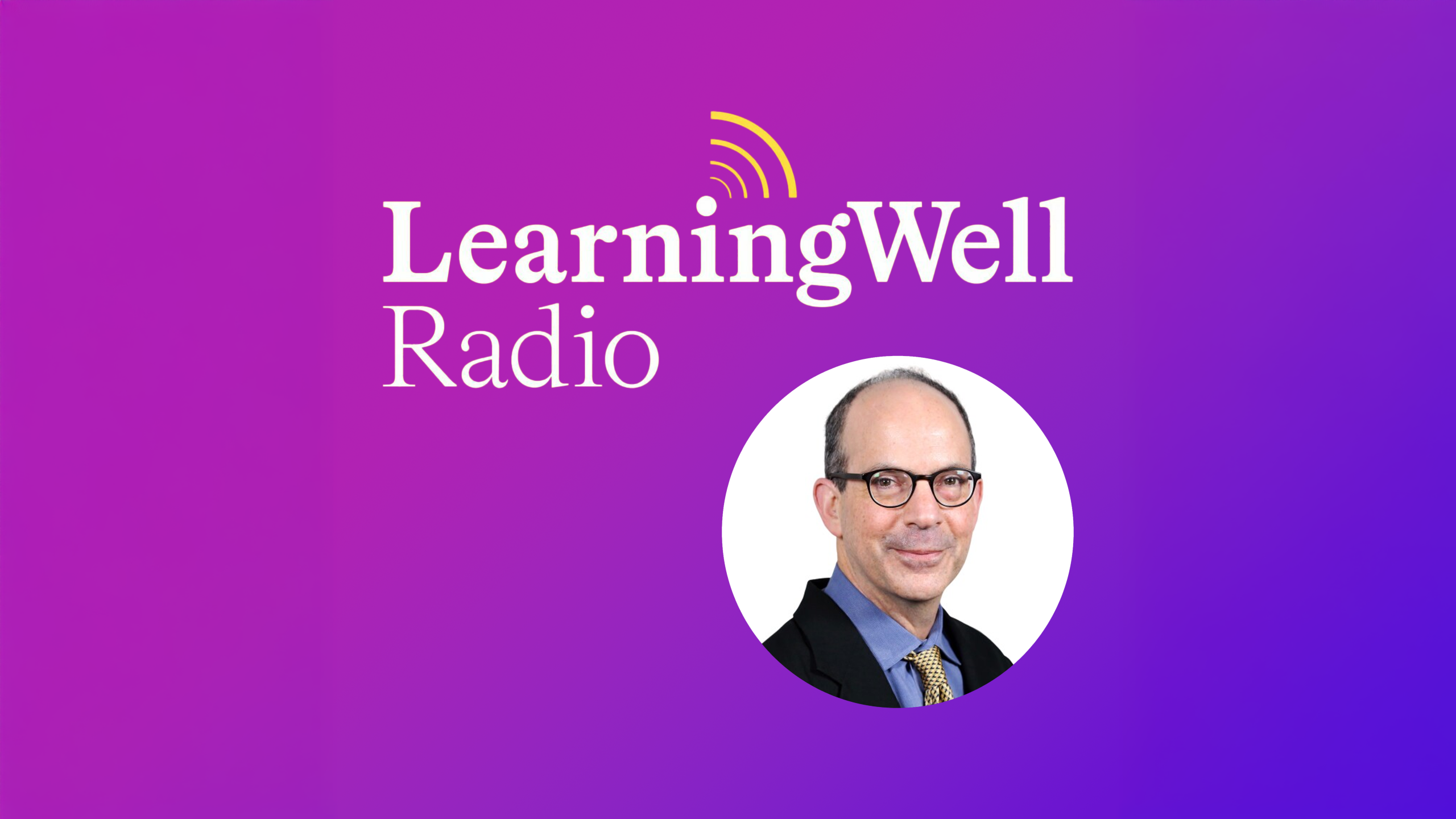
MM: Anyone who reads the higher ed press already knows Alex Kafka. For more than two decades, the senior editor at the Chronicle of Higher Education has been bringing information and insights on the most important issues in higher ed, including student mental health and well being. And he’s done this through both his regular coverage and his special reports.
Alex joins us today to talk about a new report he has authored that digs deep into a phenomenon that has been surfacing for the past several years. Certainly before and during and after the pandemic, this sense of loneliness, Gen Z students are reporting. His report, Overcoming Student Loneliness, Strategies for Connection, is, as the title suggests, an evidence based resource for how higher education can address student loneliness, a worrisome and, as we’ll hear from our conversation, complicated issue, by using its own built-in advantages. Alex, welcome to LearningWell Radio.
Alex Kafka: Thank you, Marjorie. I’m so pleased to be with you.
MM: I’m very excited to have you with us today. And I’m not going to lie. I am a big fan. fan of your work. And I’ve been reading your coverage for years on this topic and others, obviously. So first question, you have covered so many topics in higher ed, including student wellbeing. What made you focus specifically on loneliness?
AK: My editors and I were talking seriously about a loneliness special report in late 22 and early 23, even before Surgeon General Murthy brought additional newsiness to the topic with his campus tour. And the topic appealed to me because it was difficult and mysterious. And that’s what I like when I’m going into a reporting project. It’s difficult in ways we’ll discuss more later, I’m sure, but fundamentally because loneliness is such a ubiquitous but elusive phenomenon. Emily Dickinson called it the horror not to be surveyed but skirted in the dark. But she, of course, did survey it beautifully and artfully, and we wanted to tackle it too. Most everyone has felt lonely at one time or another, and if you ask just about anyone what was the loneliest time of your life, they’ll have an answer for you. But it’s a puzzle because those lonely times often are not the times when one’s alone. You can be surrounded by people, even by friends, a lover, people who cherish you, respect you, enjoy your company, and still feel lonely. And we’ve all read tragic news stories about rich, popular entertainers or athletes or influencers who, it turns out, were actually abjectly miserable. And in the higher ed space, a more specific, practical mystery, Marjorie, was why once the COVID lockdown period was behind us and students were back on campus, they were still in many cases, deeply lonely, more so than ever, according to some data. So, loneliness and isolation during the quarantine and lockdown were awful, but at least it made a kind of sense. The loneliness after that was a bit of a puzzle, and as a reporter who’d been following college mental health issues for a while, I wanted to talk to experts and figure out what was going on.
MM: So let’s get right into the mystery because I agree that this is not what people think of as being by yourself or lonely. This is a different phenomenon for this generation. So as you point out, It’s not as simple as one might think. Can you talk about the different types of loneliness that in your reporting you uncovered? And one thing that really stood out for me, the fact that loneliness is not a disease, it is a brain state.
AK: Like a lot of primal feelings, loneliness at first seems simple. And then the more you examine it, the more variegated and complicated it becomes. So it’s widespread. There are societal influences, but it’s also subjective. If you feel hungry, you’re hungry. If you feel thirsty, you’re thirsty. And if you feel lonely, you’re lonely. Jeremy Nobel, a physician and public health expert and the author of Project Unlonely, cites work by John Cassiopo the late neuroscientist at the University of Chicago. And Cassiopo interpreted loneliness fundamentally as a craving, an important psychological and neurological mechanism that prompts us to seek connection.
And I really like this thought, it really resonated in my mind that in that sense, like hunger or thirst, loneliness is a gift. We think, Oh, loneliness, how awful, but it’s also a gift because that prompt is essential to function, to live. The problematic loneliness is loneliness that goes unanswered, unaddressed. And so in that sense the epidemic of loneliness is partly a matter of education, explaining to college students, like everyone else for that matter, that loneliness is ignored at one’s peril, literally, and more broadly at the peril of society.
MM: So I’m particularly interested in your definition, or the literature’s definition, of psychological and societal loneliness and what that means for us in higher ed.
AK: I have to attribute properly, like a good journalist here, and say this is really Jeremy Nobel’s framing from his book that I draw from. And he’s an important source in the report. So he breaks loneliness down into three fundamental categories. Psychological, societal, and existential. And he in turn, by the way, is drawing from the book. from people before him who have been studying this for decades. He doesn’t pretend to be the creator of all these categories. So yeah, let’s briefly define them. Psychological is that basic craving for connection. As he puts it, I think the wanting of that just warm and fuzzy other human, that is a lifelong thing. Societal loneliness is feeling like you don’t fit in. That you’re excluded from a group of whatever kind. And then the third kind, and this is the trickiest in some ways, and also to my mind, really interesting is the existential or spiritual loneliness. So when you talk to Nobel and other clinicians and authors and experts who have been looking at this, they say that psychological and sociological loneliness are the predominant strains that you will see among college students.
Then, it’s interesting when you look at recent surveys you find things that are either in or adjacent to that existential or spiritual loneliness. And that’s the fundamental human condition. The bewilderment at being alive. Who am I? How did we get here? Why are we here? What’s my purpose? What do I mean to others? What do they mean to me? That kind of thing. And when you look at what students, what everyone, but including students are thinking about and worrying about things like climate change, gun culture, political polarization, malfeasance, incompetence, war, racism, et cetera, et cetera. Existential concerns are kind of part of that stew, I think, beneath the psychological and sociological loneliness.
MM: That’s a phenomenal description. And it makes me think, and I would agree with you, that this isn’t just about FOMO, right? Although it is about that too, fear of missing out. And also who’s in, who’s out and how do people look at me, either among them or outside of them. And I know we have a lot of that in our young generation, particularly exacerbated by social media, which I do want to talk about. But I would agree, this existential feeling of who am I? What is my purpose? How can I control all of these sort of outer worldly events that are happening? I think when I talk to students I hear them worry a lot about that. So I’m glad you brought it up.
AK: I think it’s real, that feeling that the world’s going to hell in a handbasket. And, why am I trying so hard to succeed? Why am I going through all this when things are spinning so much out of control?
MM: Yeah, let’s talk about some of the causes that you identify, and I love how you talk about social media as the Borg.
AK: I’m a big Star Trek fan, so I couldn’t help it. And I mean, doesn’t that describe social media? It’s like, when you look at all those studies about people who want to escape it, but they can’t, and they must assimilate.
MM: I have to tell you that was my favorite part of the report. The way you describe that is just priceless. And I think really spot on, to say it’s a love-hate relationship simplifies it, but you talk about, and again, you go back to the evidence and what’s in the literature. I love Jean Twenge’s work on this. We’ve all seen Jonathan Haidt’s new book, The Anxious Generation. So You know, you’re very balanced and research based when you talk about this, but do you have a personal opinion on how onerous social media is to this problem of loneliness in Gen Z?
AK: Ah, so now, Marjorie, you’re trying to trick a reporter into having an opinion about something.
MM: I’m thinking it might be there.
AK: I’ll give that a shot, and it’ll probably get me into trouble just like when any reporter strays into opinion land. Jean Twenge, a hugely influential psychologist and author, put her fingers on a lot of this stuff a decade ago. And I think most of your listeners are well aware of the argument, so I won’t rehash it at length, but, the confluence of smartphone adoption and ubiquitous social media and then Professor Haidt and his new book, and it seems like every book on this topic has to be accompanied by an article in The Atlantic, right? So he had one of those and he’s updated Dr. Twenge’s thoughts and argument in a more activist vein, saying we should look at policies and legislation curtailing the use, particularly among younger kids, of smartphones and social media. And influential folks are obviously hearing and thinking about this debate. Just this week, a few days ago, Surgeon General Murthy proposed putting warning labels on social media the same way we do on cigarettes in California, Florida, and some other states. Interestingly, states that have overall a lot of political differences are all considering legislation that would rein in kids’ use of social media. So in answer to your question, I’ll stray from my reportorial comfort zone a little bit.
While correlation is not causation, I think Twenge’s and Haidt’s arguments pack a real wallop, and I totally understand why Surgeon General Murthy and legislators and parents and teachers and school administrators are alarmed. And, I’ve thought a lot about the counter argument I mentioned in the report, a George Will column where he says, society always freaks out about new technology, whether it’s a radio or TV or internet or cell phones. But, I think that doesn’t quite hold up. Bill Maher did a great bit a couple of years ago, making a serious point in his entertaining way that cell phones, especially in tandem with social media. Bring a technological change, not just in quantity, but in kind. That this is really a little bit different. And besides the occasional glance at LinkedIn, or catching up with music camp friends on Facebook, I don’t really go in much for social media. I have other addictions like binging on Succession. But here’s where my ambivalence or confusion or reservations come in, and I realize it’s mealy mouthed and totally unhelpful.
But there are three points I want to make, and I’ll try to make them quickly. One, smartphones are woven into so many facets of our lives. That while it may well make sense to delay their use, and my wife and I did just that with our now 26-year-old twins that might just make them all the more enticing. I think about when I was a kid, Marjorie, I wasn’t allowed to watch TV except a little on Friday and Saturday nights, and that just made TV gleam in my imagination, like the Holy Grail. And pretty much every school day, I snuck over to my friend Bruce’s house to watch reruns of M. A. S. H. But I think, the forbidden fruit, whether it’s TV or social media, is always very appealing, right? And then Two, within social media, the categories are so wide and blurred. Yes, obviously heavy teen users staring at TikTok or Instagram or YouTube most of every waking hour. That’s a horror show and the opportunity costs are huge. Not just in socialization, but just in reading and pursuing other skills and passions. But social media, as you know, serves affinity groups, marginalized populations, people with disabilities. During the pandemic, in some cases, it was a real lifeline for students who felt just dreadfully isolated. And social media can reveal occupational possibilities, they blend with entertainment, streaming, and video game platforms, they offer marketplaces for niche skills, they do a lot. And so it’s a very mixed bag.
MM: Yeah.
AK: And, then the third point I’ll make, and then I’ll hush up on this, is that when it comes to cultural battles over tech, I think we’re often fighting the last war. And so I wonder if warning labels on social media will feel like the explicit lyrics on albums that Tipper Gore proposed. Where teens just laughed and rolled their eyes and bought the albums. Gosh, I think if we look back in 10 or 20 years at the possibilities and perils of, say, AI, and how that blends into the mix, some of these other debates will be dwarfed.
MM: A couple things. One is, what I think is interesting, and it’s pointed out in your report that kids themselves would just as well give up social media if all of their friend groups did the same. So there may be some sort of organic resistance to it that we might see. What do you think?
AK: I think there’s a total organic resistance to it, and I love you can read, or maybe you’ve already read, about the study by economists showing that people would literally shell out 10, 20, 30 bucks a month to rid social media from their universes. Except, and this is where the Borg assimilation metaphor comes in, you can’t quit because so much of your career life or student life or Just the logistics of communicating with your team or your carpool or whatever are so wrapped into it. And so you can’t. But I think, educating students about some of the perils and addictive issues with social media, just like you do, tobacco and alcohol and sex education and education about anything else in the world, that might yield better results, but I don’t know. I think it’ll yield a lot of great dissertations in the next decade or two.
MM: What is it specifically about — again, the many trends and habits and favorites and whatnot — what is the direct linkage to why they’re so lonely?
AK: So there’s a great metaphor that a journalist used in an Atlantic piece, and Jean Twenge in her new book actually references that, where the journalist says, look, it’s not that everyone who uses social media is lonely and miserable and it’s a more, Subtle connection, the way a sip of wine might loosen people up at a party and make them feel a little less shy and inhibited. For other people, it might make them too uninhibited or depressed or whatever that it can have or, alcoholic and addicted. That social media is the same way, that for most people a little bit of social media goes a long way and it’s probably okay, but then for some relatively small percent, It’s really problematic. And when you look at the surveys showing percentages of, I don’t have them in front of me, but gosh, five, 10, 15 percent, you’ve got a line of 10 students in front of you and one or two of them is addicted to something, whether that’s social media or drugs or alcohol or whatever else that’s a big concern. And if you’re wrapped up in social media, first of all, there’s all the potential abuse, bullying, exploitation, deep fake nudes, sex, blackmail stuff, the things you read about in the newspaper every day. There’s that, but short of that, there’s also just, gosh, if you’re staring at your phone five, six, seven hours a day there’s so many other things you’re not doing.
MM: And not connecting around, certainly not in a real way. Speaking of smartphones and social media I want to sneak in a question about something you reported on recently. And that was a new report, a white paper that came out on the efficacy of mental health apps for college students. Big, huge question. I was glad that you wrote this. And also glad that Our friends and colleagues actually did the white paper. This was Sarah Lipson and Dan Eisenberg and others Healthy Minds Network. And I believe the Hope Center. Alec, what do you think about that in relation to what we’re talking about today?
AK: Yeah, so what they’re doing, so these are teams from BU, UCLA, Irvine, Temple, and I hope I’m not forgetting any institution in conjunction with the Ruderman Family Foundation. And what they’re trying to do is bring some quantification and some publicly available evidence. about whether mental health apps that colleges are using are working. And there’s some evidence, they cite, for instance, a study from 2019, that the apps are in fact doing something, maybe quite a bit. But there’s not a lot of evidence out there. There’s not a lot of transparency as to how many students are using these apps, whether they stick with the apps, that’s a big question whether the apps are taking the best approaches for the student populations they’re reaching, that kind of thing. And so in this report, they first of all are pushing, I would say, college leadership to ask more questions of the app vendors as to what exactly you’re selling, how good is it, and for the hundreds of thousands of dollars that we’re paying for it in some cases what are we getting for our money. And then in the longer run, they’re urging the app vendors and colleges to share their information about All those things, how effective the apps are, how many students are reaching so that people can, hopefully pick the right ones for their circumstances.
MM: And there’s so much promise there to your point about the sort of flip side of social media and devices. There’s so much more we need to know about how it might actually benefit students. Certainly they’re using them. And it’s, there’s the proliferation of these that certainly came around in the last few years and We’re certainly accelerated by the pandemic. Before we leave the causes of loneliness, I didn’t ask you about the pandemic, Alex. There’s so much we still don’t know and analyze in that. But what do you say about that in your report?
AK: Yeah. When I was writing about student mental health during the pandemic, a lot of experts were hypothesizing/warning that there could be something they were calling an echo pandemic, which would be a post traumatic societal phenomenon. And they were looking back at previous historical examples like World War I, the Spanish flu pandemic, things like that, and saying, hey, after these things were quote, over, they weren’t really over, that there was in some cases, upticks in depression and anxiety and suicides and all kinds of things, and they were afraid that might happen with COVID too. And at least some, I don’t think it’s that clear and I don’t think it’s really a consensus, but at least some experts think we are in that eco pandemic now, when you look at the still rising rates. of anxiety, depression, suicidal ideation, social anxiety in particular subcategory of anxiety that we are seeing the results of those lockdown and quarantine periods and, the cognitive and emotional effects of those.
MM: And you say in your report that Gen Z students are the most lonely demographic, for all the reasons we’ve been talking about but that puts this whole issue squarely at the door of colleges and universities, particularly those who care deeply about protecting student mental health. And success, because I think you point out as well in your report, this affects how people learn, how engaged they are in their college experience, etc. I wanted to ask you about something I thought was a great point in your reporting, and that is that terms matter, right? Words matter in college student mental health. And there’s always this sense of, what is something that is a serious or acute diagnosis that has to be treated in one way? And what is, to reach back to what we first started talking about, more of a state of mind or feelings. And you talk about loneliness in a way where we need to be careful not to pathologize it, right? But at the same time understand when it becomes a problem. Can you talk a little bit about that?
AK: Sure. Yeah. As we’ve discussed, the mental health problems are all too real an unbeat of statistics from healthy mind study and other surveys, loneliness percentages in the forties or fifties or even higher, depending what you look at, anxiety and depression rates in the thirties or forties climbing rates of social anxiety. And students in psychological crises need substantial care, and they need it fast. And it’s great that stigmatization of mental health challenges has declined a ton over the last couple decades. But clinicians are also worried. That everyday stress is sometimes medicalized by students and by their parents. Being a social mammal is sometimes trying. Anyone with a roommate, schoolmate, or even just family members can attest to that, right? And there are financial, logistical problems that are very real, but not medical. Not psychological. And yet too many students, counseling center directors are saying, try to solve every problem with an appointment at the counseling center. And that can be unhelpful in a couple ways. First, the counseling center can’t help them. If the problem is finance and summer job issues, you got to go to financial aid and career centers. And second, if the misguided counseling center recessions take valuable time from students who really need them, that stretches already ragged and totally understaffed counseling centers even further.
MM: I want to then segue into sort of what schools are doing to respond to this because I do Think that this is starting to become an acknowledgement on college campuses, you know I’ve been hearing for years counseling services can’t do everything, nor should they. And so we’re seeing the rest of the community get involved in this, which I think is a good thing. When it comes to this particular issue around loneliness, what are some of the strategies that you’re seeing that might be most effective?
AK: Oh, sure. That’s the fun part of the report. After all the depressing news about causes and whatever, is that this, unlike some things colleges can actually do quite a bit about, and it doesn’t always cost that much either. There practical, just plain old fun responses, outdoor movie nights with snacks, escape rooms, food trucks, outdoor concerts, dances. Do not underestimate, I’ve been told by a couple presidents now, how much this generation that did not get their prom and junior prom nights, how much they love dances. Speed-friending preferably in conjunction with pizza. Everything goes better with pizza. Quiet craft activities for students who just don’t go in for a lot of noise and commotion. For students who do go in for a lot of noise and commotion. Crazy traditions. The one that’s pictured on the cover of the report is the Colorado School of Mines cardboard boat race. And the precedent there is also big in the GaGaBall tournaments. I had no idea what GaGaBall was until I reported this. There’s some other things too changing expectations from the outset. So that students who have a few lonely weeks at the beginning of their first year realize Hey, that’s normal, and they are not the oddballs. They’re supposed to be feeling that way. Sometimes practical nudges, like at Bryant University in Rhode Island, they give every new student a lawn chair. And have kind of a block party that first night and going on that first week. Things going on outside, right outside their dorms every night. Social gatherings around academic programs in preparation for study abroad. And then finally I love the MIT example that I cite and especially one student who I feature, and I won’t tell you too much here and spoil it, but Students who turn those existential quandaries we talked about upside down. Why are we here? How can we better serve our fellow human beings? You know, if you’re sitting alone in your room those questions can lead to misery. But if you start, like they did, a quote, big question club and get together regularly and do readings around them and invite guest lecturers and that kind of thing, that can become a very social phenomenon and really fun. So I guess, two prongs. Humanize the campus, increase empathy and peer support, but also just make campus life vibrant and fun so that the fear of missing out doesn’t happen on your phone. It happens because, or rather it happens because you’re on your phone and you’re not out the door and actually interacting with your peers.
MM: The other thing I love that you talked about, and if you have anything else to add, please do, but this idea about, so activities are terrific, right? Some people go for it, some people might not. But this kind of cultural change where everyone on campus is sort of acknowledging the reality of this, right? Not everybody has a friend group, or friends. And professors talking about that and staff talking about that. I think that’s really cool.
AK: Yeah, I do too. That strain of the argument came from Gary Glass, I think, at Emory University. And he was saying, yeah, this generation, they’ve grown up watching syndications of friends and other sitcoms where not only do you have a couple good friends, but you’ve got a circle of six or eight of them and they’re all witty. And there’s always some. Funny story arc going on that you’re all part of. And of course, people know, hey, that’s TV. It’s not real life. And yet, when you combine that with that parallel universe on social media, where everyone looks happy and healthy and thin and smiling, that can have in the long run kind of weird effects on what you expect from your social life.
MM: Fantastic words of advice with chock full of evidence and some great best practices. So this is definitely a report that should be read and it should be read now at a very important time. I want to make sure that our audience knows how to get the report.
AK: Go to chronicle.com, which you should check out anyway, because it’s awesome. But then go to the store button at the top of the page on chronicle.com, and then you will see on the drop down menu reports or featured products, as well as other things like data collections, back issues. And this will be under, at the moment, I think it’s under reports and featured products. But anyway, you’ll find my report. You’ll find brilliant reports by so many of my colleagues at The Chronicle on all kinds of urgent and important issues.
MM: Thank you so much, Alex. This has been a real treat to have you on the show. Thank you so much. And we are looking forward to more from you.
AK: Great. I’ve had so much fun speaking with you and thank you Marjorie.
MM: Take care.
Ian Elsner: This has been learning while radio, a production of learning. Well, for more information about our work, go to learning well mag.org. And if you like what we’re doing, leave us a rating or review. Thanks so much for listening.