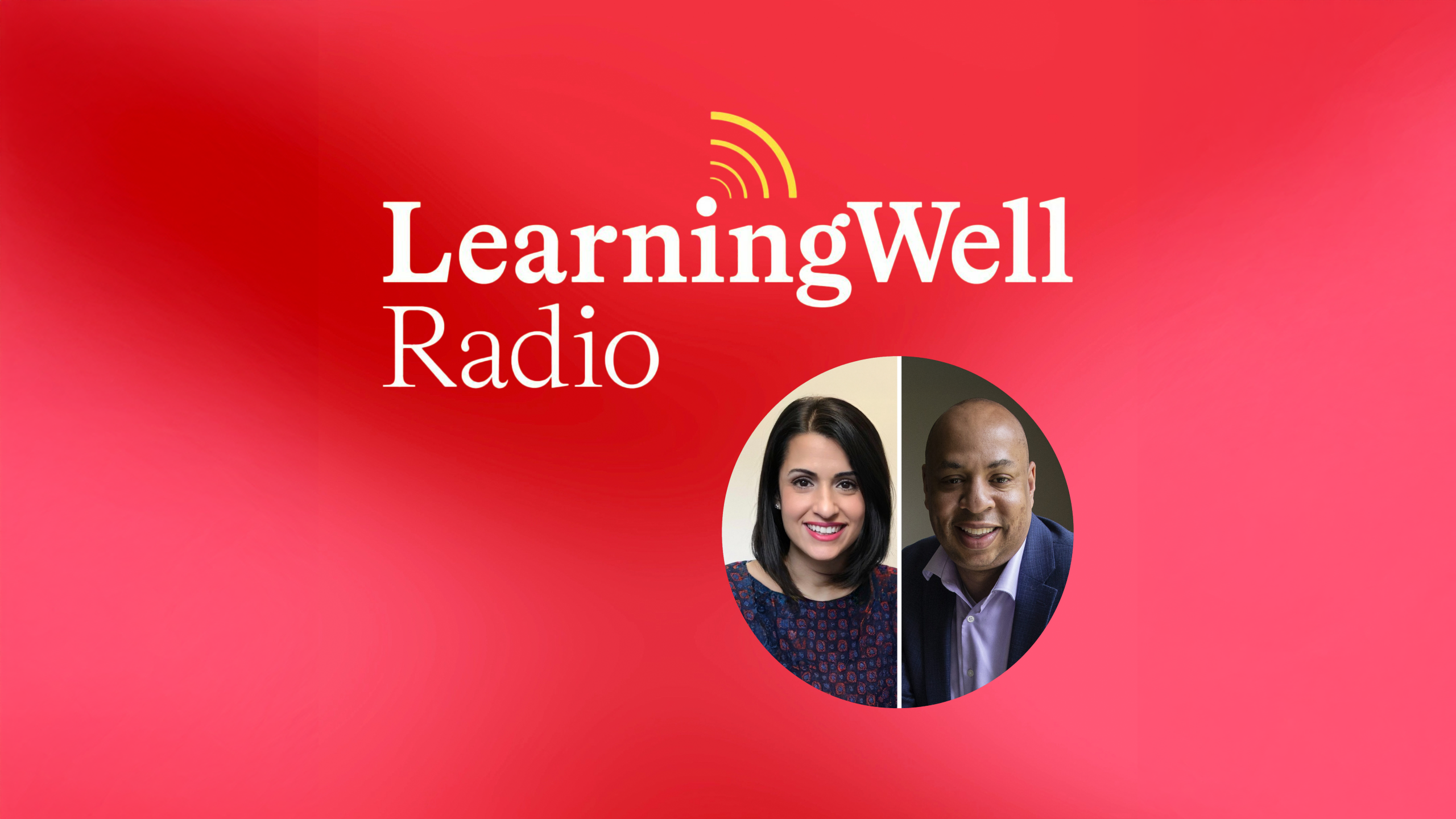
Embracing Neurodivergent Learners with Kelly Field, The Chronicle of Higher Education

On this month’s episode of LearningWell Radio, Kelly Field discusses her new report, “The Neurodivergent Campus,” for the Chronicle of Higher Education. The interview provides evidence and information about neurodiversity (students with autism, ADHD and certain learning disorders), and explores the needs and assets of this growing category of college students.

Listen now on Spotify or Apple Podcasts.

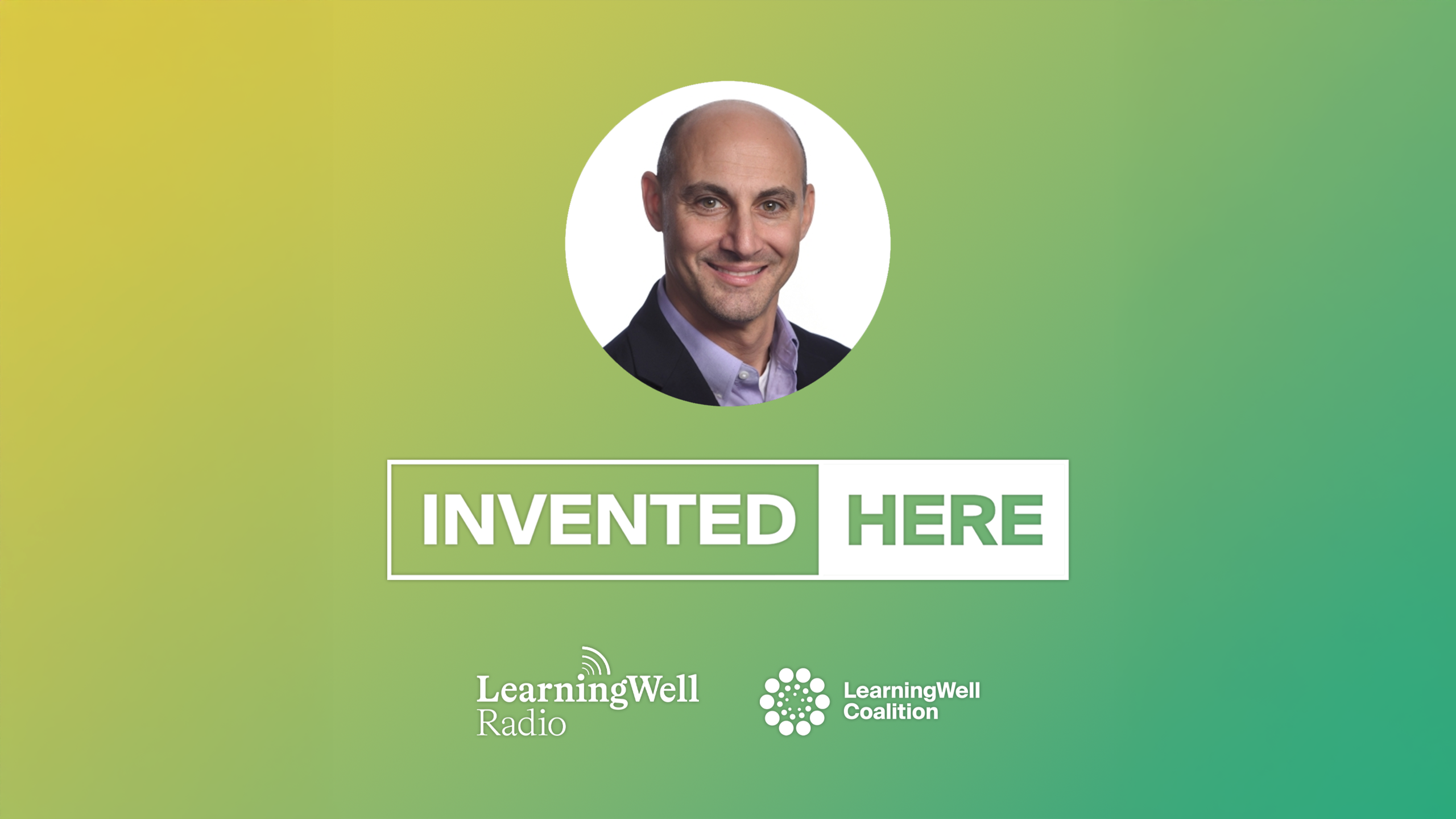
Invented Here | Sukhwant Jhaj, Arizona State University

On this episode of Invented Here, Sukhwant Jhaj, Vice Provost for Academic Innovation and Student Achievement at Arizona State University, speaks with Dana Humphrey, co-host of Invented Here, about ASU’s Work+ program, a bold and transformative initiative redefining how we think about student employment. Sukhwant shares how Work+ evolved, its impact, and the lessons he’s learned in bringing the initiative to where it is today.

This episode is a part of Invented Here, a podcast series from LearningWell Magazine and the LearningWell Coalition featuring stories of innovation in learner-centered education that fosters life-long wellbeing.

Listen now on Spotify or Apple Podcasts.

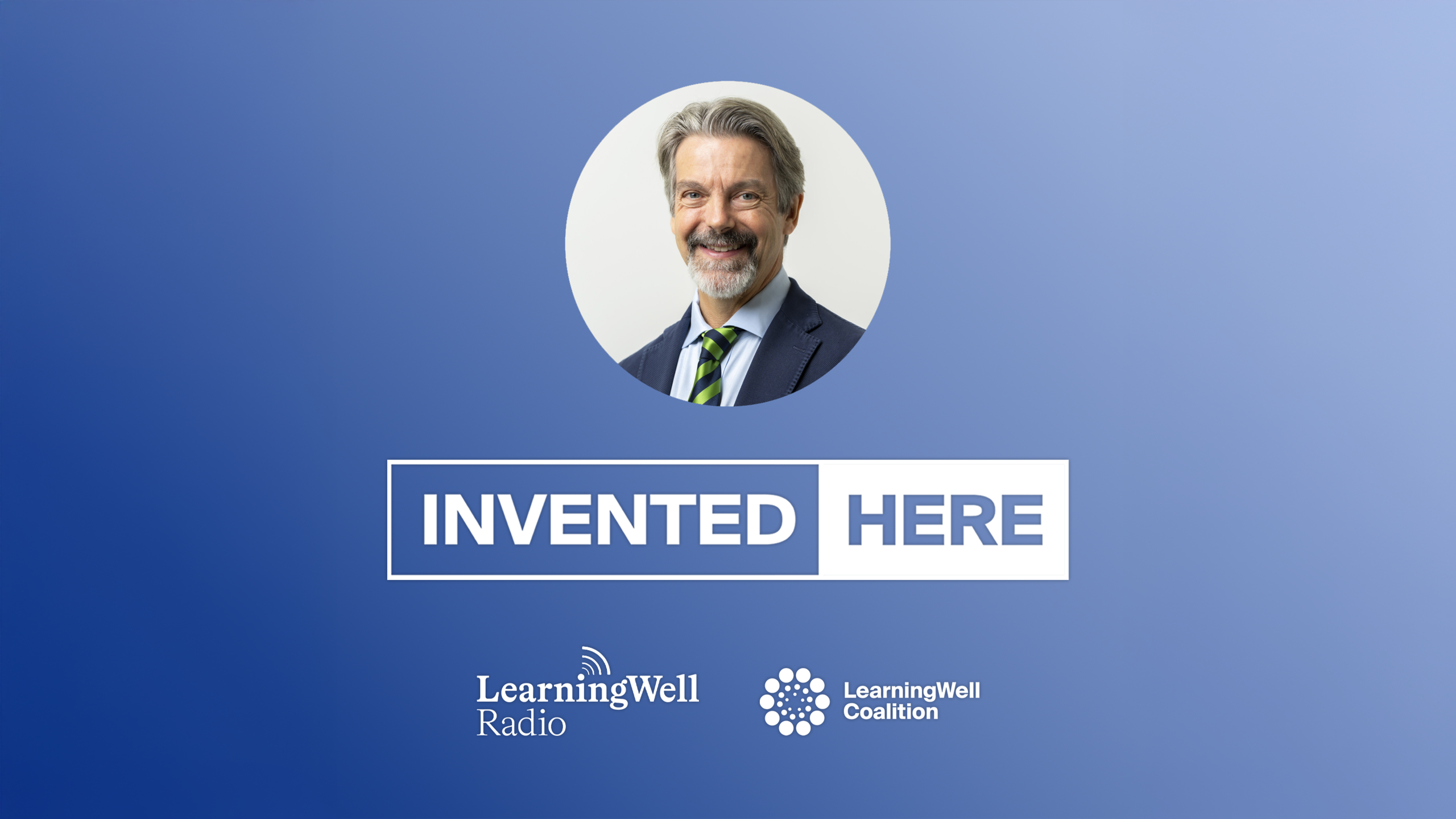
Invented Here | Joe Tranquillo, Bucknell University

On this episode of Invented Here, we talk to Joe Tranquillo, Associate Provost for Transformative Teaching and Learning and Professor of Biomedical Engineering at Bucknell University. Tranquillo is the driving force behind the Thrive Framework, which aims to fulfill the promise laid out in Bucknell’s strategic plan – “to educate individuals and, through that education, change people’s lives…. to offer students a transformative experiences that prepares them to thrive not only at Bucknell but throughout their lives.” The framework has been used to generate over 300 university-wide initiatives that enhance the student experience, addressing the ways students struggle – meeting their basic needs, enhancing their sense of belonging, improving access and use of resources and enabling holistic growth.

This episode is a part of Invented Here, a podcast series from LearningWell Magazine and the LearningWell Coalition featuring stories of innovation in learner-centered education that fosters life-long wellbeing.

Listen now on Spotify or Apple Podcasts.

Student Mental Health and Wellbeing With Zoe Ragouzeos, New York University and Eric Wood, Texas Christian University

On this month’s episode of LearningWell Radio, Dr. Zoe Ragouzeos (Vice President for Student Mental Health and Wellbeing at New York University) and Dr. Eric Wood (Director of Counseling and Mental Health at Texas Christian University) discuss what they are seeing in students returning this fall, how traumatic events of the past several years are affecting incoming students, and trends in the way we think about student behavioral health and wellbeing in higher education.

You can listen to the episode on Spotify or Apple Podcasts.

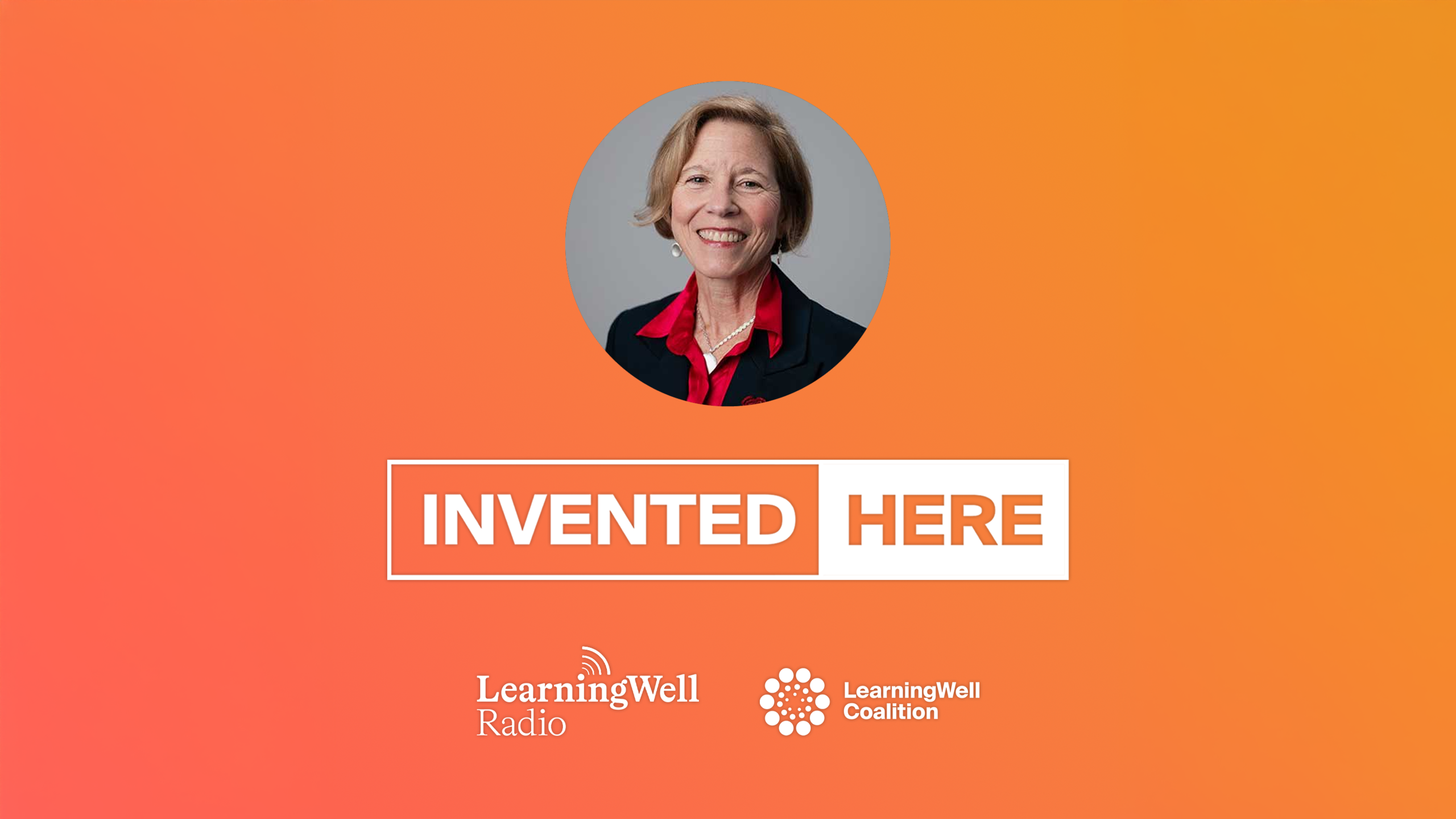
Invented Here | Angela Lindner, University of Florida

On this episode of Invented Here, Dana Humphrey is in conversation with Dr. Angela Lindner, professor and former Associate Provost of Undergraduate Affairs at the University of Florida. Lindner helped create and lead UF Quest, a 4-year signature course aimed at providing intimate, interactive learning communities within the large land-grant university in Gainesville. Part of the general education program that begins with a first year Humanities course, UF Quest engages students with questions that Lindner says “are difficult to answer, but impossible to ignore.”

This episode is a part of Invented Here, a podcast series from LearningWell Magazine and the LearningWell Coalition featuring stories of innovation in learner-centered education that fosters life-long wellbeing.

Listen now on Spotify or Apple Podcasts.

Invented Here | John Volin, University of Maine

On the first episode of Invented Here, we talk to John Volin, Executive Vice President for Academic Affairs and Provost at the University of Maine, on introducing research experiences to first year students as a pathway to belonging, wellbeing and retention.

This episode is a part of Invented Here, a podcast series from LearningWell Magazine and the LearningWell Coalition featuring stories of innovation in learner-centered education that fosters life-long wellbeing.

Listen now on Spotify or Apple Podcasts.

Overcoming Student Loneliness with Alex Kafka, The Chronicle of Higher Education

The following is a transcript of LearningWell Radio’s interview with Alex Kafka on his new report, “Overcoming Student Loneliness: Strategies for Connection.You can listen to the episode on Spotify or Apple Podcasts.

Dana Humphrey: This is LearningWell Radio, the podcast of LearningWell Magazine, covering the intersection of higher education and lifelong well being. I’m Dana Humphrey.

Marjorie Malpiede: And I’m Marjorie Malpiedie, and we’re the hosts of Learning Well Radio. 

MM: Anyone who reads the higher ed press already knows Alex Kafka. For more than two decades, the senior editor at the Chronicle of Higher Education has been bringing information and insights on the most important issues in higher ed, including student mental health and well being. And he’s done this through both his regular coverage and his special reports.

Alex joins us today to talk about a new report he has authored that digs deep into a phenomenon that has been surfacing for the past several years. Certainly before and during and after the pandemic, this sense of loneliness, Gen Z students are reporting. His report, Overcoming Student Loneliness, Strategies for Connection, is, as the title suggests, an evidence based resource for how higher education can address student loneliness, a worrisome and, as we’ll hear from our conversation, complicated issue, by using its own built-in advantages. Alex, welcome to LearningWell Radio.

Alex Kafka: Thank you, Marjorie. I’m so pleased to be with you. 

MM: I’m very excited to have you with us today. And I’m not going to lie. I am a big fan. fan of your work. And I’ve been reading your coverage for years on this topic and others, obviously. So first question, you have covered so many topics in higher ed, including student wellbeing. What made you focus specifically on loneliness? 

AK: My editors and I were talking seriously about a loneliness special report in late 22 and early 23, even before Surgeon General Murthy brought additional newsiness to the topic with his campus tour. And the topic appealed to me because it was difficult and mysterious. And that’s what I like when I’m going into a reporting project. It’s difficult in ways we’ll discuss more later, I’m sure, but fundamentally because loneliness is such a ubiquitous but elusive phenomenon. Emily Dickinson called it the horror not to be surveyed but skirted in the dark. But she, of course, did survey it beautifully and artfully, and we wanted to tackle it too. Most everyone has felt lonely at one time or another, and if you ask just about anyone what was the loneliest time of your life, they’ll have an answer for you. But it’s a puzzle because those lonely times often are not the times when one’s alone. You can be surrounded by people, even by friends, a lover, people who cherish you, respect you, enjoy your company, and still feel lonely. And we’ve all read tragic news stories about rich, popular entertainers or athletes or influencers who, it turns out, were actually abjectly miserable. And in the higher ed space, a more specific, practical mystery, Marjorie, was why once the COVID lockdown period was behind us and students were back on campus, they were still in many cases, deeply lonely, more so than ever, according to some data. So, loneliness and isolation during the quarantine and lockdown were awful, but at least it made a kind of sense. The loneliness after that was a bit of a puzzle, and as a reporter who’d been following college mental health issues for a while, I wanted to talk to experts and figure out what was going on.

MM: So let’s get right into the mystery because I agree that this is not what people think of as being by yourself or lonely. This is a different phenomenon for this generation. So as you point out, It’s not as simple as one might think. Can you talk about the different types of loneliness that in your reporting you uncovered? And one thing that really stood out for me, the fact that loneliness is not a disease, it is a brain state. 

AK: Like a lot of primal feelings, loneliness at first seems simple. And then the more you examine it, the more variegated and complicated it becomes. So it’s widespread. There are societal influences, but it’s also subjective. If you feel hungry, you’re hungry. If you feel thirsty, you’re thirsty. And if you feel lonely, you’re lonely. Jeremy Nobel, a physician and public health expert and the author of Project Unlonely, cites work by John Cassiopo the late neuroscientist at the University of Chicago. And Cassiopo interpreted loneliness fundamentally as a craving, an important psychological and neurological mechanism that prompts us to seek connection.

And I really like this thought, it really resonated in my mind that in that sense, like hunger or thirst, loneliness is a gift. We think, Oh, loneliness, how awful, but it’s also a gift because that prompt is essential to function, to live. The problematic loneliness is loneliness that goes unanswered, unaddressed. And so in that sense the epidemic of loneliness is partly a matter of education, explaining to college students, like everyone else for that matter, that loneliness is ignored at one’s peril, literally, and more broadly at the peril of society. 

MM: So I’m particularly interested in your definition, or the literature’s definition, of psychological and societal loneliness and what that means for us in higher ed.

AK: I have to attribute properly, like a good journalist here, and say this is really Jeremy Nobel’s framing from his book that I draw from. And he’s an important source in the report. So he breaks loneliness down into three fundamental categories. Psychological, societal, and existential. And he in turn, by the way, is drawing from the book. from people before him who have been studying this for decades. He doesn’t pretend to be the creator of all these categories. So yeah, let’s briefly define them. Psychological is that basic craving for connection. As he puts it, I think the wanting of that just warm and fuzzy other human, that is a lifelong thing. Societal loneliness is feeling like you don’t fit in. That you’re excluded from a group of whatever kind. And then the third kind, and this is the trickiest in some ways, and also to my mind, really interesting is the existential or spiritual loneliness. So when you talk to Nobel and other clinicians and authors and experts who have been looking at this, they say that psychological and sociological loneliness are the predominant strains that you will see among college students. 

Then, it’s interesting when you look at recent surveys you find things that are either in or adjacent to that existential or spiritual loneliness. And that’s the fundamental human condition. The bewilderment at being alive. Who am I? How did we get here? Why are we here? What’s my purpose? What do I mean to others? What do they mean to me? That kind of thing. And when you look at what students, what everyone, but including students are thinking about and worrying about things like climate change, gun culture, political polarization, malfeasance, incompetence, war, racism, et cetera, et cetera. Existential concerns are kind of part of that stew, I think, beneath the psychological and sociological loneliness.

MM: That’s a phenomenal description. And it makes me think, and I would agree with you, that this isn’t just about FOMO, right? Although it is about that too, fear of missing out. And also who’s in, who’s out and how do people look at me, either among them or outside of them. And I know we have a lot of that in our young generation, particularly exacerbated by social media, which I do want to talk about. But I would agree, this existential feeling of who am I? What is my purpose? How can I control all of these sort of outer worldly events that are happening? I think when I talk to students I hear them worry a lot about that. So I’m glad you brought it up. 

AK: I think it’s real, that feeling that the world’s going to hell in a handbasket. And, why am I trying so hard to succeed? Why am I going through all this when things are spinning so much out of control?

MM: Yeah, let’s talk about some of the causes that you identify, and I love how you talk about social media as the Borg.

AK: I’m a big Star Trek fan, so I couldn’t help it. And I mean, doesn’t that describe social media? It’s like, when you look at all those studies about people who want to escape it, but they can’t, and they must assimilate.

MM: I have to tell you that was my favorite part of the report. The way you describe that is just priceless. And I think really spot on, to say it’s a love-hate relationship simplifies it, but you talk about, and again, you go back to the evidence and what’s in the literature. I love Jean Twenge’s work on this. We’ve all seen Jonathan Haidt’s new book, The Anxious Generation. So You know, you’re very balanced and research based when you talk about this, but do you have a personal opinion on how onerous social media is to this problem of loneliness in Gen Z?

AK: Ah, so now, Marjorie, you’re trying to trick a reporter into having an opinion about something.

MM: I’m thinking it might be there.

AK: I’ll give that a shot, and it’ll probably get me into trouble just like when any reporter strays into opinion land. Jean Twenge, a hugely influential psychologist and author, put her fingers on a lot of this stuff a decade ago. And I think most of your listeners are well aware of the argument, so I won’t rehash it at length, but, the confluence of smartphone adoption and ubiquitous social media and then Professor Haidt and his new book, and it seems like every book on this topic has to be accompanied by an article in The Atlantic, right? So he had one of those and he’s updated Dr. Twenge’s thoughts and argument in a more activist vein, saying we should look at policies and legislation curtailing the use, particularly among younger kids, of smartphones and social media. And influential folks are obviously hearing and thinking about this debate. Just this week, a few days ago, Surgeon General Murthy proposed putting warning labels on social media the same way we do on cigarettes in California, Florida, and some other states. Interestingly, states that have overall a lot of political differences are all considering legislation that would rein in kids’ use of social media. So in answer to your question, I’ll stray from my reportorial comfort zone a little bit. 

While correlation is not causation, I think Twenge’s and Haidt’s arguments pack a real wallop, and I totally understand why Surgeon General Murthy and legislators and parents and teachers and school administrators are alarmed. And, I’ve thought a lot about the counter argument I mentioned in the report, a George Will column where he says, society always freaks out about new technology, whether it’s a radio or TV or internet or cell phones. But, I think that doesn’t quite hold up. Bill Maher did a great bit a couple of years ago, making a serious point in his entertaining way that cell phones, especially in tandem with social media. Bring a technological change, not just in quantity, but in kind. That this is really a little bit different. And besides the occasional glance at LinkedIn, or catching up with music camp friends on Facebook, I don’t really go in much for social media. I have other addictions like binging on Succession. But here’s where my ambivalence or confusion or reservations come in, and I realize it’s mealy mouthed and totally unhelpful.

But there are three points I want to make, and I’ll try to make them quickly. One, smartphones are woven into so many facets of our lives. That while it may well make sense to delay their use, and my wife and I did just that with our now 26-year-old twins that might just make them all the more enticing. I think about when I was a kid, Marjorie, I wasn’t allowed to watch TV except a little on Friday and Saturday nights, and that just made TV gleam in my imagination, like the Holy Grail. And pretty much every school day, I snuck over to my friend Bruce’s house to watch reruns of M. A. S. H. But I think, the forbidden fruit, whether it’s TV or social media, is always very appealing, right? And then Two, within social media, the categories are so wide and blurred. Yes, obviously heavy teen users staring at TikTok or Instagram or YouTube most of every waking hour. That’s a horror show and the opportunity costs are huge. Not just in socialization, but just in reading and pursuing other skills and passions. But social media, as you know, serves affinity groups, marginalized populations, people with disabilities. During the pandemic, in some cases, it was a real lifeline for students who felt just dreadfully isolated. And social media can reveal occupational possibilities, they blend with entertainment, streaming, and video game platforms, they offer marketplaces for niche skills, they do a lot. And so it’s a very mixed bag.

MM: Yeah.

AK: And, then the third point I’ll make, and then I’ll hush up on this, is that when it comes to cultural battles over tech, I think we’re often fighting the last war. And so I wonder if warning labels on social media will feel like the explicit lyrics on albums that Tipper Gore proposed. Where teens just laughed and rolled their eyes and bought the albums. Gosh, I think if we look back in 10 or 20 years at the possibilities and perils of, say, AI, and how that blends into the mix, some of these other debates will be dwarfed. 

MM: A couple things. One is, what I think is interesting, and it’s pointed out in your report that kids themselves would just as well give up social media if all of their friend groups did the same. So there may be some sort of organic resistance to it that we might see. What do you think?

AK: I think there’s a total organic resistance to it, and I love you can read, or maybe you’ve already read, about the study by economists showing that people would literally shell out 10, 20, 30 bucks a month to rid social media from their universes. Except, and this is where the Borg assimilation metaphor comes in, you can’t quit because so much of your career life or student life or Just the logistics of communicating with your team or your carpool or whatever are so wrapped into it. And so you can’t. But I think, educating students about some of the perils and addictive issues with social media, just like you do, tobacco and alcohol and sex education and education about anything else in the world, that might yield better results, but I don’t know. I think it’ll yield a lot of great dissertations in the next decade or two.

MM: What is it specifically about — again, the many trends and habits and favorites and whatnot — what is the direct linkage to why they’re so lonely? 

AK: So there’s a great metaphor that a journalist used in an Atlantic piece, and Jean Twenge in her new book actually references that, where the journalist says, look, it’s not that everyone who uses social media is lonely and miserable and it’s a more, Subtle connection, the way a sip of wine might loosen people up at a party and make them feel a little less shy and inhibited. For other people, it might make them too uninhibited or depressed or whatever that it can have or, alcoholic and addicted. That social media is the same way, that for most people a little bit of social media goes a long way and it’s probably okay, but then for some relatively small percent, It’s really problematic. And when you look at the surveys showing percentages of, I don’t have them in front of me, but gosh, five, 10, 15 percent, you’ve got a line of 10 students in front of you and one or two of them is addicted to something, whether that’s social media or drugs or alcohol or whatever else that’s a big concern. And if you’re wrapped up in social media, first of all, there’s all the potential abuse, bullying, exploitation, deep fake nudes, sex, blackmail stuff, the things you read about in the newspaper every day. There’s that, but short of that, there’s also just, gosh, if you’re staring at your phone five, six, seven hours a day there’s so many other things you’re not doing.

MM: And not connecting around, certainly not in a real way. Speaking of smartphones and social media I want to sneak in a question about something you reported on recently. And that was a new report, a white paper that came out on the efficacy of mental health apps for college students. Big, huge question. I was glad that you wrote this. And also glad that Our friends and colleagues actually did the white paper. This was Sarah Lipson and Dan Eisenberg and others Healthy Minds Network. And I believe the Hope Center. Alec, what do you think about that in relation to what we’re talking about today?

AK: Yeah, so what they’re doing, so these are teams from BU, UCLA, Irvine, Temple, and I hope I’m not forgetting any institution in conjunction with the Ruderman Family Foundation. And what they’re trying to do is bring some quantification and some publicly available evidence. about whether mental health apps that colleges are using are working. And there’s some evidence, they cite, for instance, a study from 2019, that the apps are in fact doing something, maybe quite a bit. But there’s not a lot of evidence out there. There’s not a lot of transparency as to how many students are using these apps, whether they stick with the apps, that’s a big question whether the apps are taking the best approaches for the student populations they’re reaching, that kind of thing. And so in this report, they first of all are pushing, I would say, college leadership to ask more questions of the app vendors as to what exactly you’re selling, how good is it, and for the hundreds of thousands of dollars that we’re paying for it in some cases what are we getting for our money. And then in the longer run, they’re urging the app vendors and colleges to share their information about All those things, how effective the apps are, how many students are reaching so that people can, hopefully pick the right ones for their circumstances. 

MM: And there’s so much promise there to your point about the sort of flip side of social media and devices. There’s so much more we need to know about how it might actually benefit students. Certainly they’re using them. And it’s, there’s the proliferation of these that certainly came around in the last few years and We’re certainly accelerated by the pandemic. Before we leave the causes of loneliness, I didn’t ask you about the pandemic, Alex. There’s so much we still don’t know and analyze in that. But what do you say about that in your report?

AK: Yeah. When I was writing about student mental health during the pandemic, a lot of experts were hypothesizing/warning that there could be something they were calling an echo pandemic, which would be a post traumatic societal phenomenon. And they were looking back at previous historical examples like World War I, the Spanish flu pandemic, things like that, and saying, hey, after these things were quote, over, they weren’t really over, that there was in some cases, upticks in depression and anxiety and suicides and all kinds of things, and they were afraid that might happen with COVID too. And at least some, I don’t think it’s that clear and I don’t think it’s really a consensus, but at least some experts think we are in that eco pandemic now, when you look at the still rising rates. of anxiety, depression, suicidal ideation, social anxiety in particular subcategory of anxiety that we are seeing the results of those lockdown and quarantine periods and, the cognitive and emotional effects of those.

MM: And you say in your report that Gen Z students are the most lonely demographic, for all the reasons we’ve been talking about but that puts this whole issue squarely at the door of colleges and universities, particularly those who care deeply about protecting student mental health. And success, because I think you point out as well in your report, this affects how people learn, how engaged they are in their college experience, etc. I wanted to ask you about something I thought was a great point in your reporting, and that is that terms matter, right? Words matter in college student mental health. And there’s always this sense of, what is something that is a serious or acute diagnosis that has to be treated in one way? And what is, to reach back to what we first started talking about, more of a state of mind or feelings. And you talk about loneliness in a way where we need to be careful not to pathologize it, right? But at the same time understand when it becomes a problem. Can you talk a little bit about that?

AK: Sure. Yeah. As we’ve discussed, the mental health problems are all too real an unbeat of statistics from healthy mind study and other surveys, loneliness percentages in the forties or fifties or even higher, depending what you look at, anxiety and depression rates in the thirties or forties climbing rates of social anxiety. And students in psychological crises need substantial care, and they need it fast. And it’s great that stigmatization of mental health challenges has declined a ton over the last couple decades. But clinicians are also worried. That everyday stress is sometimes medicalized by students and by their parents. Being a social mammal is sometimes trying. Anyone with a roommate, schoolmate, or even just family members can attest to that, right? And there are financial, logistical problems that are very real, but not medical. Not psychological. And yet too many students, counseling center directors are saying, try to solve every problem with an appointment at the counseling center. And that can be unhelpful in a couple ways. First, the counseling center can’t help them. If the problem is finance and summer job issues, you got to go to financial aid and career centers. And second, if the misguided counseling center recessions take valuable time from students who really need them, that stretches already ragged and totally understaffed counseling centers even further. 

MM: I want to then segue into sort of what schools are doing to respond to this because I do Think that this is starting to become an acknowledgement on college campuses, you know I’ve been hearing for years counseling services can’t do everything, nor should they. And so we’re seeing the rest of the community get involved in this, which I think is a good thing. When it comes to this particular issue around loneliness, what are some of the strategies that you’re seeing that might be most effective?

AK: Oh, sure. That’s the fun part of the report. After all the depressing news about causes and whatever, is that this, unlike some things colleges can actually do quite a bit about, and it doesn’t always cost that much either. There practical, just plain old fun responses, outdoor movie nights with snacks, escape rooms, food trucks, outdoor concerts, dances. Do not underestimate, I’ve been told by a couple presidents now, how much this generation that did not get their prom and junior prom nights, how much they love dances. Speed-friending preferably in conjunction with pizza. Everything goes better with pizza. Quiet craft activities for students who just don’t go in for a lot of noise and commotion. For students who do go in for a lot of noise and commotion. Crazy traditions. The one that’s pictured on the cover of the report is the Colorado School of Mines cardboard boat race. And the precedent there is also big in the GaGaBall tournaments. I had no idea what GaGaBall was until I reported this. There’s some other things too changing expectations from the outset. So that students who have a few lonely weeks at the beginning of their first year realize Hey, that’s normal, and they are not the oddballs. They’re supposed to be feeling that way. Sometimes practical nudges, like at Bryant University in Rhode Island, they give every new student a lawn chair. And have kind of a block party that first night and going on that first week. Things going on outside, right outside their dorms every night. Social gatherings around academic programs in preparation for study abroad. And then finally I love the MIT example that I cite and especially one student who I feature, and I won’t tell you too much here and spoil it, but Students who turn those existential quandaries we talked about upside down. Why are we here? How can we better serve our fellow human beings? You know, if you’re sitting alone in your room those questions can lead to misery. But if you start, like they did, a quote, big question club and get together regularly and do readings around them and invite guest lecturers and that kind of thing, that can become a very social phenomenon and really fun. So I guess, two prongs. Humanize the campus, increase empathy and peer support, but also just make campus life vibrant and fun so that the fear of missing out doesn’t happen on your phone. It happens because, or rather it happens because you’re on your phone and you’re not out the door and actually interacting with your peers. 

MM: The other thing I love that you talked about, and if you have anything else to add, please do, but this idea about, so activities are terrific, right? Some people go for it, some people might not. But this kind of cultural change where everyone on campus is sort of acknowledging the reality of this, right? Not everybody has a friend group, or friends. And professors talking about that and staff talking about that. I think that’s really cool.

AK: Yeah, I do too. That strain of the argument came from Gary Glass, I think, at Emory University. And he was saying, yeah, this generation, they’ve grown up watching syndications of friends and other sitcoms where not only do you have a couple good friends, but you’ve got a circle of six or eight of them and they’re all witty. And there’s always some. Funny story arc going on that you’re all part of. And of course, people know, hey, that’s TV. It’s not real life. And yet, when you combine that with that parallel universe on social media, where everyone looks happy and healthy and thin and smiling, that can have in the long run kind of weird effects on what you expect from your social life. 

MM: Fantastic words of advice with chock full of evidence and some great best practices. So this is definitely a report that should be read and it should be read now at a very important time. I want to make sure that our audience knows how to get the report. 

AK: Go to chronicle.com, which you should check out anyway, because it’s awesome. But then go to the store button at the top of the page on chronicle.com, and then you will see on the drop down menu reports or featured products, as well as other things like data collections, back issues. And this will be under, at the moment, I think it’s under reports and featured products. But anyway, you’ll find my report. You’ll find brilliant reports by so many of my colleagues at The Chronicle on all kinds of urgent and important issues.

MM: Thank you so much, Alex. This has been a real treat to have you on the show. Thank you so much. And we are looking forward to more from you.

AK: Great. I’ve had so much fun speaking with you and thank you Marjorie.

MM: Take care.

Ian Elsner: This has been learning while radio, a production of learning. Well, for more information about our work, go to learning well mag.org. And if you like what we’re doing, leave us a rating or review. Thanks so much for listening.
Harnessing the Power of Anxiety with Wendy Suzuki, New York University, “Good Anxiety”

The following is a transcript of LearningWell Radio’s interview with Wendy Suzuki on her book “Good Anxiety.” You can listen to the episode on Spotify or Apple Podcasts.

Dana Humphrey: This is LearningWell Radio, the podcast of LearningWell magazine, covering the intersection of higher education and lifelong well-being. I’m Dana Humphrey.

Marjorie Malpiede: And I’m Marjorie Malpete, and we’re the hosts of LearningWell Radio.

DH: Dr. Wendy Suzuki is a neuroscientist at New York University, where she also serves as Dean of the College of Arts and Science. Her primary area of research is neuroplasticity, and recently her work has focused on understanding how aerobic exercise can be used to improve learning, memory, and higher cognitive abilities. She’s the author of Healthy Brain Happy Lice, a personal program to activate your brain and do everything better, and Good Anxiety, harnessing the power of the most misunderstood emotion. She’s had appearances on CBS This Morning, WNYC, Big Think the Moth, she has a TED talk, and now she’s joining us on LearningWell Radio. Wendy, thank you so much for being here today.

Wendy Suzuki: Thank you for having me, Dana. 

DH: Good Anxiety discusses how we can make everyday anxiety work for us rather than against us. And we will definitely talk more in depth about that. But the last time I saw you was at the Coalition for Transformational Education’s conference in March,

where you gave an electrifying presentation on the effect of exercise in the brain. It really set the house on fire. I have never had that much fun during a presentation at a conference. We all stood up, we went through some of the exercises that you have your students do during class. So I just wondered if you could give a bit of background on that. Why did you decide to start bringing physical activity into your classroom, and how did that process go? Were the students receptive? Did you notice a change in how they learned or how you taught them? 

WS: Yeah, this all started when I got interested in the effects of exercise on the brain because I had I had realized I wasn’t moving at all in my life and I was feeling run down and stressed and also I didn’t have friends outside of my own lab and I said I don’t know how to gain new friends but I do know that I can go to the gym and at least feel more physically strong and so I went to the gym and I ended up really changing my regular workout habits and I felt really great. And right about that time, I needed to teach a new class and I thought, oh, wouldn’t it be fun to learn about the effects of exercise on the brain since I’m noticing all these great effects on my life,

on my mood and on my memory and on my focus and it wouldn’t be fun to really dive deep with the students. And so I at developing that class. But then I found the thing that really gets me going is going to the gym and finding a great class and moving with a whole bunch of people. And so I thought, wouldn’t it be fun to actually bring exercise into the classroom? And so I immediately ran to my departmental administrator and said, hey, could I get some money for to hire an exercise instructor so I could bring exercise into the classroom? And they said, no, no, you’re you’re the teacher, you teach the class. And so I went back to my desk a little dejected and I thought maybe I’ll train to be an exercise instructor and I will teach the exercise part of the class too. So then I went back to my administrator and I said, “Hey, would you pay for me to go train how to teach exercise at the gym and then teach in the classroom?” And they said, “Yes, we will.” And so I went and I took training fitness,

uh, teaching class at the gym, and it was so much fun. And, and I, at the same time, I was developing this new class and, and I thought, wow, make, I could turn this into a study. Maybe I could test the effects or test their baseline effects of mood and reaction time before and after this class and see whether our regular workouts, which were going to be once a week, did any difference. And so this turned into a class that I called “Can Exercise Change Your Brain?” And you asked me whether it changed the classroom. I will never forget the very first day of that class that I ever taught.

It was in a classroom where I taught for 15 years, a typical classroom with lots of seats in it. All the seats had been pulled out, it was a completely empty classroom. I walked in, I was worrying head to toe Lululemon, which I usually don’t do in classroom. And I was feeling really nervous because while I’m very comfortable lecturing, I had to actually teach an exercise class to these students for the very first time. And I’ll never forget all the nervous laughter. I think they were quite scared when they saw me walked in the classroom in Lululemon and they realized, oh my God, I have to work out with her. But I must say that completely transformed to that classroom. It eliminated that invisible wall that’s always there between the talking head at the front of the classroom and all of the hopefully learning heads in the rest of the classroom. And we had such a great time. And so that’s what made me realize, oh my gosh, I’ve got to do this in my lectures. There’s no better way to, as you say, electrify or dries a room than to make everybody stand up and they don’t know exactly what’s going to happen and then they have to do a little dance to Taylor Swift.

That’s how that came to be. 

DH: It was so much fun at the conference. It really left such an amazing impression and there was quite a bit of nervous laughter when we were going through the exercises as well. Although I think it was all based on, “Gosh, I’m going to look so silly doing this.” But it was so much fun. As you alluded to, and you talk in the intro to your book about how your own anxiety about how you were feeling led you to try and experiment with ways to feel better, including exercise and nutrition. But it also led you on this path to exploring the difference and distinction between good and bad anxiety. So anxiety has bad rap. Can you explain how anxiety can be a force for good in our lives? 

WS: Yeah, so I think first and foremost, it’s really important for people to realize that anxiety is a normal human emotion. We all have it. There’s nothing abnormal about anxiety. It’s one of the more uncomfortable emotions, but in and of itself, it is part of our natural human set of emotions. But the other second thing, it’s a little bit better, is that anxiety evolved not to annoy us, but in fact, you might be surprised to learn that anxiety evolved to protect us. And good anxiety is the idea of getting back to the protective aspect of anxiety and trying to leave the bad rap, as you say, of anxiety on the doorstep. And the first important step that I’m sure everybody’s thinking about is, oh my God, there’s no way this can be good. It’s just so overwhelming. And I totally agree. Anxiety in our society today is overwhelming. The level is too high. And in fact, for most of us, too high to be protective or helpful. So a lot of my book is first showing us how to turn down the volume of anxiety note that I never say I’m going to get rid of it because you can’t it’s a normal human emotion but there are so many approaches and techniques and tools that one can use to turn the volume down and that is the first step And I think that can be helpful to everybody listening to listening to this

podcast So a few years ago. I’ll just go in a little aside here for a it. I had the opportunity to work with somebody who I, it was sort of a coach and I took a bunch of personality tests and one of the personality tests came back that I had high access to anxiety. And you get these results back and you’re reading through them and I’m like, that doesn’t sound very good. But I was walking through them with this coach and they were talking about how it actually was a good thing that it’s eyes and ears for danger that you’re talking about that when something is not quite right,

you see it, you’re expecting it. So it wasn’t all bad. So I was thinking about that so much as I read through this book about that experience of learning that anxiety can be a good thing.

DH: So, as you know, LearningWell is focused on issues around college student well-being, including student mental health. And I was struck when you were in the book talking about this relationship between stress and anxiety and resilience,

because I think resilience is a term that gets thrown around a lot when we talk about Gen Z mental health or the younger generation, they don’t have resilience, yadda yadda yadda. Can you talk about the relationship there, between stress and resilience? 

WS: Yeah, I think that’s such an important relationship because we all have stress. And I think the key element is that the stress that we all go through in our everyday modern life, that is actually the building block to our resilience and talk about flipping a bad thing into good. So the stress that you go through that you get through that can instead of just wearing you down think of it as building up a wall to your resilience and being able to get through next time even a harder thing because you got through this medium hard thing And that really points to another topic that I talk about a

lot in the book, which is mindset. How we approach our stress and our anxiety -provoking situations in our life is so strongly influenced by the mindset that we have.

Is this a terrible burden or is it a challenge that I’m going to give myself today to see whether I could reach that challenge. And in reaching it, really celebrate.

That is an achievement that I was able to attain. There’s so much in my life that I have switched in terms of just the mindset that I approach it with. It is transforming in the way that you wake up in the morning and that you approach the world. But that’s the core right there, switching your stress response into a building block for your life’s resilience.

DH: Yeah, I loved that. I think we all talk about moving from a fixed mindset to a growth mindset, and I think that’s a pretty well-known term, but I loved this idea of this activist mindset that you brought up, that you can choose to change the things in your life. 

WS: Absolutely, and it is activist, positive that I think if you’re saying, oh, I don’t know how to do it, the other way you can ease into it is use your friend and relationship network. There are, I guarantee there are people in your life that on both sides,

some that are negativity things and some that have a wonderful mindset, maybe not about everything, but about certain things and maybe about things that you have as a challenge in your life? Can you look around? I’ve had so many kind of mindset models, particularly in my science career. Being a neuroscientist is really competitive and there’s a lot of pressure around grants, but I’ve always admired those scientists, really that had fun with their science that approached everything about their work with this sense of curiosity and joy, and use that as a model if you’re not finding it easily in yourself. And I guarantee, just look around, be a little bit observant, and you will find those people to be your activist mindset /positive mindset role models.

DH: Yeah, I love that. And it’s so funny. I think it comes so naturally to some people and there are other people, probably myself included, where you definitely have to work at it. As our listeners are largely in academia, professors, student affairs professionals, administrators, those who work with students, how can they take the wisdom from your book and apply it to their work with students? 

WS: I think number one tool is particularly in the book Good Anxiety, the last third of the entire book is a toolbox to decrease your anxiety, to lower the volume on your anxiety. And all of you out there, advisors, people in student affairs, deal with stressed out, highly anxious students. It’s the age that we are working in. And they need tools to approach it. And these were designed and they were written to be actionable. And yes, all of them are science-based, but some of them are easy to use. One of my favorites that I use often in my own life is call your funniest friend.

Call the friend that makes you laugh or go visit them in their dorm room. Things that you know will put you in a better mood. That’s the quickest way to flip your anxiety.

Maybe that’s too social if you’re too deep into your anxiety, but that’s where you can turn to your favorite music, your favorite show, things that make you smile,

things that make you laugh. I even bring this into my Instagram feed that has a large number of puppies and kittens and beautiful pictures of locations and art. And no, I don’t stare at people that have better houses and better cars And I do. I stare at beautiful locations and puppies and kittens that always make me smile.

DH: I love that idea. I think one of the things that we hear all the time and we’ve heard in our work for years is specifically around faculty feeling uncomfortable about having these conversations about mental health because they are not mental health professionals and they don’t want to cross a line. One of the things I love about this book is the framing of everyday anxiety and taking that away from the clinical anxiety. I think there is this tendency specifically now with the young adult mental health crisis to pathologize normal feelings that we all have. And I think that this book does such a good job of taking that back and taking that idea of anxiety is a normal feeling that we all have. And how do we deal with it on a normal level instead of immediately taking it to a clinical perspective?

WS: Yeah, I think of it as closing the door on that clinical perspective. I don’t have an MD, so I cannot speak to clinical anxiety, but I could speak to everyday anxiety because I have plenty of experience with that. And what I would encourage all the professors and all the administrators that counsel those professors is to be personal. Have you dealt with anxiety? Maybe you dealt with certain kinds of anxiety when you were a student. Share those experiences. Nobody’s asking you to diagnose and treat somebody with clinical anxiety. But the ask is that we all need to show a higher level of empathy, because there’s much more of it out there than there ever was either when we were in school or even just five years ago, for example. And everybody can do that. Everybody can be empathetic. Everybody can share their own experiences with anxiety, funny, or serious. Both are useful. And it’s just a challenge to to think about how can I find an appropriate way to help these students? Because I know each and every faculty out there wants their students to learn. And sometimes it requires some creativity around the levels of anxiety that comes up around certainly exam time. 

DH: Sure. And I, you know, another thing I just loved is when you talk about good anxiety can lead you to do all of these amazing things. It helps push you. And there was this feeling in the book of you can harness that anxiety, that good anxiety. 

WS: Exactly. What I like to describe is a three-step process to get to good anxiety.

One is to learn how to turn the volume down in your own anxiety. Nobody can function particularly well when anxiety is too high. So that’s where the movement, walking,

a great walk is a quick, immediate way to decrease your anxiety levels. And this is not a wives’ tale. This is from clinical studies showing that a 10 -minute walk can decrease your anxiety levels, breath work is one of the fastest ways also to quell your anxiety, and then all the tools in the last third of the book. Second, we haven’t talked about the second step of good anxiety and it’s a really important one,

which is understanding why you might be having these feelings of fear or worry that is the definition of anxiety. And when you ask yourself that, where does that get you? That flips you over to the reason for that worry, which is your values, the things that you hold dear. So I might be super, super worried about money and my next paycheck and whether I’m gonna pay for college or can I buy house that I want to buy and you could be subsumed with anxiety, but it says that your kind of financial stability is very important to you. There’s nothing wrong with that. And it’s, in fact, it’s useful to understand what you hold very dear to you, whether it’s financial stability, nothing wrong with that, your relationships, maybe there’s a lot of anxiety around, around friends or family members, whether it’s your job, of course, that means worry about job, means that you want to do your job, that you want to be seen, and you want to do a great job. Often on the flip side of that worry is something beautiful that you hold dear, and that also was my personal realization as I was writing the book, and it really does help me flip the story on that fear or that worry. That still comes up normally, I’m a normal human being, but it’s, oh yeah, I have always just needed a certain level of financial stability or a certain kind of group of friends to feel good.

And then the third step is to transform your anxiety into a gift or superpower and that is the flip to good anxiety. And the easiest example is turning a catastrophizing what if list that we all have had in our brain into a to -do list.

And this takes advantage of the fact that your what if lists aren’t about irrelevant things. They’re about very relevant things in your life. And flipping it to a to do list makes you more productive and uses that worry about things that you hold dear and puts it to use.

So that’s my favorite and easiest-to-apply superpower of anxiety, which is turning a what if list into a to do list. 

DH: I definitely will be using that one because first of all, I love the word catastrophizing. I used it all the time, but I have a tendency towards that. I will definitely use that going forward. I also love lists, but I just wanted to quickly circle back because I think this idea of reflecting and understanding yourself and who you are and what makes you tick is such an important piece of this. So I really appreciate everything you said about that and what drives you and what drives your anxiety. But overall, I just really want to say thank you so much for this book. It was such a wonderful tool, and I will definitely be passing it along. I encourage all of our listeners to read it, but also to look at your TED Talk and, self-promotional plug, to watch your incredible presentation at the Coalition for Transformational Education’s conference because it was truly a highlight. Thank you so much, Wendy, for coming to join us on LearningWell Radio. 

WS: Thank you so much for having me, Dana. It was a pleasure. 

Ian Elsner: This has been LearningWell Radio, a production of LearningWell. For more information about our work, go to learningwellmag.org. And if you like what we’re doing, leave us a rating or review. Thanks so much for listening.
The Power of College to Activate Life-long Growth with Dan Porterfield, The Aspen Institute, “Mindset Matters”

The following is a transcript of LearningWell Radio’s interview with Dan Porterfield on his new book “Mindset Matters: The Power of College to Activate Lifelong Growth.” You can listen to the episode on Spotify or Apple Podcasts.

Marjorie Malpiede:

This is Learning Well Radio, the podcast of Learning Well Magazine, covering the intersection of higher education and lifelong wellbeing. I’m Marjorie Malpiede, the editor of Learning Well and your host. Today, Dan Porterfield is president and CEO of the Aspen Institute, a global organization committed to realizing a free just and equitable society. He’s also the former president of Franklin and Marshall College, where from 2011 to 2018, he led the achievement of a number of student-centered milestones, including tripling the enrollment of low-income students and expanding student wellness and career services. Dan’s new book is called Mindset Matters, the Power of College to Activate Lifelong Growth. He joins us today at Learning Well Radio to talk about how higher education can achieve its promise to shape mindsets that enable students to thrive in an uncertain and rapidly changing world. Dan, welcome to Learning Well Radio.

Dan Porterfield:

Thank you, Marjorie, and thank you for that description of my book. It’s better than I could have done on my own.

Marjorie Malpiede:

I’ve got to tell you, I loved your book. Are you ready to give us some highlights?

Dan Porterfield:

Sure thing.

Marjorie Malpiede:

First, I wanted to ask, and it’s so obvious from the first page, this book really comes from a place of deep experience for you in terms of your mentoring students. Can you talk about those experiences first and how they may have led you or compelled you to write the book?

Dan Porterfield:

Oh, thank you, Marjorie. I was fortunate that I was exposed to education and great educators from the time I was growing up in Baltimore City as a child, which included having great coaches and mentors throughout all the different experiences I had playing sports in Baltimore, going to Loyola High School, later going to Georgetown University. I have a huge list of caring adults from my developmental times who played important roles in my life by setting an example, investing in me, listening and caring, encouraging me, sometimes challenging me or criticizing me, all those different kinds of experiences. But when I was younger, I coached basketball, I worked with court supervised youth, I worked with immigrant families in their homes in Washington, D.C., I taught in prisons and I had a set of experiences in my twenties that allowed me to be an educator, and that motivated me, inspired me to pursue a PhD and to envision college education as the place where I would develop my career. I got into working at the college level, having already both benefited from mentorship and been a mentor many times over. And so I do bring that joy to this book and everything I do.

Marjorie Malpiede:

Well, it comes through in the pages. The other thing I want to ask you, Dan, you were a college president. You were also particularly attuned to the students’ development in a way that you don’t always see in the president’s office.

Dan Porterfield:

I don’t know what to say about how other people get into this role of leading a college and university and what experiences they have, but my life has been so enriched by being a teacher and a mentor and a coach. So one of the things I’ve always looked for is more when I was at Georgetown University, I was senior vice president for strategic development and also an English professor I taught most semesters. But about five years into my experience at Georgetown, my wife and I chose to move into a residence hall with our three daughters who at that age were six, five and zero. And so, for eight years before going to F and M, we lived in the ground floor of Copley Residence Hall and were the faculty family. I was teaching, I was working at the senior level and I was living on campus, and all those roles were complementary of course, but the opportunity to be present 24/7 to the student experience at Georgetown was just so enlightening and inspiring to me. It made me want to be a president that was in close touch with the student body.

Marjorie Malpiede:

The book is called Mindset Matters. Great title by the way. And you start by describing growth and fixed mindsets, with a conclusion that encouraging a growth mindset is one of the major goals of higher education. Can you elaborate on that with an eye towards why, as you argue in the book, it’s more important than ever?

Dan Porterfield:

Yes. So first of all, Carol Dweck is the brilliant psychologist and professor of psychology who came up with the concept of growth and fixed mindsets. When I read her book Mindset years ago, it influenced how I taught my students at Georgetown and later at Franklin and Marshall, because Professor Dweck came to see through her research that people adopt a view about their capacity to handle change and to be able to grow in the face of change, to meet new challenges, to learn new skills, to climb new mountains, to develop new capacities. And she found that people tended to adopt either the mindset, I can do it, I’m a learner, or the opposite: I’m not good at that. I found myself as a professor and as a leader on Georgetown’s campus, so inspired by the idea that my actions as the professor, as the faculty and residents could directly influence a young person’s lifelong perception of their capacity to take on new challenges, to lead their learning, to be able to expand their capability. This idea that our capability and our talent is malleable and not fixed is I think first of all, absolutely true. And secondly, a great resource for educators because it reminds us if we can ignite in our students their capacity for self-development, if we can help them think of themselves as equipped and able to lead their own learning, we are giving them the gift of themselves for life. Be the person that ignites, in a younger student, their self-confidence that whatever may come, they can take responsibility for leading their learning. 

Marjorie Malpiede:

And to be on the receiving end of that, Dan, is so hopeful, and I got to say unusual in terms of the way many of us went through our education, which is What are you good at? Oh, okay, you’re good at that. And I think that’s just such an interesting insight, to think, You know what? I don’t really know what I’m going to be or do until I explore it more. And to your point, college is the place to do it.

Dan Porterfield:

Well, I think that also just for anybody listening, think about the educators in your life who were most influential. Almost always, the ones you lean on were the ones that said, You can do it and let me help you be able to know you can do it. Let me challenge you, instruct you, motivate you, and then express my faith in you. And I got that sense of educators having faith in me all across my learning journey from third grade on, but especially the Jesuits who taught me at high school and at Georgetown University who has a set, and I had at least 10 or 12 different professors or teachers who were Jesuits again and again, their worldview, their understanding of the human person was that we were beings in development, and that their job was to foster and nurture that developmental process, not to limit it.

Marjorie Malpiede:

In the book, you talk about five different kinds of mindsets that are critical to this holistic approach, which again is the Jesuit way of looking at learning, and you illuminate these with stories about students themselves. It’s one of the things I love most about your book because it was the best way to illustrate your point by talking about the students’ journeys. Can you describe those five mindsets and maybe tell us a little bit about the students that for you sort of characterize the best of those.

Dan Porterfield:

So overall, I believe that growth mindsets express themselves in certain directions. What I explored was how the residential college experience fosters in students growth mindsets for discovery to be the one that can look for answers. No one’s thought to look for creation, the one who can make something that didn’t exist before for mentorship, the one who can give mentoring so that another person can develop what’s great inside of them for teamwork, for collaboration, for working as a part of a group in a way that advances the power of the collective. And then for striving. And by striving, what I mean by that is that we drive our growth in a way that the growth is in pursuit of what we value most, that our values and our growth are reinforcing. So those five growth mindsets I think are exceptionally valuable in today’s economy and today’s society. 

The reason I say that is because as I think we all know, there’s so much change coming faster and faster. What is the cause of that change? A lot of it is technology, the rise of artificial intelligence being only the latest example. All of our jobs are evolving constantly because of technological change and because of the plethora of new knowledge, there’s also change happening demographically. There’s change happening in terms of the climate, the ecosystem, and there’s change happening in terms of communications technologies which connect people in far-flung places so much more easily. So if you think of the individual human being making her way in a world of rapid change, more change faster and faster and faster change, what is it that can allow for coherence and a feeling of empowerment? It’s that you think I have the capacity to thrive in change because I can be the one that discovers because I can create, because I can partner with people to do something together because I can learn on the go as a mentee and because I can pursue my values, my growth and my values, not just do what somebody else tells me to do. And so I find this notion of growth mindset is even more empowering if you think about being in a very dynamic sort of turbulent, disruptive ecosystem and economy because it centers the individual on our ability to adapt, to learn, and to grow, to meet new challenges. Now then explicated these five mindsets by telling the stories of the learning journeys of students I knew very well at Franklin and Marshall College.

“Their understanding of the human person was that we were beings in development, and that their job was to foster and nurture that developmental process, not to limit it.”

Marjorie Malpiede:

So one of the things that struck me is let’s start with the striver. I’ve got to say that sort of interested me the most. I love that term. You gave the examples of Julia and Aisha, amazing women with great stories to tell. So, again, in your mind and from your experience with them, they have achieved this striver mindset. Can you give us a little bit of what it means to be a striver, how these particularly young women sort of personified that?

Dan Porterfield:

So for me, a striver is first of all the person that’s always relentlessly looking for new experience, for new opportunity, for growth, for the chance to have a different kind of experience because they’ve got a new interest that sparked their curiosity. The strivers are the people on a college campus that are constantly raising their hand and saying, Yes, I’ll join in. Yes, let’s try to do that. They’re the ones that are inventing new events for people to attend or new clubs for students to grow where they’re the ones who are connecting what they’re learning in class to what they might do over the summer. They’re trying out and adopting new possibilities all the time. And the key though for striving is that they’re doing it not simply to achieve a job or to get an award – they’re doing it because they value that growth.

So in the case of Julia Ramsey, she came to Franklin and Marshall College with a deep yearning to be the student who would do it all and achieve the best grades and be the top one. But then she got sick and she was suffering from a condition that essentially affected the tissue in her muscle, very hard to diagnose. It made her exhausted. After a very strong freshman year, she came back for sophomore year and she simply couldn’t stay awake, she couldn’t keep her head up to study, she was lethargic all the time, and while rehearsing for a play she actually collapsed. She was diagnosed with a condition called EDS. She went through a process of trying to get better using all of her willpower. She was always the kid who could work harder, work longer, came back to school, collapsed again. And this time when she went home, she had to have treatment and medical care for more than 18 months.

And so this goal, she had to be the top student, was dramatically disrupted by this condition. And so instead she began to ask herself and talk with her family about: What do I value most, even more than being the number one student, which is kind of extrinsic; what’s intrinsic? What do I value now, as I’ve had so much taken away from me months and months lying in bed, unable to do anything? And she basically came to realize that some simple everyday pleasures like walking around on a campus and taking in what’s around her or having meaningful conversations with people or feeling that she could set her own schedule, that those things were even more important and more true to her than being the number one student in the school. And with the help of a who advised her try to do everything you can, just 5% better than you were, she gradually came to realize that she could control her illness a bit by dialing back the amount of time she spent on studies and dialing back that idea of being number one and dialing up a kind of learning and a growth that was speaking to her experience of being a human being enjoying life in and of itself.

And so she didn’t lower her expectations for herself. She re-centered her expectations on what was most valuable. Then her professors helped her because when she came back to school after that 18 month time on leave, now that her classmates, some of them had graduated that she started with, she eased back into school. She was able to balance what her body could do with her yearning for everyday experience. She graduated then over a course of a couple years with this feeling, even though she wouldn’t have chosen that path of struggle, she was glad it happened because it put her in touch with the values that she wanted to live well beyond college. I look at that story as a way of reminding people that if we can encourage students to strive for growth, but to do it with a deep appreciation for what they value most, we’ve got a great shot at helping students experience fulfillment. And that’s something so many college students today are struggling to feel a sense of fulfillment, sometimes going deep to just ask yourself what is it that really matters can help us focus on the inherently meaningful instead of the more performatively meaningful, if you will.

Marjorie Malpiede:

I am so glad of your explanation of that, and I realize this in the book, but one of my follow up questions to you, I think you’ve pretty much have answered because one of the things you think of when you think of strivers, I mean a lot of strivers are striving themselves into unhealthy situations and from the work that we do in covering student mental health, a lot of, in fact, I think it’s the number one identified source of stress on campus is reaching these academic milestones or making sure that you’re in every kind of leadership position that you’re stacking your resume, all these things that are kind of connote striving, but you are talking about something different, right?

Dan Porterfield:

Absolutely. So in the case of Aisha – and Aisha is a pseudonym – she was a remarkable achiever who came to America from West Africa at the age of, I think it was about 13, was reunited with her father and a stepmother in New York had to learn English on the fly, was expected as the eldest daughter to perform many household duties. And her father really was not comfortable with her even going to college. She had a bit of a battle royale with her father to have the opportunity to leave home and go to Franklin and Marshall, and he was very concerned that she would lose her identity as his daughter, that she would be inauthentic to how he understood she should live her life as a woman, which to him meant she’d returned to Africa for a marriage that he would arrange. And so Aisha at Franklin and Marshall College was this incredible, super engaged student with extraordinary learning, constant leadership and growth.

But when she went home to New York, she had to subordinate all of that. She had lived two identities because that school identity at home would’ve been deeply, deeply threatening to her father. And one of the things that she came to recognize is that she deeply valued having a relationship with her younger siblings and her father and stepmother, even though her father held these constraining views, these kind of older worldview, that she was willing to negotiate two identities and two lives because it’s so mattered to her to have her younger siblings in her life. She was an amazing student. She went on to win a George Mitchell scholarship and to study in Northern Ireland. She’s doing great things with her life now, but for her striving meant finding some kind of a measure of peace with being a bridge person with a foot in two worlds, not having to choose one or the other, and that striving is going to be her life calling basically to have both parts of her identity alive in her, not to have to choose one or the other.

Marjorie Malpiede:

I loved both of those stories and both of them, and I think all of the stories that you tell eliminate another important lesson, which is all of the mentors and supporters along the way that they encountered in college. So I want to turn next to some of the advice that you provide. I think that some of the most important messages here actually come from your subtitle, right, the Power of college to activate Lifelong Growth, many schools throughout the country, and you talk about what it takes to really, and I would say again, back to your examples, really have those interventions with the adults on campus that will lead to this growth, this amazing growth in the mindset that you talk about. So what has to happen, I know it’s a huge and perhaps simplistic question, but what would you say has to happen to change higher education in order for it to fulfill this promise? It has,

Dan Porterfield:

I guess I’d like to say let’s double down on what’s working in terms of what really to ignite growth mindsets in 18 to 23 year olds, which is another way of saying to help young people claim control of their own future, to believe that they have a greatness within them that they can develop and they can apply whatever they do. What’s needed is one, to have caring adults, mentors of various types, including definitely faculty members active in their education, and lots of research has shown the power of caring and involved faculty in the development of young people. It’s probably the number one thing that people remember about their own college experience along with their close friendships. So that happens with faculty that help to inspire students to push themselves academically. It happens with faculty who serve as mentors and as guideposts to give students a place to come to reflect together on what they like to do with their lives or what they’re encountering as challenges.

It also happens through writing centers, through career centers, through coaches, through people that work in residence halls and facilitate collective learning that way. The most important thing I believe, to develop the talents of young people and the confidence they can keep developing those talents is educational relationships with adults. The second next thing that I think critically matters is strong peer experience recruiting and encouraging students who want to be active learners and who want to take the constant opportunity to say yes to growth. And there’s a lot of students out there that really want to go to college, really want to grow and develop themselves, and the single biggest barrier to those students going to have those opportunities is finances. And I really believe that the investment our institutions need to make is in faculty mentors and in student financial aid. Those two investments above all others will unlock opportunity.

A third thing that’s worth thinking about is how we can help students to sequence their learning so that they have the experience of yes, learning something and then knowing they’ve learned. So it’s both learning, documenting, seeing that you’ve learned, and then the third step is learning how you can do it again, and then finally learning that you love it and those are the elements of a growth mindset or that you sequence learning, you see that you’ve learned, you know can learn again and you know love learning. And when that comes together, it comes together often not because of single magic moments, but of a series of well sequenced learning opportunities. And I saw that over and over at Franklin and Marshall College throughout every level of the curriculum, the faculty were so committed to helping students sequence their learning. I tell four stories in the chapter on the mindset for discovery about students named Charisma Lambert and Eddie Alena and a student named Morgan, a student named Wyatt, and how in each case individual faculty spent the time to help them make the incremental learning that then builds for the next incremental learning and the next incremental learning.

And all that adds up to a tremendously powerful wave of understanding that I’m a learner.

Marjorie Malpiede:

And Dan, that leads to a very strong point you make in the book about post-college lifelong learning, and we don’t think about that enough, and I know just for my own sons who’ve gone through college, they all think about the milestones of graduation and they think learning sort of stops there when in fact what you’re describing is it’s a mindset that continues forever. Correct.

Dan Porterfield:

Well, success in today’s workforce and certainly tomorrow’s requires constant learning and the beauty of a great college education is that you will take away from that the confidence that you can drive your own learning in the future, and that’s critical in almost any field because the field itself is going to change constantly and also your responsibilities as you progress are going to grow. So you’ve almost got to keep learning. I think that the colleges could do maybe an even better job of helping not just providing learning experiences, but helping students document through portfolios or through different ways of developing resumes so that resumes aren’t achievements but more they are a record of continuous progression.

Marjorie Malpiede:

Reflection can help with that too.

Dan Porterfield:

Reflection is essential to a growth mindset because you have to not just learn, but know you’ve learned and know you can learn again.

Marjorie Malpiede:

I’m really glad that you mentioned affordability and access, the financing conundrum of whatever reforms we’re trying to make in higher education. So when I noticed a lot of the examples in your book were of students who were low income or first gen, and I wonder about the correlation between that and this hunger or real desire to pursue their education despite their financial circumstances. What did you witness there in terms of motivation?

Dan Porterfield:

And this, of course, I was witnessing this long before I went to Franklin and Marshall College because I’ve worked with first gen college goers and immigrants and members of lower income communities my whole life, and what’s just so beautiful to witness if you’re working as an educator with people who are searching for opportunity and who have faced disadvantages, is this hunger to learn and grow and give back. I’ve worked with thousands of first gen college students, I have yet to meet a single first gen college student who didn’t want to give back. It’s amazing, not one. And that’s the beauty of education that when you seek it, you love it, you want others to have it too. When I went to Franklin and Marshall College, a group of us on the board and the administration worked to develop what we call the next generation talent strategy through which we reorganized the financial priorities of the institution in order to triple our investment in need-based financial aid.

And we made a promise to every student admitted that we would meet their full demonstrated financial need with a package that was mostly a grant and did involve some work study and also $5,000 a year of loan. We did feel that having some loan was actually a help because we could have more low income students if students were having a small loan as a part of their college experience. And so when we tripled our aid budget, we began to think, well, where are we going to recruit our students? And we reached out, first of all, to the Lancaster Public Schools in Pennsylvania where F&M is and then to a set of access programs around the country that we’re working with motivated lower income students. Some of them you’re probably familiar with, the Posse program, one called SEO in New York, one that was called College Match in California, college Track in California and in New Orleans.

Then we began to reach out also to different public charter schools, the KIPP Educational Network Achievement First Uncommon Schools, Green Dot Noble were some of the ones we worked with, Breakthrough Collaborative, another access program. We also worked with some private schools that had scholarship programs. We had all this financial aid money and we wanted to recruit students who would really benefit from F&M. So we felt partnerships was essential, and through all those different partnerships, we identified students who had what we called the ingredients of talent that we were looking for as a talent strategy. It was not framed as exactly a diversity strategy, as important as diversity is what qualities of talent would predict success for first gen students at a very rigorous liberal arts school. And so our qualities we looked for were curiosity because if you go to a liberal arts college, you’re going to take classes that you’ve never studied before, maybe geology or maybe dance or maybe philosophy classes that weren’t in your high school as a part of the curriculum.

Without curiosity, you might wonder what am I even doing studying this stuff? A second thing we looked for was saying yes to opportunity. Even if you didn’t have a lot of opportunity, what opportunity could you say yes to? Was it babysitting after school? Was it tutoring other students in your school? Was it holding a job over the summer to help your family out? We saw that saying yes to opportunity as predictive of success in a college context where students need to take initiative and seek out opportunity. The third thing was resilience because F&M’s, a very hard school, rigorous school in terms of academic expectations, so everybody struggles through the learning process. If they’re being challenged, who having faced challenges in their life were able to meet those challenges, not because they overcame them all, but because if they got knocked down, they could get back up.

If they had a setback, they had some perspective to help them go forward or they could lean on the resources of their culture or their religion or their family as an inspiration in dealing with difficult times. The talent to have a vision for education, somebody say, is that talent? Yes. If you’re going to commit yourself to four years of doing something meaningful and hard, you’re going to borrow money. You’re going to say, leave home, you’re going to start off in this whole new world. Do you go because somebody told you to or because you have a vision for why it matters. So those qualities of talent, again, saying yes to opportunity, resilience, curiosity, and having a vision of education. Were so highly predictive of success that our first gen students at Franklin and Marshall College right off the bat, even their first year, achieved the same grades pretty much as the student body as a whole.

And later we started to see first gen students overperforming in terms of representation at summa and magna com laude, or secure winning prestigious scholarship competitions. The graduation rates were always at or above domestic students as a whole at F&M. And so what I’m trying to say here is that we need to look at all students as a collection of assets and capabilities and potential. There’s talent in every zip code and there’s hunger in every zip code, and there’s a special kind of combination of talent and hunger that we find in lower income communities. Amazing point. It’s a collective effort. The faculty are critical to this because the faculty bought into this idea that Franklin and Marshall could triple at basically our enrollment of Pell Grant students, which meant triple our Latino students, triple our African-American students, triple our rural students. Everything tripled and the school got even stronger because there were that many more highly engaged students. But there are individual faculty members that I can name a lot, but someone like Ken Hess in chemistry who committed himself to working with all these first gen pre-med students and really was this amazing facilitator for students right off the bat feeling and knowing that they belonged. Ken was just one of many that I admire so much because of the way that they created a climate that allowed incoming students from underrepresented backgrounds to think of themselves as the talent in our talent strategy, not the diversity in somebody else’s student body.

Marjorie Malpiede:

I love that distinction and I am glad you made it because a lot of schools who have done similar efforts, very well intentioned, have sort of forgotten that piece. If you focus on the numbers and not the belonging, it’s not going to work.

Dan Porterfield:

And that doesn’t mean there’s not going to then be challenges. I write about Charisma Lambert, a student from Newark who overcame the feeling of imposter syndrome during her first year at F&M, and for her, a critical breakthrough enabled by faculty was that she could use F&M to learn about dynamics of her life story and Newark’s life story, that the college was equipping her to have even more understanding of the causes and consequences of inequity. And so she more than belonged F&M was her power pack for the life she wanted to live, or a different student, Nadia Johnson, who came into F&M believing that as a first gen college kid, she should be pre-med because if she was a doctor, she could help people in our community, and the only thing was that wasn’t where her interests lie.

She was doing it because she was living the identity of a high powered, high achieving student, but her fulfillment, she realized wasn’t found through that avenue with faculty guiding her and supporting her, she took the risk of changing majors, went into sociology, nailed it, and now for the last six years has been a incredible educator in Baltimore city and public education working with students like her and so fulfilled by doing it for her imposter syndrome was living into an identity of the high achiever at first that didn’t actually fit with what she values most. These journeys of learning and discovery, of course, like all growth, there’s pain in the process. I try to write with permission from my mentees about the pain points because it is in pain often that we experience growth and awareness and ultimately a sense of purpose in our lives

Marjorie Malpiede:

And for their educational journeys and certainly what they’re going to be facing. I want to ask one last question, and again, it’s two or three parts, so forgive me, but it’s a little more philosophical. I loved your point in the book about the necessity for a growth mindset given the world we’re living in towards a universal good versus something that’s just an individual benefit. You argue that growth mindset setters can navigate rapid change towards good outcomes like improving the planet or expanding economic opportunity, but how do we get students to think in terms of these universal goods when so much in their world and in society encourages them to think inwardly?

Dan Porterfield:

I think that the one way to do that is by having as the overall educational environment, it’s very vibrant where students are able to be exposed in and out of class to the experiences of others, the needs of communities, the needs of the world where college is in part about a widening of perspective and a coming to see the relationship of self and other through all kinds of relationships with people in your neighborhood, with people in your country, with people on the other side of the planet. We’re all living in a network of mutuality and dependency as Dr. King said. And so I think that a rich educational environment constantly exposing students to new and encouraging them to take the risk of learning the new is the best way to invite students to choose the course for them that will allow them to give back, but give back in a way that’s resonant with their sense of identity.

That’s why I think that for some it’s about discovery, and so they need faculty present to help them see themselves as able to discover. For others it’s about making their own mark as a creator. For others, it’s about teamwork. There shouldn’t be one way to make a difference, but the environment should always be about growth and expanding our range of exposures, if you will. I end the book by writing about three students who all ended up at Franklin and Marshall College because it was pretty much the only option for them of a school like this. They all came from schools where almost nobody went to college. One is a Muslim immigrant whose name is Akbar Hussein, who came from Bangladesh, lived in a workers’ factory as a child in Saudi Arabia before coming to America. The second is a student named Marra Jones, who came from a highly segregated community in Coatesville, Pennsylvania, where there was tremendous racial discrimination and educational inequality in the schools and public health systems and housing that she grew up with.

She found her way to F&M because of a single college advisor who encouraged her to push herself to a school like this. The third Sheldon, Ruby comes from central Pennsylvania from a small rural community, all white fundamentalist Christian where he had never encountered anybody who was black, who was gay, who was Muslim, who was Jewish. His exposure, he was the only one in school just about that went to college. Any exposure he had, his first two years of college was new. And those three, Akbar, Marra and Sheldon, each one of them is exemplary, but they’re also representative of the talent in their communities. Today, Akbar at age 30 or something is the chief policy advisor to the governor of Pennsylvania. Marra is a freshly minted clinical psychologist having earned her PhD at University of Illinois. After serving and Teach for America, Sheldon spent his junior year studying abroad, including in Bangladesh living with a Muslim family.

He then won a wrangle fellowship which paid for his graduate education at Georgetown. Now he’s a diplomat in the US State Department, and these three students were just about the only ones in their schools who went to college. F and m was the only place that offered them admission. They were offered full scholarships because of our full need approaches, and they took their opportunity to work with incredible faculty to become for our country a policy leader, a clinical psychologist, and a diplomat, and one is black and one is Muslim American and one is white rural background. And that is the vision that I have for education for all young people: that before college and in college, we ignite what is great in young people by giving them the belief that they can drive their own learning and we support them every step of the way. And then we have the benefit as a society, I believe, of seeing people grow into roles of leadership and public service that will make our country stronger. Cynicism has never solved a single problem in our country. There’s plenty of people cynical about the world, and when they start solving problems, we should start adopting cynicism, but otherwise, we need to invest in people that are optimistic, can do mindset, that want to learn and give, and from that they will create the kind of world we want to live in.

Marjorie Malpiede:

I have a personal reflection here, Dan. We’ve had many conversations and I’ve always found you to be so optimistic, and I’m reading through the lines here in the book, and it’s also based on my own experience because every time I actually get out on campus and talk to students, I feel hopeful and I can see now why you are actually so optimistic.

Dan Porterfield:

All you’ve got to do in my opinion, is walk around and get to know young people, and I don’t only mean on college campuses, we just get to know young people. Real young people just listen, just engage. Just allow them to express the things that interest them, that make them laugh or that give them a feeling of optimism and then double down on that. Education is something where if you get it, I benefit. That’s what’s so distinctive about it compared to all the other social goods. If everybody gets it, my children are better off. And so I hope as a society we will come together around this notion that young people are rising. Generations are a place where we can land in all our disagreement, we can land around the idea that let’s invest in the greatness of our young people, let’s give them educational and work opportunities that give them the chance to be the leaders of their own lives. Let’s take pride in what it means to be a country that pays it forward.

Marjorie Malpiede:

Well, I am going to have that be the last word. Thank you so much, Dan. This has been an absolute joy to talk to you, and again, it has really been inspirational and it gives us all more reason to get up and do the work we do in higher ed.

Dan Porterfield:

There’s hundreds of thousands of people across all of our campuses of all types, with students of all backgrounds who are doing what I celebrate in the book every single day. That’s not the dominantly told story, but that is the dominant reality.

Marjorie Malpiede:

The book is called Mindset Matters, the Power of College to Activate Lifelong Growth, and it is available starting June 25th on Amazon, correct, Dan?

Dan Porterfield:

That’s right. Johns Hopkins University is the press, and I hope that readers who, if they do read it, take the time to linger over those stories because there is an eminence in the life experiences of students in our midst and ask ourselves, are these 35 or 40 students at Porterfield profiles from F&M? Are they all that different from the students on my campus in my neighborhood? The answer to that question actually is no. They’re exemplary, as I said before, but they’re also representative.

Marjorie Malpiede:

Thank you so much, my friend. I’m sincerely grateful for you joining us on Learning Well Radio today.

Ian Elsner:

This has been Learning WellRadio, a production of LearningWell, for more information about our work, go to learningwellmag.org. And if you like what we’re doing, leave us a rating or review. Thanks so much for listening.