Knowledge and Virtue at the University of California, Irvine

In 1965, students at the newly established University of California, Irvine, chose, as their mascot, the anteater. The unusual selection was an attempt to distinguish the university from others within the state system, leading to a campus identity that remains unique.  

Today, U.C. Irvine has embraced a university-wide approach to teaching and learning that once again reflects its independence. Anteaters Virtues is a pedagogical and research initiative that promotes a set of intellectual character traits meant to underpin a student’s educational journey. If this sounds like something critics of higher education might call indoctrination, Anteater Virtues is, in fact, the opposite. 

“We don’t just train people to be doctors or engineers or business leaders; we train people to think for themselves, and that is profoundly liberating,” said Duncan Pritchard, a distinguished professor of philosophy at U.C. Irvine and the creator of Anteater Virtues.   

The virtues — curiosity, integrity, intellectual humility, and intellectual tenacity —  are first introduced to students at orientation. Students work on them, in different forms, as they advance to their degrees. The hope is that these intellectual building blocks will help students develop a greater capacity to learn and to succeed in a rapidly changing world.   

Launched as a pilot in 2017, Anteaters Virtues is hitting its stride. The initiative has recently received a $400,000 grant from the Lilly Endowment as part of the Educating Character Initiative at Wake Forest University, supporting schools dedicated to making character education central to their academic mission.  

The grant will fund, in part, a major push to bring Anteater Virtues to other institutions attracted to the method’s commitment to freedom of ideas and the development of durable skills. Indeed, the initiative’s leaders believe that a return to intellectual virtues may be what’s needed to address many of the problems facing higher education today. 

Anteater Origins 

Duncan Pritchard is an epistemologist from the U.K. who had a keen interest in the intellectual side of character education when he arrived at U.C. Irvine in 2017 from the University of Edinburgh in Scotland. As a knowledge scholar, Pritchard sought to understand how intellectual virtues could be embedded into an educational setting.  

“A lot of people are focused on moral or civic virtue in terms of character education, but my interest is in intellectual character: How can we get students to understand that what they are doing is actually cultivating intellectual virtues that will stay with them for life?” he said.

Pritchard explored the idea of identifying and explaining a digestible set of  intellectual virtues that would be taught throughout a student’s trajectory. The vision included faculty training to infuse these virtues into the classroom. 

Pritchard admits that attempting to transform curriculum at an Research-1 university seemed like “absolute madness,” but he was surprised and encouraged when he received the full support of U.C. Irvine Chancellor Howard Gillman and Vice Provost for Teaching and Learning Michael Dennin.  

“When Duncan came to me with this idea of creating intellectual virtues that would be a framework for teaching and learning, I thought, ‘Yes, this is what anteaters are all about,’ and so that’s what we called it,” Dennin said. 

While Dennin was excited about the potential of Anteater Virtues, he said he always viewed the initiative as a “long game” effort.  

“We could have made a big announcement telling everyone they have to use these, but that was never going to work,” he said. “Instead, we said, ‘Let’s do this slow and steady, get the modules developed, and engage some early adopters.’” 

With leadership backing him, Pritchard focused on two tracks: implementation and assessment. After introducing the concept as a pilot, he expanded it to the entire university with a grant from the Templeton Foundation. To allow the initiative to scale quickly, he developed online modules. Core modules are included in the orientation course that all incoming U.C. Irvine students take, with other introductory modules embedded into regular courses or taken for extra credit. More advanced modules, including a capstone version, round out a more in-depth experience.

To help assess the work, Pritchard enlisted the expertise and support of Richard Arum, a professor of sociology and education and the former dean of the U.C. Irvine School of Education. The well-known sociologist and author is also the director of the U.C. Irvine MUST Project (Measuring Undergraduate Success Trajectories). Arum’s unprecedented data collection on undergraduate experiences and outcomes would now include measuring the effect of Anteater Virtues. Like Dennin, Arum became an eager partner.  

“This work really spoke to me as a faculty member and a scholar and as someone who has been thinking about how we educate individuals in the 21st century,” said Arum, who is the author of “Academically Adrift: Limited Learning on College Campuses.” 

“A lot of character education to me is politically challenging and not very productive, given people’s different perspectives,” he continued. “But shifting some of that work into intellectual virtues — academic values — that can promote scholarly dispositions, I found to be a very useful intervention.”

It became clear that for the virtues initiative to be embraced on campus, even one as free-spirited as U.C. Irvine, it would need to be strategically positioned — from the chancellor’s endorsement to its distinction among character work to its iterative implementation. Perhaps the most important step to ensure the Anteaters Virtues’ acceptance on campus was the careful identification and communication of the virtues themselves.  

Dispositions for Life 

“When I think about the core of a research university, I don’t think we could do much better than to start with curiosity,” Dennin said. “That’s what we’re all about. It is important as a virtue but also as an antidote to something I find disturbing in society today: that questioning things, which should be a positive, has become a negative.”  

“When I think about the core of a research university, I don’t think we could do much better than to start with curiosity. It is important as a virtue but also as an antidote to something I find disturbing in society today: that questioning things, which should be a positive, has become a negative.”

A major theme throughout the four virtues is a return to inquiry as a core value of education. After curiosity comes integrity, which at first glance may appear to be about plagiarism and misconduct in the age of A.I. Pritchard said Anteater Virtues turns this around, asking students: What does good conduct look like? The last two virtues — intellectual humility and intellectual tenacity — complement one another, though Pritchard said they are often misunderstood. 

“The reason we chose intellectual humility and intellectual tenacity is that a lot of students think of them as opposing concepts — that to have conviction is to not listen to another’s point of view and that humility is a lack of conviction,” Pritchard said. “What we are trying to convey is that intellectual humility is respect for others’ viewpoint and is critical to one’s capacity to learn new information, and tenacity means stick to your guns but also be sensitive to the fact you could be wrong.” 

Arum is particularly appreciative of this virtue pairing and believes it holds a strong message across the board.  

“Some of the problems we are having in the sector as a whole, with students and faculty alike, come from not embracing intellectual dispositions,” Arum said. “It’s great to have convictions and want to do good in the world, but the way that that is acted upon sometimes abandons humility and curiosity. So it becomes just advocacy, and that’s very off-putting. If faculty are not showing an openness to other perspectives, how can we expect that from students?”  

Getting faculty to embrace Anteaters Virtues is a large part of the effort. To gradually build the virtues into the curriculum, Anteater Virtues is now part of  pedagogical training for faculty and teaching assistants, hundreds of whom have taken the modules. Pritchard said the reaction thus far has been encouraging.  

“Now we’ve got engineers talking about intellectual grit, an educational theorist talking about humility. We have a Shakespearian scholar talking about integrity. In each case, they are connecting the intellectual virtues to what most interests them,” he said. 

Pritchard said they are well on their way to attaining their target of 80 percent of students being exposed to the virtues programs through general education courses, and all of them have taken introductory modules as part of their orientation. Students, faculty, and staff are also regularly reminded of the virtues by posters on campus and continuous references by Chancellor Gillman, who promotes the project whenever possible — from convocation to commencement.  

For those who remain skeptical, or less enamored by the virtues’ philosophical core, Pritchard said he uses the development of durable, enduring skills as his pitch. In a technology-based marketplace, specialized skills can quickly become redundant. “This is something that you learn at university that will stay with you for life,” he said.

Evidence of the program’s effectiveness is also convincing. Arum’s research on the effort is nascent though promising. Following pre- and post-studies of student and faculty experiences with Anteater Virtues, one report revealed: “The intervention was effective at promoting knowledge of what intellectual virtue is, why it is important, and how to implement it, suggesting the importance of instruction in virtue learning.” 

But despite the early data, Arum summons the integrity virtue in cautioning against broad conclusions. “Large public universities are very noisy places,” he said. “It is very hard to capture the attention of either students or faculty.” 

As the Anteaters Virtues team continues to communicate the project’s benefits, they are expanding the focus to other universities in the United States and abroad with support of their institutional impact grant from the Wake Forest E.C.I. program. Public versions of the model are now freely available and come with a commitment to help other universities learn how to implement and assess the program. 

“We’re sort of a beacon now,” Pritchard said. “We’ve done it here, and we want to use it to promote a conversation about higher education generally — what its purpose is and how we can use this model to help meet the existential challenges that are coming our way.” 

Dennin agrees, believing an intellectual virtues framework can address a number of the issues facing higher education from academic freedom to the value of a college degree to the myriads of opportunities and challenges posed by the proliferation of technology.   

Dennin even wonders if Anteater Virtues can help with a critical question about the use of A.I.: “What do we do that A.I. doesn’t do?” he asked aloud.

“What does faculty bring to class if A.I. can deliver information and answer questions?” he said. “How does a student learn if they are just using A.I. to do the work? This is where curiosity, integrity, humility, and tenacity come into play. You may have all the information, but what conclusions are you drawing?” 

You can reach LearningWell Editor Marjorie Malpiede at mmalpiede@learningwellmag.org with comments, ideas, or tips.

Peace of Mind at Utah State University

Following the Oct. 7, 2023 Hamas attack on Israel, war broke out in the listserv for alumni of Patrick Mason’s graduate program in peace studies. 

Not even advanced training in conflict management could stop the former classmates from dividing into camps and hurling accusations back and forth. For Mason, now a professor, the vitriol was disturbing, but also “galvanizing.” 

“What it revealed to me is that it’s not enough simply to have knowledge; it’s not enough even simply to have skills,” he said. “This kind of work has to sink deep into your heart and soul.”

At Utah State University, where Mason teaches Mormon history and culture, the belief that mastering peacebuilding requires certain personal aptitudes has inspired a new approach to the field — one focused on equipping students with the character traits they need to be successful, as much as the tools or theories. 

This fall, with a $747,310 grant from the Educating Character Initiative at Wake Forest University, U.S.U. launched a three-year project to promote, as its name suggests, “The Character of Peace,” campus-wide.

The project’s two primary initiatives include the development of general education courses to expose more students to “the character of peace;” and strengthening an existing program, Space-Makers, through which students trained in conflict management talk peers through life challenges.

For years, U.S.U., which Mason estimates serves a majority of students raised in the tradition of The Church of Jesus Christ of Latter-day Saints, has been increasing attention to peace studies. 

In 2020, a group of U.S.U. faculty from different departments recognized a shared interest in peacebuilding and decided to create a formal certificate around it. Together, they identified a collection of classes across disciplines that covered conflict management and could count towards such a program.

It wasn’t long before one certificate turned into five. In 2022, philanthropist and U.S.U. alumnus Mehdi Heravi made a donation generous enough to endow an entire center dedicated for peace studies on campus: the Heravi Peace Institute. 

Now, students can pursue certificates in global peacebuilding as well as conflict management, interfaith leadership, leadership and diplomacy, and social entrepreneurship.

Beyond academic work, one of the funder’s personal priorities was to support experiential learning opportunities, like study away, internships, and foreign language training, that would help students apply their education to the real world. In a diversion from semesters abroad in popular cities like Barcelona and London, students of the H.P.I. head to some of the most consequential conflict sites in modern history. 

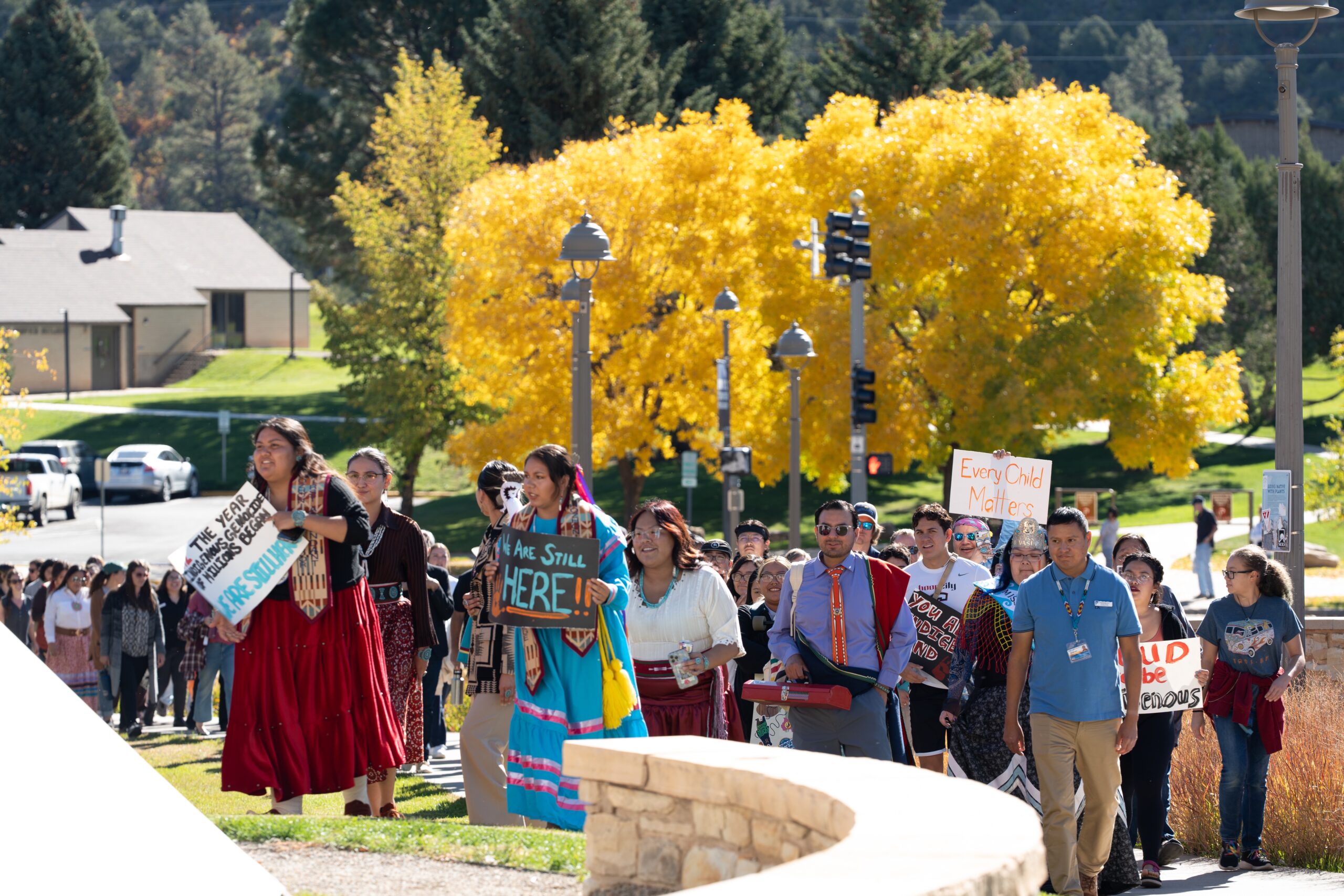
In nearby Preston, Idaho, a group visited the site of the Bear River massacre, the largest mass murder of Indigenous Americans by the U.S. military. Trips to Northern Ireland, Bosnia, and Rwanda have offered similarly powerful insight into post-conflict societies, although in less familiar cultural contexts. 

Other activities at the H.P.I. include academic research, campus events, and community engagement. Non-students can attend conferences, workshops, and even entire courses in conflict management. 

In 2024, when H.P.I. Inaugural Director Austin Knuppe applied for and received a first, smaller grant from the Educating Character Initiative at Wake Forest, the official foray into character education began.

Students of the H.P.I. head to some of the most consequential conflict sites in modern history. 

“It just so turns out in order to do that work effectively, you have to be a person of a certain type of disposition or character,” said Knuppe, a political science professor who specializes in political violence and conflict processes in the Middle East.

Alongside a team of interested colleagues, including Patrick Mason, Knuppe used the initial support from the E.C.I. to begin crafting a more formal framework around the attributes of a successful peacebuilder and how to teach them. 

The group ultimately landed on four key traits: moral imagination, or the dual compassion and creativity to consider undiscovered solutions; cognitive flexibility, or the open-mindedness to hold contradictory narratives; emotional attunement, or an awareness of the human lives at the core of any conflict; and reciprocal love, or the capacity to relate and, especially, forgive.

Another central concern in these early conversations about character, Mason said, was how to engage as many students as possible in the work. 

The primary objective has never been only to prepare the next generation of “peace professionals,” he explained, but to help young people across a range of degree programs with a range of professional aspirations become “better citizens.”

“If students only take one class from us, that’s okay. If they take three or five classes — if they get a whole certificate — fantastic,” Mason said. “We’re just really convinced it’s going to serve them well and serve our society well if we have more people out there with good conflict skills.”

For Justice Cheatham, a current junior at U.S.U., the original motivation to pursue peace studies stemmed from needing to tackle a personal conflict, rather than an academic or even professional one. 

When Cheatham started his first year of college, he was still struggling with the disappointment of having left early from his mission for The Church of Jesus Christ of Latter-day Saints. He had been stationed in Columbia, when he came down with a mysterious illness that forced him to return home and finish his service from there.

An introductory class during his first semester at U.S.U. covered conflict management and offered Cheatham a way forward. In a few sessions on interpersonal conflict, he gained a new vocabulary and skillset to deal with the difficult emotions he was battling.

Today, he is pursuing a certificate in conflict management alongside his major in communications and serves on the H.P.I’s inaugural student board. 

With general education courses in conflict management in the works, more students like Cheatham without prior interest in peacebuilding may similarly start to see its wide-ranging applications.

Junior Abbi Zaugg isn’t pursuing any of the academic certificates through the H.P.I., but she still attends events there. “I am just a great lover of thought exchange,” the double major in political science and creative writing said.

That’s the outlook that inspired her to join a recent conversation following the killing of Charlie Kirk at Utah Valley University — just a two-hour drive away from U.S.U. — about whether controversial speakers should appear on campus. 

“I was participating very, very heavily,” Zaugg said of her role in the session. Her favorite part of dialogues like these is being able to hear her peers respond to her ideas, even if they disagree.

The common narrative that Gen Z is unwilling to engage with viewpoints unlike their own indeed does not seem to apply to Zaugg, nor her peers who attended the same event.

Zaugg even wondered if today’s young people are uniquely suited to deal with conflict, given that “most of us have been in conflict since we were very young.” She called her nearly lifelong concerns about school safety “a normal fact of life.”

Justice Cheatham, who also attended the H.P.I. event, stepped away feeling proud of his fellow students. They didn’t have to show up to an uncomfortable conversation. The weather had been nice that evening. He knew they could have been hiking instead.

“I have a lot of faith in our generation, and I think we can change the world,” Cheatham said. 

Soon, students like Cheatham may have the opportunity to participate in change-making on the state level. 

Utah Governor Spencer Cox, who is a U.S.U. alumnus, has been considering new partners in higher education for his think tank, Disagree Better, to help advance programs for peace. The H.P.I. is at the table. 

The Educating Character Initiative at Wake Forest University recently announced a request for proposals for grants between $50,000 and $1,000,000 to fund character education projects at U.S. colleges and universities.

You can reach LearningWell Reporter Mollie Ames at mames@learningwellmag.org with comments, ideas, or tips.

BentleyPlus

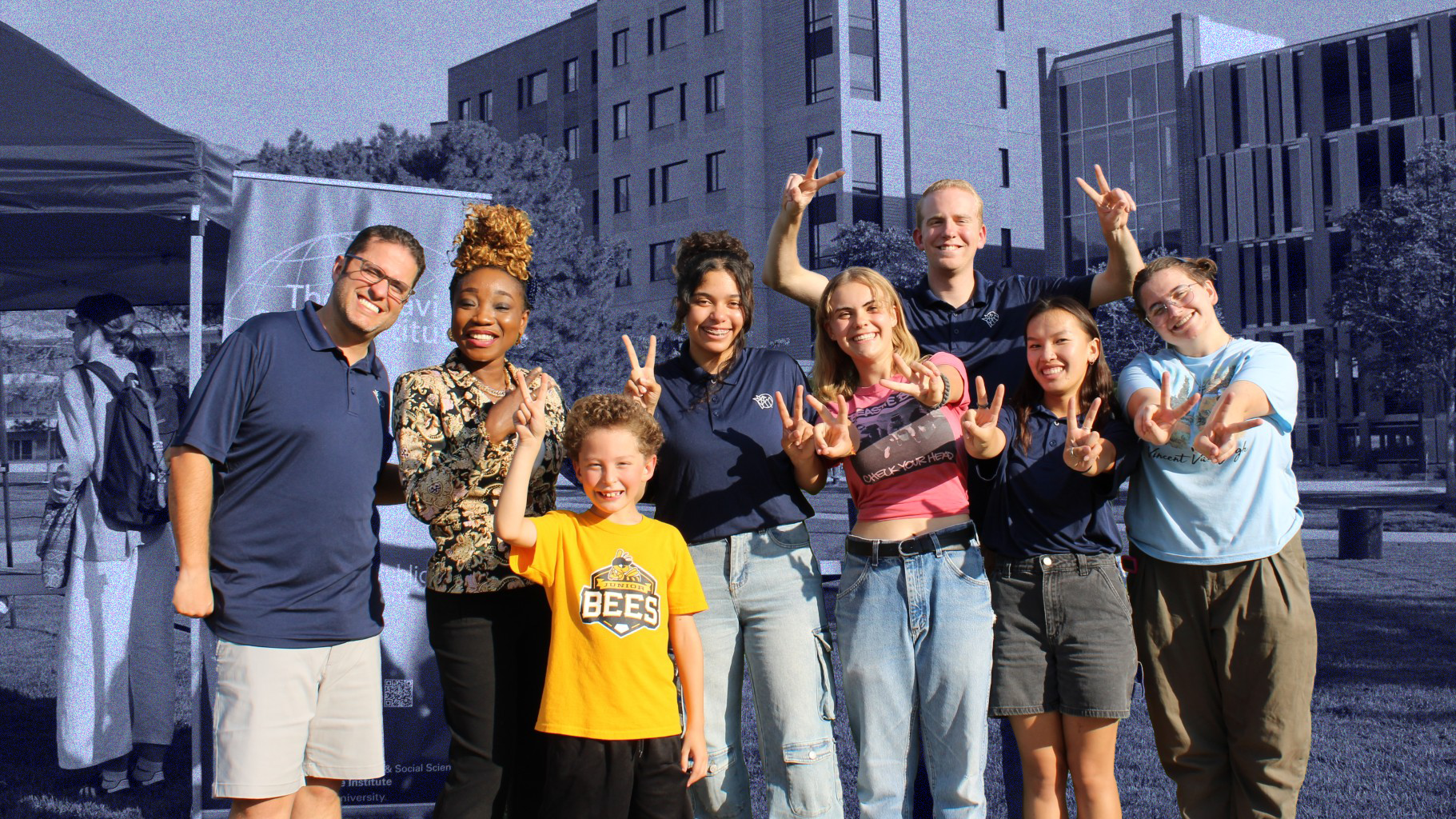
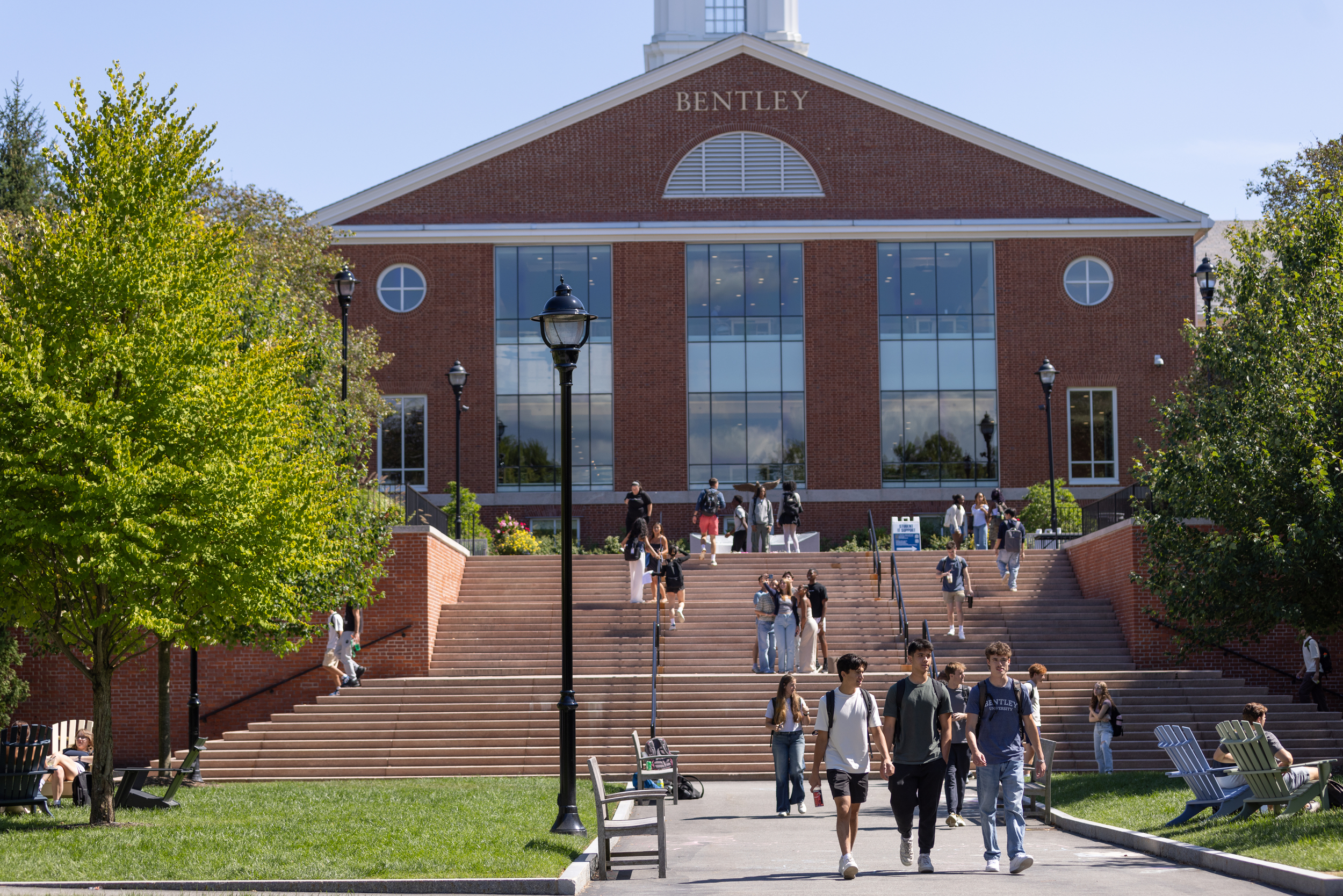
This September, The Wall Street Journal ranked Bentley University the 12th best college in America. Its criteria included considerations such as the institution’s impact on salary and how quickly the degree will pay for itself. While pleased with the bankable metrics, leaders at the Boston-based business university will tell you their real differentiator is fostering the personal formation of their students.  

“We put a lot of emphasis on technical fluency and quantitative literacy, but what really makes the difference in the marketplace is the ability of our students to think critically, to communicate extemporaneously with comfort and poise, and to exhibit confidence, not hubris,” said Brent Chrite, President of Bentley University.

Helping students gain and demonstrate these attributes is the thinking behind BentleyPlus, a competency development program focused on encouraging experiences that lead to dispositions such as resiliency, purpose, and agency. While reflecting the business university’s high regard for the liberal arts, BentleyPlus is a separate and intentional effort to get students to understand that marketable skills are not confined to the classroom. 

BentleyPlus began as a pilot in 2021 and is now a university-wide effort combining career readiness with dimensions of wellbeing. The program involves four major pillars, starting with an introductory program where first-year students select two out of 11 competencies to work on throughout their time at Bentley. The competencies, such as ethical reasoning, leadership, and work ethic, are organized into three buckets: cognitive skills (Think), intrapersonal skills (Develop), and interpersonal skills (Act).  

Students are then encouraged to pursue co-curricular experiences that help them develop these competencies — not by adding more to their plates but by making what they’re doing more meaningful. BentleyPlus advisors meets with students three times a year to help them reflect on their experiences and articulate their value. An awards ceremony with a BentleyPlus certificate completes the program. 

While a nod to the university’s holistic pedagogy, BentleyPlus also reflects a concern, among employers nationwide, about the lack of “durable” skills in entry-level employees — everything from communication and collaboration to grit and work ethic. Another factor driving the project is the persistent emotional and mental health issues college students and recent graduates are reporting, including disengagement with work and school post-pandemic.

While a nod to the university’s holistic pedagogy, BentleyPlus also reflects a concern, among employers nationwide, about the lack of “durable” skills in entry-level employees.

As vice president of student affairs, Andrew Shepardson has his eye on all of these phenomena. He sees BentleyPlus as more evidence of the university’s long history of student-centered education. In 2014, Gallup released the groundbreaking Gallup Alumni Survey, originally known as the Gallup-Purdue Index, showing the influence of certain college experiences on career readiness and wellbeing. Shortly afterward, Bentley became one of the first schools in the country to enlist Gallup in conducting its own alumni survey. 

As with the national research, Bentley’s alumni reported higher levels of wellbeing correlated to experiences like “having professors who make me excited about learning,” “having someone who cared about me as a person,” and actively participating in extra-curricular activities.  

“That information was huge for us in terms of sending a strong message to our students and faculty,” Shepardson said. “You may be a finance major fixated on working at a hedge fund, but you would really benefit from taking a discussion-based humanities course or working on an initiative off campus.”

Shepardson said that while students regularly participate in co-curriculars, he noticed they can struggle to articulate how these experiences transfer into skills in the marketplace. He recalled one example of a senior who became flummoxed when asked in a job interview how his experience as president of a club had helped prepare him for the position he was seeking.  

“He made no connection between this significant leadership experience and what might be expected of him in the real world,” Shepardson said. 

A natural partner for BentleyPlus was the team from the Pulsifer Career Development Center, who, as front-liners, recognized the importance of curating durable skills in addition to academics. “Our career folks thought this was phenomenal,” said Lauren Hubacheck, assistant vice president for student affairs. “They said, ‘We can do all the career development work with our students, but you all are connecting tangible stories that show skills like dialogue and leadership.’”   

While focused on competency building, BentleyPlus eventually took a stronger turn towards wellbeing, as Hubacheck and Shepardson began to see this as the through line in all of the work they were doing.   

“Employers were telling us that the greatest number of leaves of absences were with entry-level employees and for wellbeing purposes,” Hubacheck said. 

In talking with his staff and colleagues around the country, Shepardson was hearing about disengaged students whose anxiety was keeping them from talking with their professors or connecting with other students.  

“It became apparent that wellbeing was the higher order,” Shepardson said. “We needed to give students a clear understanding that their ability to work on a competency was not going to be successful if they didn’t have that wellbeing piece in place right from the beginning.”

This year, BentleyPlus 2.0 was launched with its own strategic plan; a full-time associate dean, director, and assistant director; and a commitment from leadership to promote wellbeing in all aspects of university life. 

The Underlying Competency 

Rebecca Jimenez is the newly hired associate dean of wellbeing and BentleyPlus. She said she had her first “pinch me” moment when working the negative mindset table at orientation, where students were asked to select from an array of cards displaying unhelpful concepts like blame and self-doubt.  

“I said to them, ‘Let’s work on how to change that,’ and they loved it. They did the exercise with such intention. I thought, Wow, they really care about this stuff.” 

Jimenez had been working on what she calls “wellbeing communications,” an effort to help people understand what wellbeing means in their lives and to arrive at a definition that incorporates all of its associated elements. Often confused with wellness (mindfulness and yoga), wellbeing can mean different things to different people. After extensive research, Jimenez created a new wellbeing narrative for the university that is part of the BentleyPlus strategic plan. 

“Wellbeing at Bentley is a dynamic balance of personal and community wellness, where students feel supported, connected, and empowered to flourish,” the plan now states. “It’s about caring for oneself, making intentional choices, nurturing meaningful relationships, and engaging in environments that promote joy, purpose and belonging.” 

As part of the BentleyPlus first-year program, students take a wellbeing self-assessment and develop wellbeing goals to be addressed over time with their advisors. Right now, all of the BentleyPlus advisors are student affairs professionals, but the enthusiasm they convey in working one-on-one with students has attracted the interest of other community members, including faculty.  

For Jimenez, bringing BentleyPlus into the classroom is an important next step. 

“Not only can we make wellbeing front and center in the classroom, we can help faculty connect what they are doing with wellbeing outcomes. We can help them say out loud to their students: ‘What we’re doing here is critical thinking.’” 

As with the pilot, the new version of BentleyPlus has the strong backing of career services. Staff there suggested that first-year students participate in the wellbeing self-assessment prior to a popular career development course, acknowledging that wellbeing work proceeds career prep. Perhaps most significant is the new way they encourage graduating students to consider their career choices. 

With support from BentleyPlus, they now ask: “Does the organization you are interviewing with align with who you are as a person? Do they value building relationships and connecting with others?” 

These may just be the questions today’s employers are waiting to hear. 

You can reach LearningWell Editor Marjorie Malpiede at mmalpiede@learningwellmag.org with comments, ideas, or tips.

Questions and Answers with Wendy Kopp

Wendy Kopp was fresh out of Princeton when she launched Teach For America, the premier teaching corps for college graduates hoping to change education and, with it, the world. Along the way, Kopp was able to prove that early career choice involving proximity to social challenges was the most fertile ground for strong leadership. Her proof of concept is the success of the program’s alumni — a group that includes leaders of education, social innovation, and government.  

Over 35 years later, Kopp is working to reinvigorate the national call to service among a generation jaded by the weight of the world’s problems and drawn to a culture, on and off campus, that puts “I” before “We.” Kopp, who is now the head of Teach For All, has recently launched Rising Generation, a campaign of sorts to change the perception about what constitutes a successful career and what it takes to be the kind of leader the world needs. 

The initiative aims to counter the declining participation among recent graduates in social impact jobs and the prevailing narrative that lucrative careers are the best path for our brightest students. In this interview with LearningWell, Kopp lays out the barriers and opportunities inherent in bringing today’s students into jobs that will change people’s lives, as well as their own.

LW: What was your main motivation in launching Rising Generation?

WK: For 36 years and counting, I’ve been obsessed with the question of how to inspire the next generation, first, to commit themselves to the work of Teach For America and, now, to the similar organizations across the global Teach For All network. Working alongside many others across the world, I think we all felt collectively like we were pushing a boulder up a hill in terms of inspiring the engagement we need for this work. 

In a way, I would think that it would be easier than ever to recruit this generation to commit two years to teach in under-resourced communities — to go through that kind of learning journey that gives them the capacity to tackle these systemic inequities throughout their lives. The challenges of the world — the inequities of the world — are more visible than ever. And yet, statistically speaking, more recent graduates are foregoing these opportunities and putting their energy towards, say, finance, consulting, and tech, than they did even ten years ago. I’m just constantly obsessed with that puzzle, and that was one factor.

“The ability for young people to assume professional responsibility in proximity to injustices is really crucial for developing the leadership we need in the world.” 

And then the second is the growing evidence we have across the Teach For All network about just how transformative those two years are for young people. That’s led me to believe that the ability for young people to assume professional responsibility in proximity to injustices is really crucial for developing the leadership we need in the world. 

Our research shows that through these two-year commitments to teach, these young people come to believe in their own self-efficacy and agency and come to believe even more in the potential of students and families in low-income communities. Their analysis of the issues they’re addressing shifts from thinking it’s more a technical fix — that more funding will solve the problem — to believing it’s a deeply adaptive systemic challenge. 

And their priorities shift. Across the world, 75 percent of these individuals of all different majors and career interests, who begin their two-year commitments to teach unsuspectingly, end up committing themselves to this mission long term. They’re working long term as teachers, school principals, school system administrators, social innovators, advocates, policymakers, and elected officials.

What that research shows us is that not only are we getting a different group of people who might not otherwise have engaged in this work and are staying with it but this experience is turning them into the leaders we need: people who have a sense of agency, who have a sense of possibility, who understand there’s no silver bullet solution and are committed to tackling the issues long term. 

Another factor, I have to admit, is my own kids. I have college-aged kids and, in spending time with them and their friends, I’ve learned more about their experiences and what they’re thinking about, and that gave me a sense of possibility that we could do something about this. 

I think it’s all of that. It’s seeing the challenges of recruiting the next generation to this work, understanding just how formative these kind of professional experiences are in generating the leadership we need in the world, and then finally coming to believe that we could actually do something about this problem.

LW: In a LinkedIn message about Rising Generation, you note that data from the Deloitte Global 2024 Gen Z and Millennial Survey showed some of those generations’ lowest–ranked considerations in deciding where to work were “its values and purpose align with my own,” “the positive impact it has upon wider society,” and “the opportunities it gives me to address social problems.” I’m guessing that was disappointing. What do you make of this, and do you think it reflects a real turn away from social impact careers? 

WK: Initially, I thought it was really surprising because there’s so much evidence that this generation cares so deeply about the challenges facing the world. I think there’s a deep concern among many, many young people that they would love to help make the world a better place. But what the latest research shows us is that they’re not thinking that the way to do that is through their jobs.

This is not a new phenomenon. The more I’ve talked to people, the more I’ve come to think of this as a societal norm. We think about our jobs like our houses. We get a job. It meets our needs, and then it’s how we do our jobs that matters — how we work with others, how we vote, and what we volunteer for that enables us to make a difference in the world. 

We need to really challenge that and help people understand that to tackle these big systemic challenges, it is going to take a whole lot of full-time, long-term work in the arena. It requires being close to the roots of the issues. It’s going to take going through the learning journey, trying things, learning from that process, and really playing the long game. 

One thing I’ve discovered is that there is such power in just naming this issue. That’s true for young people. It’s true for people at the university level. The most valuable resource in the world is the time and energy of our most educated young people, and we need to be conscious about that. We need to start thinking a whole lot more about how to make sure that their energy is tackling our biggest challenges and that these young people have the early experiences that will enable them to actually be successful in tackling those issues.

LW: We hear a lot about “sellout jobs” — this idea that our highest performing students are just being funneled into higher paying careers at the expense of doing good in the world or even deriving purpose from what they do. What do you think has led to this phenomenon? 

WK: There are so many different factors, but let’s unpack it a bit. Many believe this is an economic issue — that students are graduating with greater debt and greater financial burdens and are more worried about their financial futures. Those factors are real, but it’s not right to attribute this phenomenon to these factors.   

“Instead of thinking these four years are going to be a time of great exploration, they are met early on — sometimes as early as freshman year — with corporate recruiters.”

First, we should question the financial narratives that young people are telling themselves. If you really start talking to these students who are taking the “sellout jobs” and get your head around what they think their baseline salary requirement is, you’d be shocked. 

What the research shows is that students are far more likely to work in consulting, finance or technology if they are from an economically privileged background, so we can’t attribute this whole thing to the financial state of affairs. 

I think a really important factor is that these young people aren’t experiencing a campus culture that fosters deep intentionality and reflection on what they see as their purpose in life. What are their values? Where do they want to put their time and attention? Instead of thinking these four years are going to be a time of great exploration, they are met early on — sometimes as early as freshman year — with corporate recruiters.  

Before they can even think about it, here comes the very lucrative summer internships and then these two-year, post-college programs. There aren’t the countervailing forces on these campuses to create a culture of reflection and intentionality, and that’s a huge part of it. 

I will say there’s something that’s giving me hope in looking at the research and talking to young people about what matters to them, and that is their priority around learning and development. The corporations have convinced them that the path to rigor and learning is through working for their firms. One of the things we’re thinking about with Rising Generation is how we can help young people understand that if they want to be a civic leader in our country and in our world, they need to find their way to a professional responsibility that gives them proximity to the roots of the social challenges we face; only then will they gain the perspective, the insights, the relationships, and the credibility to ultimately make a difference against the big systemic challenges we face.

LW: Do you think this reflects a kind of “I” vs. “We” culture on college campuses? 

WK: We think a lot about that at Teach For All because we really believe that we need to shift the purpose of education from being about individual attainment to equipping young people to shape a better future — not just for themselves but for all of us. And I think if we don’t shift what happens in our classrooms to work towards that end, we won’t ultimately have the world that we’re all hoping for.

LW: How do you approach a problem like that?

WK: Well, this is how we see our work across the Teach For All network. The independent, locally led organizations in our network are working to develop what we’ve come to call “collective leadership” for ensuring all children fulfill their potential. By this, we mean we’re developing a critical mass of diverse people working around the whole ecosystem around children who are all on the same mission and who are reflecting and learning together and collaborating. As we develop this leadership, we’re orienting towards a vision of a world where all children have the education, support, and opportunity to shape a better future for themselves and all of us. We’ve recently launched the Global Institute for Shaping a Better Future to foster learning among leaders everywhere — across and beyond our network — who are committed to reshaping education in this way.

Wendy Kopp meets with students on a visit to a rural school in Yunnan Province, China. Courtesy of Teach For All.

LW: Do you get the sense that graduates feel as though they will get to contributing at some point in their lives? 

WK: Yes. We have to give young people some perspective that you can’t go spend 15 years working in a skyscraper and be confident that you can shift gears and know exactly what to do to tackle the social inequities in the world. You have to go through a deep learning journey to be able to do that.

LW: What is it that’s unique about the Teach For America and Teach For All experiences in this regard? 

WK: I think that Teach For America and the Teach For All network partners are giving young people a chance to attain that proximity. You’re in a classroom; you’re seeing the microcosm of the world and all its social issues play themselves out in your classroom, and you’re on the front line directly working with students and families and others in the community. Our theory has always been that this would create leaders for social change far beyond education because the issues you see in a classroom are so systemic and cross-sectoral in their nature. 

LW: What can colleges and universities do to embrace that concept and try to help students think about the value of these early, social impact experiences? 

WK: I think this is so crucial. In the early years of Teach For America, we had so much allyship among professors and career service offices and college presidents in putting the Teach For America opportunity in front of their graduates. I think over time, we started hearing from folks that they needed to be neutral — that they couldn’t offer preferences for one job choice over another. And I’ve thought a lot about that because they’re professing neutrality, and yet honestly, they’re anything but neutral. 

A lot of people — a lot of career service offices — are encouraging young people to take more lucrative paths for a variety of reasons. There are notable exceptions. I think about Michael Crow at A.S.U., who every year invites the top few hundreds of students to his house and says, “I want you to do Teach For America.” That makes a big difference. There’s a lot that universities can do to help people think about these options that might not be as present for them, given the recruiting practices of these corporations. But by and large, that’s not our experience, and that’s very unfortunate.

LW: Finding meaning and purpose in your career has proven to lead to improved wellbeing, but you don’t hear a lot about that in corporate recruiting, I’m guessing.  

WK: This is one of the reasons we’re embarking on the Rising Generation initiative. I think we need to help young people understand — really think about — what it’s going to take for them to feel successful. I think we need to challenge the common narratives around that. There’s evidence showing that your wellbeing in the workplace is the biggest factor in your overall wellbeing. If you’re feeling the sense of purpose and connectedness to people through your work and a sense of agency and you’re able to contribute positively, that’s going to have a huge impact on your mental health. 

I think about the people I know who have done work that involves proximity to big issues and have stayed the course. They are some of the most connected, grounded, and fulfilled people I know. I think we need to help young people understand the long-term consequences of those first decisions that they make. 

LW: That’s a big part of Rising Generation, I assume. What are the ways you are going about this work?

WK: We’re really thinking about how to create a norm shift in how people think about first jobs.  

We’re organizing our work in three buckets initially. One is around data,  research, and learning — understanding how this issue is playing itself out differently across different segments of campuses and different student demographics and understanding what’s influencing young people and their job choices. We are going to pursue student-led focus groups to understand and inform the path forward. 

The second is what we’re calling University Community and Learning. We’ve found our way to so many people who are working on these university campuses, from some college presidents to career service office heads to professors and thought leaders, and all who are really focused on doing something different — who are challenging the prevailing narrative and working to foster more intentionality and reflection among students. We are aiming to bring them together and build community among them so that folks can support and inform each other and think together about how to propagate these experiments. 

The third bucket is around the options themselves because if you are a college student who doesn’t go the traditional path, it can be really hard to find your way to a job that gives you the kind of proximity you would hope for. We need to make the existing options more visible and create new ones. We think there may be some real opportunities to do that. 

You can reach LearningWell Editor Marjorie Malpiede at mmalpiede@learningwellmag.org with comments, ideas, or tips.
Collective Wellbeing

Faculty and staff at Randolph College in Lynchburg, Va. don’t typically have resources for new campus initiatives that aren’t absolutely necessary. 

But when students at the formerly Methodist-affiliated school requested a renewed focus on spiritual life, administrators were able to answer those prayers. Renovations began on the college’s chapel, which was empty and in disrepair, to forge a revamped, interfaith space for not only religious gatherings but meditation, lectures, and performances.

The explanation for the sudden deepening of Randolph’s pockets is a share of a $3.275 million investment from the Endeavor Foundation. The two-year grant, which started in November 2023, funded the collaboration of 13 different small liberal arts colleges to develop new ways of enhancing student mental health and wellbeing. Last month, Endeavor announced it has committed another $5.22 million to launch a second phase of the project over the next three years. 

At a time when many are counting liberal arts colleges out, questioning their focus on broad intellectual development over vocational training, Endeavor is betting on them for the same reason. Its support of Randolph and peer institutions stems from a belief that their “whole person” educational approach and close-knit, engaged communities are uniquely poised to help young people find the sense of purpose and belonging that so commonly elude them. And by working together, the theory goes, the schools may push their innovation and impact even further.

“Ultimately, our hopes were to generate initiatives that would strengthen these institutions — that would showcase the liberal arts and the power of a liberal arts in a world that’s increasingly skeptical for various reasons of its value,” said Ashley Kidd, the program director of grants and research at Endeavor.

In 2016, Endeavor first united small liberal arts colleges after noticing a trend of “really wonderful, community-engaged” schools struggling against declining enrollment and finances, Kidd said. The foundation invited presidents from some of these at-risk colleges to discuss institutional issues and other developments, and the convening became an annual tradition.

Over the following years, Endeavor awarded various presidents small to mid-size grants to tackle discrete projects on their campuses. Toward the end of the Covid-19 pandemic, though, the foundation approached the larger group with a proposition: to form a collaborative of their schools with a focus on one issue of their choice.  

“The conversation turned to: ‘What do you really all need? And if we were to invest a larger sum of money in something that was a collaborative project or two, what would be the primary initiative or initiatives on your plate?’” said Lori Collins-Hall, who was involved at that point as interim president of Sterling College in Craftsbury Common, Vt. 

“The presidents very quickly gelled around student mental health and wellness, and from there, the collaborative was born,” she said. 

13 colleges from Maine to New Mexico, Ohio to North Carolina, signed on to join what has since been named the Endeavor Lab Colleges (E.L.C.) Collaborative. Collins-Hall also left her post at Sterling and became the E.L.C.’s project director. Beyond Sterling and Randolph, the initial member institutions included Antioch College; Bennington College; Blackburn College; Northland College; Prescott College; St. John’s College, Annapolis; St. John’s College, Santa Fe; Unity Environmental University; Warren Wilson College; and Wells College. 

Not all would make it. Wells and Northland have since closed, while Unity Environmental left the collaborative after structural shifts, including an emphasis on remote learning, meant it no longer shared the profile of the other member schools. 

Bennington College in Bennington, Vt. was particularly influential in the presidents’ decision to coalesce around wellbeing. Shortly before choosing this focus, the leaders had heard from Bennington President Laura Walker on the results of a study she commissioned to assess student needs and institutional gaps around mental health on her campus. That report, Walker said, “became kind of the foundation for not only our work at Bennington but also the work of the Endeavor project.”

“The presidents very quickly gelled around student mental health and wellness, and from there, the collaborative was born.”

Next, the presidents agreed on four areas to direct their collective and respective institutional energies: infusing curricula with wellbeing-related content; helping students explore their sense of purpose and meaning; creating experiential learning opportunities, especially in nature; and enhancing clinical and nonclinical services, like counseling and peer support.

The majority of the first Endeavor grant went towards compensating faculty and staff, who came from all levels across the institutions, in their joint work to determine the best ways of approaching and executing the collaborative’s priorities. The remaining money was split among the schools for practical capacity building according to distinct institutional needs. 

Randolph dedicated funds to not only the redesign of its chapel but the addition of a comprehensive telehealth service, TimelyCare, as well as mental health training and professional development for staff. A minor in contemplative studies, an interdisciplinary field exploring the human contemplative experience, also took off.

Bennington, meanwhile, invested in the renovation of its fitness center and a revamp of the first-year career preparation course. The college’s standing interest in the arts also inspired a pilot course combining art engagement with mental health processing.

“It was a wonderful mix,” Bennington’s President Walker said of the class. “The students reported they had increased motivation, reduced isolation, and positive changes to mental health. And because so many of our students are artists and creative, it also gave them the sense that they had power to change people’s lives and their mental health through their art.”

For both Randolph and Bennington, another perk of the Endeavor partnership has been the ability to leverage the funds to raise money from other sources. By pointing to dollars already secured for, say, bolstering interfaith programming at the chapel or building out career services, the schools have garnered even more support for their efforts.  

By the end of phase one, the collaborative’s ideative efforts had resulted in the transformation of the initial four priorities into five fine-tuned initiatives to guide future work: Cultivating Curricular Review and Innovation, Building Models of Community Care and Resilience, Center for Purposeful Life and Work, Mapping Belonging, and Nature Rx.

Mapping Belonging and Nature Rx evolved from the commitment to experiential learning, where Mapping Belonging uses reimagined campus maps to cultivate student belonging to the place and its history, while Nature Rx helps connect students to the school’s outdoor spaces.

Unlike phase one, when colleges might use their individual funding to pursue whichever of the priorities was most compelling to them, this next stage will urge every school to tackle each of the five initiatives. According to the president of Randolph, Sue Ott Rowlands, this part of the new grant is especially important. 

“We’re not just going to pick and choose what we do,” she said. “We’re going to commit to all of the five areas, and that’s going to push us — make us really expand our engagement and thinking and open up a lot of opportunities for our students.”

Also in the second phase, the collaborative efforts of the colleges will continue to grow. Currently, a working group of faculty from across the participating schools is spearheading each of the five initiatives, while the chief academic officers of every college also work together.

Part of the mission of the working groups is to devise a way of assessing the impact of their particular initiative. On a larger scale, each institution will measure how the whole of the Endeavor-funded work is affecting campus by conducting pre- and post-surveys on student wellbeing, as well as that of faculty and staff.

Despite the colleges’ limitations resources-wise, Bennington President Laura Walker said she’s been excited to have access to the wealth of “real talent” on their other campuses. “I think one of the best things about this project has been the collaboration among colleges and the support group,” she explained.

Collins-Hall said she thinks most participating faculty and staff have been similarly “jazzed” to work together and come to meetings. “I have people who have been doing this for two years on a biweekly schedule who are excited to be back for year three. That doesn’t happen with any committees in higher education.”

At Randolph, one of the unexpected challenges of Endeavor’s support has been acclimating faculty and staff to the idea that there are now resources to pursue projects that were once off the table — that they no longer need to stretch every dollar to the extent they might have before.

“It was a very interesting process to say, ‘No, wait, we can do that. We have Endeavor funds to help us with that,” President Ott Rowlands said.

Now she’s telling her team: “Think a little bigger.”

You can reach LearningWell Reporter Mollie Ames at mames@learningwellmag.org with comments, ideas, or tips.
History, Mission, and Character

The week Charlie Kirk was killed on a campus across the country, a group of undergraduate researchers at Seton Hill University in Greensburg, Penn. used their Friday meeting to talk about peace.

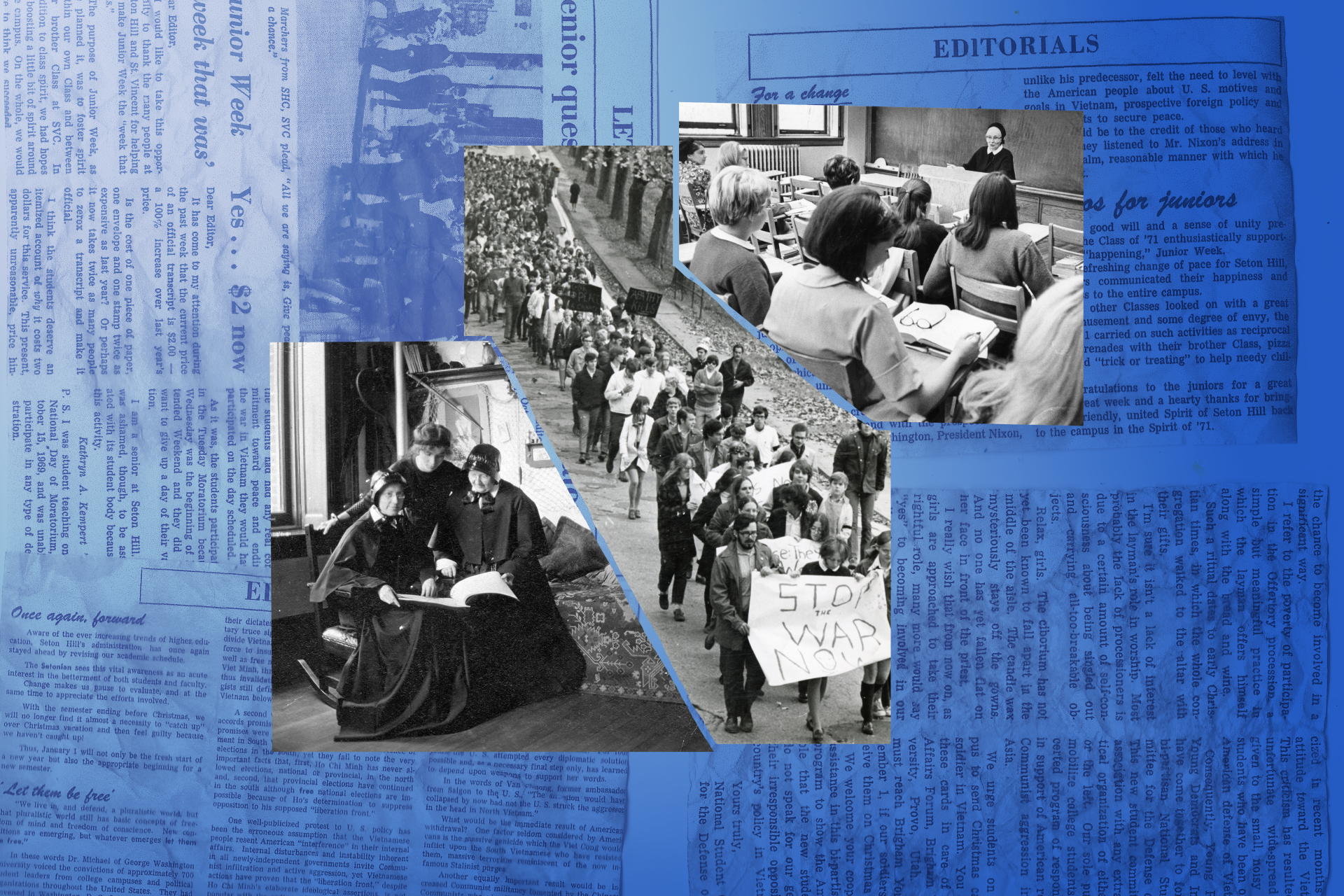
To guide their conversation, they turned to the records of students who came before them — who grappled with different controversies, but ones that similarly shaped their young lives and emerging beliefs. In 1960s editions of Seton Hill’s century-old newspaper, The Setonian, these archivists-in-training discovered voices both in support and rejection of the war in Vietnam. They analyzed photographs of their predecessors in protest, carrying signs insisting “Apathy Kills,” as well as an op-ed from the bipartisan National Student Committee for the Defense of Vietnam, which decried its radical peers and their “irresponsible opposition to our country’s policy in Vietnam.”

The past may not be prescriptive, and Vietnam-era editorials may not offer a how-to guide for peace in 2025, but there are lessons to be learned from shared history. That’s the idea behind Seton Hill’s new character education initiative, of which exploring The Setonian archives is one key part. The institution-wide endeavor centers efforts to derive and promote the values and virtues the Catholic liberal arts university was built on. That pursuit, its organizers hope, can strengthen students’ individual intellectual and personal development, while uniting the broader campus in collective understanding.

Literature professor Sarah Marsh, who is also the director of university curriculum, began spearheading Seton Hill’s entry into character education last year. She was inspired, she said, by a growing recognition that the purpose of higher education should encompass “making people,” rather than simply transferring degrees. From there, the direction for a character project at Seton Hill fell into place, given the strong sense of institutional identity she said already grounds school and student life. “Many universities have missions,” Marsh said. “Ours is present in the day-to-day.”

Seton Hill’s lasting mission stems from its unique origins as a project of a Catholic order of women religious, the Sisters of Charity. This congregation was founded in the early 19th century by Elizabeth Ann Seton — the first American-born saint for whom Seton Hill was named — and was devoted to spiritual as well as humanitarian work, particularly in service of the poor, education, and medical care. In 1882, what became the Sisters of Charity of Seton Hill purchased the plot where Seton Hill University now sits, using it to educate younger pupils before launching a junior and then four-year college for women by 1918. 

A century later, Seton Hill is a coeducational university home to around 2,000 students of any (or no) denomination, yet loyal to the Catholic social values that started it all. “Anytime we’re having a conversation about curriculum, anytime we’re having a conversation about student wellbeing, anytime we’re having a conversation about student life, we are talking about the history and the charism of the Sisters of Charity of Seton Hill,” Marsh said. 

“You feel a deeper connection in knowing and understanding who you are, how you’ve been formed, and the people who have come before you.”

A charism, Marsh clarified, is a set of values or “spiritual gifts” that the Sisters of Charity, who are still active, strive to embody in their vocational life. For those at Seton Hill, these gifts are expressed by four pillars — welcoming, learning, celebrating, and serving — that guide their work in the world and the university to this day.

In 2024, the pillars took on new meaning when Marsh decided to make them the crux of her vision for character education at Seton Hill. Awarded a $50,000 Capacity-Building grant from the Educating Character Initiative (E.C.I.) at Wake Forest University, she assembled a team of interdisciplinary faculty and staff to devise a unique definition of character education for the university. The succinct, one-page document that came out of their year’s work outlines how each of the institutional pillars reflects different character virtues. 

The pillar of welcoming, they write, refers to the virtue of hospitality, which involves a “conviction of the fundamental, and therefore equal, dignity of every human being.” The pillar of learning refers to humility and wisdom, virtues that allow people to recognize the limits of what they can know, as well as their personal biases. Celebrating refers to gratitude for others and life itself. Serving refers to prudence, or the translation of wisdom into practice to promote good.

With the clarity of these definitions, Marsh expanded the project further, applying for a second round of support from the E.C.I. This one, secured in July 2025, is an Institutional Impact grant of $438,000 to convert the character concepts Marsh and her colleagues developed into practice. Over the next three years, this process will feature two main initiatives: incorporating a series of character education courses into the required curriculum and enlisting students to pioneer research into the student newspaper archives.

The added coursework will form a “vertical pathway,” Marsh said, with one character education class for each grade level. For the youngest students, the First Year Seminar will introduce them to the fundamentals of character education and the Seton Hill mission. For sophomores, another pre-existing course called Faith, Religion, and Society will be infused with character theory to, Marsh said, “make students more aware of the virtues that they are practicing as they work through the content of that particular class.”

As for the subsequent two, higher-level courses, they have not yet been realized. When they are, juniors will take one called Setonian Mission, offering a more advanced understanding of the institutional virtues and taught by interdisciplinary faculty. Finally, seniors will engage in a Setonian Seminar, which Marsh called “a liberal arts capstone” to consider the purpose of their education and its translation to professional life. 

But even as this coursework emphasizes the virtues Marsh worked hard to pin down, she is sensitive to the idea that they intend to control or limit students’ thoughts or behaviors. “We’re not trying to create a person who votes in a particular way. We’re not trying to create a person who worships in a particular way,” she said. “We are trying to create the kind of person who has made commitments based on an authentic and rigorous experience of some fundamental things that we think are true about being human.”

A key part of this work is to help students find out who they are and who they want to be; that’s where exploring the student newspaper archives comes in. University archivist Casey Bowser, who is leading this research alongside Marsh, said the newspaper is an ideal point of reference for institutional character because it is the richest source of student voices. “It really defines a culture of our community in a way that almost few other records do,” she said. 

Seven undergraduates have embarked on the archival project, wherein the first semester offers training in how to use the newspaper archives and the second lets them pursue an original research question about character. As the students use the paper to ask how and why character has appeared at Seton Hill, they are also exercising the institutional intellectual virtues, like the humility to accept what they cannot know. Moreover, at a moment when student interest in the modern-day student newspaper has been waning, they will consider how to refresh the content and the value of journalism more broadly. 

According to Bowser, engaging with the archives has already left her research interns more energized about the legacy of not only The Setonian but the institution as a whole. “It’s almost like your own family,” she said. “You feel a deeper connection in knowing and understanding who you are, how you’ve been formed, and the people who have come before you.”

That sense of connection to the past, Bowser said, has also been powering students’ express desire to do justice to the publication going forward. In fact, the research project will culminate in the production of a governing document to guide the future of the paper — by drawing from its history. 

“It’s meant to be a bridge,” Marsh said, “between what we have done before and what we are doing next.”

You can reach LearningWell Reporter Mollie Ames at mames@learningwellmag.org with comments, ideas, or tips.

Mentoring 2.0

When Hannah M. was a college student a few years ago, her mentor — the chair of her department — was, as she recalls, a thoughtful person who was also extraordinarily busy. “When I needed to know something about credits and certifications, she would say she’d get back to me,” Hannah said. “But she usually didn’t.” Hannah often ended up finding her own information about licensing or grants and making her own connections through LinkedIn. “I didn’t want to complain because I knew she meant well, and I had friends who didn’t have mentors at all.”

Mentorship has long been a cornerstone of youth development, but for young adults today, finding effective, supportive relationships is hit or miss. For mentors, meeting the shifting landscape of mentees’ needs can also be up to chance. According to MENTOR, a nonprofit national mentoring partnership, one in three young people grow up without a mentor figure, and those from low-income communities are even less likely to have one. This, in spite of the communication and technology advances today that surpass any other generation’s ability to make and maintain connections at a distance.

Jean Rhodes, a psychology professor at the University of Massachusetts Boston and founder of its Center for Evidence-Based Mentoring, has spent her career studying what makes mentorship effective. After publishing more than 250 peer-reviewed studies, she grew increasingly concerned that the field was stuck in outdated models. Despite decades of effort, the effect size of mentoring — the measurable impact on youth outcomes — has barely budged in 20 years. 

In response, she developed an A.I.-assisted platform that equips mentors with the tools, insights, and training her center has honed over the years, delivered to the palm of your hand. It isn’t intended to replace human connection but to enhance it. Rhodes describes the program as “rocket fuel for relationships” — a way to scale quality mentoring with resources at the moments they’re needed most.

The app, called MentorPRO, recently won the International Tools Competition for Higher Education, standing out among more than 1,000 entrants for its innovative approach to scaling relationships. It arrives at an odd juncture, a time when artificial intelligence is hailed as the zenith of information management, yet controversial for its role in therapeutic conversations. The fact that this advisory tool engages in both functions — information and support — is precisely what piques interest in the mentoring world. The question is: Can a tool feared to replace relationships actually make them more meaningful?  

A backdrop of need: The mentoring gap

Today’s disparity between the number of young people who would benefit from a mentor and the number of adults willing and available to serve as mentors is known as the mentoring gap. There’s been a worrying decline in “naturally occurring” mentoring relationships with teachers, coaches, and neighbors, which once provided widespread support. Organic mentoring relationships are based on rapport and familiarity, says Belle Rose Ragins, a mentoring expert and professor at the University of Wisconsin-Milwaukee, whose research makes the case that unless mentees have a basic relationship with their mentors, there is no discernable difference between people who have a mentor and those who don’t. 

The mentoring gap was underscored by statistics from the Annie E. Casey Foundation, which reports that the number of 18 to 21 year-olds who say they’ve had a mentor has actually declined in the past decade — from about 66 percent in 2013 to 60 percent in 2022. And the mentoring opportunities that do exist are not distributed equally, often favoring those from higher-income households. The young adults most in need of mentorship — those navigating school-to-work transitions, financial pressures, mental health struggles, and social isolation — are often the least likely to receive it, the foundation found.

The Center for Evidence-Based Mentoring began to see that traditional mentoring had reached a plateau, with its measurable impact largely unchanged for more than two decades. Rhodes suspected the problem was rooted in the way we’re going about mentoring. Too often, she said, the friendship model — mentors provide companionship and a coffee date — is well-intentioned but inadequate.

“We’re still locked in friendship-based models that don’t match the complex needs of today’s young people,” Rhodes explained. “It feels good, but without training and structure, mentoring too often becomes mismatched to what mentees really need.”

This is especially true for young people grappling with major life transitions, as well as financial stress, depression, or trauma. Because most mentors are volunteers without formal training, the support they offer rarely matches the complexity of mentees’ needs. This mismatch is compounded by problems of scale and continuity: Due to constant turnover, cyclical programs and workplaces churn through new mentors without the infrastructure to sustain quality or deliver evidence-based guidance in real time. The result is a system that feels supportive but frequently fails to equip young adults with the structured, targeted help they most require. 

These challenges can stifle even the most well-intentioned program. At one large community college, for example, the executive director of its alumni foundation recalled a mentor scholarship program that, she thought, had a high potential for success. It was available to both women and men, highly motivated individuals with a G.P.A. of 3.0 or higher, and those accepted into the pilot were offered free tuition as well as a $500 book stipend. Mentorship was a cornerstone of the program: Participants were assigned a mentor based on their major and career interest and required to meet at least twice a month. Yet at the end of the inaugural year, only 50 percent of participants called it a success and opted to continue working with their assigned mentor.

“I was surprised and sad to hear about the results,” said the alumni foundation director. “But in the end, it’s like speed dating. It’s only as effective as the connection with the personality on the other side of the table, which is kind of a roll of the dice if you’re assigned to one another. Add to that the expectations a mentee might end up having, and unexpected needs, and it’s a total gamble. It’s almost impossible for the mentor to be prepared for all that in advance.”

A human-centered, A.I.-supported solution

During the pandemic, mentorship turned into e-mentoring by default, while colleges and other organizations struggled to stay connected with young people virtually. 

“The sudden shift to e-mentoring during the pandemic tested the capacity, professional skills, and adaptability of many mentoring programs,” concludes the MENTOR report “From Crisis into Capacity: Final Report on Findings from Recent Research on E-Mentoring,” funded by the Bill and Melinda Gates Foundation. “However, these rapid innovations also fostered a belief that e-mentoring is a meaningful addition to a program’s capacity and scope, and that with proper staffing and planning time, virtual program delivery warrants further scaling.” 

The Covid-19 shutdown made clearer the weaknesses that had existed in mentoring for years and provided an opportunity for virtual mentoring to step up. What virtual mentoring lacks in non-verbal cues, according to The National Institutes of Health, it gains in geographic flexibility and accessibility for a wider range of people. And that loss of in-person connection can be mitigated through intentional communication, use of video conferencing, and consistent effort from both the mentor and mentee to build a strong and supportive relationship

Rhodes began working on an A.I-enhanced platform that would step into the void, combining the flexibility of many modes of communication with the access to resources and best practices available through hundreds of pages of research. With input from her sister, a computer engineer, and support from the National Science Foundation, she designed a system that blends human-centered mentorship with A.I.’s capacity to deliver research and training in real time. As an app, it folds naturally into electronic communications. But it also serves as a genie in your pocket for information before, during, or after any kind of interactions – virtual or in-person.

MentorPRO was built in response to the shortcomings Rhodes observed in traditional mentoring. Instead of relying on casual, friendship-style interactions that may feel supportive but often fail to meet urgent needs, the platform grounds mentoring relationships in clear goals and purpose. By asking mentees to identify their priorities at the first interaction, the program helps mentors move beyond informal companionship and focus on tangible outcomes — academic progress, career readiness, or emotional wellbeing — that align with the challenges each young person experiences. This structure puts guardrails on the mentoring relationship and helps guide the partnership with growth and goals.

The first guardrail takes the form of weekly check-ins, brief surveys that ask mentees to share where they are thriving or struggling. If a mentee indicates rising distress — say, slipping into discouragement about school or career — the mentor has the chance to intervene proactively rather than react after problems escalate. 

Another key feature is the platform’s ability to capture conversations and data within the app, creating a record of interactions, challenges, and progress. Instead of relying on memory or irregular check-ins, mentors and program staff have access to a growing dataset that helps track trends, tailor support, and maintain continuity even if mentors change. This addresses one of the biggest weaknesses Rhodes identified behind the effectiveness plateau: the inability of programs to sustain quality as mentors (especially peer mentors) cycle in and out. With institutional memory embedded into the system, mentees don’t have to start over if transitions occur.

Perhaps most significantly, in Rhodes’ eyes, the program addresses the training gap that has historically limited mentors’ effectiveness. Instead of front-loading generic training that may or may not be relevant later, the app delivers on-demand, evidence-based training modules at the moment they are needed. This is Rhodes’ “rocket fuel.” If a mentee discloses trauma, attention challenges, or career anxieties, the mentor is immediately provided with concise, research-backed resources — front-loaded and trained on information from the Center for Evidence-Based Mentoring — to guide the conversation. This “just-in-time” approach closes the gap between a mentor’s good intentions and actual capacity to help, transforming volunteers into skilled supporters without requiring them to become experts overnight.

Other resources synthesize useful information. Using retrieval-augmented generation models, the program scans prior conversations, mentee surveys, and local institutional resources — such as a university advising center — into short, actionable insights for the mentor. Instead of spending time trying to remember details or search for resources — like Hannah’s busy department-head mentor — mentors can focus on listening and active responses, equipped with tailored guidance automatically, without having to remember to dig later. Rhodes emphasized that the A.I. is not a replacement for human connection, but a delivery system for the research that can make it more potent. 

Rhodes emphasized that the A.I. is not a replacement for human connection, but a delivery system for the research that can make it more potent. 

“I created an 800-page training manual that curated all these studies and all the work that I think is really good, and I trained our language model on that,” she said. “It’s at the fingertips of a mentor right when they need it. It becomes this wonderful way to bring science and evidence into the conversations they are having with their mentors. And it makes relationships more effective without stripping them of authenticity.”

Beyond strengthening one-to-one mentoring, MentorPRO addresses another systemic weakness: the limited networks available to many young adults. Through social capital expansion and “flash mentoring,” the app connects mentees to short-term advisors in their communities — alumni, local employers, subject-matter experts — who can provide specialized guidance. This helps young adults build broader networks of support, a critical factor for career development and community integration that traditional programs often overlook.

In this way, Rhodes sought to address the systemic barriers that exist: inequitable access, lack of scalable training, poor continuity, and irrelevance to young adults’ real needs. By ensuring that mentors — not algorithms — remain at the center, while equipping them with timely, evidence-based tools, the platform helps bridge the mentoring gap.

The human at the helm

A recurring theme in Rhodes’ vision is the phrase “human at the helm.” At an age where bots have fallen short with disastrous results — say, reinforcing a youth’s suicidal ideation — the human at the helm has never been more critical. Rhodes draws a sharp contrast with A.I. chatbots marketed as companions. “Young people need to practice asking for help, navigating conflict, and building weak ties beyond their comfort zone. That’s how growth happens.” In this model, A.I. is not a substitute but a co-pilot — an invisible force making human mentors more effective, more present, and more scalable. 

While A.I. can streamline, summarize, and deliver evidence, only humans can offer the sacrifice, fallibility, and authentic presence that young adults crave. They can hear and support, challenge, and engage, with spontaneous pivots to humor and flashes of reciprocity and irreverence — because that’s what it is to be human and what is rewarding about human interaction. 

The MentorPRO platform is currently in place in more than 50 partnerships with higher education, youth development, and workforce development, ranging from West Point and the University of Chicago to Big Brothers Big Sisters of America and City Year to Warrior Women and the National Guard Youth Challenge. MentorPRO users report that 92 percent of mentees voluntarily downloaded and used the platform; 94 percent actively engaged with it, and 87 percent said the resources helped them achieve their goals. 

Rhodes believes that structured mentoring — human relationships supported by scaffolding — can improve educational performance and workforce readiness, and wellbeing.

“Decades of research have shown that, with the right training and support, mentors and other paraprofessionals can deliver interventions just as effectively as professionals — if not more so — in ways that could help to bridge the substantial gaps in care and support,” concludes Rhodes in “The Chronicle of Evidence-Based Mentoring.” “Yet, there is a critical caveat: across all the studies comparing professionals to paraprofessionals, paraprofessionals were only effective when there was ongoing training and supervision.”

Learning and Belonging at Drew University

Despite her long career in academia, Hilary Link is a bit of an anomaly in higher education. Since becoming president of Drew University in 2023, she has been working hard to embrace change by seeking advice from the outside world. 

At a time when many in the sector are battening down the hatches, Link is throwing the doors wide open, viewing this challenging time as a watershed moment for higher ed. In November, Link will continue her Presidential Innovation Series, for which she invites leaders at the forefront of innovation and disruption in their industries to lead conversations that will help steer the future of higher education.  

Link has instituted her own major changes at Drew, a small school in Madison, N.J. with an iconic, leafy green campus and devotion to the liberal arts. Recruited to shore up the institution’s financial position, Link has worked with the Drew community to reimagine its pedagogy to better accommodate industry’s demand for job-ready graduates. At the same time, she emphasizes what should not change, like the ability of the liberal arts to help develop the human skills needed to navigate a complex world. 

In this conversation with LearningWell, President Link shares what she is learning and how she is going about crafting a “dream future” for Drew — one in which, she said, “everyone can be 100 percent themselves.”   

LW: You are both a president and a thought leader in higher education. What motivated you to start the Presidential Innovation Series and your upcoming convening “The Future of Higher Education”?

HL: As a scholar of Renaissance Italian Literature, I was trained to analyze texts, see patterns, employ words and visuals — as a window into other cultures and societies. I have always loved the meta process of stepping back from the text or artwork in which you are immersed to ask, “What is really going on here? What does this work tell us about the cultural, linguistic, artistic, religious, political context in which it was produced?”  

My scholarly work focuses specifically on theories of artificial perspective, so I embrace the concept of shifting where one stands to better understand the “big picture.” I see the convergence of being a president and being a thought leader in the higher education sector in similar ways. I have now been president at two institutions and dean of another, and while that work is all consuming, I always push myself to step back and puzzle over the “bigger picture.” How can what I am seeing at Drew University translate across the industry? What does my reading and careful analysis of this institution — like with a text or artwork — tell us about higher education in general and also this moment in our country, our world, our society? The fun for me of planning, crafting, and hosting the Innovation Series or speaking at a public convening is the chance to step back from my day-to-day work about Drew and learn from experts both inside and outside of higher ed — to help me and others see “the big picture.”

LW: In the series, you engage partners outside of higher education. What have you learned from that, both for higher education and for Drew University specifically?

HL: I have always been an interdisciplinary scholar, thinker, and do-er. My dissertation was on ekphrasis — written descriptions of visual works of art — which is a true convergence of art and literature. I have always felt that I saw new and different things in texts because I saw them through a visual lens, and vice versa. Similarly, as I have been on an “innovation journey” for Drew over the past 18 months, I have learned so much from innovators and disrupters in fields related to education but also completely separate.  

Often, the “aha” moments come from the concept of “far transfer” that David Epstein talks about in “Range,” one of my favorite books. I see how someone has evolved or transformed their sector, and it makes me see a higher ed-related problem in new ways; it makes me get creative about how we might do something similar in a very different context. The panelists at our November convening are just a sample of some of the fascinating people I have had the opportunity to learn from and be inspired by, and I am excited for other higher ed leaders — and really anyone interested — to learn from them and bring new ideas or ways of thinking back to their campuses or fields.

LW: You are an advocate for new models for liberal arts education. What needs to change? What changes have you made at Drew in this regard?

HL: Since arriving at Drew, I feel like I have been on a journey to understand where the rapid changes in our world are pushing higher ed, and quickly. I started by having deep conversations with anyone who would speak to me — innovators, entrepreneurs, investors, educators — and then crafted a white paper of my dream future for an institution.  

But then I put that aside because I knew this couldn’t be driven only by what I thought. Universities are complex organisms, and if we had any chance of evolving, these ideas had to bubble up more organically. So I brought in a brilliant scholar, Dr. Michelle Weise, who spent a year leading some of our most innovative faculty and staff on their own discovery journey. Michelle exposed them to many different models for education, introduced them to people thinking in very different ways about “K-Gray” education, and pushed them to iterate and ideate in really liberating ways.  

At the end of last year, we hosted a design-thinking charrette for about 40 campus members, and everyone agreed that any new direction for Drew needed to focus on the following human skills or qualities that we already value and prioritize: resilience, commitment to a common good, complex problem solving, and creativity and curiosity. 

Three future-oriented visions emerged for higher education, and groups of faculty and staff spent the past summer designing around those four values to arrive at possible prototypes to present to the community. We encouraged them to think big and challenge existing systems, while focusing on specific challenges Drew needs to solve. It was up to them to define those challenges. While the groups landed in very different places, their prototypes actually gravitated around the same critical features, which was a surprise: student-enabled, personalized/individualized learning; intentional, structured mentoring; applied learning; and accessible, lifelong learning based in problem-based/experiential frameworks. While we already do these things in small ways, the groups were telling us that this is where we need to go big. The coolest part? All of the prototypes in certain ways overlapped strongly with my original “white paper” vision, which further convinced me we are on to something.

The challenge now is finding the space where we can prototype these big, system-changing ideas while protecting the excellent learning experience our university has long provided and will continue to provide for current, traditional students. One idea is to create an incubation hub at Drew where we can play with the most compelling concepts, allowing a small group of students to collaborate with us in shaping a new educational pathway that includes all four critical features from the work of our staff and faculty. This approach can allow us to rapidly learn and find the clarity we need to move forward in the accelerating changes around us. This can of course be tricky. We know we have to move fast, but higher education’s DNA is to move only after deep, comprehensive thinking on matters; it’s how we have been trained as scholars.

I also think it is important to remember that institutions like Drew and higher ed in general do plenty of wonderful, transformative, and life-changing work already, and we see its effect in our current students. So I want to emphasize not just what needs to change but also what needs not to change about Drew and similar institutions: Even as liberal arts colleges might shift from disciplinary majors to more thematically organized knowledge focusing on the problems facing our world, the benefits of a liberal arts approach are amplified, not reduced. The broad interdisciplinarity that develops individuals who can think for themselves, face the uncertain and unknown, and contribute meaningfully to local communities and society at large remains. We’re essentially remixing our strengths for a new audience who are already arriving with different interests and needs.

LW: There’s strong evidence showing that how someone experiences college affects their wellbeing long after they graduate, particularly if they have had mentors and hands-on learning. Do you take that into account in thinking about policies on campus?

HL: I love that you asked that question! In fact, as we have been leaning into redefining the liberal arts for the future in ways that incorporate and employ technology and A.I., we have doubled down on those two concepts: the “human in the loop” — or even better, “at the helm” — or the need for strong mentoring in a new educational model; and the need to interweave applied learning, inquiry-based curriculum, and problem-based approaches with content acquisition. These are things that technology cannot do for us, yet, and these are the aspects that I believe must drive education forward. Those of us in higher ed and those of us who parent young people know all too well the challenges in mental health, isolation, lack of resilience, and need for community young people present with today.  

At Drew, we are trying to re-imagine higher education in ways that make it not just financially sustainable but that give young people the tools to engage with big global challenges, to learn through applying their knowledge, to have more say in what, when, and how they learn, and to give them a sense of human connection and relationship that they crave. We of course do many of these things already, but not systematically and not sustainably. We are pushing ourselves to be more intentional here — to shift and evolve so that we give students not just the tools to be well throughout their lives but also a desire to keep coming back to us in meaningful ways as they grow and evolve.

LW: Do you see this as a seminal moment for higher education?  Given the attack on higher ed, do you think the sector can move out of its defensive position and into a position of strength?

HL: I absolutely see this as seminal moment and a moment when most institutions have no choice but to lean hard and fast into innovation: different ways of teaching, less traditional definitions of a “student,” new modes of delivery and crediting experiences and applied learning, and more flexible ways of creating a sense of community. As the author and Drew Honorary Degree recipient David Epstein writes in his forthcoming book, “Inside the Box: How Constraints Make Us Better,” institutions that embrace this moment of scarcity, overreach, and challenge to be creative and resilient and that reinvent themselves for a future that is already here, will thrive. 

While it is easy to fret and feel defensive and “batten down the hatches” while we hope for and wait for things to change or improve, I see this as a watershed moment.

While it is easy to fret and feel defensive and “batten down the hatches” while we hope for and wait for things to change or improve, I see this as a watershed moment. If we can come out of these challenges having heard and thoughtfully tried to address some of the public critique about higher ed and particularly the liberal arts — too politicized, too costly, broken, offering no value for workforce preparation — we can envision entirely new prototypes and models for the sector that are accessible, affordable, more relevant to all, and better suited to equipping future generations to control what they learn and when, in order to apply what they learn to solve big global issues. I have been beating this drum for more than a decade, but I think the sector is now being squeezed and pushed so much that real and lasting change can happen.

LW: What do you love about Drew?

HL: From the moment I stepped on campus as president, I fell in love with the tranquil and beautiful campus, the open, thoughtful, unpretentious and welcoming students, the inspiring faculty, and a community that cares deeply about each other and the institution. I love that Drew is a little quirky and that it holds space for everyone — no matter who you are. I love that you can be 100 percent yourself here. And I love that at a moment of deep crisis for the higher ed sector as a whole, this community has been open to change, willing to lean into where the future is leading us, and incredibly thoughtful about what we do well, as well as where we can be more agile, focused, and open to new ideas.

Thanks for Asking 

When a group of us recent graduates from Georgetown University were asked to be Hoya Fellows, we weren’t sure what to think. As Fellows, we were expected to weigh in on strategies and policies that affect Georgetown students, an area that we believed did not often involve listening to students. Students are seldom invited to be true active participants in the complex decision-making processes that dictate their campus experience. Most of the time we aren’t even familiar with how the process operates. As recent graduates ourselves, we wondered how much impact we could really have. 

Our degrees did not qualify us to oversee university initiatives, let alone challenge the culture of a centuries-old institution like Georgetown. But the school’s vice president of student affairs, Dr. Eleanor Daugherty, trusted in our abilities to make an impact. Dr. Daughterty, who had invited us into the process, had years of experience studying adolescent development while working in higher education, but she admitted she was far removed from knowing firsthand what the adolescent world is like. “I am the expert on your tomorrow, but you’re the expert on your today,” she often said.  

With that, we were thrown into the deep end, and like the child that learns to swim this way, we kicked our legs hard enough to keep our heads up. Rather than assigning us simple administrative tasks, Dr. Daugherty handed us complex challenges, like bolstering an atmosphere of “belonging and mattering” among Georgetown students. We weren’t told to be cogs in a machine; we were empowered to build new ones. We were asked to lead the way in designing new initiatives and solutions to address issues that we dealt with firsthand as students, like finding community within the university or balancing working hard with caring for ourselves while being away from home for the first time.  

There would be constant pressure, not necessarily to succeed, but to maintain unwavering ambition and creativity. We were required to bring our respective passions and skillsets into conversation with the spirit of innovation, all in the name of creating a world we thought we could only imagine.

What we learned is that the deep end is not a place to drown; it is a place to learn. It is a place where Fellows are trusted to take on unsolved institutional challenges, to move beyond our comfort zones, and to think beyond our own years of experience. It is where we are asked to address student impostor syndrome while managing our own, tasked with changing a culture we were not sure we had the authority to critique.  

What we learned is that the deep end is not a place to drown; it is a place to learn.

We were given access to the full resources of the Division of Student Affairs and encouraged to collaborate with university leaders. We relied on each other and drew from our own experiences as alumni, as well as from the students who are still attending. Most importantly, we were not afraid to make mistakes because we were guided by leadership who encouraged us to take risks. For Fellows, there was no consequence for failure besides learning a lesson and trying again. It’s inevitable that we’d falter along the way, and we agreed that the only thing that fearing failure does for us is hinder and delay our eventual triumphs. Failing didn’t mean the journey ended; it just provided us another memory, lesson, and motivator to propel us towards results.

Since the beginning of the Hoya Fellowship in October 2023, the Fellows have helped student affairs launch a number of initiatives and projects, which have proven almost overwhelmingly successful. Each Fellow was encouraged to pursue projects aligned with our own strengths and to collaborate and learn from each other in the process.  

One of our biggest accomplishments came directly from our own experiences. A major goal of student affairs has been to focus on “belonging and mattering” on a campus, which is welcoming but also often too perfect for its own good. On a campus like Georgetown, many students find it difficult to be anything other than perfect. This cycle of pretending to be perfect causes some of the brightest adolescent minds to wonder if they really belong in a place where everyone is as smart or smarter than they are. From this came the development of a class called “Blowing Up Perfection,” meant to teach students some of the skills they might not learn in other classes: how to build authentic friendships, how to face conflict, how to be resilient in the face of difficulties, how to embrace vulnerability. These skills help students understand that belonging comes not from perfection but from connection and self-acceptance. It is something we had to learn ourselves. 

Another related initiative is Hello Hoyas, a summer program where university leadership travels around the country to visit incoming first-years in their own hometowns. Particularly impactful for first-generation and low-income students, Hello Hoyas offers a powerful message that students and families belong here and that we will be here for them when they arrive. Hello Hoyas expanded from five cities in 2024 to 10 cities in 2025 and has welcomed hundreds of students before they even reach campus across both years.  

Expanding our impact beyond Georgetown, Fellows even helped advance scholarship and research on adolescence, most notably by leading a national research symposium that reimagined how we approach adolescent development within the context of today’s challenges and opportunities. The gathering, called “The Promise, Possibility and Power of Adolescence,” convened K-12 and higher-education administrators, educators, non-profit leaders, and renowned researchers, who were brought into conversation with adolescents themselves — the very people who would be impacted by the work. Like the Hoya Fellowship, the hallmark of the symposium was that the youth led the way. There, young people spanning 14 to 22 years old worked alongside adult participants to co-create innovative solutions aimed at promoting universal adolescent thriving, regardless of one’s location or access to resources. 

Our experience as Fellows made us realize that the distance between students and administrators didn’t come from disagreement, but from mutual misunderstanding. While institutional leadership can offer frameworks of what young people should be, only young people themselves can speak authentically about their own current reality. The Fellows program has helped expand the opportunities for students and administration to communicate directly with one another. Our office initiatives include a student advisory, which invites all students to join university leaders for dinner and discussion. There are Hoya Family Forums, which invite curious parents to meet different student, professor, or staff panelists and keep families informed about what happens on campus. The Fellows have helped build bridges between Georgetown leadership, families, students, alumni, researchers, and everyone who is invested in making universities everywhere a better place for adolescent wellbeing.  

Through these initiatives and projects, the Fellows have helped reframe how the university approaches its students. There are many more opportunities for students to connect directly with leadership, even before their time on campus. And in turn, leadership can better understand the state of adolescents today. The Fellows have helped blow up the culture of perfectionism and exclusivity which permeated the otherwise very welcoming Georgetown community, and we hope to continue doing so in the future.  

We never thought we’d be working for the university, let alone teaching classes or organizing national conferences. We’re driven by our pride in being members of the Georgetown community, and we’re honored that we get to serve as a connector between students and administrators, all of whom want the best for our university. The issues we tackle — adolescent development, student wellness, belonging and mattering, to name a few — reach far beyond Georgetown’s gates. Through the Hoya Fellowship, we aim to show how empowering young people to lead not only develops them but also ignites impact at scale. 

One last note: When you throw people like us into the deep end, we’ll never want to leave the pool.

Since October 2023, Hoya Fellows have worked in key university offices across Student Affairs to develop strategic initiatives focused on student life and well-being. These positions enable the university to benefit from the experience and insight of alumni who understand the lived experience of our students, while also empowering these new graduates to help build Georgetown into the institution they hope to leave for future generations of Hoyas. 

Character and Reconciliation

At Fort Lewis College in Durango, Colo., the word “character” was not always a positive. The liberal arts college, which serves a large indigenous population, was once a federal Indian boarding school, notorious for coercive character formation aimed at extinguishing indigenous cultures. Now, as it addresses its painful past, Fort Lewis College is centering character education within a reconciliation initiative that goes beyond atonement to institutional change.  

With a grant from Wake Forest University’s Educating Character Initiative (E.C.I.), Fort Lewis College is launching a Reconciliation Center — a campus-wide, interdisciplinary effort that values truth-seeking, engages students in experiential learning and problem-solving, and promotes the mutual respect needed to have the difficult conversations that lead to progress. Campus leaders hope that by overlaying institutional and individual aspects of character onto its reconciliation framework, Fort Lewis College will help all students navigate a better future.  

“If we are to move forward as a society, we need to do so with intellectual curiosity and cultural humility so that we build community and belonging — not just for indigenous people but for everyone,” said Mathew Schaeffer, who is the Fort Lewis College reconciliation coordinator, an alumnus, and a citizen of the Hopi tribe.  

Schaeffer recalls 2023 as a seminal year for him and for the institution itself. The state of Colorado had released a report investigating the experiences of students within the federal Indian boarding school system, which included Fort Lewis College. The school was established in 1891 as a cultural integration project in line with the country’s assimilation era after the frontier wars. The school, which closed in 1911, punished indigenous students for failing to abandon customs such as longer hair or speaking in native tongue. Part of their mandate was to eradicate what was considered the “bad character” of tribal people in favor of western, colonial mores.  

“We have a collective responsibility to each other and to all our students to tell the truth, to learn from that, and to move forward together.” 

Two years earlier, the college had removed placards on campus which inaccurately and harmfully depicted the original school as a positive experience for indigenous children. It was the first step in a process that led to the inclusion in the school’s strategic plan of a four-part reconciliation framework including: tribal nation building, language reclamation, health and wellness, and indigenous culture and knowledge systems. 

When the report on Colorado boarding schools came out, Schaeffer, who was then a student, was compelled to find out how well the reconciliation effort was understood and operationalized on campus. He conducted qualitative research on the subject as his senior thesis. His conclusion — that most campus members had only a vague understanding of this work — was presented to the then-president.   

“What I found was that there was an appreciation for the work people were trying to do in this area, but there was confusion about how to apply it and what it meant for their day-to-day,” Schaeffer said.

Paul DeBell is a political science professor at Fort Lewis College and was the principal investigator on the E.C.I. grant project. When Schaeffer’s research came out, he had been teaching a political psychology course with students who were interested in having deeper conversations across lines of difference. While the reconciliation work was more familiar to him, he wasn’t surprised that his colleagues had trouble internalizing it.  

“People would say to me, ‘You do political theory, so you get this. But I’m a chemistry professor, what does this mean to me in my classroom?’” he said.

DeBell added there were still pockets on campus where this work was done passionately, often involving students in experiential learning or service learning in the community. These reconciliation activities came under the purview of then-Vice President of Diversity Affairs — now President of Fort Lewis College — Heather Shotton, Ph.D. DeBell and Shotton had worked together on “difficult conversations” given their respective positions and came together again to pursue the Wake Forest E.C.I. grant opportunity.   

Funded by a large grant from the Lilly Endowment, the E.C.I. helps colleges and universities place character education at the center of their missions and practices in various and diverse ways. After receiving a capacity building grant from the E.C.I. to build out the idea for the Reconciliation Center, Fort Lewis College was awarded a nearly $1 million institutional impact grant this July to launch it.  Character education became what DeBell called “the common element among all these spaces.” 

The Inclusion of Character

“For us to be an institution of good character that serves Native American students and all of our students, we needed to be very thoughtful, respectful, and transparent about our past,” DeBell said. “Shaving off parts of history that make us feel bad is not demonstrating good character. But in the same respect, we also wanted to think of this as an opportunity for all of our students to build on their own character traits — to think about their own position in our society and the world.”

DeBell and Schaeffer agree that one of the most valuable benefits of being awarded the grant was the ability to name, frame, and communicate what reconciliation looks like at Fort Lewis College. 

“Thinking about reconciliation from the perspective of character development gives us a common language and helps translate it to people who might not see themselves as a part of reconciliation,” said DeBell, who noted even the word “reconciliation” is open to broad interpretation. 

For a school with a cautionary history around character, what reconciliation should not look like at Fort Lewis is the imposition of character. Not only does the Reconciliation Center recognize indigenous people’s standards of character — historically excluded from western understanding of the subject — it encourages students to explore what good character means to them. In this sense, the character/reconciliation work offers students a new avenue for self-discovery, empathy, purpose, and meaning.  

According to its grant report, the Center will “embed a Community Bridging Institute where students will work shoulder-to-shoulder with faculty and staff mentors to hone their dialogue skills as they learn to navigate conflict, embrace multiple perspectives, and move between western and Indigenous ways of knowing.” 

One of the key pillars of the character and reconciliation work at Fort Lewis College is curriculum innovation and student impact, which leverages the school’s asset as a liberal arts college with a deep learner-centered pedagogy.  Building off of a strong commitment to experiential learning, activities within the Center include undergraduate research projects with faculty mentors and an Educating Character Fellowship Program, where students and faculty will explore the intersection of reconciliation, character education, and personal meaning.  

The Center just hired its inaugural director, Rosalinda Linares-Gray, who will begin building the scaffolding around the Center’s initiatives and activities, many of which are already underway. The first step is to organize those efforts and connect the people who are involved, letting them lead the way. Having a home for this work helps further one of the initiatives founding goals: to foster a campus culture where reconciliation is understood as a collective responsibility.

DeBell and Schaeffer believe the establishment of the Center has already helped in this regard, and many of the activities within the project plan include the direct engagement of faculty and staff. But they believe the most effective way of gaining buy-in across campus, or across the country, for reconciliation work is to present it as a public good — a benefit to all. 

Asked if he worries how the Reconciliation Center might be perceived by political forces determined to root out anything resembling diversity, equity, and inclusion programs, DeBell admits to having some concern, but only if the initiative is misunderstood.  

“We have a collective responsibility to each other and to all our students to tell the truth, to learn from that, and to move forward together.” 

In April of this year, Heather Shotton was named President of Fort Lewis College, making history as the first Native American to lead the institution. 

You can reach LearningWell Editor Marjorie Malpiede at mmalpiede@learningwellmag.org with comments, ideas, or tips.