Carson Domey is a youth mental health advocate in his sophomore year at The University of Texas at Austin, studying Economics and Government. Carson currently serves as the chair of The Mary Christie Institute’s National Youth Council on College Student Mental Health.
In an increasingly connected world, it might seem paradoxical that loneliness has been deemed an epidemic by the U.S. Surgeon General. Yet, the profound impact of isolation on youth mental health is undeniable, as the life-altering effects of the COVID-19 pandemic highlighted the need for community and social connections, particularly within education.
For college students like myself, who left behind support systems and existing relationships, the need for a sense of belonging and companionship becomes ever-so-critical. The pandemic only exacerbated this challenge of socially acclimating into a new environment, as during COVID-19, opportunities to develop such skills were limited.
The impact of the pandemic on students cannot be understated. The abrupt shift to online learning equally impacted students’ social and academic development. The absence of in-person interactions and hallmark experiences throughout high school and college resulted in students missing crucial social development opportunities. These skills, such as forming relationships, effective communication, and collaboration, hindered as a result of the lack of ample opportunities to hone such traits.
While online classes offered some benefits in terms of flexibility and accessibility, this medium certainly came with a price. The absence of natural social interactions in classrooms, lecture halls, and hallways left a void that no virtual meeting or Zoom icebreaker questions could fill. The spontaneous lighthearted moments during class and the collective energy and camaraderie lacked due to the nature of this new means of education.
As a student at the University of Texas at Austin, this fall, I have witnessed firsthand the commitment by faculty to address this issue. The first week of school included not only overviews of syllabi, but an emphasis from professors on the importance of fostering community in and out of the classroom. For example, many professors allot specific times for students to meet and engage with their peers during lectures, and we have furthered these bonds throughout the semester by working together on group projects. The dedication to creating a connected environment was echoed throughout classes as small as 30 students to lectures as large as 150 students. This trend sends a resounding message: even in the face of adversity, the critical essence of community is irreplaceable.
Fostering such an environment requires educators to go beyond the conventional boundaries of their roles and see themselves as facilitators of both knowledge and community. Equally, students must be willing to step out of their comfort zones, engage with their peers, and invest in the bonds that will endure throughout their academic journeys and lives. The benefits of community and a connected college experience can contribute positively to mental health, academic performance, and overall well-being.
“For college students like myself, who left behind support systems and existing relationships, the need for a sense of belonging and companionship becomes ever-so-critical.”
The declaration of a loneliness epidemic and post-pandemic landscape underlines the urgent need to invest in and prioritize building community through education. The impact of COVID-19 on students’ ability to socialize and develop essential interpersonal skills warrants a response. It is my hope that educators’ dedication to building connections will continue to grow and serve as a beacon of resilience in the face of the recent adversity experienced by students and faculty alike. By recognizing and embracing the importance of community on college campuses, we can shape a culture and environment capable of bringing out the best in the next generation.
A dozen years ago, Richard Arum and Josipa Roksa published what was–as academic books go–a blockbuster. In it, they argued that students weren’t learning a whole lot during their first two years of college. And, beyond that, they weren’t particularly engaged with their professors. Indeed, they often drifted through campuses, anchored neither by academic knowledge nor by relationships with potential mentors.
Academically Adrift not only captured the attention of those in higher ed; it also garnered national headlines. The book tracked more than 2,300 students at 24 four-year colleges and universities who took the Collegiate Learning Assessment (CLA) in the fall of 2005 and again in the spring of 2007. Nearly half of them showed no improvement at all on critical thinking, complex reasoning, and writing skills.
It raised deep concerns for lots of folks. If students weren’t learning, and didn’t feel engaged, what was going on? Those concerns have shaped Arum’s thinking, though his quest to understand the undergraduate experience has become more multifaceted in the years since.
Arum is now a professor of sociology and education at the University of California, Irvine, and has devoted a large part of his career to sorting through massive amounts of data, trying to understand what makes college meaningful, useful, and enduring. At UCI, he’s working on an enormous data collection effort, which aims to understand what decisions contribute to undergraduate flourishing.
And he’s come to the conclusion that colleges have lost a sense of purpose, and their unmooring has, to some degree, also unmoored students. Many colleges, he argues, have become less connected to their communities and to the world around them.
When Academically Adrift came out, one of its striking findings was that student disengagement went far beyond standardized tests. Multiple surveys found that time studying had declined radically between the 1960s and the early 2000s, dropping from roughly 25 hours a week to 12-13 hours a week.
Arum says that some who heard those numbers wondered whether technology might have changed things (students can look things up more quickly), or whether students in the 1960s tended to inflate the amount of time that they studied. Arum thought neither of those theories were particularly likely. In a follow-up book, Aspiring Adults Adrift (2014), he and Roksa tried to contextualize US college students by examining international data on studying. “And the US was lower than almost every country,” Arum says. “Rock bottom.”
Aspiring Adults Adrift also addressed the question of whether focusing on the first two years of college might be misleading. Perhaps students were skating through freshman and sophomore years, but then buckling down after that? Perhaps junior and senior years were when the real learning and engagement took place? It was a hopeful notion, but wrong, as Arum and Roksa discovered. Indeed, the drift not only continued through junior and senior years, but it kept right on going after graduation.
And where does that drift come from? The top, Arum argues. “I think there has been institutional drift, in terms of what college means and how students understand and experience it. The institution is focusing a lot more on a lot of other stuff, and a lot less on the traditional academic function. And that’s true if you just look at higher ed budgets.”
Arum says that colleges frequently talk about “career preparation” – and that has always been true, to some degree. But he worries that “credentialism,” as he puts, is not a positive development and tends to exclude higher ideals. “College is about finding meaning and purpose in life and developing orientations around civic engagement and civic responsibility,” Arum notes. “If it’s just about making extra money, it may not be sufficient in terms of meaning and purpose for all students.”
“What we know from research is that when people find meaning and purpose in their work, and in their studies, they persist. They achieve. It’s central to understanding people’s behavior. And the institutions that have dropped that discourse have done a real disservice to students.”
To Arum, this has had a profound spillover effect on civic engagement. His research found that more than a third of college graduates said they read the newspaper either monthly or never. Even more graduates said they discuss public affairs with family or friends either monthly or never.
“Where does that drift come from? The top, Arum argues. “I think there has been institutional drift, in terms of what college means and how students understand and experience it.’”
And feeling adrift in the world–not anchored to a community or the civic debates within it–can play into deep feelings of loneliness. It’s a phenomenon that the political scientist Robert Putnam famously explored in his 2000 book Bowling Alone, and that has become commonplace in America over the past few decades.
At colleges, between 2013 and 2021, students reporting anxiety and depression almost doubled. “Campuses have responded by increasing the number of counseling support services on campus,” Arum says. “But guess what? They can’t increase them enough to deal with the increasing problems. So the solution can’t simply be that–it has to also be helping the students find meaning, purpose, community, connections, and attachments that will lead to mental health wellbeing and flourishing.”
So what does Arum believe would work to amp up student engagement? For teachers, he says, it’s essential to explain why a course is relevant. Many students sign up for courses to check a box; they don’t arrive with a sense of the potential impact of various bodies of knowledge. Less lecturing and more active learning are also critical, he believes.
But he argues that institutions also have to talk about meaning and purpose as a central rationale. They should answer questions like: “What are you doing for the community? What are you doing for the schools that are struggling down the street? What’s your responsibility to them? How are you engaging with local industry? In a society that’s plagued with mass incarceration, what are you doing about getting into the prisons and educating incarcerated individuals there, so that they can lead productive, meaningful lives in the future?”
With his new project at UCI–Measuring Undergraduate Success Trajectories (MUST)–Arum is diving deeper into the question of how you make college work for students. How can it make their lives better? MUST started in 2019, with a grant from the Andrew W. Mellon Foundation, and Arum hopes it will prove to be a model for colleges and universities across the US.
The project merges a huge variety of data, including info from a student’s college application, courses that a student takes, who takes those courses alongside them, when they use academic support, who their roommates are, what clubs they’re joining, and who’s in those clubs. Plus, there’s clickstream data from Learning Management Systems like Canvas.
Then there’s a subset of students who are frequently questioned on topics like friends, mentorship, experiences with discrimination, critical thinking, and problem solving. And a couple of weeks a year, some students will get texted 50 times a week to find out: Right at this moment, what are you doing? Who are you with? Do you feel psychologically engaged or disengaged?
In 2021, Arum noted that President Biden has talked frequently about infrastructure. But, he said, the “infrastructure we need in this country today is… infrastructure about how to deliver, measure, iterate, and improve higher education. I can think of no greater infrastructure need than that. Because individuals alone can’t do this.” He believes that the federal government is missing an enormous opportunity to improve education, and to ensure that it does what every other industry does: “use data to better improve its performance.”
Trying to understand well-being and progress during college, Arum argues, is essential to both expanding access and ensuring success. He notes that “our country is falling behind in educational completion rates, relative to other advanced economies.” And as more Americans question the value of higher education, it’s imperative to understand what works and what doesn’t. If we don’t use data to improve outcomes, Arum says, “it’s a failure of imagination.”
Kara Miller writes The Big Idea column for The Boston Globe, which examines game-changing ideas in everything from traffic, to education, to housing. Kara has worked across radio, TV, and print for the past 15 years. From 2011-2021, she hosted and served as the Executive Editor of the public radio program Innovation Hub, which she launched. She has taught at Babson College and at the University of Massachusetts.
The numbers are startling. Mental health challenges among United States college students increased by more than 100% in eight years, with the largest increase seen among non-white students, according to a recent study by the Healthy Minds Network. And, while the good news is that more students are seeking help and the stigma around mental illness is slowly fading, demand for support services far outpaces supply, particularly for students of color.
As president of American University (AU), these numbers keep me up at night. I don’t have to look at the data to know that mental health challenges can impact every aspect of our students’ lives. I see these impacts across our campus every day, and I know others are experiencing similar trends on campuses across our nation.
If we’re going to create and implement long-term solutions that address both the supply and the demand issues, we need to apply the same three-pronged approach we have used in other public health crises: prevention, detection, and response.
At the same time, we must ensure we’re differentiating what services are needed throughout every stage of our approach by understanding the unique needs of each individual student, and by accurately assessing their situation to provide an appropriate level of care.
At AU, our approach to prevention begins with a comprehensive focus on the whole person. Student thriving is a campuswide priority. We ask ourselves: What does our unique population of students need to be healthy physically, mentally, and socially?
If we’re going to create and implement long-term solutions that address both the supply and the demand issues, we need to apply the same three-pronged approach we have used in other public health crises: prevention, detection, and response.
We are finding creative ways to meet those needs in our campus environment—from our 84-acre campuswide arboretum that provides space for our community to gather, engage, and recharge; to our specialty housing communities that bring students together to live and explore a common interest or academic pursuit.
We know that financial challenges cause stress for many of our students. We’re working to address this stress through the Elevate Scholarship Initiative, a philanthropic effort to raise $25 million—matched by another $25 million from the university—to support undergraduate students enrolled at AU who are experiencing financial hardships.
And we’re working to create a sense of inclusion and belonging throughout our community to ensure that our students have support networks that both help to counter feelings of loneliness and depression and provide opportunities to seek, and find, assistance.
We believe that detection must be a community effort—our Care Network empowers all AU community members to identify students experiencing mental health and other challenges and help them access the assistance they need.
And, as part of our strategic focus on scholarship, learning, and community, we’re working to address the root causes of this crisis on a macro level. Our faculty are at the cutting-edge of mental health research—from Dr. Terry Davidson’s work with the Center for Behavioral Neuroscience, which is poised to transform our understanding of addiction; to Dr. Kate Gunthert’s work with the Stress and Emotion Lab, which uses intensive daily monitoring techniques to better understand and address symptoms of depression.
We also know that a comprehensive response is important, both in terms of providing timely and effective care, and being thoughtful about what we can do with our resources. Above all, we anchor our response in the idea of the whole student and our values of inclusion.
When students access our services, the first step is a solid initial assessment from a strong clinical team. We offer both individual and group therapy, with specific services for specific populations, such as racially-diverse clinicians who are skilled at providing services to students of color at predominantly white institutions, or through our use of technology to connect our students with a licensed clinician any time of the day or night.
If we are to make progress on this crisis, we need to know what success looks like by asking ourselves crucial questions about growth, responsibility, and accountability. College students need to be supported and challenged to develop intellectually, socially, and morally. The college experience shouldn’t be so overwhelming that our students retreat and ultimately face mental health challenges, or so comfortable that there is no incentive to grow.
And we must embrace the power of communities to act as the ultimate prevention tool—study after study has shown that building inclusive communities creates the social connections our students need to develop resiliency, be challenged and supported, and ultimately become the changemakers of tomorrow.
Together, we can learn from today’s numbers and create a new story of mental health and wellness for our students.
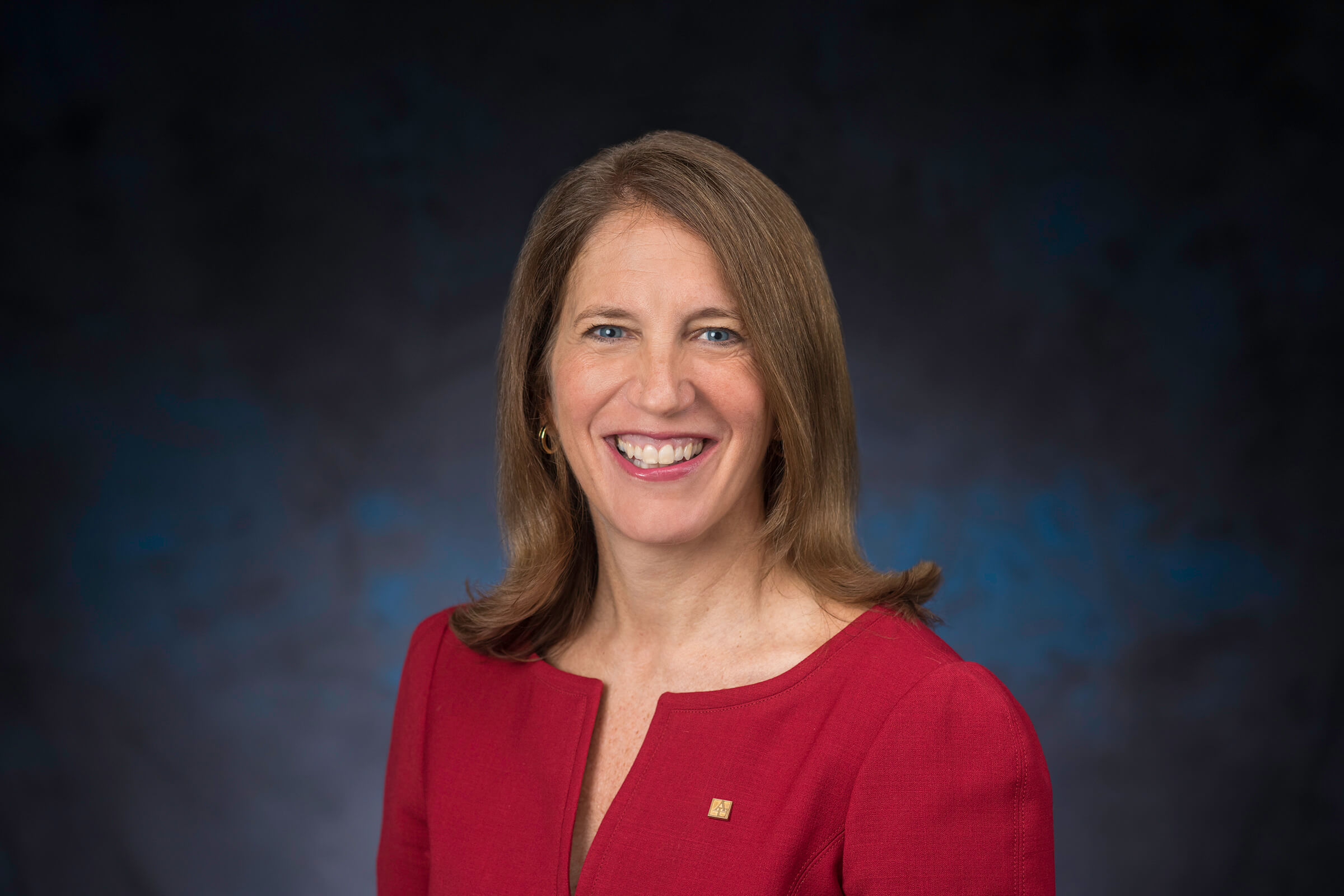
Sylvia Mathews Burwell is the 15th president of American University and the first woman to serve as president. She previously served as Secretary of the U.S. Department of Health and Human Services and as Director of the Office of Management and Budget.
In his recent book American Whitelash, journalist Wesley Lowery offers a stark portrait of contemporary American society, describing burgeoning levels of polarization and partisanship as signaling a “soft civil war.” Throughout his treatise, Lowery reminds readers that “One of our historical blindspots is thinking multiracial democracy—what America should be—is a settled question. Many people are not sure of that.” The recent Supreme Court rulings in the cases brought by Students for Fair Admissions against Harvard and the University of North Carolina confirm Lowery’s analysis.
By striking down the use of race-conscious admissions, the current Court upended forty-five years of established precedent in cases spanning from Regents of the University of California v. Bakke (1978) and Grutter v. Bollinger (2003) to Fisher v. University of Texas at Austin (2013) and (2016), each of which affirmed a compelling state interest in a diverse student body as facilitating a critical educational goal. In the absence of a special justification or strong grounds for doing so, the majority’s rejection of the principle of stare decisis, from the Latin “to stand by things decided,” constitutes a monumental setback for higher education and for American democracy.
When Justice William Powell announced the landmark decision upholding affirmative action in the Bakke case, he not only noted the educational benefits that flow from racial diversity on campuses but also held that in order to promote “the most robust exchange of ideas,” an institution of higher education is “entitled as a matter of academic freedom to make its own judgments as to the creation of its student body.” Among the cases informing the majority opinion in Bakke was Sweezy v. New Hampshire (1957), in which Justice Felix Frankfurter argued compellingly that a “free society [depends] on free universities.” Frankfurter proceeded to warn of “the grave harm resulting from governmental intrusion into the intellectual life of a university,” according four “essential freedoms” to colleges and universities—to determine who may teach, what can be taught, how it is taught, and who will be admitted.
By striking down the use of race-conscious admissions, the current Court upended forty-five years of established precedent.
The Supreme Court’s recent abridgement of these freedoms and their strict adherence to the notion that “the law is and must be colorblind,” even in the face of persistent structural racism, will inevitably exacerbate the growing economic and racial segregation in American higher education by creating further barriers to educational opportunity and social mobility for historically marginalized and underserved students. Evidence for this comes from the nine states that have already banned race conscious admissions, which include Arizona, California, Florida, Idaho, Michigan, Nebraska, New Hampshire, Oklahoma, and Washington. These states have witnessed a steady, long-term decline in their share of African American, Latine, and Native American students being admitted and enrolled at their public universities. For instance, after the University of California System passed Proposition 209, barring consideration of race in admissions at state colleges and universities, the enrollment of underrepresented minority groups dropped by 50% or more on UC’s most selective campuses. Similarly, when Michigan outlawed affirmative action, Black undergraduate enrollment declined from 7% in 2006 to just 4% in 2021, highlighting the fact that alternative policies designed to increase representation have proven inadequate. Two of the dissenting justices in Students for Fair Admissions, Sonya Sotomayor and Ketanji Brown Jackson, outlined several contributing factors, such as students of color being more likely to attend under-resourced schools with fewer Advanced Placement courses and extracurricular activities, alongside less qualified teachers, a less challenging curriculum, and lower standardized test scores.
The negative impact of eliminating race-conscious admissions extends to the entire student body, however. A multidisciplinary analysis of the research literature on the benefits of diversity at colleges and universities, conducted by Jeffrey Milem, demonstrates that the educational experiences and outcomes of individual students are enhanced by the presence of a multiracial and multiethnic campus community. It also illustrates the ways in which diversity enhances organizational and institutional effectiveness, while positively impacting quality of life issues in the larger society. Additional studies have shown the significant role that engagement with others who are racially different from oneself plays in identity construction and cognitive growth. Moreover, research on the effects of classroom diversity and informal interaction among African American, Asian American, Latine, and White students on learning and democracy outcomes has revealed the educational and civic importance of informal interaction with different racial and ethnic groups during the college years.
Despite the availability of this evidence, and the expert claims offered by Harvard and UNC detailing the importance of a diverse campus for training future leaders in the public and private sectors; preparing graduates to adapt to an increasingly pluralistic society; producing new knowledge stemming from diverse outlooks; preparing engaged and productive citizens and leaders; and enhancing appreciation, respect, empathy, and cross-racial understanding, while breaking down stereotypes, Justice Thomas admitted to being “unable to understand how diversity yields any educational benefits.”
The negative impact of eliminating race-conscious admissions extends to the entire student body.
The decision that any use of race in the college admission process constitutes a violation of guarantees under the 14th Amendment to equal protection under the law comes amid a flurry of legislation aimed at eliminating Diversity, Equity, and Inclusion programs, policies, and practices; banning the teaching of Critical Race Theory, Gender Studies, and reproductive rights, even in medical schools; and eviscerating protections for LGBTQ+ students. Forty bills in 22 states have been introduced in support of these measures at a time when there are skyrocketing mental health issues on campuses, intertwined with a heightened sense of belonging uncertainty. The hidden and overt messages embedded in Students for Fair Admissions around who deserves a place at our nation’s elite colleges and universities creates a new sense of urgency for campus leaders around reassessing how we admit and enroll students, how we create spaces of welcome and belonging, and how we might employ pedagogies of kindness to fulfill the promise of American higher education for all.
The American Association of Colleges and Universities’ mission of advancing the democratic purposes of higher education by promoting equity, innovation, and excellence in liberal education is grounded in the conviction that equity and excellence are inextricably linked, and that academic freedom is a prerequisite for a truly liberal education. A politicized Supreme Court has imperiled the capacity of colleges and universities to promote genuine diversity, which necessitates active, intentional, and ongoing engagement with difference in people, in the curriculum, and in the co-curriculum, as well as intellectual, social, cultural, and geographical communities, as a means of increasing one’s awareness, content knowledge, cognitive and empathetic understanding of how individuals act within systems and institutions. By engaging in blindspotting, a majority of justices in Students for Fair Admissions have handed down a decision that is likely to have negative repercussions for generations to come. The result will be a thwarting of the multicultural democracy to which Lowery refers, where all students are positioned for success in work, citizenship, and life within a globally interdependent, multiracial, and multiethnic world.
Lynn Pasquerella is the president of the American Association of Colleges and Universities and served as the 18th president of Mount Holyoke College.