When Supporters Struggle

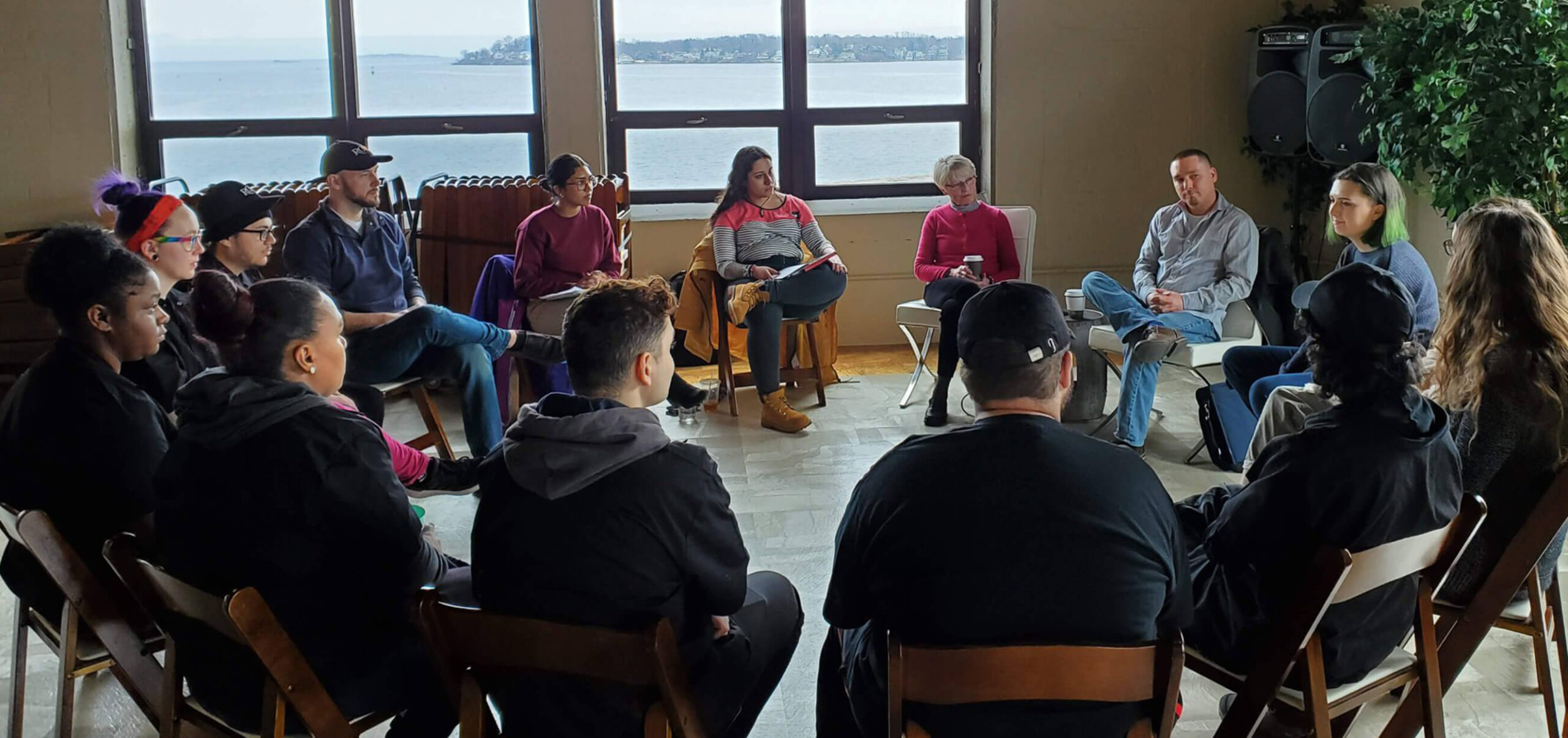
The chair of the department wasn’t herself. This was clear to her advisees, who noticed their professor becoming disengaged and disorganized, and inconsistent in following through with paperwork and information. They suspected it might have something to do with the campus tragedy: A student in one of the professor’s classes had died by suicide earlier in the year, and she was taking it hard.

“I wanted to tell her how sorry I was, but I didn’t want to make her more upset,” said a sophomore advisee. “So, I found other ways to get the information instead of bothering her.”

There is much concern these days about the mental health of college students, and with good reason. During the 2020–2021 school year, more than 60% of college students matched the criteria for at least one mental health problem, according to a study by the Healthy Minds Network (HMN), and meeting demands for treatment is a challenge for counseling centers. 

Less discussed, however, is the mental health of the faculty and staff. As the adults who see the students regularly, they are uniquely positioned to see whether their students are thriving, or seem out of sorts, or even attending class consistently. Which is an added stressor in work upended by the pandemic, on a career path already paved with unusual professional strain.

 “There’s an old saying, ‘A good teacher is like a candle—it consumes itself to light the way for others,’” said a sociology professor in Washington, D.C. “I don’t think whoever coined that phrase had this kind of ‘consuming’ in mind.” 

These days, faculty members are consumed with whether the students are okay, why they aren’t showing up for class, and how to handle the deluge of requests for accommodations, extensions, and exceptions. Recent political, racial, and harassment tensions have brought not just campus unrest, but also inquiries, investigations, and lawsuits. Many professors’ own work and research went dead in the water with COVID. The sociology professor counted four colleagues who’d either retired early in the wake of COVID or left teaching for the private sector, citing better pay and a more sane work-life balance. “Most of the burnout I’m hearing about doesn’t even have much to do with teaching itself.”

Or as one English department head put it, “The job you’re responsible for today is not the same job you got hired for 20 years ago.”

Studying the teachers: Who’s supporting the supporters?

After its survey of student mental health, HMN partnered with the Boston University School of Public Health (BUSPH) and the Mary Christie Institute (MCI) on a survey of faculty perspectives on the state of student mental and behavioral health. Findings published in 2022 show that about 80% of faculty members reported having had conversations in the past year with students about their mental health. And one in five reported that supporting students in emotional distress has taken a toll on their own mental health. 

“Classroom environments are one of the only places that every student is actually present. So, the vast majority of faculty are in this role of contact in some capacity,” said Sarah Lipson, an associate professor at BUSPH and a principal investigator of the study. “It was really important to have data to say we know that faculty are already playing a role in supporting student mental health; we no longer need to guess as to whether or not that’s happening. And I think probably without data we would underestimate how common it is.” 

“There’s an old saying, ‘A good teacher is like a candle—it consumes itself to light the way for others,’ I don’t think whoever coined that phrase had this kind of ‘consuming’ in mind.”

It isn’t surprising that faculty members report feeling like their work goes well beyond typical job hours and boundaries; student expectations of faculty extend further than the classroom. According to a Student Voice survey by College Pulse with Inside Higher Ed, students are looking to their professors for more than course content. More than half sought introductions to people working in their fields of interest, while 45% wanted professors to hear them on personal matters and to consider making accommodations because of them; and 28% hoped for help navigating college life. 

Navigating college life can cover a lot of ground for an unhappy student looking for a helping hand. Last fall, a professor at Texas Christian University received a disturbing email from a student saying thank you for everything the professor had done for him, but closing by saying he was going to jump off a parking garage. TCU had lost a student in a similar way a few years before, and kicked into emergency mode trying to locate the student and stake out all the possible garages. As it turns out, the student’s walking route toward the football stadium garage passed the counseling center where he’d just begun an on-campus IOP (Intensive Outpatient Program). He made a spontaneous decision to go into the counseling center instead, said Eric Wood, director of mental health counseling at TCU—a significant benefit to having an on-campus IOP. Still, the email and frantic galvanizing was a shot of adrenaline that carries the lasting weight of stress and responsibility—pressure felt by faculty and staff, and of course, counselors.

Greg Eells was the beloved director of Cornell University’s counseling center for more than 15 years. In March of 2019, he left to take a similar position at the University of Pennsylvania. His marching orders there: to increase capacity; decrease the time between a first consultation and a first counseling appointment; better distinguish short-term care, long-term care, and other kinds of wellness care; and expand the availability of phone, video, texting and app-based technologies that can be accessed anywhere, at any time, to support students in crisis. Eells also taught both graduate and undergraduate students in courses on counseling and psychology. No small balancing act, but he was a known superstar. Eells had also served as chair of the Mental Health Section of the American College Health Association, and won the Association for University and College Counseling Center Director’s Award for Excellence. 

The September after his move, both campuses were shocked to learn that he’d jumped to his death from a building near his new home in Philadelphia. His suicide devastated colleagues, and sparked soul-searching about the pressures of being a campus therapist, a constant watchdog. It also opened up a thoughtful dialogue on expectations we hold of the people looked upon to always be the strongest in the room.

An editorial in The Daily Pennsylvanian expressed well the pressure on caregivers to have it all together, all the time. 

“The capacity of helpers to give sound advice, to listen attentively, and to go out of their way to help others leads us to believe they must be healthy themselves. The qualities we attribute to the helpers in our lives ultimately feed into the assumption they are immune to the problems and emotions we all face,” the editorial wrote. “While it may be easy to assume that helpers are invincible, it’s also dangerous. It’s one of the reasons we don’t think to check in with them and don’t remind ourselves that they’re human, too. People who give a lot of themselves to help others can experience pain, love, and hurt as we all do.”

COVID habits and harms 

It’s been well documented that COVID was a strange and challenging time for education. From the university professor’s standpoint, it was a two-headed beast: learning to host classes online, from your side of the unfamiliar platform, and trying to remain connected with the struggling people in the squares on the other side. Being a faculty member during COVID meant having students who may or may not show up for class, and not knowing why. It meant not knowing who was living on campus or off, with or without a decent support network (or wifi network). It meant all the complicated communications that come with masking, especially hard for students with hearing loss or for whom English isn’t a first language. And now, post-COVID, it means contending with lackluster student commitment, and not knowing how much of the ongoing absenteeism, missing skills, and requests for grade leniency should be excused with accommodations. 

“One of the ancillary effects many of my colleagues talk about is that students don’t seem to believe in deadlines anymore, and it’s like the time online made it seem as though you don’t really have to come to campus anymore,” said John Hess, a senior lecturer in the English department at UMass Boston. He lost his youngest brother early during the pandemic, and was very empathetic to COVID’s effects on students and their families. “The faculty really, really care a great deal. They worry about their students and are very committed to student success. And so, when students don’t come to class, or when they don’t get the work done on time, it’s not just that it annoys us; it’s that they’re cheating themselves and missing out.”

Professors were also a natural target for student frustration during the pandemic. After all, they were the single point of official school contact via squares on a computer. 

“During the midst of COVID, you definitely saw a lot of high expectation of instant responses and a lot of demands, for lack of a better word, about how things should be,” said Eric Wood, director of TCU’s counseling center. “There was a lot of pressure for faculty and administration to know all the answers. Everyone was scrambling, and students would say, ‘You should know the answer.’ It’s a global pandemic. But kids were expecting immediate support and help.”

And if professors weren’t able to provide answers or respond in a satisfying way, their ratings went down—ratings that are taken into consideration for performance reviews and tenure. 

“Anonymous reviews can be brutal,” said David Kroll, professor of Pharmacology and director of Master’s & Certificate Programs at University of Colorado Skaggs School of Pharmacy & Pharmaceutical Sciences. Kroll, a sometime contributor to Forbes magazine, wrote a 2013 article “Top 10 reasons Why Being a University Professor is a Stressful Job.” Anonymous reviews—which influence everything from tenure, publication, and grant applications—were one of them, as was the business of securing funding for one’s research, which COVID has only exacerbated. 

Professors were also a natural target for student frustration during the pandemic. After all, they were the single point of official school contact via squares on a computer.

“Faculty are expected to bring in grant funding for their own research. Research flatlined during COVID. You have your research team, you have your lab, and all of a sudden, you can’t do any of it. If another university is managing to do it, then you are at a competitive disadvantage,” he said. “And funding is an issue that has gotten worse since then because of the rise in costs. So, they also have a financial pressure that’s a barrier to the tenure process. We lost someone recently because they couldn’t get funding for their research. Being a faculty member in the sciences is like being a small business owner.”

Wellness in the sciences and beyond

The sciences have unique pressures, based on funding and research-related outcomes. This in part prompted eLife, a global nonprofit committed to improving the way research is reviewed and communicated, to undertake a 2020 report on mental health in academia. The report focused on those who support colleagues struggling with their mental health. Of 1,500 faculty members surveyed at varying roles and levels of seniority, two-thirds of respondents said they had supported two or more coworkers who were struggling. Of those who identified as being early-career research academics, 47% said they were struggling with their own mental health at the same time. Of more senior respondents, nearly 25% said they were struggling themselves.

“I am repeatedly frustrated by my (often male) colleagues’ stated belief that ‘there is no mental health problem’ at our institution,” wrote one female mid-career respondent in the survey. “They don’t know about it because their trainees come to me, not to them, with their issues. I receive no institutional recognition for this role.”

In an essay that accompanied the report, an associate professor at the Brain Mind Institute at the Ecole Polytechnique Fédérale de Lausanne in Lausanne, Switzerland wrote with striking honesty about the stress and mental health challenges that contributed to two heart attacks. He was not yet 50 years old. 

“As young scientists taking on a faculty position, we quickly transition from being a team member to a team leader; from never worrying about securing funding to being overwhelmed with grant deadlines; from managing a single project to planning and guiding the work and careers of several students and post-docs; from worrying about ourselves to being absorbed in worrying about everything except our wellness. The great majority of us have never developed a course or taught classes on our own, yet we are all expected to assume these responsibilities,” wrote Hilal A. Lashuel, associate professor and director of the Laboratory of Molecular and Chemical Biology of Neurodegeneration. 

“The life of a professor is a constant balancing act, where we try to juggle personal and professional responsibilities under the pervasive stress of managing expectations in an often hypercompetitive culture. There is always a fear that we may drop the ball, a sense that if that were to happen, we would be alone and the only one to blame,” he said. 

Climbing with no clear footing

Achieving tenure is, for most professors, the natural progression and Holy Grail. Tenure track positions are hard to secure; they don’t open up very often, and they represent a financial and professional security that’s hard to replicate in other industries. And yet, it’s an elusive and constantly moving target. This is why, COVID aside, it’s a career path paved with unusually high stress and unpredictability.

“The importance of tenure can’t be overstated. That sort of freedom is remarkable. Pre-tenure, your entire life is centered on getting tenure, in terms of your research, however that’s defined. That is the central focus of your life. Everything counts, but you never know exactly what the bar is, even if it’s explained to you. There are no real guarantees,” explained one music department chair at a highly selective university. “It’s ultimately a question of how you are viewed by other people in your field. What’s your personal reputation? And it really has very little to do with your teaching, per se. If you are an amazing researcher and a terrible teacher, you will still get tenure. If you’re a mediocre researcher and a wonderful teacher, you will not get tenure.” 

Or, as another professor put it, once you have tenure, you’re free to finally speak your mind.

But the shine on tenure is seeing some tarnish these days, with the nation’s political climate impacting freedom of speech in academia. Even back in 2013, Kroll included it on his Top 10 list for Forbes, and he said it’s even more true today. 

“We cannot take care of our students if we do not learn how to take care of ourselves.”

“The political climate is attacking academic freedoms, minimizing the protections of tenure. Universities are finding ways of getting rid of people whose views they don’t agree with,” Kroll said. “I know faculty members who’ve decided they’d rather work in the private sector for that reason.”

If you are a faculty member who then gets asked to be a department head, you have an entirely new learning curve ahead—and you are largely on your own. Learning to become an administrator is not something professors are born knowing how to do, and there’s rarely instruction or mentoring.

“Becoming an administrator is an entirely different skill set in a career where you’re not trained to do this,” explained the music department chair. “Suddenly, overnight, you’re a manager. The first couple of years I made mistakes, or just approaches that were not productive, so I’ve learned what does and what does not work. Truly on-the-job training. Some larger departments are able to have associate chairs and steps to start to train their faculty. But if you’re a small department, you usually don’t have that option.”

His learning curve included a lot of travel for fundraising, a lot of communication around the Black Lives Matter and Me Too movements, and being the department’s point person on about 40 cases in litigation, going back through events of the past 15 years. “As luck would have it, for me, there were additional stressors that are particular to this moment in history, even before the pandemic. I was completely burned out, and I was overdue for a break,” he said. He ended up taking an emergency sabbatical. “A lot of hard aspects of teaching have nothing to do with teaching. And it wears you down.”

Supportive solutions

Many institutions continue to offer expanded and innovative mental health benefits and services to faculty and administration—though unlike students, in most cases, they need to travel beyond the campus to take advantage of them. It’s not as if a professor is likely to sit elbow-to-elbow with their students in the Counseling and Psychological Services (CAPS) office, waiting to meet with a counselor who is their own colleague at the school. Some universities have changed their offerings to include an in-house Employee Assistance Program (EAP), or a personalized referral service to identify local counselors who have strength in a desired specialty. 

But the most pressing request identified by the BUSPH survey is for training in being an effective supporter, as 73% of faculty say they would welcome additional professional development on the topic of student mental health. Responses make clear that faculty feel a responsibility to help students dealing with mental health concerns, which contradicts a long-held assumption that faculty do not see this as “their job.” Additionally, peer support and ambassador programs that involve training staff and faculty would help them recognize and respond to mental health crises in their colleagues.

But at the end of the day, it’s up to the individual to be willing to reach out for help. 

“As faculty, we cannot take care of our students,” wrote Hilal A Lashuel of Ecole Polytechnique Fédérale de Lausanne, “if we do not learn how to take care of ourselves.”
A Public Health Approach to the Campus Mental Health Crisis

The numbers are startling. Mental health challenges among United States college students increased by more than 100% in eight years, with the largest increase seen among non-white students, according to a recent study by the Healthy Minds Network. And, while the good news is that more students are seeking help and the stigma around mental illness is slowly fading, demand for support services far outpaces supply, particularly for students of color. 

As president of American University (AU), these numbers keep me up at night. I don’t have to look at the data to know that mental health challenges can impact every aspect of our students’ lives. I see these impacts across our campus every day, and I know others are experiencing similar trends on campuses across our nation. 

If we’re going to create and implement long-term solutions that address both the supply and the demand issues, we need to apply the same three-pronged approach we have used in other public health crises: prevention, detection, and response.  

At the same time, we must ensure we’re differentiating what services are needed throughout every stage of our approach by understanding the unique needs of each individual student, and by accurately assessing their situation to provide an appropriate level of care.   

At AU, our approach to prevention begins with a comprehensive focus on the whole person. Student thriving is a campuswide priority. We ask ourselves: What does our unique population of students need to be healthy physically, mentally, and socially? 

If we’re going to create and implement long-term solutions that address both the supply and the demand issues, we need to apply the same three-pronged approach we have used in other public health crises: prevention, detection, and response.

We are finding creative ways to meet those needs in our campus environment—from our 84-acre campuswide arboretum that provides space for our community to gather, engage, and recharge; to our specialty housing communities that bring students together to live and explore a common interest or academic pursuit. 

We know that financial challenges cause stress for many of our students. We’re working to address this stress through the Elevate Scholarship Initiative, a philanthropic effort to raise $25 million—matched by another $25 million from the university—to support undergraduate students enrolled at AU who are experiencing financial hardships. 

And we’re working to create a sense of inclusion and belonging throughout our community to ensure that our students have support networks that both help to counter feelings of loneliness and depression and provide opportunities to seek, and find, assistance.  

We believe that detection must be a community effort—our Care Network empowers all AU community members to identify students experiencing mental health and other challenges and help them access the assistance they need. 

And, as part of our strategic focus on scholarship, learning, and community, we’re working to address the root causes of this crisis on a macro level. Our faculty are at the cutting-edge of mental health research—from Dr. Terry Davidson’s work with the Center for Behavioral Neuroscience, which is poised to transform our understanding of addiction; to Dr. Kate Gunthert’s work with the Stress and Emotion Lab, which uses intensive daily monitoring techniques to better understand and address symptoms of depression. 

We also know that a comprehensive response is important, both in terms of providing timely and effective care, and being thoughtful about what we can do with our resources. Above all, we anchor our response in the idea of the whole student and our values of inclusion.

When students access our services, the first step is a solid initial assessment from a strong clinical team. We offer both individual and group therapy, with specific services for specific populations, such as racially-diverse clinicians who are skilled at providing services to students of color at predominantly white institutions, or through our use of technology to connect our students with a licensed clinician any time of the day or night. 

If we are to make progress on this crisis, we need to know what success looks like by asking ourselves crucial questions about growth, responsibility, and accountability. College students need to be supported and challenged to develop intellectually, socially, and morally. The college experience shouldn’t be so overwhelming that our students retreat and ultimately face mental health challenges, or so comfortable that there is no incentive to grow.  

And we must embrace the power of communities to act as the ultimate prevention tool—study after study has shown that building inclusive communities creates the social connections our students need to develop resiliency, be challenged and supported, and ultimately become the changemakers of tomorrow. 

Together, we can learn from today’s numbers and create a new story of mental health and wellness for our students.

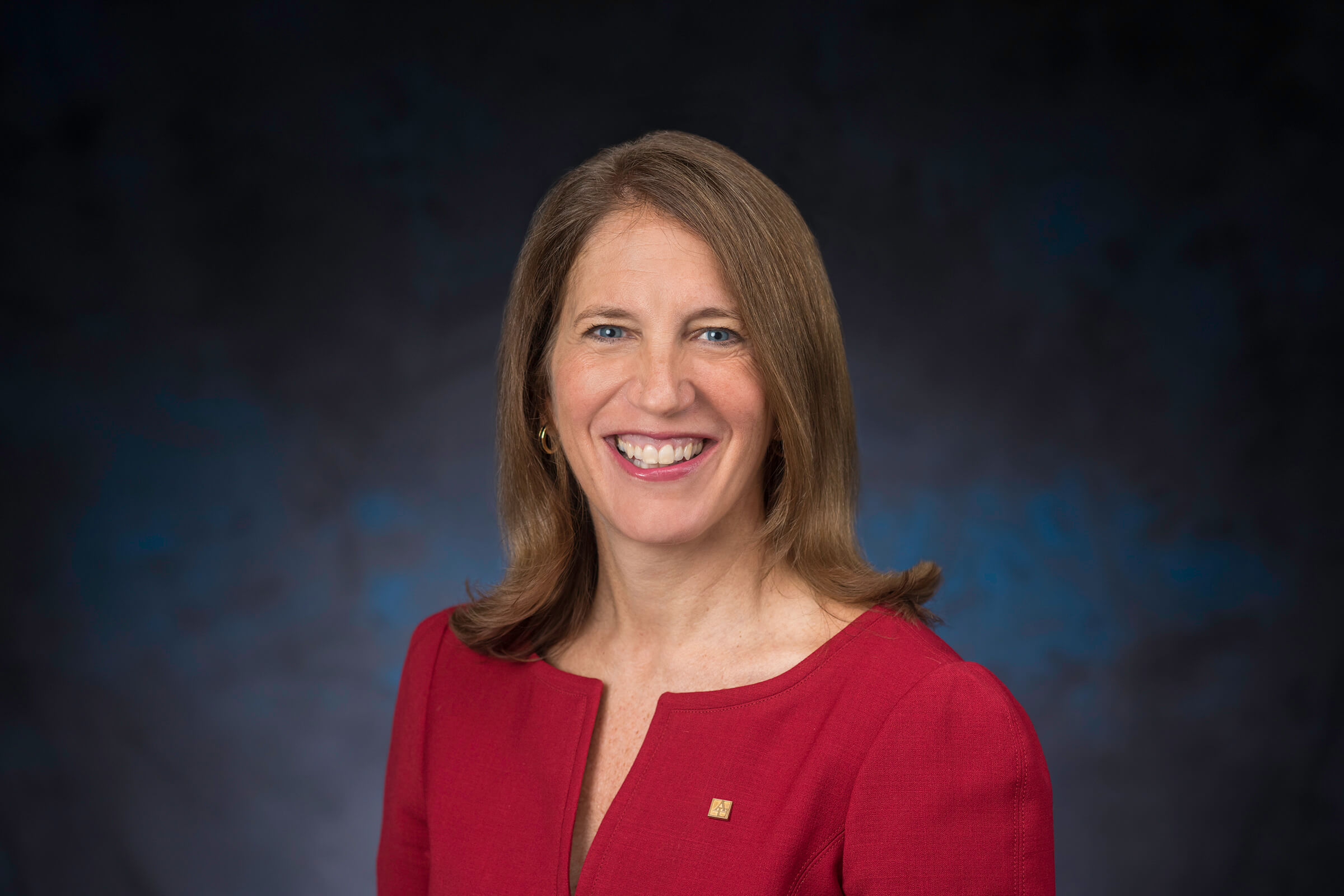
Sylvia Mathews Burwell is the 15th president of American University and the first woman to serve as president. She previously served as Secretary of the U.S. Department of Health and Human Services and as Director of the Office of Management and Budget. 

If not for Nan

It was unseasonably warm in early April as the first years at Wayland High School trickled into the morning class. The 15-year-olds from suburban Boston were dressed for the 85-degree weather, with girls in unburied denim cutoffs and boys sporting their lacrosse uniforms, untucked jerseys swallowing up the team’s youngest players. Teenage chatter hummed through the room, softening into whispers at the sound of instructions from the day’s guest presenter. Amid the babble, a few stared silently straight ahead. 

No one spoke once John began his story. At the front of the classroom, he stood before the band of students, their desks arranged in a wide U-shape around him. At his waist, he held a white stack of paper—his script—although he rarely looked down except to turn the page. He had been about their age when he started abusing drugs, he said. A talented soccer player and actor, he attended Cambridge Rindge and Latin School, one of Massachusetts’ esteemed public high schools—much like Wayland. Many in the room had probably taken the 30-minute drive to his alma-mater to compete in sports matches and debate tournaments. They might have friends who go there.

What started as a tool to socialize more comfortably with his peers quickly became a crutch for John. “I thought substances would give me more control, but they did the opposite,” he said. By the time he realized drugs were his way of coping with symptoms of depression, he felt stuck. He attempted suicide shortly after matriculating at Boston University, waking up in the hospital to find his mother by his bedside. While the two had drifted apart over the course of his substance use challenges, she was there for him throughout his recovery, helping him rediscover passions for fitness, music and drama. 

He only wished he reached out sooner. “[My substance use] took some valuable years I could have used to put my life together,” he said. “Remember, asking for help means you are brave.”

Since 2020, 33-year-old John Oxenford has been sharing his recovery story with students of all ages as a Peer Mentor with The NAN Project. Based in Lexington, Mass., the suicide prevention organization hires young people, typically recent high school or college graduates, with a history of mental health challenges to craft narratives about their experiences and present them to audiences across the northeast. This approach aims to elevate discussions of mental health by centering voices of those who have suffered, and begun healing, from emotional issues that continue to burden countless youth today. Peers offer what they wish they had known about mental health and help-seeking to those who have the time, and need, to learn from them.

Peer-to-peer programming is the flagship work of the NAN Project, founded by Ellen Dalton and Jake Cavanaugh in 2016, after they lost their daughter and younger sister Nancy “Nan” Cavanaugh to suicide in 2012. At 24, Nan died while enrolled in graduate school, a month before she would have earned her Masters of Social Work degree. “The thing was that we were just taken by surprise,” Ellen said of her daughter’s passing. “It seemed like everything was good on the outside.” Despite struggling with obsessive-compulsive disorder (OCD) throughout her life, Nan remained high functioning until the end—a spirited friend, accomplished athlete and honors student. 

Ellen believes it was stigma that killed Nan. When Nan’s symptoms of depression and anxiety worsened during high school in Beverly, Mass., her family steered her toward treatment. While she conceded to taking medication, she rejected therapy time and again. Asking for help was always difficult for Nan, Ellen said, due to fear of being judged or ostracized. That fear silenced her so effectively that not even Ellen, who was senior vice president of Eliot Community Human Services, a large Boston-based health nonprofit, could see through the mask. “I know kids. I know mental health. I know behavioral health. And this still sort of slipped through my fingers.”

“The thing was that we were just taken by surprise,” Ellen said of her daughter’s passing. “It seemed like everything was good on the outside.”

Unfortunately, Ellen’s experience happens all too often. Even as stigma around mental health has receded overall, young people dying from suicide and keeping their struggles to themselves remains a disturbing phenomenon. The Centers for Disease Control and Prevention’s (CDC) latest Youth Risk Behavior Survey shows nearly a quarter of female high schoolers and 12% of male ones reported making a suicide plan. Suicide is the second leading cause of death among college students. This past academic year alone, North Carolina State University lost seven students to suicide and another two to overdoses. 

From Nan’s suicide came her family’s commitment to creating space for young people to talk about mental health and become comfortable asking for help. The prevalence of suicide among teens shocked Ellen, she said, “because back then, we didn’t talk about it. That was the ‘S-word.’ And even mental health was not something that people felt safe talking about.” As she and her son Jake strove to cut through the discomfort that shrouded what few discussions of suicide and mental health she found did exist, Ellen said they wondered, “How do we start the conversation and bring it above a whisper?” 

The decision to pursue a peer-to-peer model emerged from a series of consultations with professionals, including teachers, school counselors and other clinical experts, as well as focus groups with students. Nan’s brother Jake, who is now the executive director of The NAN Project, said he and his mother Ellen met with “whoever would sit down with us.” Through their research, they began to pick up on what strategies and voices could carry the most weight or promise the greatest impact. “It just became clear that the way to do that is not an adult standing up there saying, ‘This is what you need to know,’” Ellen said. “It was peers talking to students.”

Not everyone shared Ellen’s confidence. “It was really banging on doors,” Jake said of early efforts to spread their message, which often didn’t take. School officials expressed concerns about exposing young people to conversations about mental health. One principal told Ellen that Peers from The NAN Project could present to his students so long as no one ever uttered the word “suicide.” “Well, that’s why we have such a huge problem on our hands,” she said.

The founders caught a break in the summer of 2016, when, through Ellen’s connections at Eliot Community Human Services, she made contact with staff at Everett High School. They were interested in participating in one of The NAN Project’s other programs, professional development workshops, which teach school personnel how to recognize signs of a student in distress and how to respond. From there came an opportunity for the team to put on the first of what has become its signature Peer presentations for members of Everett’s health staff. 

Now, The NAN Project has presented to students at around 50 schools, reaching several thousand students annually in recent years. For not only students and educators but caregivers and first-responders, the organization offers a variety of educational programming, including the Peer presentations, professional development workshops and QPR (Question, Persuade, and Refer) suicide prevention training. For young people who may need additional support beyond a one-time Peer visit, there are also SEL (Social-Emotional Learning) Circles, a six-week curriculum run by Peer Mentors and a licensed mental health clinician.

“We’re at the point where we’re getting calls every week. Can you do this for my community group? Can you come into this school?” Ellen said. She credits the traction to the influence of the Peer presentations. “It’s about the young people telling their story to young people and making that connection and allowing the students to open up about their questions or their thoughts. It’s amazing the conversations that go on after these Peer Mentors present their stories.”

“Remember, asking for help means you are brave.”

The Peer presentations have remained largely the same since their inception. For finding Peers, the primary recruiting source continues to be the Department of Mental Health, specifically its own Peer Mentor training program, called Gathering Inspiring Future Talent (GIFT). NAN Peers then start by participating in a four-day training course to help them craft their “comeback stories.” These are the hope-forward narratives that track the origins of their mental health challenges and their paths to finding and maintaining recovery. To appeal to each of the various age groups, the Peers pen multiple iterations of their stories.

The impact their presentations can have on students is also what keeps long-time Peers like Lizzie MacLellan part of the fold. Lizzie, now assistant director of the organization, joined the team right after receiving her undergraduate degree in psychology from University of Massachusetts Boston. Five years later, she sticks with this work, in part because of how she’s seen her story of anxiety, panic attacks, and self-harm resonate with young people. “I’ve had a number of experiences where a student afterwards made a beeline to me and, in some cases, is physically reaching out and being like, ‘You are me. Oh my God, you just said everything that I’m thinking all the time,” she said. 

“What we’re going through is a really common thing and so many people go through it. But you don’t know until you hear somebody else say it. And in those situations I’ve been able to say, ‘Okay, well, you heard what I just said—that I wish I had reached out to somebody sooner. Who do you talk to?’” Lizzie said. Sometimes, she’s comforted to hear that the student who connected with her already has a support system in place. Other times, she ends up making the “warm handoff” to a school counselor, who tells her later that no one knew the child in question had been struggling.

Another draw of working at The NAN Project is the unique support system that comes with it. “Something we pitch to the Peers is you become part of a community of folks who’ve been through similar things, but, unlike working at Stop & Shop, you’ll get support as part of that,” Nan’s brother Jake said. Given that mental health challenges brought them all together, they not only don’t need to hide their pasts but find solidarity in them. Clinical director Donna Kausek even performs regular clinical check-ins with the Peers. According to Jake, “If they have to step back because they’re having a tough day or anxious, we get that, and that’s perfectly okay, whereas some work places might not be quite as accommodating.”

Still, it’s important that Peers have reached a point in their recovery where they can handle sharing the rawness of their background. Donna said the main criteria she looks for in aspiring Peers are twofold: whether they’re far enough along in the healing process to deliver their story and whether they have support systems in place to help. After all, logistical issues can crop up from a policy of accommodation for staff when they have a bad day or need a break. “There’s no repercussions for that ever, but it also means that they call out all the time,” Jake said. “That’s why I pay them 50 bucks just to show up [to each presentation].”

For John Oxenford, the presenter at Wayland, the ten hours per week he works as a Peer Mentor for The NAN Project are an opportunity to nurture his longtime love of acting—with one major difference. “It’s not like doing the monologue. It’s like being on a team. So I can connect with these people, and we all support each other so that everything can go well and we can help people,” he said. “Rather than worrying so much about what I do, I can also rely on some people around me.”

“Especially when a kid really connects with it on a personal level, it’s so empowering,” Lizzie said. “It’s almost like every time you say your story, you get to say, ‘And that’s not me anymore.’”

“What we show them is light at the end of the tunnel,” John said. 

Anxious to Launch

Almost without exception, they felt ready to leave college. Notwithstanding all the nerves and nostalgia, of which there were plenty, the recent graduates, now between six months and five years out, could recall at least some part of themselves that had been looking forward to the next phase.

Many had outgrown the behaviors that used to excite them, like drinking and going to parties. For others, the tipping point came as social tensions, having bubbled up during the last few semesters, finally boiled over. One was exhausted after spending four years as a first-generation student navigating higher ed without a blueprint. Another was just eager to jump into his career.

As ready as they imagined themselves for the next chapter, these young graduates would all come to miss certain comforts of the college experience before long. The real world, they found, also without exception, could be a rude awakening. And while “commencement” has always brought its share of anxiety, Gen Z grads have faced a confluence of challenging dynamics, including untested pandemic-related norms and the financial pressures of an inflated, uncertain economy. Where they fall on the graduation preparedness scale may determine their ability to make it beyond the “bubble” of higher education.

Harvard College graduate Wiley Schubert-Reed felt like adulthood claimed him  overnight and without warning. “I felt pretty good about graduating, and I still feel pretty good about it,” he said, with an imminent “but” about to follow: He’s been finding himself weighed down by the transition from pursuing a physics degree to chasing solo musical aspirations in New York City, and yearning for the certainty and structure of Cambridge, Massachusetts’ hallowed halls. 

A year since leaving college, Wiley continues to grapple with the liminal space he occupies between childhood and adulthood and wonders what makes it so confusing for him and many of his friends. Maybe the COVID-19 pandemic distorted his generation’s sense of time, or maybe it’s that he’s still living at home in the same city and house where he grew up. “I feel like the line of growing up is a little bit more obscure now than it was before,” he said. “I think my parents graduated from school and moved to the city and became adults. I don’t feel that way.”

However different the anxieties of college are compared to those of the “afterlife,” the question stands as to whether soon-to-be-grads tend to leave school with an adequate understanding of what awaits them on the other side.

Wiley’s experience mirrors that of many of his peers. The end of college brought the end of a slew of academic and social-related stressors he was keen to shed. It also created space for a whole new set of issues to crop up, and fester. “It definitely ebbed and flowed,” Wiley said of his mental health in college. “But it was far less existential than I think the things influencing my mental health are now.” The forces that controlled the Brooklynite’s mood as recently as a year ago, like homesickness or disgruntlement with his major, seem silly to him at this point. After all, college, and all the problems that came with it, had an endpoint, unlike in “real life.” “Now, it’s like this chapter is ending when I die,” he explained. “Now, it’s like everything is for life. Or it feels that way.”

However different the anxieties of college are compared to those of the “afterlife,” the question stands as to whether soon-to-be-grads tend to leave school with an adequate understanding of what awaits them on the other side—the freedoms and uncertainty, excitement and discomfort, self-discovery and, especially, loneliness. Education is often the most consistent form of structure in these students’ lives before they lose it. For all the energy and resources colleges dedicate to teaching students how to conquer academic life, they may be less apt to focus on preparing them to cope with its absence.

While some institutions may dismiss the concept of emotional preparation as “not their job,” taking a hands-off approach could be risky in 2023. In a recent survey on the mental health of recent graduates by the Mary Christie Institute, more than half (51%) of respondents reported needing help for emotional or mental health problems in the past year. More than half (53%) reported feeling burnout at least once per week (where burnout is “a state of prolonged physical and psychological exhaustion, which is perceived as related to the person’s work”). More than one third (39%) said their college did not help them develop skills to prepare them for the emotional or behavioral impact of the transition to the workplace.

Finding Community 

“I don’t think it was the worst job in the world, but it certainly was a challenging office,” 27-year-old Ada (whose name has been changed) said of her first job post-college. After graduating from one of her state’s public universities she accepted a position working in a District Attorney’s office. The adjustment proved difficult as she struggled to fit in with her coworkers and find support among them. Actually, she admitted, it was miserable. “Three months, four months, five months after I graduated, I pretty much couldn’t get out of bed. So I had no choice but to seek help if I didn’t want the rest of my life to basically fall apart.”

For Ada, the toxic office environment was a product of some of the people as much as the work itself. By nature, the DA’s office can end up exposing its employees to “horrendous things,” Ada said, probably alluding to violent or disturbing criminal cases. But her stint there also coincided with a height of the Black Lives Matter movement, she said, opening up a dialogue among certain colleagues about police brutality and anti-Black racism. Their commentary didn’t strike Ada, who immigrated with her family from East Africa almost 20 years ago, as work-appropriate. “Being Black with all of these political conversations that are happening in office…” she drifted off. “I think sometimes it’s unfortunate how little people can actually articulate what their state of discomfort with you is.”

While Ada attributed the decline in her mental health after college only in part to her initial job, she experienced a drastic improvement once she’d left. “Surprisingly,” she added with dry amusement. After the DA’s office, she spent two years with a disability advocacy nonprofit, before becoming a program manager of the intercultural education office at a small liberal arts college. If the community at her old job drove her away, the one at her current office is why she sticks around. “I love my work. I love my students. The ones that I get to work with, they make the hard days easy.”

Now that she works in higher education, Ada’s understanding of the support, or lack thereof, for soon-to-be grads stems from her recent experiences as both student and staffer. “We ask students more about what they’re going to do and what their career goals are than if they have built any infrastructure to support themselves mentally when they leave college,” she said. “Because they’re not going to have quick access to their friends. They’re not going to have quick access to a meal, whereas college really does create a bubble and create this life that is really not in the real world.”

Hot air balloon

For young people at this vulnerable stage, hungry for the kind of social network they built in college, the community they find at work can make or break the larger job experience, especially for those from marginalized backgrounds. In 2022, 25-year-old Emma Womack graduated from Amarillo College, a community college in Amarillo, Texas, with two degrees in welding and machining and wary of being a woman in a male-dominated field. The Texan, hailing from Bushland, had been the only woman in her welding program and one of two in the machining program. When she started job searching, she remembered an unfortunate interview at what she called a “really cool” fabrication company in Austin. “They asked me questions like, ‘Are you aware that you’re going to sweat? Are you aware you’re going to be working outside?’ And then they didn’t even let me take a weld test, whereas if I were a male, they wouldn’t have asked those kinds of questions,” she said. She didn’t accept the job.

As for the position Emma did end up taking, a machinist apprenticeship at Los Alamos National Laboratory in New Mexico, positive social interactions have set it apart. “I have only male bosses, which was a little unnerving. But they’ve all been fantastic. I couldn’t have asked for better bosses honestly,” she said. She credits the ladies’ lunches organized by the company with nurturing a community of women even amid the male environment. There’s also a wellness center and a range of employee resource groups, including for LGBTQ+ people and those affected by addiction. “They have a lot of support here, which is super awesome, because I know a lot of places don’t have that.”

Wiley Schubert-Reed, the Harvard grad, has felt the absence of similar support as he pursues a career as an independent musician. Given the only structure in his life is what he constructs, he often questions whether he’s on the right path, wishing he could tap into the minds of those who charted the waters before him. “Harvard preaches to have this huge, wonderful network of people everywhere,” he said, “but unless it’s the finance world, they’re kind of impossible to get in touch with.” He’s reached out to alumni but rarely hears back, and laments that his alma mater doesn’t play a more formal role in facilitating mentorship opportunities for everyone. “Just to feel like you have some sort of authority figure offering you guidance, like when you have an academic advisor or mentor in school, that could be helpful. And I think that would be helpful for non-artistic people, too.”

Mentors have long been regarded as important influencers for students, particularly in readying them for career. According to Gallup, college graduates are almost two times more likely to be engaged at work if they had a mentor in college who encouraged them to pursue their goals and dreams. Alumni mentorships could be one way to soften the landing for young graduates by providing them the unique perspective of someone recently in their shoes. Given the paucity of formal mentor programs within higher education, the wide proliferation of this “add-on” remains a challenge. Additional research from Gallup shows that less than half of graduates (43%) said they had an undergraduate mentor who encouraged them to pursue their goals. The mentorship gap is even greater for minority graduates, who were 25 percentage points less likely to say they had a faculty mentor than their White peers.

“Oh my God,” he remembered thinking about his first job. “This just sucks. I don’t want to be here, but I have to be here. There’s nothing I can do about it.’”

The need for connection, whether with mentors or peers, became particularly, sometimes painfully apparent to those who started their first jobs during the COVID-19 pandemic. When 26-year-old Sophie (whose name has been changed) graduated from Texas A&M University, she kicked off her new job at an audit advisory firm online, living and working from her childhood home west of Houston. Her employer, whom she connected with through a career fair during her senior year, won her over thanks to an on-site visit. “The office visit was so cool, and all the people were so fun and nice,” she said. “Funny enough, I never got to go to the office until way later.” There were days in the first months of her job during which she never spoke to another employee.

Coming from college, which Sophie remembered as a hub of constant interaction, the self-proclaimed extrovert had expected to be more social when her job started. “It definitely affected me personally because I wanted more out of work than just sitting behind a computer creating massive Excel models.” Once she started working in-person, building relationships in the office became easier, not to mention valuable in the face of long hours, competitive coworkers, and high-pressure evaluations. Still, after three years, she said she’s considering a career shift, having grown tired of crunching numbers to make clients happy, rather than investing in a mission she truly believes in. “The only thing that really keeps you there is the connections you make at the company,” she explained.

What’s the Purpose?

The compounded effect of not being particularly interested in his line of work and not having a community to compensate was enough to send 25-year-old Michael running from his job in tech sales. “In my first job, there was a point where I dreaded waking up and logging on my computer just because I hated it so much. I hated everything about it,” he said. As a senior, Michael recalled being so focused on finding a job—intent on earning a salary, moving into his own apartment, and diving into the next chapter—that he didn’t think long or hard about what kind of job would suit him. He now encourages seniors to carefully consider who they are and what they’re passionate about before selecting a job for the sake of it or because their friends are pursuing something similar.

“Oh my God,” he remembered thinking about his first job. “This just sucks. I don’t want to be here, but I have to be here. There’s nothing I can do about it.’”

Even having moved on to a second job he enjoys more, Michael said he’s still coming to terms with the less-than-fuzzy reality of the corporate world. “I figured it was just going to be similar to college, but in a different, more mature way. That was not the case. It was very different. You’re just kind of a number.” He often only sees colleagues through his computer screen and imagines they only care about him insofar as he makes money for the company. Although his exhaustion has changed since the pandemic, when managing to get out of bed was a feat, he continues to worry about the sustainability of his career. “I wouldn’t say it’s burnout where I feel like, ‘ I can’t go on with this.’ I think it’s more of an existential, ‘What am I doing? How long am I gonna be doing this? At what point does this change?’”

Michael may have benefitted from more structured encouragement to contemplate what career would best suit him. Some colleges have begun providing these forums for students to figure out how to ‘align who they are with what they do.’ At Bates College, for example, the Center for Purposeful Work has pioneered helping students mull over their “purpose” and identify work that brings them meaning through curricular infusion models, practitioner-taught courses, internships, and job shadowing. Even if these experiences do not expose the students to promising fields of interest, they learn to pivot to new opportunities.

“Aligning your work with your interests, strengths, and values gives you the agency you need to make the right career decisions, those that will bring you meaning and purpose in your life, which we know is a significant driver of wellbeing,” Clayton Spencer, who recently stepped down as president of Bates, said.

In 2018, Bates partnered with Gallup on a survey in which 80% of college graduates said deriving a sense of purpose from their work was extremely important (43%) or very important (37%). Yet less than half of these graduates had succeeded in finding it. Likewise, the study showed that graduates with high purpose in work are almost ten times more likely to have high overall well-being.

“I think especially with a good college degree, it’s pretty easy to find ways to make money,” Wiley continued. “The question is more, can you find ways to make money via what you feel passionate about as well?”

The decision to abandon a promising career that becomes mentally or emotionally damaging isn’t always straightforward. The comparative culture and social pressures to make money often intensify outside of college, where many students had access to the same classes, dorms, and dining halls. Off campus, what gym friends belong to or even how much they spend on salads for lunch begins to reflect the kind of job they have and how well they do it, Michael said. “I would say, certainly after the first year and into the second and third, a big part of social connotations is frankly, and this is terrible, but how much money do you make?”

Spencer is quick to emphasize the practical dimensions of Purposeful Work, including financial considerations. “The reflection that lies at the heart of Purposeful Work helps students figure out what they are or are not interested in, what they are or are not good at, and what kinds of work experiences activate their strengths in ways that build excitement and a sense of momentum. Students also see adults in the workplace whose choices reflect a series of value-based judgments about how important financial concerns are to the kind of life they wish to live.”

Ada, who comes from a low-income background, said the promise of a higher salary swayed her decision to leave a job she loved. Learning to manage money continues to be an uphill climb for her. “I think coming from low income means you know how to stretch $20 into $200. So there’s that, but that’s not really money management, that’s just making do with what you’ve got,” she said. “To be honest, even at 27, I’m still learning about money. I don’t really know money.” Her basic approach involves ensuring all the necessities get paid for on time and “then dealing with the rest.”

“What people don’t really understand with first-gen is there isn’t anyone to turn to and be like, ‘Hey, how do I budget this?’ How do I create a spreadsheet?’ There isn’t anyone,” Ada continued. Whether from a first-generation background like Ada or supported by a mom who works for a tax filing company like Sophie, the path to financial literacy for young professionals can seem never-ending and discouraging. When the Mary Christie Institute polled young professionals about their mental health last year, nearly half (46%) reported their financial situation was always or often stressful. Financial stress also correlated with overall mental health, as nearly two-thirds (61%) of respondents with more financial stress said their mental health was fair or poor, compared to under one-third (31%) of those with less financial stress.

Many colleges offer financial literacy programs. Whether students have the foresight to seek them out before graduation or know they exist is an issue. At Stanford University, the Mind Over Money financial wellness program offers free financial coaching and online learning modules. At Texas Tech University, students pursuing personal financial planning degrees offer guidance to their peers through the Red to Black financial coaching program. Yet, Inside Higher Ed’s Student Voice survey last year indicates more than two-thirds (67%) of student respondents were “not sure what is offered” in the way of personal finance education at their institution.

Accepting a tighter budget is a compromise many who lead with their passion may be forced to make. Wiley has confronted this reality as he pursues a less secure line of work in the arts. Saving on rent by living with his parents and earning a salary from his second job keep him feeling like money-related concerns hold him back from socializing. Long-term uncertainty plagues him. “I’m happy to spend two or three years struggling and figuring stuff out, but what if in five years, my friends stay at their corporate companies and are making millions of dollars a year and my art doesn’t go anywhere and now I literally have zero income or prospects?” he asked aloud.

“I think especially with a good college degree, it’s pretty easy to find ways to make money,” Wiley continued. “The question is more, can you find ways to make money via what you feel passionate about as well?”

Working through questions with such life-altering consequences is ultimately up to the individual, as these young people have all acknowledged. The take-away for higher education may simply be providing the opportunities, the support, and the experiences to do so.