Dr. Estevan Garcia is at the Table

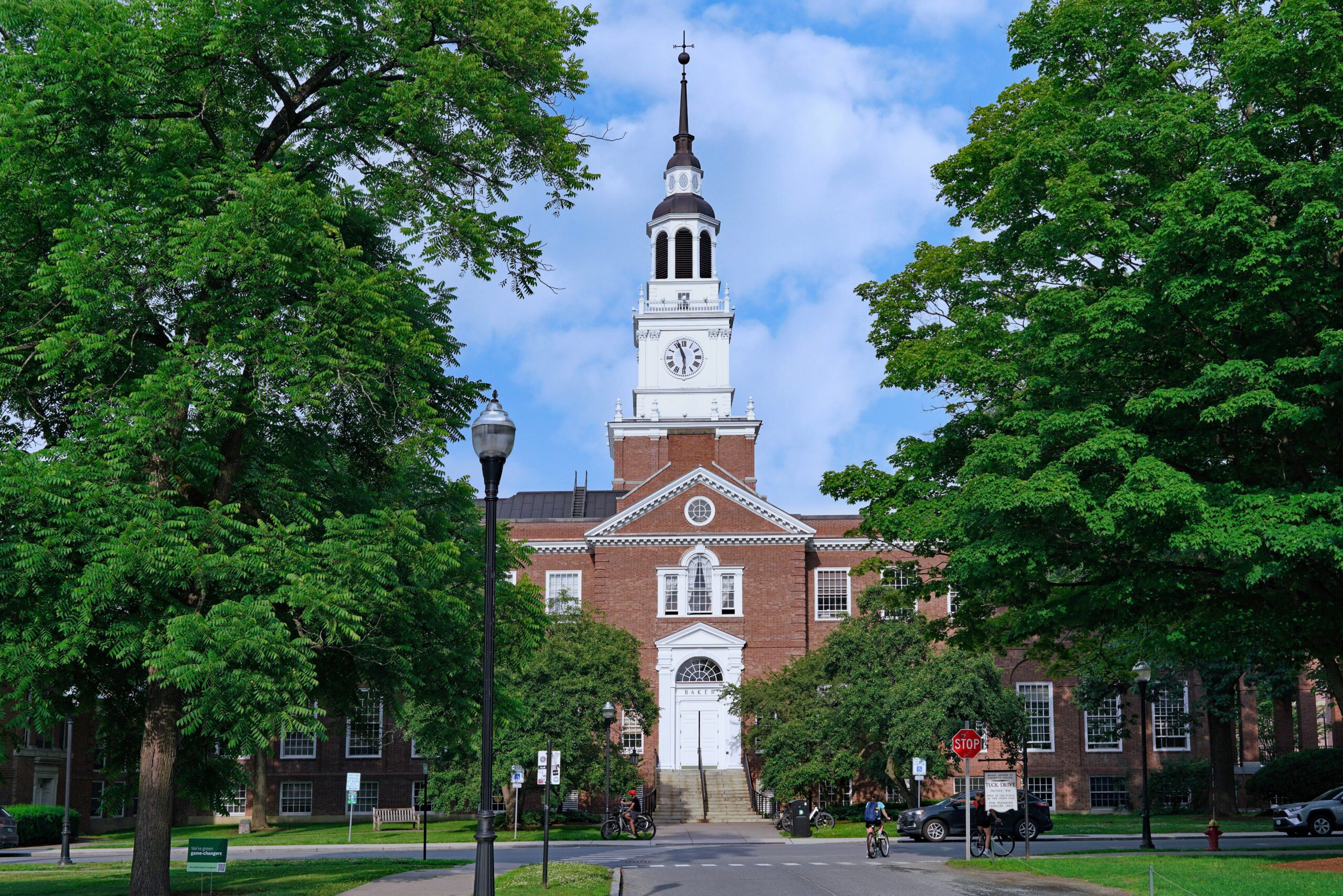
Given his background, Dr. Estevan Garcia might be considered an unusual member of a college president’s cabinet. But as Dartmouth’s new Chief Health and Wellness Officer, the physician and public health expert works directly with President Sian Beilock on an issue she has made a well-publicized priority in her first year in office – protecting the mental health of students, faculty and staff. Garcia, who is a pediatrician specializing in emergency medicine, came to Dartmouth from the Massachusetts Department of Public Health where he helped led the effort to address the behavioral health crisis in emergency departments during the pandemic.

It is now Garcia’s job to lead Beilock’s health and wellbeing agenda, most specifically through the implementation of the school’s comprehensive strategic mental health plan called the “Commitment to Care.”  The origins of the plan predate Garcia’s arrival and was informed by a collaboration with the Jed Foundation, a non-profit organization dedicated to protecting emotional health and preventing suicide in young people. Beginning in 2020, the Dartmouth community lost several students, including by suicide, as the pandemic eclipsed college life.

Dr. Estevan Garcia

Four years later, the Jed Foundation featured Dartmouth as a success story in its impact report and Garcia is now focused on the longer term outcome data that will provide a more precise evaluation of their recent work.  He views the plan as a pathway to a wellness culture at Dartmouth that prioritizes self-care, community care and mental health innovation. With an increased staff and budget behind him, Garcia is addressing a number of wellbeing issues often associated with elite institutions, particularly ones like Dartmouth, located in remote areas with less community resources.  These include the stress of perfectionism among high-performing students and the lingering lack of belonging many students feel, particularly those with mental health issues and/or those with diverse identities. As the fall semester brings new and familiar challenges to students’ wellbeing, Dr. Garcia is ready and at the table.

LW: What was the thinking behind having a new position in this area reporting directly to President Beilock?

EG: I think her vision for the role was to elevate student mental health and wellness as a high priority but also to bring under one umbrella campus-wide health and wellbeing. Part of my portfolio is faculty and staff health and wellness so it was important to President Beilock to have that direct communication on all of the activities in this area across campus.

LW: How has your background in public health prepared you and/or motivated you to take on the position of Chief Health and Wellness officer at a college? 

EG: What brought me to this work came from what I saw in emergency departments during, and predating COVID, with adolescents and young adults in crisis. To me, that was really shocking.  When I started in the Department of Public Health {in Massachusetts} I partnered with the Mass Department of Mental Health through the community behavioral health programs, providing options that would divert the mental health crisis from emergency departments when appropriate.  I spent those two years heavily involved in the work we were doing to create an actual road map for behavioral health in Massachusetts. 

My background is in emergency medicine.  I useasthma as an example of the way we look at illness in the emergency department.  You would come to the emergency department after you had gone through your asthma action plan – “I’m a green, I’m a yellow, I’m a red,” — here’s how I step up my care so by the time you came to us, you had exhausted your plan.  Westarted to view behavioral health in the same way.  “I’m at home fighting with my parents, or “I’m depressed, I can’t leave my room” or “I’m in crisis, potentially I’m suicidal” – all of those scenarios have varying degrees of illness and severity.  Ifwe treated them all as emergencies, we would be failing our patientsand our ability to manage true crisis and emergencies.

LW: Do you have a similar strategy around health and wellbeing that you are utilizing at Dartmouth?

EG: When I first came here, it was important to explain to my colleagues what we mean by health and wellness because not everyone understands this. One of the things I did was develop a pyramid that shows the different degrees of mental health needs. The base of the pyramid is the 70% of the students we have here – very successful, high achieving – experiencing the stress that comes with that.  There’s another 20 to 25% who could use some clinical support.  The final piece at the top of the pyramid is the group of students who were most clinically concerning, potentially suicidal, and these are the student we need to act quickly to support and get into the appropriatesetting. 

The goal of this kind of structure is to understand that much of what we do is at the base – that 70% of our students need easy access to services and almost no barriers to the many wellness activities we should be providing across campus. The idea is that college is the right timeto experiment with wellness and to build your portfolio of activities and support strategieswhen you are successful – when you are at the base – so you can manage the challenges that will come your way.  You will be more prepared when you fail a test, or break up with your girlfriend, or have other challenges– all the things that challenge yourequilibrium andcould push you into crisis.

“College is the right timeto experiment with wellness and to build your portfolio of activities and support strategies when you are successful –- so you can manage the challenges that will come your way.”  

For the 20 to 25% in the middle, we have clinical  supports that help themmanage their illness, while also providing access to wellness activities.  With the smaller group, my job is to really help identify them as their situation evolves and get them the support that they need, and this can be a protective setting in a hospital if that’s necessary.  And it is really important that we don’t make them feel that they are alone.  You have to care enough about the students that require services outside of the college to partner with them – to give them time away, with support, and then bring them back with the appropriate accommodations. This is how I see my job.

LW: What have been some of your early priorities?

EG: President Beilock has recently completedher first year as presidentbut was very involved in the creation of the strategic plan for mental health and wellness before that. I would say the majority ofmy work since I came to Dartmouthhas been to implement that plan.  It has multipledeliverables and my job was to take that on and run with it, delivering on health and wellness as a priority for the president and for the campus.

Part of those deliverables involved new permanent staffpositions – across ourstudent health and wellness divisions.  It was really a huge investment by the college and we had to make sure those were the right positions and we were utilizing them in the right way.  

The Dartmouth community has faced several challenges since I arrived.  I think it is helpful to have a clinician at the table.  Health and wellness staff arenot enforcers, but supporters.  We arevery much there to support students, and help them engage in tough conversations. I think partnering with students has been one of the strongest game changers for me personally. I worked with them before as patients but now they are really partners to me in the work we are doing around health and wellness.

LW: What was the history behind the Commitment to Care plan?

EG: When Covid started, we (in reference to Dartmouth) were doing the best we could, but clearly it was very isolating on this campus and colleges across the country. It was not your normal college experience by far here and of course everywhere.  Beginningin 2020, we had several student deaths including bysuicide, and it was clear they needed to address what was happening.  In the summer of 2021, they brought the Jed Foundation in and that led to a major mental health review –  campus visits, survey data, all of that.  Additionally, the provost at the time set up a steering committee to work on an all-Dartmouth strategic plan on health and wellbeing from May 2023 to September 2023, that was the foundation of the Commitment to Care. It was across all campuses – undergrad, grad schools, professional schools. 

What makes it unique is that it is very stakeholder-driven, very student-driven and the result is this multi-year, campus-wide engagement with actual deliverables. What I found interesting when I first came to campus, folks would introduce themselves – students, staff, faculty – and they would say “I was on the committee for mental health” or “I was on the committee for health promotion.”

LW: What are the elements of the plan?  

There are five pillars to the plan which drive the many activities and initiatives that we are working on.  (From materials): Center wellbeing in all we do both inside and outside of academics; Create an inclusive community to foster mental health and well-being for students with diverse lived experiences; Equip students with the resources and skills to navigate both success and failure with strength and confidence; Proactively address mental illness to aid students in reaching their goals; Invest in innovative applications of evidence-based approaches to respond to changing environments and needs.

It is a very broad approach involving all aspects of the college.  Regarding the second pillar, we pride ourselves on attracting first generation students and students with diverse lived experiences, and it is important for us to center those lived experiences in what happens on campus, particularly here in rural New Hampshire. This includes how we address mental health and wellness and creating a sense of belonging.

President Beilock was clear that focusing on wellbeing is critical to a successfulacademic career. One of the key pillars for us is helping students navigate success and failure, this is number three.  There is an understanding that our students are incredibly driven. They are gifted and they are used to being at the top. They are not used to failure. But failure is part of succeeding and it is how you pick yourself up and move forward that is important.  We call it normalizing life.

Regarding wellness services, we have made significant gains here.  One of the first things I did was to move wellness to be a separate divisionwith a director reporting to me.  Our health services are really top notch and I wanted wellness to be on equal footing.  Additionally, we are arural community sometimes makingrecruitment difficult.  To better meet the needs of our students, we needed to find ways of extending and diversifying our services.  We partnered with a tele therapycompany, that gives us 24/7 behavioral health support for students and that made a big difference in accessibility when our team was not in the office.  We have several hundred students who have engaged with the service.  We have unlimited access to 30 minutes therapy slots any time of day or night and will beexpanding that to 50 minutes for those who need it.

The addition of the tele service didn’t lower our need for in-person services but it enabled other students to access therapy who might have been uncomfortable doing so before.  We know that a quarter of our students utilize our mental health services and that is similar across our student groups.  That is a significant point since historically, underrepresented students seek help less frequently. 

And the other piece – which I think is one of the harder ones – is thinking about data analysis and evidence-based approaches to make sure that what we are doing is impactful. This is really important because as we are delivering on a lot of these initiatives, we need to know what is helpful and not helpful and then redirect our time, energy and resources accordingly.

LW: You have said that some of your work is inside as well as outside the classroom.  What has been your experience there?

EG: There are a few tracks to this work, one involving academic policies and calendars that students have said would be meaningful to them in terms of reducing their stress levels over academics.  There’s also some interesting things faculty are doing in their classrooms by integrating mindfulness techniques in their academic disciplines including physiology and languages.   These are just some of the ways we are partnering with academic leadership, and I will say it does make a difference now that we are at the table.
“The Real World of College,” Continued

In their book The Real World of College: What Higher Education Is and What It Can Be, Howard Gardner and Wendy Fischman explore what stakeholders, on and off campus, believe to be the purpose of higher education and assess the degree to which these views are consistent.  Their research began in 2012 when “return on investment” was emerging as the catchphrase for pragmatic families choosing a post-secondary path amid rapidly rising tuition rates. The authors hoped the effort would help validate a sector they believed to be second to none in terms of encouraging personal growth and understanding the world in all its complexity. After studying 10 campuses of diverse profiles and conducting over two thousand interviews, the researchers concluded that their views were not widely held and that higher education “had lost its way.”

Among their key findings was an uncertainty among students regarding their reason for attending college; a strong turn toward vocationalism (what they call “earning over learning”); and misalignment — between families and students on one hand and between faculty and administrators on the other — about what college is all about. In their exploration, one dominant element emerged: the consistent reporting that student mental health was the biggest problem in higher education today. Gardner and Fischman make plausible connections among these findings — including providing context for the mental health phenomenon — and deliver a series of recommendations for how higher education can reclaim its meritorious role in individuals’ lives and in society. 

“We conclude that if higher education in the United States is to be successful in the twenty-first century, it needs to be sharply reframed,” they write in the book’s introduction.

This proposition is meticulously unpacked throughout the book, each chapter building a staircase of knowledge indicative of the authors’ unique contributions: Gardner, the famous developmental psychologist and giant in the academic theory space whose synthesis and sequencing reveal his decades as a professor; and Fischman, whose pure and artful approach to qualitative research succeeds in leading to authentic and, at times, vexing findings. In fact, The Real World of College raises as many questions as it answers, which led the authors to continue today their exploration of American higher education and the dynamics they believe have caused it to flounder. 

Since publishing the book in 2022, Fischman, Gardner, and their research team have been working on another major initiative to help colleges and universities center ethics and character development, encouraging students to think not just about themselves, but about others around them. The Beyond the Self project is testing the probability that, with sensitive guidance and ample practice, today’s young people can move from “I” to “we,” an effort the researchers see as critical to the fate of higher education, as well as the country’s future. In their office in Cambridge, Gardner and Fischman are joined by their graduate assistant, Kate Abramowitz, in discussing their findings and the new work those have led them to. Together, the trio represent three generations of scholars hoping to steer higher education in a new direction to fit a rapidly changing world.

Real Findings 

As is often the case with good research, The Real World of College evolved from previous work the authors had done at the Harvard Graduate School of Education’s Project Zero, from which Gardner launched the Good Work Project. For decades, the research center has explored various scenarios of ethics and character including the decline in the professional sense of responsibility for “good work.” The effort has produced ten books of various themes, including morality and ethics in high school students and young adults. Fischman, then just out of college, has now been working with Gardner for nearly 30 years and has co-authored a number of books and articles with him. The Real World of College is their most ambitious to date, and, while the research has a clear start and end, it is informed by and interwoven with their many years of working with students. 

“In reflection sessions with college students for our Good Work Project, we would ask them about why they were in college and what they wanted to get out of it,” said Fischman. “We were struck by how many students really didn’t know why they were there, and we were really curious about that. This was around the time the value of a college experience was being called into question, and we began to wonder how other higher education stakeholders responded to the question, ‘Why go?’”

The Real World of College establishes four ways of thinking about going to college. These mental mindsets are: Inertial: one goes to college and thinks little about being there, does not participate significantly; Transactional: one goes to college and does what (and only what) is required to get a degree and then (hopefully) secure placement in graduate school or a job; Exploratory: one goes to college intentionally to take time to learn about diverse fields of study and try out new activities; and Transformational: one goes to college to question and reflect about one’s own values and beliefs with the possibility that they will be changed, hopefully in constructive ways. 

“We were struck by how many students really didn’t know why they were in college.”

Their research showed that while few held an inertial mindset, nearly half of all students had a transactional view of college; these young persons were most concerned with grade-point averages and building their résumés and less concerned about personal and intellectual growth or expanding their understanding of the world around them.

“Students talked about academic rigor in terms of wanting to do well, getting As, not more challenging work,” said Fischman. “It was about performing well, being successful, and having those external markers of success.” 

In their transactional view of college, students were joined by parents, alumni, and trustees, but were out of synch with on-campus stakeholders like faculty, administrators and staff; the latter informants tended to view the college experience through the exploratory and transformational lenses, what one might think of as the more traditional stance. This misalignment may account for the declining rates of confidence the public has in higher education. For the authors, it was another indication that the sector was losing its grip on its reason for existence — after all, they thought, if stakeholders just want jobs, they should go directly into job-training (and résumé-building) programs.

“Nearly 80% of faculty and administrators in our sample viewed college as an opportunity for transformation, so the difference between families and campus adults was really striking and really significant,” said Abramowitz. “If students are there for one reason, which likely reflects why their parents are sending them, and faculty and administrators are designing their courses with a completely different approach in mind, everybody’s going to be unhappy.” 

Starting in 2012, Gardner and Fischman said they did not anticipate many of their findings, including what was far and away the most dominant: the prevalence of mental health issues among college students and the consistency with which all stakeholders believed this to be the number one problem in higher education today. “At the start, we didn’t ask them to rate problems,” said Fischman. “But simply to name what they thought was the biggest, and from there, mental health quickly became the number one area. It was one of the only topics that every stakeholder agreed on.” 

As rates of mental health problems among college students soared in the 2010s, Gardner and Fischman became less surprised and more curious about the origins of the problem as well as how it might relate to their other findings. They found that students not only personally experienced mental health issues but believed them to be pervasive throughout higher education. Among the distress – mainly feelings of anxiety — was a deep sense of alienation. The authors were also compelled to understand what “mental health issues” really meant to college students. 

“What does it take to say there’s a mental health problem?” asked Gardner. “I think if you did research across different societies and diverse cultures, you would find that there are very different answers to that question.” 

The most common explanation for why mental health was considered the biggest problem on campus was academic stress. In a section in the book called “What keeps you up at night: the 3 a.m. worries,” Abramowitz writes that more than half of the students interviewed reported that academic stress was the reason. More than a fifth (17%) of students raise mental health issues in relation to these academic concerns. Again, the responses revealed a fixation on performance. 

“For the most part, students talked about mental health problems relating to doing well in school, so the stress is focused again on these external markers,” said Fishman. 

The authors do not purport to have any specific training or background in mental health and lean heavily on the literature to describe its prevalence among college students. But they do posit that their prescription for reframing the purpose of higher education may have a positive impact.

“If you think that college is just about getting straight A’s, developing your own profile and getting a job, you of course are going to have stress and anxiety about meeting those milestones. But if colleges were to encourage more of an exploratory or transformational mindset, they may also address some level of the mental health issues we are seeing.”

The Work of Reframing 

In reflecting on their findings, Fishman, Gardner and Abramowitz discuss what they feel needs to be done for higher education to find its way, with an eagerness that underscores their own formative undergraduate experiences. While they discuss some concerns about Gen Z students’ preparedness to embrace the hard work of learning (one of the most frequently-used words in the responses was “mom”), the authors avoid judging the students. Instead, their analysis and recommendations are focused on the academy and its failure to adhere to, and communicate, its primary mission, indeed its primary reason for existing: effective learning. 

“We would rather students be less concerned about their grades and more transformational and exploratory in their thinking about college, but it’s hard for them when they don’t understand what the mission of their institution is – or of the sector of higher education overall for that matter,” said Gardner. 

The authors call this “mission sprawl,” which gives way to “projectitis” — the proliferation of offices and programs that, however well-intentioned, can serve to further distract and confuse students. 

The most common explanation for why mental health was considered the biggest problem on campus was academic stress. 

“In the late 19th century, when we minimized the religious missions of our traditional institutions — which people like me might have applauded at the time — we did not replace them with being a good citizen or having a well-trained mind,” said Gardner. “We replaced them with a grab-bag of these other things—most of which do not have explicit learning aspirations.” 

Fischman concurs. “Colleges have become all things to all people and in doing so, they have lost their sense of purpose. Institutions need to remind themselves and their students what they stand for.” 

The authors conclude that schools should establish a well-defined, easily understood mission that is introduced with explicit onboarding and reinforced by ensuring that any additional priority is intertwined into that overarching academic mission. In confronting the tenuous notion that college is simply a means to an end, the authors offer a new measure for what they believe is a far more lasting and valuable asset: higher education capital (HEDCAP). HEDCAP’s five constituents are the abilities to “Attend, Analyze, Reflect, Connect and Communicate.” HEDCAP encompasses key components of becoming a well-educated person – what Gardner terms higher ed’s “raison d’etre.”

The authors’ promotion of the learning mission includes a sense of thinking “outside of oneself,” a component that could obviate some of the ambiguity students have about college and might dial back the obsession with personal milestones. “You should know, as a student, that ‘I’m here because I can learn about the rest of the world, understand other people’s perspectives, and contribute something when I get into the world that will not only benefit me but benefit others as well,” said Fischman. 

Gardner is even more emphatic. “If colleges don’t increase higher education capital – being able to think and understand better — we really should close them down. Given where we are with the world, if we don’t do something to get students beyond themselves, then we have also failed, because college is the last chance to think about these things—who we are and who we might become, what the world is like, how to think better about it and act more effectively and most compassionately—in the precious years before you go full-time into the world of work.” 

Moving from “I” to “We” 

In today’s internally focused world, getting stakeholders to think more broadly is a formidable challenge, particularly for young people who are relentlessly besieged with messages to the contrary. With a team of colleagues, Fischman, Gardner and Abramowitz are now working on a new project that they hope will nudge the sector toward recognizing the collective benefits of outward thinking.

“After the book was published, we were concerned about this transactional mindset and this preoccupation with self, so we piloted our own approach to try to get students to move from ‘I’ to ‘we,’ as we call it,” said Fischman. 

For two years the researchers worked with over 150 students at four different colleges, instructing them to keep journals about difficult dilemmas. Fischman says they did not explicitly use the word “ethics” but prompted students to think about the ethical complexities of the dilemmas they described. 

“Among the thousands of students we interviewed for The Real World of College, very few talked about decisions or dilemmas that affected other people,” she said. “We wanted to increase sensitivity to the fact that there are decisions you make and behaviors you have that affect others and there are things going on in the world that may not relate to you but may need your sense of agency.” 

Another red flag raised in the book was the fact that while students reported cheating to be widespread on campus, they rated it as far less important to them than mental health and dismissed it as something they needn’t deal with or, indeed, even think about. This tracked to previous work the researchers had done with high school students (see her co-authored 2004 book, Making Good). 

“We got the sense that teenagers believed that ethics were for later. ‘As a young person, I don’t need to worry about that. And actually, when I decide to cut corners and may not do the right thing, its justified because I’m moving forward and getting to where I need to be.’” 

The notion that “ethics are for later” may seem detrimental, but Fischman believes it is an understandable response given the pressures placed on high school students to do all they can to get into the right college. In their work with college students, particularly first year students, the researchers found the reflection exercises, where students considered other people, constituted a welcome respite. 

“We found the students really appreciated having that time to reflect on the world, as it was something they would not have done otherwise,” said Abramowitz. “Many of them expressed benefits for their mental health, though that was not our primary focus.”

The journaling effort has shown promising results, and the researchers are now looking to expand their impact by working with select colleges and universities to embed their “Beyond the Self” approach within existing curriculum like first year programs or capstone experiences. The work is funded by the Kern Family Foundation, a national nonprofit dedicated to empowering young people to build flourishing lives anchored in strong character and inspired by quality education. The work includes interviewing alumni who participated in Beyond the Self programs and other initiatives focused on building sensitivity to ethics and character, in order to understand how it may have affected how they see the world, their lives and their careers. The research with alumni is part of what Fischman describes as a whole-institution approach to paving the “I” to “we”’ pathway.

“We are looking at institutions that are taking on this approach and trying to understand: Do students come to these schools prepared for this mission? What do they take away? How do they leave and what have they gained? And, ideally, what might society gain?”

A Collective Endeavor

In the liberal arts, small student populations, intimate learning environments, and dedicated faculty and staff create pathways for students to develop a sense of purpose, belonging, and identity on campus — pillars of wellbeing that will sustain them long after commencement day. Amid a youth mental health crisis with young adults reporting that their lives lack purpose, the liberal arts mission of whole-person development has never been more vital. For twelve small colleges across the United States, that mission has become a collective venture thanks to a $3.275 million grant from the Endeavor Foundation. “Collective challenges require collective solutions,” says Warren Wilson College President Damián Fernández. “The Endeavor Foundation’s collaborative approach to addressing student mental health and wellness—one of the pervasive issues of our times—promises broader and deeper impact.” 

The Endeavor Lab Colleges (ELCs) are a consortium of 12 small liberal arts colleges across the United States who share a commitment to student mental health, experiential learning, civic engagement, and purposeful work. Working across their campuses as a cohesive ecosystem, the collaborative has been supported by the Endeavor Foundation in New York City since 2016. In 2023, the ELCs — Antioch College in Yellow Springs, OH; Bennington College in Bennington, VT; Blackburn College in Carlinville, IL; College of the Atlantic in Bar Harbor, ME; Northland College in Ashland, WI; Prescott College in Prescott, AZ; Randolph College in Lynchburg, VA; St. John’s College in Annapolis, MD; St. John’s College in Santa Fe, NM; Sterling College in Craftsbury, VT; Unity Environmental University in New Gloucester, ME; and Warren Wilson College in Asheville, NC — received the $3.275 million grant to fund the first phase of their collaborative project, “Enhancing Student Learning and Experience through Campus Wellness, Student Well-Being, and Mental Health Initiatives.”

Capacity to care

Phase I of the Endeavor Mental Health Initiative, which will continue to unfold over the course of the 2024-2025 academic year, focuses on building capacity — on the individual ELC campuses and across the “collaborative school” — for shared pilot projects within four categories: curricular initiatives to promote mental health and wellbeing in the classroom; purposeful life and work; place-based experiential learning; and expanded services, which include clinical and non-clinical mental health interventions such as peer mentoring, faculty and staff trainings, and bringing 24/7 counseling services to campus.

The colleges each received $100,000 for capacity-building in the 2023-2024 academic year and will receive an additional $75,000 to continue their efforts in the upcoming academic year. Also during Phase I, the Endeavor Lab Colleges will convene on progress and implementation, share expertise, and deepen their inter-institutional collaboration. With successful completion of this phase, the colleges will earn access to an additional $5.225 million over three years. Together, they will design and implement mental health and wellbeing that can be shared and adapted across the collective and become self-sustaining.

Dr. Lori Collins-Hall is the project manager for the Endeavor Foundation Mental Health Initiative. She also serves as vice president and chief operating officer of Sterling College, a liberal arts college in rural Craftsbury, Vermont and member of the Endeavor Lab Colleges. Prior to her work with the Endeavor initiative, Collins-Hall spent 20 years as a professor of sociology at Hartwick College in upstate New York, where her teaching and scholarship focused on criminal justice reform, alternatives to incarceration, and victim advocacy. She then served for five years as the provost and vice president of academic affairs at Antioch College in Ohio (also a member of the Endeavor Lab), before coming to Sterling in 2021. 

“Collective challenges require collective solutions. The Endeavor Foundation’s collaborative approach to addressing student mental health and wellness—one of the pervasive issues of our times—promises broader and deeper impact.”

From the first leg of her career at Hartwick College to her work with the Endeavor Foundation nearly 30 years later, Collins-Hall has been dedicated to community-based service work, exploring the transformative potential of the liberal arts model and place-based learning at institutions that value experiential education.  Both Antioch and Sterling (as well as Blackburn College and Warren Wilson College, also Endeavor Lab institutions), are among the ten federally-recognized work colleges that compose the Work College Consortium. These small colleges share a commitment to place-based education, community engagement and service, integrating work into the learning experience. 

Collins-Hall describes the Mental Health Project as a “capstone” to a career dedicated to cultivating pathways for student success in the liberal arts. For her, mental health care and the liberal arts share a common goal of whole-person development: “Within the liberal arts framework,” Collins-Hall says, “health and wellness becomes another avenue for being a whole person.” Whole-person development encompasses critical thinking, social engagement, and a sense of community —ideas we often associate with higher education and, more broadly, with the experience of “becoming” oneself — but it also includes self-care, self-reflection, and understanding one’s own behaviors within a larger social context. At their core, Collins-Hall explains, the Endeavor Lab Colleges have joined as a united front to develop methods “to integrate mental health and wellness as an acceptable and central piece of the liberal arts’ mission toward becoming a holistic person.”

The big impact of a small college

While the Endeavor Lab Colleges vary somewhat in size — most have fewer than 1,000 students; Sterling College has fewer than 100 — they all fit within the “small liberal arts college” or “micro college” designations. Institutions of their size and scope provide intimate learning environments, community engagement, and social belonging. For students, this kind of college environment can be an opportunity to establish a strong sense of self and place. As Collins-Hall describes, “These small colleges are community-oriented. They are student-focused,” and, importantly, she says, “they tend to be very relational, so people feel the impact when their communities are healthy — and they feel the impact when they’re not, perhaps more immensely, more directly.”

Among the most significant offerings of a small college environment is the development of students’ sense of purpose. Though purposeful work and learning have been shown to promote wellbeing and life satisfaction throughout a person’s lifetime, a 2022 Harvard University study of teens and young adults found that a striking 58 percent of respondents reported feeling little to no purpose or meaning. By prioritizing purpose, one of the four project areas of the Endeavor Lab Colleges, a liberal arts education can set students up for wellbeing in their post-graduate lives.

But these small institutions are not without challenges. As undergraduate enrollment falls, Americans’ trust in higher education continues to falter, and colleges now close at a rate of one per week, higher education has reached an inflection point — and perhaps no institution feels the weight of change as acutely as the small liberal arts college. While the endowments of larger universities may insulate them somewhat from cultural and financial pressures, those same pressures can be lethal for small colleges. Wells College in Aurora, NY was originally the thirteenth member of the Endeavor Lab Colleges; in April, it abruptly announced its closure after 156 years. (The shutdown and its fallout were the subject of a deep-dive by The Hechinger Report.)

Through a consortial approach, the Endeavor Mental Health Initiative preserves the immense value that the small liberal arts colleges provide their students while mitigating the budgetary challenges to creating and sustaining new programs. These are, as Collins-Hall describes, “some of the smallest, leanest, least financially resourced institutions.” 

Joining forces on mental health and wellbeing amplifies what each institution is able to accomplish on its own. “The support of the Endeavor Foundation and participation in the collaborative is vital to our small, private school as we strive to provide the best possible educational experiences to our students,” says Randolph College President Sue Ott Rowlands. “Our Endeavor Foundation grant funding has made it possible for us to enhance services to our students.”

While the endowments of larger universities may insulate them somewhat from cultural and financial pressures, those same pressures can be lethal for small liberal arts colleges.

Dr. Matt Vosler is a professor of outdoor leadership at Warren Wilson College. Vosler grew up in rural Western Ohio, where the outdoors were an integral part of his life — so integral, in fact, that he did not realize their impact until college, when his priorities shifted and experiences in nature became scarce. During his undergraduate studies at Ohio University, Vosler found himself spending less time outside— and feeling less fulfilled — than ever before. 

“Growing up in a rural area, being outdoors had always been a part of my daily routine. Then, suddenly, it wasn’t, and I was suffering.” At this realization, Vosler abandoned the pre-medical track he was on and went on to earn a degree in recreation, or, as he affectionately put it, “the study of play.” While pursuing a master’s degree in experiential education at Minnesota State University Mankato, he studied the traditional K-12 schooling system and the history of education reform in the U.S., leading to a revelation about the structure of education and the kinds of learners it is designed to serve. “When I left my K-12 education, I thought I wasn’t a good learner,” Vosler reflects. He experienced hyperactivity and ADHD as a child, and the traditional educational model was at odds with his style of learning. Upon discovering experiential education as an adult, Vosler thought of the many learners, including himself, who could benefit from the hands-on approach. He earned his PhD in curriculum and instruction, specializing in the transformative potential of outdoor education. 

Today, Vosler points out, students entering college had their middle school and high school years interrupted by the pandemic, spending formative developmental years online. Connection with nature supports attention restoration and stress reduction, but for a generation of college students that is less social and spends less time outdoors than its predecessors, the power of nature as a space for holistic wellbeing has eluded many. In his role at Warren Wilson, Vosler is devoted to exploring the connection between mental health and experiential learning in non-traditional classroom spaces. Nature Rx is a program that joins traditional mental health supports, such as counseling and clinical services, with the use of nature as a powerful supplementary tool for wellbeing. The mission, Vosler says, is to “empower students to cultivate relationships to nature, to others, and to themselves, creating sanctuary within the chaos of the modern college experience.” In a time when “hustle culture,” careerism, and pursuit of high-paying jobs are a proven detriment to college students’ sense of purpose, that sanctuary is worth protecting.

“At a small college, our capacity gets stretched. With the Endeavor grant, we were able to hit the ground running,” Vosler says. “We can grow and sustain our outdoor programs, ensuring that mental health and wellbeing remain an institutional priority.”

At Randolph College in Lynchburg, VA, Dean of Students Chris Lemasters is spearheading the Endeavor Lab’s expanded services initiative. With a background in residential life, Lemasters embodies the community-oriented approach to wellbeing that the liberal arts model encourages. “In the 2024-2025 academic year and beyond,” Lemasters says, “we have an opportunity to bring new and comprehensive mental health resources to expand the scope of our services and consistently keep mental health on the radar.” This expansion will go beyond acute care, such as mental health first aid, by prioritizing wellbeing across all areas of student life.

With an undergraduate population of just under 500 students, Randolph’s faculty promotes experiential and student-centered learning opportunities. Last year, Professor of Religious Studies Suzanne Bessenger and her colleagues built a contemplative studies minor into the Randolph curriculum, after a course taught by Bessenger proved meaningful for students. The contemplative studies field illuminates the human psychological experience through philosophical inquiry, deepening students’ exploration of self while encouraging intercultural exchange of ideas.

At Bennington College, Italian studies professor and First-Year Forum Director Dr. Barbara Alfano is exploring curricular opportunities such as trauma-informed learning to integrate wellbeing into the classroom within the first year of college. The First-Year Forum is a year-long advising course designed to help first-year students navigate campus resources, engage with their community, explore their interests, and develop their writing and critical thinking skills. As director of the First-Year Forum, Alfano thinks a lot about how the first year shapes the college experience. Her work within the Endeavor Lab focuses on integrating wellbeing into the liberal arts curriculum through developing shared curricular and co-curricular learning modules. 

Meanwhile in the Midwest, Blackburn College in Carlinville, IL conducted a Mental Health Needs Assessment to identify the status of student wellbeing on campus and helped college leaders locate areas for improvement. Now, the survey will expand from Blackburn into a multi-institution survey that will help all twelve Endeavor Lab institutions collect data on life experience, mental health, sense of belonging, and self-care behaviors among their students, creating a collective database for tracking and supporting mental health and wellness across the ELCs. 

In Bar Harbor, ME, College of the Atlantic Community Engagement Coordinator Nick Jenei is constructing campus maps to foster a sense of place and deepen students’ connections to their campus, local communities, and the cultural and natural history in their midst. Using interactive digital maps, the initiative leverages mobile phone technology to promote real-world engagement and will be adapted to create a sense of place and connection on other Endeavor campuses. Being connected to one’s physical place — its people, history, and environment — has shown positive effects on human health, improving both emotional wellbeing and academic performance in college. 

Together, the Endeavor Lab Colleges are not only enacting change on their own campuses, but tapping into the growing pool of knowledge they have built together. Their models for mental health and wellness are scaled and adapted to reach across the collaborative school of the Endeavor campuses. “These initiatives will support thousands of students on the members’ campuses but reach far beyond,” President Fernández says. “The work will have a multiplier effect through the creation of a model for all colleges and universities to implement refined best practices for student mental health and wellness.”

The Jed Foundation at 25

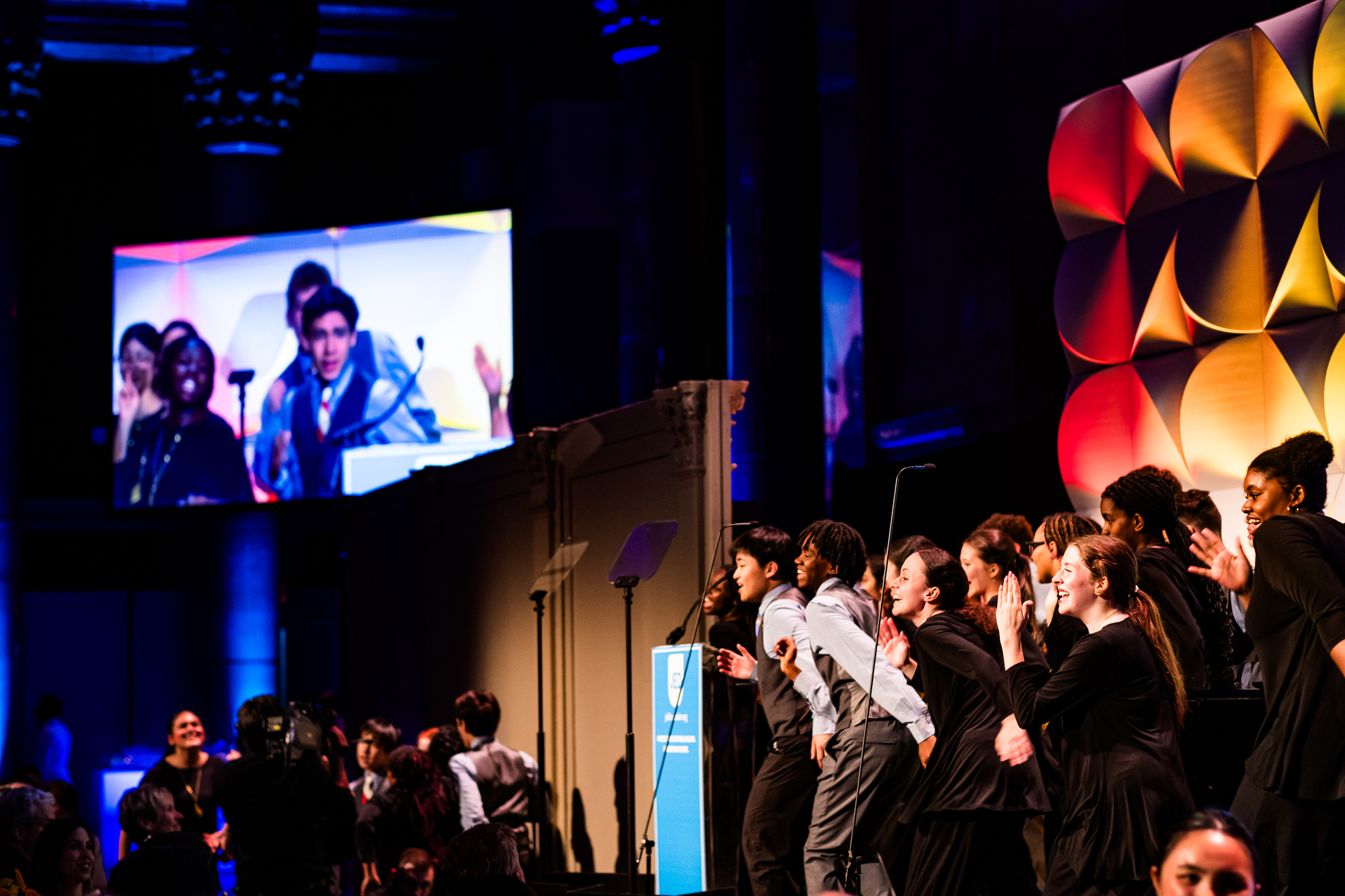
The Jed Foundation (JED) annual gala in New York City never fails to impress. The beautifully choreographed event at Cipriani’s in Lower Manhattan draws participants of all kinds, from celebrities and well-heeled patrons to behavioral health advocates and young people from across the country. But behind the production and couture is a non-profit start-up with a remarkable influence on the mental health and well-being of high school and college students — and one of the country’s most significant and little-known success stories.  

This year’s gala was particularly inspirational, breaking records in attendance and fundraising while featuring personalities such as TV anchor Savannah Sellers and New England Patriots owner Robert Kraft, who bestowed a lifetime achievement award on his friend and former college classmate, Phillip Satow. The gala honored the twenty-fifth year of the country’s leading non-profit dedicated to protecting emotional health and preventing suicide in young people, as well as the retirement of Satow, its co-founder, who has moved from Chairman of the Board of Directors to Chairman Emeritus and Board member. 

Phil and Donna Satow launched The Jed Foundation in 2000 in acknowledgement of the life and sudden death of their youngest child, Jed, who died by suicide two years earlier when he was a student at the University of Arizona. What the Satows chose to do with their unimaginable grief would change how colleges and universities view their role in protecting their students from tragedies such as Jed’s.

JED’s work in the past twenty-five years has not only provided an evidence-based model for suicide prevention, it has brought to the surface the important and sensitive truth that, for many, the college years are the most developmentally challenging of their lives. 

In accepting his award, Satow told the story of when, shortly after Jed’s death, the president of his son’s university asked him and his wife Donna the question that would lead to the launch of the Foundation. “What can I do to improve the safety of my 30,000 students?” Satow, who was already a highly successful pharmaceutical executive, responded in the best way he knew how: he and Donna devoted themselves to finding an answer to the question. 

Satow’s first “kitchen cabinet” was made up of medical professionals, suicide prevention experts, and business colleagues. After years of raising awareness and developing JED’s Comprehensive Approach to Mental Health Promotion and Suicide Prevention for Colleges and Universities, the organization began offering JED Campus. Launched in 2013, the program engages colleges and universities in collaborative work with a dedicated JED Campus Advisor over the course of four years. After conducting an initial needs assessment, the Campus Advisor draws on the data to create a strategic plan with actionable opportunities that span seven domains: develop life skills; promote social connectedness; identify students at risk; increase help-seeking behavior; provide mental health and substance misuse services; follow crisis-management procedures; and promote means safety. 

In April 2024, JED published an impact report detailing improvements to student mental health at schools that completed JED Campus titled A Decade of Improving College Mental Health Systems: JED Campus Impact Report. A decade of data (2013 to 2023) from JED Campus schools and the Healthy Minds Network survey were analyzed and found schools that completed JED Campus saw statistically significant improvements in student mental health at the end of the program. Students at participating institutions were 25% less likely to report a suicide attempt, 13% less likely to report suicide planning, and 10% less likely to report suicidal ideation. Students whose schools make more progress on their JED strategic plans are more likely to demonstrate improvement. 

JED Campus is now in over 450 colleges and universities in the United States, reaching 5.6 million students, with the core of its programming expanding into high schools and school districts throughout the country. In 2022, JED received a $15 million grant from Mackenzie Scott, which Satow hopes will triple the number of students it reaches over the next several years, someday reaching more than 50 percent of colleges and universities. JED has recently doubled its staff from 40 to 95 to cover its expanding programming, which includes webinars and trainings, original research and reports, consulting services, public awareness campaigns, youth mental health resources, and policy, advocacy, and government relations work on the local, state, and federal levels. 

Shortly after the gala, Satow spoke with LearningWell about these accomplishments, including living up to expectations, proving the organization’s impact, and finally being able to answer the University of Arizona president’s question. 

LearningWell: Did you believe back in 2000 that the Jed Foundation would grow to this size and scope?

Phillip Satow: In many ways, yes. This was a hope that I had after I lost my son, when I thought about how many other kids were in similar situations and how many other families would be affected by a loss like ours. And here was a college president, obviously a very bright man, and he had no constructive idea what to do. And it dawned on me that we could have an incredible impact if we could establish a safety net under thousands of kids across so many campuses.

Shortly after Jed died, I brought together a number of experts and posed the question that I was asked by Jed’s college president.  They responded by suggesting the applicability of a model, sourced from the U.S.  Air Force and published in The British Medical Journal, with outcome data that showed it actually reduced suicide. So we had a model with evidence, and when we first started, one of the things we thought about was how broad our approach should be. Should we think horizontally or vertically? Should we bring this information to one school at a time, or should we bring awareness to all campuses in the United States and let them know a prevention model like this could really work to reduce suicide on their campuses? We ended up going horizontal, and even though we were small, we wanted to make sure that as many college counseling centers we could get to would have this information. I really did have that dream.

It would be very hard for many presidents not to feel obligated to call on JED, because we know we can indeed make a difference on their campuses.

LW: For a non-profit, JED is very entrepreneurial. You started outside of higher education and now serve so many colleges and universities and high schools. Do you ever think about how what you built can be applied in other scenarios? 

PS: I do, often. The idea for the model was far-sighted in many ways. In boundaried communities, you have leadership in a position to say, “Here is our policy that I am asking you to follow.” If you look at suicide in general in the United States, so many occur in boundaried communities like prisons and large health care systems. I believe there is something to our model that allows it to be applied more broadly than in colleges or in other academic spaces. We now consult with corporations and other organizations like national fraternities and even professional sports organizations. 

LW: What were some of the big milestones for you in JED’s 25-year history?

PS: I think there were a few things that really changed our growth trajectory. The decision to put “boots on the ground” made a big difference. At first, we put our model out there, but it was up to the schools to implement it. Over time, we decided it was important to have people assigned to schools and committees formed that we could collaborate with. That became the JED Campus program. Another major milestone for us came about due to the pandemic, which of course made things difficult for us, as for everyone, but it did bring the JED message alive – that mental health was an important priority for schools. And the third area that really distinguishes us is our data collection effort. We have an extraordinary amount of data that we can continuously display as evidence of our impact. From the beginning, we were always looking to collect support data for our impact framework.  I think that’s what sets us apart.

LW: When did you feel as though you had an answer to the question Jed’s college president asked you? 

PS: We had a subjective feeling as we were rolling out the JED Campus program into hundreds of schools but in the last couple of years there’s been real evidence of this. The American Council on Education released a survey in 2021 that showed that over 70% of college presidents reported that student mental health was their number one priority. Our impact report really shows how the needle has moved. Students at JED schools were 25% less likely to report a suicide attempt. This is all real data that shows how much has changed since 2000. 

LW: What directions do you see JED going in now?

PS: There’s much more to do in the college space. I think that, with the data we have, it would be very hard for many presidents not to feel obligated to call on JED, because we know we can indeed make a difference on their campuses. There are also around over 20,000 high schools in the United States, and we have a lot of work to do there. We’ve just launched a partnership with AASA, The Superintendents Association,  with the goal to help many K-12 school districts implement a comprehensive approach to mental health and suicide prevention

I think we will end up expanding significantly, but at the same time, we don’t want our success to hamper us. I know from my business career that if you take on too much, you may not do anything very well. And when we’re talking about kids’ lives, you’ve got to do everything superbly. So, I think the real challenge will be how we successfully assure high quality control in all those thousands of high schools and colleges. I don’t think anyone wants to see JED, as we continue to expand, be an organization of hundreds of employees.  We’ll need to use the latest technology in every way possible in order to provide excellent support in each school we serve.

LW: What do you think has been the secret to JED’ success?PS: First of all, it’s the people, starting with John MacPhee, our CEO for 12 years. Also our medical and clinical personnel, and of course, our excellent development department. We have also used leverage very well to scale our work – our partnership with AASA, The Superintendents Association, is an example. We are not just doing this one-school-at-a-time, and that has really benefited us. And the last thing would be our focus on outcomes data. Most organizations in the mental health field don’t have the data to prove that what they’re doing works. I think the fact that I came from the pharmaceutical industry (as did John) was helpful in that regard. We know that, in the health care world,you can’t promote anything that doesn’t have data to support it. I think that’s been a highly important concept that has been transferred to our work at the Jed Foundation. 

This Is Us

It is a cold, rainy day in March, but Vassar’s campus still holds its appearance as the beautiful, contemplative place of learning for which it is famous. Its lush green quads and remarkable architecture reflect a traditional liberal arts experience. But like any community, Vassar is more than it appears to visitors. Over the past two decades, its landscape has significantly changed in many ways, both positive and challenging. 

Among its many distinctions, including its outsized number of famous alumni, Vassar’s President Elizabeth Bradley hopes the school will be known as a place of good health and wellbeing. To make this vision a reality, she recognizes that the college must establish a universal sense of belonging amid a new, more diverse student body where students of various identities express different expectations and needs. Like their Gen Z peers everywhere, many Vassar students struggle with their mental health.  

Since becoming President in 2017, Bradley has worked with faculty and the college’s senior leadership team to foster a campus of wellbeing as a key part of her administration’s agenda, with a focus on belonging in the classroom and in the community. “When I think of wellbeing, I think about our students’ ability to thrive, and to grow, and to learn to become confident young adults who will go out and do the things that are in their hearts to do,” she said. “You can’t thrive if you feel like you don’t belong — in or out of the classroom.”

A noted public health expert, Bradley believes success in this area requires all campus stakeholders to work on improving wellbeing within their respective realms and across departments when necessary. This means professors being attuned to the personal and emotional aspects of their students’ lives and practicing inclusive pedagogy along with their areas of expertise. Student affairs roles, such as the office of Student Growth and Engagement, steer students toward co-curricular activities that help them “thrive, not just survive.” 

Mental health services are highly utilized and, like many college counseling centers, the office is experimenting with new strategies like bringing community partners onto campus for students with acute needs. But even mental health is not confined to any one service, partly due to capacity and partly due to philosophy. Early in his tenure, Dean of the College Carlos Alamo-Pastrana asked, “Can we, as a community, shift our perspective on whose responsibility it is to think about wellness?” 

One inter-departmental effort that is central to wellbeing and belonging is the Office of Engaged Pluralism (EP). Like the term implies, EP seeks to engage all community members in acknowledging differences through an asset-lens where unique perspectives and norms are respected, if not universally agreed upon. It is both a program (offering workshops, trainings and events) and a pledge. The concept evolved from tensions on campus shortly after Vassar moved to need-blind admissions and the student body make-up changed significantly. 

All of these efforts, taken together, are demonstrations of the college’s commitment to building a campus of wellbeing, and one can’t help but wonder what role initiatives such as Engaged Pluralism may have played in more recent controversies, including the voluntary, and atypical, removal of the pro-Palestinian encampment at the school. But to better understand how Vassar’s intentionality on wellbeing and belonging has affected its students overall, LW discussed the topic with four students in various stages of their education. In this enlightening interview, the students talked honestly and graciously about their aspirations, their challenges, and what wellbeing means to them. Here is an edited transcript of some of what they had to say. 

Editor’s note: It is unclear whether any of the interviewees participated in the Vassar protest encampment which occurred after this conversation, but it is worth noting that each of them expressed support for the right to protest on this and other issues, though it is not reflected in this transcript. 

LW: Let’s start with mental health and wellbeing. What kinds of supports or strategies help you thrive here at Vassar?

Marissa is a junior majoring in Science, Technology and Society (STS) with a minor in prison studies.

Marissa: For me – I’m a student leader here on campus alongside a whole bunch of other amazing students. I’m the vice president of the Black Student Union. I’m the co-head of a small concert throwing organization that we have on campus. My friends are always saying, “Marissa, you’re so busy. How do you do it?” But I think the thing that allows me to do all these different things and be in all these different places but still be flourishing is the fact that I’m consistently working with people who all love it. We come together and we support each other and I think for me, thriving is being in these spaces where you are able to laugh but then cry about assignments and experience this whole breadth of emotions. The school has a counseling center, and there’s been times where I went there – some were good and some were not.But I feel like, overall, the thing that really allows me to continue going and not burn myself out is being in these spaces with these people. 

Prisha is a senior psychology major and international student from Bangalore, India.

Prisha: Can I add on to that? I think something that might go unnoticed, but that I feel has a big impact, is the fact that we acknowledge that mental health, your mental health, changes every day and that it does impact your work and your interpersonal relationships. Coming from an international standpoint, I think a lot of students come here as first-generation students arriving in a new country with all of these aspirations and goals for themselves and also expectations that I feel like they don’t give themselves enough grace around. They’re doing a lot here and their wellbeing is a part of something they need to take care of, not just their futures. 

For me, it’s in the really little things that I find solace; just having check-ins at the start of class or meetings like the “rose, thorn and bud question” — a rose is what went well this week. A thorn is something that didn’t go as well and a bud is something you’re looking forward to. Before I was asked those questions, I didn’t even think in that frame of mind of, “Oh, what went well this week?” I actually began to think about myself and what I’m putting out in the world, more than just going through the motions.

“My peers are a significant source of support for me. Another is my professors.”

Maya is a senior biochemistry and psychology double major.

Maya: I think I approach wellbeing from three avenues. My peers are a significant source of support for me. Another is my professors. I know that there are professors on campus who push you and want you to do your best, and sometimes it can feel very overwhelming. But there are other professors who are very, very understanding. I remember two years ago, I was going through a very difficult situation in my personal life and I was able to reach out to my professors and they immediately said, “I can be that avenue for you to make sure that you’re advocating for yourself and advocating for what you need during this time, extensions, whatever.” In general, professors will work with you, which is so nice on this campus. And that definitely helps a lot because things can get very overwhelming very quickly, especially during this time of year when you have burnout from papers and finals. 

But then the third avenue for me is all the work that I do as a leader on campus. I work at the women’s center. I’m a women’s center intern, and we do a lot of events that are centered around wellbeing, but I also lead a women of faith group. Religion is very important to me and has become even increasingly important to me as my years at Vassar have gone on. Which is interesting because a lot of people look at Vassar and they’re like, “Oh, it’s a liberal arts school. You could do so many other things. Why talk about religion?” I am a Christian and my beliefs have developed throughout my time here. And that’s because I’ve been able to ground myself in these groups and in these places where other people also believe. And the women of faith group, I mean we have people who are Jewish, we have people who are Muslim, we have people who are Christians and they’re coming from all different perspectives, but we’re able to unite about our experiences on this campus as well in life. And that has been so centering for me.

Mia is a first year, first-generation college student.

Mia: I would say a lot of the same things. Community is huge. I don’t think I would’ve made it through the year if I didn’t have people to rely on or people to have conversations with. And just to know that you’re not alone. People are having the same experiences, especially when you’re transitioning from high school to college. For me that included feeling like you don’t necessarily belong in the classroom just based on everyone else’s background. I am a first-generation, low- income student and I look at other people in the classroom and sometimes I think, “Do I really belong here?” Then I’ll talk to other people and it’s a very common experience to feel like that — it’s very normal. Knowing that you’re not alone makes it a lot better and helps you find ways to feel comfortable in this space.  The role of professors is huge. Before I came here, I’d never heard of a mental health day. I had a professor who said, “If you need a mental health day, you can just take it. You don’t have to email me or anything.” And I realized, wow, there’s a really big emphasis on who you are as a person outside of your academics. That is something that is sometimes really hard for me to separate because I’m a goal-oriented person. I will get through this task no matter what because I’m looking at a bigger picture. And sometimes that also can harm me because it can lead to burnout. Sometimes I have moments where I realize, “Wow, I’m definitely struggling.”

LW: What are some of the challenges to wellbeing and belonging here? How can things be improved? 

Prisha: I think I can give this a go. All of us need to better understand our different cultures and perspectives. I work at the Office of International Services and we do a bunch of these events throughout the year, some big, some small, all celebrating the different cultures that are present on our campus and give students, especially international students, a platform to celebrate their own cultures as well as to spread awareness. And something we always face is how can we get more students to come engage with us? I think a lot of international students feel the need to just disappear into the crowd of white Americans here on campus, and they feel a really strong need to conform.

“Considering how fast college goes by, you have to create your belonging quickly in four years.”

I think another way to cultivate a larger sense of belonging is how can we get white Americans or locals to also look at what we do? It’s like you see the email and right away, it’s not for me. And it’s just such a missed opportunity. If it was the other way around, if instead of putting the pressure on international students to fit in, we got all students to learn about all the different kinds of cultures we have here, it would benefit everyone. You would learn to be more tolerant, be more open. “Hey, this is what exists outside of this campus, outside of this state, this country, and this is what’s going on, and you should look at it.” That is something I’d like to change. 

Marissa: It can be tough here sometimes. Vassar is a PWI, predominantly white institution, and I think statistically the numbers of students of color are going up, but you could look out into the college center, into the dining hall, and it doesn’t feel that way. Oftentimes I hear people say, “This is a really small school. I feel like I know everybody.” And I think, “I don’t know everybody.” And I think that’s because even as extroverted as I am, there are different pools here, you have your cliques. Vassar is still just like any other school that way. And sometimes it can be hard to mesh those, even when we are all taught to be very multidisciplinary and interconnected. That’s why I rely on my peers to uphold one another. But sometimes it feels like if we don’t do it, nobody else is going to. And then we could fall through the cracks. Considering how fast college goes by, you have to create your belonging quickly in four years. And then you want to be able to not just make your own belonging, but to make spaces for other people like you to belong that are consistent, that are long lasting, that don’t disappear. 

Mia: I knew coming here it was going to be humbling. I knew the workload, the difference in material and curriculum was going to be huge for me. I came from a Title 1 school. It was not going to be the same. There’s always going to be something you don’t know. I think my biggest fear was also not having a community here. I was so scared I wasn’t going to make friends. I thought, “I’m going to be all alone. This is going to be so hard.” But I came in and I made friends the very first week, and they’re still my friends now. We’re eight months down the line and we have dinner every single night. You don’t realize how much people will impact you as you spend time here. So, I think you expect certain things and you just don’t know what it’s really going to be like until you get here. 

LW: You are all so inspiring and accomplished. I wonder, have you thought much about your purpose in life, which is different from just what you want to do. 

Maya: For me, personally, the desire to go into research, and specifically researching disorders like ALS, is because my dad was diagnosed with ALS and he passed away two years ago. (That’s the personal thing that I was struggling with.) So that was very embedded in me since his diagnosis. I understand the person suffering as well as how much suffering their family is going through and how much support they need during this time. And the fact that we have so many unanswered questions remaining despite all of the technological advancements that we have, seems like we need to really focus on certain aspects of these diseases to further our understanding and to further treatment and cures to these problems. I do think my experiences on campus, specifically talking with other people who are in my majors, who are also close friends, has further solidified my interest in research. I see the research that they’re doing with other professors on campus, or I see what they’re learning about and I’m like, oh, that’s really interesting. I want to learn about that, too. I would definitely say that finding my purpose in life has been facilitated throughout my time at Vassar. 

Marissa: I think, at least for me, my purpose — the thing that drives me — is to be happy. Because there was a period where I really wasn’t. And I look back at my younger self and I just want to give her a hug. But I look at her with grace and I look at the journey and I’m so grateful that I was able to go on it. And when I’m here, I think I also believe in the power of storytelling. And telling the stories, whether it be how it was back then or where I’m at now, it’s just being able to do that. And I think what college gave me was a toolbox for all that.

Reading Between the Lines

The average age of a college president today is sixty. That makes them too young to have participated in the major social movements of the 1960s and not too old to be keenly aware of the emotional and mental health problems reported by young people today. These leaders are now navigating the minefield of issues laid bare by student protests over the war in Gaza, including the internal and external political pressures that have pushed them into defensive positions. As they contend with conflict in the most public of ways, they should make a connection amid the chaos to something most have long advocated for: the wellbeing and personal development of their students as they stand in solidarity around an issue for which they care deeply.  

Every protest movement has a wide range of viewpoints, and this does not excuse any of the bad actors or extreme views on any side of this issue. But for someone who has reported on college student mental health and wellbeing throughout the “college mental health crisis,” I cannot help but link the most active campus protests we’ve seen in years with some of the elements of emotional wellbeing we hope our young people will experience – agency, empathy, belonging and sense of purpose. The absence of these elements has created the loneliness and isolation that Surgeon General Vivek Murthy included in his young adult mental health advisory of 2021 and his book Together, wherein he discusses America’s loneliness epidemic and the healing power of human connection. 

For over a decade, college students have reported a significant increase in anxiety and depression, along with high rates of loneliness, plateauing during the pandemic and remaining prevalent today. Gen Z students, who have been dubbed “The Anxious Generation,” are also feared to lack independence, to be overly tethered to their parents, and to be unable to advocate for themselves. College administrators have addressed this problem in myriad ways, from increasing mental health support resources to experimenting with co-curricular programs designed to help students build resilience and a sense of belonging. First-year programs now frequently include reflection about purpose and meaning as a way to center anxious students and give them the grace of seeing themselves in the bigger picture. Affinity groups, often organized by the school, help socially wary young adults find their people. 

The students united in protest, some in traditionally opposing camps, are their own curated affinity group.

There is a connection here between students’ fervent reaction to the war in Gaza and their social and emotional health that is understandably buried in the severity of the issue and the thorny consequences of the protests. Participation in protests can improve students’ sense of belonging and identity, leading to positive mental health outcomes. “In higher education, we want students to feel like they belong to a community. Participating in activism, such as protests, allows students to be in a community with other people who share their same values and can provide them with meaningful connections to others,” wrote Dr. Samantha Smith in an op-ed for LearningWell.  

The literature is particularly robust on the connection between purpose and wellbeing. Research indicates that having a purpose in life is significantly associated with lower levels of depression and anxiety and may increase resilience after exposure to negative events. To the extent that their method of protest aligns with their good intent, we should recognize that the majority of these students are standing up for the humanity of others — and that is a good thing for a generation accused of obsessing about their images on social media. 

The more the movement grows, the more valid these arguments become. Given the momentum, administrators can no longer view this as the predictable behavior of certain student groups. There is something bigger going on. Perhaps most promising is that the movement is entirely student-driven. The students united in protest, some in traditionally opposing camps, are their own curated affinity group. Their passion is evidence that the teenagers who finished high school in their bedrooms and on their screens have learned to find their outside voices. Let this be a positive element in an otherwise complex and difficult leadership challenge.

The Jed Foundation/SHEEO Mental Health and Equity Initiative

In 2023, the State Higher Education Executive Officers Association (SHEEO) and The Jed Foundation (JED) launched a learning community across state higher education agencies and systems  to better support college student mental health and determinants such as equity and belonging. In late April, SHEEO and JED will host a convening in Minneapolis, “The Wellness Blueprint: Cultivating Foundations for Statewide Student Mental Health Policy,” with the purpose of continuing the development and implementation of state- and system-wide policy recommendations to advance student mental health and wellness. The hope is after a year-long collaboration, states will have moved the needle on a problem that lies at the intersection of each organization’s area of advocacy and expertise: mental health challenges remain the number one reason students stop out or consider stopping out of their post-secondary programs.

Dr. John Lane is the Vice President for Academic Affairs and Equity Initiatives at SHEEO, where he leads policy and project development in educational equity, academic programs, and student success. SHEEO works with state higher education officers to promote equitable higher education attainment for all Americans. 

“Whether these challenges are crisis circumstances or are accumulated over time and hidden, students identify mental health as the primary challenge to their academic persistence and achievement,” says Lane. The issue is exacerbated for low-income students, many of whom will never return to school, and are often laden with debt and the result is no degree to show for it.  

Last year, states submitted grant proposals detailing their plans and commitments to mental health as a facet of equity in higher education, as well as their efforts to engage internal stakeholders, such as a state Department of Public Health. Five states — Arizona, Louisiana, Oregon, Pennsylvania, and Texas — were selected to receive $25,000 grants to support their work to implement mental health solutions tailored to their unique contexts over a 15-month period. The objective of the partnership was to provide states with the resources to explore how mental health and equity are being addressed and to share their findings through cross-state collaboration. 

The Jed Foundation brings decades of research and expertise in suicide prevention and student mental health to the table. It is also another example of an expanding focus for the non-profit, which has recently added a public affairs and advocacy component to its work with colleges and high schools.  The JED Equitable Implementation Framework and the JED Campus Program will be used to guide state policymakers in creating a space for states to identify best practices, refine strategies, and work toward inter-state collaboration. The Jed Foundation has a longstanding precedent of centering student mental health as an academic issue, making its partnership with SHEEO an opportunity for the organizations to implement robust, research-supported policy change, study best practices as tailored to states’ unique resources and needs, and improve student outcomes by working directly with policymakers. 

“There is no rulebook right now for investing in student mental health at the state level. We are building as we climb.”

Dr. Zainab Okolo is the Senior Vice President of Policy, Advocacy, and Government Relations at the Jed Foundation. Okolo says the mission of the learning community is to help guide state systems in centering mental health in state and federal policy. “What we found at JED was a gap and an opportunity,” she says. “In response to the mental health crisis that was exacerbated during the pandemic, we saw many state-level leaders begin to directly invest in mental health. Governors had clear new line items around mental health — but there wasn’t any guidance on how to actually move the needle on mental health, or whether or not the investments being made at the state level were answering the questions around how we destigmatize mental health, how we expand resources, and how we ensure that students, particularly within school settings, are having their mental health needs met so they can continue to thrive as they pursue their degrees.” In having conversations with their partners at SHEEO, an imperative emerged to ensure that state policymakers had the means to support the work that they were already investing in. The priority was there, Okolo says, but procedural clarity wasn’t: “There is no rulebook right now for investing in student mental health at the state level. We are building as we climb.”

A Just Design

The mental health learning community comes at a time when mental health is a steadfast feature of public discourse and a topic of conversation on the federal stage. “There is a great opportunity here to take advantage of the attention that is being rightly paid to this work, as recently as the President’s State of the Union address,” says Lane.“We are so fortunate to do this work now; we have the Surgeon General whose platform is mental health, and the Secretary of Education who cares about the wellbeing and mental health of college students, and wants to know how to best sustain support for students and for systems that are supporting them.” 

According to Okolo, bringing states together on these issues highlights the similarities of their positions even as they navigate different political landscapes. “They’re all grappling with very similar questions. How do you scale crisis response? What specific policy levers need to be in place in order to continue this work, even beyond this kind of mental health Renaissance moment? How do we flag for our federal stakeholders and leaders that we need harder lines of funding to continue on even beyond these next couple of years? The learning community creates a space for states to collaborate and learn from each other.”

The five states selected for the learning community project — Texas, Oregon, Pennsylvania, Arizona, and Louisiana — represent a diverse range of education policy, resources, and student demographics. “We were deliberate about the variety of states,” says Lane. “The topography of the states is representative of a deeper conversation about how we tailor our work to the unique circumstances of each state. The political landscape varies greatly across these five states. So does the availability of resources, the governance model and the engagement profile. So, states work really hard to build consensus among their stakeholders, and regardless of the model, try to provide direction to help set important way points.”

Texas is one of several U.S. states to implement changes to its diversity, equity, and inclusion (DEI) policies within the last year. Senate Bill 17 banned all DEI programming from public colleges and universities in the state, creating  potential mental health risks for students who relied on affinity groups and identity-based spaces to cultivate a sense of inclusion and belonging on campus. These changes to DEI policies went into effect after the launch of the learning community, Okolo points out, and only reinforce the importance of adaptability and community engagement. When mental health initiatives find themselves in the crosshairs of fraught political divides, they reveal a unique area of bipartisanship. 

“The interesting thing about working within these political contexts is that this work remains bipartisan,” Okolo explains. “We see clarity around the importance of mental health echoed across states. What’s not bipartisan is the approach to issues around parental access, data, and funding. So the approach is not bipartisan, but the issue and the framing of the issue remains undoubtedly bipartisan. We want to keep it that way and lean into that opportunity by learning about how to do this work no matter the political ground that we find ourselves in.”

The public spirit, Lane and Okolo say, has not changed even where laws have. DEI “is directly adjacent to our mental health work, and it influences the scope of our reach when it comes to identifying needs based on race,” says Okolo. “What I’m happy to see, though, is that Texas made a commitment to making mental health resources accessible to all. What the ban might mean is that the language, how we frame it, what we call it, may change. But it doesn’t change the intent of the work.”

The mental health learning community leans into designing equitable futures within the contexts of each state. This, Lane says, calls for new approaches to address the systemic biases and inequity that are known contributors to the lack of access to mental health supports and can therefore serve as deterrents to student success and degree attainment. As a result, new projects at SHEEO include more dialogue about “just design.” According to Lane, “If you know pre-existing structures, and best efforts in the past have resulted in the need for current work and equity to try to mitigate disparities, then, if we have new solutions without addressing those original systemic circumstances, we could accidentally perpetuate the disparities that equity efforts are meant to close.” 

“The topography of the states is representative of a deeper conversation about how we tailor our work to the unique circumstances of each state. The political landscape varies greatly across these five states. So does the availability of resources, the governance model and the engagement profile.”

In order to address systemic discrimination and avoid repeating previously unsuccessful — and potentially harmful — initiatives, Lane says states must raise questions about designing systems and environments. A just design, he says, is one that centers community engagement, student voices, and adaptability to different states and institutions. The SHEEO/JED collaboration is currently building a student panel to foreground the student experience in policy reform. The goal is to not only amplify student voices, but to give students a seat at the table of changemaking. 

“Our goal to center student voices goes beyond the traditional model, which often includes bringing on students who share a narrative in the first-person,” Lane says. “My feeling is that too often we resume the policy work without taking an important next step, and that next step is giving students a sense of agency so that they are at the table with us as thought partners and are mentored in collaborating around policy in a way that helps us in the present, that gives them development opportunities for the future and really enriches the work that we’re doing.”

Lane and Okolo are looking forward to the late April conference to collectively assess how much has been accomplished and to provide a best practices guide. “What we are hoping to achieve with the best practices guide is a bit of a north star and a guardrail context on what to consider when implementing and scaling mental health work within your state,” Okolo says. “What are the blind spots? Who are the unsung heroes and key stakeholders that should be at the table when making these decisions? What opportunities do you have to triage off campus? What community-based organizations do you have at your fingertips to close the gap between resources on your campus and ensuring that students get the support that they need? Those kinds of strategic levers are what we hope to outline, so that if the state never engages with us directly, they have a way of navigating this work within their state context.”

New survey shows stop-out rates remain steady; emotional stress, mental health are main drivers

A new survey report from the Lumina Foundation-Gallup State of Higher Education study shows that the number of students considering leaving their post-secondary positions has remained about the same as last year and that emotional stress and personal mental health continue to top the list of drivers, just ahead of cost. The survey also showed that Black and Hispanic students are more likely than their White peers to report they have considered leaving school (Hispanic (42%) and Black (40%) compared to White (31%)). 

Stephanie Marken, the senior partner of Gallup’s education division and author of the report, says the findings within the more than 14,000-person survey are particularly instructive for colleges and universities keeping a watchful eye on both overall retention and efforts to increase enrollment for underrepresented groups.

“One of the most interesting findings from my perspective is that people are about as likely as they were last year to consider stopping out in general, about 1 in 3,” said Marken, referring to data in the 2023 Lumina-Gallup survey.  The report notes that postsecondary enrollment, although up slightly due to increases for community college and short-term credential programs, have been steadily declining for the past four years. The fact that the number of those considering stopping out has also remained steady, indicates initial losses due to the pandemic may be more of a trend than a disruption.   

“This is alarming on a number of levels,” said Marken. “We know that from a social mobility perspective, from an economic perspective, people who complete a college degree are far more likely to be thriving in their lives. Whether it’s their career, their financial future, or their general wellbeing. The group that is even more disadvantaged is the “some college, no degree” cohort (those who stop out and never come back) who have huge amounts of student loans and nothing to show for it.” 

The report finds that consideration (of leaving) among Blacks and Hispanics has improved slightly but is still higher than among their White peers.  Marken sees the losses among this group as even more problematic when considering the outsized gain disadvantaged groups, including women, receive from a college degree.  

“We know that from a social mobility perspective, from an economic perspective, people who complete a college degree are far more likely to be thriving in their lives.“

“When we think about people who have been historically marginalized in our workplaces, in our communities, in our institutions, as Black and Hispanic individuals have been, we see that the lift those individuals experience is significant when it comes to receiving a college education,” she said.  “They enter the workplace in a very different situation from a pay perspective, even more so than their white peers.”  

Marken says the consistency among all racial/ethnic groups about the primary reasons for considering leaving school (emotional stress, mental health) is particularly concerning. 

“The fact that emotional stress and personal mental health are universal reasons (for consideration of leaving) and have remained as high as they are is a good reminder that all students are struggling and the core foundational need to stay enrolled is to have a strong sense of wellbeing,” she said. “We know that for Black and Hispanic students, because more of them are considering stopping out, it’s a really high need within those communities.”  

The recent survey is the latest in a series within the Lumina Foundation-Gallup State of Higher Education study.  Begun in 2020, the research first looked at the learning experiences of enrolled students amidst the pandemic but expanded to include non-enrolled individuals or those who have left college in an effort to understand what drove them to opt-out or stop out.  Marken says learning more about these dynamics will help colleges and universities better understand how to get them back. 

“This is a good reminder that the core foundational need to stay enrolled is to have a strong sense of wellbeing.”

The latest report surveyed 6,015 currently enrolled students, about 5,012 Us adults who were previously enrolled in an education program after high school but had not completed a degree, and 3,005 adults who never enrolled in higher education.  The survey showed that about six in 10 Black and Hispanic unenrolled U.S. adults report they have considered enrolling in the past two years and that Certificate and Associate programs are most attractive to Black and Hispanic Americans.  

Marken sees this as good news and tracks it to 2019 Gallup research that showed that 66% of Hispanics and 65% of Blacks said that a college education was very important compared to just 44% of Whites.  

“All of this research is really aimed at figuring out how do we keep more of these individuals within higher education – those who want to be in higher ed and who perceive it to be a highly valuable experience — so they don’t stop out temporarily or permanently.”

Filling the Research Gap on Student Health and Wellbeing

Last August, as Kent State University students were busy reconnecting with friends and settling into another year of college, professors John Gunstad and Karin Coifman were launching a research initiative that could improve their wellbeing and that of the thousands of students who come after them. The new Student Life Study is the largest and most ambitious investigation into the health and wellbeing of college students ever conducted. It will collect a high-dimensional data set on a group of 10,000 students and follow them throughout their lifetimes, providing real-time data on student mental and physical health. Gunstad and Coifman believe a study of this magnitude will eventually identify best-practice interventions, provide immediate access to health and wellness resources, re-structure university programming and decision-making, and even predict outcomes after graduation. 

“Our goal is to create a comprehensive understanding of what it’s like to be a modern-day college student in order to help them live happier and healthier lives,” said Dr. Gunstad. 

Longitudinal, population-scale research projects, like the Harvard Study of Adult Development, can provide a treasure trove of data as they follow individuals over the course of their lifetimes. But no studies of this scope and intensity have ever focused on college students. Dr. Karin Coifman is a clinical psychologist whose research focuses on following people over extended periods of time, particularly through stages of stress—including normative, developmental stressors like the transition into college. Dr. John Gunstad is a clinical neurologist interested in tracking changes in the brain over the course of a lifetime. Their combined expertise is now fully dedicated to helping improve the overall wellbeing of college students by looking at all the contributing factors – including mental and physical health, social belonging, academic and career success and equity and inclusion. 

An unmet need

The Student Life Study’s abstract states that “Current students represent a unique generation, the first raised entirely within the broader context of social media. Presently, U.S. colleges and universities do not have adequate resources to address this increased demand and existing surveillance and broad-scope interventional tools are limited. The Kent State Student Life Study (SLS) is designed to investigate complex and dynamical developmental shifts in psychological health and functioning in this generation of college students.” By understanding the unique social, cultural, and psychological challenges faced by these students, Dr. Coifman and Dr. Gunstad believe that universities can better accommodate their needs and support their development. 

A population-scale study of this magnitude and with this intensity of measurement has never been conducted on college students.

As Dr. Coifman explains, “college is a developmental period when the bad habits that drive many health concerns later in life are formed. There’s a shift that happens when kids leave home and come onto the college campus. They come with their history. They come with their risk. They come with their experiences and certainly patterns of behavior. But those things dynamically shift during the college years, and we don’t yet understand exactly how that occurs—which means we’re not very good at intervening.” 

Both Dr. Gunstad and Dr. Coifman speak passionately about the research methodology and the rigor of the study. The Student Life Study aims to gather data on a sample of 10,000 college students—not only while they are on campus, but after graduation and throughout their lives. The research methods range from surveys and video responses to physical health assessments, the combination of which is itself precedent setting. The model of the study involves both tracking behaviors and testing methods of intervention, discovering what works in real time. When something works, the researchers will make it available without delay—an intervention found to be effective will be available to all students and continuously refined. 

The process of data collection is equally rigorous, agile and ever evolving. “To capture developmental processes, you have to use a dynamic model for research,” Dr. Coifman says. “It’s often called a measurement burst framework, where you do these fits of intense measurement, and then you wait, and then you do them again, and then you wait and repeat. We’re doing that within a platform that’s really comfortable for this population. We rely on a lot of remote assessment, such as surveys delivered through the smartphone, as well as a process called ecological momentary assessment, a technique that allows researchers to observe behaviors and experiences in real time.”

In the Student Life Study, this assessment takes place during one week of each semester, when students will report their behaviors and experiences 5 times a day for a period of 7 days. “We’ve paired these periods of ecological momentary assessment with passive biosensing,” Dr. Coifman explains. This means hardware and software integration, pairing survey data with health data collected by a Garmin device such as a Fitbit or Apple watch. 

The study has “enormous scientific potential,” Dr. Coifman explains, in part due to the scope and methods of data collection. A population-scale study of this magnitude and with this intensity of measurement has never been conducted on college students. It allows the researchers to make better, more nuanced scientific inferences. “There are lots of population-scale studies following individuals over the course of their lifetimes, but the intensity of measurement is gathering data maybe once or twice a year. We are doing continuous, intensive sampling, and we’re also collecting biological data that other samples haven’t.” 

Phase 1 of the study began last fall and involves measuring the health, social behavior and academic performance of 10,000 college students during their time on campus. Phase 2 will follow these same students after graduation, studying how their physical health, mental and emotional wellbeing, social and professional lives play out over the course of their lifetimes. The researchers will use information gathered in both phases to identify predictors of successful outcomes, develop effective interventions for issues like substance abuse or mental health concerns, and understand how students’ college years affect the rest of their lives. 

The ultimate goal of the Student Life Study is to work with university administrators and decision-makers at Kent State and beyond to implement resources and best practices based on the findings of the study.

“We’re trying to capture all domains of operations,” Dr. Coifman says. “We are, of course, interested in psychological states, but we’re also interested in basic biological functions. We want to know how people are sleeping, how they’re eating, how they’re moving; what their social networks look like and how they experience social connection.” Additionally, the researchers will collect data on difficult experiences in students’ lives—as well as how they think about those experiences, and how different ways of thinking about difficult experiences affect life outcomes. At the end of every semester, students complete a survey detailing the primary stressors they encountered, as well as completing a video prompt where they discuss those sources of stress. They use the same method to record positive experiences and achievements. The video offers a platform for narrative response and, importantly, a window into the way students think. 

“Often what people say is much less useful for predicting outcomes than how they say it,” Dr. Coifman explains, adding that “subtle things, like how people use words or how the syntax moves in their phrasing” can help researchers glean qualitative information about how they are processing positive or negative events and emotions. Beneath the content of what students say, the psychology of how they feel about what they are saying opens another world of interpretation. 

With this ambitious undertaking comes a tremendous potential for meaningful change. The ultimate goal of the study is to work with university administrators and decision-makers at Kent State and beyond to implement resources and best practices based on the findings of the study. Dr. Gunstad emphasizes that helping universities reallocate their resources to better serve students in an important benefit. “Universities have limited funds for programming to help students succeed,” he says, noting that much of that funding is misallocated to interventions whose efficacy is unproven. “If we can help universities be smart about how they use those funds, we can create better outcomes for students.”

The Student Life Study is funded by a competitive “Game Changer” award sponsored by the Division of Research and Economic Development at Kent State University, which provides internal pilot funds to research projects at the university. When Phase 1 launched in August of 2023, the Student Life Study had amassed around $450,000 in funding to cover the first two years of the study. Dr. Coifman and Dr. Gunstad are grateful for the university’s investment into the program, and they agree that Kent State is the ideal setting for an initiative of this size, scope and potential outcome. 

With nearly 35,000 students across 8 campuses, the university’s geographic spread includes both rural and urban campuses in Ohio. Additionally, more than a third of Kent State students are first-generation college students, and a longitudinal study could have meaningful implications for that population of students. “These are individuals who are the first in their families to make their way into college,” Dr. Gunstad says. “Being able to capture information on that group is critically valuable to their development, and also valuable to us as a country and a society.” 

Dr. Gunstad also points out that past longitudinal and life course studies have typically looked at populations on the east and west coasts. Kent State’s midwestern location means that the study will fill in what past research has missed: “flyover country,” as Dr. Gunstad affectionately puts it. 

Additionally, Dr. Coifman emphasizes institutional support as a crucial element to the study’s success. “The potential of the study is in the commitment of this institution to this project. We are reaping the tremendous benefit of many institutional resources. I suspect that lots of institutions are very concerned with the fact that it’s incredibly hard to meet the needs of students today, and they simply have inadequate funding available to do it. The gap between the need and the resources is just getting wider and wider,” she says. Institutional investment into the Student Life Study may eventually mean that those limited resources can be reallocated to better serve students at colleges and universities across the country.

To learn more about the Kent State University Student Life Study, visit https://www.kent.edu/student-life-study. 

Mindfulness: Coming to a College Near You

Around the turn of the century, psychiatrist Holly Rogers noticed an emerging trend among her student clients at Duke University. Many of them were coming into the student counseling center with a variety of mental health problems driven by what seemed to be a lack of resilience; an inability to sit with discomfort, distress or disappointment. She concluded that helping her students develop the coping skills needed to confront these emotions would lead to a myriad of benefits, including alleviating what would soon grow to be a capacity crisis at college counseling centers across the country. 

Nearly a quarter century later, Rogers’ professional observation has become a personal mandate to help address some of what today’s college students are struggling with – including anxiety, depression and loneliness. She is even more convinced today that practices such as mindfulness can help many college students regulate their own wellbeing in a world that has only become more stressful. She and her colleague, Libby Webb, the former associate director of counseling and psychological services at Duke, founded the Mindfulness Institute for Emerging Adults (MIEA) to bring the evidence-based program in contemplative practices developed at Duke to colleges and universities around the country.

“Something more has got to be done,” said Rogers, MD. “There needs to be a top-level paradigm shift to change the culture on our campuses so we don’t have academic success over here with all its metrics and then ‘here’s a few things we do for wellness.’”  

Rates of anxiety and depression reported by college students have been on the rise for more than a decade, and the responsibility of addressing the crisis has been largely laid at the door of college counseling centers. But capacity problems have coincided with a growing recognition that subclinical emotional issues can and should be addressed by opening up the circle of care on campus, and that combatting the college mental health crisis requires adding a preventative, public health approach, along with a treatment response. Enter mindfulness. 

Holly Rogers, MD
Libby Webb, MSW

Like many ubiquitous terms, mindfulness could stand to be better explained before it can be fully embraced. Based on age-old contemplative practices found in most religions, notably Buddhism, mindfulness is defined as a mental state achieved by focusing one’s awareness on the present moment, while acknowledging one’s feelings, thoughts, and sensations. Its broad appeal in today’s frenzied world is its ability to calm the mind through practices such as mindful breathing, meditation, body scans, and intentions of gratitude. 

“Mindfulness is the skill and capacity to bring our minds to the present as opposed to galloping towards the future or dwelling in the past,” said Webb, MSW. “And doing so with a non-judgmental awareness of where our minds tend to go. You just notice it and bring your attention back to the present.”

Mindfulness has become a big business, complete with YouTube channels and celebrity endorsements, and it is clear the practice can work for people of any age. But Rogers and Webb believe it is particularly beneficial for emerging adults: traditional college-age students who are navigating emotional land mines such as test anxiety, social media-induced self-doubt, and vulnerability to substance use. “What we know about this developmental stage is that it is filled with ambiguity,” said Webb. “‘Who am I? What do I care about? Who am I going to love?’ And we know that the brain doesn’t like ambiguity. It detects a threat, so it’s a time of high unease.” 

Webb says that because their brains are still fluid, young people are more adept at flexing into other patterned behaviors if exposed to them. Skills-based practices like mindfulness can calm their brains, which helps them make better choices, examine their purpose, and identify what is important to them. In 2023, the American Council on Education strongly endorsed mindfulness programs with supervised practice in its report, “What Works for Improving Mental Health in Higher Education,” adding to a strong body of evidence already in the literature.

“Research is showing us more and more that this capacity to be in the moment reduces suffering and improves attention,” said Webb.

For several years, Duke offered the program developed by Rogers and her colleague Margaret Maytan, MD, in the form of a four-week, opt-in course, involving a teacher and group discussion.  While it was slow to catch on, it eventually took on waiting lists. They called it Koru, a Maori word used for an unfurling fern frond symbolizing stability in the center of unfolding growth. With refinements to the curriculum over the years, they began an effort to assess its effectiveness in 2012. The results of its randomized controlled trial were published in the Journal of American College Health and became that publication’s most downloaded article in 2014, around the same time the Healthy Minds survey showed a solid upward trend in mental health problems among college students. In the trial, students who had taken Koru reported a reduction in stress, an increase in restfulness, and a greater sense of self-compassion, among other findings.  

Skills-based practices like mindfulness can calm their brains, which helps them make better choices, examine their purpose, and identify what is important to them.

Interest in practices like Koru on college campuses has grown steadily since then, motivating Rogers and Webb to leave their positions at Duke to focus full-time on expanding the program through a “train the trainer” model. Individuals from other universities began coming to the center, recently renamed MIEA, in Durham, NC, where they receive training to become MIEA-certified teachers and then go back to their campuses and offer the courses in a variety of forms. 

Since the pandemic, MIEA has offered the certification program online, which has accelerated the number of schools and individuals participating in the program. Rogers said that MIEA has now trained 1,500 teachers in 14 different countries and taught over 70,000 students. Institutions range from the Ivies to community colleges. You don’t have to have a clinical background to become a MIEA teacher, only some background in contemplative practices. If you don’t, they will help you cultivate one.  

MIEA’s first non-Duke client was Harvard University, which continues to offer a variety of classes each semester and has 12 MIEA-certified teachers within its Center for Wellness and Health Promotion. “I have been teaching MIEA classes for over 10 years,” said Amanda Ayers, MPH, Harvard’s Director of Health Promotion. “It is such a joy to see the changes that students make in just four weeks. They are able to be more present in their everyday lives, spend less time on social media, and are kinder to themselves.” 

How mindfulness practices are taught and who chooses to teach them illustrates their versatility and low barrier to access. In an environment as siloed as a college campus, mindfulness curriculum like that offered through MIEA can weave through departments and requirements – a credit-bearing course here, an elective there. Mindfulness teachers are often connected to traditional fields like health promotion but can include anyone in any discipline who sees the value of improving student wellbeing. Evidence on the connection between mindfulness and attention attracts professors and academic advisors worried about student disengagement and burnout.

“You can embed this curriculum into your first-year seminars, your physical education classes, or as an extra credit elective,” said Rogers. “We have faculty in business schools who are offering the curriculum in conjunction with their academic material.”

The individualized nature of the MIEA program is both an advantage and a challenge. The curriculum, which comes with an app and a teacher dashboard, takes different forms at different price points. To date, MIEA’s business model is to sell the program to individuals within schools such as faculty or staff working in the wellness center who might use professional development funds to pay for it. Rogers points out that this case-by-case model lacks the consistency and traction needed to make mindfulness a universal benefit. Professors get busy. Funds dry up. The team is now offering the MIEA program directly to institutions at a much larger scale, hoping the urgency of student mental health will spur a university-wide commitment to wellbeing.  

“We’re asking universities to make a commitment both to us and to their teachers if they want to really make a difference on their campus,” said Rogers.  

Mindfulness in Action

Eric Teske directs the Office of Health and Wellness Promotion at Indiana University, Indianapolis. His interest in the MIEA program came from his desire to “take pressure off of the counseling center” by offering a program that could be taught by trained teachers to students who could be helped in non-clinical contexts. After hearing a presentation by Libby Webb during the pandemic, Teske was determined to get a number of people on campus trained and certified through MIEA. Making it a free professional development opportunity was an added incentive. He funded the trainings through a grant from the state’s Division of Mental Health and Addiction.  

“In helping students understand their own thoughts and feelings, we are equipping them with self-regulatory skills, self-management, and that is all part of alcohol and drug prevention,” said Teske, MS, CHWC, who urges institutions in other states to explore the use of similar public funding.

The person who brought Libby Webb to IU was Nancy Barton, MS, a senior lecturer in the School of Health and Human Sciences’ Department of Kinesiology. With a background in meditation, Barton had been interested in becoming MIEA certified but didn’t find the time to pursue it until the pandemic,when the online option provided an opportunity — and even more students were reaching out for help. 

“Once I got it [the certification], I really wanted to work with my university to see it take off,” she said.  “So many people would say to me, ‘I am really worried about the mental health of my students, but I don’t know what to do.’ Now I could say,‘here’s something you can do.’”

Teske and Barton were part of the university’s Wellness Coalition, an ad hoc group of wellness enthusiasts who informally met to strategize about tactics to use on campus. Another member was Lisa Angermeier, PhD, MCHES, a senior faculty fellow in the Institute for Engaged Learning, which focuses on first-year experience and high impact practices. Together, they led an effort to embed the MIEA curriculum as a pilot program into selected sections of the first-year seminar. Now, the course is not just a credit-bearing option in the Department of Kinesiology, but a required course for first-year students.

“We wanted to offer students more tools, right from the beginning of their college experience to help them deal with the stress they will encounter,” said Angermeier. “But we also see this as something they can take with them and use for the rest of their lives.” 

An assessment of the program indicates that 62% of the first-year students found the program to be valuable. The team considers this statistic a positive outcome, considering that students do not opt-in to the program. Requiring mindfulness courses is a matter of debate among experts, with some saying it takes away from the self-agency of the practice, but Angermeierviews it as a way to plant a seed of self-care, even for those students who may be reluctant. Equity was another driver. 

“Oftentimes with opt-in programs, we see that the students that get there first come in with more social capital while those who lag behind lose out,” she said. “These are the students who often need it the most.”  

Valencia College in Orlando, Florida is also utilizing the MIEA curriculum. One of the largest, multi-campus community colleges in the country, Valencia is diverse, both in terms of its students and in the broad range of developmental stages in which they come to campus. Marcia Roman, EdD, ThM, is a counselor and faculty member at Valencia, where she and her colleagues do case management-type work, connecting students to clinicians when necessary and providing workshops and skills-based training. She said the MIEA curriculum “blended beautifully” with their model.  

“Our students can learn basic skills that you might even describe as mechanical – like how to breathe in a way that activates the parasympathetic nervous system, which will calm them down – but it’s more than that. For some, it has been life-changing. With mindfulness, they can move through the difficulty in their lives as opposed to all the manner of ways we try to bypass it. And they can do so without tremendous cost and with little risk.”  

The accessibility of mindfulness is one of its biggest selling points and something Rogers and Webb are promoting before potential higher education clients. Vivien Roman-Hampton, MSW, LICSW, is MIEA’s new Director of Outreach and Teacher Development. Part of her job is encouraging MIEA teachers to become trainers with a particular focus on bringing in people with diverse backgrounds.  

Roman-Hampton believes that when colleges and universities offer these services to students of all backgrounds and abilities, it says to them, “We see you and we want to support you.”

“My focus is on ensuring that the practices are accessible to anyone who isn’t what we would call ‘mainstream,’” she said.

Her interest in MIEA is personal. A clinician who works with clients from marginalized communities and is from one herself, Roman-Hampton was drawn to MIEA’s work because of its low cost and long-term benefit. “So much about self-care costs money, and that becomes a barrier to people,” she said. But Roman-Hampton initially questioned the lack of diversity among the training staff, which she said would be an issue for her clients. When she expressed her concern to Rogers and Webb, they encouraged her to help diversify the practice, and she joined them officially two years ago.    

Roman-Hampton believes that when colleges and universities offer these services to students of all backgrounds and abilities, it says to students, “We see you and we want to support you.”

Asked if mindfulness programs offer a particular benefit for marginalized groups, she said, “I think the practice allows us to sit with things that might be really difficult — like how the world sees us versus how we really are. And while we can most definitely work to create change, it is also exhausting, and not everyone will change as a result. But that doesn’t mean we have to keep absorbing it the way we have historically. Mindfulness is a way to sit with suffering but not let it destroy you.”