Example Storytelling

In this video, Jon and Gillian introduce Olin Story Slam

Thank you, Gillian. So, we decided Gillian would tell the story, and then I would do the interpretation, so good luck to me, so I am gonna talk a little bit about why we tell stories and I think, actually, your story illustrates it really nicely which is that we all have two roles to play in our lives. Most of the time, we’re just the main character in our lives, right? We just go about doing the stuff of our lives, but every once in a while, like, starting a new job, we step out of being the main character, and we tell the story of it. We make sense. We become the narrator, and that’s not something to be taken lightly actually, right? We’re born without words – let alone stories – and we spend most of our childhoods as characters and stories told by someone else, usually our parents or other caregivers, but in adolescence and early adulthood, we get this skill to become the narrator of our own lives, and in that skill is the seed of human agency. So, there’s this famous philosopher Daniel Dennett who says that, “stories are what humans do. Spiders spin webs, and beavers build dams, and humans tell stories. They are our evolutionary adaptation for navigating our social niche, and if you think about our social niche compared to that of a spider or a beaver, they are infinitely more complex, and stories are this incredibly efficient effective way of navigating all the demands on us, right? If you think about the complexity of our lives, no memory system could possibly hold on to all of the details, and indeed we know from research on memory that we’re not very good at holding on to the details of our lives. If you want to know what really happened, don’t ask someone to tell you a story about it, but what stories do tell you is what those things meant to the person stories are the medium of meaning, so and if you think about why do we have memory in the first place it’s not so we can sort of nostalgically hold on to all of the details of the past we have a memory so that we can navigate the present and make decisions about the future and the future and the present are never exact replicas of the past so if we could only hold on to the past exactly as it happened our memories wouldn’t be all about useful to us, so this narrative reconstructive feature of memory is not a bug in the system; it’s a feature. So most of us don’t spend that much time deeply consciously working on our stories but our nine storytellers here have put in a lot of time and effort, and we are so happy to see so many of you here to see the fruits of their labor, so without further ado, let me introduce our first story the story is called “Disembodied” by Hwei-Shin Harriman.

To learn more about Storytelling, visit ____________

Heart of Dubuque

Ethan Barden spent most of his life striving to be a person of good character without thinking about it in those exact terms. He grew up the youngest of four children, with a mother who often reminded him he didn’t need to be older to lead by example. He’s also an army brat, whose frequent moves across the country and overseas acquainted him with the world as well as service and sacrifice. After high school, he imagined participating in the Reserve Officers Training Corps program in college and, one day, becoming a physician in the army.

At the University of Dubuque in Dubuque, Iowa, good character became something Barden could pursue with new intention. Not only did he join the R.O.T.C. program but he got involved at the Presbyterian university’s Wendt Center for Character and Leadership, which offers students a formal opportunity to reflect on and develop their character. While the Wendt Center launched more than 20 years ago, Barden, now a junior, arrived at a time when the program was turning a page. With a change in leadership has come added avenues for young people, like Barden, to begin realizing who they want to be long after they graduate. 

More colleges and universities have recently begun launching character education initiatives, but far fewer are dedicating entire centers to the work. That U.D. carved out this focus decades ago means it now occupies a well-known space not only on the physical grounds but in the spirit of the school. The Wendt Center’s location on campus right next to the president’s office indeed reflects its support from the highest levels of the university. From the top down, U.D. is cultivating a culture of holistic education with character at its core.

Multiple members of the faculty and staff said they chose to work at U.D. because of a distinct sense that the school invests in its students and employees as people, not just academics. That’s what drew in Liza Johnson, who is now in her second year as the director of the Wendt Center. “What makes us so unique is that it’s not just a mission,” she said of U.D.’s emphasis on whole-person education. “We actually live that out.” 15 years ago, Johnson arrived to work in career services before taking on a role of her own design as the director for personal empowerment. She created this position and program after participating in a professional development workshop that focused on emotional intelligence, living purposefully, and modeling those capacities for students. Over the next decade, she crafted similar opportunities for U.D. faculty and staff as well as a course for students, which can now fulfill a general education requirement. 

For Johnson, taking the reins at the Wendt Center has been an opportunity to pull from her expertise in personal empowerment to deepen the impact of character education. She’s pinpointed four primary “pursuits,” or outcomes, that emphasize both individual and communal growth to serve as the Wendt Center’s new pillars. They are: seeking knowledge and insight, supporting wellbeing, strengthening community, and serving others. “Those four things have to be part of the culture — have to be part of what we are doing as a community to be able to cultivate good character,” she said.

Essentially, the plan is to imbue character work into every element of the college experience.

Johnson is also taking a fresh approach to implementation. She doesn’t just want students to know in their heads that it’s important to exhibit good character. She wants to empower them to feel it in their hearts — for the lessons to take root in ways of thinking and belief systems that last far beyond graduation. She’s betting this kind of resonance will only be possible through programming that is particularly relational and experiential. “We’re not just having them sit and listen,” she said. “We’re actually creating experiences for them so that they can really feel and live what we’re trying to inspire them to do.”

Essentially, the plan is to imbue character work into every element of the college experience. On the academic side, Johnson and her team have ramped up work with faculty to assess and support infusing character into coursework. One example is the inclusion of character-focused curriculum in the World View Seminar series, which is also a general education requirement. Meanwhile, professors like Rafic Sinno, who heads U.D.’s business and accounting department, have led efforts to bring character topics relevant to their field — emotional intelligence or ethical behavior — into their classes. “That’s been an intentional development across the whole curriculum,” Sinno said, “where we really emphasize some of those soft skills that make all the difference in the business world.”

Outside the classroom, the long-standing Character Scholar program selects 11 to 12 students from each class and engages them in in-depth character development work, including weekly activities, mentorship, and service work. These scholars also receive an annual stipend of $3,500. For all other interested students, Johnson will be launching a co-curricular program called Pathways to Purpose. Additional offerings include faculty and staff-focused character discussions, programming, and training; cross-campus awards for upstanding character; and lectures on character for the U.D. campus and wider Dubuque community. 

“It’s all sorts of different little activities,” Barden said of his work in the Character Scholar program. “But at the end of the day, it’s always about inward reflection and how we can change our mindset, perception, or our actions in hopes to grow our character and evolve, I guess, as humans.” In their weekly Monday meetings, the scholars might practice mindfulness, discuss a book they read, or hear from guest speakers. Barden’s been especially focused on embodying compassion and leadership, as those are the capacities he sees himself needing not only now — as a student, friend, and, most recently, husband — but in his future career in the military. He doesn’t take that responsibility lightly. 

Another major part of the scholar program — and Johnson’s relational approach — is mentorship. Nathan Hough, an associate professor of psychology, serves as a mentor for close to a dozen scholars, including Barden. Once a month, he hosts his students in his home for dinner, as do the other mentors. The personal setting, he’s found, is more conducive to deeper conversations among the scholars about their lives and struggles. “I think it’s vital when you’re looking at character development that you have someone who can mentor you and help you process and talk about it. ‘These are the parts of me that I need to work on and to improve on so that my character is where I want it to be.’” 

Indeed, character work isn’t easy, and students and faculty alike may need some handholding to get their footing. In certain academic departments, the connection to character education can be less clear. That doesn’t mean it’s not there. “If you look at someone in a math class, they still have to look at things like tenacity and work ethic and honesty and openness,” Hough said. He is a member of the Wendt Center’s advisory board designed to steer the way forward and galvanize support from all corners of campus. 

For Barden, who has been learning about character for more than a year now, the process has never been easy, but it has been worth it. “I think character is probably the hardest thing to teach — definitely one of the hardest — because it’s a lot of judgment and individuality that comes into character,” he said. “But to me, it’s a journey of self-discovery.”

You can reach LearningWell Reporter Mollie Ames at mames@learningwellmag.org with comments, ideas, or tips.

Can Colleges Produce Better People?  

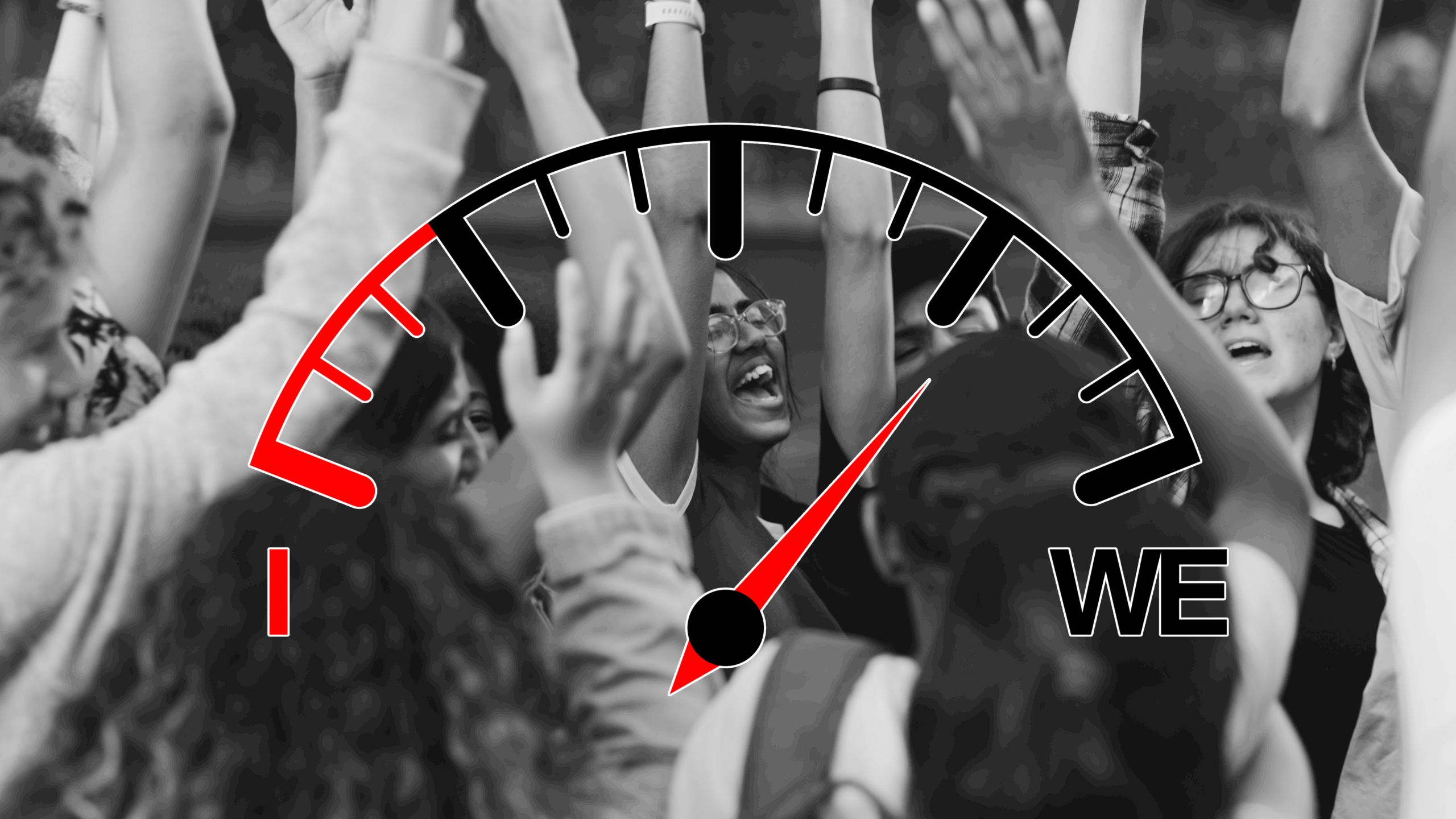
In their book, “The Real World of College,” Harvard Graduate School of Education researchers Wendy Fischman and Howard Gardner discovered something concerning about how today’s students view the world. After interviews with over a thousand students at 10 diverse campuses, they found that students had said the word “I” eleven times as frequently as they said “we.”  The researchers took that to mean that students had a preoccupation with themselves and less of an interest in, well, “us.”  

“As a result of that research, we became very concerned that students were so focused on themselves — their grades, their resumes, their getting that first job — they had little interest or time to think about any campus problems, local challenges, or world-wide issues,” Fischman said.  

While there are many in higher education, indeed in the country, who share that concern, Fischman and Gardner are exploring how college experiences might address it. Their new research initiative is aimed at understanding what it takes to broaden students’ perspective so they might consider how their actions influence those “beyond the self” — from the student down the hall to the wider world.  

All of this work is part of Project Zero, a research center at Harvard dedicated to understanding and nurturing human potentials, such as learning, thinking, ethics, intelligence, and creativity. Characterized as a study of “character education,” this latest research involves rigorous interviews with students and alumni from schools that make character a priority, particularly through efforts that encourage caring for others. These may span strong missions and first-year seminars to service-learning capstones and reflective courses. Fischman and Gardner’s goal is to understand if any are having an impact — both for students over the course of college and for alums beyond college — in moving the needle from “I” to “we.” 

Fischman believes the research fills both a need and a void. “There are a lot of resources and efforts ostensibly focused on character education, but we don’t know what actually works, what endures over time,” she said. “What we are trying to do is to understand what students and alums take away from these messages, initiatives, and missions, so we can begin to understand which are most effective. More importantly, with empirical data, we may be able to show that higher education makes a difference in how individuals think about, act toward, and possibly make a difference in the lives of others.”

Evaluating how well colleges produce good citizens might seems like an “off-trend” effort in a world seemingly obsessed with financial and employment metrics. But given that this easier-to-get hard data has dominated the debate over the value of a college degree, the researchers believe that providing strong evidence of higher education’s more enduring outcomes, including awareness of and empathy for others, is more important than ever.  Without this pursuit, Gardner asks, “What is the point?” 

“If universities and colleges simply have as their goal helping students to get jobs, they will either become vocational institutions or will cede their whole raison d’etre to the private sector, which can train more quickly and less expensively,” Gardner said. “Institutions of higher education should have a broader goal. And especially in the U.S. at the present time, helping others in the community and in the broader society as well as helping oneself would seem highly desirable on all counts.”

Beyond the Self

The Harvard team’s “I” to “we” work is closely aligned with another related finding reported in “The Real World of College.” In their analysis, Fischman and Gardner discerned mental models among students that included a transactional view of college (do what is required to get the degree) and a transformational view of college (question and reflect about one’s own values and beliefs with the possibility and aspiration of being changed, hopefully in constructive ways.)

The researchers identified a measure called HEDCAP (Higher Education Capital), defined as intellectual capacities that students gain as a result of going to college — skills they use to analyze, reflect, connect, and communicate about issues, ideas, and perspectives. For many like Fischman and Gardner, HEDCAP is the ultimate metric on which to gauge the value of a college degree, but currently, it is very difficult to demonstrate. 

“With empirical data, we may be able to show that higher education makes a difference in how individuals think about, act toward, and possibly make a difference in the lives of others.”

Shortly after the release of “The Real World of College,” Fischman, Gardner, and their team embarked on a project called “Beyond the Self,” aimed at understanding how a more transformational college experience, involving engagement with community, might move the “I” to “we” student needle. With 150 students on three different college campuses, they piloted the program aimed at “nudging” students to become more sensitive to campus problems and ethical dilemmas, recognizing that their responses, behaviors, and actions meant something. 

The students were asked to keep portfolios of different dilemmas and problems they had heard about, learned about, read about, or observed and to document their thinking about them through writing, illustrations, or news clippings about them. The researchers talked with the students four times a year about their reflections and were pleased with the results they gathered after the first year.

“We were able to demonstrate that this approach made a difference. We were able to move students from just thinking about themselves to also thinking about others,” Fischman said. 

With evidence of their intervention, Fischman, Gardner, and their team were poised to implement the program at other schools, but a number of factors led them to change course. There were already a myriad of character-based programs and messages in schools throughout the country. Adding another, albeit a promising  one, seemed redundant. Instead, the team focused on what was missing: a larger assessment effort that could show the efficacy, or lack thereof, of these efforts.  

“When we began to ask people how they knew their programs and missions were working, we’d be met with blank stares,” Fischman said. “To our knowledge no one was evaluating or assessing the longer-term impact of efforts that focused on helping student think beyond themselves.” 

With continuous support from the Kern Family Foundation, the team’s new research initiative aims to examine character programs that have a specific outward perspective, not just those that develop individual dispositions such as humility, intellectual curiosity, or honesty, though there is a fair amount of overlap. The researchers are now working with about 30 schools — some with a religious orientation, some with strong public service programs, most with a well-defined mission about doing good in the world.  

The launch-pad question is always the same: For those institutions that make character and ethics a priority, what is the value-add? This exploration leads into three follow-up questions: “Does an institution’s mission, programs, and/or courses on character, ethics, and leadership deepen students’ and alums’ understanding of their role as workers and citizens? Do these initiatives shape students’ perspectives and development over the course of college — and, if so, how? Can we find evidence that these efforts have a lasting impact on students’ and alums’ professional and civic lives?” 

This is not the kind of information one can get from surveys, and it’s certainly more difficult to obtain than economic data like first-year earnings. To meet this challenge, Fischman, Gardner, and their team employ a qualitative method that brings deep, iterative reflection to the analysis, something that has become their signature contribution to the field.   

“We meet with students for 45 minutes to an hour in in-depth, semi-structured qualitative interviews,” said Sophie Blumert, one of the lead researchers on the project. “We never tell students what we are looking for. We ask them a wide range of open-ended questions, so it feels like having a good conversation with another person but someone who isn’t connected to your school. So students feel more free to open up.”  

Fischman said the approach involves listening carefully to what students say and what they don’t say. “When we ask people about their college experience, what they are getting out of it, and what they want from it, if they don’t mention these efforts, those are data.” 

The third-party nature of research means that they are able to go beyond just “self-reporting” to make sense of what the students are telling them. For example, they ask questions about the news as an unobtrusive way to understand students’ and alums’ interest in others beyond themselves. The prompt might be: “Do you stay informed about current issues in the news?” And then: “If so, how? If not, why not?”

The team also asks about mission with open-ended questions such as: “From your perspective, do you think that your school has any particular goals for its students? How do you think your school makes these goals known?”  

Understanding how well students comprehend their school’s mission is a reflection of an existing theory on the negative effects of what Fischman and Gardner coined “mission mishmash.” 

“Schools have so many priorities and so many aspirations for students that mission becomes all over the map,” she said. “And in the wake of that, students are forced to make assumptions about what is most important themselves. When all they hear about is jobs and resume building, then that’s what they focus on.” 

The inclusion of alumni in this work is particularly important. Interviewing graduates who are one year out, five years out, and ten years out about how their experiences in college influenced who they are as people can show whether these programs have any effect on the older adults who once participated in them as students.  

If Fischman knows the answer, she won’t yet reveal it, as the team is in the midst of taking on new schools, continuing to collect information, and analyze the data. She did, however, mention that in analyzing HEDCAP relative to mental models, she’s seen that students with transactional views of their college experience are more likely to have a lower score of HEDCAP, whereas students with a transformational mental model are more likely to have higher HEDCAP.  

Fischman said findings like this give her hope, and perseverance. 

“We can develop higher education capital. We can move students from a transactional mindset to a transformational one. We can get students to go beyond themselves, but we need to show that higher education can do this with empirical data, and, currently, that doesn’t exist.” 

You can reach LearningWell Editor Marjorie Malpiede at mmalpiede@learningwellmag.org with comments, ideas, or tips.

A Simple Step for Schools to Save Lives

Peter McGinnes is a pre-medical neuroscience student at Stanford University whose lived experience with a suicide attempt has shaped his path. Today, he channels that experience into advocating for better access to mental health care, particularly for students.

Every year, thousands of students in mental health crises are left searching for resources. What if, printed on their university ID card, were three digits that could make reaching out for help just that much easier?

People often imagine suicide as dramatic or obvious, but that usually is not the case. Most students struggle silently, showing up to class, keeping up appearances, while feeling increasingly isolated and overwhelmed. That silence is exactly what makes it so hard to notice, and why accessible resources matter.

I know, because I’ve been there. As a teenager, I felt trapped, convinced no one could understand. My grades stayed high, my face appeared calm, but internally, I was breaking down. Mental health resources were hidden behind webpages and brochures that no one gave a second thought. I didn’t know there was a national hotline, much less that calling it could mean someone would listen.

I spiraled until I couldn’t anymore. I attempted to take my life and spent two months in a residential treatment center. For the first time, I was surrounded by people who could relate to my pain. I learned to sit with my thoughts instead of drowning in them. I left stronger, but still fragile.

Months later, I saw a poster in my doctor’s office: “988 – National Suicide and Crisis Lifeline.” The numbers stuck with me like a song lyric you hum without thinking. Later that month, I was sitting in bed at my grandmother’s house, heart racing, chest tight, feeling like silence might swallow me whole. I dialed the three numbers. 

On the other end was a calm voice. Someone who didn’t rush or judge me. We talked through coping strategies, and by the end of the call, I wasn’t magically healed, but the fog had lifted just enough for me to keep going. In that moment, that was all I could ask for.

I saw a poster in my doctor’s office: “988 – National Suicide and Crisis Lifeline.” Later that month, I was sitting in bed at my grandmother’s house, heart racing, chest tight, feeling like silence might swallow me whole. I dialed the three numbers. 

That night taught me the power of a small, timely gesture. In behavioral science, they call it a nudge: a simple change in how choices are presented that makes a better outcome more likely. Think about putting vegetables at eye level in a grocery store instead of banning junk food. The choice remains, but the path to the healthier option becomes clearer. For someone in crisis, seeing three digits on their student ID card could work the same way. The difference between knowing or not knowing about 988 could be the difference between spiraling and picking up the phone.

The 988 National Suicide and Crisis Lifeline is a 24/7/365, publicly-funded resource that has been shown to save lives. The problem is awareness. According to a 2024 poll by the National Alliance on Mental Illness, fewer than one in four Americans are even “somewhat familiar” with 988. That means millions of people could be reaching for help without knowing the resource exists. 

Students are particularly vulnerable. Suicide is the second leading cause of death for people ages 15-24. And college counseling centers are overwhelmed with wait times that stretch for several weeks. In moments of acute crisis, students cannot afford to wait until their next appointment or go searching through Google for resources. They need support in the moment.

That’s why printing 988 on student ID cards matters. Contact with 988 is on the rise. In just a year, calls to the lifeline rose by 48 percent and texts by 1445 percent, a clear sign that, as the visibility and accessibility of the number increase, so does its use. Printing 988 on an ID card, an item students carry everywhere, means they don’t have to remember a poster or navigate a website in a moment of panic. The number is right there.

What makes this initiative so powerful is how little it costs. Universities already reprint IDs regularly. Adding three digits is a minor design tweak. Schools spend thousands on wellness campaigns and programming; yet this simple step might reach more students than all of those efforts combined. 

Some states are already leading the way. New York and Virginia, for example, have passed laws requiring schools to include 988 on student ID cards. That progress is encouraging, but a patchwork approach isn’t enough. Mental health crises don’t stop at state borders, and neither should access to lifesaving numbers.

That’s why national advocacy is critical. As a council member for the Coalition for Student Wellbeing (C4SW), I have seen firsthand how powerful coordinated action can be. C4SW’s mission is simple: bridge the gap between students and decision-makers through advocacy, collaboration, and education. Printing 988 on IDs is exactly the kind of systemic fix we aim to achieve. That is why the coalition has launched a national advocacy campaign to add 988 to student ID cards.

I am still here today, not because I am stronger than anyone else, but because in a moment of silence, help was within reach. 

Universities can make this change now. Legislators can make it standard nationwide. This is not about saving every life; no single policy can do that. It is about ensuring that every student has a fighting chance to reach for help when they need it most.

Points of Entry

Khaleigh Reed stood onstage recently at the University of Colorado Boulder introducing an author she admired: Ibram X. Kendi, the writer of “How to Be an Antiracist.” The event was the keynote of the university’s five-day Martin Luther King Jr. celebration, and the role was an honor for the senior, president of the Black Women’s Alliance. 

It was a moment she could not have imagined just a few years earlier, beginning community college in her hometown of Colorado Springs. At the time, applying to a four-year university felt out of reach with the limited scholarships available to her. But after a few years of deliberate academic and financial planning, Reed found herself not just introducing Kendi onstage but nearing completion of a bachelor’s degree and considering jobs and graduate programs beyond.

“The transition from community college to Boulder wasn’t always easy, but this is the way it worked for me,” said Reed, a senior. “Now I’m in a great place. I’m a very different person than I was then, and I saved a lot of money.”

Reed’s journey from a local community college to a bachelor’s degree represents one of many ways to achieve career credentials. The latest figures for higher education show a small uptick in enrollment and underscore the significance of community college — as well as students’ growing awareness of their diverse options. Overall enrollment figures from fall 2025 show a 1 percent increase, according to the National Student Clearinghouse Research Center. Within that number are micro stories: The community college sector experienced a 3 percent increase, the lion’s share of growth, while public four-year colleges went up 1.4 percent. Private for-profit and nonprofit four-year colleges saw a decline of 2 percent and 1.6 percent, respectively.

The figures reflect more than the current crisis of affordability, said Martha Parham, senior vice president of public relations at the American Association of Community Colleges, though there’s that. They affirm the tactical, versatile ways community college helps students achieve their career goals — whether that involves gaining transfer credits affordably, training to join a manufacturing workforce, or testing one’s chops in the arts.

“The strategic use of community college is just a smart way when we think about the student loan crisis and excessive debt,” she said. “Community colleges are responsive to the needs of their local communities, they’re accredited, they’re affordable, and they’re accessible.” 

What appears to be fueling growing interest now is their role in the conversation about return on investment and students’ strategic appreciation of the ways they can customize offerings for their own goals.

There is a well-documented history of prominent Americans who’ve attended community colleges. Jackie Robinson attended Pasadena Junior College before transferring to the University of California, Los Angeles, where he became the first athlete to letter in four sports. Steve Jobs took classes at De Anza College after leaving Reed College. Arnold Schwarzenegger studied business at Santa Monica College after immigrating to the United States, his accessible entry point into American entrepreneurship. Designer Eileen Fisher, chef Guy Fieri, and performers Queen Latifah, Halle Berry, and Tom Hanks all credit community college with giving them their starts.

About 40 to 45 percent of all undergraduate students in the United States are enrolled in community college, a figure that swelled to its current levels dramatically in the late 20th century and has been fairly constant since. What appears to be fueling growing interest now is their role in the conversation about return on investment and students’ strategic appreciation of the ways they can customize offerings for their own goals: for dual enrollment (high school students taking courses), associate’s degree and certification programs, and affordable credit attainment en route to a bachelor’s degree. 

High Schoolers in Higher Ed

Of the added 3 percent of students who enrolled in community colleges in fall 2025, almost one third of them were 17 or younger, according to the National Student Clearinghouse Research Center — meaning, they were still in high school. This “dual enrollment” status enables students to earn transferable college credits before they graduate. What was once a niche option for advanced students has become a more mainstream pathway, a way to reduce college costs and accelerate time to degree. And in some communities where high schools are under-resourced, community college can be the only way students can take the courses they need to pursue more challenging or specialized paths.

When Emily Harmon attended high school in a rural corner of northeast New York, her small school didn’t offer many science options. A single K-12 building served about 330 students, didn’t offer any Advanced Placement or honors classes, and had limited electives. She wanted to pursue engineering and, throughout her junior and senior years, took classes at two community colleges. After graduation, she attended Cornell with a full scholarship. 

In this way, dual enrollment blurs the boundary between secondary and postsecondary education, reframing college credits as something students can work toward directly while in high school — for a cost, Harmon noted, not much more than the price would have been to take the A.P. exam toward college credit.

“In the world of underfunded rural public education, it was decent setup,” she recalled. “I think it’s always a good thing to show that you took the most advanced classes possible in your situation, and in my case, that’s how I could do it. And if I went to a New York state college or a less stringent private university, I could’ve placed out of a lot with those credits.” Cornell did not accept the credits for her science classes taken in high school. But Harmon notes that one of her classmates who took the same science classes was able to enter the State University of New York at Albany with the credits of a mid-year sophomore. 

Certifications and the Pipeline to E.M.T.s, Apple, and BMW

Two-year degrees and short-term certificate programs — many designed to be completed in months — draw students to community college seeking fast, practical routes into the workforce. These programs are often built in close partnership with regional employers and tailored to labor needs.

This workforce focus is not incidental; it is foundational. Many of the fastest-growing jobs in the U.S. economy now require education beyond high school, but not necessarily a four-year degree. Community colleges occupy that middle ground, translating employer demand into credentials that are short, targeted, and relatively affordable. They train the majority of the nation’s nurses and first responders, as well as workers in fields like advanced manufacturing, cybersecurity, and logistics — roles that keep regional economies running but rarely feature in the public’s image of higher education.

To get a sense of what’s available, prospective students need only call their local community college, which in many cases, has programs aligned with other communities and states, as well.

“There are thousands of different programs across the country that speak to a local workforce with global computing skills, like an Arizona school with an environment to train cyber security experts mimicking real hacking scenarios,” said Parham of the A.A.C.C. “But we also have very local programs that service the local workforce with curricula that align directly with available regional jobs. South Carolina has a program for certified BMW mechanics. Tesla does in its backyard. I’ve seen slot machine repair technicians come out of programs in Nevada. Community colleges are responsive to local business needs.” 

The appeal of these programs extends beyond recent high school graduates. Community colleges enroll a disproportionate number of older students — parents, midcareer workers, and people returning to school after job disruptions — many of whom are balancing education with work and family responsibilities. For them, short-term credentials offer a quicker return on investment and a clearer link between education and employment than traditional degree programs.

Community College as On-ramp to a Bachelor’s Degree

When he was a high-performing high school junior in Massachusetts, Robert carved out a unique way to enrich both his academic path and his passions while saving money. After he graduated high school, he spent one year taking core courses at a local community college while performing gig work in a regional jazz ensemble. A year later, when he was accepted into the University of Massachusetts Amherst Commonwealth Honors College, he was able to focus exclusively on his joint degree in math and computer science. 

“Community College allowed him to knock out all prerequisite courses,” said his mother, who is a youth career coach. She praised the excellent adjuncts at her son’s community college, where teaching was grounded in real-world experience. “Financially, the cost for the year was 10 percent of a residential private or out-of-state public four-year college. And the wider age range of peers really helped younger students see how adults process a day of mixed learning and work, which was a great model for being organized and serious.”

This use of community college as a low-cost on-ramp to a bachelor’s degree is a popular one. Like Khaleigh Reed, students accrue basic credits at a local community college for a year or two, then plan to transfer to a four-year institution — maintaining a minimum G.P.A. to take advantage of transfer-guarantee and articulation agreements that allow students to move seamlessly into public four-year institutions. Programs such as California’s Associate Degree for Transfer and the New England Transfer Guarantee are designed to remove uncertainty from the process while dramatically reducing the cost of a bachelor’s degree. Currently, about 31 states have some form of transfer program to ensure and ease transition to the state’s public universities.

All of which sounds good on paper. But life has a way of being complex, particularly for students whose family, financial, and work circumstances made four-year college difficult in the first place. An estimated 80 percent of community college students begin with the intention to pursue a four-year degree, a transfer process often called the “2+2 pathway.” In actuality, about 30 percent do transfer to a four-year school within six years, and roughly half of those complete the bachelor’s degree, according to a joint report by the Community College Research Center at Teachers College, Columbia University; the Aspen Institute College Excellence Program; and the National Student Clearinghouse Research Center.  

“Priorities change. Life gets lifey. I had all the best intentions of finishing or trying something new, but fate throws you a few curve balls,” said Yvette, a single mother and social services administrator in Rhode Island. “Sometimes your workaround ends up being fine after all. What I do is rewarding.” 

Education is, after all, a course of discovery, and a lower-priced school lowers the stakes if the path ends up not being the right one. Knowing that outcomes can be mixed makes the price point especially important. What is the harm in of venturing to take a basic class in computing, or introduction to acting? 

Tom Hanks is a case in point. He took some classes at Chabot Community College, where he first began to study acting, then transferred to state college for a year before dropping out to pursue acting full-time. “That place made me what I am today,” he wrote in a New York Times opinion piece and love letter to the appetite-whetting possibilities of community college.

The experience, he wrote, was formative not because it pointed immediately to a career, but because it allowed him to experiment without the financial pressure to decide too quickly — an approach he later credited with shaping how he thinks about storytelling and creative work. 

“Classes I took at Chabot have rippled through my professional pond. I produced the HBO mini-series ‘John Adams’ with an outline format I learned from a pipe-smoking historian, James Coovelis, whose lectures were riveting,” he wrote. “High school graduates without the finances for a higher education can postpone taking on big loans and maybe luck into the class that will redefine their life’s work.”

Hanks, for one, is a big fan of free community college, some form of which is available in about 35 states. These programs, many called College Promise or Reconnect, often offer two years of free tuition for eligible in-state students who meet certain conditions, like G.P.A. requirements and income limits.

His hope, he wrote, is that free community college will lower obstacles to veterans, mothers, workers who have been out of the job market, and high school graduates without the finances for a higher education who might luck into the class that will inspire their life’s work.

“Many lives,” he wrote, “will be changed.”
SAMHSA Grant Reversal Fuels Additional Anxiety in the Field   

On Wednesday morning, Scott Delaney woke up to an email from an address he didn’t recognize. In a hasty 6 a.m. message, the writer explained to have been hearing from contacts at community-based organizations running substance use disorder and harm reduction programs that “their grants were all cancelled.” The stranger wondered: Had Delaney, who leads Grant Witness, an online database tracking federal grant terminations, heard the same?

In fact Delaney hadn’t — yet. By 10 a.m., NPR broke the story that, the previous night, the Trump administration had notified hundreds that their funding from the Substance Abuse and Mental Health Services Administration (SAMHSA) had been terminated, apparently due to misalignment with “agency priorities.” Upwards of 2,100 grants were cancelled, worth a total around $2 billion. Delaney’s Signal threads blew up. Emails and web form submissions reporting specific grant terminations and requesting information flowed in. The Grant Witness team spent the day building a new system to track SAMHSA grants. Come evening, Delaney had put his kids to bed and was settling back down at the computer when he learned the Trump administration had reversed its decision: The cancelled grants are now restored.

In that moment, following the news of reinstatement, silence fell upon the Grant Witness Slack chat. Delaney described a sense of relief, perhaps second only to disbelief: a stomach-clench of mixed emotions no doubt reflecting the experience of mental health professionals across the country. They had spent hours mobilizing, scrambling for answers, only to end up with a new set of questions, among them: Is it over?

This latest instance of federal policy whiplash plays into a larger pattern that makes it difficult for some to completely shake off concerns.

Certain developments on this front have been reassuring. That lawmakers from across the political aisle activated to restore the funding indicates vast support for these programs, which widely focus on suicide prevention and substance use treatment, including for young people. The letter SAMHSA sent rescinding the terminations also seems to promise a quick return to regular programming. “Your award will remain active under its original terms and conditions,” a copy of the email obtained by LearningWell states. “Please disregard the prior termination notice and continue program activities as outlined in your award agreement.” 

But this latest instance of federal policy whiplash plays into a larger pattern that makes it difficult for some to completely shake off concerns. This fall, LearningWell covered the ongoing uncertainty that has weighed on mental health researchers over the fate of federally funded projects. Throughout 2025, mass grant freezes and terminations by the National Health Institute, for example, disrupted scientific research across a range of disciplines. In the case of mental health, the particularly unfunny irony is of course that the stress of these cuts has been damaging to the mental health — and careers and livelihoods — of the researchers themselves. 

“It’s really hard to know and trust, frankly, the information and know how it’s going to play out,” said Sara Abelson, the senior director of training and education at The Hope Center for Student Basic Needs at Temple University. At the junction of mental health and higher education, the ground beneath her has felt shaky for a while now. Amid this week’s cuts, Abelson paid special attention to one grant impacted that provides funds to colleges and universities: the Garrett Lee Smith Campus Suicide Prevention program. According to research Abelson has been conducting on federal grants for student basic needs, between 2016 and 2024, G.L.S. touched nearly 250 campuses in 45 states and Puerto Rico. These are the kind of wide-reaching “lifesaving supports” she said have been threatened. Will next time be for real? 

Delaney also isn’t quite ready to unwind. Well-versed in the grant cancellation and restoration process, he worries about how long it will take this round. On Wednesday, some grantees shared with him documents, called Notices of Award, they received reestablishing their funding to zero. These NOAs are legal contracts, with the terms offset, in Delaney’s experience, only when a new one is issued. So, he wonders, are the grantees technically owed their original funds at this point? Will some end up pausing their work out of caution? SAMHSA did not respond immediately to a request for comment as to whether revised NOAs will be sent or the expected timeline.

Others worry, because the potential reasons for the original cancellations remain, future cuts may still be coming. Kathleen Ethier, the former director of the division of adolescent and school health at the Centers for Disease Control, believes U.S. Secretary of Health and Human Services Robert F. Kennedy Jr.’s expressed views on the over-discussion and over-pathologization of youth mental health issues don’t bode well for the future of related initiatives. “I do think that there is an ideological reason why these grants were targeted,” she said, “and I do think we have to remain vigilant about the ways in which this administration is going to support young people’s mental health in schools.” 

The continuous federal funding upheaval may have had at least one positive outcome for mental health advocates, though. Now they know how to respond. While Delaney said the initial rush following this week’s terminations — to organize his team and collect new information and field inquiries all at once — felt akin to Whac-A-Mol, previous experience helped him maintain a sense of control. “I think because we’ve done this before, honestly, I felt ready to tackle this,” he said. “We knew what to do, we knew who to contact, and we were going to be able to put together a database that was going to be really helpful, and we were going to be able to do it really well, really fast.”

“It’s really, really energizing to see the vast numbers of folks pull together, the communities activate and mobilize, and you can draw a lot of strength from that,” Delaney said.

You can reach LearningWell Reporter Mollie Ames at mames@learningwellmag.org with comments, ideas, or tips.

Understanding Mattering with Jennifer Wallace

In this episode of LearningWell Radio, journalist and bestselling author Jennifer Wallace discusses her forthcoming book, “Mattering: The Secret to a Life of Deep Connection and Purpose.” She explains what mattering is; why it’s crucial to wellbeing, particularly among young people; and how we can pursue mattering in our lives to the benefit of ourselves and those around us. 

“Mattering” is available now for pre-order and for purchase on January 27.

Listen now on Spotify or Apple Podcasts.

You can reach LearningWell Reporter Mollie Ames at mames@learningwellmag.org with comments, ideas, or tips.

Student Mental Health Advocates Want 988 Lifeline on all College IDs

Two years ago, a common interest in mental health advocacy landed two young college students from different ends of the country in the same virtual room. They didn’t know it yet, but their meeting would launch not just a friendship but a working partnership with national implications. 

Carson Domey, then a sophomore at the University of Texas at Austin, and Shriya Garg, in her first year at the University of Georgia, started swapping strategies, sharing the trials and errors of their mental health advocacy work. Domey told Garg about his efforts as a teenager in Massachusetts to get schools to print the suicide prevention hotline on the back of student ID cards. Garg, intrigued, ran with the idea and found success with it on her own college campus.

Today, Domey and Garg are the leaders of the Coalition for Student Wellbeing, a nonprofit Domey founded in 2024 to unite college students across the country who want to affect mental health change at their institutions. The coalition’s first major campaign is to promote the inclusion of the now three-digit 988 Suicide and Crisis Lifeline on student IDs at as many colleges and universities as possible. 

Both Domey and Garg see the initiative as a relatively simple way to achieve critical, even life-saving, results. As Garg put it, “it’s just a small change that has a big, big impact.” 

18 to 25-year-olds report to suffer from mental illness more than any other adult demographic; yet they may be lacking a critical awareness of the resources that can help as well as the instinct to seek them out. 

In July 2022, 988 replaced a 10-digit number as the national hotline to call or text for support during a mental health or substance abuse-related crisis. But according to a 2023 study, nearly 57 percent of 1,345 college students surveyed didn’t know the 988 Lifeline existed; 20 percent said if they were in a crisis, they would not contact any services at all. 

A more recent poll found up to 82 percent of 18 to 24 year-olds had at least heard of 988, although only 28 percent of all respondents of any age indicated they were somewhat or very familiar with the service.

Adding 988 to college IDs places the tool literally in the palm of students’ hands. “You can’t get anywhere without a student ID,” Garg said of the card’s constant companionship. “It’s like your identity as a college student. You memorize your number — that’s how you take your tests, that’s how you get into all the buildings, that’s how you get into your dorm, that’s how you get into your dining halls.”

Perhaps even more than a resource, IDs that include 988 deliver a message to students: that their school and administration care about campus wellbeing and want to offer support. “It’s nice to know from the get-go that there’s someone or there’s something there for you,” Garg said. That comfort, she added, is not only for young people but also their parents, eager for assurances their student will be okay on his own.

“It’s nice to know from the get-go that there’s someone or there’s something there for you.”

The coalition’s campaign is not so much a new idea as it is a nudge towards one that has not yet reached its promise. Legislation in 25 states already mandates the inclusion of 988 on student IDs. To reach colleges and universities in the remaining 35, Domey and Garg have mapped a plan of attack, featuring their preferred three-pronged approach: education, advocacy, and collaboration, specifically across the student-administrator divide. 

So far, the coalition has partnered with the youth mental health nonprofit Active Minds to produce a toolkit for students interested in starting the campaign on their own campuses. They then followed up the release of the toolkit with a webinar to share additional information and field questions from students.

2026 is ushering in a new chapter of advocacy as the coalition launches an outreach campaign targeting the student governments at the five most populated colleges and universities in states where 988 is not yet required. The goal is to inspire existing student leaders to take up the initiative on their own campuses.

A particular benefit of the 988 appeal, especially as a starting point for the coalition, is that it requires a fairly low lift from the administrative point of view. Garg even called the effort “low hanging fruit.” 

“We’re not asking the school to come up with a new resource. 988 is free; it’s federally funded; it’s there,” Domey said. “We have a very strong case for why this should cost zero dollars and zero cents for schools.”

Keeping the Connection 

The coalition’s leaders are hopeful that developing a broad network of student changemakers will pave the way for their future projects. “I think there’s going to be so many long-lasting relationships with different campuses across the country that will be created from this initiative,” Domey said. “It really shows the value that we hope to demonstrate in terms of being a resource to student leaders.” 

As Domey and Garg well know, student mental health advocates need each other’s support; their battles are never easily won. Before Garg turned her attention to the 988 work, she was championing the implementation of student mental health screenings in universities. Though the cause itself is still alive, Garg’s progress stalled in the face of certain barriers, like privacy and liability concerns, too big to climb.

Domey is particularly familiar with the fits and starts of bureaucratic policy change, especially in large institutions where the coalition stands to have the deepest impact. “Even though we can have some of the most supportive administrators, faculty, and staff and students behind this,” he said, “things are still sometimes going to take time.” 

One asset in the coalition’s corner is the prominent advisory board of higher education leaders Domey has nurtured and engaged. Members include presidents Mark Gearan of Hobart and William Smith Colleges and Domenico Grasso of the University of Michigan.  

Kent Willis, another advisor, is the senior vice president for enrollment and student engagement at Stephen F. Austin State University. He said he’s been involved in the 988 campaign primarily to offer guidance on navigating diverse university systems and introduce Domey to personal connections on various campuses.

“Yes, all colleges and universities share some similarities, but the governance structure can be very different,” Willis said. He’s been counseling Domey, asking: “How is it that you create that common collaborative conversation for the initiative to get as far as it can in order to make the ultimate impact that we all hope that it would make?”

While ready to leverage his expertise and connection for the cause, Willis also stressed the importance that the messaging continues to come from students themselves. “It adds that other level of validity to the work,” he said, “because the student voice is extremely important and student leaders hold a significant role as a stakeholder group.”

Even if school leadership doesn’t ultimately institute the change to student IDs, Willis said the coalition’s campaign could be successful just by having reached the right ears in the right rooms. “It allows or invites a conversation that maybe hadn’t been happening in the highest level decision-making conversations.”

For Domey, the ultimate driving force of the campaign continues to be the number of students it stands to help. In the master spreadsheet he created — with the hundreds of student government contacts the coalition hopes to reach — he also included a column for the total enrollment at each school. 

“As we hopefully start to see the spreadsheet light up green with schools that have changed,” Domey said, “we can tangibly see how many students we’re impacting.”

You can reach the Coalition for Student Wellbeing at advocacy@c4sw.org for more information about the 988 campaign.

You can reach LearningWell Reporter Mollie Ames at mames@learningwellmag.org with comments, ideas, or tips.

Attention Activism with D. Graham Burnett

D. Graham Burnett, a professor at Princeton University, discusses his new book “Attensity! A Manifesto of the Attention Liberation Movement,” which warns of the exploitation, by the tech industry, of one of the world’s most precious commodities: human attention.

Listen now on Spotify or Apple Podcasts.  

You can reach LearningWell Editor Marjorie Malpiede at mmalpiede@learningwellmag.org with comments, ideas, or tips.

Colors and Connections

Xochitl Casillas’ students were moping again. As the dean of Chicano Latino student affairs at the Claremont Colleges, she had come to expect this phenomenon: When February rolled around, and Valentine’s Day became imminent, those without partners seemed to feel their singledom more keenly than ever. She called them, affectionately, the “lonely hearts club.” She also wanted to help.

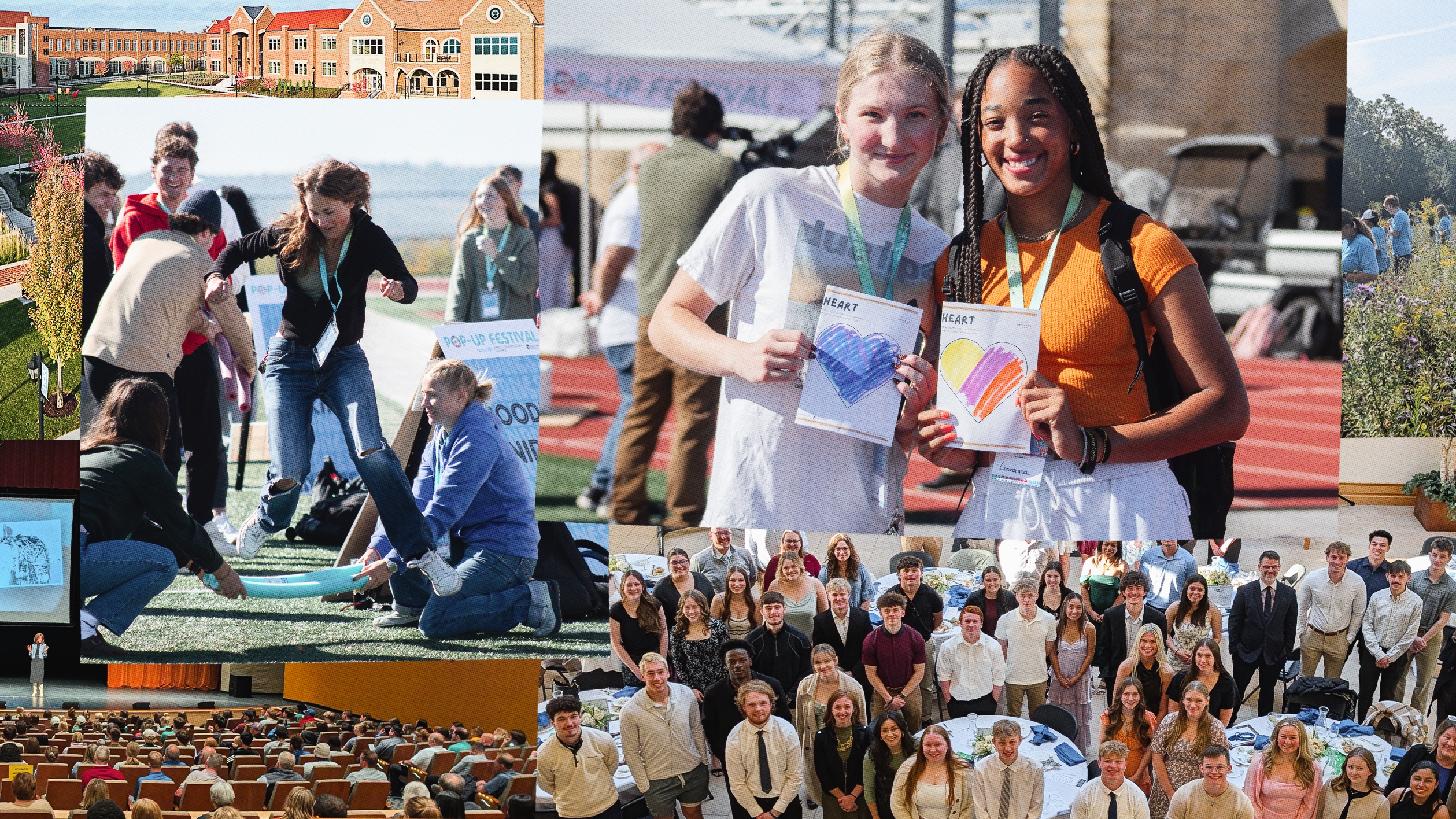
Starting last year, Casillas organized an event on Valentine’s Day-eve for students who didn’t want to be alone to come together. The main activity was an art workshop, called Campus Colors and Connection, which asks students to consider the feelings different colors provoke and then create abstract drawings to represent those feelings or related experiences. By sharing their work and thinking with each other, they could learn more about their peers, as well as themselves.

“This is the time where a lot of people who want partnership may not have it,” Casillas remembered telling the group. “But today, this is an opportunity to connect.”

The workshop Casillas led her students through was developed by The Foundation for Art and Healing, a nonprofit that promotes the arts as an intervention for loneliness. Jeremy Nobel, M.D., Ph.D., a physician and lecturer at Harvard Medical School, started the foundation to explore the impact of the arts on health generally but pivoted towards developing arts-based resources for loneliness about a decade ago. At that point, loneliness was emerging as a predominant mental health concern, and research had begun to suggest what Nobel already suspected: The arts could help.

Today, with loneliness widely considered a national crisis and young adults particularly affected, Nobel continues to believe in art as an antidote. Lately, he and his team have made a special push to bring their work to colleges and universities. Educators, like Casillas, all too familiar with their students’ struggles, have become eager partners. Even those who might question handing crayons to twenty-somethings are considering: Can they afford not to try?

“I think loneliness is where depression was 20 years ago,” Nobel said, “where people didn’t even want to say it out loud.” In other words, Americans may have come around to the idea that depression is a medical condition, rather than a personal defect, but they don’t necessarily treat loneliness with the same open mind. Nobel, whose background is in internal medicine, likes to say loneliness is just a biological signal that a person needs to connect, like feeling thirsty is a signal to drink water. He urges others to adopt this same understanding, or risk the consequences. 

Evidence shows that, physically, loneliness can make people vulnerable to inflammation, higher blood pressure, and a weaker immune system. Mentally, they may act less rationally and more impulsively; they may begin to see the world as threatening. And the lonelier they stay, the more threatening the world seems and the more difficult it becomes to develop connections in the future. Nobel calls this “spiraling.” 

Young people report to be the loneliest of any age group, despite seeming so well-connected online. Even considering the end of the pandemic and return to in-person learning, Gen Z continues to indicate widespread loneliness; in 2024, up to eight in 10 were saying they had been lonely in the last year. As for why, a slew of familiar explanations abounds, like the impact of social media, drawing youth away from “real” human interaction. 

Art and Healing

For Nobel, the connection between loneliness and the arts wasn’t immediately apparent. At first, his interest in the health impacts of creative expression was focused on how it might help treat acute trauma. He had personally sensed the benefits after using poetry to make sense of his feelings about the Sept. 11 attacks. A psychologist overseeing a similar brand of work in a more formal setting confirmed patients were finding relief, specifically across race and class backgrounds. 

“The arts seemed to be helpful across all these wide horizons,” Nobel said, “which meant something was going on that really rewired your brain in some important ways.” 

In 2003, Nobel launched The Foundation for Art and Healing, eager to explore the effects himself. He kept the focus on trauma-affected groups — first those with military backgrounds, then those dealing with sexual, domestic, meteorologic, and other forms of trauma. As the scope expanded, Nobel heard a common refrain: The programs “made them less lonely and more connected.” 

Brain imaging now shows how areas associated with social connection light up while subjects engage with art.

Science was catching up, too. Brain imaging now shows how areas associated with social connection light up while subjects engage with art. Other findings suggest it can reduce hormones associated with stress and increase “feel-good” ones, like dopamine, serotonin, and oxytocin. 

As evidence mounted, the foundation turned its attention fully to art’s possible sway over loneliness. In its current form, the organization aims to raise awareness and reduce stigma around loneliness, as well as disseminate research-based programs that help people connect. Offerings include original films, online exercises, and in-person workshops, all within the organization’s signature initiative, Project UnLonely.

Core to all this work, and meant to maximize its impact, is the foundation’s public health approach. The Foundation for Art and Healing team partners with other businesses and organizations to implement its services, rather than delivering them directly. It also prioritizes simple and low-cost interventions that don’t require prior medical or professional training to implement. “The key is to do things that meet three criteria: effectiveness, scalability, and sustainability,” Nobel said.  

While the foundation also targets the general public, the elderly, and workers in high-stress environments, Gen Z has become a particular focus. Community-based organizations like museums and libraries can be good partners for reaching the 18 to 28-year-old demo. But, Nobel said, “by far the most direct way is through colleges and universities.” 

So far, the foundation has reached more than 50 campuses and 6,000 students. The institutions range from Harvard’s T.H. Chan School of Public Health to large public research universities in the south and small community colleges on the west coast. The activities appeal to a range of campus community members, including those in student affairs, residential life, spiritual life, athletics, and even campus museums. 

At the Claremont Colleges, students used the Campus Colors and Connection exercise to explore their common cultural identity. When Casillas asked them to represent, through different colors and shapes, what brings them joy, for example, she said her Latino students depicted cooking with a grandparent in the Dominican Republic, swinging in a hammock in Puerto Rico, and speaking Spanish. She watched them become eager to tell their stories and encourage new friends to do the same. 

“People are like, ‘Oh, it feels like we’re back in elementary school. We’re just coloring,’” Casillas said. “But I think they didn’t realize how vulnerable they were going to get.” After the 45-minute Valentine’s Day session ended, students lingered to continue the conversation.

The simplicity, perhaps child-like nature, of the exercise might push some away. But Nobel said the playfulness is the point. It’s also part of the draw as a less intimidating, or clinical, form of self-care. “We never frame it as therapy,” he said of the workshops. “We often don’t even use the word loneliness in our promotion of it.” Instead, the directive is simple: “Create and connect.”

Expanding Connections

The University of New England was an early adopter of Campus Colors and Connection, starting about four years ago. Coming out of the pandemic, Dean of Students Jennifer DeBurro said she and her team decided to take a “10,000-foot view” of the student wellbeing issue: “We were asking ourselves questions about on-ramps: What are some of the additional ways that we could provide opportunities for students to connect with peers in a low-risk, easy way?” That’s when they were introduced to Nobel’s work. 

First a one-off program, Campus Colors and Connection is now part of U.N.E.’s orientation program. “They can just talk — talk about what’s making them nervous about going off to school, talk about what’s exciting, reflect on a memory,” DeBurro said of incoming students.

When it comes to evaluating the workshop, the primary mechanism is the survey students fill out after participating. Questions prompt them to reflect generally on the experience, and so far, the results are positive. The vast majority have reported they would recommend the workshop to others (96 percent), as well as feeling more in touch with their emotions (84 percent) and more connected to their peers (84 percent). 79 percent of those who indicated feeling lonely beforehand said they felt less lonely afterwards. 

Yet Nobel recognizes the survey work isn’t as robust as it could be. He hopes to expand assessment to consider the potential impact on student success, including academic performance and retention. “Does being more connected increase learning? All the evidence says it should,” he said. 

As the foundation aims to strengthen assessment efforts, Claremont and U.N.E. continue to extend their partnerships with the foundation. Casillas has now led Campus Colors and Connection not only for her Latino students broadly but with a group of student mentors, who learned to run a version of the session themselves. She also brought the workshop to fellow staff. 

U.N.E. recently began offering a tailored version of the Campus Colors and Connection for first-gen students. “We continue to talk about it in as many different corners of the university as we can,” DeBurro said, “so that any opportunity we have to bring it to a new population, we do.”

You can reach LearningWell Reporter Mollie Ames at mames@learningwellmag.org with comments, ideas, or tips.