Questions and Answers with Dr. Zainab Okolo

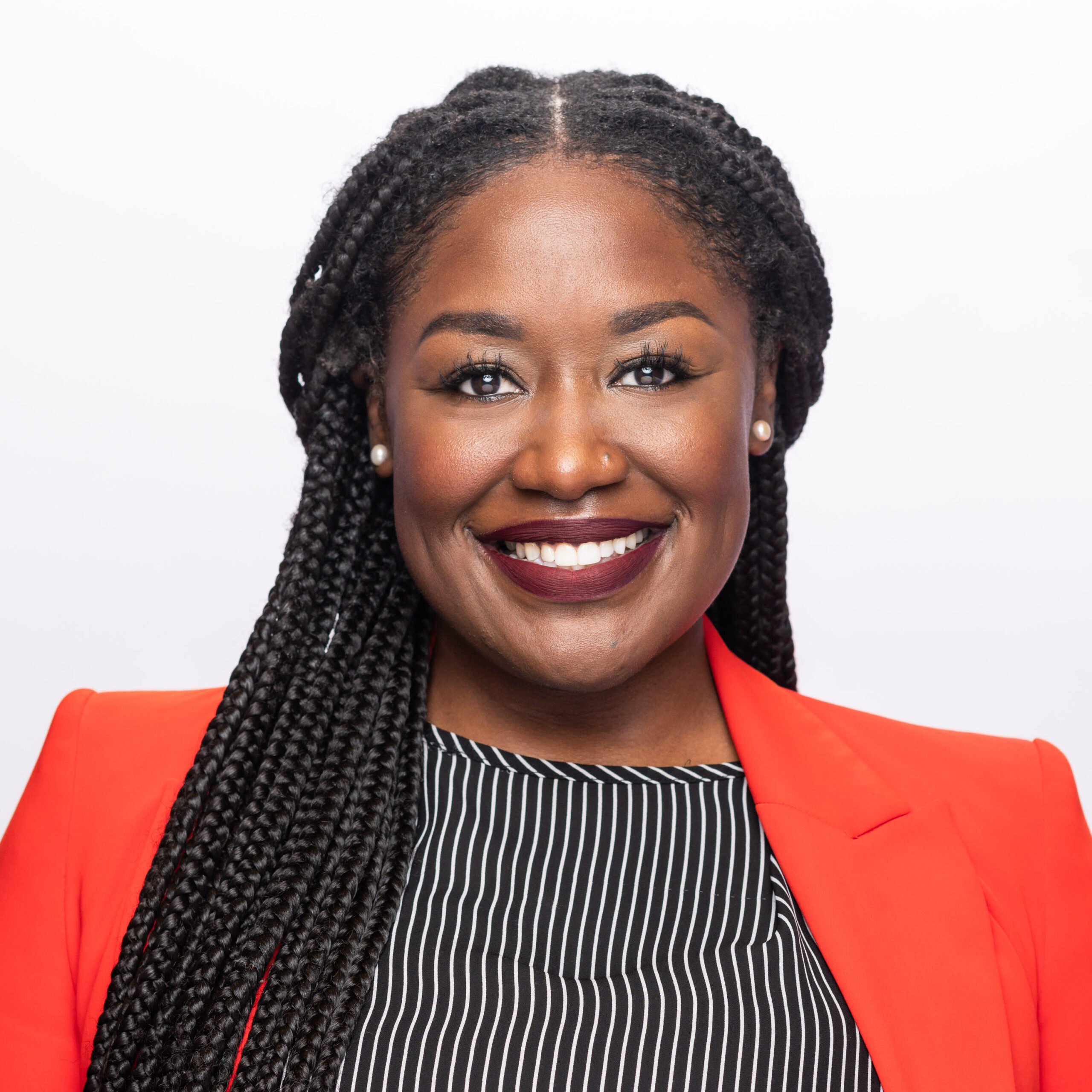
In May of this year, Dr. Zainab Okolo became Senior Vice President of Policy, Advocacy, and Government Relations at the Jed Foundation, the nation’s leading nonprofit that protects emotional health and prevents suicide for teens and young adults.  It was not just a new job for Okolo, who had previously led the Lumina Foundation’s work in student mental health, it was an inaugural position for the Jed Foundation which has moved from being a memorial initiative for a beloved son to the leading suicide prevention program in college mental health, to a national and international advocate for wellbeing strategies that support young people.  The arrival of Okolo signals both the rising importance of external policies in youth mental health and college mental health, and the organization’s own expansion into public affairs. 

When Okolo, Ed.D., LCMFT, who is a licensed therapist, led Lumina’s student mental health portfolio as a strategy officer,  she designed and established the foundation’s mental health partnerships and investments while advising key stakeholders, including the U.S. Department of Education (ED), the U.S. Department of Health and Human Services (HHS), the State Higher Education Executive Officers Association (SHEEO), the American Council on Education (ACE), and the Steve Fund.

She will now lead JED’s growing Advocacy and Government Relations function, leveraging key relationships with external networks to strengthen the organization’s national and state-level presence in advocating for new federal, state, and local support for a comprehensive approach to mental health and suicide prevention. Okolo led the Jed Foundation’s first policy national summit in October of this year which resulted in the foundation’s new Youth Mental Health Policy Strategies.

LW: This was a big move both for you and JED. How do you feel several months into the job? 

ZO: Oh, it feels full circle. I feel very fortunate as a marriage and family therapist for over a decade and having worked in higher education and those finding those two passions intersecting  – — I feel very lucky. I’ve only been with Jed now for six months and we’ve made some incredible strides, but as I tell my team, I’m building on 20 plus years of just fantastic work that JED has done with institutions, with high schools, with other private sector entities so I’m building on a very solid foundation and I feel very fortunate to have this ground to build on. I also feel really energized that there’s a constant sense of urgency when it comes to mental health work and advocacy; when you’re watching the data, when you’re watching the news, when you’re specifically focused on youth, there’s always a sense of urgency. There’s always a drive to create the solve sooner rather than later. Because what our suicide trends and rates are telling us is that there is an urgent need.  And for me, for as long as my career and time will allow, my goal is to create impact and change to bring suicide to zero. And I’m glad that I work at an organization that also has that as its North Star mission.

LW: The new position signals an expansion of JED’s work.  Do you feel this was a natural evolution? 

ZO: I do think that the pivot towards having an inaugural position focused specifically on policy, advocacy and government relations was really just a nod to the time that Jed found itself in within the national landscape. As you know, Jed Foundation has been a mental health advocacy organization that has been around for two decades now, focused on youth mental health and suicide prevention. And a lot of the work that Jed did was specifically targeted at ensuring colleges and universities had the appropriate programming and supports to serve youth mental health, resources and needs.

Jed has since expanded into working within high schools, and it’s done a lot of work to inform the ways mental health services are provided even in elementary schools, so across the K-20 pipeline. But Jed did all of this under the then existing stigma around mental health. So again, think 20 years ago when this started, when the Satow family unfortunately lost their son Jed to suicide, this was at the height of us turning a blind eye to what we already knew were challenges around youth mental health and the conversations that we just weren’t willing to have as a nation. Now, fast-forward to the pandemic exacerbating a lot of those preexisting needs and demanding that we have systemic approaches in which we are strategically looking at ways to scale programs like Jed Campus. It only made sense for Jed to bring someone in that could help them think through some of that planning and engage state and federal level actors and make considerations for what it looks like to appropriately inform policy. Before I came on, we had what as “a coalition of the willing,” that took on some of this work, but having a separate portfolio for it I think was just about timing and again, watching what the nation really needed.

“I think we take for granted the job that stigma did on our college campuses on the topics of mental health and suicide prevention.”

LW: In what ways will the organization work on policy and with what stakeholders?

ZO: I might start with funding. From my work at Lumina, and now at Jed, the question is where does investment in mental health go? And where will that investment make impact in the larger work in terms of increasing access to mental health resources or helping to solve for the rising rates of suicide amongst younger and younger citizens? One of the things that we have to make consideration for is how we sustain programming nationally. We’ve had conversations with Department of Education, we’ve had conversations with the Department of Health and Human Services. Beyond that, we’ve also thought about research. What are the indicators that we’re looking for to determine success within mental health programming and implementation? We’ve had conversations with SAMHSA, we’ve had conversations with the CDC, we’ve also had conversations with state level folks so when I think about policy, I think not only about federal policy and the national landscape, I think about our, our many little countries, AKA our states.

I say that because there is huge variation in how states invest in mental health and what they choose to invest in. Some states have done a lot of work around increasing programmatic functions and presence like Jed on college campuses and within institutions, while others have leaned heavily into bringing in teletherapy supports to their campuses where it made sense, like in New Jersey, for example.

It feels like a moment of opportunity where it is all hands on deck and everyone has a role to play in making sure that the way we look at mental health is from a collective bargaining approach and that it is seamless in its implementation.

LW: Regarding COVID funds, is there a sense that there’s an appetite for making sure that whatever we invested in mental health, particularly on big state institution campuses, will continue in some fashion? Is this a concern? 

ZO: I think that that’s an opportunity. I think there’s an opportunity for there to be additional investments in mental health, particularly within states. And not just limited to state institutions, but also private institutions, community colleges especially, and even minority serving institutions. I do think though that the funding that’s coming from governors who have had a chance to call out separate budgets for mental health, that’s what we’re really watching closely and seeing how those budgets within states have made impact and driven forward some of the mental health initiatives by state. Because of those investments, JED has collaborated with the State Higher Education Executive Officers Association (SHEEO) to create a mental health learning community whereby states figure out how to go about investing that funding, how to make impact within their state, how to read and then interpret the data around the needs of youth within their state and what partnerships were appropriate to make now that they had some additional funding to support that work that they’re doing. That partnership in particular that we have with SHEEO will help us inform future investments. So my biggest priority is making sure that when we do have funding, that we know what to do with it and we know what’s working within the nation. Otherwise, we run the threat of not being able to appropriately defend what we’re investing in and how impactful those dollars really can be.

LW: Drawing on all of the work you’ve done in mental health, what would you say are the most important things we need to work on?

ZO: I think first about two things. One is messaging and the other is representation. Messaging first. I think we take for granted the job that stigma did on our college campuses on the topics of mental health and suicide prevention. It stopped a lot of work that could have been going on before we had a real crisis on our hands. And so what I never want to ever see happen again to us as a nation is where we get silent about our very basic human needs, which include mental health. It was almost like we were daring to say to each other at one point that the pandemic happened, get over it, let’s move forward. And we know what the data told us about the enrollment crisis, and we knew about what youth were saying about not wanting to return to business as usual. The CDC’s release of data that had suicide rates as low as 10 years old and the second leading cause of death for 10 year olds in 2022 – what that taught us was that we can’t afford to not have these conversations consistently and invariably. We can’t afford to talk student success or student persistence or completion without first considering mental health and the necessary supports. 

I think that then we can start to talk about sustainability and implementation. If I had a magic wand, both financial and otherwise, I would double or triple the current practitioner workforce right now. There is such a shortage when it comes to ensuring that there are enough practitioners to meet the demand that we’re now finally tuning our ears to hear. And then within that demand, ensuring that there’s appropriate representation, not only representation in terms of diversity, equitable representation of diverse, racially diverse practitioners on all college campuses, but also diversity in modality. A psychiatrist versus a therapist versus a social worker have very different functions in the same way that if you broke your leg, you wouldn’t just go to CVS. You would want a specialist to help you with perhaps your very unique challenge. 

I think the other piece that we can expand on as well is how we go about training non-mental health practitioners to recognize when students or youth need help, making training the trainer models more consistent. And we have a few frameworks that exist in the ether, but making sure that they’re consistently available across college campuses is critical because what we’re hearing from faculty and staff alike is that not only do they want to be able to help students, they want to be able to serve them appropriately, but they need the appropriate training and they need to know where to go themselves when they need help. So those are some of the issues we need to invest time and money in. 

LW: Fundamental to JED’s work has been equity and access topped by the Equity in Mental Health Framework.  Where does that work stand now? 

ZO: Back in 2000 when JED was established, one of the first priorities was to ensure that the work that we were doing was equitable and accessible to all students. In 2017, building upon our existing comprehensive approach, we developed the equity and mental health framework in partnership with the Steve Fund, which provides recommendations and implementation strategies to colleges and universities to better support the mental health of students of color. And the way this shows up in the work that we do every day with college campuses is we do pre and post assessments. And within the pre-assessment work that we do, we always ask schools specific things, such as what representation looks like on their campus, how they feel best poised to serve students of color and students with intersecting identities including LGTQIA students, for example, what does it look like in terms of leadership and advocacy?  Is there diversity there and how does that play into the mental health of students of color? 

We’ve made this a priority because of what we know from the data. Students of color are disproportionately impacted when it comes to mental health because of some of the systemic barriers that they already face outside of the college campus such asbeing more likely to be first generation students and not having a plethora of firsthand role modeling on their college campuses unless they choose to go to an HBCU or another MSI. And so we wanted to make sure that when we thought about the work that we’re doing, that this was baked into all of it and if we remain that thoughtful, then all students benefit from those strategies. And it has definitely remained a key part and a key focus of our work. The other thing that I’ll mention is more recently we’ve had to double down on that commitment given some of the challenges that we’ve seen play out over the last year or so, the SCOTUS decision and the striking down of affirmative action, looking at certain Senate bills within Texas and Florida, for example, that struck down DEI initiatives, some of which directly impact the programs and the folks that we work with on campuses. So we are waving a flag that the journey towards equity and equality across a couple of different facets is not over. And when it comes to mental health, we have to be bringing that to the forefront and calling it out if we are serious about serving all students with equity and fidelity.
Mindful Unrest

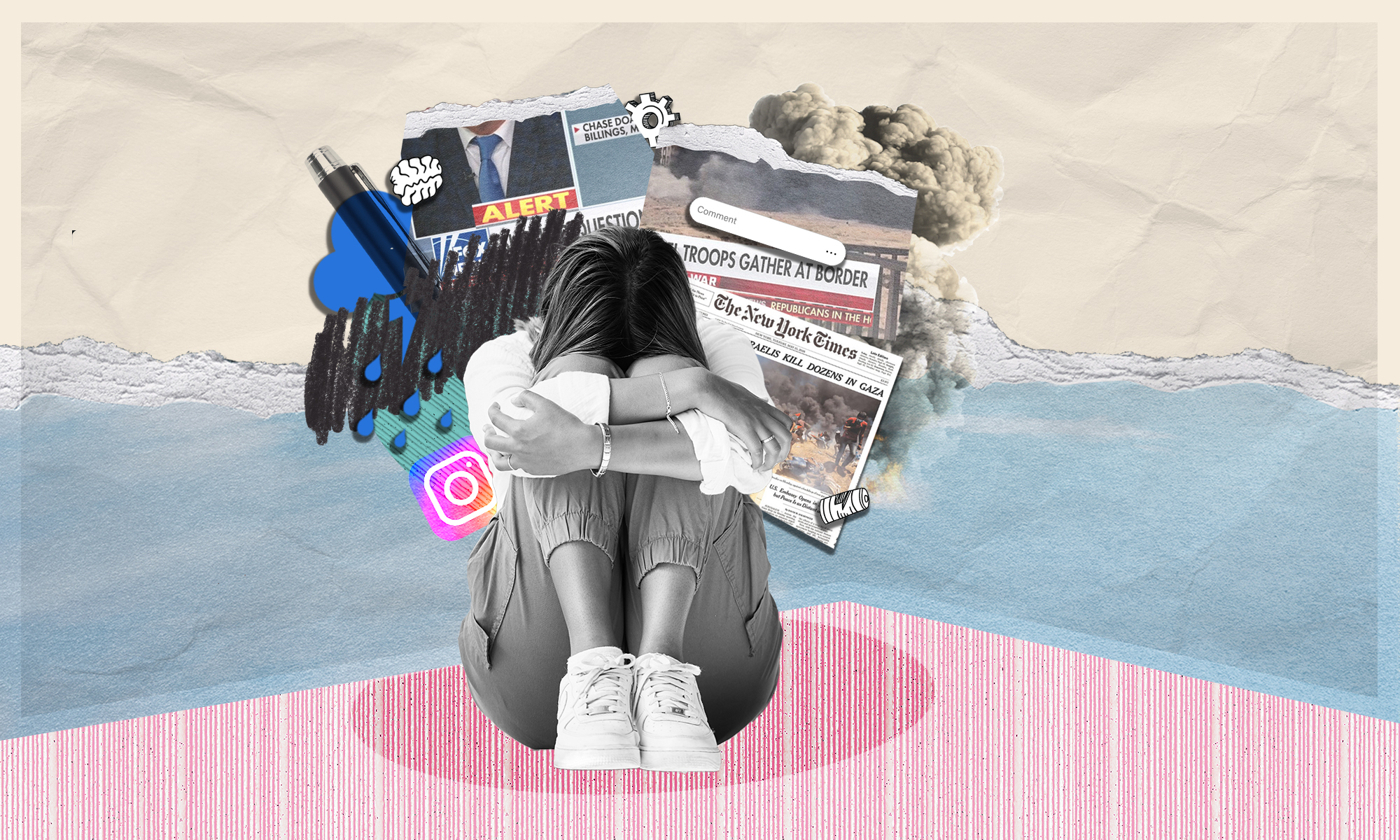
When your house is burning, it feels like the whole world is on fire. That is how one student described her experience since October 7, when the heated protests and divisive debates over the war in Gaza erupted on her campus and on campuses across the country. For many students like her, the conflict is personal, it is political, and it is tangled up in all the things she is already struggling with: finding her identity, navigating friendships, and striving to retain intellectual curiosity while also feeling really angry.

For higher education, the Israel-Hamas war has rocked its own foundation, exposing not just elephants in the room but real wooly mammoths like the definition of free speech, the role of the presidential pulpit in geopolitical events, and the degree to which institutions tolerate or enable extreme political views. All of these issues relate to the overall wellbeing of students and of campus communities, issues that have emerged as important priorities for colleges and universities given the rates of anxiety and depression students, and faculty and staff, have been reporting.  

It would seem there would be no better time for campuses to be working on those elements that we know help humans flourish, such as empathy, civility, community and self-awareness. But very little of that is cutting through the vitriol, blame, and anger that are unavoidably replayed on non-silenced screens.  How can higher education use this moment in time, and others before it, to understand some of what is happening and to begin to heal through the power of its own resources and assets? LearningWell asked a number of people what they think.  Here is our first guest interview.

Gene Beresin, MD, MAis executive director of The Clay Center for Young Healthy Minds at Massachusetts General Hospital (MGH), a full professor of psychiatry at Harvard Medical School (HMS), and senior educator in child and adolescent psychiatry at MGH.

LW: What is your reaction to the way the conflict in the Middle East is playing out on college campuses?  

GB: Colleges are places that can raise issues that are highly controversial, that involve conflict, that generate high levels of emotion and that require civil conversations.  We want college campuses to be places where students feel safe enough to speak their minds, to disagree in ways that are interesting, that engage them. The problem in this particular instance with the war between Israel and Hamas is that I don’t think that there has been sufficient attention given to how to deal with conflict.

We try to teach our younger kids social emotional learning, principles of wellbeing, controlling our own emotions such as rage, shame, humiliation, passion, and in ways which are helpful. But what’s happened here in my view is that lines are being drawn in the sand. The students have been taking sides. And even though the leadership of many colleges have said, “we want this to be a safe place, and that there’s no room for terrorism or hatred or brutal behavior,” I have not heard much at all about principles of conflict resolution. It seems to me that students on both sides of the issue need to understand that there’s tremendous power to resolving conflict and dealing with conflict. And there are principles, for example, of noting the appreciation of differences, of acceptance, of tolerance, and the ability to love and respect each other despite our disagreements. But that does not seem to be happening.  I’ve heard a lot about free speech. I’ve heard a lot about the right to express your own opinions. I’ve heard a lot of platitudes, but I have not heard anything about principles.

LW:  How would these principles apply on college campuses today where disagreement appears to be the only thing people are focused on? 

GB:  We need to hold open conversations and active listening to both points of view. If we take a pedantic view of this and we look at history, both the Palestinians and the Jewish people in that region, both groups of people have been conquered, oppressed, displaced and brutalized by outside influences. If you look at it, there’s a lot in common between the Palestinian people and the Jewish people and we should take a step back and appreciate both points of view. 

“I’ve heard a lot about free speech. I’ve heard a lot about the right to express your own opinions. I’ve heard a lot of platitudes, but I have not heard anything about principles.”

Principle two is avoid being judgmental. When one is a subject of criticism or rage or a personal affront from a mental health standpoint, there’s the risk of feeling blamed, devalued, shamed, humiliated.  When on the defensive, the impulse is to counterattack. It basically fires up the amygdala and the fight or flight response, and it doesn’t generate oxytocin, which is the kind of neurochemical that brings us together.

Another principle is having frequent conversations that are under control. Many of the protests that I’ve seen have not been well controlled. They’ve been people screaming at each other. We’re not going to get anywhere by screaming at each other. We’re not going to resolve conflict. Another principle is learning to apologize. If I’ve offended you, if you’ve offended me, there’s tremendous power in apologizing for lashing out, for attacking another point of view. And what do you have to lose? Nothing really. You have a lot to gain by seeing what’s in common and by making one’s own reparations. I think that’s another principle of conflict resolution that I have not seen much of at all. 

Violence should, in every case, not be tolerated. Not tolerated in the Middle East, not tolerated in the United States, not tolerated on college campuses. And violence, I mean in word as well as in deed. Name-calling, attacking personally, ruthless behavior should be unacceptable. 

I think another principle is that the solution to this problem is not going to be easy, and it’s not one side giving into another or one side being right or one side being wrong.  It’s complicated, it’s nuanced. It requires accountability. You don’t resolve a conflict like this by a win or a loss. You resolve it in a way that leaves some things unresolved by demonstration of empathy, putting yourself in the other person’s shoes. I have not heard much at all from anyone including administrations or studentprotesters, about empathically understanding what the other side has endured. I can’t stress it enough. If the students can’t empathize with the impact of these horrifying events, if they can’t see that the trauma that’s happened to virtually everyone is extraordinarily traumatic, extraordinarily sad, extraordinarily dehumanizing, then we’re not going to get anywhere.

We want our kids from toddlerhood through young adulthood and beyond to understand principles of having civil conversations. And for the most part, these have not been civilized. So is there demonstration of respect? When you’re all fired up, you don’t demonstrate respect. And when you don’t demonstrate respect, you foster trauma, you foster distrust, dishonesty in some sense, and saying things that are hurtful and traumatic to other people. We should be able to respect differences. We try to teach our young children to take turns, to use the golden rule, to do unto others as you would have them do unto you. I don’t see much of that. I’m getting back to basics here. Basics that are psychological principles and principles of conversation and understanding that we want to teach kids from toddlerhood through adulthood.

Another principle of civil conversations is telling stories. What we’ve learned from all of our major scriptures, whether it’s the Quran or the Torah or the Bible, is that every scripture in the world lives through narratives and I think people can really begin to listen to each other through stories and through narratives. One of the reasons why all the scriptures have been built upon narratives is because narratives generate not only emotions, but questions about trajectories, about lives, about family, about loss, about trauma.

LW: What do you think about this from a mental health perspective?

GB: The bottom line is that this insoluble situation, this inflammatory situation is not only traumatizing, but breeds depression, anxiety, stress, and in some cases, hopelessness, loneliness, and suicidal thinking. I mean, it has all the elements of inflaming the mental health crisis that our college students are already undergoing. 

Stages of rage and trauma and high levels of emotion are not good for physical, emotional, or mental health. They fire up the immune system. They affect our sleep. They change our hormonal systems. They suppress the releases of oxytocin that makes us feel together and connected. So they have physiological effects that are dangerous. They have mental health effects that are dangerous, and they foster social disconnection, which I think is very detrimental for students on college campuses. So neurophysiologically, emotionally, and behaviorally and psychologically, these kinds of vitriolic demonstrations are not conducive to mental health. One can still express one’s point of view in a powerful way and not take a beating physically, mentally, emotionally, behaviorally.

Look, anger is a normal response. Anger prepares us for fight or flight. It’s a normal emotion. But when anger is extreme, when anger becomes laced with rage and hate, it is uncontrollable, and it clouds our cognition. It clouds our thinking. It clouds our ability to engage with others, and it puts us in an attack mode. So I think one of the other things that I would welcome is for not just students, but everyone involved in this very difficult and traumatic situation, is to use principles of anger management. If we can cool our jets, we’re in a much better place to actually talkwith each other and have civil conversations and have some kind of conflict resolution. And what this means is knowing when you’re angry and knowing when you’re coming from a place of anger rather than a more neutral emotional state.

Identifying your triggers for anger is really important. We all know road rage – the car that cuts us off, we want to just kind of slam into it. But we don’t do it. It’s okay to have impulses and angry impulses, but it’s not okay to act out on it. And one has toidentify one’s triggers. A lot of times the triggers here are identification with one’s cultural heritage, but that doesn’t necessarily mean attacking the other person. And a third principle of anger management is controlling your thoughts. Yes, we’re feeling angry. Yes, we’re feeling hateful. Yes, we’re feeling that we’ve got to do something, but it’s like one of my favorite supervisors said to me once, “A lot of times when you’re doing therapy, don’t just do something, sit there.” And I don’t see people just sitting there.  I don’t see people sitting there and taking things in and processing it without impulsively blurting things out. 

LW: How do you think colleges and universities should react? 

GB: I think the role of the leadership should be to provide and empower different segments on campus to actually promote these principles, so we need faculty and student training in conflict resolution,  civil conversations, and anger management. Secondly, this is not a “one-off.”  As a child, you learn things in places of worship, in the boys and girls club, in the community, in the home, on the playground.  We need stakeholders on campus to communicate these principles in reinforcing ways.  The dorm leaders, the heads of our student mental health service, the dean of wellbeing, our clubs, our athletic teams, our coaches to all engage in some way in modeling civilized behavior because what we are seeing now is not civilized. 

It’s not as though we need to have an assembly or a meeting at the student center and have a debate and then we’re done. No, it’s not one and done. These are ongoing conversations that need to occur with dignity and with respect and with thoughtfulness and kindness and compassion and empathy in multiple different forums so that they can reinforce each other.  The leadership of colleges can say, “Look, there are no simple solutions.” Not many presidents have said this. “There are no simple solutions. But let’s try to turn things around.”

Let’s not let rage and hate lead to what we’re seeing in the Middle East with tragedy and loss of life. Let’s try to make our campus a model of civility. Let’s have multiple places in which we can communicate with each other respectfully in a calm fashion, present opposing points of view, agree to disagree, bring in history, bring in culture, bring in personal narratives, bring in spiritual narratives.  And let’s do it differently. Do we want to replicate this? Do we want to perpetuate a stalemate, or do we want to do something that actually brings us to a higher level of empathy and understanding?

Every Student, Everywhere

Loren Muwonge has lived in Milwaukee, Wisconsin all her life. A senior in high school, Loren’s passion for the future of her city is as striking as her résumé. In addition to being a star student in the top percentile of her graduating class, Loren is the district 2 representative for the Milwaukee County Youth Commission, where she promotes civic engagement and provides a student perspective to policymakers charged with advancing educational and racial equity among Milwaukee youth. She is also a member of the Student Enrichment Program for Underrepresented Professions (StEP-UP) at the Medical College of Wisconsin; a Leadership Enterprise for a Diverse America (LEDA) scholar at Princeton; and an active volunteer for her church’s community outreach programs. In October, she spoke at a national policy summit on young adult mental health sponsored by the Jed Foundation.  

Loren Muwonge

When Loren speaks about what compelled her to advocate for education reform, equity and inclusion, and mental wellbeing on the national stage, she emphasizes the local roots of her activism. A 2018 study by the Brookings Institution’s Metropolitan Policy Program found that Milwaukee had the highest “black-white segregation” of any American metropolitan area.  This modern reality is largely due to decades of redlining, the discriminatory practice of denying loans and services to certain neighborhoods classified as “hazardous” to investment—the effects of which Loren has personally witnessed. As a Youth Commissioner, her initiatives include addressing and repairing the harm wrought by redlining in Milwaukee, as well as education reform, equitable resource distribution, and mental and behavioral healthcare access for low-income youth and students of color. 

During her Youth Commission’s swearing-in ceremony, Milwaukee County Executive David Crowley, who himself served on the county’s first-ever youth commission, remarked of the initiative, “Too often young voices go unheard; their problems, they go unaddressed, and a vicious cycle of disengagement and neglect perpetuates the problems that we see each day.” 

In hearing her story, it is clear that Loren’s voice, and those she amplifies, will not go unheard. 

LearningWell had the privilege to interview Loren Muwonge, and the following is a summary of our conversation. 

LearningWell: What would you like LearningWell readers to know about your background and how you began your advocacy journey?

Muwonge: I come from a redlined area in Wisconsin, one of the most segregated places in the nation. So, it’s really obvious and sometimes discouraging to see how that segregation manifests in my community, where some neighborhoods look better than others, and the areas that look worse and have fewer opportunities are the ones that are predominantly populated by minorities and people of color. That has led a lot of my advocacy work—seeing how redlining affects quality of life for residents, such as low-income communities having worse air quality than their suburban counterparts.

LearningWell: How did your advocacy work begin to include student mental health? 

Muwonge: I’m very inspired by Fred Hampton [of the Black Panther Party]. I was impressed and inspired by Hampton’s efforts to improve the success of his community by creating a free breakfast program for school children. I looked at my community, my peers, and their needs and I began to identify that my community can’t truly thrive without accounting for the mental health of the students. And for me, it really just became a matter of, okay, right now there is a need to improve mental health, especially in my district, in relation to the pandemic and the rising crime that we’re seeing with school shootings. I realized the best way that I could help was accounting for the mental health of my community by directly listening to the concerns of my peers.

LearningWell: Why is it important for education policymakers, administrators, and faculty to hear student perspectives on mental health and wellbeing?

“While everyone who pursues higher education has worked hard to be there, not everybody has been adequately supported to thrive in that place.”

Muwonge: We are the people directly affected by education policy, and while professionals may be able to look at data to assess trends—they might even spend time in the classroom, proctoring, observing—they can’t experience it firsthand. The data doesn’t replace the firsthand experience of being a student at this moment in time. We live in an evolving nation, with new factors affecting education, such as A.I., the rise in school shootings, and the student experience during the pandemic. It would be to their benefit if policymakers would talk to those directly affected, since we can provide feedback, voice our concerns, and give a human perspective that the data can’t. 

LearningWell: Based on your K-12 experience, do you believe that student wellbeing is a priority in American education?

Muwonge: I do not believe that student wellbeing is a priority in American public schools. There are many aspects to that issue, including the hours that teachers are working. I believe that teachers in America are undervalued, and they’re not given adequate support, whether it be for school supplies, resources, or fair pay. And I think that truly seeps into the education that students receive, because teachers don’t have enough time to account for factors such as wellbeing, especially since there are many parameters set in place that make it difficult for teachers to help and intervene. And then there are limits on their time; they have so much curricular content to get through, and they’re not being adequately supported themselves. 

LearningWell: Much of LearningWell’s audience is involved in higher education. What would you like them to know about the student experience? As you prepare to head to college, what do you hope to see on campus in terms of mental health, equity and inclusion, or student wellbeing? 

Muwonge: I’d like them to account for the fact that while everyone who pursues higher education has worked hard to be there, not everybody has been adequately supported to thrive in that place. And it’s important to consider the fact that many people may not have the necessary K-12 education that they need to succeed in higher education. They may not have the financial support that they need to thrive, whether they struggle with tuition costs or just being able to afford groceries, transportation, or visiting family back home if they attend college out of state. Again, everybody’s worked hard to be there, but not everybody’s being adequately supported to thrive. What I hope to see when I get to college is financial freedom, financial security for myself and my peers. I’d like to see universities place an emphasis on requiring all students to pursue an internship or some sort of professional experience within their college education, because analyzing the statistics of our nation right now, a college education in most cases isn’t enough. Many colleges do have access to different internship opportunities, but not all students utilize them or even know about those programs. If colleges were encouraging or even requiring students to gain exposure in their fields, I believe it would help set their students up for success. 

LearningWell: You’re now a high school senior in the midst of the college application process. Do you anticipate that institutions’ mental health programs and resources will have any bearing on your college decision? 

Muwonge: A lack of mental health services would be extremely deterring. I’ve done some research into wellbeing resources, and it has weeded out certain colleges. If I find that they aren’t able to adequately support and account for my and my peers’ mental health, especially when you’re considering out-of-state colleges where you won’t have in-state insurance, or you won’t have family close by, it affects the decision. If you are low-income, it may not be as easy to afford mental health services, and it’s important for me to go to a university that will accommodate that. If I’m investing into this university for my education, I’d like to see that what I invest is going to serve me and my peers. 

LearningWell: Do you plan on continuing your advocacy work when you go to college? 

Muwonge: I’m intentional about making a home somewhere that has convenient transportation and is a walkable city. That way I’m able to contribute to different communities and local organizations, so that I can continue serving in a way that is bigger than myself and bigger than my college campus.

Posted in Q&A

Counselors’ Concern

Eric Wood currently serves as the Director of Counseling & Mental Health at Texas Christian University. With over 16 years of experience in college mental health, Dr. Wood founded TCU’s innovative Comprehensive Collaborative Care Model and has helped train over 100 colleges and universities to implement various aspects of the nationally recognized program. Dr. Wood serves on LearningWell’s Editorial Board.

As more states move to eliminate diversity, equity, and inclusion (DEI) programming, there is one consideration that should be placed above political ideology: student mental health.  No matter how sensitive or controversial an issue is, student counseling centers on college campuses see to students’ mental health needs without judgement, and this is true for any issue. Yet new laws recently passed by the 88th Texas Legislature reflect a very specific point of view which threatens to compromise what the data show are best practices in college mental health.

The first law is Senate Bill 17, which prohibits public colleges and universities from having diversity, equity, and inclusion offices and policies. It specifically states that these schools cannot conduct any “training, programs, or activities designed or implemented in reference to race, color, ethnicity, gender identity, or sexual orientation…” When SB17 was introduced, it included an exemption for “health services provided by licensed professionals at an institution of higher education.” This part of the exception was removed, which was surprising to those of us in college mental health.   

Eric Wood, PhD
Eric Wood, PhD

Health care professionals need to talk about and provide outreach specific to race, ethnicity, and gender identity. The Texas State Occupational Code even requires licensed mental health care providers to obtain bi-yearly Continuing Education Units on multicultural issues. This is because appropriate interventions address identity. Senate Bill 17 allows schools to focus on first-generation students, students with low-income, or students in underserved populations. However, students do not define their identity by these concepts, and many mental health concerns relate to identity.

This is particularly concerning given the mental health crisis we continue to combat. The majority (73%) of college students reported moderate or severe psychological distress in 2021, according to the National College Health Assessment, and according to the National Healthy Minds Study, 60% of college students reported experiencing one or more mental health challenges in the last year. 

Meanwhile, experts like Sara Abelson, PhD, MPH, Assistant Professor and Senior Director at the Hope Center at Temple University, present significant research showing that sense of belonging in schools in general, and in college in particular, is protective for adolescent mental health and acknowledging and valuing one’s identity is a strong predictor of belonging.[1] Lack of perceived belonging is associated with a host of negative psychological outcomes and is a critical risk factor for suicide.[2] Conversely, strong sense of belonging has been shown to be a predictor of flourishing (or positive mental health) (Fink, 2014), particularly among African American college students. (Mounts, 2004).

“Health care professionals need to talk about and provide outreach specific to race, ethnicity, and gender identity.”

Senate Bill 17 is not only at odds with what the data show is effective, it is confusing and difficult to accommodate given other mandates such as the recent passage of House Bill 906. This bill requires that institutions of higher education provide students with information about mental health services and suicide prevention efforts on campus. This information must include education about “appropriate interventions” for a person considering suicide. Since it’s well established that individuals of various races, ethnicities, gender identities, and sexual orientations have higher rates of suicide, suicide prevention efforts need to address these groups. However, according to Senate Bill 17, providing direct outreach for these domains on campus might be perceived as excluding other students, so many counseling centers’ staff are thinking that they won’t be allowed to do this.  

The 88th legislature did not intend to, and does not want to, hinder the ability of licensed health care providers to prevent possible suicides, or any other negative outcomes, on campus. Some might argue that there’s no contradiction between Senate Bill 17 and House Bill 906. I can attest that many directors of student counseling centers are confused, if not deeply concerned. If anything, clarification is needed about what licensed health care professionals can do regarding interventions that are specially designed for high-risk groups. The fact that health-care providers were originally exempt from Senate Bill 17 indicates that there was, at one point, awareness for these concerns.


[1] Anderman, 2002; Baumeister & Leary, 1995; Fink, 2014; Haas, Silverman, & Koestner, 2005; Osterman, 2000

[2] Choenarom, Williams, & Hagerty, 2005; Galliher, Rostosky, & Hughes, 2004; Hagerty, Williams, Coyne, & Early, 1996; Pittman & Richmond, 2008; Van Orden et al., 2008; Freeman et al., 2007; Gummadam, Pittman and Ioffe, 2016

The Duke Resiliency and Well-Being Project

Larry Moneta, EdD, served as vice president for Student Affairs at Duke University from 2001 to 2019, when he retired to a life of consulting, teaching, and grandparenting. Dr. Moneta serves as adjunct professor at the University of Pennsylvania Graduate School of Education and teaches in the Global Higher Education Management program and the Executive Doctorate Program for Higher Education Management. He can be reached at lmoneta@gmail.com.

Sometimes, it’s all about choosing where to eat. On this particular day in 2012, I was deciding between a couple of places on the Duke University campus, with just enough time between Board of Trustee sessions to grab a bite. Fortuitously, I elected to grab a bagel in a venue in the student union where the president and vice president of The Duke Endowment (this is the Duke family endowment…not Duke University’s) also happened to be eating. At their invitation, I joined them where we engaged in a fascinating and, what would eventually become a significant, conversation about the status of students’ mental health.

The leadership of the Duke Endowment had apparently been following the news of rising suicides, greater expression of vulnerability and declining overall mental health of students and wondered to what I attributed all of this. I shared my thoughts which included concerns about over-protective parents, over-scheduled children, excessive use of technology and social media, overwhelming and global news dissemination, persistent and pronounced hate incidents, and more. In response to questions of solutions to this crisis, I offered vague but unclear ideas about population-level, preventative interventions rather than simply relying on more counselors and other forms of distress response efforts. We began focusing on resiliency-building techniques rather than disease response approaches.

Larry Moneta, EdD

At the urging of my luncheon colleagues, I began to develop a proposal for a research study that would lead to the development of population-level interventions to strengthen students’ resiliency. Over the course of that year, this idea germinated into a multi-million-dollar proposal that involved nearly 20 faculty and administrators, engaged four colleges and universities, and focused on tracking the undergraduate class of 2018 through their entire collegiate experience. The Student Resilience and Well-Being Project collected data on more than 6,600 variables across 11 waves of data collection from more than 2,000 students.

Unfortunately, just as our efforts to summarize and disseminate our findings were about to happen, the Covid crisis hit, and all attention was justifiably diverted to addressing that pernicious situation. Ironically and alarmingly, the post-Covid conditions on college and university campuses make this work even more important and valuable. According to the American Psychological Association:

“By nearly every metric, student mental health is worsening. During the 2020–2021 school year, more than 60% of college students met the criteria for at least one mental health problem, according to the Healthy Minds Study, which collects data from 373 campuses nationwide (Lipson, S. K., et al., Journal of Affective Disorders, Vol. 306, 2022). In another national survey, almost three quarters of students reported moderate or severe psychological distress (National College Health Assessment, American College Health Association, 2021).”

The article goes on to identify a variety of approaches campuses are taking to address this issue. Unfortunately, most efforts seem more reactive than proactive, requiring more and more precious resources which have begun to dwindle as Covid emergency relief funds dissipate.

In the years since the completion of our Resiliency and Well-Being Study, many of the faculty and staff associated with the project have retired or moved on to other roles and assignments. I retired in 2019 but remain active as a consultant and teacher and have been involved with various approaches to virtual and campus-based healthcare. It seems clear to me that the outcomes of our study and the key areas of intervention identified by the study are more important than ever.

The study identified four key foundations of resilience as noted in this graphic.

The Duke Endowment publication notes several initiatives that were launched towards the end of the study period, based on preliminary findings that confirmed the influence of these four focal areas. But, years and the impact of Covid have passed since that time, and a fresh look at potential interventions guided by these findings is warranted. In the rest of this article, I want to offer my thoughts, as someone with 50 years of collegiate student support experience, on further ways to address the campus mental health crisis based on our findings.

Self-Control (Self-Regulation)

Can colleges really teach or even modestly influence students’ self-control? Vulnerability to negative influences seems well-established by high school age, so the challenge to campuses is to reverse a years-long period of social conformity and group-think mentality. We’ve struggled with students’ alcohol consumption and substance abuse for as long as I’ve been an administrator…and much longer. I do believe that campuses have made a difference but can do much more to establish a culture with reduced peer pressures and reduced willingness by students to conform to destructive behaviors.

“Being resilient doesn’t mean never failing.”

Creating a culture and climate of positive self-control—one where most students will make behavioral choices that conform to their values and ideals, rather than submit to the will of others—requires persistence and patience.  There’s no inoculation for foolish or dangerous behaviors and occasional but measured risk-taking is well-recognized as part of the journey to maturity. But diminishing overt hazing, drug and alcohol abuse, sexual misconduct and other common, destructive aspects of American collegiate behavior is essential. In my experience, the practices that have had the best effect to achieve this objective include:

  • Surrounding incoming students with peer influencers and mentors who model healthy behaviors, reinforce messages of self-empowerment, and invite healthy forms of engagement. The selection and training of resident assistants, for example, at residential campuses is key. The same is true for peer academic advisors, orientation leaders, and any students who serve as mentors and advisors to entering students.
  • The development of communities that are self-governed and guided by principles of inclusion, care, and forgiveness. Again, residential campuses have a great opportunity to accomplish this through residence hall models that foster small and frequent gatherings. The science of space[1] can inform how best to create physical spaces that foster these exact conditions. Non-residential campuses can accomplish the same through learning cohorts, clubs and organizations, study groups, and other facilitated group gatherings.
  • Adjudication practices that are less punitive and more educational with a focus on self-reflection, self-awareness, and self-compassion. Early intervention at the point of modest miscues can offer opportunities to prevent irrecoverable disasters.
  • Well-being coaches who can work with teams of students on nutritional guidance, fitness plans, stress avoidance, relief tools and more.
  • Faculty development programs that inform faculty about the science of self-control, encourage the development of effective time management skills for students and advise them how to respond to early indications of procrastination and incomplete assignments.

As may be obvious, moving the needle on a culture of self-control requires campus-wide coordination and consistency. Messaging about institutional values and norms regarding student behaviors must begin with enrollment recruitment messaging, continue through onboarding processes, and extend through academic and co-curricular student engagement. Healthy behaviors need to be modeled by peer and professional staff, by faculty and by deans. Even alumni who might signal historical patterns of behaviors perhaps previously tolerated but now recognized as inappropriate must be ‘re-educated.’ For campuses with significant graduate and professional students in attendance, customized versions of this approach may be useful as well. This is especially true where graduate students represent a significant part of the instructional staff.

With a new crop of students arriving each year, socialized by mass media, ill-informed peers, and romantic historians (their parents), the process of acculturation to healthy norms and of reinforcing the positive attributed of self-control is ongoing. Measures of changing patterns of behavior are available and should be part of a campus analysis of movement towards good community health and well-being.

Academic Engagement

Our study, unsurprisingly, found that students who were most excited and most engaged by their studies were also among the healthiest of our students. Being academically engaged doesn’t mean having the highest grades (though engaged students do tend to score above average). These students, in the words of one of our researchers, have a ‘gusto’ for their studies. They love what they’re learning and can’t wait to get back to it. For faculty, in particular, having a classroom full of engaged students is the holy grail!

Recent research by Gallup-Purdue University offers insights into practices which stimulate academic engagement and post-graduate career and personal success.

The findings highlight the importance of faculty who are great teachers, who actually get to know their students, and who provide opportunities for project work, in collaboration with others, for more than a brief period of time. Guided immersion into some intellectual effort is key.

In addition to caring and engaged faculty, students benefit from a variety of mentors which can include alumni, campus administrators, and volunteers from the local community. The development of practical skills through apprenticeships and internships is also critical as is leadership and followership opportunities through campus clubs and organizations.

 
“Sometimes you have to break a model to build a better model.”

This study focused on the power and influence of engagement in the academic realm, but in my experience, engagement across the campus environment is equally advantageous. The students whom I knew to be deeply involved in athletics, campus newspapers, community service, campus social groups, and more always seemed to me to be among the healthiest. Of course, there are outliers…I know plenty of students who were highly functioning alcoholics. But it was always quite clear to me and my colleagues that disaffected students struggled the most while engaged students thrived.

The broad literature on ‘belongingness’ (space limitations prohibit from a full treatment in this article) reinforces the findings on academic (and non-academic) engagement. The stronger the sense of belongingness at and to an institution, the greater the likelihood of engagement and well-being.

Self-Compassion

Being resilient doesn’t mean never failing. In fact, I imagine that healthier people are more self-confident and are prone to taking calculated risks. On campus, self-confident students pursue leadership roles, try out for lead roles in campus stage productions, take more challenging courses and take greater advantage of all the opportunities available to them. But self-confidence doesn’t always equal self-compassion, and inevitable failures, especially among the most ambitious students, can result in extremely debilitating consequences.

Our study showed that students who scored highest on self-compassionate scores also scored highest on our overall well-being indices. This means that healthy students accepted their failures but didn’t wallow in them. They learned from their mistakes, gave themselves grace for their missteps and moved on. If only we were all so kind to ourselves!

Can self-compassion be taught to all students? Absolutely! There’s considerable evidence of the relationship between mindfulness practices and self-compassion reinforcing the value of mindfulness training for all students as a campus-wide practice. In my time at Duke University, members of our counseling staff developed a program called Koru Mindfulness (now The Mindfulness Institute) which was promoted widely among first-year students. For other students, faith-based practices and engagements offer support for self-kindness and compassion. Athletics teams have begun to adopt self-compassion awareness to assist with recovery from losses and academic advisors are increasingly being trained to assist students with recovery from exam and course underperformance.

Relationships

What’s better than good friends? And I don’t mean all those Facebook or other social media friends! When it comes to the power of friends as stimulant for health, it’s not about the numbers. Having even one or two really good friends—friends who will look out for you, forgive your missteps, and celebrate/grieve with you unconditionally—makes a huge difference, according to our study. This may seem pretty obvious to all of us, but institutional efforts to promote friendships aren’t quite so simple.

Sometimes you have to break a model to build a better model. For example, at Duke, I discovered through our ongoing assessments that every year, more and more incoming students were pre-selecting a roommate rather than letting one be assigned to them randomly. Digging into the data, I discovered that most who chose this option were white students and mostly from wealthy families. This wasn’t too surprising as these students had the social capital to meet other students at summer camps or from their high schools and chose to room with one another rather than risk assignment with someone perceived to be ‘less compatible.” The problem, in addition to the self-segregation outcome, was that these roommates rarely actually became friends. The superficial characteristics they had in common rarely served as the foundation for a good friendship so, in time, these relationships drifted apart.

Given what we learned, we made a change. With the support of institutional leaders, we prohibited the pre-selection of roommates and mandated random assignments of all students (with some exceptions among varsity athletes). I also enlisted the support of a faculty member who had previously conducted research around roommates, friendships and diversity of relationships who agreed to track the consequences of the random assignments. It was gratifying to learn that random assignments lead to longer-lasting friendships and greater appreciation of differences among students from varying identities and cultures.

Residential campuses have ample opportunities to sponsor options for exposure to potential friends and non-residential campuses can do so through various student clubs and organizations. The point is to be deliberate about connecting students in pairs, teams, and communities. The student projects mentioned in the academic engagement foundation can also help forge friendships. The quality of a campus environment can also encourage friendship development. One of my first projects at Duke was to convert a passageway that promoted unengaged movement into a beautiful plaza where students (and others) preferred to stop, relax, and converse with those around them. I’m a huge proponent of campus architecture, both indoors and outside, that foster connections and engagement.

The four foundations I’ve noted are proven elements that promote students’ well-being. I’ve shared a few practices that align with the principles embedded in each foundation, but every campus will have their own approaches. If your campus has uniquely addressed one or more of these foundations, I’d love to hear about it!


[1]Strange CC, Banning JH. Designing for Learning : Creating Campus Environments for Student Success. Second ed. San Francisco CA: Jossey-Bass; 2015.

Student Voices

Carson Domey is a youth mental health advocate in his sophomore year at The University of Texas at Austin, studying Economics and Government. Carson currently serves as the chair of The Mary Christie Institute’s National Youth Council on College Student Mental Health.

In an increasingly connected world, it might seem paradoxical that loneliness has been deemed an epidemic by the U.S. Surgeon General. Yet, the profound impact of isolation on youth mental health is undeniable, as the life-altering effects of the COVID-19 pandemic highlighted the need for community and social connections, particularly within education.

For college students like myself, who left behind support systems and existing relationships, the need for a sense of belonging and companionship becomes ever-so-critical. The pandemic only exacerbated this challenge of socially acclimating into a new environment, as during COVID-19, opportunities to develop such skills were limited.

The impact of the pandemic on students cannot be understated. The abrupt shift to online learning equally impacted students’ social and academic development. The absence of in-person interactions and hallmark experiences throughout high school and college resulted in students missing crucial social development opportunities. These skills, such as forming relationships, effective communication, and collaboration, hindered as a result of the lack of ample opportunities to hone such traits.

Casron Domey

While online classes offered some benefits in terms of flexibility and accessibility, this medium certainly came with a price. The absence of natural social interactions in classrooms, lecture halls, and hallways left a void that no virtual meeting or Zoom icebreaker questions could fill. The spontaneous lighthearted moments during class and the collective energy and camaraderie lacked due to the nature of this new means of education.

As a student at the University of Texas at Austin, this fall, I have witnessed firsthand the commitment by faculty to address this issue. The first week of school included not only overviews of syllabi, but an emphasis from professors on the importance of fostering community in and out of the classroom. For example, many professors allot specific times for students to meet and engage with their peers during lectures, and we have furthered these bonds throughout the semester by working together on group projects.  The dedication to creating a connected environment was echoed throughout classes as small as 30 students to lectures as large as 150 students. This trend sends a resounding message: even in the face of adversity, the critical essence of community is irreplaceable.

Fostering such an environment requires educators to go beyond the conventional boundaries of their roles and see themselves as facilitators of both knowledge and community. Equally, students must be willing to step out of their comfort zones, engage with their peers, and invest in the bonds that will endure throughout their academic journeys and lives. The benefits of community and a connected college experience can contribute positively to mental health, academic performance, and overall well-being. 

“For college students like myself, who left behind support systems and existing relationships, the need for a sense of belonging and companionship becomes ever-so-critical.”

The declaration of a loneliness epidemic and post-pandemic landscape underlines the urgent need to invest in and prioritize building community through education. The impact of COVID-19 on students’ ability to socialize and develop essential interpersonal skills warrants a response. It is my hope that educators’ dedication to building connections will continue to grow and serve as a beacon of resilience in the face of the recent adversity experienced by students and faculty alike. By recognizing and embracing the importance of community on college campuses, we can shape a culture and environment capable of bringing out the best in the next generation. 

In 2011, Richard Arum found that college students weren’t learning much.

A dozen years ago, Richard Arum and Josipa Roksa published what was–as academic books go–a blockbuster. In it, they argued that students weren’t learning a whole lot during their first two years of college. And, beyond that, they weren’t particularly engaged with their professors. Indeed, they often drifted through campuses, anchored neither by academic knowledge nor by relationships with potential mentors. 

Richard Arum, MEd, PhD

Academically Adrift not only captured the attention of those in higher ed; it also garnered national headlines. The book tracked more than 2,300 students at 24 four-year colleges and universities who took the Collegiate Learning Assessment (CLA) in the fall of 2005 and again in the spring of 2007. Nearly half of them showed no improvement at all on critical thinking, complex reasoning, and writing skills.

It raised deep concerns for lots of folks. If students weren’t learning, and didn’t feel engaged, what was going on? Those concerns have shaped Arum’s thinking, though his quest to understand the undergraduate experience has become more multifaceted in the years since.

Arum is now a professor of sociology and education at the University of California, Irvine, and has devoted a large part of his career to sorting through massive amounts of data, trying to understand what makes college meaningful, useful, and enduring. At UCI, he’s working on an enormous data collection effort, which aims to understand what decisions contribute to undergraduate flourishing. 

And he’s come to the conclusion that colleges have lost a sense of purpose, and their unmooring has, to some degree, also unmoored students. Many colleges, he argues, have become less connected to their communities and to the world around them.

When Academically Adrift came out, one of its striking findings was that student disengagement went far beyond standardized tests. Multiple surveys found that time studying had declined radically between the 1960s and the early 2000s, dropping from roughly 25 hours a week to 12-13 hours a week. 

Arum says that some who heard those numbers wondered whether technology might have changed things (students can look things up more quickly), or whether students in the 1960s tended to inflate the amount of time that they studied. Arum thought neither of those theories were particularly likely. In a follow-up book, Aspiring Adults Adrift (2014), he and Roksa tried to contextualize US college students by examining international data on studying. “And the US was lower than almost every country,” Arum says. “Rock bottom.”

Aspiring Adults Adrift also addressed the question of whether focusing on the first two years of college might be misleading. Perhaps students were skating through freshman and sophomore years, but then buckling down after that? Perhaps junior and senior years were when the real learning and engagement took place? It was a hopeful notion, but wrong, as Arum and Roksa discovered. Indeed, the drift not only continued through junior and senior years, but it kept right on going after graduation.  

And where does that drift come from? The top, Arum argues. “I think there has been institutional drift, in terms of what college means and how students understand and experience it. The institution is focusing a lot more on a lot of other stuff, and a lot less on the traditional academic function. And that’s true if you just look at higher ed budgets.”

Arum says that colleges frequently talk about “career preparation” – and that has always been true, to some degree. But he worries that “credentialism,” as he puts, is not a positive development and tends to exclude higher ideals. “College is about finding meaning and purpose in life and developing orientations around civic engagement and civic responsibility,” Arum notes. “If it’s just about making extra money, it may not be sufficient in terms of meaning and purpose for all students.”

“What we know from research is that when people find meaning and purpose in their work, and in their studies, they persist. They achieve. It’s central to understanding people’s behavior. And the institutions that have dropped that discourse have done a real disservice to students.”

To Arum, this has had a profound spillover effect on civic engagement. His research found that more than a third of college graduates said they read the newspaper either monthly or never. Even more graduates said they discuss public affairs with family or friends either monthly or never. 

“Where does that drift come from? The top, Arum argues. “I think there has been institutional drift, in terms of what college means and how students understand and experience it.’”

And feeling adrift in the world–not anchored to a community or the civic debates within it–can play into deep feelings of loneliness. It’s a phenomenon that the political scientist Robert Putnam famously explored in his 2000 book Bowling Alone, and that has become commonplace in America over the past few decades. 

At colleges, between 2013 and 2021, students reporting anxiety and depression almost doubled. “Campuses have responded by increasing the number of counseling support services on campus,” Arum says. “But guess what? They can’t increase them enough to deal with the increasing problems. So the solution can’t simply be that–it has to also be helping the students find meaning, purpose, community, connections, and attachments that will lead to mental health wellbeing and flourishing.”

So what does Arum believe would work to amp up student engagement? For teachers, he says, it’s essential to explain why a course is relevant. Many students sign up for courses to check a box; they don’t arrive with a sense of the potential impact of various bodies of knowledge. Less lecturing and more active learning are also critical, he believes. 

But he argues that institutions also have to talk about meaning and purpose as a central rationale. They should answer questions like: “What are you doing for the community? What are you doing for the schools that are struggling down the street? What’s your responsibility to them? How are you engaging with local industry? In a society that’s plagued with mass incarceration, what are you doing about getting into the prisons and educating incarcerated individuals there, so that they can lead productive, meaningful lives in the future?”

With his new project at UCI–Measuring Undergraduate Success Trajectories (MUST)–Arum is diving deeper into the question of how you make college work for students. How can it make their lives better? MUST started in 2019, with a grant from the Andrew W. Mellon Foundation, and Arum hopes it will prove to be a model for colleges and universities across the US.

The project merges a huge variety of data, including info from a student’s college application, courses that a student takes, who takes those courses alongside them, when they use academic support, who their roommates are, what clubs they’re joining, and who’s in those clubs. Plus, there’s clickstream data from Learning Management Systems like Canvas. 

Then there’s a subset of students who are frequently questioned on topics like friends, mentorship, experiences with discrimination, critical thinking, and problem solving. And a couple of weeks a year, some students will get texted 50 times a week to find out: Right at this moment, what are you doing? Who are you with? Do you feel psychologically engaged or disengaged?

In 2021, Arum noted that President Biden has talked frequently about infrastructure. But, he said, the “infrastructure we need in this country today is… infrastructure about how to deliver, measure, iterate, and improve higher education. I can think of no greater infrastructure need than that. Because individuals alone can’t do this.” He believes that the federal government is missing an enormous opportunity to improve education, and to ensure that it does what every other industry does: “use data to better improve its performance.” 

Trying to understand well-being and progress during college, Arum argues, is essential to both expanding access and ensuring success. He notes that “our country is falling behind in educational completion rates, relative to other advanced economies.” And as more Americans question the value of higher education, it’s imperative to understand what works and what doesn’t. If we don’t use data to improve outcomes, Arum says, “it’s a failure of imagination.”

Kara Miller writes The Big Idea column for The Boston Globe, which examines game-changing ideas in everything from traffic, to education, to housing. Kara has worked across radio, TV, and print for the past 15 years. From 2011-2021, she hosted and served as the Executive Editor of the public radio program Innovation Hub, which she launched. She has taught at Babson College and at the University of Massachusetts.

Q&A with Marcus Hotaling, Director of the Eppler-Wolff Counseling Center at Union College and President of AUCCCD

In March 2023, the Association for University and College Counseling Center Directors (AUCCCD) released a policy paper that provides a foundation for structuring how higher education can approach mental health support. “Navigating a Path Forward for Mental Health Services in Higher Education” lays out some of the issues facing the field, including staff burnout and turnover, misallocation of resources, lack of coordination between campus stakeholders, ineffective or incongruous treatment models and the proliferation of third-party vendors. The paper offers some recommendations for addressing these concerns with an overarching theme that campus stakeholders must work together to create a realistic, agreed-upon, campus-wide approach–and then act on that plan with consistent messaging and communication to all constituents. This month, LearningWell (LW) magazine interviewed Dr. Marcus Hotaling, director of the Eppler-Wolff Counseling Center at Union College and president of the AUCCCD, to discuss the paper and “the path forward.”

LW: The AUCCCD recently published a paper that lays out a path forward for college mental health services amid high rates of mental health concerns and help-seeking among college students, and at the same time, increased burnout and dissatisfaction among counselors. What led the AUCCCD to develop this paper?

MH:  I think we’ve all been feeling the burnout for some years. Every year, up until the pandemic, my counseling center was seeing increased utilization—more students and more sessions. And while more students is understandable, we continuously saw more sessions with the same amount of staff, going above the national standard of about 65% face-to-face time for counselor. When I became president of AUCCCD in 2021, we had started to look at themes as to why people were leaving. We have 895 active members. In that first year, 81 of our members left for various reasons. Burnout was a huge factor, due to, in large part, getting pressure from all directions. You’re getting pressure from the students who want to be seen right away. You’re getting pressure from parents calling you. And then you’re getting pressure from the higher-ups who are getting called by parents or faculty members.

We also looked at where these counselors were going. The majority of them, two thirds, left the field of higher education and went into private practice. And there were two factors that led to that. The first was salary—you can make more in private practice. Some people went to the local hospitals and the salary is $50,000 more than their institution was paying. And the second reason was that, when you’re in private practice and you’re full, you just say, “I’m sorry, I’m not accepting new patients.” You can’t do that in a college setting. So, we started to look at the burnout piece and how higher ed and counseling can work together to try to resolve this problem.

LW: What were your goals in issuing this paper? What was it meant to convey?

MH:  We didn’t want to just say, “Colleges, you just need to hire more people,” because we know that’s not realistic. But what is realistic is everybody coming to the table and saying, “What services do we want to offer?” Let’s all be on the same page; let’s all have the same messaging around that, and then let’s actually do that. Because, in the counseling center, we can develop whatever service model we want, but if admissions or faculty or someone else is telling a student they could be seen six times a week, that’s not helpful. If we have people saying there are session limits when we don’t have session limits, that’s not helpful.

It’s important for counseling center leadership and student affairs leadership, and presidents, to come up with a plan of action to determine, based on the staffing we have, what we can provide. There needs to be a plan of action.

LW: The paper points out that colleges are making decisions about the service delivery model based on meeting the volume of demand, rather than taking an outcomes-based approach. Why, in your view, are institutions approaching mental health care that way? 

MH: I think part of it is that, for the most part, it’s really just fallen onto the counseling center staff to say what we need to do. And the reality is, that can be really hard when you don’t have the opportunity to step back and try something different or think about how it can be done differently.

I’m going to use my center as an example. There was one day that I opened up the schedule and there were just tons of appointments. And I said to my associate director, “Look, I’m seeing your schedule today. That’s not healthy. Your last patient is getting nothing from you. You’re exhausted.” So, we sat down over a school break and looked at how to change things. Everything was on the table. And that takes time, and it takes trust. We did get some pushback from our staff, but the approach was to give it a shot until the end of the year. And if it didn’t work, we’d change it again.

The reason why the usual approach is all over the place is that we’re just trying to meet the demand. And it’s like a dam that’s breaking where we plug one hole, and then all of a sudden there’s another hole over here. It’s still coming in; the water’s still flowing. And how many fingers do I have to plug these holes? And it’s only when you can take that step back that you can come up with a new way of doing things.

The demand is so high and you’re just trying to bail water out of the boat before you can actually sit down and plan. And that’s what we were trying to say in this paper: Do the planning, take the initiative to sit down with your leadership and say, “What can I do? What do you want? What does this school want to offer?” And we will work around that with the current staff. And maybe we’ll need to grow staff in the future.

But we are starting to see the numbers fall. One of the positives that came out of the pandemic is that states are starting to look at patients being able to cross over state lines for care. Clinicians are also more comfortable using telehealth and teletherapy. So, if you’ve been working with somebody for a long time, rather than saying, “Go see somebody at college because you’re two hours away,” counselors can continue to see their patients. So, the numbers are falling a little bit, but a little bit from a flood is still a flood.

“Do the planning, take the initiative to sit down with your leadership and say, “What can I do? What do you want? What does this school want to offer?”

LW: You point out that there is a mismatch of expectations, like having admissions promote a certain number of sessions that does not align with the reality of what can be offered. But even if you fix that inconsistency in messaging, do you think there’s also a cultural expectation that students, when they get to college, are going to be cared for in this way and they’re going to have access to therapy? And if so, is there going to be a difficulty in pushing back against that cultural expectation?

MH: Absolutely. Look, students are paying a lot of money to go to college, and with that comes a certain level of expectation across the board. When it comes to the expectations that parents have or families have, we also need to move away from the normalcy that every student is going to get through in four years. And that taking some time off isn’t a bad thing if you’re making good use of that time by working on yourself and getting healthy, so that when you come back, you’re going to be in a better place.

LW: So many issues, like leaves of absence as you suggest, involve more of a public health approach. What is the role of the counseling center in this approach?

MH: This whole thing is a public health problem. And I say that not to remove our responsibility or the individual responsibility of the students or counseling center. There are two reasons I say this is a public health problem. One, counseling centers and mental health for the past 20 years has been pushing for parity. We should be treated just like physical health. Let’s reduce the stigma. And it worked and that’s good. And then you have a challenging outside world. There’s war, there’s political unrest, a recession, a pandemic, school shootings. All these things create anxiety. On top of that, we have these expectations, real or imagined, that everybody else’s life is perfect, which we can see on their Instagram reel.

So, for a public health approach, yes, the community needs to do better about addressing gun violence and addressing systemic racism. But once they’re on our campuses, we can give students the tools to stay happy and healthy, while also recognizing that [every person is] going to have bad days.

We also need to help our constituents around campus recognize when somebody actually needs therapy versus when they might just need empathy or a listening ear. We need to help faculty and staff understand that referring a student to counseling is not the first thing you do. The first thing to do is say, “Are you okay? What do you need? I’m so sorry.”

These are public health approaches that are very, very simple and need no training from a mental health professional. All of us on a college campus can be approaching this from a public health perspective. It’s a public health issue, and now we need to be using our public health solutions.

LW: All of this – counseling staff wellbeing, policies and procedures and service delivery–its all about overall student health, correct? 

MH: Absolutely. Because if we’re not healthy, how are we helping anybody?

And evidence shows that students who utilize mental health services are retained and graduate at a higher percentage than those who don’t receive mental health care. And in theory, those are the students that are most at risk—the ones that are unhappy, the ones that have a mental health diagnosis. In a National Association of Mental Illness report, 64% of students that are no longer enrolled in higher ed list mental health as the main reason. So, it’s about student success as well.

Q&A with Dr. Félix V. Matos Rodríguez, Chancellor of the City University of New York (CUNY)

CUNY Chancellor Matos Rodríguez is everywhere these days promoting and advocating for a system he calls “the Ellis Island of education.” CUNY has a storied history where separate public colleges, many with famous alumni from underserved communities, came together over time to form the nation’s largest urban public university, serving more than 226,000 degree-seeking students each year. 

Matos Rodríguez, known as “Felo,” is a vital part of that story.  A historian, professor, and author, Matos Rodríguez grew up in Puerto Rico, received a degree in Latin American studies from Yale University and received his PhD in history from Columbia University. He was president of two CUNY colleges before becoming the system’s first chancellor of color and first Latino to hold the office in 2019. Now, after four years and a pandemic, Matos Rodríguez acknowledges many challenges remain despite the progress he has made to build relationships with industry leaders, improve infrastructure at campuses, and create more workforce opportunities for CUNY students. 

In his interview with LW, the chancellor talks about the strategies he is using to improve the career connection for his students, as well as his efforts to strengthen the system. He also opines on broader issues, such as the value of public higher education and how going to college can be both a stressor and a haven for his students. 

CUNY Chancellor Félix V. Matos Rodríguez sitting at a table
Photo provided by CUNY

LW:  What are the priorities you are working on from a systems-wide level?  

FMR: CUNY is probably the best institution in the Unites States to boost social mobility. Nobody does a better job of moving people from the bottom quartiles of the socioeconomic ladder to the middle class and above than CUNY. We’ve done that by remaining an affordable institution—75% of our students graduate debt free and about 68% attend tuition-free, thanks to state and federal aid. We also have top-notch faculty and staff. Affordability and quality staff are two of CUNY’s strengths. 

What we have not done as well, particularly for a place where half the students are first-generation, is career preparedness and the whole connection to the world of work.  There has been vast underinvestment, historically, in career services, and not a lot done to integrate that world of work with curriculum and academic departments to really prepare students for careers. We’ve changed that with help from our partners in city and state leadership and the private sector.

LW: How do you tackle such a major issue at such a big place?

FMR: I break it into buckets.  The data we have on students participating, for example, in paid internships, tell us that those who participate in those programs graduate faster. When they go to get a job after graduation, they get it faster than their peers without that experience and their first-time pay is higher.  The other value here is the professional capital these opportunities create.  All college students come with assets and challenges, but the students with professional parents can often leverage their family’s networks once they graduate.  More than half of my students don’t have that. We need to be that connector to opportunities for them. Right from the start, I said, “I want to be known, at the end of my time, as the patron saint of paid internships for CUNY students.”

Nobody does a better job of moving people from the bottom quartiles of the socioeconomic ladder to the middle class and above than CUNY.

We have made a lot of progress in this area. A coalition of CEOs from some of the city’s largest employers was created three years ago to provide access to high-potential jobs for underrepresented New Yorkers. Another industry partnership, CUNY Futures in Finance, was formed by Centerbridge Partners, Bloomberg, and Goldman Sachs to connect financial services to CUNY talent.  We’ve also launched a number of public-private partnerships which, thanks to a strong backing from Governor Hochul and Mayor Adams, put millions of dollars to work on paid apprenticeships and internships for CUNY students.  

The point I really drive home to industry in New York is that our paid internships do all the things that paid internships do everywhere but because of our price point, it can really be an extra agent of advancement. Our tuition is approximately $7,000 a year for senior colleges and $5,000 a year for community colleges, for New York State residents. That paid internship that they have for a semester, if they were going to a community college, could pay for their semester. If they’re on financial aid, then that extra money can be used for food and housing, and all the other expenses we know make it challenging for them to stay in school. It’s like a scholarship. When I was president at Queens and a donor or alumni would come and say, “I’m going to give you $7,000, for a scholarship for a year,” I said, “No, give it to me in a paid internship.” At the end of the day, it will do the same thing financially for the student, but give that student a lot more in experience.  

CUNY is the ideal partner for New York industry.  I say to them, “We are a one-stop shop, come and deal with CUNY because we have 25 campuses, so if you’re an employer and you don’t want to have 25 conversations, we have a whole operation that can do that for you.”

LW: What other “buckets” are you working on in this area? 

FMR: We are integrating career preparedness into all that we do, including in the classroom and to get students to think about career options as early as possible and not in a narrow way. You want to make students think about career possibilities and begin to explore them and determine whether there’s a path, a liking, or not. And we don’t want them to wait until junior year or senior year and say, “Oh my God, I need to get a job. Now I need to think about all these things.” 

The second reason why students drop out of college—finances is the first one—is not knowing why they’re in college in the first place, and also not being able to make a connection with what they’re doing in college with what will happen in life later. So that entire career exploration is what I think we owe our students. And that’s why we want to get to career options early, to make students think about it. We’re actually trying to map for every major—and in fields within majors, not just the courses—some of the activities that you should be engaged in.  A lot of our students think career services are only for high-performing students with really good grades. My role is to get them introduced to careers, make them feel worthy of them, and then go out and compete and kick some butt.

Chancellor Félix V. Matos Rodríguez with CUNY students and moscot
Photo provided by CUNY

LW: You mentioned incorporating this work into the classroom.  What does that entail? 

FMR: Curriculum revision is another bucket we’re working on. The New York Jobs CEO Council is a key partner in helping us think about updating curriculum. It is also a main focus of our new Office of Transformation, headed by an amazing senior faculty advisor Cathy N. Davidson, one of the best writers out there on education, to help us think differently about our pedagogy.  The key to that is to make sure that faculty value this work and have the tools to do it.  So many of them do this already but we are asking them to be more intentional about it so that their students understand that this exercise that you did here, or this test or this essay or this project, creates skills that they can go to an employer with.  But what I hope that our students do is that, as they’re building a portfolio, either personally or through career services, they think that what they have learned in a class is something they can then go tell someone, “I learned X, Y, and Z in this class, and here’s a concrete example. You need me to work in groups? Let me tell you about the project I did in my history or anthropology class.” 

Faculty have to be our partners in this. We need to help them think about that value, that engagement, because for students, even though they talk to advisors and other staff, faculty are still their key role models. 

Already, faculty have competencies in this area through NACE (National Association of Colleges and Employers), that are embedded into the curriculum, but they’re not necessarily thinking about it that way, so we decided that we need to have champions.  We’ve been working with the president of NACE and with a group of career fellows out of the Office of Transformation. We started with 20 faculty from across CUNY. The fellows have been thinking together about the best ways that CUNY faculty, in all fields, can support our students in their future lives and careers. This year, CUNY will scale the pilot to nearly 50 faculty, with the goal of promoting strong relationships between classroom learning and career success.  

LW: Has your experience as a community college president influenced some of the changes you are working on system-wide?

FMR: Absolutely.  Transfers have always been the key driver in the system. The transition from community college to four-year schools has to be improved, so that students aren’t set back in time and money by needless requirements.  This is a challenge for two and four-year schools everywhere, but at CUNY where we’re working within a system, we have no leg to stand on if we don’t get this right. 

The second reason why students drop out of college – finances is the first one – is not being able to make a connection with what they’re doing in college with what will happen in life later.

At the same time, when I came on board as chancellor, since I was president of a two-year school, I told all the presidents, “We have to improve the two-year experience.”  What often happens is if you come to CUNY and you are not college-ready, you need to start out in a community college. Part of the challenge has been that not every student starting at a community college really wants to be there. So, I told the community college presidents, “You need to create a rationale of why people want to come here. Not because we tell them to, but because either you have the student life or signature programs that they want to engage with.”  This is particularly important at this point in time when we’ve lost so many students to the pandemic.  We need to ask ourselves, outside of the personal circumstances, “Why is it that students don’t want to return or to start in the first place?” 

LW: Do you think one of the reason people stop out, or never enroll, has to do with public perception about the declining value of a college degree? 

FMR: I think that accounts for some percentage. Whatever I tell you will be a guesstimate. What I do think affects us is the perception that higher education is unattainable. Many of our students, particularly the ones who are low-income, assume it will not be affordable because the larger discourse is about debt and lack of affordability. They assume because we’re a part of higher ed that this place is going to be expensive without even thinking about applying for financial aid, or seeing what options are out there, so I think that we are being really affected by a mindset, which is the debt discourse. But that is not our story. Our average debt, for the 25% of the students that end up with debt, is, I think, between $12,000 and $14,000. But it’s hard to get that story out. There’s no validator in many families that can say, “This worked out,” and there might be a validator that somebody went and dropped out and said, “Yeah, look at what happened to cousin so and so.” We need to crack that. I tell people, “Listen, there’s probably no state more generous with financial aid than the state of New York.”

LW: Speaking of New York, what case do you make for why CUNY is worth investing in? 

FMR: The value and the importance of what we do is huge, and 80% of our students stay in New York so they are part of their communities. Graduates get higher paying jobs, which adds to our tax base, and they are less dependent on social service programs. There are also social and civic gains when you think about where all of our immigrants or sons and daughters of immigrants learn about democracy and what it means to be an American in New York City.  There’s another important category of work there of civic engagement, what I like to call civic mobility. That is also a key part of what we bring to the table. 

LW: We know so much about the stresses of college, particularly for students who have the added burden of poverty.  How do CUNY schools and others like them impact their students’ wellbeing? 

FMR: Obviously, there is some stress generated by going to school from a financial perspective.  “Can I pay? Can I stay?” And then there are the exams and the stress that comes from managing your life as a student. In that sense, we do add some stress. 

But we are also such havens for our students.  They’re commuter students and, in many places, the little campus corner where they can sit down and study quietly may be the only place they have some privacy. In my first presidency, every nook and cranny that we could put a desk, a chair, whatever, we used because some of those South Bronx students were in apartments with three or four siblings and they needed quiet space.

For parents of small children, there is often campus childcare. There are also mental health counselors and extracurricular activities that can provide some stress relief. It really is a balance in helping them to manage and overcome the stress of going to college. 

Q&A with Dr. Robert Waldinger, Co-Author of The Good Life

Bob Waldinger is a psychiatrist, a professor at Harvard Medical School, and the Director of the Harvard Study of Adult Development, the world’s longest scientific study of happiness.  His new book, The Good Life, with Dr. Marc Schulz, provides insights regarding what makes some people happier and more satisfied than others.  At a time when many of us, particularly young adults, are reporting symptoms antonymous to happiness, such as loneliness and disconnection, the insights he shares based on this research are particularly relevant. 

LW: Your new book, The Good Life, is based on the work you have done in the Harvard Study of Adult Development.  Can you describe the study?  

RW: I am the fourth director of the Harvard Study of Adult Development. As far as we know, it’s the longest study of adult life that’s ever been done in that it follows the same people from when they were teenagers all the way into old age. We’re in our 85th year and we have reached out to the children of our participants as well, the second generation. All in all, we’ve followed over 2,000 people over many decades. In essence, this is a study of human thriving and wellbeing. It started with two groups of males, one very privileged group of male undergraduate students from Harvard College and one very underprivileged group of boys from Boston’s poorest neighborhoods and most troubled families. It started with these two contrasting groups of people and then, over time, we brought in their wives and their children. Currently, more than half of those in our study are women.

Headshot of Dr. Robert Waldinger
Dr. Robert Waldinger

Now, we have this wonderful treasure trove of information on 724 families across 85 years. The study has discovered so many things. There have been hundreds of papers and scores of books, but there are two big takeaways I think are most salient, and very relevant today. One is, no surprise at all, taking care of your health really matters in terms of how long you live and how you feel during your life. Preventative healthcare, exercise, diet, not abusing alcohol or drugs, not smoking—all of that really matters. The finding that we didn’t expect, and, at first, we didn’t believe, was that the people who stayed the healthiest and lived the longest were the people who had the best connections with other people; that our relational lives make a huge difference in not just how happy we are, but how healthy we are and how long we live. And it’s not just our study that has found this, but now many other studies, so there’s now a fairly well-established finding that there is a powerful connection between relationships and health. 

The finding that we didn’t expect, and, at first, we didn’t believe, was that the people who stayed the healthiest and lived the longest were the people who had the best connections with other people.

LW: I think it’s interesting that you started with college students.  We know from the data how prominent mental health struggles are for this population.  What does your work tell us about this age group?

RW: What we know, not just from our study, but from a lot of studies, is that people ages 16-to-24 are the loneliest group of people, at least in the United States, and perhaps around the world—these young adults—adolescents moving into young adulthood—are the most isolated, disconnected population group. And that’s been a surprise to older people who look at young people and think of them as active and involved and so connected with one other. And, of course, many young people are, but there’s a huge subset of young people who are not, who are feeling really disconnected. And this is not just a function of the COVID pandemic, it was in the works before then, COVID just accelerated the upsurge in issues like depression, anxiety, and a sense of isolation. 

LW: If you’re providing some advice based on your data, what might you tell that 19-year-old or 20-year-old who is in college now about the importance of relationships? 

RW: We know that we get all kinds of value from relationships, and we don’t get the same things [from each one]; relationships are all slightly different.  Some relationships are fun, and some relationships are with people we confide in, and some relationships are simply with people who might help us move furniture or drive us to an appointment. Many relationships can serve more than one function, but almost no relationship is going to provide everything. And what that means is, we need to look to different people to meet all kinds of different needs. The best relationships, of course, are relationships that are reciprocal. And one of the things that feels bad about relationships is when they’re not reciprocal, when it feels like I’m always the one who calls my friend or I’m always the one helping out, and I don’t get that in return. 

Mutuality is really important. And one of the things I would ask young people to think about is: How mutual are your relationships? And if they’re not, can you work on that or can you find some people with whom it’s more mutual? Similarly, what we learn is that conflict is inevitable in relationships. That does not mean you want to get rid of that relationship in your life. In fact, if we have enough invested in good relationships then it’s worth trying to work out conflicts.  The work is not to find a conflict-free friend, but to find a friend with whom you can talk to about disagreements. And both people come out feeling okay, like nobody won and nobody lost and that, if anything, you are stronger together because you’ve worked out differences. 

LW:  This is for friendships and romantic relationships, correct? 

RW: Romantic relationships for sure. There is no real romantic relationship without conflict. When I look at people who are about to get married, sometimes I will evaluate couples who come for therapy, and the real question is not, “Are they each other’s soulmate?” but “How do they work out conflicts?” And if they can work out conflicts, they have a good future together. If they can’t find any way to talk about disagreements and come out the other side feeling okay, then they’re in trouble. They either have to develop skills to resolve conflict, or they should find another person with whom it’s not so difficult.

LW: You have some interesting data about perspective and lifespan. What’s that all about?  

RW: Even now, at my age I think, “Why doesn’t everybody think just like me?” And I have to remember from my own research and from looking around me that people think very differently at different ages. People of college-age are going to have a certain view of the world, a certain view of culture, of politics, of the future that older people don’t have, that younger people don’t have. And that’s actually a good thing, because we wouldn’t want a world that was filled with everybody who had the same perspective on life or even one generation dominating everything. Actually, the baby boomers probably dominated a lot of culture for a lot of years and didn’t always turn out so well. 

What we know, not just from our study, but from a lot of studies, is that people ages 16-to-24 are the loneliest group of people, at least in the United States, and perhaps around the world.

I think that the thing we learn from following people over time is that things change in their importance. Let’s say you’re 20 years old now, think about when you were half that age when you were 10 years old, what was important to you then? Well, it’s probably not at all the same stuff that’s important to you now. And when you’re 30, it’s going to shift again. And when you’re 40…and that’s okay, that’s normal. It’s to be expected. But it means that to some extent, we all have to hold our own perspectives a little more lightly and realize that it’s not the only way to look at life. 

LW: What implications does your research have on finding direction in life? 

RW: My sense is that we know that the college years are where we do a lot of figuring out of who we are. “What kind of person am I? Who do I want to align with? What do I value the most? And therefore, how do I want to spend my time on this earth? [Time] is pretty limited, even though it may not seem that way when you’re in college. We can teach ourselves to think about, “What do I value the most?” And if that’s what I value the most, am I actually spending my time promoting those values, doing things that align with those values? Or am I doing things that don’t align with those values at all? In my own life, I’ve ended up taking jobs that I don’t really care about and don’t really like, and that actually promote things I don’t believe in. 

It’s been really important for me to turn back to my own values and say, “Okay, as soon as I can, I’m going to make a change because this is not energizing for me. It’s not making me feel like my time is being well-spent.” And I think that’s the thing that can start when we go to college or university. It’s the thing you can do from day one, and it can help you with course choices. It can help you choose a major. It can help you think about summer internships. It can help you think about where you want to go after college. Then you can settle on some core things that you care deeply about that can become your North Star toward which you can point your decision. 

LW: I know in your workshops you ask people about their core values. Should we be doing this more with young people, with college students?  

RW: Yes. We all have values, but we don’t quite know what they are until someone asks us to clarify them. I’ll give you an example. We’ve started bringing my two sons, who are in their thirties, into our process of deciding about our philanthropy each year. There are a host of good causes, but we had to decide as a family what we were going to give to. And it turned out that my sons value some things differently than I value. I wanted to help with poverty and disease. They wanted to work on climate change. All of them are really important issues. And that’s just a way of saying that even clarifying values is something we don’t always do until someone asks us, and that’s a really good thing.

LW: What are your thoughts on socio-emotional learning?

RW: My friends who work in socio-emotional learning say that when teachers are given curricula to teach the children in their classrooms about feelings or having an argument with a friend, the teachers come back and say, “We need this for us.” What we know is that everybody needs this. You need it at a different level if you’re in college or if you’re a teacher in the middle of your career, but you need it. All of us need it. I practice Zen and a lot of Zen meditation is learning those emotional skills. It’s watching all the feelings and thoughts that come up and drive you crazy and then learning how to work with them. 

LW:  What would be your number one piece of advice for young people out there based on all you have learned? 

RW: Invest in connections with other people. It has the biggest payoff, both in terms of making us happier because it’s more fun to be connected, and in helping us get through the hard times, and the hard times are always coming along when we least expect them. It’s a really good investment of time and energy. Don’t neglect it. Don’t assume that your relationships will just take care of themselves. Keep your friendships going. Keep reaching out.