How to Flourish with Daniel Coyle

On this episode of LearningWell Radio, reporter Mollie Ames hosts best-selling author Daniel Coyle for a conversation about his latest book, “Flourish: The Art of Building Meaning, Joy, and Fulfillment.” He talks us through the biologically-rooted reasons humans need others to be and do well, and how educational settings can be particularly fertile ground for the kinds of connection that flourishing requires.

Listen now on Spotify or Apple Podcasts.

You can reach LearningWell Reporter Mollie Ames at mames@learningwellmag.org with comments, ideas, or tips.

Advising for Life

Despite battling a double-bout of Covid-19 and strep throat, Destiny Barletta is smiling when she joins our Zoom call. The director of alumnae connections at Wellesley College even dressed up for the occasion, sporting a lime houndstooth blazer (and summoning the signature pantsuits of her institution’s most famous graduate, Hillary Clinton). There’s very little, apparently, that could keep Barletta from talking about her work supporting the professional development of Wellesley alumnae.  

And that means all of them. Unlike many colleges and universities whose career centers focus on enrolled students and more recent graduates, the prestigious women’s college in Wellesley, Mass. has, for the last ten years, extended services to alumnae of any age or stage. As Barletta explains, career is rarely one-and-done, particularly in our rapidly changing world. At Wellesley, career development now means embarking on a lifelong search for growth and meaning. After all, even former Secretary of State Clinton navigated her share of job transitions — and weighty ones at that.

As the offerings at Wellesley’s Center for Career Education continue to become better known, more are taking advantage. 1,915 graduates attended advising appointments between June 2024 and 2025, nearly 300 more than in the previous year. With LearningWell, Barletta describes what that lifelong professional engagement looks like in practice, why it’s important for alumnae and students alike, and how it’s bringing a global institutional community closer together. 

LW: I thought we could start by talking about your title — the director of alumnae connections. What exactly does that entail? 

DB: So that entails thinking about career education in terms of alums and their careers, much in the way that many career centers work with students — exploration, industry advising, and support around very functional things, like cover letters and application materials and interviewing. All of those kinds of conversations that we have with students, we also have with alums, but tailored to where alums are in their careers — all the way from those second destination roles to thinking about what an active retirement might look like. 

Reentry to the workforce after a break for some kind of caregiving is something that happens a lot. Wellesley is a women’s college, so that is an important part of many conversations. And then we’re also thinking about opportunities and programs for alums to connect with students as a part of career exploration. So, how can alums be a valuable resource for lived professional experience for students? 

LW: Was yours a role that always existed at Wellesley? Or at what point did you all decide to dig more into the alumnae piece?

DB: This did not always exist at Wellesley. About 10 years ago, the career center at Wellesley was reimagined and became what now we call Career Education. And at that time, with a very generous gift from an alum, we began to offer career advising for alums for their whole careers. So at that point in time, this role came into existence.

LW: Do you know what the thinking was behind that decision to invest more in alumnae engagement?

DB: It was a commitment to the idea that graduation isn’t a stopping point for an intentional career journey. We do such good work around experiential learning to help students see that their professional identities, in a variety of ways, are integrated into their broader life experience, and it’s not just one thread that you can pull out that then stops the moment you graduate. So if we are doing our work really well, students graduate and see their career journey is just that — a journey. It’s something that you continue to tend to and navigate, as you build skills, build experiences, build connections, and explore. 

“If we are doing our work really well, students graduate and see their career journey is just that — a journey.”

And so that ability to continue to connect with Wellesley around networking and advising becomes really important. And we appreciate that requires an investment. It’s an investment in staffing and in training and in funds. But it also helps our students to see that when we say that this is ongoing work, we mean that. We’re here through the duration of that, and your fellow people in your Wellesley community are here for that.

LW: I like that because I imagine with Wellesley grads, who are so high performing, there could be a lot of that feeling like, “My first job needs to be my last.” Do you find that’s a pretty common sentiment?

DB: Yes, that is very true — true of Wellesley students and grads, but also more broadly. There is this sense that what comes on the other side of graduation needs to be right. You need to get it right. And helping graduates think about what does “right” mean for them, that is a values question. But also, what we know about the future of work is that having a flexible, skills-based approach that is grounded in some really solid experiential learning can prepare grads for a variety of first destination roles, with this kind of underlying assumption that there isn’t a single “right” thing. There is just a thing that is going to utilize skills and experiences you’ve built and provide you with additional opportunities for meaning and growth so that you have a sense that what comes next is also important.

LW: Do you see trends in terms of the age or stage of alumnae who come to you most often?

DB: We do. So we think of engagement in two ways: individual advising appointments and then participation in a webinar, an event, a cohort, programming. In terms of appointments, probably 60 percent are 10 years out or less, and then about 40 percent are folks who are further along in their career. Engagement in programming, events, webinars, cohorts tends to be a bit more even across class years. 

But we do see, in terms of advising, now that our model of engaging with alums throughout their whole career has been in place for a decade, our appointments are increasing. Because as you continue to have students who know, as they graduate, that this is an opportunity that remains available to them, they continue to engage. 

LW: What about trends in industry or profession? Are there certain jobs you see alumnae come to you for help getting?

DB: I mean, there are trends for Wellesley students broadly, and our alum data tracks mostly with our first destination data in terms of industry. But we do see a five-years-out uptick, when many alums are entering a career transition: “I thought I was going to do X, and now I realize that is not the path I’m interested in pursuing. So what am I thinking of next?” You see it almost like clockwork. And while that uncertainty is hard, the ability to seek more intention than just checking a box and climbing a ladder is, in and of itself, a really positive thing.

LW: You mentioned individual advising as one key service. Are there others that you think of as being most impactful or popular?

DB: We do a yearly webinar series, which generally features alum panels with conversations about what it looks like to work in certain industries — human resources, environmental impact, patient-facing healthcare, biotech, consulting, all of these kinds of different industries. And so that gives alums an opportunity to hear from other alums working at various stages in their career and in various roles in a broader industry and then to continue to connect with those alums for career resources. 

We also offer a program based on the Design Your Life program out of Stanford for alums who are in a place of transition and want to be in an alumnae cohort as they use that Design Your Life framework. The sessions are led by our alumnae career advisors, and we do those twice a year in a series. This is the fifth year, and participants find it very helpful. They bring a certain shared experience of their Wellesley time, which creates a foundation that feels safe and can be very generative. 

“They bring a certain shared experience of their Wellesley time, which creates a foundation that feels safe and can be very generative.”

LW: Do a lot of alumnae come to you with questions around changes in the workplace or for guidance around technology and A.I.-type skill building?

DB: We definitely do talk about upskilling. Because how people are thinking about skill development is shifting — I think rightfully so — in terms of the idea that you go in this kind of linear or vertical fashion, and then sometimes you need to stop and build a new skill, and then you continue up. It really is a much more fluid and ongoing approach. And you’re always thinking about: What are your skills? What are your experiences? What tools do you need to onboard? And then those tools offboard, and something else comes along. 

It’s been really interesting. So much of just the career space is teaming with conversations about A.I. You can’t escape it. But one of the threads that’s coming through is the power of a really solid liberal arts education that helps as a foundation for navigating all of these changes. And we definitely see that’s true. 

LW: Do you see a throughline between your career services work with alumane and a generally more engaged culture of alumane, either with students or with each other? 

DB: Wellesley does have a very strong alumane network. I also think there is a sense of being motivated toward sharing and generosity because people often remember a time of uncertainty, of vulnerability. And it’s such an opportunity for people who felt, in their own experience, that there was an opening for support, for guidance, for information, when they see that they’re now in a place to provide that. 

And it gives a sense of perspective, especially in this moment. This is a challenging time for students to be graduating into the workforce, and having that voice of alums who have gone before can provide a sense of perspective: “I graduated in ‘08 when the collapse happened and what I came into also felt really challenging.” Just this ability to see that others have navigated different, but also challenging, experiences in a way that was ultimately successful for them can create a support line that is important for students who are graduating, and then also for the alums.

LW: Do you think that culture is also strengthened or unique in some ways because Wellesley is a women’s college?

DB: I do. There seems to be this kind of structure when conversations happen within a Wellesley context that you have the expectation that you will be seen and heard, and you don’t have to fight for that, which is really powerful.

You can reach LearningWell Reporter Mollie Ames at mames@learningwellmag.org with comments, ideas, or tips.

Fighting for Funding

Pursuing a Ph.D. is a demanding, tiring, and long mission, but one that many who undertake it welcome. In most cases, Ph.D. students are passionate about their line of work and willingly make sacrifices to achieve that level of scholarship. Finding time to work outside their research programs can be difficult, if not impossible, so doctoral students often count on stipends and a combination of funding programs to help make the journey possible.

Jesus Alexander Lopez, a current Ph.D. student researching impulsivity behavior, knows this well. Until this year, Lopez was thankful for a combination of programs from his university that allowed him to focus fully on his project and studies. But in September, the funding Lopez counted on was slashed by the U.S. Department of Education. 

The department announced it was canceling $350 million in federal grants it provided to minority-serving institutions (M.S.I.s), including Hispanic-serving institutions (H.S.I.s), claiming the funding was unconstitutional. The D.O.E. created the H.S.I. program in 1992 as a part of its grants programs to M.S.I.s, which also include historically Black colleges and universities (H.B.C.U.s) and Tribal colleges and universities (T.C.U.s). About 70 percent of M.S.I.s qualify as an H.S.I. Criteria dictate that 25 percent of the full-time student body identify as Latino, and 50 percent or more of the school’s students must receive federal need-based aid. Additionally, the core expenses per full-time employee must be lower than the average institutional group. 

Advocates for H.S.I.’s often center their argument around a different point: the contributions that H.S.I. graduates make to the economy. H.S.I.s enroll over 5.6 million students nationwide, including two-thirds of all Latino undergraduates in the country.  Anne Marie Nunez is the executive director of the Diana Natalicio Institute for Hispanic Student Success at the University of Texas at El Paso. “H.S.I. students are a workforce lynchpin and contribute to global economic leaderships,” she said. “Students who attend them operate at only 68 cents of a dollar, compared to non-H.S.I. schools, so they are more efficient. Seventy-seven percent of H.S.I. graduates recoup the tuition cost within five years, and their education is likely to provide them with three times the economic mobility than other students.”

Additionally, Nunez says H.S.I.s do not specifically serve Hispanic students or give them preference, nor do they limit students from other demographic groups. According to the Hispanic Association of Colleges and Universities, the cut funding is a loss for every student at these schools, not just Hispanic-identifying students. H.S.I. funding is race-conscious but not race-exclusive. The funding can be used toward new buildings, resources, and services, for instance, that help every student on campus. A 2022 report from the U.S. Government Accountability Office broke down the need for such funding. It found that many of these schools had maintenance backlogs, the need for modernization, and technology gaps that peer universities did not. In total, about 602 public and private institutions meet the qualifications for H.S.I. designation. 

About five percent of H.S.I.s are considered R1 institutions, a designation for colleges and universities that produce the most academic research and confer the most doctoral degrees — a selective set of schools. Nunez sees an enterprising student body at H.S.I.s, one that has sparked innovation and delivered a strong return on investment for the nation. “These cuts harm students who otherwise wouldn’t have access to higher education,” she said. 

The Fallout

Graduate students also benefit from H.S.I. grants. Lopez, who attends one of the nation’s top H.S.I.s, said that when the D.O.E. “reprogrammed” the money that had been helping him get through school, his experience changed dramatically.  

“In my first year, I joined my university’s research initiative for scientific advancements,” Lopez explained. “This allowed me to pay for tuition, receive a stipend, and receive a research assistant position. It was nice not to have to work outside the university and simply focus on my research.”

As Lopez advanced in his studies and began working collaboratively with a second university, his expenses began to rise. He applied for a second funding program, which allowed him to attend workshops on research ethics and personal development, as well as join a cohort group of under-represented students. “Life was getting more expensive, but I was able to spend a lot of time in the lab, attend conferences, and mentor undergrads,” Lopez said. “Many of them benefited from H.S.I. funding, as well.” 

When the federal government pulled H.S.I. grants, both the programs that were helping him afford his Ph.D. journey lost their funding. Everything changed for Lopez and his students. “Many of my students had to take out student loans or quit school altogether,” he said. “They already come from poor socioeconomic backgrounds, and when they must work full-time jobs, it becomes a stressor. You must have an immense amount of drive to manage all that.” 

For his part, Lopez also had to pivot. While he’s continuing his research, he’s now also fighting for competitive teaching assistant positions to support himself. In addition, Lopez has been picking up late-night bartending shifts to keep afloat. “When people ask me what I miss in life while working toward a Ph.D., I always say sleep,” he said. “Because it’s a hard road. But now I’m sometimes getting home from work in the middle of the night, then getting up to go to school tired. It’s a stressor I didn’t count on.” 

Manuel Del Real, the executive director of the H.S.I. Initiatives and Inclusion Program at Metropolitan State University of Denver, is also facing the reality that his school must figure out new revenue streams for its students. “We had an expectation that it might come to this, so we started preparing for that outcome,” he said. 

Since achieving H.S.I designation in 2019, M.S.U. Denver has received nearly $20 million in grants and funding from the federal government. With a 37 percent Hispanic-identifying population and 60 percent first-generation student body, the cuts to H.S.I. grants are impactful. 

“We have used the funding in a variety of ways,” Del Real said, “including scholars’ programs in science, nutrition, cybersecurity, and more.” 

The money has also allowed M.S.U. Denver students to pursue research in a variety of academic areas, including STEM, and helped faculty and staff with certificate programs to enhance their teaching. Additionally, M.S.U. Denver created a consortium of current and emerging H.S.I.s to provide collaboration between the schools to build organizational capacity to serve the state’s Latino students. M.S.U. Denver’s efforts earned it several awards, including the Seal of Excelencia and a Fulbright H.S.I. Leader designation from the State Department. 

Now, however, Del Real is doing his best to find new sources of funding for the school. “We’re working closely with our staff and faculty to support them with grant writing,” he said. “It’s about reimagining and pivoting.”

M.S.U. Denver is also conferring with its H.S.I. consortium to support collaborative efforts, look for more state grants, and tap into foundations that are willing to fill in funding gaps. Del Real said the school is mining data to support any applications for new funding. “That works well for us, allowing us to tell our story,“ he said. “We are sticking to our mission of serving our students, and we continue to communicate that to them.”

The Lawsuits

No one can say for sure the motivation behind the D.O.E.’s funding cuts, but it likely began with a federal lawsuit filed last summer by the state of Tennessee and the Students for Fair Admissions (S.F.F.A.) group — the same group that successfully sued Harvard over race-conscious admissions, taking the case to the Supreme Court in 2023, where it won. In the current suit, the S.F.F.A. asserts that all colleges serve Hispanic students and that eligibility requirements for H.S.I. grants are discriminatory to all students. Tennessee is one of several states that have no designated H.S.I.s, although all schools in the state serve some population of Hispanic students. The groups are asking that the court strike down the program’s ethnicity-based requirements.

Indeed, the H.S.I.’s are up against some formidable opponents with a very different point of view. Dan Morenoff is the executive director of the American Civil Rights Project, a nonprofit law firm that is representing the eastern district of Tennesee in the lawsuit. “This is an effort to ensure Americans aren’t treated differently because of their race,” he said. “The litigation asks the court to declare unconstitutional the discriminatory qualifications for the funds and open the doors for other schools to compete.”

In the meantime, Senator Jim Banks, Republican of Indianna, has introduced a bill that would allocate the former H.S.I. funds to any lower-income student. Morenoff supports this approach. “The federal government has many grant opportunities,” he said. “Why are some schools where students aren’t well off barred from competing for these streams of money?”

H.S.I. advocates push back on that argument, using data to support their case. While H.S.I.s represent 15 percent of all nonprofit colleges and universities, they enroll most Hispanic college students. Some H.S.I.s meet the minimum designation of 25 percent Hispanic students, others range from 60 to 100 percent. These same schools also serve larger proportions of Black and Native students than H.B.C.U.s and T.C.U.s combined. Research shows that there are an additional 300-plus institutions that rank as “emerging H.S.I.s,” indicated by growing Hispanic populations in several states. As Nunez and others point out, supporting this sector of education is critical to the nation’s educational and workforce goals. 

H.S.I.s are not eligible for Title III and Title V funding through the D.O.E. or other federal agencies, so that is not an optional avenue. Data supports the fact that H.S.I.s can use the extra support. A 2023 analysis demonstrated that Hispanic students graduate at lower rates than their white peers. 

In response to the lawsuit, LatinoJustice PRLDEF and the Hispanic Association of Colleges and Universities have filed a motion to intervene. If the court grants the intervention, the groups intend to argue that the H.S.I. program is lawful, essential, and equitable.

Moving Forward

While much has changed for the schools, students, and faculty at H.S.I.s, they recognize that for now, they must operate without the funding. In some cases, this has resulted in cutting support programs for first-generation students or “future scholars” programming that introduces students to career paths they might not otherwise learn about. 

 Some states with a high number of H.S.I.s are investigating ways to provide funding where the federal grants left a hole. California’s legislature, for instance, which is home to 167 H.S.I.s — the largest concentration of any state — has introduced a bill that would create a carve-out to state law that would allow community colleges to backfill funding. 

For Lopez, the cuts mean he’s had to fight to remain in his Ph.D. track, even when his school encouraged him to “master out” instead because the master’s program had more funding available. His work environment also looks different today. “I’ve had to use my own money to buy supplies for the lab,” he said. “I’m tired and stressed and so are my students. It slows down our motivation and our research as a consequence.” 

Despite all that, Lopez remains committed to his research and considers himself lucky to have been so far along with it when the funding cut hit. “I’m trying to frame things optimistically,” he said. “They can cut funding based on culture, language, gender, but it only makes the community stronger.”

Like Del Real, Lopez said the H.S.I. community will continue to seek funding from other sources, especially for younger undergraduate students and those who will follow them. “I see how many students are ambitious and still want to get into higher ed, and it’s my responsibility to continue to believe in them,” he said. “As long as the demand is there, I believe the universities will continue to find ways to help these students, as they’re our future.” 

Del Real is encouraged by the support M.S.U. Denver continues to give its student body considering the funding cuts. “We continue to communicate with our students, faculty, and staff that we are here, and we’ve seen this before,” he said. “We’re very proactive and intentional in our support.”

While the future is murky when it comes to any potential restoration of H.S.I. grants, the impacted institutions will continue to creatively find ways to replace lost dollars and keep their students in the fold. “In science, we love a challenge, and language is one of our strong points,” Lopez said. “We will get creative and find new ways to phrase our funding requests.”
Talking College Student Mental Health with Alexis Redding

On this episode of LearningWell Radio, we hear from Alexis Redding — psychologist, researcher, and faculty co-chair of the higher education program at the Harvard Graduate School of Education — about her new book, “Mental Health in College: What Research Tells Us About Supporting Students.”

Listen now on Spotify or Apple Podcasts.

You can reach LearningWell Editor Marjorie Malpiede at mmalpiede@learningwellmag.org with comments, ideas, or tips.

Five for Flourishing 

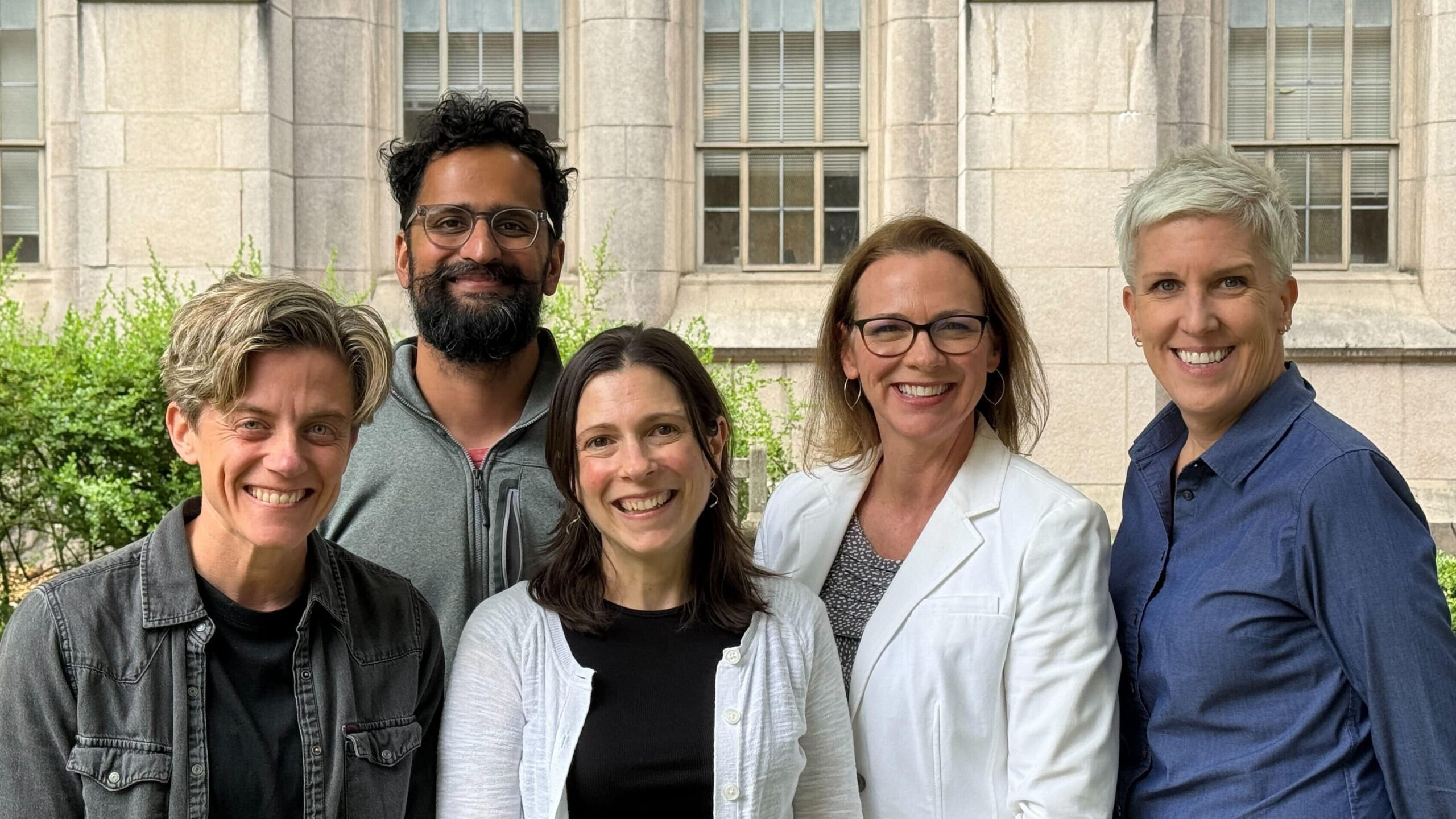
University of Washington professor Elizabeth Kirk regularly arrives early to her introduction to nutrition class and stands outside the lecture hall to welcome her students inside — all 500 of them. She also grants every student email a personal response, reflecting a philosophy that the essential transaction of higher education is the connection between instructors and students.

But lately, Kirk has watched her students become increasingly withdrawn and has been eager to try out new ways to engage them. A recently launched, interdisciplinary initiative at U.W., called Five for Flourishing, wants to help. 

In 2024, a team of U.W. administrators spanning student and academic affairs developed Five for Flourishing to guide faculty members like Kirk in the implementation of strategies to promote connection in the biggest classes across the university’s three campuses. 

The strategies are: adding language to class syllabi that expresses support for student wellbeing; setting up a slide before each class offering wellness resources or prompting students to engage with one another; reminding students before major assignments that they are opportunities to grow rather than reflections of intelligence; organizing small student groups that meet weekly; and instituting mid-quarter evaluations for students to offer feedback on the course.

Taken together, the strategies mean to improve wellbeing by cutting through the feelings of anonymity that can run rampant in huge classes. The interventions set the precedent that professors want to connect with students and care about their personal and academic success. The intended outcomes — sense of belonging, classroom engagement, and intellectual risk-taking, among others — are those often associated with smaller courses and more intimate faculty-student dynamics.

Part wellness intervention, part student success initiative, Five for Flourishing grew out of the needs of several departments. Its dual focus is captured in its interdisciplinary leadership, which includes the provost’s office, the Center for Teaching and Learning, and the U.W. Resilience Lab, a hub for campus wellbeing efforts.

The interventions set the precedent that professors want to connect with students and care about their personal and academic success.

According to Penelope Moon, the director of the Center for Teaching and Learning, what makes Five for Flourishing unique is the way all five interventions come together, and the unlikely team that assembled them. “The package is an innovation,” she said. “The partnership is an innovation.”

Marisa Nickle, the senior director of strategy and academic initiatives, laid the groundwork for Five for Flourishing. While U.W. staff may be “naturally collaborative,” she said, they tend to be “structurally siloed.” That was a barrier she was prepared to overcome.

With her boss, vice provost for academic and student affairs Philip Reid, Nickle had attended the presentation of another wellbeing initiative that she liked but feared was overly complicated. Curious about how a simpler version could work at U.W., they sought advice from Moon as well as Megan Kennedy, the director of the Resilience Lab, which promotes campus wellbeing through research, education, and strategic programs.  

Kennedy was ready to lend her expertise and welcomed the cross-departmental nature of the initiative. “I think the question universities are trying to answer around mental health is: How do we distribute the responsibility beyond student life and the counseling center and crisis services?” she said.

What many institutions need, Kennedy added, is “a really clear pathway for how everyone can take responsibility.”

But wellbeing interventions in academic spaces are not always easy to implement for time-pressed faculty. Nickle said a major question steering the work was: “How can we bring student success into the classroom and do that in that lightweight way that also thanks faculty for their time and effort?” 

With Kennedy and Moon both on board, and critical support and funding from Vice Provost Reid, the group began to develop an official program, first by deciding on the strategies themselves.  

“It came together fairly quickly,” Moon said. “It was pretty easy to identify the things that probably would help, and then we dug into the literature to confirm suspicions.”

“How can we bring student success into the classroom and do that in that lightweight way that also thanks faculty for their time and effort?” 

Once the five strategies were established, the team turned to enlisting faculty members for a two-year pilot phase of the project, during which educators would institute the interventions in two classes. The recruitment didn’t present much trouble, given plenty of professors, like Kirk, were already interested in incorporating these kinds of learner-centered techniques. 

Not surprisingly, Kirk had been using some of the Five for Flourishing strategies before the program existed. Mid-term evaluations, for example, were standard practice for her and continue to be. She’s long valued how they allow students to feel heard and her to respond to their needs in real time.

Other interventions, though, were new to Kirk, like the “growth-mindset” reminders. It’s another way she’s appreciated being able to establish a rapport with her students. 

“This is just my way of assessing how well I’m getting across to you — how well you are understanding what it is I’m saying,” she now tells her class before tests. “Because if I need to revisit some things, I want to do that.”

While Kirk doesn’t expect one practice to expel her students’ performance anxiety completely, she thinks they appreciate the sentiment. One even wrote in the course feedback that the language “made me feel calmer.”

Samantha Robinson, a professor in the chemistry department, teaches lectures with between 100 and 300 students. The uphill battle is made steeper by chemistry’s reputation as one of the most difficult and demanding subjects. 

“They hear horror stories. They’re under this impression that we’re ‘weed-out’ classes,” Robinson said. “And that isn’t ever our goal.”

In 2025, Robinson started implementing Five for Flourishing in two courses that tend to draw those without strong chemistry backgrounds — those who might feel particularly uncomfortable or nervous about the class.

“Those are really great student populations for this sort of an initiative because they are feeling pretty intimidated to be in a STEM class in a lot of cases,” Robinson said. Five for Flourishing, she hoped, could increase their sense of belonging and support. 

Over time, Robinson determined which elements of the program she found helpful. She likes the syllabus and growth-mindset language and the “moment-to-arrive” slides. The midterm evaluations present more of a challenge because, given the highly structured nature of her courses, she can’t plan to change much about them half-way through the term.

Both Robinson and Kirk came out with mixed reviews of the effort to have students meet weekly in small groups. They know it’s difficult to get students to get together on their own outside of class.

Robinson found that the students in a 120-person course were more likely to meet than those in her 285-person class. Kirk tweaked the structure so that the groups gathered during “quiz sections,” a pre-existing T.A.-led class time. 

More formal assessment of the initiative has also been ongoing since the beginning thanks to the contributions of Lovenoor Aulck, a data scientist working in the provost’s office. 

Aulck developed pre- and post-course surveys to assess the impact of the five interventions on students’ reported sense of belonging, confidence, and academic support, among other measures. Aulck said he’s found “small positive gains,” based on data from the first year of implementation. 

Some of the promising findings include that, by course end, students were more likely to indicate feeling accepted and comfortable being themselves in class and less likely to indicate feeling worried about being judged negatively based on their identity.

But data collection is in its pilot phase as much as the rest of the program; and the Five for Flourishing staff plans to continue tweaking each facet of the work as needed.

That doesn’t mean the program can’t grow at the same time. Already, the group has collaborated with the University of Georgia to help engineer its own version of Five for Flourishing called Wellbeing by Design.  

As the U.W. team monitors their own progress, and swaps stories with partners near and far, perhaps students nationwide will begin to find their big classrooms feel a little smaller.

You can reach LearningWell Reporter Mollie Ames at mames@learningwellmag.org with comments, ideas, or tips.

College should Be a Creative Engine — Not a Conveyor Belt 

Many 18-year-olds who step onto campus hungry for possibility may not believe that four years later, they could walk across the graduation stage feeling more uncertain than ever. While it is easy to blame the students, this all-too-often outcome is reflective of the failure of a higher education system that has become exemplary at producing compliant students but far less so at encouraging creative thinkers. 

As someone who feels privileged for my positive college experience and the post-graduation time that followed, I can’t help but wonder how a different set of expectations could have benefited me and my generation. What if, instead of striving for measures of output that stay with us temporarily (the conveyor belt model), we were encouraged to build intellectual capacities that stay with us forever (the creative engine model). Maybe then Gen Z would feel more engaged, more fulfilled, more productive, and more prepared for our careers. 

The Conveyor Belt Model 

Many colleges have done an excellent job of building a culture of pressure, comparison, and G.P.A. obsession. Often, this consists of rigid majors and predetermined career tracks. Creativity is often treated as a “less important” extracurricular, not central to learning. This results in decreased risk-taking within our learning. My post-grad friends are often reporting a LinkedIn doom scroll, chronic burnout (already), anxiety, and a loss of intrinsic motivation to “do.” 

It’s not that Gen Z can’t handle college; it’s that college isn’t exactly handling Gen Z. 

We grew up in a world far from predictable — with limitless information, an unstable economy, mental health challenges, environmental concerns, rapid growth in technology and media, political polarization, and socio-cultural vulnerability, especially for marginalized groups. Older generations may mistake Gen Z burnout for fragility, but I argue this interpretation misses the point. The learning ecosystem within which Gen Z currently operates is built on dated values and old assumptions. It’s not that Gen Z can’t handle college; it’s that college isn’t exactly handling Gen Z. 

The Creative Engine Model 

As opposed to the conveyor belt producing students who can check the boxes, fostering creative learning environments for students could help Gen Zers achieve improved wellbeing and more success entering the workforce. 

Believe it or not, Gen Z students want “uncheatable projects,” as coined by educational consultant Michael Hernandez in a pedagogical philosophy I explored in my final undergraduate education course. This approach includes transitioning traditional assignments into multimedia projects where the motivation is the experience itself, not the output (the grade). This drives student engagement and works against the conveyor belt model. It encourages intrinsic curiosities and passions, rather than shallow memorization, translating into longer-lasting learning. It avoids the infinite “Whac-A-Mole” (referenced by Hernandez) of repetitively policing new shortcuts students use — especially as A.I. tools rapidly evolve — as the desire to learn comes from within. In this model, students can strategically implement tools to improve their work, rather than resorting to abusing them. The truth is if Gen Z students want to cut corners, they will figure out how to do so quicker than educators can ever stop them. This method faces that head on, utilizing purpose and personal connection. 

Creativity and passion must be treated as learning priorities, rather than extracurricular activities that come second to classroom work. My peers hustled in their internships, extracurricular activities, and jobs; yet we were trained to say, “School comes first.” Shouldn’t they both matter? How can these extracurricular learning opportunities work hand in hand with class to enhance one another? Think back to high school: Can you recall the answers from a random exam? Likely not. How about your favorite field trip or project? More likely. The same cognitive processes of creating long-lasting learning align from younger to older ages, especially when uniquely tailored to the students to feel more meaningful and less flat. 

Please, encourage us to fail. 

Often, the penalization of making mistakes in the current system makes it undesirable to fail. In that context, no one would take the risk to mess up. One way to combat this is through less conventional, interdisciplinary studies. The less binary the answers, the better. This is more holistically reflective of the real world we live in after all. Another is through ensuring students are met with an elaborate support system of relationships that make them feel safe enough to fail. This support system is essential — a mutual system of care. We are constantly encouraged not to fail but seldom learn how to fail, learn, and recover. 

A great example of this is the makerspace model. 

A makerspace is a welcoming, hands-on environment with tools and resources to collaboratively design, explore, tinker, and create. Access and encouragement to use this kind of model should be broader than just in STEAM (science, technology, engineering, art, and mathematics), as it trains us to navigate uncertainty and to problem solve with confidence and resilience in a community.

As we add risk to our education journey, we ask that educators in higher education do the same. Changing a system is unpredictable and entering the unknown is often not a desirable route. But, we cannot keep fostering the conveyor belt culture when learners’ potential deserves so much more, particularly in these rapidly changing times. Educators and students alike must agree to learn together through a transition, taking reflective and precise note of what works and what should be changed. 

We need a more humane and timely college experience to better prepare students to walk the graduation stage. 

One that treats creativity as an essential skill, not a hobby.

One that treats risky exploration as productive, not wasteful.

One that avoids treating students as empty vessels to be filled with information to reproduce. 

This may not change the job market that Gen Z faces, but creating the opportunity to support young people to tackle the complex issues of today’s society far better prepares them for the post-graduation transition they face. We have the potential to graduate an energized cohort of young people by imagining boldly, questioning deeply, and re-building creatively. I am inspired by my generation, and our post-secondary education system should consider how to more effectively support our potential. 

Nicole LeVee graduated from American University in 2025 and is pursuing her master’s degree in learning development and family services at the University of Colorado Denver.